Health
Mushrooms for Weight Management: Satiety, Substitution, and Evidence
Assess mushroom calories, satiety, food substitution, trial design, realistic portions, and why mushrooms are not a stand-alone weight-loss treatment.
By MushroomScope Editorial Team · · Editorially reviewed
Evidence context
Food, extracts, and supplements differ
Health conclusions depend on species, fungal part, preparation, dose, population, and measured outcome.
Open the nutrition evidence hub →Medical limit
Educational, not medical advice
Do not delay diagnosis or replace prescribed care with mushroom foods or supplements.
Read the editorial policy →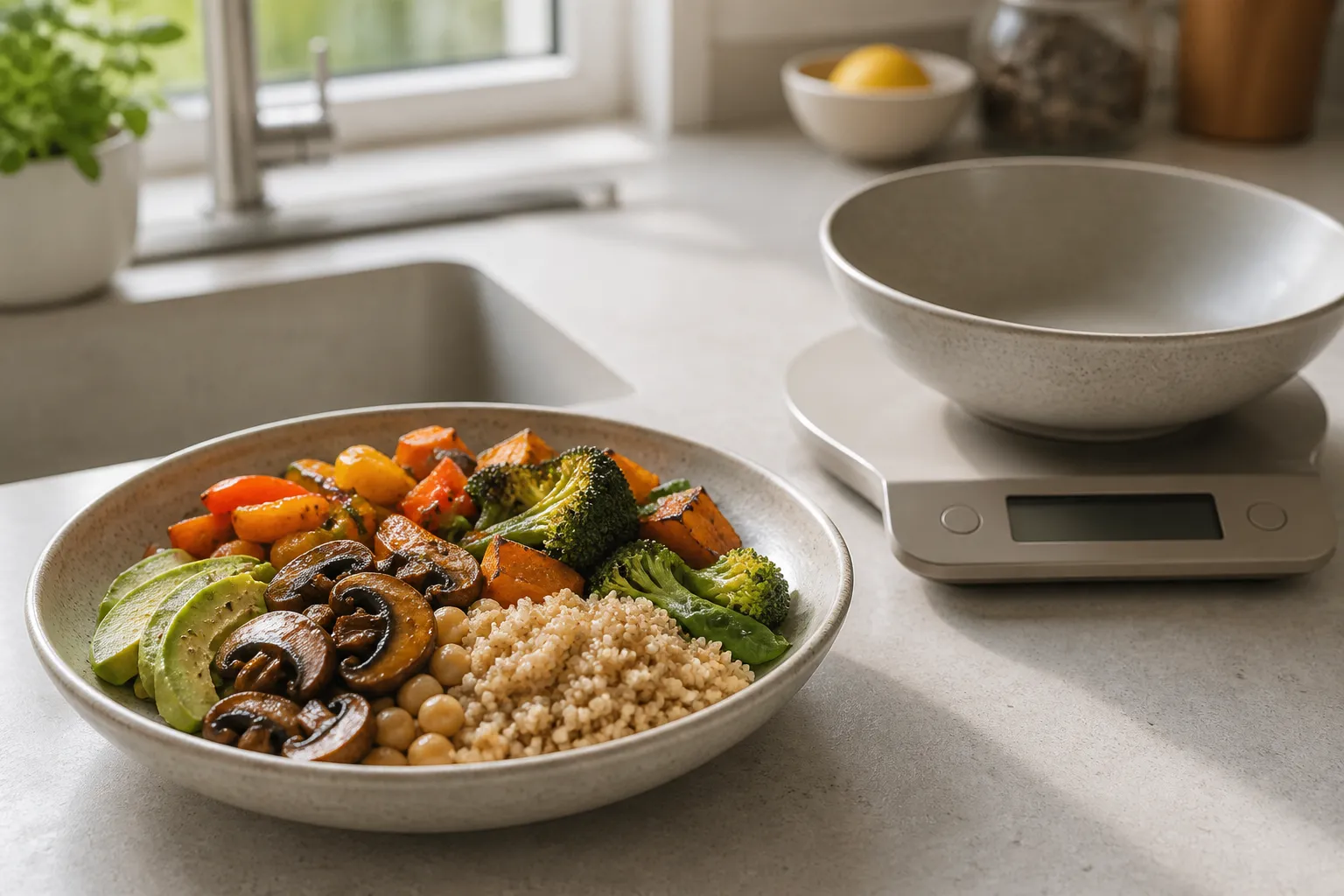
Review status: Editorial review only. No named physician, dietitian, pharmacist, or other clinical expert independently reviewed this page.
Mushrooms can support substitution, not cause weight loss
Fresh mushrooms are water-rich and relatively low in energy, so they can add volume and savory texture to meals. Weight change, however, reflects the sustained eating pattern, activity, physiology, medicines, sleep, access, and health conditions. Adding mushrooms without changing anything else does not guarantee a calorie deficit, and no mushroom food or supplement is a stand-alone obesity treatment.
Energy density depends on the recipe
Energy density describes calories relative to food weight. Plain mushrooms begin low, but oil absorption, butter, cheese, cream, breading, and portion size can dominate the final dish. A large fried appetizer and a broth-based mushroom-vegetable soup should not share one calorie narrative. Compare the prepared recipe and serving, not the raw ingredient alone.
Satiety is more than one ingredient
Fullness depends on volume, protein, fiber, fat, texture, palatability, eating rate, and expectations. Mushrooms provide texture and some fiber but are not a concentrated protein source. Pairing them with beans, tofu, eggs, fish, poultry, yogurt, or another appropriate protein and with minimally processed carbohydrate may build a more complete meal than relying on mushrooms for satiety.
The comparison that matters
Fresh mushrooms are water-rich and relatively low in energy, so they can add volume and savory texture to meals. Weight change, however, reflects the sustained eating pattern, activity, physiology, medicines, sleep, access, and health conditions. The useful comparison keeps species or product, dose, preparation, population, and outcome aligned rather than borrowing certainty from a different exposure.
What substitution trials actually test
In a substitution trial, participants may replace part of a meat dish or another energy-dense ingredient with mushrooms. Any difference reflects the whole swap: energy, fat, protein, water, portion volume, flavor, and possibly expectations. Such a study can inform a specific meal strategy but cannot establish that a mushroom compound burns fat. Adherence outside the controlled meals is also crucial.
Weight change needs adequate follow-up
A brief feeding study can measure hunger ratings or intake at the next meal, not durable body-weight change. Weight trials need enough time, retention, objective measurements, a credible comparator, and attention to lean mass, nutrition adequacy, adverse events, and quality of life. Small average differences conceal individual variation and should not be marketed as a guaranteed result.
Protein and fiber claims in perspective
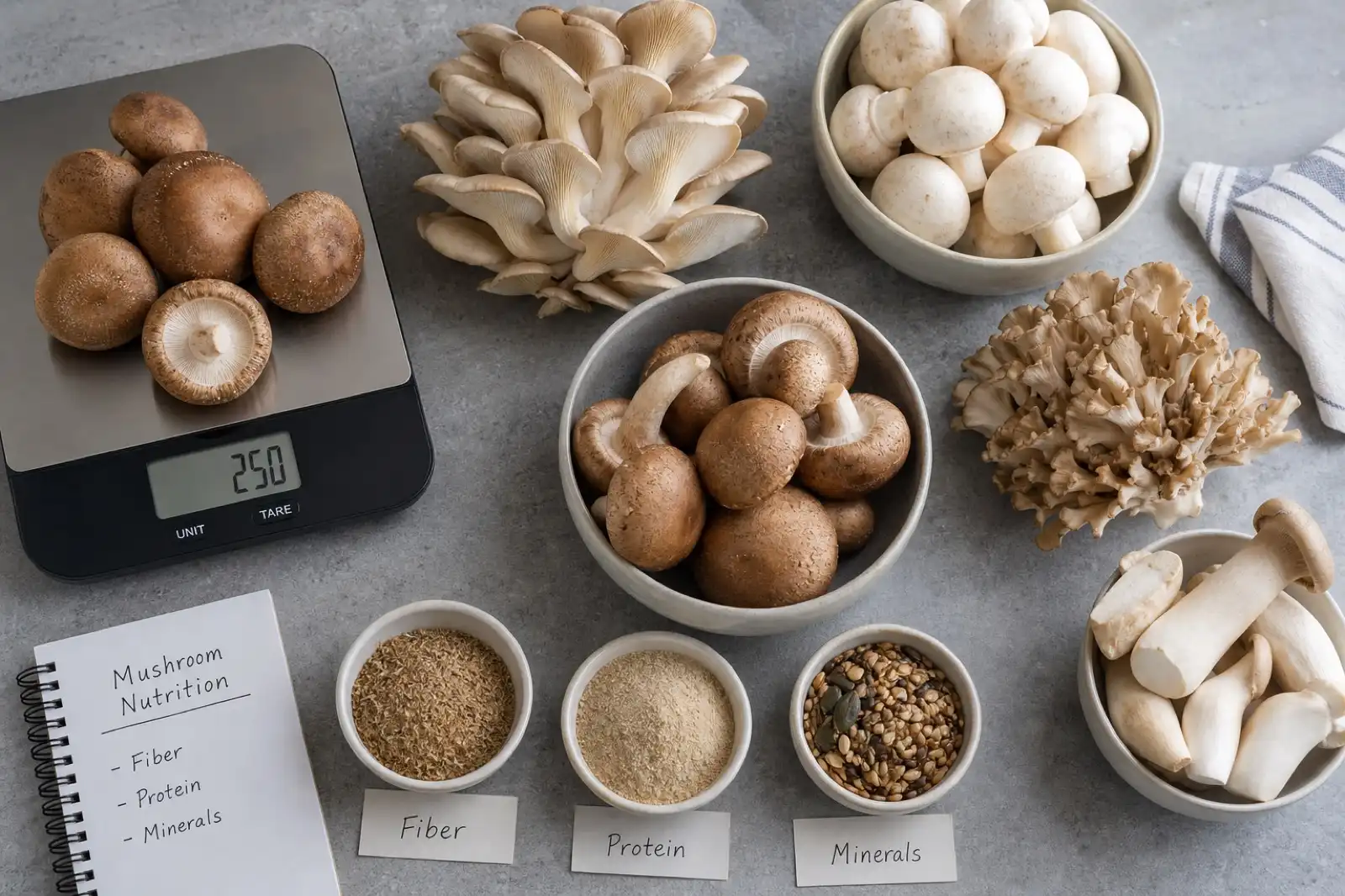
Mushrooms contain both fiber and protein, yet their high water content means ordinary fresh servings deliver modest absolute amounts. They should not be described as nutritionally interchangeable with meat merely because they supply umami and a chewy texture. The mushroom nutrition guide gives matched food values and avoids a false either-protein-or-fiber choice.
Questions to ask before accepting the claim
- For weight claims, was the outcome measured in people, animals, cells, or a chemical assay?
- Does the tested species, fungal part, preparation, and dose match the food or product?
- Was the outcome prespecified, clinically meaningful, and measured long enough?
- Were adverse events, withdrawals, funding, and conflicts reported?
- Has an independent group replicated the result?
Cooking can reverse the calorie advantage
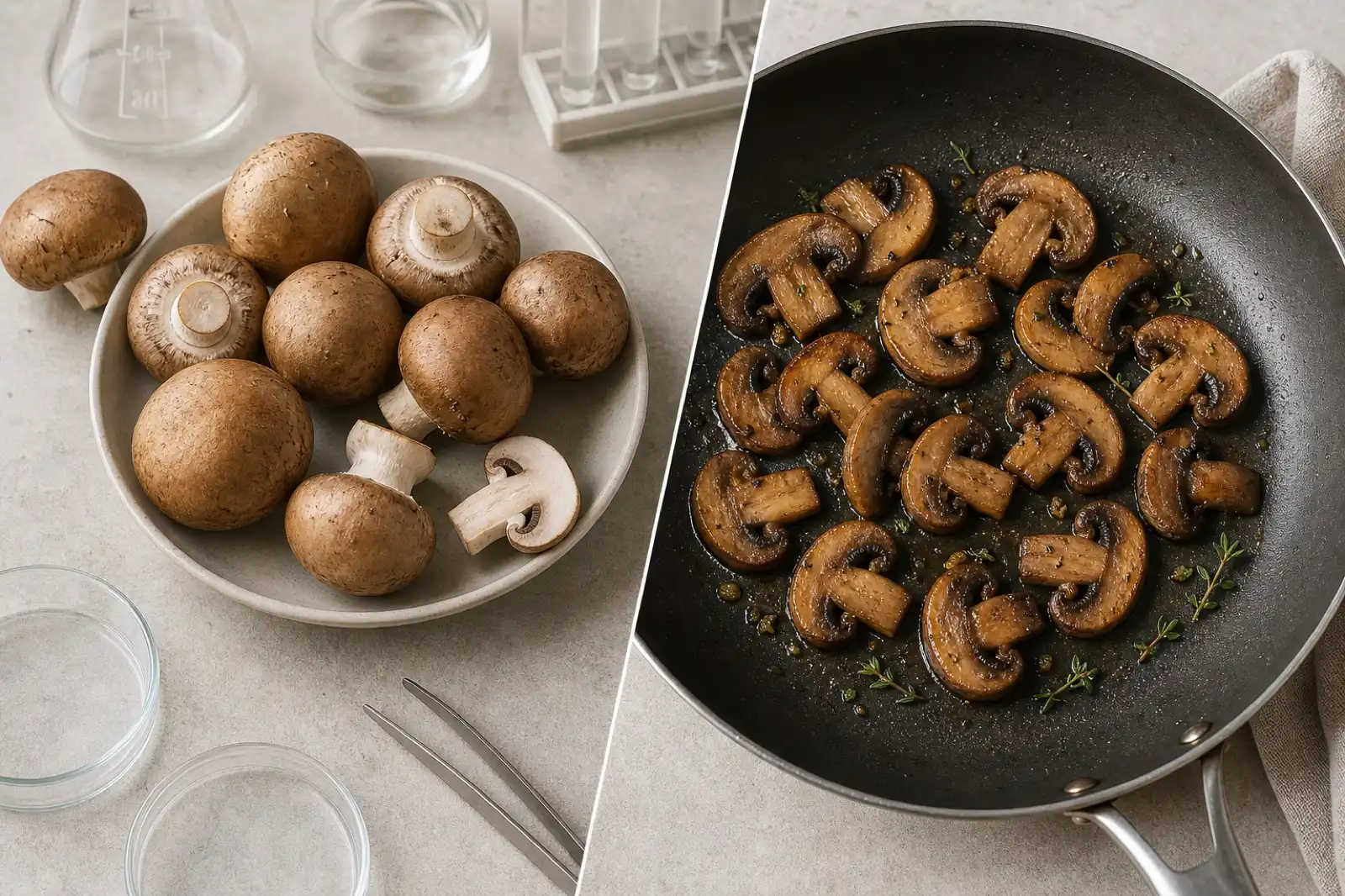
Sautéing can be useful, but mushrooms readily take up cooking fat as moisture leaves. Measure oil rather than assuming all remains in the pan, and account for sauces and toppings. Raw-versus-cooked comparisons must use consistent denominators because water loss concentrates values per 100 grams. See the cooked-versus-raw comparison for this interpretation.
Design a sustainable meal pattern
A sustainable pattern uses mushrooms where their flavor and structure genuinely replace some higher-energy ingredient, not as a mandatory add-on. Plan protein, fiber-rich plants, culturally appropriate staples, and enjoyable portions. Track hunger, energy, symptoms, and feasibility rather than reacting to daily scale noise. Repeated severe restriction is neither necessary nor evidence that a mushroom strategy works.
When weight advice needs clinical care
Unintentional weight loss, eating-disorder symptoms, pregnancy, childhood growth, frailty, cancer treatment, kidney or liver disease, diabetes medication, and substantial weight change warrant individualized guidance. Weight is not a complete measure of health. The nutrition evidence hub focuses on evidence quality and avoids promising that one food produces a particular body size.
A reader’s evidence worksheet
Interpret the scale without turning normal variation into failure
Body weight changes with hydration, sodium, glycogen, digestive contents, menstrual cycles, and measurement conditions. Daily movement does not reveal how much body fat changed. Research protocols standardize clothing, timing, equipment, and repeated measurements; home tracking should likewise focus on a useful trend rather than reacting to every fluctuation. An apparent overnight response to a mushroom meal is water and contents, not evidence that the ingredient burned fat.
Weight-focused studies should report what happened to participants who withdrew, because demanding diets can selectively lose the people who find them least workable. Intention-to-treat analysis, adherence information, and confidence intervals help readers judge the average estimate. Even then, group means do not promise an individual result. Maintenance after the intervention is a separate outcome and often more relevant than the largest short-term reduction.
Satiety ratings are subjective but valuable when collected systematically. Study design should specify when hunger was measured, what participants ate beforehand, whether meals were equal in energy, and how intake at later meals was assessed. If a mushroom meal has much greater volume or less energy than the control, greater fullness may support that recipe strategy without proving a special fungal appetite pathway.
Protein adequacy deserves attention when mushrooms displace meat. Their culinary texture makes partial substitution appealing, but the replacement meal may need beans, lentils, soy foods, eggs, dairy, fish, poultry, or another suitable source depending on preferences and needs. Iron, vitamin B12, zinc, and total energy can also change. A nutritionally planned substitution is different from simply removing a protein-rich ingredient.
Finally, health improvement need not be defined by a narrow appearance goal. Blood pressure, mobility, sleep, dietary quality, glucose, strength, symptoms, and relationship with food may matter, with priorities differing by person. Products that attach mushroom extracts to rapid weight-loss promises bypass this complexity and add supplement risks without establishing durable benefit. Ordinary mushrooms are best discussed as adaptable food, not a body-transformation product.
Weight-management evidence audit: write the claim in one sentence without words such as supports, boosts, detoxifies, or wellness. Name the exact outcome and time frame. Then record the study design, participant number, comparison group, attrition, preparation, dose, funding, and absolute result. Separate statistical significance from clinical importance. If the paper studies a concentrated ingredient while the claim concerns cooked food, mark that as an indirect comparison. If it studies a surrogate marker while advertising promises disease prevention, mark that as an outcome mismatch. Uncertainty should remain visible rather than being converted into a recommendation.
Weight-product matching: photograph the full label and retain its lot number. Compare every ingredient with the paper rather than matching only the mushroom name. Ask what the control received and whether participants could guess their assignment. Look for preregistration and whether the reported primary outcome matches the registered one. A single study can inform a decision, but reliability grows through consistent results, appropriate methods, clinically meaningful endpoints, and independent replication.
Frequently asked questions
Practical substitutions and their tradeoffs
Finely chopped mushrooms can replace part of ground meat in sauces, patties, dumpling fillings, or tacos. This may reduce energy density and retain savory character, but the result depends on the meat, replacement proportion, oil, binder, and serving. It can also reduce protein, iron, zinc, or vitamin B12 unless the rest of the meal compensates. Reporting the complete recipe keeps the substitution honest.
Whole roasted clusters can replace a larger center-of-plate item for texture, but a glaze or repeated oil application can narrow the energy difference. Soup may create volume, while cream and bread served alongside change the total. Mushroom powder added to an unchanged meal is unlikely to create the same displacement as replacing an energy-dense ingredient. Form and culinary function therefore belong in any study summary.
Cost and access determine sustainability. Fresh specialty mushrooms may be expensive or spoil quickly; common cultivated mushrooms, frozen options, or other vegetables may serve the same volume-building purpose. A weight-management plan that depends on one premium food is less transferable than a flexible cooking principle. Enjoyment and cultural fit also influence whether a change persists after a trial ends.
If monitoring weight increases anxiety, compulsive restriction, bingeing, or avoidance of social eating, stop treating the scale as the primary feedback tool and seek appropriate support. A mushroom-centered meal does not justify ignoring eating-disorder risk. Safe nutrition advice must leave room for adequate intake, flexibility, and mental health as well as numerical outcomes.
Do mushrooms burn fat?
No. Mushrooms do not independently burn body fat; their practical role is as a low-energy ingredient in an overall pattern.
Are mushrooms a protein replacement for meat?
Not nutritionally on a gram-for-gram basis. Pair them with an appropriate protein source when replacing meat.
Why can a mushroom dish be high in calories?
Cooking fat, breading, cream, cheese, sauce, and portion size can outweigh the low energy density of plain mushrooms.
Do mushrooms guarantee fullness?
No. Satiety varies and depends on the complete meal, portion, protein, fiber, texture, and individual context.
Who should avoid generic weight-loss advice?
People with unintentional loss, eating disorders, pregnancy, growth needs, frailty, major illness, or medication-sensitive conditions need individualized care.
References
Source quality notes
MushroomScope cites sources that match the page scope, such as taxonomic databases, extension guidance, food-safety agencies, food-composition databases, and peer-reviewed or institutional health references. Sources support context and uncertainty; they do not turn an online page into specimen identification, medical advice, or a tested recipe record.
Frequently asked questions
Do mushrooms burn fat?
No. Mushrooms do not independently burn body fat; their practical role is as a low-energy ingredient in an overall pattern.
Are mushrooms a protein replacement for meat?
Not nutritionally on a gram-for-gram basis. Pair them with an appropriate protein source when replacing meat.
Why can a mushroom dish be high in calories?
Cooking fat, breading, cream, cheese, sauce, and portion size can outweigh the low energy density of plain mushrooms.
Do mushrooms guarantee fullness?
No. Satiety varies and depends on the complete meal, portion, protein, fiber, texture, and individual context.
Who should avoid generic weight-loss advice?
People with unintentional loss, eating disorders, pregnancy, growth needs, frailty, major illness, or medication-sensitive conditions need individualized care.
Related guides
health
Mushroom Nutrition: Fiber, Protein, Calories, and Vitamins
Are mushrooms a source of fiber or protein? Compare calories, fiber, protein, vitamins, food forms, serving sizes, and preparation without overstating benefits.
health
Cooked vs. Raw Mushrooms: Nutrition and Safety
Cooking changes water content, texture, digestibility, and measured nutrient concentration; it also supports safer produce handling.
health
Mushroom Nutrition: Fiber, Protein, Calories, and Vitamins
Are mushrooms a source of fiber or protein? Compare calories, fiber, protein, vitamins, food forms, serving sizes, and preparation without overstating benefits.
Continue exploring
Browse more practical guides in Health or visit the mushroom encyclopedia.