Health
Cooked vs. Raw Mushrooms: Nutrition and Safety
Cooking changes water content, texture, digestibility, and measured nutrient concentration; it also supports safer produce handling.
By MushroomScope Editorial Team · · Updated · Editorially reviewed
Evidence context
Food, extracts, and supplements differ
Health conclusions depend on species, fungal part, preparation, dose, population, and measured outcome.
Open the nutrition evidence hub →Medical limit
Educational, not medical advice
Do not delay diagnosis or replace prescribed care with mushroom foods or supplements.
Read the editorial policy →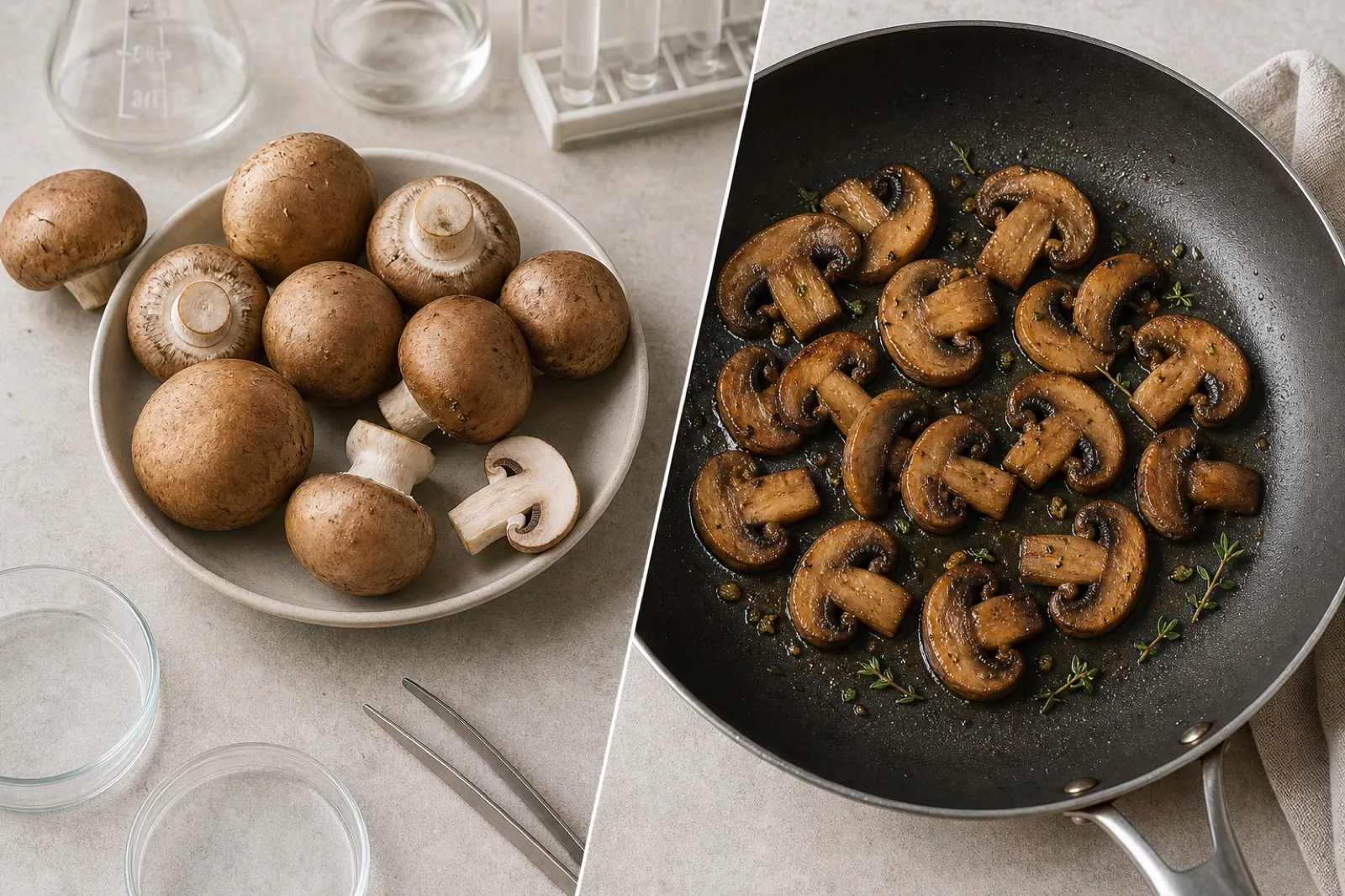
Key takeaways
August 2026 editorial note: The practical choice is not raw versus cooked in isolation. Match preparation to safety, texture, and the meal pattern, then use the mushroom nutrition guide and gut-health evidence guide for broader context.
Cooking changes water content, texture, digestibility, and measured nutrient concentration; it also supports safer produce handling. The useful question is not whether mushrooms are “healthy” in the abstract, but what material was studied, in whom, at what dose, against what comparison, and with which outcome. This page focuses on preparation, nutrient interpretation, and food safety.
Cooking changes a mushroom first by moving water. A 200-gram raw batch may weigh much less after sautéing because steam left the pan; comparing 100 grams raw with 100 grams cooked can therefore make retained nutrients appear “higher” through concentration. Species, starting moisture, cut size, heat, time, oil, salt, and drained liquid all affect the result, so compare the same starting batch or use a documented yield factor.
What the evidence can show
Food-composition entries answer questions about the analyzed food form, not every home pan. A raw white-mushroom record and a cooked shiitake record differ in both species and preparation and cannot isolate the effect of heat. Laboratory retention studies are most useful when they report starting mass, cooking method, final mass, discarded liquid, and nutrient values on both wet-weight and dry-weight bases.
Keep culinary preparation separate from supplement extraction. Sautéing a serving of identified mushrooms is not equivalent to manufacturing a hot-water or alcohol extract, and research on an extract does not show that raw or cooked food has the same dose or effect. Compare raw versus cooked only within the same edible species and product form.
Compare nutrients on the same basis
Cooking often reduces water, so 100 grams of cooked mushrooms may represent more starting mushroom tissue than 100 grams raw. A nutrient value that appears higher after cooking can reflect concentration rather than creation. Conversely, boiling can move water-soluble compounds into discarded liquid, while added oil, salt, cream, or sauce changes the finished dish independently of the mushroom.
Compare the same species, edible portion, preparation, and unit. Values “per 100 g,” “per cup,” and “per serving” answer different questions. Raw sliced cups contain variable air space, and a cooked cup has collapsed substantially. FoodData Central entries are useful reference samples but do not guarantee the value in a specific package.
Vitamin D is especially product-specific. Mushrooms exposed to ultraviolet light can contain more vitamin D2 than unexposed mushrooms, and labels may identify treatment. Cooking method, storage, and starting level affect the amount served. The vitamin D guide explains why a generic raw-versus-cooked rule cannot replace the package label and total dietary assessment.
Why cooking changes texture and tolerance
Mushroom cell walls contain chitin and other structural polysaccharides that humans do not digest like ordinary starch. Heat softens tissue, drives off water, and changes texture and flavor, which can make a normal culinary portion easier for some people to chew and tolerate. This does not mean cooking prevents every allergy or intolerance.
Large portions, high-fat sauces, garlic, onions, and other meal components can contribute to symptoms attributed broadly to “mushrooms.” If mild symptoms recur, record species, portion, cooking method, ingredients, timing, and symptoms and discuss the pattern with an appropriate clinician. Do not deliberately challenge a suspected allergy at home.
Cooking cannot make an unidentified poisonous mushroom safe. Some toxins remain hazardous after heating, drying, or freezing. Use only cultivated mushrooms sold as food unless a qualified local expert has examined a complete wild collection and local guidance permits its use.
Raw use is species- and product-specific
Cultivated button, cremini, and portobello mushrooms are sometimes served raw in salads, but raw produce still needs clean sourcing and handling. Choose firm refrigerated mushrooms without slime, mold, extensive damage, or sour odor. Wash under running water rather than with soap, dry, cut with clean utensils, and prevent contact with raw animal foods.
Do not assume every cultivated species is intended for raw use. Shiitake is generally cooked, and raw or undercooked shiitake has been associated with a distinctive dermatitis in susceptible people. Other specialty mushrooms may be tough, poorly tolerated, or sold with cooking instructions. Follow supplier guidance and local food-safety advice.
Raw dried mushroom powder is not equivalent to a clean fresh salad ingredient. Drying does not prove identity, eliminate contaminants, or make every species appropriate without cooking. Supplements and extracts also have different composition and regulation from food.
Match the cooking method to the mushroom
Sautéing uses a hot wide pan to evaporate water and create browning. Add mushrooms in a loose layer, allow released liquid to evaporate, and avoid relying on color alone for a thick piece’s tenderness. Roasting provides a broad dry surface and works well for halved or thick cultivated mushrooms when pieces are spaced apart.
Boiling or simmering transfers flavor and some soluble material into the broth. That is not necessarily a loss when the liquid is eaten as soup. Steaming limits added fat but may produce a softer surface. Grilling needs careful heat control so thick portobello caps become tender without scorching marinade.
Microwaving can heat mushrooms with little added fat, but uneven portions need stirring or rotation and a standing period. Air frying emphasizes surface drying; overcrowding still produces steam. No method is automatically “healthiest” independent of the full recipe, portion, dietary needs, and safe handling.
Avoid overinterpreting agaritine discussions
Agaricus bisporus contains naturally occurring compounds including agaritine, and laboratory studies have examined how storage and cooking affect levels. Laboratory hazard questions, exposure amounts, animal studies, and actual human outcomes are different layers of evidence. A single mechanistic result should not be converted into a claim that ordinary mushrooms cause or prevent disease.
Cooking generally changes many compounds simultaneously. It can lower some, concentrate others through water loss, and create new flavor compounds. Public-health guidance and individual clinical advice should carry more weight than a viral claim about one chemical. People with specific medical restrictions should ask a qualified clinician rather than trying to calculate risk from isolated laboratory values.
Use a controlled comparison at home
To compare preparation rather than two different products, start with one package and divide similar mushrooms by weight. Cook portions without changing multiple variables: for example, dry sauté one and roast one with the same measured oil and salt. Record cooked weight, time, texture, and portion actually eaten. If the question is metabolic rather than culinary, keep the complete plate visible: the blood-sugar evidence guide explains why sauce, starch, activity, medication and measurement timing prevent a mushroom-only conclusion, and the weight-management evidence guide separates recipe energy density from a mushroom-specific effect.
This exercise can reveal water loss and preference, but it is not a nutrient assay or medical experiment. Do not use symptoms from an informal test to diagnose an allergy. Stop eating and obtain medical advice if reactions occur.
Evidence limitations
A cooking study can look precise while answering a narrow question. Small sample batches, unreported maturity, different water additions, unmatched starting weights, and failure to analyze cooking liquid can alter apparent retention. Prefer replicated method comparisons with a mass balance over one antioxidant assay presented as a universal ranking of raw and cooked mushrooms.
Changes in extractable phenolics, radical-scavenging assays, or cell-culture activity after heating do not establish that one preparation prevents cancer, improves immunity, controls glucose, or treats inflammation. Those endpoints measure chemistry under specific conditions. Meal choice should be based on safe handling, tolerability, texture, flavor, and the wider diet unless clinical evidence addresses a defined outcome.
Safety and interactions
Raw tolerance is species- and person-specific. Commercial mushrooms can still carry soil or handling contamination, and raw texture can be difficult for some diners. Allergy symptoms are not a cue to run a home raw-versus-cooked challenge. People with prior reactions, pregnancy-related food concerns, immune compromise, or clinician-directed restrictions should follow individualized medical and food-safety advice.
Powders and extracts sold as supplements fall outside this raw-versus-cooked kitchen comparison. Their labels, lots, identity testing, contaminants, and adverse-event instructions require separate review; market availability does not turn a concentrated product into the nutritional equivalent of cooked mushrooms.
For culinary mushrooms, refrigerate promptly and keep the refrigerator at or below 40°F (4°C). Wash hands and surfaces, separate produce from raw meat, poultry, seafood, and eggs, and refrigerate cooked leftovers within two hours—or one hour above 90°F (32°C). Discard mushrooms with mold, slime, off odor, or an unsafe holding history; tasting is not a safe spoilage test.
Allergic reactions can occur to raw or cooked mushrooms. Urgent symptoms such as breathing difficulty, throat or facial swelling, fainting, or rapidly spreading hives require emergency care. Gastrointestinal symptoms after an unidentified wild mushroom are also a poison-control issue, not simply “raw intolerance.” Retain remaining material and photographs when safe.
Choose preparation by product, tolerance, and meal context
Buy mushrooms identified for culinary sale, refrigerate as directed, trim spoiled tissue, prevent contact with raw animal foods, and use a method appropriate to the species. Record raw weight and cooked yield if comparing nutrition. Seek urgent care for breathing difficulty, facial or throat swelling, faintness, or severe persistent symptoms, and retain the food package and meal details.
Choose cooking for flavor, texture, supplier directions, and safe handling rather than expecting one method to maximize every nutrient. Use modest measured additions when comparing nutrition, and count sauces and oils as part of the finished dish. People who enjoy raw cultivated button mushrooms can still vary preparation; people who tolerate only cooked mushrooms do not need to force raw servings for a supposed universal benefit.
For a practical cooked example, use the sautéed mushroom method. For recurring symptoms, consult the mushroom allergy and intolerance guide and seek individualized care.
Explore related health evidence guides and species context in the mushroom encyclopedia.
Use preparation advice without turning it into treatment
Choosing cooked mushrooms may improve texture or individual tolerance, but it is not a treatment for allergy, digestive disease, or nutrient deficiency. People with recurrent reactions should preserve the species, portion, preparation, and ingredient record for a clinician. Do not conduct a raw-versus-cooked challenge when allergy or poisoning is possible.
Use a yield factor to avoid false nutrient gains
Weigh a raw batch before cooking and the edible cooked portion afterward. If 300 g raw becomes 180 g cooked, the yield factor is 0.60. A 100 g cooked portion then represents about 167 g of the starting raw mushrooms before accounting for material left in the pan or cooking liquid. Comparing database values per 100 g without this conversion can make water loss look like nutrient creation.
Retention is a separate question. Minerals generally do not evaporate, but they may remain in discarded liquid. Heat-sensitive or water-soluble compounds can change with time, temperature, oxygen, and whether the cooking liquid is eaten. Added oil and salt belong in the finished-dish calculation. For household decisions, weigh ingredients and use a consistent database entry rather than claiming laboratory precision.
Cooking methods change different variables
Sautéing combines surface heat, evaporation, and added fat; crowding lowers surface temperature and prolongs steaming. Roasting exposes more surface to dry heat, while simmering moves soluble material into broth that may still be consumed. Microwaving uses water already in the food but depends on portion geometry and stirring. Grilling adds intense local heat and can char a marinade before a thick cap becomes evenly tender.
No single method maximizes every compound. Choose a method for the identified species, supplier instructions, safe handling, desired texture, and the whole recipe. UV-exposed vitamin D2 is determined substantially by the starting product and storage, so a cooked-versus-raw comparison should not merge UV-treated and untreated packages.
Keep a symptom record without performing a challenge
When non-urgent digestive symptoms recur, record the scientific or commercial species, product source, raw weight, cooked weight, method, other ingredients, portion, time eaten, onset, duration, and medicines. Garlic, onion, cream, alcohol, and a large fat load can confound a meal-level observation. Bring the record to an appropriate clinician; it is not a diagnosis.
Do not deliberately repeat exposure after hives, swelling, breathing difficulty, faintness, or a suspected wild-mushroom reaction. Cooking does not reliably remove allergens and cannot detoxify an unknown species. For severe allergic symptoms use emergency services; for a possible poisonous mushroom contact the local poison service or medical facility promptly and retain remaining material when safe.
Antioxidant comparisons need the same denominator discipline
The mushroom-antioxidants evidence guide shows why fresh weight, dry matter, extraction method and human outcomes must remain separate when a cooking article cites ergothioneine or glutathione values.
References
Source quality notes
MushroomScope cites sources that match the page scope, such as taxonomic databases, extension guidance, food-safety agencies, food-composition databases, and peer-reviewed or institutional health references. Sources support context and uncertainty; they do not turn an online page into specimen identification, medical advice, or a tested recipe record.
Frequently asked questions
Does cooked vs. raw mushrooms: nutrition and safety prove a medical benefit?
No. Nutrient data, traditional use, laboratory experiments, observational studies, and clinical trials answer different questions and cannot be treated as equivalent.
Can a mushroom supplement replace treatment?
No. Do not delay diagnosis or replace prescribed care. Discuss supplement use with a qualified clinician who knows your conditions and medicines.
How can product claims be evaluated?
Check the scientific species, plant or fungal part, preparation, dose, independent identity and contaminant testing, study population, and measured outcome.
Related guides
health
Mushroom Nutrition: Fiber, Protein, Calories, and Vitamins
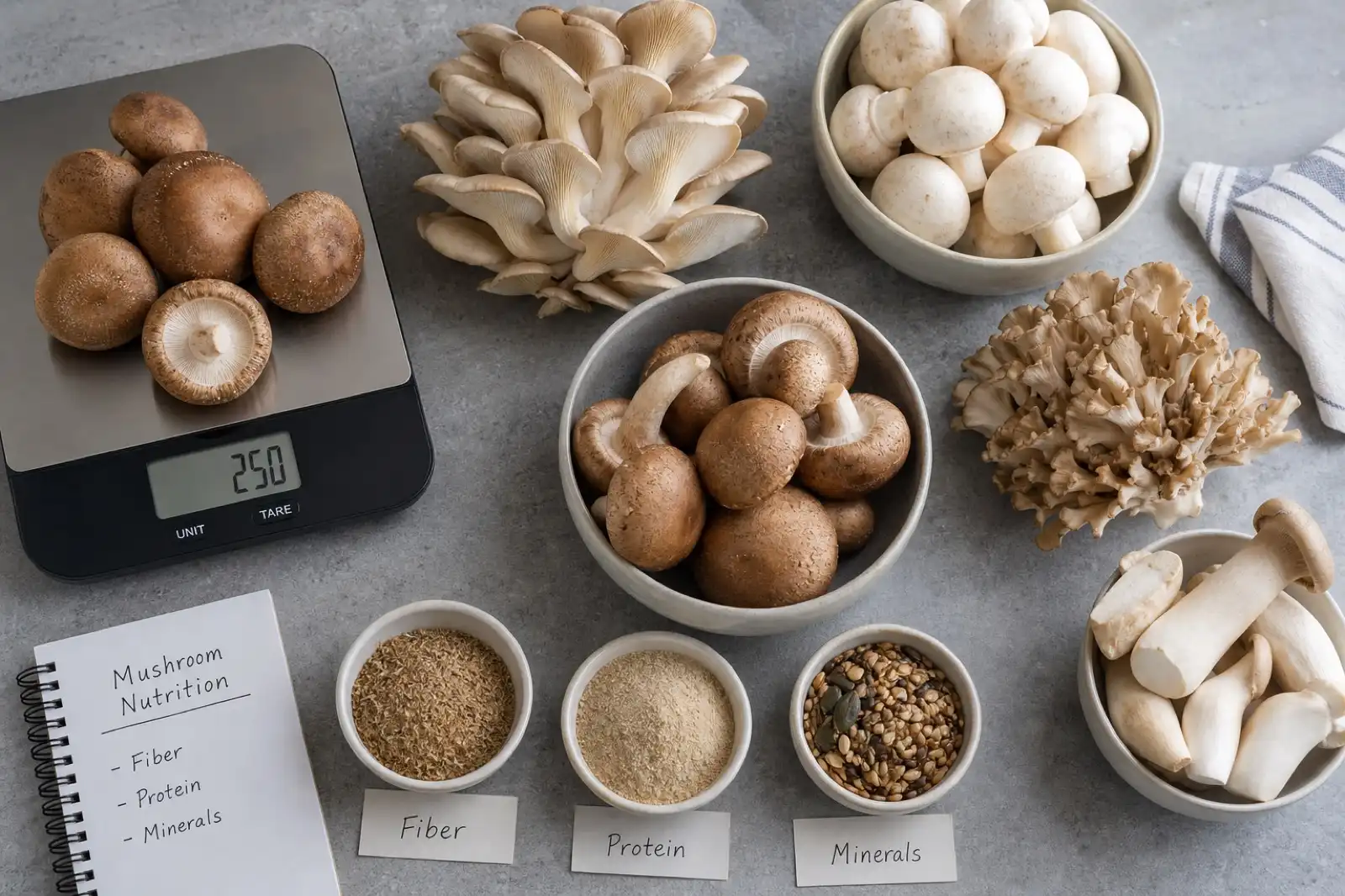
Are mushrooms a source of fiber or protein? Compare calories, fiber, protein, vitamins, food forms, serving sizes, and preparation without overstating benefits.

health
Vitamin D in Mushrooms: UV-Treated Products, Labels, and Evidence
Vitamin D in mushrooms is usually vitamin D2 from ultraviolet treatment. Learn to read labels and keep food choices separate from medical care.
recipes
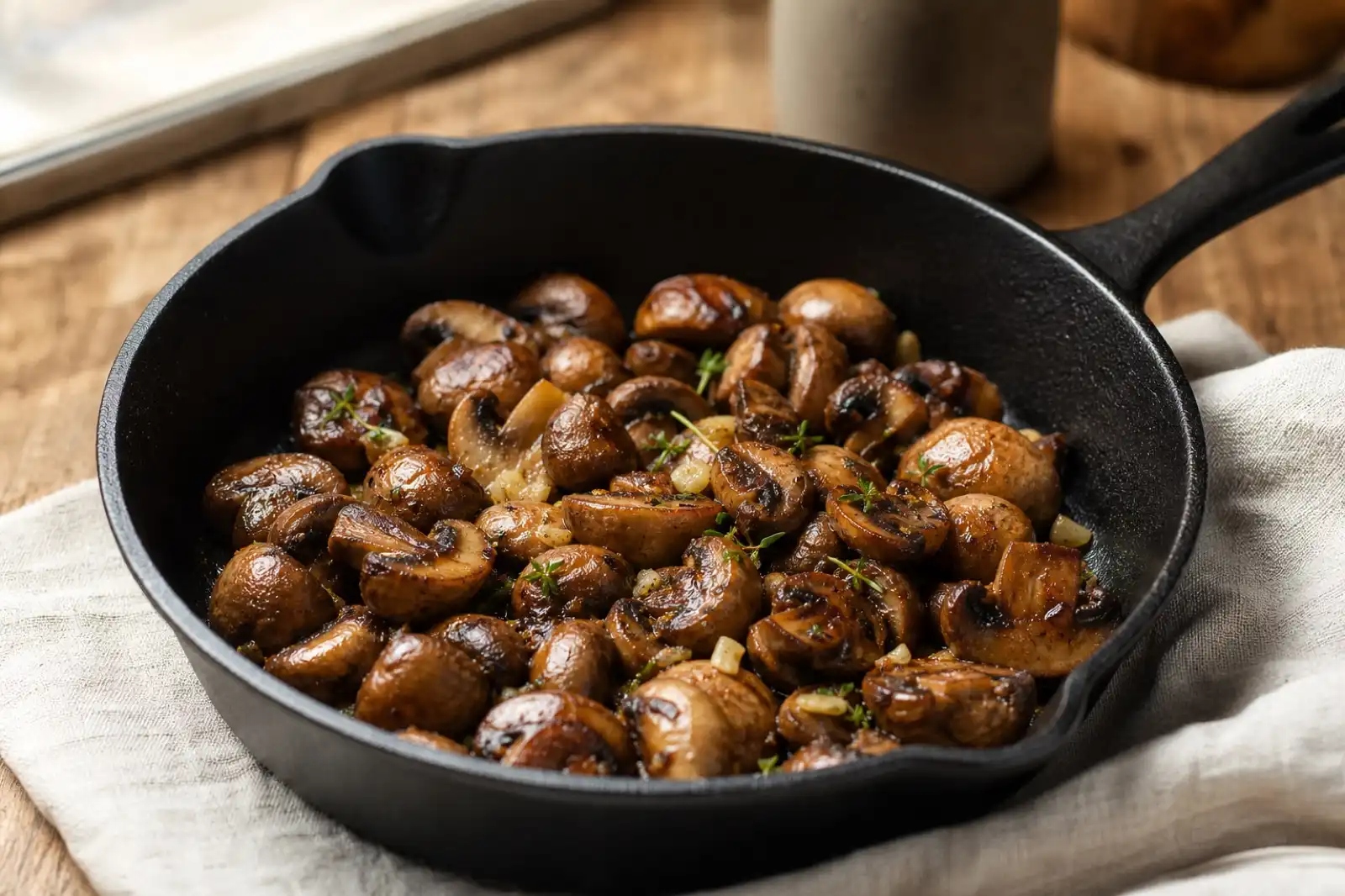
Easy Sautéed Mushrooms with Garlic and Herbs
Sauté cremini mushrooms with garlic and herbs using a wide-pan method, clear batch sizes, realistic timing, and safe storage advice.
Continue exploring
Browse more practical guides in Health or visit the mushroom encyclopedia.