Health
Mushroom Nutrition: Fiber, Protein, Calories, and Vitamins
Are mushrooms a source of fiber or protein? Compare calories, fiber, protein, vitamins, food forms, serving sizes, and preparation without overstating benefits.
By MushroomScope Editorial Team · · Updated · Editorially reviewed
Evidence context
Food, extracts, and supplements differ
Health conclusions depend on species, fungal part, preparation, dose, population, and measured outcome.
Open the nutrition evidence hub →Medical limit
Educational, not medical advice
Do not delay diagnosis or replace prescribed care with mushroom foods or supplements.
Read the editorial policy →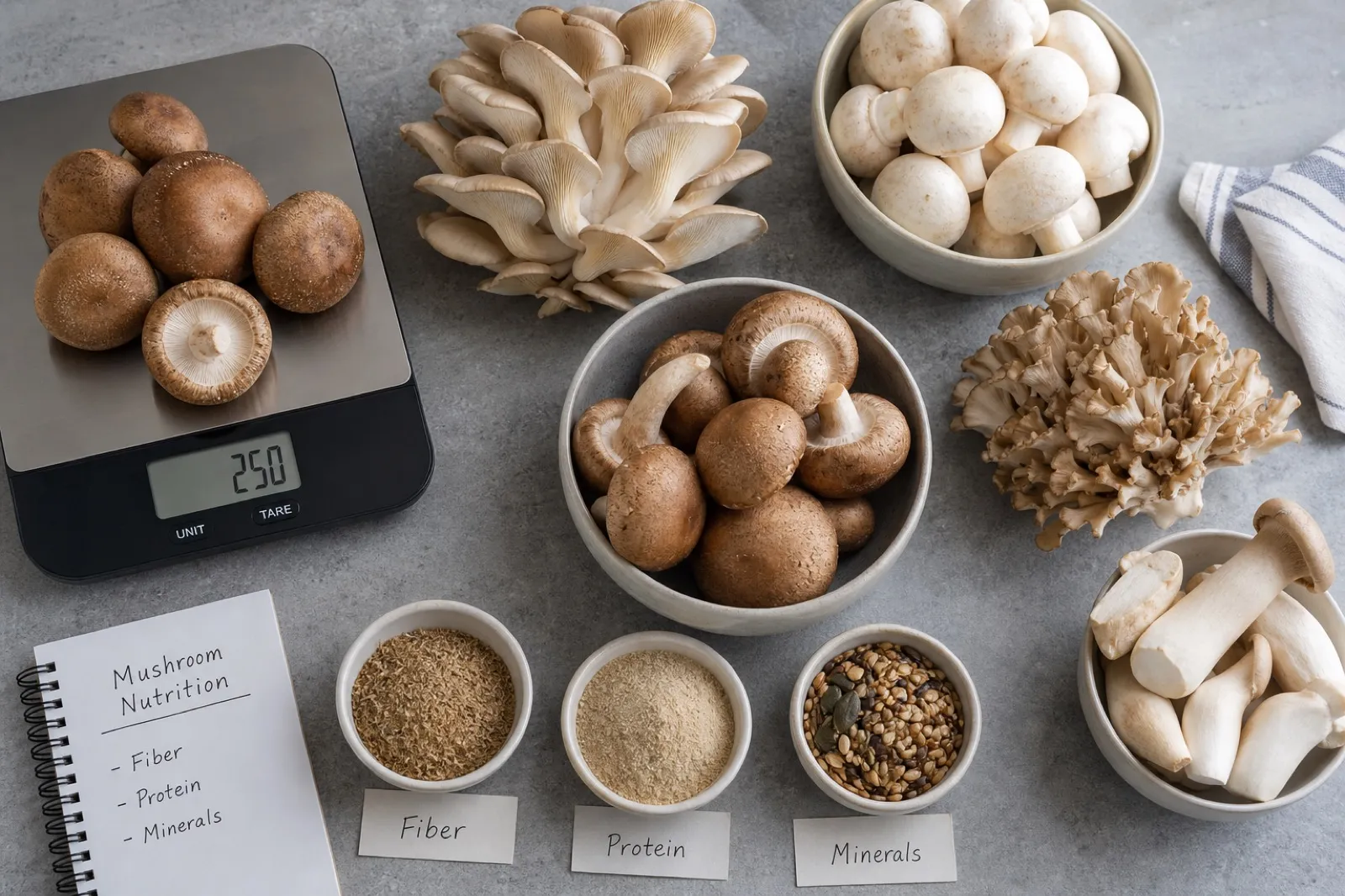
Key takeaways
Direct answer: Mushrooms contain both dietary fiber and protein, but an ordinary fresh serving is not usually interchangeable with a high-fiber staple or a concentrated protein food. Fresh mushrooms contain substantial water, so the useful comparison is the product’s stated serving against the same form—raw with raw, cooked with cooked, or dried with dried. Check the label or a matching USDA FoodData Central entry rather than assigning one number to every mushroom.
For readers comparing mushrooms with health claims, start with ordinary food use first. Pair this nutrition overview with cooked vs. raw mushrooms, mushrooms and gut health, and mushrooms and heart health before treating any single nutrient as a medical claim.
Mushrooms can contribute fiber, protein, B vitamins, minerals, and flavor, but composition varies by species, growing conditions, and preparation. The useful question is not whether mushrooms are “healthy” in the abstract, but what material was studied, in whom, at what dose, against what comparison, and with which outcome. This page focuses on food composition and realistic dietary context.
Whole mushrooms can be part of a varied diet. Their composition changes with species, strain, substrate, maturity, ultraviolet exposure, storage, and cooking. FoodData Central provides representative values, not a laboratory certificate for every package.
Read a mushroom nutrient entry in context
A nutrient table is useful only after its heading and serving basis are clear. First ask which mushroom is named: a generic entry, a named cultivated species, and a product made from dried mushrooms do not describe the same food. Then check whether the entry is for raw, cooked, canned, dried, or otherwise prepared material. Water changes the weight of a serving dramatically, so values expressed per 100 grams can look very different even where the underlying dry matter is similar.
Next, identify the unit. A package serving, a household measure, and a database’s 100-gram reference amount answer different practical questions. For a meal, use the package’s serving information and the amount actually eaten. For comparisons between foods, use equivalent units and the same preparation state. Do not turn a database average into a promise that every tray of mushrooms contains exactly that amount.
USDA FoodData Central combines data from multiple sources and updates entries over time. Its entries are a sensible starting point for food context, while a current product label is the more direct record for a packaged food. Neither source proves that a particular meal will prevent, treat, or manage a condition.
For a species-specific example, the shiitake health-benefits review separates ordinary food composition from lentinan, extracts, and medically administered preparations. Those exposure differences are why a nutrient entry cannot carry a treatment claim.
Fiber, protein, and vitamins answer different questions
Mushrooms are often described with a string of favorable nutrient words: low calorie, source of fiber, protein-containing, or rich in B vitamins and minerals. Those phrases are not interchangeable claims. Fiber describes a group of carbohydrate components that can contribute to a meal’s total fiber intake; protein describes amino-acid-containing material; vitamins and minerals have their own intake recommendations and functions. Whether an amount is meaningful depends on the person’s overall diet, portion, age, medical context, and the food being compared.
It is also worth separating a whole food from a single constituent. A meal that includes mushrooms brings water, texture, flavor, and whatever other ingredients were used. Adding mushrooms to a salty, creamy, or highly processed dish does not make the whole recipe nutritionally equivalent to a simple mushroom preparation. For meal-level context, see the mushroom risotto guide and adapt portions and ingredients to the dietary pattern rather than chasing one nutrient in isolation.
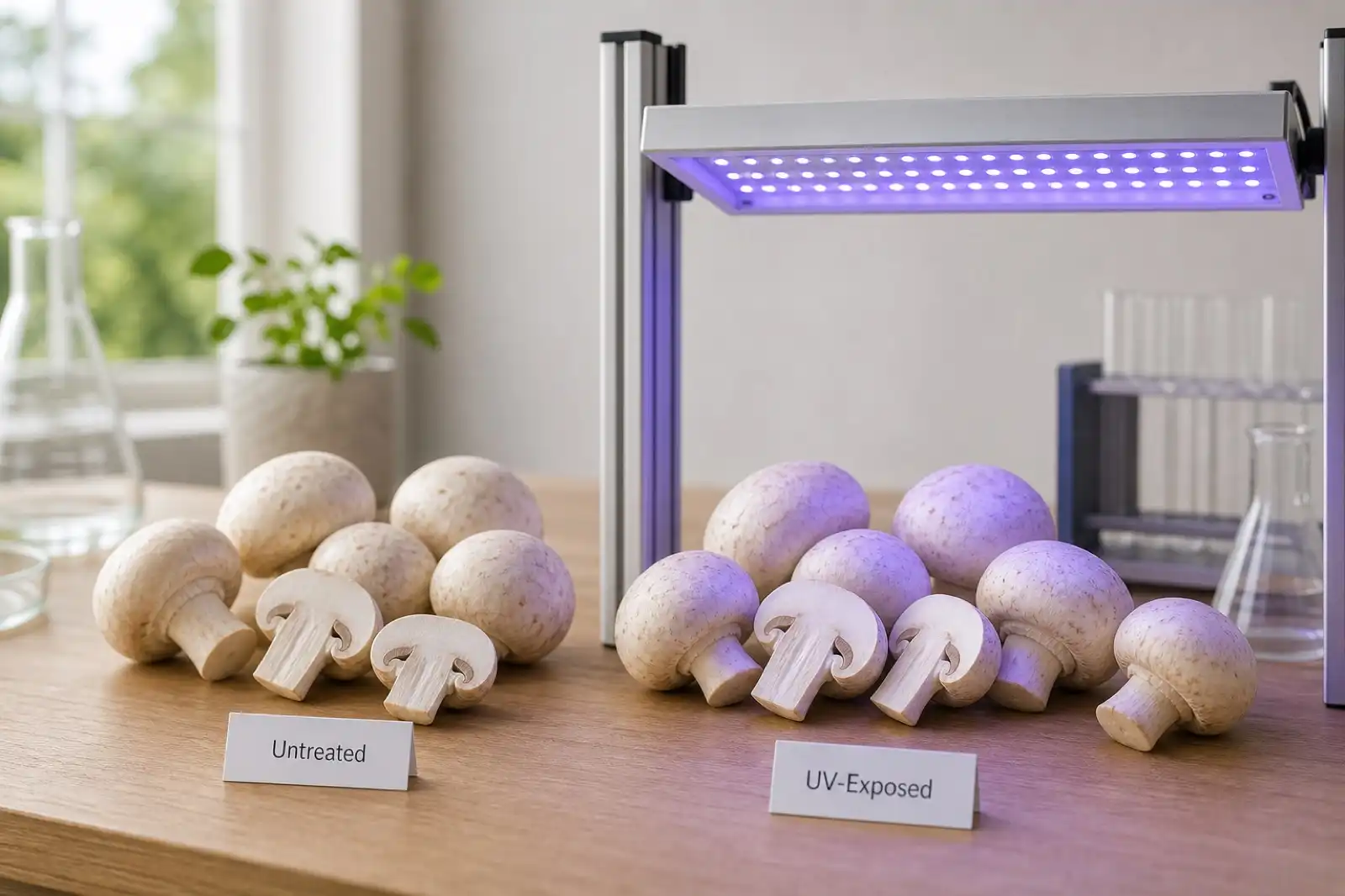
Vitamin D requires especially careful reading. Some mushrooms may have vitamin D values affected by ultraviolet exposure, while others may not. The mushrooms and vitamin D guide explains why the species, treatment, and actual label matter. The NIH fact sheet is useful for the broader role and intake context of vitamin D, but it does not convert any mushroom product into a replacement for clinical advice or prescribed treatment.
Are mushrooms fiber or protein?
Both terms can describe parts of a mushroom food, but they answer different nutrition questions. Culinary mushrooms contain some protein and can contribute dietary fiber, yet neither statement says that mushrooms are nutritionally interchangeable with a high-protein food or a high-fiber staple. The useful answer begins with the exact species, preparation state, and serving size on the package or in a comparable USDA entry.
For example, fresh mushrooms contain substantial water. A label may therefore show modest grams of protein and fiber per serving even though the same food looks more concentrated after drying or cooking. Do not compare a spoonful of powder with a plate of fresh mushrooms by weight and call one “better”: first compare the stated serving, total calories, protein, total dietary fiber, sodium, and any added ingredients.
Use mushrooms for their flavor and variety alongside foods that suit the meal’s actual goal. If protein is the priority, assess the full meal’s protein sources; if fiber is the priority, assess total dietary fiber across vegetables, legumes, whole grains, fruit, and the mushroom portion. The oyster mushroom nutrition guide applies this comparison to serving form, cooking yield, protein, and fiber, while the mushrooms and gut health guide explains why a fiber-containing food does not by itself establish a digestive-health outcome.
This distinction also prevents a category error in product marketing. A capsule, beverage blend, or mycelium-on-grain powder may use the word “mushroom,” but its protein and fiber can come from a different material or from added ingredients. Read the full label and use the supplement evidence guide when the product is not an ordinary culinary food.
Compare fiber claims by food form and serving basis
“Fiber in mushrooms” is not a single fixed number. Before comparing two products, first identify whether each is fresh, cooked, dried, powdered, or combined with other ingredients. A dried powder has much less water per spoonful than fresh mushrooms, so a weight-for-weight comparison can look dramatic while describing very different portions of food. A prepared soup, snack, or supplement blend may also obtain much of its fiber from grains, legumes, added fibers, or other ingredients rather than from mushrooms alone.
Use the Nutrition Facts or Supplement Facts panel for the item in hand, including its stated serving size, and use a FoodData Central entry only as broader context for a comparable food and preparation state. Compare total dietary fiber on like-for-like portions, then consider the meal around it. A food can contribute fiber without making a disease-prevention or treatment claim true. This distinction is especially important where a product label shifts from a nutrient statement to promises about digestion, blood sugar, weight, or immunity. The evidence boundaries differ: the mushrooms and blood sugar guide evaluates meal-level glucose claims, while the mushrooms and weight management guide evaluates energy-density and substitution claims.
For ordinary meals, adding an identified culinary mushroom can be one way to vary texture and ingredients alongside other fiber-containing foods. For a powder or extract, the relevant questions change: what exactly is the material, how much is served, what else is in the product, and what evidence applies to that exact preparation? The mushroom supplements guide explains why those products should not be treated as interchangeable with a grocery-store mushroom.
A five-column comparison that prevents misleading numbers
When two sources appear to disagree, place their values in a table with five columns: exact food name, raw/cooked/dried form, stated serving weight, nutrient amount in that serving, and data source or label date. Convert values only after confirming that units and preparation states match. A 100-gram database row is useful for standardized comparison, while the package serving is usually more useful for planning a meal; neither should be silently substituted for the other.
Keep calories, protein, total dietary fiber, sodium, and added ingredients visible together. This avoids declaring a product “higher in fiber” merely because it has been dried, or “higher in protein” because its serving is much larger. For a mixed soup, snack, burger, or powder, separate the mushroom contribution from grains, legumes, isolated fibers, oils, and seasoning whenever the label provides enough information. If it does not, report the uncertainty rather than reverse-engineering a precise mushroom value.
Preparation changes the practical comparison
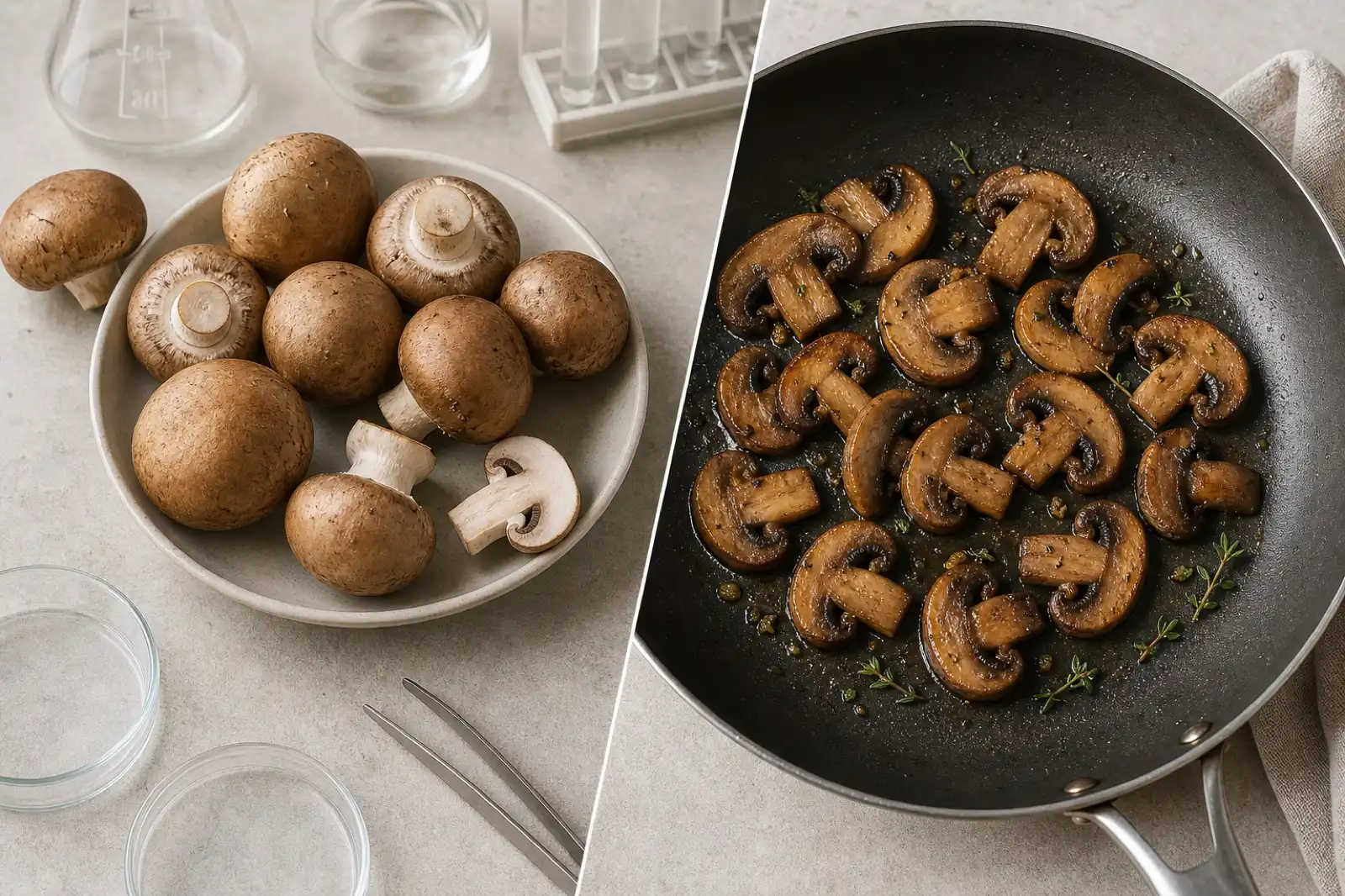
Cooking can change texture, digestibility, water content, and the way a serving fits into a meal. It can also change the apparent concentration of nutrients when values are compared by weight. That is one reason a raw database entry should not be casually compared with a cooked restaurant portion. Our cooked vs. raw mushrooms guide covers preparation questions without promising that one method cures or prevents disease.
Storage and handling matter too. Buy identified culinary mushrooms from a reputable seller, refrigerate them as appropriate for the product, and discard food that is visibly spoiled or has an off odor. Nutrition is not a reason to eat a wild mushroom that has not been reliably identified. A food-composition entry describes an analyzed food; it is not an identification key and cannot establish that a foraged specimen is edible.
Food, UV-treated foods, and supplements are different materials
The word “mushroom” can appear on a grocery label, a powder, a beverage, a capsule, or an extract. These products may differ in species, fungal part, processing, dose, and other ingredients. A study of a standardized extract therefore cannot be assumed to apply to a sautéed culinary mushroom, and a food database entry cannot validate a supplement’s marketing claim.
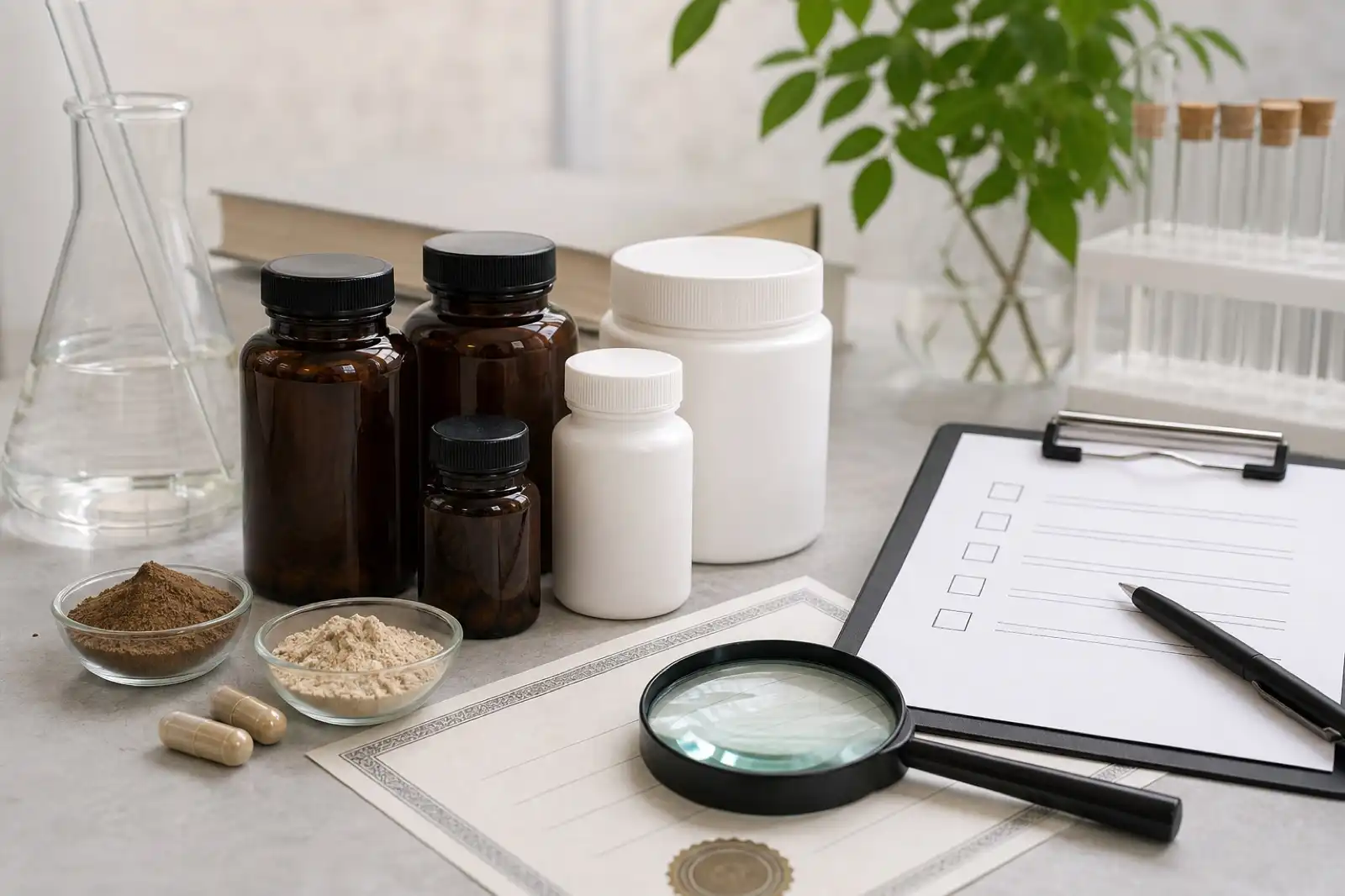
For a supplement, start with the Supplement Facts panel and the full ingredient list. Look for the stated species, the material used (for example, fruiting body, mycelium, or an extract), the amount per serving, and any other active ingredients. If a company makes a specific nutrient or health claim, look for the exact product, population, dose, comparison, and measured outcome—not just a study on a different species or laboratory preparation. The mushroom supplements guide offers a more detailed evidence-and-label checklist.
The FDA explains that dietary supplements are regulated differently from conventional foods and approved drugs. Market availability is not the same as premarket proof of effectiveness. A vague “immune,” “focus,” or “wellness” promise should not be read as a diagnosis, treatment plan, or assurance that the product is appropriate alongside medicines.
A practical shopping and meal workflow
Use this short sequence when nutrition language is influencing a purchase:
- Identify the material: fresh culinary mushroom, preserved food, UV-treated food, dried ingredient, powder, or extract.
- Check the named species and preparation state, then compare like with like rather than generic marketing categories.
- Use the package label for the product in hand and a reputable food database for broader food context.
- Treat claims about symptoms, disease risk, immunity, blood sugar, cholesterol, or cancer as separate evidence questions.
- If the product is concentrated or you take medicines, ask a pharmacist or clinician about the exact label before using it regularly.
This workflow is deliberately less exciting than a headline claim, but it prevents category errors. It also leaves room for mushrooms to be enjoyed for flavor and variety without requiring them to act like a medicine.
Questions a nutrition table cannot answer
Food data cannot tell you whether a particular product is appropriate for an allergy, a medically prescribed diet, a medication regimen, or a symptom. It also cannot reveal whether a wild specimen is safe: only use clearly identified culinary mushrooms from a reliable food source. If a label claims that the food can treat a disease, replace a medicine, or produce a guaranteed body change, that claim needs evidence beyond a nutrient listing.
For an ordinary meal, the practical test is simpler. Use mushrooms as one ingredient in a balanced pattern, vary foods across the week, and choose a preparation that is safe and enjoyable for the people eating it. For a concentrated product or a health concern, move from general nutrition information to product-specific professional advice.
What the evidence can show
Food-composition databases describe nutrients in analyzed samples. Laboratory studies can explore mechanisms. Animal studies can test biological hypotheses. Observational research can identify associations, while randomized human trials can estimate effects under controlled conditions. Results cannot be moved from one level to another without new evidence.
Product identity matters. A study of a standardized extract does not establish the effect of culinary servings, tea, powder, mycelium grown on grain, or a different species sold under the same common name. Extraction ratios and marketing terms are not substitutes for measured constituents and independent testing.
Evidence limitations
Small samples, short follow-up, multiple outcomes, selective reporting, inadequate blinding, and industry sponsorship can all change confidence. A statistically significant result may still be too small, uncertain, or product-specific to guide care. Replication and clinically meaningful outcomes matter more than an isolated positive finding.
Claims about immunity, cognition, cancer, blood sugar, cholesterol, or inflammation require especially careful interpretation. Laboratory activity does not prove prevention or treatment in people. “Supports” language can still overstate evidence when the exact product and outcome have not been tested.
Safety and interactions
Foods and supplements can cause allergy, intolerance, contamination, or interactions. Concentrated products may not share the safety profile of normal culinary portions. People who are pregnant, breastfeeding, preparing for surgery, receiving cancer treatment, managing liver or kidney disease, or taking prescription medicines should discuss supplements with a qualified clinician.
The FDA regulates dietary supplements differently from conventional foods and drugs; consumers should not interpret market availability as proof of effectiveness. Check labels, lot numbers, independent identity and contaminant testing, recall notices, and adverse-event guidance. For symptoms suggesting a serious allergic reaction—such as trouble breathing, swelling of the face or throat, fainting, or rapidly worsening illness—seek urgent medical help rather than attempting to manage the reaction with food advice.
Apply composition data to a real serving
For food, buy identified culinary mushrooms from reputable suppliers, store them safely, and cook them appropriately. For supplements, bring the exact label to a clinician or pharmacist. Record the species, part, extraction, dose, other ingredients, and reason for use. Stop and seek care for severe allergic symptoms or other urgent reactions.
Explore related health evidence guides and species context in the mushroom encyclopedia.
Related evidence reviews
Compound claims need their own evidence audit. The mushroom-antioxidants guide explains why ergothioneine or assay values are not clinical outcomes, while the maitake benefits review separates an ordinary food serving from concentrated maitake extracts.
References
Source quality notes
MushroomScope cites sources that match the page scope, such as taxonomic databases, extension guidance, food-safety agencies, food-composition databases, and peer-reviewed or institutional health references. Sources support context and uncertainty; they do not turn an online page into specimen identification, medical advice, or a tested recipe record.
Frequently asked questions
Do mushroom nutrient values prove a medical benefit?
No. Nutrient data, traditional use, laboratory experiments, observational studies, and clinical trials answer different questions and cannot be treated as equivalent.
Can a mushroom supplement replace treatment?
No. Do not delay diagnosis or replace prescribed care. Discuss supplement use with a qualified clinician who knows your conditions and medicines.
How can product claims be evaluated?
Check the scientific species, plant or fungal part, preparation, dose, independent identity and contaminant testing, study population, and measured outcome.
Are culinary mushrooms and mushroom supplements nutritionally interchangeable?
No. A whole food, dried powder, mycelium-on-grain product, and concentrated extract are different materials. Their labels, serving sizes, constituents, and evidence should be assessed separately.
Why can vitamin D information differ between mushroom packages?
Vitamin D can vary with species and ultraviolet treatment. Use the nutrition label or a product-specific statement for the food in hand; a general food-database entry is not a certificate for every package.
Related guides
health
Cooked vs. Raw Mushrooms: Nutrition and Safety
Cooking changes water content, texture, digestibility, and measured nutrient concentration; it also supports safer produce handling.
health
Vitamin D in Mushrooms: UV-Treated Products, Labels, and Evidence
Vitamin D in mushrooms is usually vitamin D2 from ultraviolet treatment. Learn to read labels and keep food choices separate from medical care.
health
Mushroom Supplements: Labels, Testing, and Safety
Learn how to check mushroom supplement identity, fungal part, extraction, dose, lot testing, claims, interactions, and regulatory limits.
Continue exploring
Browse more practical guides in Health or visit the mushroom encyclopedia.