Health
Maitake Mushroom Benefits: Food, Extracts, and Evidence
Separate maitake food nutrition from extract research, with practical guidance on study quality, product matching, interactions, and claim limits.
By MushroomScope Editorial Team · · Editorially reviewed
Evidence context
Food, extracts, and supplements differ
Health conclusions depend on species, fungal part, preparation, dose, population, and measured outcome.
Open the nutrition evidence hub →Medical limit
Educational, not medical advice
Do not delay diagnosis or replace prescribed care with mushroom foods or supplements.
Read the editorial policy →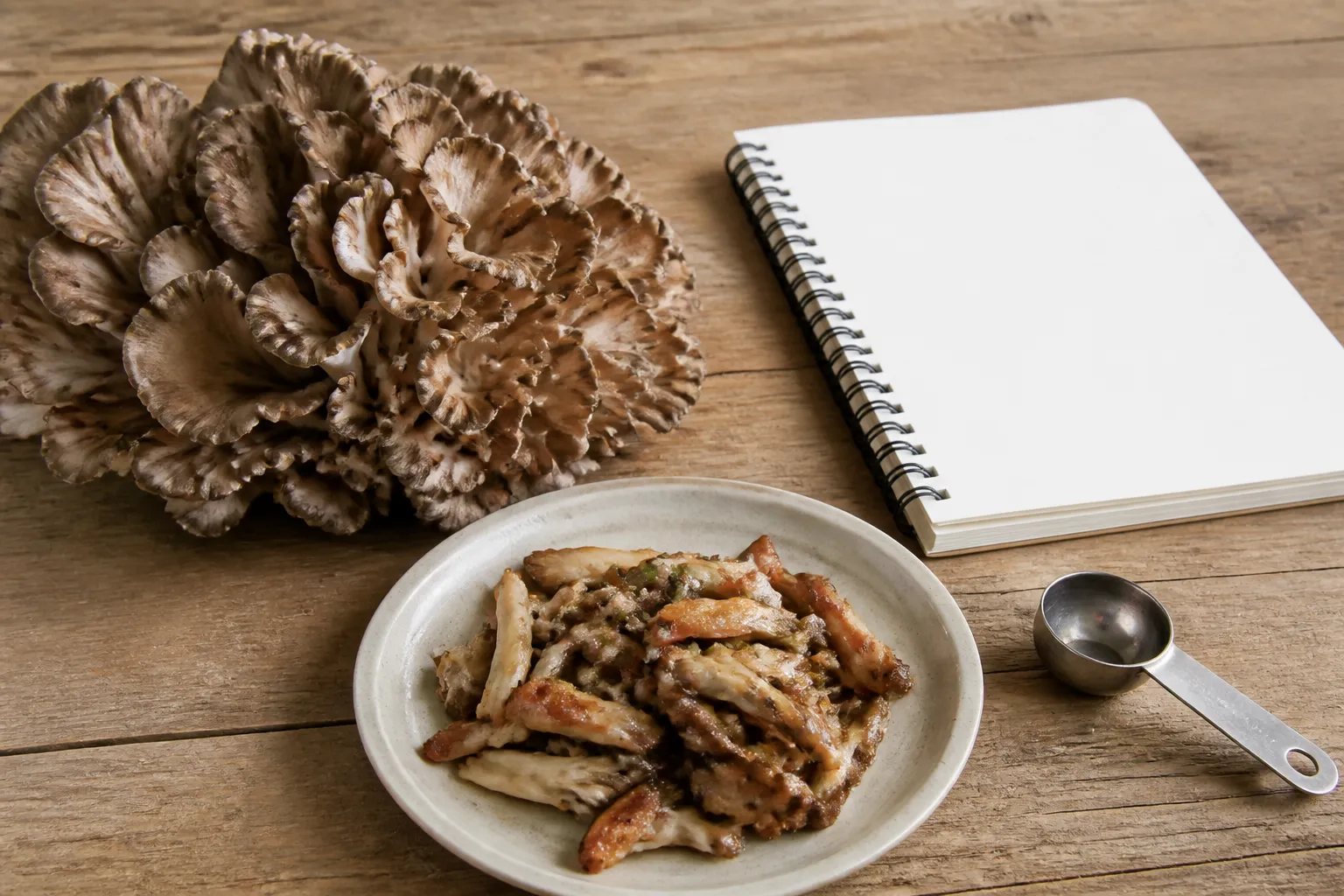
Review status: Editorial review only. No named physician, dietitian, pharmacist, or other clinical expert independently reviewed this page.
Bottom line: maitake is food, not a proven therapy
Maitake, Grifola frondosa, is both a cultivated food and an ingredient in powders and extracts. Those uses cannot be collapsed into one evidence claim. A cooked portion supplies food components in a water-rich matrix; an extract may concentrate selected fractions and deliver a very different exposure. Maitake can be part of a varied diet, but current human evidence does not establish it as a treatment for cancer, diabetes, immune disorders, or cognitive decline.
Define the maitake preparation before judging a claim
Identity starts with the scientific name, fungal part, strain when reported, and manufacturing process. Fruiting-body powder, cultured mycelium on grain, hot-water extract, and branded beta-glucan fractions are not interchangeable. A study of one defined preparation cannot validate every bottle labeled maitake. The species context is covered in the maitake species guide; that identification information is not itself clinical evidence.
What a serving of maitake contributes
Food composition databases describe sampled products rather than a guaranteed value for every cluster. Fresh maitake is mostly water and contributes fiber, some protein, B vitamins, minerals, and fungal cell-wall carbohydrates within an ordinary serving. Cooking method, water loss, added oil, and serving mass change the numbers that appear on a plate. These nutritional facts support treating maitake as food, not converting individual nutrients into disease-prevention promises.
The comparison that matters
Build an exposure record before applying a study: authenticated Grifola frondosa, fruiting body or cultured mycelium, carrier material, extraction solvent and ratio, beta-glucan method, daily amount, and treatment duration. A sautéed cluster, whole powder, and branded fraction have different matrices and doses. If a label omits fungal part or extract specifications, the paper-to-product match cannot be established even when both use the word maitake.
Human studies remain product-specific
An older systematic review found a lack of systematic study of maitake safety and effectiveness in humans and called for randomized trials. Newer individual studies may answer narrower questions, but one positive trial does not erase concerns about sample size, multiple outcomes, short follow-up, commercial involvement, or replication. Readers should examine the registered outcome and full methods instead of relying on the abstract conclusion.
Immune findings need clinical context
Laboratory experiments often measure cytokines, immune-cell activity, or responses in animals. Such work can identify mechanisms worth testing, but an immune marker is not automatically a patient benefit. More activity is not universally desirable in allergy, autoimmune disease, transplantation, or treatment that deliberately changes immune function. A clinically useful trial must connect a defined exposure to outcomes people can feel, function with, or survive.
Blood-glucose claims exceed the evidence
Maitake is frequently marketed around blood sugar. Cell and animal results cannot determine a human dose, and small human studies of extracts do not show that a culinary portion treats diabetes. Anyone using insulin or glucose-lowering medicine should not add a concentrated product and adjust medication independently. Changes in eating pattern, weight, illness, and treatment can all alter glucose, making unmonitored attribution unsafe.
Questions to ask before accepting the claim
- For maitake, was the outcome measured in people, animals, cells, or a chemical assay?
- Does the tested species, fungal part, preparation, and dose match the food or product?
- Was the outcome prespecified, clinically meaningful, and measured long enough?
- Were adverse events, withdrawals, funding, and conflicts reported?
- Has an independent group replicated the result?
How to match a product to a paper
When a seller cites a paper, compare species, strain, fruiting body or mycelium, extraction solvent, marker compounds, dose, schedule, duration, population, comparator, and outcome. Then ask whether the finished retail lot was studied. If these fields do not match, the citation is background biology rather than proof for that product. The supplement label guide explains this equivalence problem in detail.
Safety, allergy, and interaction questions
Culinary maitake may cause allergy or digestive symptoms in susceptible people. Concentrated products add uncertainty about dose, contaminants, undeclared ingredients, and interactions. Pregnancy, breastfeeding, childhood, surgery, liver or kidney disease, cancer care, immune conditions, and prescription treatment are reasons for individualized advice before supplementation. Severe symptoms, breathing difficulty, facial swelling, fainting, or persistent vomiting require prompt medical attention.
A practical evidence checklist
A useful decision begins with a measurable goal and the best established way to address it. Record the exact product, lot, ingredients, daily exposure, start date, medicines, and baseline symptoms. Decide what would count as no benefit and which symptoms mean stop. Do not change several products simultaneously or replace prescribed care. This process reduces ambiguity; it does not make an unproven intervention effective.
A reader’s evidence worksheet
Food intake and supplement exposure are different decisions
A shopper choosing fresh maitake is making an ordinary food decision. The useful questions concern freshness, storage, cooking, allergy, the complete recipe, and whether the food supports an adequate diet. A person considering capsules for a disease-related goal is making a different decision involving concentrated exposure, uncertain efficacy, manufacturing quality, interactions, and the possibility of delaying established care. Putting both under the word benefits hides the change in risk. This article therefore does not use culinary familiarity to reassure readers about extracts.
Serving size also prevents exaggerated comparisons. A dry-weight laboratory value may be reported for material from which most water has been removed, whereas a plated serving is fresh or cooked and includes substantial water. Extraction ratios introduce another denominator. Neither a large dry-weight number nor a ratio such as 10:1 states how much of a relevant compound reaches human tissues. The underlying input, extraction yield, marker method, and actual serving are needed before the number becomes interpretable.
The 2026 randomized bread study in healthy older Japanese adults is a useful example of narrow inference: it tested two specified maitake strains incorporated as 50 grams of mushroom in bread, in a defined population and time frame, with cognitive outcomes. It should be read with its methods, funding affiliations, multiplicity, effect sizes, and need for replication visible. It does not establish that an unidentified capsule treats dementia, that every maitake strain has the same effect, or that people with cognitive symptoms should self-treat rather than seek assessment.
For nutrition, evaluate maitake beside foods actually eaten in its place. Adding it to a vegetable-and-bean dish may increase variety and texture; frying it heavily or covering it with salty sauce changes the nutritional result. Vitamin D content can vary with light exposure and product handling, so a generic table cannot guarantee the amount in a package. The sound conclusion is modest: maitake is a versatile edible mushroom with food value and interesting research, while clinical promises remain preparation- and outcome-specific.
Maitake claim audit: write the claim in one sentence without words such as supports, boosts, detoxifies, or wellness. Name the exact outcome and time frame. Then record the study design, participant number, comparison group, attrition, preparation, dose, funding, and absolute result. Separate statistical significance from clinical importance. If the paper studies a concentrated ingredient while the claim concerns cooked food, mark that as an indirect comparison. If it studies a surrogate marker while advertising promises disease prevention, mark that as an outcome mismatch. Uncertainty should remain visible rather than being converted into a recommendation.
Maitake product matching: photograph the full label and retain its lot number. Compare every ingredient with the paper rather than matching only the mushroom name. Ask what the control received and whether participants could guess their assignment. Look for preregistration and whether the reported primary outcome matches the registered one. A single study can inform a decision, but reliability grows through consistent results, appropriate methods, clinically meaningful endpoints, and independent replication.
Frequently asked questions
Publication boundary for maitake claims
A publication-ready summary must say what maitake research has not shown. It has not established a standard preventive dose, a reliable treatment dose, or interchangeability among foods and extracts. It has not shown that immune-marker changes translate consistently into fewer infections, better cancer outcomes, or improved autoimmune disease. It has not established that self-directed supplementation is safer than addressing the underlying symptom or treatment question with a qualified professional.
The same caution applies to mechanistic terms such as D-fraction, proteoglucan, polysaccharide, and beta-glucan. These names may describe broad classes, branded preparations, or incompletely characterized mixtures depending on the paper. A chemical label is not a clinical indication. Authors should report the actual preparation and assay, and consumer pages should not combine favorable results from chemically different materials into one implied treatment effect.
Maitake remains worthwhile to study. Future trials can improve the picture by authenticating material, publishing composition, preregistering outcomes, recruiting adequate samples, using credible controls, tracking adverse events, and replicating results independently. Until then, food enjoyment and nutritional contribution are the firmest context; therapeutic language should remain explicitly preliminary.
Is maitake proven to treat cancer?
No. Human evidence is insufficient for a treatment claim, and maitake must not replace oncology care.
Does cooked maitake equal an extract?
No. Food, powder, mycelium, and extracts differ in composition and dose.
Can maitake lower blood sugar?
Current evidence does not support using maitake to treat diabetes or changing medication without clinical supervision.
What should a maitake label identify?
Look for species, fungal part, extract method, amount, other ingredients, lot information, and meaningful testing.
Who should seek advice first?
People using medicines, preparing for surgery, pregnant or breastfeeding, or managing cancer, immune, liver, kidney, or glucose conditions should ask a qualified clinician.
References
Source quality notes
MushroomScope cites sources that match the page scope, such as taxonomic databases, extension guidance, food-safety agencies, food-composition databases, and peer-reviewed or institutional health references. Sources support context and uncertainty; they do not turn an online page into specimen identification, medical advice, or a tested recipe record.
Frequently asked questions
Is maitake proven to treat cancer?
No. Human evidence is insufficient for a treatment claim, and maitake must not replace oncology care.
Does cooked maitake equal an extract?
No. Food, powder, mycelium, and extracts differ in composition and dose.
Can maitake lower blood sugar?
Current evidence does not support using maitake to treat diabetes or changing medication without clinical supervision.
What should a maitake label identify?
Look for species, fungal part, extract method, amount, other ingredients, lot information, and meaningful testing.
Who should seek advice first?
People using medicines, preparing for surgery, pregnant or breastfeeding, or managing cancer, immune, liver, kidney, or glucose conditions should ask a qualified clinician.
Related guides
mushrooms
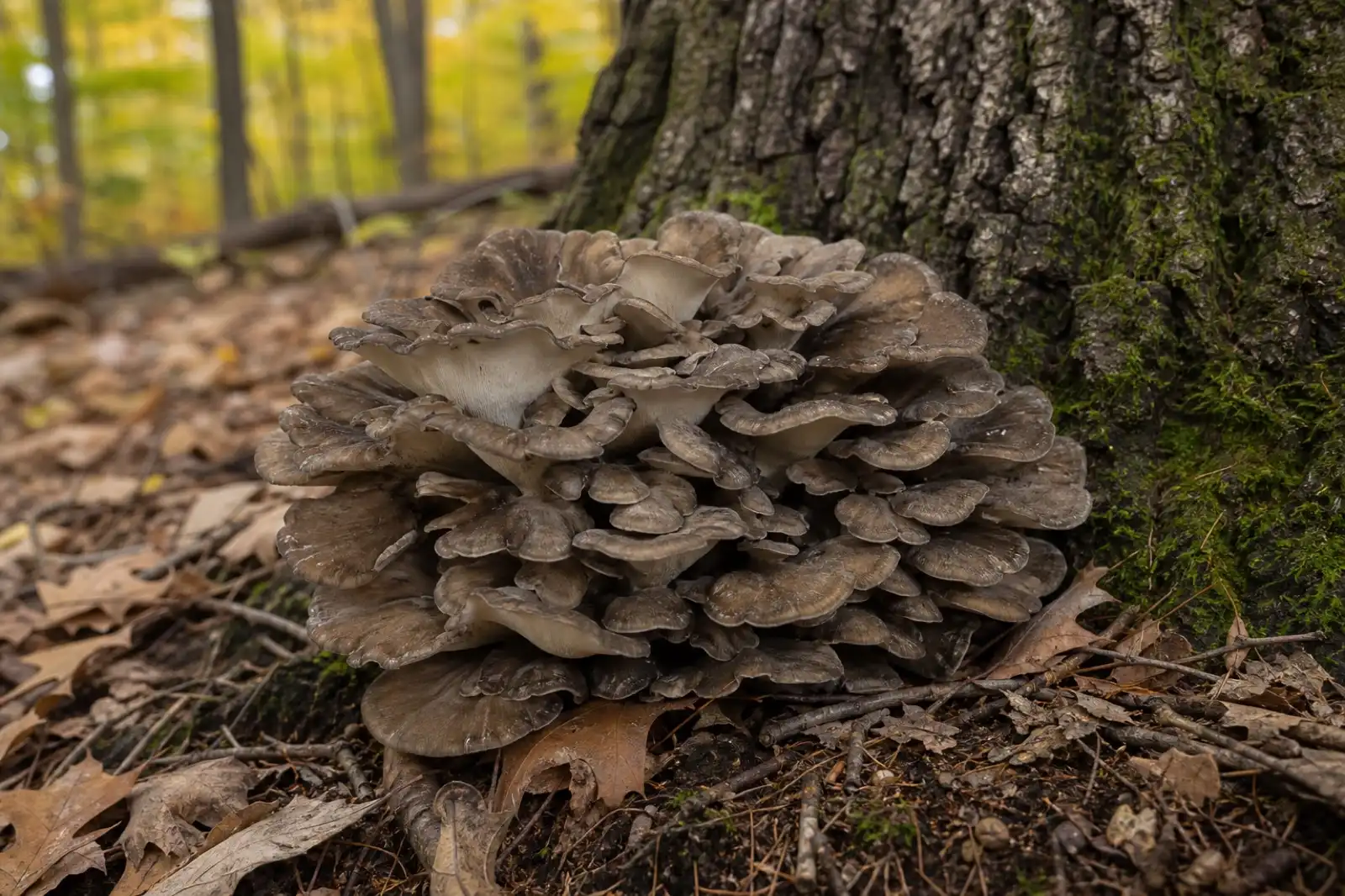
Grifola frondosa: Maitake or Hen-of-the-Woods Guide
Explore Grifola frondosa identification, oak-associated habitat, cultivation, nutrition, lookalikes, supplement evidence, cooking safety, and FAQs.

health
Mushroom Supplements: Labels, Testing, and Safety
Learn how to check mushroom supplement identity, fungal part, extraction, dose, lot testing, claims, interactions, and regulatory limits.
health
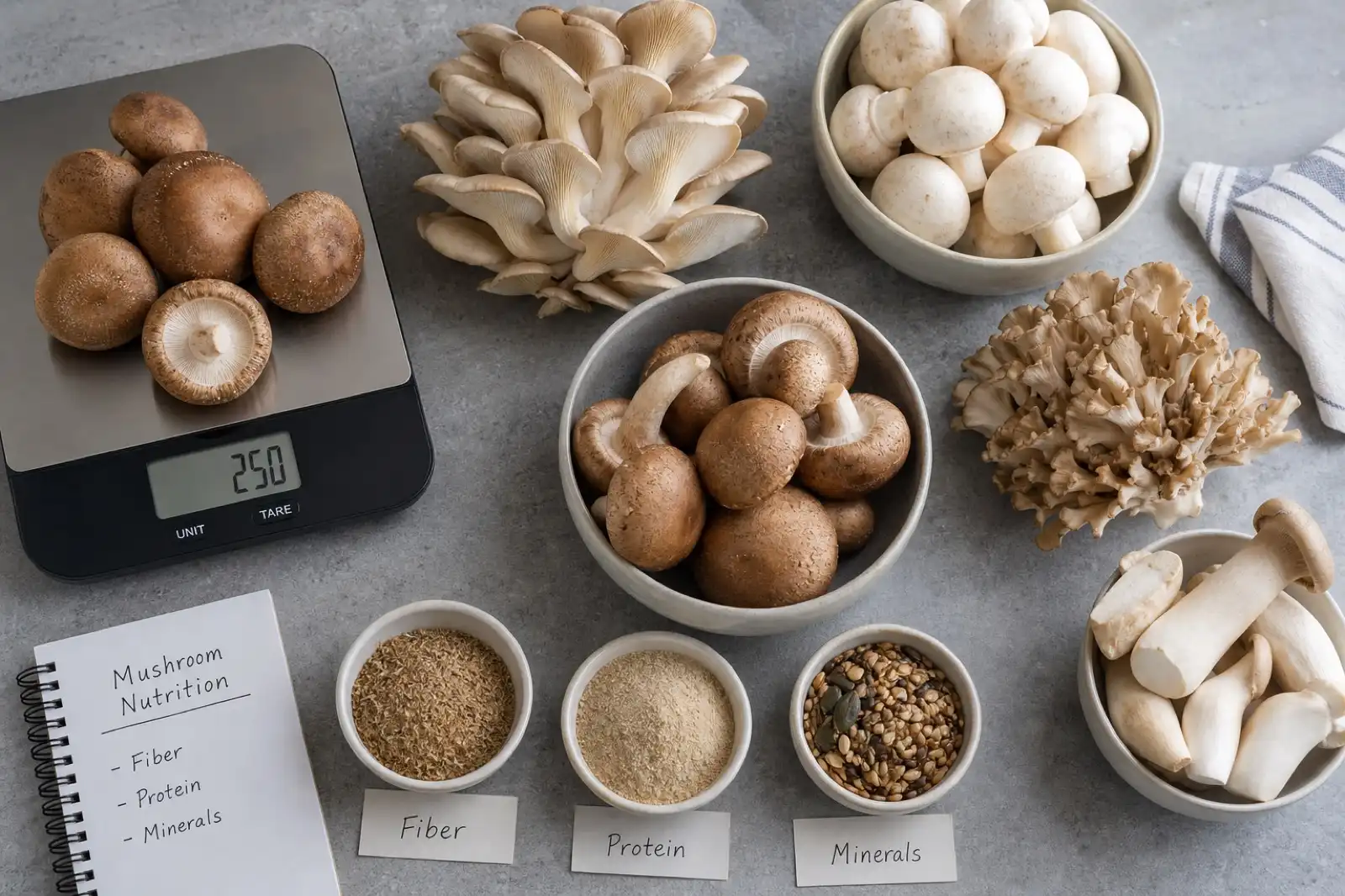
Mushroom Nutrition: Fiber, Protein, Calories, and Vitamins
Are mushrooms a source of fiber or protein? Compare calories, fiber, protein, vitamins, food forms, serving sizes, and preparation without overstating benefits.
Continue exploring
Browse more practical guides in Health or visit the mushroom encyclopedia.