Mushroom Encyclopedia
Grifola frondosa: Maitake or Hen-of-the-Woods Guide
Explore Grifola frondosa identification, oak-associated habitat, cultivation, nutrition, lookalikes, supplement evidence, cooking safety, and FAQs.
By MushroomScope Editorial Team · · Updated
Species context
Treat profiles as reference material
Species profiles summarize documented traits, taxonomy, and lookalikes, but natural variation can be substantial.
Use the safety checklist →Decision limit
A profile cannot authenticate a specimen
Do not eat a wild mushroom from an online match, single feature, or generated image.
Read the safety disclaimer →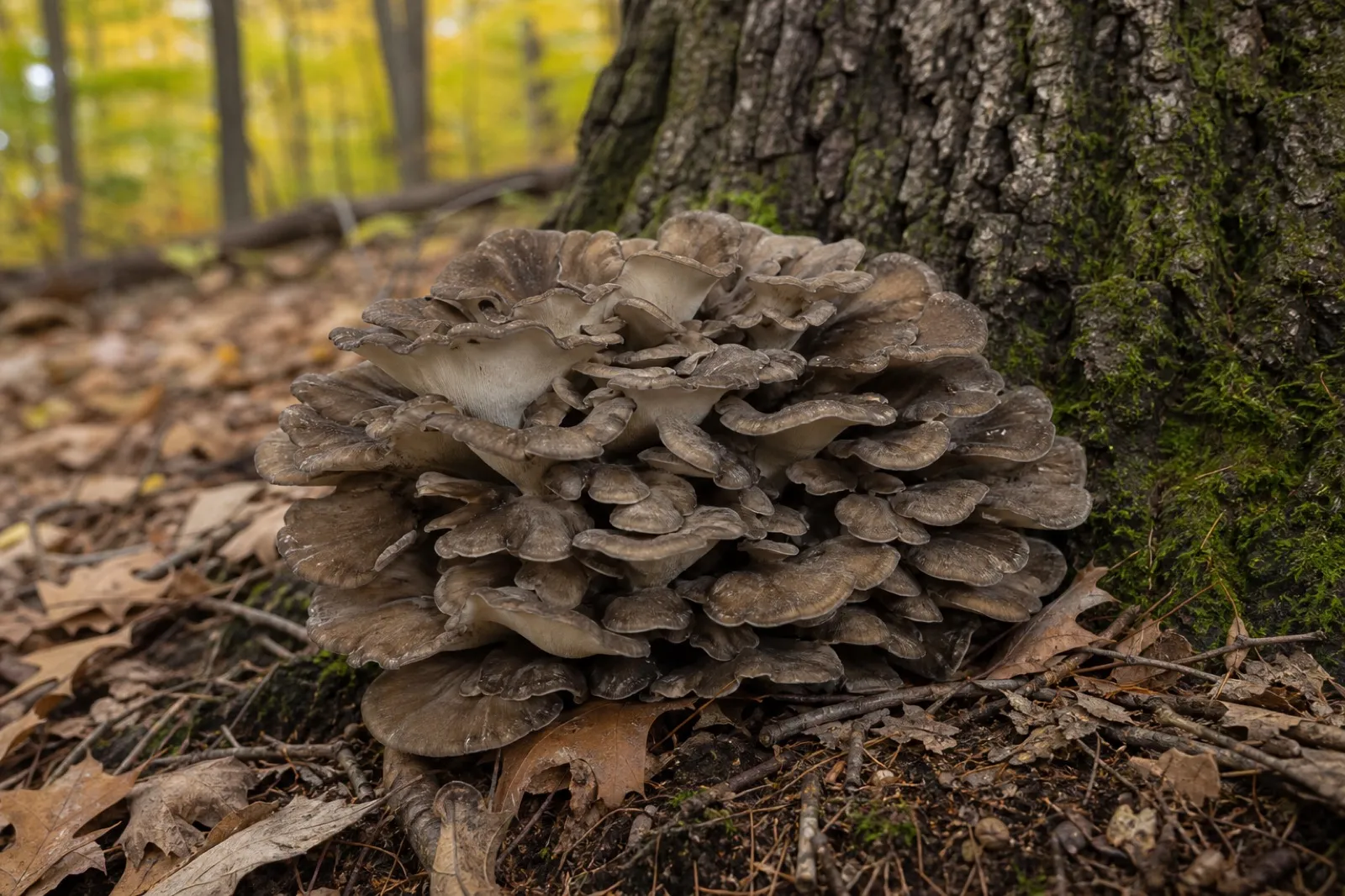
Quick facts
- Scientific name
- Grifola frondosa
- Common names
- maitake, hen of the woods, ram's head
- Taxonomy
- Grifola · Meripilaceae
- Edibility context
- Edible: Young, correctly identified fruit bodies are valued as food and should be cooked.
- Spore print
- White.
- Toxicity context
- None Known: No characteristic toxin syndrome is recognized for cultivated maitake, but wild misidentification, allergy, intolerance, and supplement interactions are concerns.
- Season
- August, September, October, November
- Growing difficulty
- Difficult
- Regions
- eastern North America, Europe, Asia, cultivated worldwide
Safety limit: These labels summarize documented context; they never authenticate a wild specimen. Cooking does not make a poisonous species safe.
Introduction
Grifola frondosa forms a many-capped rosette that resembles the feathers of a sitting hen, hence “hen of the woods.” The Japanese name maitake is widely used in food and supplement markets. It is a polypore: the fertile undersides have tiny pores rather than gills. That feature, together with the branching base and hardwood association, is central to identification.
This species account follows the branching rosette from host root to pore surface. “Maitake” in a grocery listing normally points to cultivated G. frondosa, while “hen of the woods” in a field report still needs a complete specimen and regional comparison. The page therefore separates three decisions that a common name tends to blur: documenting a wild polypore, handling a verified food crop, and evaluating claims about a concentrated product.
A useful maitake record begins at the center of the rosette. Photograph the point where the many whitish branches converge, then turn one intact frond far enough to show whether its underside has pores rather than gills. For a wild observation, record the tree genus, distance from the trunk, emergence from exposed wood or soil over roots, and whether the cluster recurs in the same position. For a cultivated package, retain the producer, lot, harvest or pack date, and the scientific name printed on the label. Do not taste an unidentified rosette.
Identification
A fruit body is composed of dozens of gray to brown fan-shaped caps attached to branching white tissue. The underside is pale and porous. Young cap edges are tender; the central base can remain tough. Size can be impressive, but size is not diagnostic. Record bruising or blackening, pore size, odor, tree association, and cross-section because other root-associated polypores form comparable rosettes.
Macroscopic characters
- Cap or upper surface: Numerous gray-brown, fan-shaped caps overlap in a large rosette.
- Fertile surface: A white to cream pore surface, not gills, extends beneath the caps.
- Stem or attachment: Many branches arise from a thick whitish central base.
- Flesh: White, tender at cap edges when young, increasingly fibrous toward the base and with age.
- Spore print: White.
Document three scales: the diameter of the complete cluster, the width of representative individual caps, and the depth of the branching base. Young cap margins may hide the pore layer; aged caps can darken after frost, dry at the edge, or acquire insect damage. Photograph upper and lower surfaces in the same natural light, mark one clean area for a timed bruising series, and collect a white spore deposit from a mature cap when legal. The deposit supports a maitake hypothesis but does not separate every pale-spored rosette polypore.
Similar species
- Meripilus sumstinei: Often blackens or stains with handling and can form large rosettes; pore and staining observations are important.
- Berkeley’s polypore: Forms fewer, much larger pale caps and has a different overall texture.
- Bondarzewia species: Rosette-forming polypores can overlap in shape; microscopy and expert review may be needed.
Build the comparison around processes rather than a single silhouette. Meripilus sumstinei earns a timed bruise test because handled tissue characteristically blackens; Berkeley’s polypore earns a cap-count and cap-width comparison because it generally forms fewer, broader, paler shelves. A Bondarzewia possibility shifts attention to regional keys and microscopic characters. An app cannot inspect the hidden base, repeat a reaction after an interval, or determine whether two rosette species share the same oak. Food use requires an in-person determination of the complete collection.
Compare the rosette over time, not by silhouette alone
For Meripilus sumstinei, document a clean area before handling, then record whether bruised pore or flesh tissue darkens over time. The Missouri Department of Conservation field guide specifically highlights blackening as a useful distinction. A negative stain on one old, dry, frozen, or damaged sample is not decisive, and the reaction should be documented rather than remembered. Photograph the same marked area immediately and again after a measured interval.
Berkeley’s polypore typically produces fewer, broader, paler fronds than the many smaller spoon-shaped caps expected in maitake, but overlap in age and weathering prevents a one-character decision. Compare the complete base, individual cap dimensions, pore surface, texture, host, season, staining, and spore deposit. Preserve an uncooked portion if a qualified identifier may need to examine it.
The cover on this page is an editorial illustration, not a specimen record. A real identification requires your own uncropped habitat, attachment, upper-surface, underside, section, and timed-reaction photographs. The mushroom photo checklist provides a repeatable sequence, and the identification safety checklist explains why an edible reputation never clears an unknown rosette for food.
Scientific Classification
| Rank | Name |
|---|---|
| Kingdom | Fungi |
| Phylum | Basidiomycota |
| Class | Agaricomycetes |
| Order | Polyporales |
| Family | Meripilaceae |
| Genus | Grifola |
| Species | Grifola frondosa |
Grifola frondosa belongs to Meripilaceae within Polyporales, a placement consistent with its pore-bearing fertile surface and wood-decay ecology. Taxonomy databases are used here to check the accepted lineage, not to retroactively relabel every older experiment. When interpreting a paper or product certificate, preserve the organism name, strain identifier, voucher or accession, and identification method actually reported; “maitake fraction” without those fields is weaker evidence than an authenticated G. frondosa culture.
Habitat
Wild maitake commonly fruits at the base of oak and other mature hardwoods, sometimes recurring near the same tree in later years because the mycelium persists in roots or buried wood. Fruiting does not prove that the visible tree is healthy. Avoid damaging roots and consider the risk of falling branches around decayed trees. Follow property, park, and harvest regulations.
Known range represented here: eastern North America, Europe, Asia, cultivated worldwide. Typical substrates: buried hardwood roots and stumps, sterilized hardwood-based cultivation blocks. Wild fruiting is most typical in late summer and autumn; commercial production is year-round.
Host position is unusually informative for this species. UMass describes oaks as the primary hosts and notes that rosettes may emerge at the trunk base or from roots several feet away. Record the oak species if defensible, trunk-to-rosette distance, root flare, previous stump removal, and other visible conks. In southern New England the extension record places peak abundance around mid-September to early October, but the broader late-summer-to-autumn window shifts with latitude, weather, and host condition.
Because a maitake rosette can mark decay inside roots or the lower trunk, observation should not become excavation. Leave roots and buttress tissue intact, keep clear of hanging limbs and vehicle or foot-traffic targets, and photograph the cluster from stable ground. If collection is permitted, retain the central attachment and representative caps while leaving enough material for documentation and spore release. A recurring rosette beside a high-use area belongs in a dated arboricultural record even when the tree crown looks normal.
Treat the host tree as part of the record
The Missouri Department of Conservation describes maitake as a large cluster of spoon-shaped gray-brown caps with a white pore surface, growing at the base of oak trees in autumn. UMass Extension adds an arboricultural boundary that food-oriented summaries often miss: G. frondosa is associated with root and butt rot, and its annual fruiting bodies can resemble those of the black-staining polypore. A rosette is therefore evidence about a fungus and possibly about hidden root or lower-trunk decay; it is not proof that a tree is safe to stand beneath.
Record the apparent host, distance from the trunk, whether the fungus emerges from exposed wood or soil over buried roots, and whether fruiting recurs in the same position. Do not cut roots or excavate around a mature tree to find an attachment. If a large rosette appears beside a tree near a building, path, playground, or parked vehicle, a qualified arborist—not a mushroom app—should assess structural risk.
This ecological role also separates the species guide from the site’s mushroom nutrition and evidence hub. This page addresses the organism, host association, morphology, lookalikes, cultivation, and food context; the hub explains how food, extracts, and human evidence require different interpretations. Keeping those intents separate prevents a forest observation from being treated as supplement evidence.
Growing Guide
Maitake production is more specialized than oyster cultivation. A proven culture colonizes a sterilized hardwood-based block, followed by a maturation phase and carefully managed initiation. Temperature, humidity, light, carbon dioxide, and surface moisture affect whether a compact primordium develops into a marketable rosette. Beginners obtain better and safer results from a commercial fruiting block than from cloning a wild specimen.
A safe cultivation workflow
- Choose verified material. Buy spawn or a fruiting block from a specialist supplier that identifies the culture and provides strain-specific parameters.
- Match the substrate. Use buried hardwood roots and stumps or sterilized hardwood-based cultivation blocks only through a proven recipe. Moisture and heat treatment must suit the method.
- Separate clean and dirty work. Clean tools and surfaces, wash hands, label every batch, and keep finished fruiting areas away from substrate preparation waste.
- Monitor colonization. Healthy appearance depends on the species and culture. Do not assume every white growth is the intended fungus; odor and unexpected pigments are warning signs.
- Initiate fruiting deliberately. Temperature, humidity, light, oxygen, and carbon dioxide interact. Follow the culture supplier rather than copying one universal number.
- Harvest and cool promptly. Use clean tools, avoid saturating fruit bodies, refrigerate culinary crops, and document yield and abnormalities.
For maitake, a cultivation record should identify culture, hardwood formulation, supplement fraction, bag or bottle geometry, sterilization cycle, inoculation lot, colonization endpoint, maturation interval, initiation treatment, and fruiting-room position. Change one major variable across replicated blocks rather than copying an oyster schedule. An unexpected fruit body, sour odor, wet breakdown, or colored growth is a batch-disposition problem: isolate it and follow the operation’s discard rule instead of using the intended species on the label as proof of identity.
Health Benefits
Maitake contains fungal polysaccharides and is studied for metabolic and immune-related outcomes. Much of the publicity concerns named fractions or extracts, not culinary servings. Small trials and preclinical experiments cannot support a statement that maitake treats diabetes, cancer, hypertension, or immune disease. People may still value it as a flavorful source of fiber and micronutrients within an overall dietary pattern.
For culinary maitake, the defensible nutrition starting point is a matched FoodData Central entry with serving basis and preparation state visible. Fresh and dried values cannot be interchanged because water changes the denominator; neither can a generic mushroom value be presented as a laboratory result for one maitake package. Report food composition as food composition—fiber, protein and micronutrients per stated mass—not as evidence that the meal changes a disease outcome.
Maitake research often narrows the material to a named polysaccharide fraction or extract. That design may test a mechanism, but it does not estimate the effect of roasted fronds, another manufacturer’s capsule, or a different strain. A human result must be read with its enrollment criteria, comparator, dose, duration, outcome definition, attrition, adverse events, and funding. Cell and animal findings remain preclinical even when the abstract uses immune or metabolic language.
A maitake supplement label should be traceable to G. frondosa, the part or culture material used, extraction solvent, amount per serving, other ingredients, lot, and independent identity and contaminant results. A ratio such as 10:1 is a manufacturing statement, not proof of clinical equivalence or benefit. The published mushroom supplements guide explains how to examine preparation-specific claims; this organism page does not convert taxonomy or beta-glucan presence into treatment advice.
Safety
Cook young, sound cultivated maitake. Tough or insect-damaged wild tissue is not improved by assuming it is medicinal. Anyone using glucose-lowering, blood-pressure, anticoagulant, or immune-modifying medication should discuss concentrated supplements with a clinician because evidence on interactions and dosing is incomplete. Wild rosette polypores require local expert confirmation, with special attention to staining reactions and the host.
For a verified cultivated cluster, trim the dense substrate-bearing base, separate the branching fans, inspect between folds for debris or spoilage, and cook the pieces promptly with clean utensils. Refrigeration, a breathable container, and separation from raw animal foods limit avoidable handling risk. Cooking improves the texture of the fibrous base and reduces ordinary microbial load; it does not authenticate a wild rosette or remove hazards acquired from a contaminated site.
Treat wild-collection uncertainty and supplement uncertainty as separate safety paths. After illness from an unidentified rosette, preserve uncooked material, photographs, location and meal timing, and contact a poison center or emergency service promptly; breathing difficulty, confusion, fainting or severe persistent symptoms need urgent care. Before using a concentrated maitake product with glucose-lowering, blood-pressure, anticoagulant or immune-modifying treatment, ask a clinician or pharmacist to review the exact label rather than relying on a species reputation.
Record one rosette as a measurable event
A maitake observation becomes more useful when the rosette is treated as one time-stamped biological event rather than a generic “large cluster.” Record the tree species if it can be established independently, whether the fruit body arises at the trunk flare or from a buried root, the straight-line distance to the trunk, and whether other rosettes occur around the same root zone. Photograph the whole cluster with a scale before handling it, then record the width of representative spoon-shaped caps, pore surface, branching core, odor, bruising response, and any insect or decay damage. A return visit can show whether the same rosette expanded, darkened, collapsed, or was replaced by a separate emergence.
This record separates three claims that are often blurred together. The fruit body can support a morphological identification; the tree and root position support an ecological interpretation; neither alone proves the condition or structural safety of the tree. A repeated fruiting location may justify assessment by a qualified local arborist, especially where a mature tree could strike people or property, but a web photograph cannot quantify root loss. For identification methodology, use the mushroom photo checklist and retain uncropped habitat images alongside close views.
Keep the health-evidence intent separate
This page documents the organism, host and morphology. The separate maitake benefits evidence review evaluates preparation-specific studies and label matching without turning a species observation into a treatment claim.
References
- National Center for Biotechnology Information. NCBI Taxonomy Browser. Used for a current lineage check; NCBI notes that nomenclature should also be assessed against specialist literature.
- U.S. Department of Agriculture. FoodData Central. Food-composition reference; values vary by sample and preparation.
- Penn State Extension. Mushroom Food Safety. Production hygiene and preventive-control context.
- Schoch CL, et al. NCBI Taxonomy: a comprehensive update on curation, resources and tools. Database (Oxford). 2020.
- U.S. Food and Drug Administration. Selecting and Serving Produce Safely. General produce handling guidance.
- Missouri Department of Conservation. Hen of the Woods (Maitake). Morphology, oak-base habitat, season, spore print, and black-staining-polypore comparison.
- UMass Extension. Root and Butt Rot Caused by Grifola frondosa. Host-decay context and arboricultural safety boundary.
Last editorial review: September 8, 2026. Substantive revision replaced generic species templates with a rosette-scale documentation protocol, process-based lookalike separation, oak-root position records, maitake-specific cultivation variables, preparation-matched evidence rules, and separate wild-food and supplement safety paths. Scientific names and public-health recommendations should be rechecked at every substantive update.
Source quality notes
MushroomScope cites sources that match the page scope, such as taxonomic databases, extension guidance, food-safety agencies, food-composition databases, and peer-reviewed or institutional health references. Sources support context and uncertainty; they do not turn an online page into specimen identification, medical advice, or a tested recipe record.
Frequently asked questions
Can this mushroom be identified from a photograph?
No. A photograph can support documentation, but a defensible identification of Grifola frondosa also considers substrate, location, developmental stage, underside, spore deposit, odor, texture, and sometimes microscopy or DNA. Never make an edibility decision from an image alone.
Is it safe to eat?
maitake is an established food when it comes from a reputable cultivated source and is stored and cooked properly. Individual allergy or intolerance is still possible. A wild specimen needs independent expert confirmation.
Can beginners grow it?
The database rates cultivation as difficult. Beginners should use authenticated spawn or a reputable ready-to-fruit block, follow the supplier's temperature and hygiene instructions, and discard cultures showing unexplained mold colors or foul odors.
Does it have proven health benefits?
It has nutritional or research interest, but that wording must not be converted into a treatment claim. Laboratory findings do not prove clinical benefit, and human evidence must match the exact species, preparation, dose, and outcome.
How should it be stored?
Refrigerate fresh cultivated mushrooms promptly in breathable food-safe packaging and use them while sound. Keep dried material sealed, dry, and away from heat. Follow local recall notices and discard spoiled or contaminated products.
Related guides
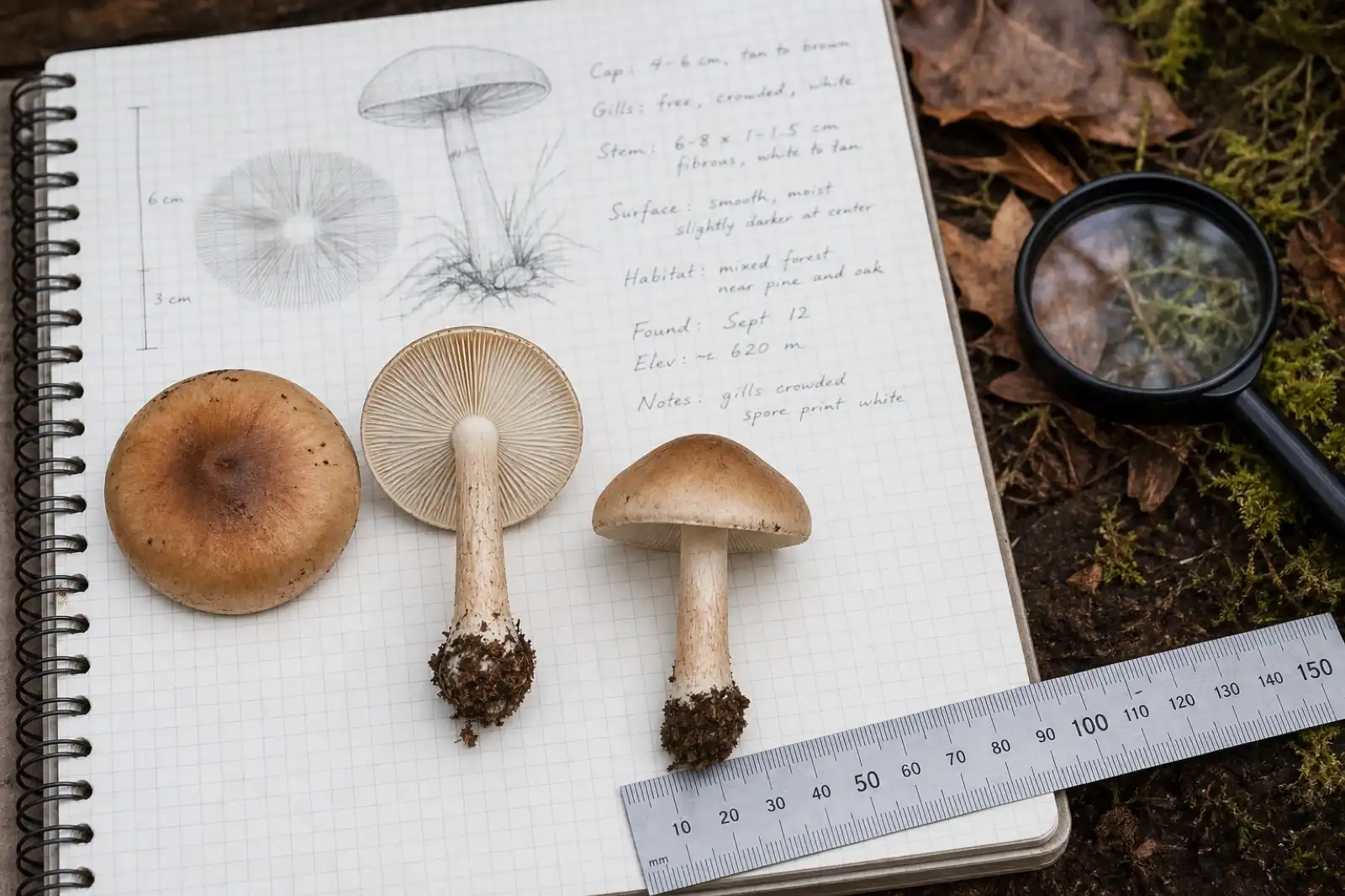
identification
How to Identify Mushrooms: A Beginner's Field Guide
Build an identification from the whole specimen, substrate, habitat, spore deposit, and location—not from a single photograph.
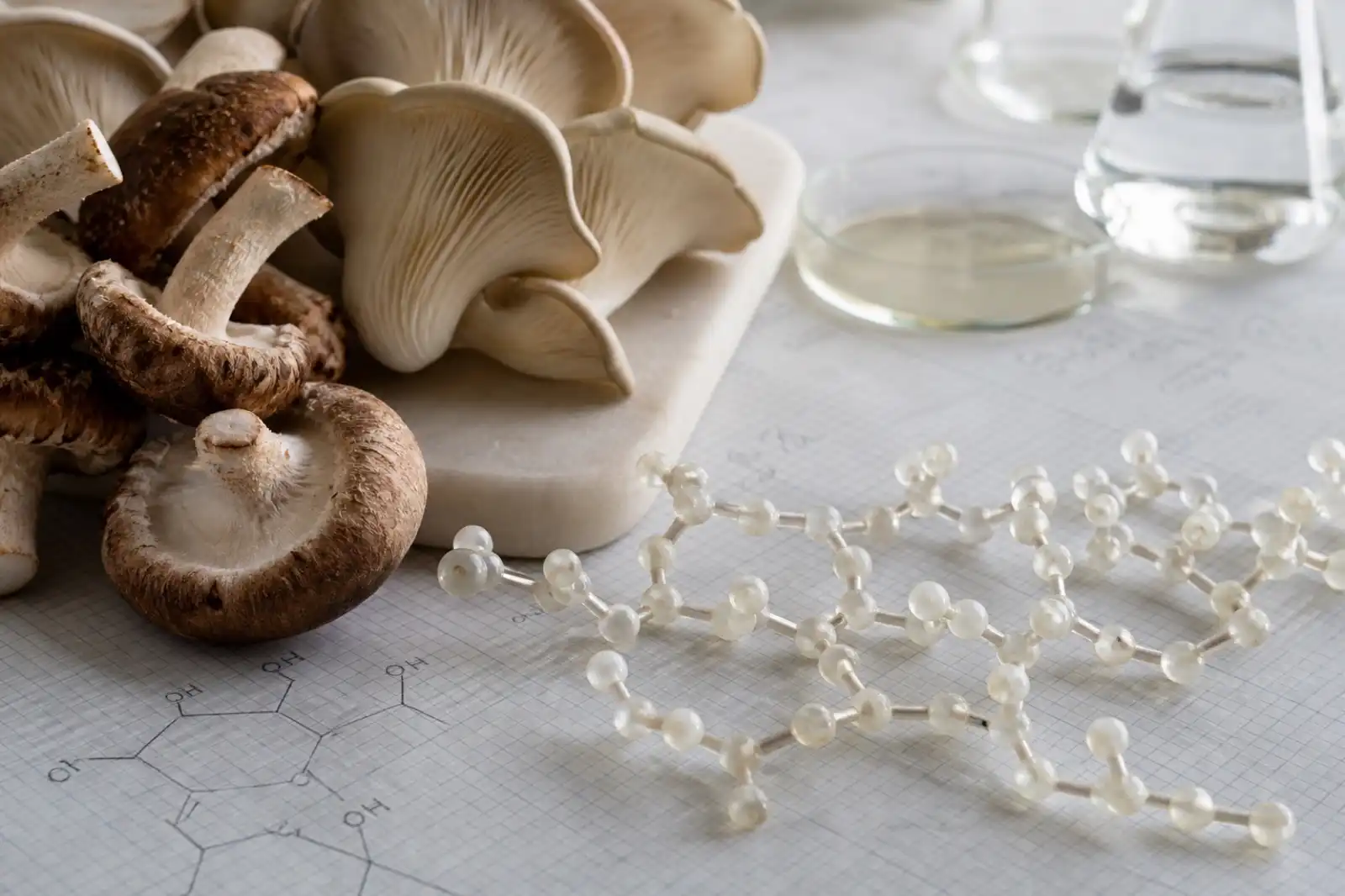
health
Mushroom Beta-Glucans: Evidence, Sources, and Limits
Fungal beta-glucans differ in structure, source, dose, and preparation; evidence for one purified product cannot validate every mushroom food or supplement.
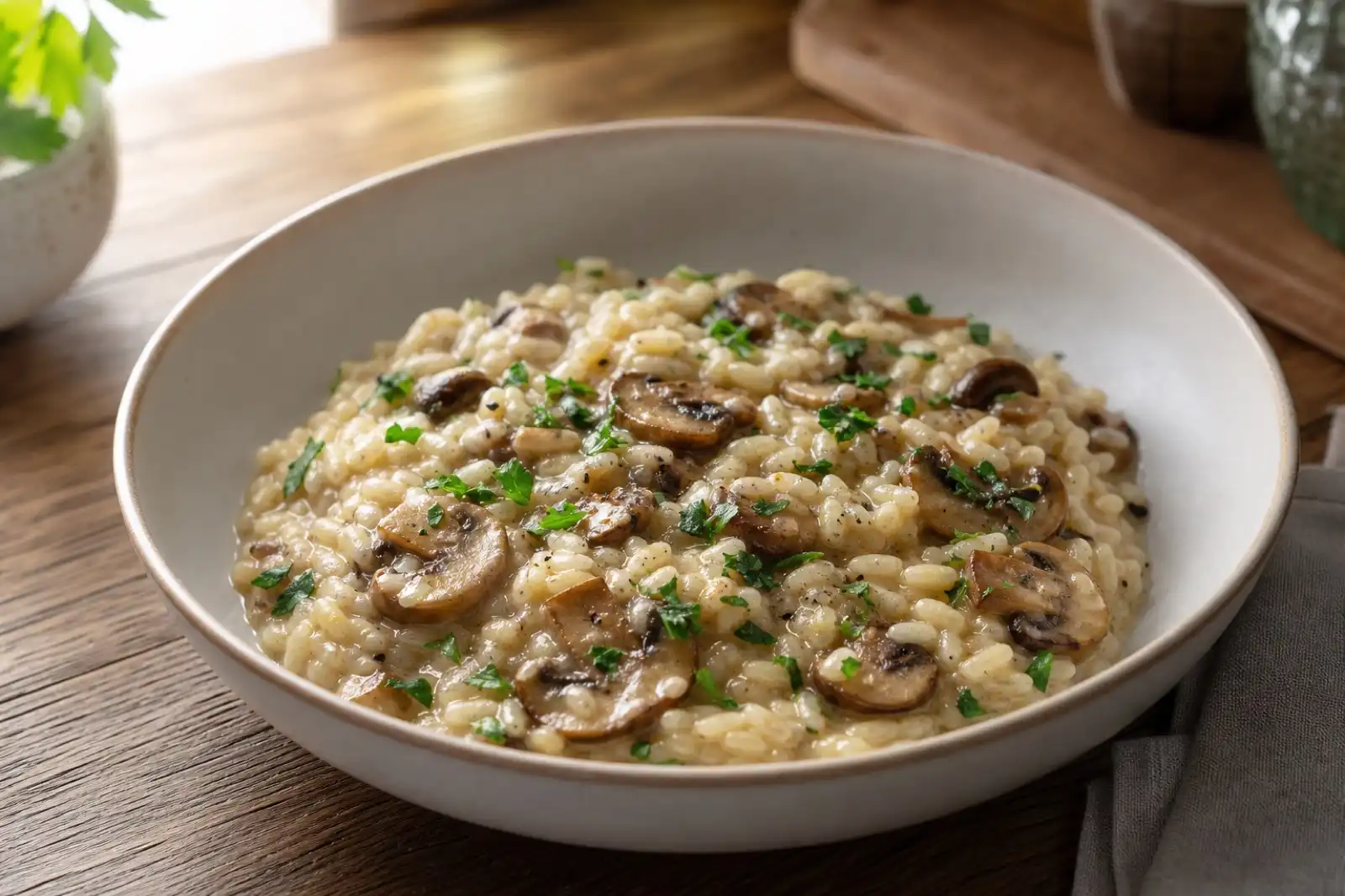
recipes
Mushroom Risotto with Cremini Mushrooms
Make creamy mushroom risotto with browned cremini mushrooms, warm stock, and clear visual cues for tender rice without a heavy finish.
Continue exploring
Browse more practical guides in Mushroom Encyclopedia or visit the mushroom encyclopedia.