Health
Mushroom Supplements: Labels, Testing, and Safety
Learn how to check mushroom supplement identity, fungal part, extraction, dose, lot testing, claims, interactions, and regulatory limits.
By MushroomScope Editorial Team · · Updated · Editorially reviewed
Evidence context
Food, extracts, and supplements differ
Health conclusions depend on species, fungal part, preparation, dose, population, and measured outcome.
Open the nutrition evidence hub →Medical limit
Educational, not medical advice
Do not delay diagnosis or replace prescribed care with mushroom foods or supplements.
Read the editorial policy →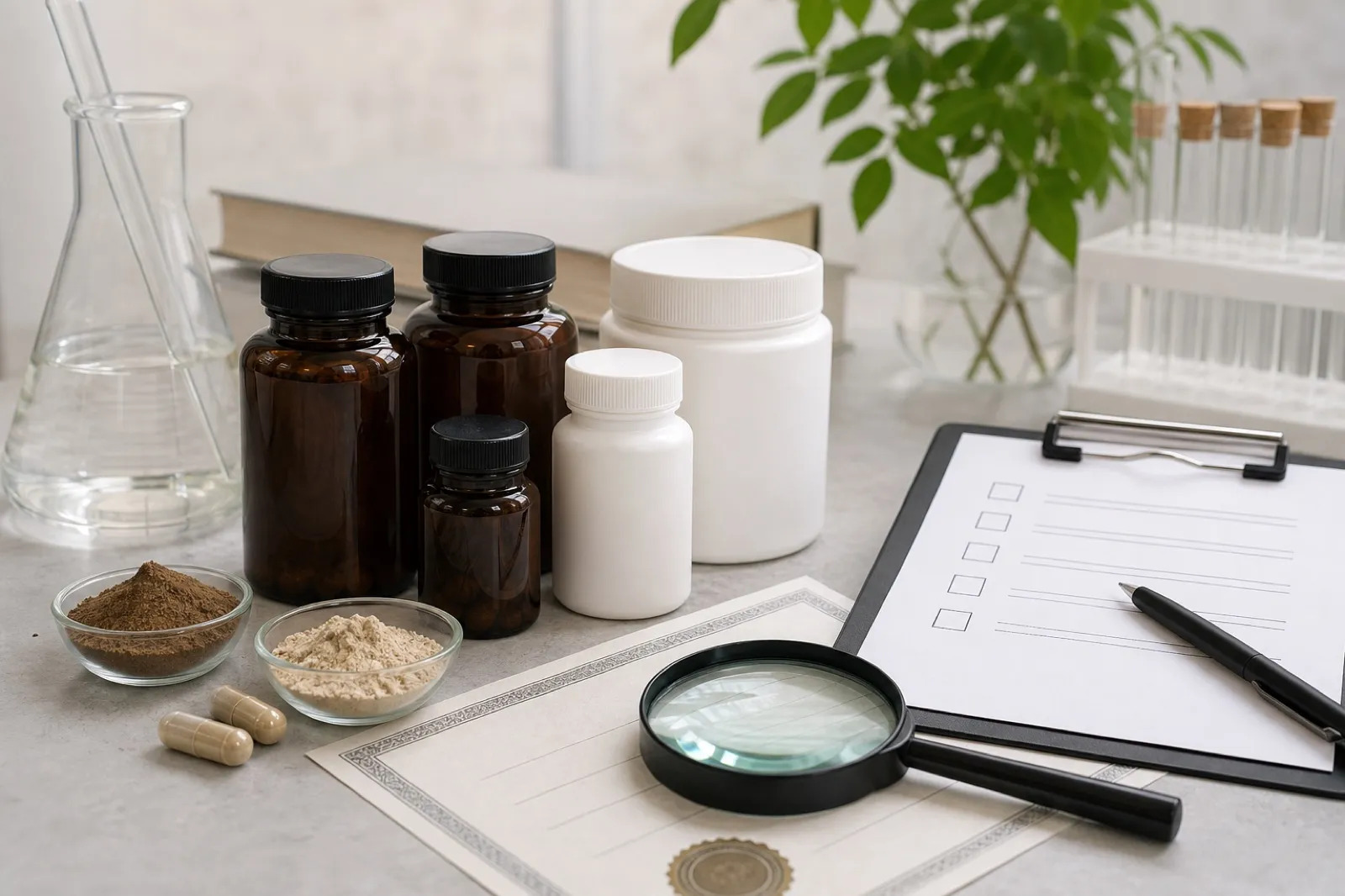
Start with the regulatory reality
A mushroom supplement is not automatically reviewed like a prescription drug before it reaches a store. In the United States, FDA does not approve dietary supplements for safety and effectiveness before marketing. A Supplement Facts panel, professional-looking package, or online availability therefore does not show that the finished product has demonstrated a clinical benefit.
Manufacturers remain responsible for lawful labeling and product quality, and FDA can act against adulterated or misbranded products. That system is meaningfully different from premarket approval. Consumers need to evaluate identity, manufacturing transparency, evidence, and personal risk separately.
This page does not rank brands or recommend a dose. It provides a repeatable way to ask what is in a bottle, whether the cited research actually matches it, and when uncertainty is too important to ignore.
Identify the species rather than accepting a common name
Common names such as reishi, turkey tail, cordyceps, and lion’s mane are not complete ingredient identities. A useful label gives a scientific binomial and uses current enough taxonomy that the material can be traced. Even then, printed identity is a claim until supported by manufacturing controls and appropriate testing.
Species substitutions matter because related fungi are not chemically or clinically interchangeable. A study of one authenticated Ganoderma preparation does not validate every product called reishi. The chaga species guide likewise separates a birch-associated sterile conk from powders and extracts marketed under its common name. A blend listing “ten mushrooms” without scientific names and individual amounts is difficult to match to research.
Look for the full ingredient list, including carriers, flavorings, capsule materials, sweeteners, and proprietary blends. Allergens or interacting ingredients may be present outside the mushroom component.
Distinguish fruiting body, mycelium, spores, and substrate
The fruiting body is the visible reproductive structure commonly recognized as a mushroom. Mycelium is the vegetative network grown in liquid or on a solid material. Spore products use another fungal material, and some labels combine several parts.
These forms are not automatically good or bad, but they are not equivalent. Mycelium grown on grain can be difficult to separate completely from its substrate, so the finished powder may include residual grain. Fruiting-body, mycelial, and spore preparations can differ in composition, extraction behavior, and dose.
A study result follows the preparation tested. If a trial used a defined fruiting-body extract, it should not be applied to an unlike mycelial powder without evidence of equivalence. Our fruiting body versus mycelium guide explains this comparison in more detail.
Read the amount per serving correctly
Capsule count is not a dose. Find the mass of each named ingredient per serving and the number of capsules required. Proprietary blends that disclose only a combined weight hide how much of each mushroom is present.
Watch for “raw equivalent” statements. An extract may be described as equivalent to a larger mass of starting material, while the actual extract mass is much smaller. That calculation can be useful only when the extraction ratio, yield, input material, and method are clear. It does not mean the serving contains the claimed raw mass.
Compare the label with the intervention used in a human study. Daily amount, schedule, duration, and chemical standardization all matter. A higher printed milligram number is not necessarily a more comparable or effective product.
Interpret extraction ratios cautiously
Water extraction, alcohol extraction, dual extraction, and unextracted powders produce different mixtures. Terms such as “8:1,” “10:1,” and “full spectrum” are manufacturing descriptions rather than clinical outcomes.
An extraction ratio can refer to the mass of starting material relative to final extract, but it does not reveal extraction yield, discarded material, marker compounds, contaminants, or absorption. Two products with the same ratio can still be unlike.
Ask what material entered the extraction, which solvents were used, what the final serving contains, and how composition was tested. A very high ratio without those details is not proof of potency.
Evaluate beta-glucan and polysaccharide numbers
Polysaccharides are a broad class that includes starch. A high “total polysaccharides” result may therefore reflect non-fungal carbohydrate and does not by itself confirm meaningful mushroom beta-glucan content.
Beta-glucan assays are more specific only when the method, units, sample, and laboratory are disclosed. The number still does not prove a health benefit. Beta-glucans differ in structure, and clinical relevance depends on the exact preparation and outcome.
The mushroom beta-glucan evidence guide separates composition claims from human clinical evidence. Treat a marker result as quality information, not as a treatment guarantee.
Check every line of the Supplement Facts panel
Record serving size, servings per container, ingredient amount, percent Daily Value where one exists, and all other ingredients. Many mushroom constituents do not have an established Daily Value; the absence of a percentage is not evidence of either benefit or harm.
Check sodium, sugars, caffeine, herbs, vitamins, minerals, and added compounds in blends. A product marketed primarily as a mushroom formula may derive much of its physiological effect or interaction risk from another ingredient.
Verify allergen statements and the capsule material. People avoiding animal-derived gelatin, gluten, soy, or particular grains need to inspect the entire product rather than the front label. If symptoms followed a capsule, powder, or blend, preserve the exact label and lot rather than assuming the named mushroom was responsible; the mushroom allergy and reaction guide explains the exposure record and urgent warning signs.
Ask for lot-specific identity and contaminant testing
A certificate of analysis is most useful when it identifies the exact finished-product lot, testing laboratory, date, methods, units, specifications, and results. An undated template or certificate for a raw ingredient may not describe the bottle in hand.
Depending on material and sourcing, relevant tests can include species identity, microbial contamination, heavy metals, pesticides, residual solvents, and undeclared ingredients. Each test answers a different question. “Third-party tested” without naming what was tested and whether the lot passed is incomplete.
Identity methods have limits. Microscopy, chemical fingerprints, and DNA-based methods may be affected by extraction and processing. A responsible quality program chooses methods suited to the material rather than relying on one marketing-friendly badge.
Understand what certification does not prove
Independent certification may verify specified manufacturing, identity, or contaminant requirements. It can improve confidence in those particular checks. It does not establish that the product prevents disease, improves cognition, treats cancer, or is appropriate for an individual.
Likewise, “organic,” “natural,” “wild,” “vegan,” and “non-GMO” address limited attributes. None demonstrates clinical effectiveness, absence of interactions, or equivalence to a study.
Read the certification organization’s scope and confirm the mark is current and belongs to the exact product. Logos can be misunderstood or used without adequate context.
Match a marketing claim to the actual study
When a seller cites research, compare nine details:
- scientific species and authentication;
- fruiting body, mycelium, spores, or other material;
- extraction and chemical standardization;
- daily amount and schedule;
- intervention duration;
- participant population and diagnosis;
- comparator or placebo;
- prespecified outcome and clinical importance; and
- whether the finished marketed product was tested.
If several do not match, the citation is background rather than validation. “Clinically researched ingredients” can mean that a differently manufactured ingredient appeared in a study. A long bibliography does not close the product-equivalence gap.
Separate laboratory findings from human outcomes
Cell experiments and animal models can identify mechanisms worth testing. They cannot establish that a retail serving reaches the same tissue concentration, produces a meaningful human benefit, or remains safe with long-term use.
Terms such as antioxidant, immune-modulating, neurotrophic, and anti-inflammatory may describe experimental measurements. They should not be silently converted into promises to prevent infection, treat depression, reverse dementia, or control cancer.
Human trials also require scrutiny. Small samples, short duration, multiple outcomes, incomplete blinding, attrition, and product-specific methods limit generalization. Statistical significance is not automatically a noticeable or durable benefit.
Recognize disease claims and implied promises
Direct claims to diagnose, mitigate, treat, cure, or prevent disease raise regulatory issues. Indirect language can be just as misleading: “supports oncology,” “detoxifies the liver,” “repairs nerves,” or “boosts immunity” may imply outcomes the evidence has not established.
Testimonials cannot control for expectation, natural symptom changes, concurrent treatment, or selective reporting. White coats, podcast endorsements, and expert titles do not substitute for product-matched evidence.
Before buying for an immune or digestive claim, compare the wording with our evidence reviews on mushrooms and the immune system and mushrooms and gut health.
Consider interactions before starting
Dietary supplements can affect medication absorption or metabolism, bleeding, blood pressure, blood sugar, immune pathways, anesthesia, and laboratory results. Risk depends on the complete formula, dose, medicines, conditions, and timing. For glucose-specific claims, the mushrooms and blood sugar review shows why an extract trial cannot be transferred to dinner—or used to change diabetes medicine.
Discuss the exact label with a clinician or pharmacist before use if taking prescription medicines, preparing for surgery, receiving cancer or immune therapy, or managing liver, kidney, bleeding, allergy, or autoimmune conditions. People who are pregnant or breastfeeding and children also need individualized guidance because evidence is often limited.
Do not stop or reduce prescribed treatment to try a mushroom product. Bring the bottle or clear photographs of every label panel, not just the front brand name. The medicinal mushroom safety guide provides a product-specific interaction, surgery, adverse-event, and stop-rule checklist for that conversation.
Avoid changing several products at once
Starting multiple supplements simultaneously makes it difficult to identify which product caused a symptom or whether any one produced a benefit. Blends create the same problem within one bottle.
If a clinician agrees that a trial is reasonable, define a specific goal, keep the rest of the regimen stable where appropriate, record the product and lot, and decide in advance when to stop. Vague goals such as “wellness” invite confirmation bias.
This process does not prove effectiveness. It makes uncertainty and adverse events easier to recognize.
Respond to adverse effects promptly
Stop the product and seek urgent care for trouble breathing, facial or throat swelling, fainting, seizure, severe weakness, uncontrolled bleeding, confusion, or another severe reaction. Persistent vomiting, dark urine, yellowing skin or eyes, or marked abdominal pain also require prompt medical assessment.
Keep the package, lot number, receipt, amount taken, timing, other medicines and supplements, and symptom timeline. Do not restart a suspected product on your own to see whether the reaction repeats.
Use the appropriate adverse-event reporting system. In the United States, FDA provides reporting routes for serious supplement problems; other countries have their own regulators and poison-information services.
Use a practical purchase decision
Before paying, answer these questions:
- Is the scientific species stated?
- Is the fungal part clear?
- Is the actual amount per serving disclosed?
- Are extraction details interpretable?
- Does a lot-specific certificate cover identity and relevant contaminants?
- Does the cited human evidence match the product and intended user?
- Are all blend ingredients and allergens disclosed?
- Has a clinician or pharmacist reviewed meaningful interaction risks?
- Is there a measurable goal and stop rule?
If identity, dose, or lot testing is unclear, do not let a discount or testimonial override the missing information. If the intended use is treatment of a symptom or disease, appropriate medical assessment comes first.
Product-specific evidence remains narrow
Evidence conclusions should be made one species, preparation, population, and outcome at a time. Our reishi evidence review and lion’s mane evidence review show why a named mushroom does not represent one standardized intervention.
The most responsible conclusion for mushroom supplements as a category is limited: label transparency and testing can reduce some quality uncertainty, but they cannot establish broad effectiveness or individual safety. A trustworthy decision keeps product identity, human evidence, regulation, and personal medical context separate.
Worked evidence comparisons
The mushroom-antioxidants evidence guide separates chemical assays from human outcomes. The maitake benefits review shows how fruiting body, mycelium, powder and extract claims must be matched to the material actually studied.
The shiitake health-benefits evidence guide shows how to audit a concrete example where whole food, fruiting-body powder, extracts, and lentinan are often treated as though they were equivalent.
References
Source quality notes
MushroomScope cites sources that match the page scope, such as taxonomic databases, extension guidance, food-safety agencies, food-composition databases, and peer-reviewed or institutional health references. Sources support context and uncertainty; they do not turn an online page into specimen identification, medical advice, or a tested recipe record.
Frequently asked questions
Does FDA approve mushroom supplements before sale?
No. FDA does not approve dietary supplements for safety and effectiveness before they are marketed; manufacturers are responsible for compliance.
Does third-party certification prove a supplement works?
No. Quality certification may address listed tests, but it does not establish clinical effectiveness or guarantee suitability for an individual.
What information should a useful mushroom supplement label provide?
Look for scientific species, fungal part, amount per serving, extraction details, other ingredients, manufacturer contact, lot number, and accessible lot-specific testing.
Is a high extract ratio proof that a product is stronger?
No. A ratio is interpretable only with the input material, extraction method, yield, serving amount, and composition. It does not by itself prove identity, purity, absorption, or clinical benefit.
Are fruiting-body and mycelium supplements interchangeable?
No. They can differ in material, growing substrate, extraction, chemical profile, and dose. Evidence for one preparation should not be transferred to an unlike product.
Related guides
health
Mushroom Beta-Glucans: Evidence, Sources, and Limits
Fungal beta-glucans differ in structure, source, dose, and preparation; evidence for one purified product cannot validate every mushroom food or supplement.
health
Reishi Mushroom Benefits: Evidence and Safety Review
Clinical evidence for reishi remains product-specific and uncertain; it does not support replacing cancer treatment or other prescribed care.

health
Lion's Mane Benefits: What Human Research Can and Cannot Show
Small human trials of lion’s mane examine specific products and outcomes; they do not establish prevention or treatment of neurological disease.
Continue exploring
Browse more practical guides in Health or visit the mushroom encyclopedia.