Health
Reishi Mushroom Benefits: Evidence and Safety Review
Clinical evidence for reishi remains product-specific and uncertain; it does not support replacing cancer treatment or other prescribed care.
By MushroomScope Editorial Team · · Updated · Editorially reviewed
Evidence context
Food, extracts, and supplements differ
Health conclusions depend on species, fungal part, preparation, dose, population, and measured outcome.
Open the nutrition evidence hub →Medical limit
Educational, not medical advice
Do not delay diagnosis or replace prescribed care with mushroom foods or supplements.
Read the editorial policy →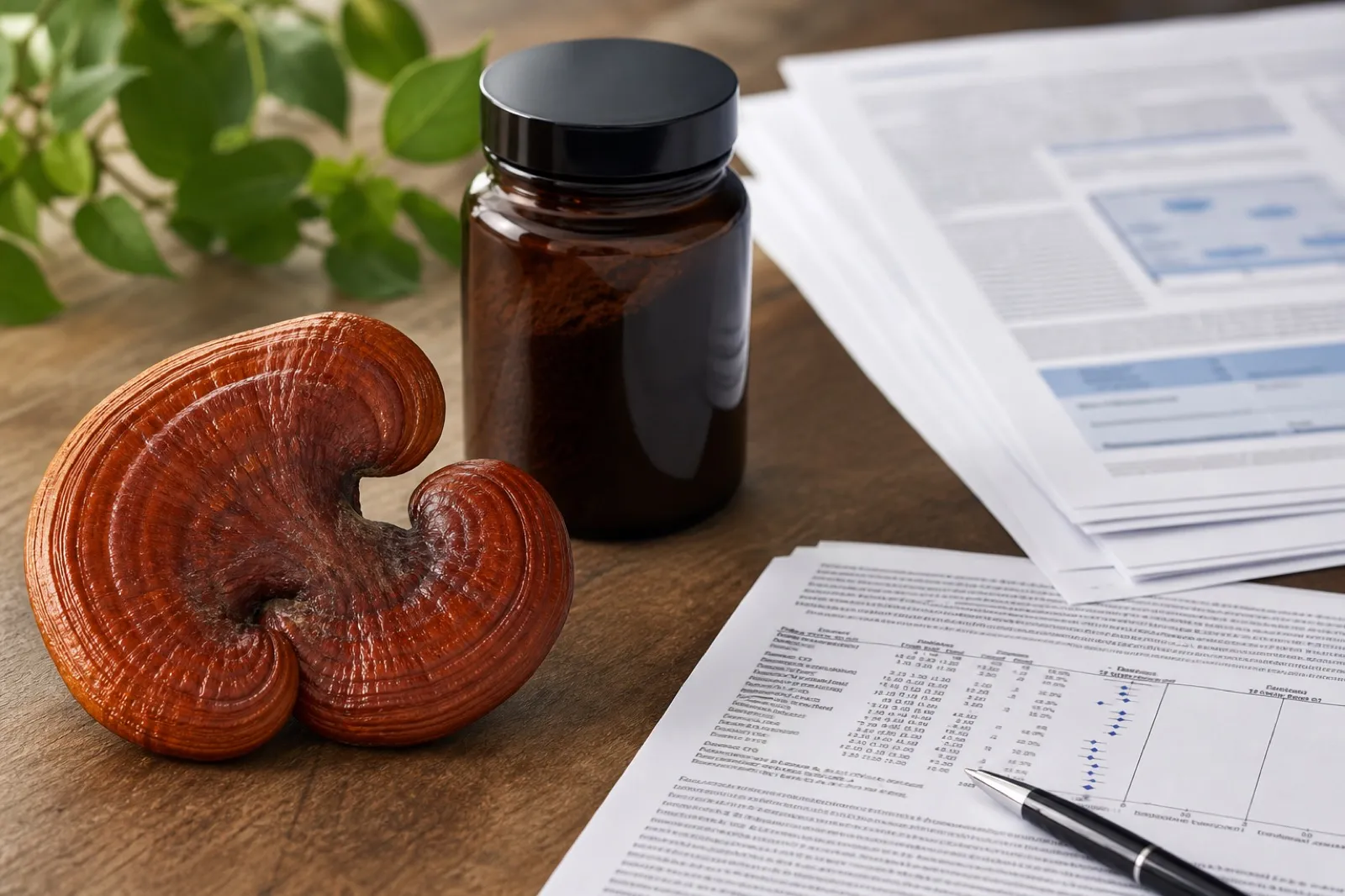
Bottom line: reishi remains an unproven treatment
“Reishi” is a market name, not a sufficiently precise description of one medical intervention. It may refer to different Ganoderma species and to fruiting-body powder, cultured mycelium, spores, hot-water extract, alcohol extract, or mixtures of those materials. Processing changes which compounds reach the finished product, and the amount delivered per serving can vary substantially. These products should not be treated as interchangeable.
Traditional use, chemical analysis, and laboratory activity are valid subjects of study, but none establishes that reishi prevents or treats disease in people. The most defensible reading of the current evidence is narrower: a limited number of human trials have investigated particular Ganoderma preparations, often in small or clinically diverse groups, and the results do not justify broad treatment claims.
The Cochrane review of Ganoderma lucidum in cancer care is especially important because cancer claims carry serious consequences. Its included trials had methodological limitations, did not establish a long-term survival benefit, and did not support using Ganoderma as first-line cancer treatment. A change in an immune-cell count or a short-term response measure cannot substitute for outcomes such as survival, disease progression, symptoms, quality of life, and well-characterized harms.
This page therefore does not provide a “best reishi dose” or recommend a brand. It explains how to distinguish preliminary research from a clinically established benefit and how to reduce avoidable risk when evaluating a product.
What researchers mean by reishi
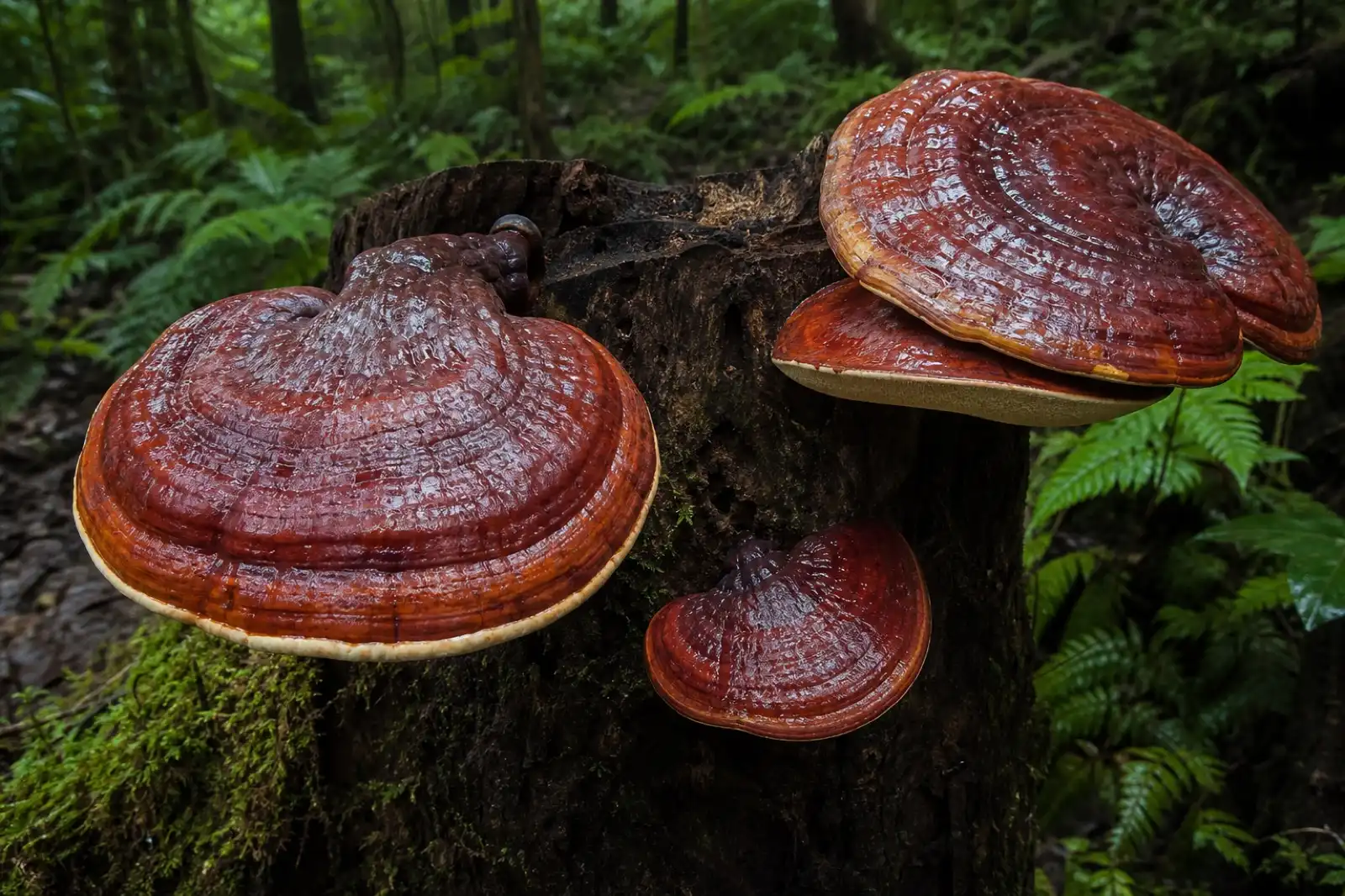
Scientific names matter because older papers, commercial labels, and modern taxonomy do not always use Ganoderma names consistently. A product labeled only “reishi mushroom” leaves unanswered which species was used and how its identity was confirmed. The reishi species guide explains the organism and common naming issues; it is identification context, not evidence that a supplement works. The same evidence boundary appears in the chaga species guide, where a host-associated field organism must not be treated as proof about a retail extract.
The fungal part also matters. A mature fruiting body is chemically and physically different from mycelium grown on grain. Spore preparations introduce another material, and “broken spore” processing is itself a manufacturing variable. A label may list the mass of a raw powder, the mass of an extract, or an “equivalent” quantity calculated from an extraction ratio. Those numbers do not mean the products deliver the same exposure.
Extraction changes the mixture further. Hot water tends to recover water-soluble components, while alcohol or dual extraction can emphasize a different chemical profile. Terms such as “10:1” describe a manufacturing ratio only when the underlying method and yield are adequately documented; they are not proof of potency, absorption, purity, or clinical effectiveness.
For this reason, the question “Does reishi work?” is too broad for a trial to answer. A useful evidence question identifies the species, material, preparation, dose, duration, participant group, comparator, and outcome.
How to interpret the human evidence
Study design comes before the headline
A randomized controlled trial can reduce bias, but the label “randomized” is not a guarantee of reliability. Readers should ask how the sequence was generated, whether assignment was concealed, whether participants and outcome assessors were blinded, how many people withdrew, and whether all prespecified outcomes were reported. Very small trials may produce unstable estimates, especially when researchers measure many outcomes and highlight only favorable ones.
Follow-up length also changes what a study can show. A short trial may detect a temporary laboratory change yet be unable to assess disease progression, durable symptom improvement, delayed adverse effects, or interactions that emerge over time. If a trial is designed around a surrogate marker, it should not be rewritten in marketing language as proof of longer life, cancer control, or “immune optimization.”
Pooled estimates do not erase weak inputs
Systematic reviews and meta-analyses can summarize a scattered literature, but their conclusions depend on the studies they include. Later pooled analyses combine different populations, products, doses, durations, and outcomes. Statistical pooling may produce a precise-looking number while the clinical question remains unclear.
The GRADE-assessed review listed in the references is useful because it evaluates certainty rather than merely reporting whether a combined result crosses a significance threshold. Low-certainty evidence means future, better research could materially change the estimate. It should be communicated as uncertainty, not converted into a confident consumer promise.
A statistically detectable difference is also not automatically a meaningful difference. Small changes in BMI, heart rate, a laboratory value, or an immune measure must be interpreted in context: Was the change large enough to matter? Was it consistent? Was the outcome prespecified? Did participants feel or function better? Were harms collected with equal care?
Cancer evidence requires an especially conservative standard
People receiving cancer treatment may encounter claims that reishi “supports” chemotherapy or strengthens immunity. That wording can sound modest while implying a clinical benefit that has not been established. Cancer care involves treatment-specific schedules, organ function, bleeding risk, immune effects, and medicines with narrow safety margins. Adding a concentrated supplement can complicate adverse-event attribution or lead someone to delay effective care.
The available evidence does not support replacing surgery, radiation, chemotherapy, immunotherapy, hormonal therapy, targeted therapy, or other prescribed care with reishi. Anyone considering it during cancer care should discuss the exact product and complete ingredient list with the oncology team before use. This is not a formality: the relevant decision depends on the diagnosis, treatment, medicines, liver and kidney function, and timing.
Laboratory findings are not clinical outcomes
Reishi research often discusses polysaccharides, beta-glucans, triterpenes, or extracts that affect cells in a dish or animals under controlled conditions. These experiments can help identify mechanisms and guide future trials. They cannot establish the dose that reaches human tissue, whether an effect is beneficial in a person, or whether the same exposure is safe.
“Immune activity” is not inherently desirable. The immune system is a network with different roles in infection, cancer, allergy, inflammation, transplantation, and autoimmune disease. A nonspecific claim to “boost immunity” does not identify a clinical goal or show a net benefit. Our mushroom beta-glucans review explains why a compound class should not be treated as a single standardized medicine.
Animal studies have similar limits. Species differences, experimentally induced disease models, controlled diets, and doses scaled in different ways all affect translation. A mouse result can support a research hypothesis; it cannot validate the bottle sold beside it.
Check whether a product matches the cited study
When a seller cites research, compare the paper with the label point by point:
- Scientific identity: Does the paper name and authenticate the same Ganoderma species? Does the retail label provide more than the word “reishi”?
- Fungal material: Did the study use fruiting body, mycelium, spores, or a defined fraction? Is that the same material in the product?
- Extraction: Were water, alcohol, or another process used, and is the method comparable?
- Composition: Were marker compounds measured with a stated method? A generic polysaccharide number can include non-fungal carbohydrates and does not by itself prove identity.
- Dose and schedule: Is the daily amount of the studied preparation clear, and does the consumer product deliver an equivalent amount rather than an unexplained “raw equivalent”?
- Population and outcome: Were participants healthy, living with a specific diagnosis, or receiving other treatment? Was the measured outcome the one used in the advertisement?
- Finished-product testing: Was the actual marketed lot studied, or does the company merely say that an ingredient is “clinically studied”?
If several of these details are missing, the research citation should be treated as background rather than product validation. A photo of a paper, a list of PubMed links, or a white coat in an advertisement does not close the equivalence gap.
Quality-control information worth requesting
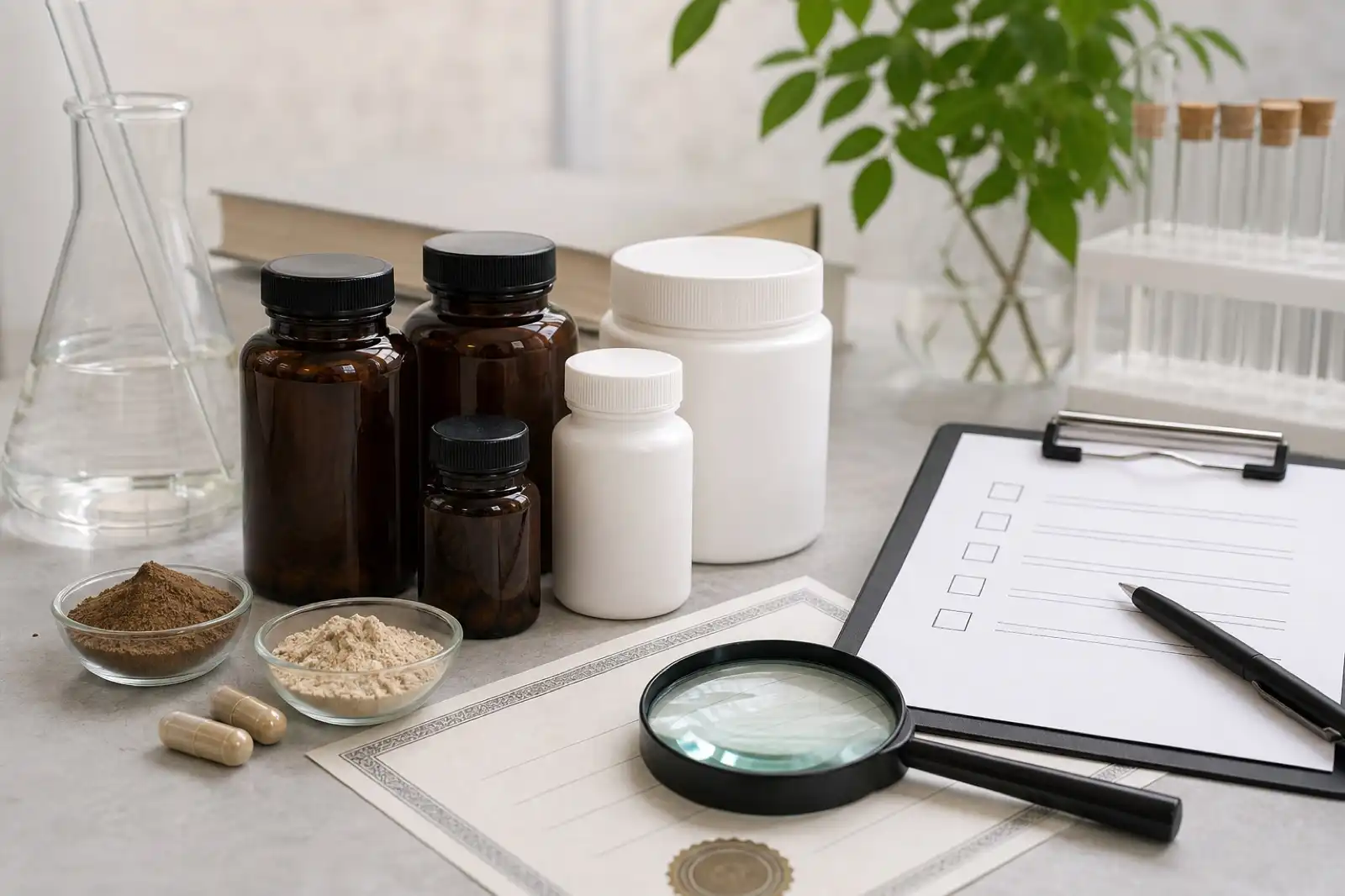
A useful label or certificate should identify the manufacturer and lot, serving mass, full ingredient list, allergens, fungal part, and testing laboratory. Depending on the product and jurisdiction, relevant testing may include species identity, microbial contamination, heavy metals, pesticides, and undeclared ingredients. A certificate of analysis is more informative when it names the batch and test methods instead of presenting an undated template.
Independent certification can verify particular manufacturing or testing requirements, but it does not prove that a health claim is effective. Likewise, “organic,” “natural,” “wild,” and “traditional” do not establish dose, purity, or clinical benefit. The mushroom supplement label guide provides a broader checklist for comparing products without turning label quality into a treatment endorsement.
Safety, interactions, and when to stop
Published safety data are less complete than many advertisements imply. Gastrointestinal symptoms, dry mouth, rash, or other reactions may occur, and concentrated products create exposures unlike an occasional food. Case reports and clinical concern about liver injury make new symptoms such as dark urine, yellowing skin or eyes, marked fatigue, persistent vomiting, or right-upper abdominal pain reasons to stop the product and seek medical assessment promptly.
People with mushroom allergy should avoid experimentation. Anyone who is pregnant or breastfeeding, is a child, is preparing for surgery, has liver or kidney disease, has a bleeding disorder, has an immune or autoimmune condition, or takes prescription medicines should obtain individualized advice before use. Potential concern is particularly relevant around anticoagulant or antiplatelet medicines and therapies that intentionally alter immune function, but a general webpage cannot determine an individual interaction.
Do not respond to a suspected reaction by switching brands and restarting on your own. Keep the container, lot number, ingredient panel, timing, and amount taken. The medicinal mushroom safety guide explains how to preserve product identity, medicine context, timing, and lot evidence across concentrated mushroom products. Seek urgent care for trouble breathing, facial or throat swelling, fainting, severe weakness, uncontrolled bleeding, confusion, or another severe symptom. In the United States, serious supplement problems can also be reported through FDA MedWatch; other countries have their own reporting systems.
A practical decision framework
Before buying or continuing reishi, write down the goal in a measurable sentence. “Improve wellness” is too vague to evaluate. Then ask whether an established treatment, sleep issue, nutrition problem, medication effect, or undiagnosed symptom needs attention first. A supplement should not become a substitute for appropriate assessment.
Next, identify the exact product and compare it with the actual human evidence—not with a summary written by the seller. Consider the certainty and clinical importance of the outcome, the duration of study, known uncertainty, cost, and interaction burden. Decide in advance what would count as no benefit and which symptoms would trigger stopping.
If a clinician agrees that a trial is reasonable, avoid changing several supplements at once, retain the label and lot, and do not alter prescribed treatment. This framework does not make reishi effective; it reduces the chance that uncertainty is hidden by vague goals, product substitution, or selective marketing.
What the evidence supports saying
It is accurate to say that defined Ganoderma preparations have been studied in humans and that laboratory findings justify continued research. It is also accurate to say that trials are heterogeneous, important bias concerns remain, and results cannot be generalized across retail products.
It is not supported to say that reishi treats cancer, replaces oncology care, reliably prevents disease, or broadly “boosts” the immune system. Market availability is not FDA preapproval for effectiveness. Until well-designed, independently replicated trials show clinically meaningful benefits for a clearly characterized preparation, reishi should be described as investigational rather than proven therapy.
References
Source quality notes
MushroomScope cites sources that match the page scope, such as taxonomic databases, extension guidance, food-safety agencies, food-composition databases, and peer-reviewed or institutional health references. Sources support context and uncertainty; they do not turn an online page into specimen identification, medical advice, or a tested recipe record.
Frequently asked questions
Is reishi proven to treat cancer?
No. A Cochrane review found that available trials did not justify using Ganoderma as first-line cancer treatment, and long-term survival evidence was inadequate.
Can results for one reishi extract apply to another product?
No. Species naming, fungal part, extraction, marker compounds, dose, and quality control differ, so products cannot be assumed clinically equivalent.
Who should discuss reishi with a clinician first?
Anyone receiving cancer care, taking medicines, preparing for surgery, pregnant or breastfeeding, or managing liver, kidney, bleeding, or immune conditions should seek individualized advice.
Does a laboratory immune effect prove a health benefit?
No. Changes in cells, animals, or short-term biomarkers can generate hypotheses, but they do not by themselves show that people live longer, feel better, or avoid disease.
Is reishi tea equivalent to an extract used in a trial?
Not unless the species, fungal part, extraction process, chemical profile, dose, and quality controls are demonstrably comparable. Most retail teas do not meet that standard.
Related guides
mushrooms
Ganoderma lingzhi: Reishi Mushroom Identification and Evidence Guide
Understand Ganoderma lingzhi taxonomy, varnished-conk identification, cultivation, supplement evidence, interactions, safety, and responsible FAQs.
health
Mushroom Supplements: Labels, Testing, and Safety
Learn how to check mushroom supplement identity, fungal part, extraction, dose, lot testing, claims, interactions, and regulatory limits.
health
Mushroom Beta-Glucans: Evidence, Sources, and Limits
Fungal beta-glucans differ in structure, source, dose, and preparation; evidence for one purified product cannot validate every mushroom food or supplement.
Continue exploring
Browse more practical guides in Health or visit the mushroom encyclopedia.