Mushroom Encyclopedia
Ganoderma lingzhi: Reishi Mushroom Identification and Evidence Guide
Understand Ganoderma lingzhi taxonomy, varnished-conk identification, cultivation, supplement evidence, interactions, safety, and responsible FAQs.
By MushroomScope Editorial Team · · Updated
Species context
Treat profiles as reference material
Species profiles summarize documented traits, taxonomy, and lookalikes, but natural variation can be substantial.
Use the safety checklist →Decision limit
A profile cannot authenticate a specimen
Do not eat a wild mushroom from an online match, single feature, or generated image.
Read the safety disclaimer →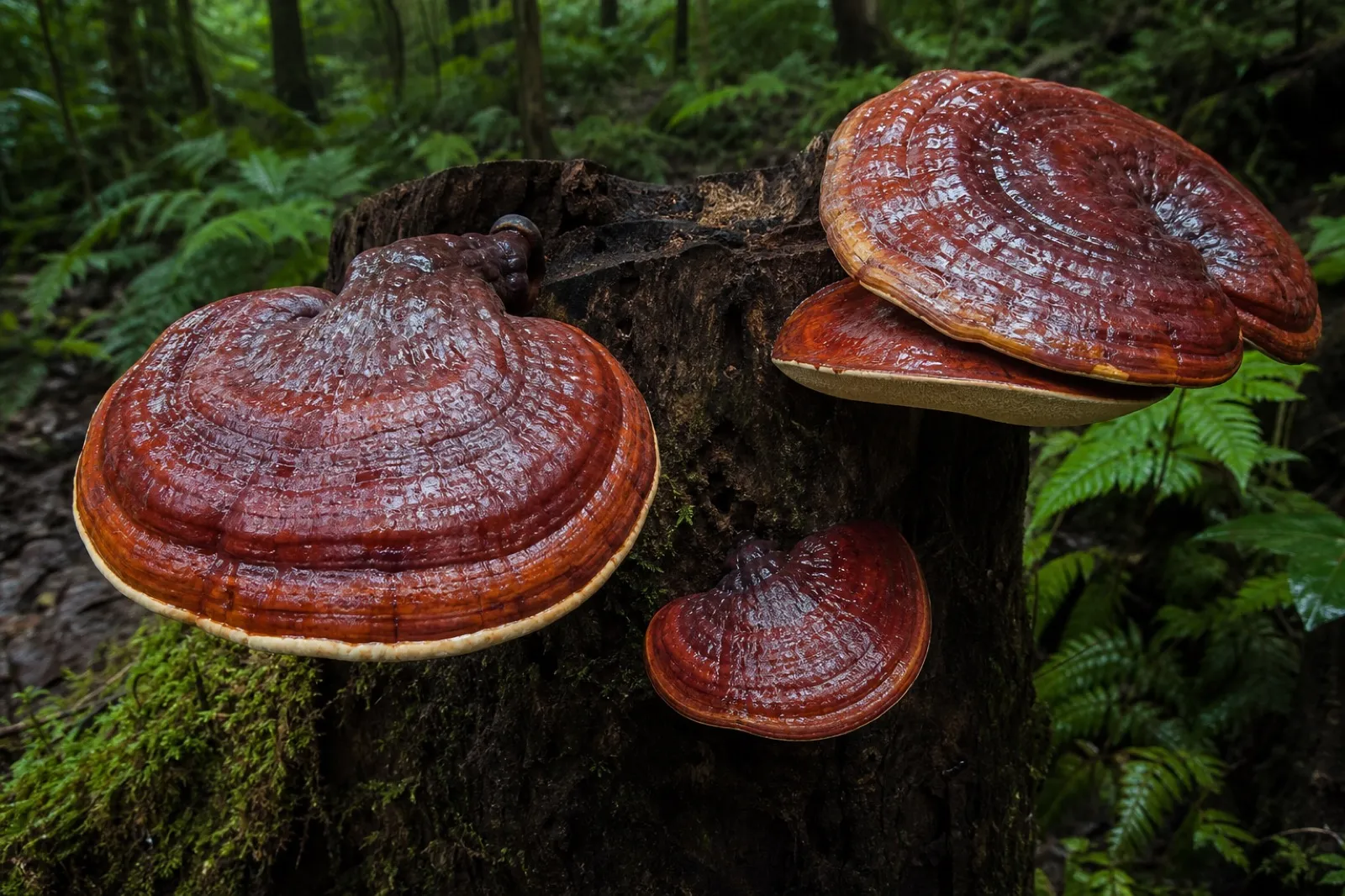
Quick facts
- Scientific name
- Ganoderma lingzhi
- Common names
- reishi, lingzhi, varnished conk
- Taxonomy
- Ganoderma · Ganodermataceae
- Edibility context
- Inedible: Too woody and bitter for ordinary culinary use; sold mainly as teas, powders, and extracts whose identity and composition vary.
- Spore print
- Brown.
- Toxicity context
- Low: Not regarded as an acute poisonous mushroom, but adverse effects, product contamination, drug interactions, and uncertain long-term supplement safety require caution.
- Season
- May, June, July, August, September, October
- Growing difficulty
- Difficult
- Regions
- East Asia, cultivated worldwide, related Ganoderma species occur globally
Safety limit: These labels summarize documented context; they never authenticate a wild specimen. Cooking does not make a poisonous species safe.
Introduction
Ganoderma lingzhi is associated with reishi and lingzhi, which are commercial and cultural names, not guarantees of one biological species. Many East Asian cultivated products are associated with Ganoderma lingzhi, while the name G. lucidum has historically been used broadly in research and trade. This taxonomic ambiguity matters because chemical profiles and study materials may differ. A responsible page states the name used by each source rather than silently treating every varnished Ganoderma as identical.
This account separates three questions that “reishi” often collapses: what a wild varnished conk can be documented as, what organism and material a cultivated product contains, and what a particular clinical study tested. Ganoderma lingzhi is not a visual synonym for every glossy red bracket, and a common-name label does not connect a powder to a voucher or trial. Each conclusion therefore needs its own provenance.
A wild Ganoderma record should preserve the whole attachment, upper crust, active margin, pore surface, context, tube layers, host evidence, and location. A cultivated record instead needs producer, culture or strain designation, substrate recipe, fruiting form, harvest stage, drying, and lot. Keep these evidence trails separate: a traceable antler-form crop does not validate the name of a nearby wild conk, and a field photograph does not authenticate a capsule.
Read a varnished conk as a character set, not a color match
G. lingzhi commonly forms a glossy red-brown conk with concentric zones, a pale pore surface, brown spores, and woody flesh. Cultivation can also produce elongated antler forms when carbon dioxide remains high. Surface varnish is characteristic of several Ganoderma species and is not enough for species identification. Host, location, pore structure, context, microscopic spores, and sequence data may be needed.
Macroscopic characters
- Cap or upper surface: Kidney-, fan-, or semicircular, with a lacquered red-brown surface and concentric growth zones.
- Fertile surface: White to cream pore surface underneath, often bruising brown.
- Stem or attachment: May be lateral and varnished or absent, depending on strain and fruiting position.
- Flesh: Corky to woody and bitter rather than a tender culinary texture.
- Spore print: Brown.
Document several developmental stages because the lacquered crust, pale growth margin, pore color, and tube depth change as a conk matures. Measure width, projection, thickness, and stipe dimensions where present. Photograph a clean pore close-up beside a scale and a vertical section from crust through context and tubes. Brown spore dust on an upper surface can support a Ganoderma record, but it cannot separate similar taxa by itself.
Similar species
- Ganoderma lucidum: A European taxon whose name has historically been applied broadly to Asian reishi products.
- Ganoderma tsugae: A varnished species associated especially with hemlock in North America.
- Other Ganoderma species: Macroscopic overlap is substantial; host, spores, microscopy, geography, and DNA may be necessary.
The comparison list is not exhaustive. Geographic checklists and local keys matter because the set of possible lookalikes changes by continent and habitat. Apps can organize observations, but their suggestions should be treated as hypotheses. This page cannot confirm edibility or product identity from an image.
Use the pore surface and context tissue to document maturity
A fresh fertile surface is pale and made of tiny pores rather than gills. Handling can bruise it brown, while age, algae, insects, and weather can obscure the original color. Photograph an untouched section before testing a small area. Count pores over a measured distance when a regional key requests it, and cut a legal specimen to record the thickness and color of the context and any dark boundary layers. “Glossy red shelf” omits most of the characters a specialist needs.
Spores may dust nearby caps and wood with brown powder. That deposit is consistent with Ganoderma but not a species verdict. Microscopic spore size and ornamentation, host association, geography, and DNA can be necessary because several varnished species converge on the same field silhouette.
Taxonomy and the reishi name problem
| Rank | Name |
|---|---|
| Kingdom | Fungi |
| Phylum | Basidiomycota |
| Class | Agaricomycetes |
| Order | Polyporales |
| Family | Ganodermataceae |
| Genus | Ganoderma |
| Species | Ganoderma lingzhi |
Taxonomy is a working scientific framework, not a permanent label. The European name Ganoderma lucidum was applied broadly to Asian medicinal material for decades, while G. lingzhi is now used for a major East Asian cultivated lineage. North American varnished conks may instead belong to species such as G. tsugae, G. curtisii, or members of other regional complexes. A product labeled “reishi” therefore provides a commercial common name, not a voucher-confirmed species record.
Database records should preserve the name used by a cited paper, its culture or voucher identifier, geographic origin, and publication date. Silently relabeling older G. lucidum experiments as G. lingzhi creates false precision. The same rule applies to supplements: fruit body versus mycelium, strain, substrate, extraction solvent, and batch testing are part of the identity of the tested material.
Treat G. lingzhi and G. sichuanense as an active nomenclature record
The name problem did not end when G. lingzhi was published. NCBI currently lists Ganoderma lingzhi as a species name and links it to the 2012 clarification of cultivated lingzhi. A later re-examination of type material concluded that the cultivated lineage should instead use the older name G. sichuanense, with G. lingzhi treated as a later synonym. These records are evidence of a nomenclatural decision trail, not permission to choose whichever label makes a product sound more precise.
For a new observation, record the database and date behind the accepted name. For an older paper, preserve the paper’s original binomial and add a separate interpretation note. For a retail product, copy the exact label, lot, manufacturer, country of origin, declared plant or fungal part, and test certificate without upgrading “reishi” to a voucher-backed species. This three-column approach—reported name, current interpretation, material evidence—keeps taxonomy from silently changing the organism tested.
Sequence data also need provenance. A bare ITS match can inherit an incorrectly named reference, and a percentage identity without alignment coverage, reference voucher, and phylogenetic context does not settle a difficult species complex. When the species claim matters, retain the raw sequence accession, marker, laboratory, reference set, and the specialist determination alongside morphology and origin.
Hardwood association, root contact, and tree-safety context
Ganoderma fungi decay wood and can fruit near stumps, roots, and the bases of trees. A conk may indicate internal decay, so do not damage it or linger beneath structurally unsafe trees. Commercial cultivation uses logs or sterilized hardwood formulations. Growers manipulate oxygen and carbon dioxide to favor antlers or broad conks, then dry material carefully to limit microbial deterioration.
Known range represented here: East Asia, cultivated worldwide, related Ganoderma species occur globally. Typical substrates: hardwood logs, supplemented hardwood sawdust blocks. Wild fruiting depends on regional warmth and moisture; controlled cultivation is possible year-round.
Habitat is part of the identification, not decorative background. Record whether wood is hardwood or conifer, alive or dead, standing or fallen, and visibly exposed or buried. A conk that seems terrestrial may be attached to a buried root. Note fruit-body height, orientation, number, and whether shelves emerge singly or from a common base. Weather, latitude, elevation, and local tree communities can shift the fruiting window, so calendar months are orientation rather than a guarantee.
The host record also has a different purpose from the species name. Wood-decay fungi can reveal internal decay, but a fruit body alone does not quantify failure risk. Do not cut, probe, or remove conks from a living tree to conduct an amateur safety test. If the tree could strike a person, building, road, or utility, use a qualified arborist who can evaluate the whole tree and site.
Do not transfer a tree-risk statement from one Ganoderma species, host, or region to every glossy conk. Forest guidance often addresses locally important species such as artist’s conk or hemlock varnish shelf, not cultivated East Asian lingzhi. The defensible field record separates the conk identification from the structural assessment: document host, root flare, wounds, conk position, recurring fruiting, crown condition, targets, and recent site disturbance, then leave risk rating and any removal decision to the qualified assessor.
Conks may occur on living roots, buried wood, stumps, or fallen trunks. Before collecting, photograph whether the bracket emerges directly from exposed wood or appears terrestrial above a buried root. Obtain permission and take only the material needed for a voucher where legal. On living trees near people or structures, leave risk conclusions to a qualified arborist: a conk documents established fungal activity but does not measure residual strength or predict a failure date.
Cultivation decisions: antlers, conks, and traceable batches
Begin with an authenticated culture from a specialist supplier. Supplemented hardwood blocks require sterilization and clean inoculation; log systems are slower. After colonization, high carbon dioxide encourages antlers, while increased fresh air supports cap expansion. Maintain humidity without soaking the conks and provide diffuse light. Because the harvest is usually dried for later extraction, post-harvest moisture measurement, cleanliness, and traceability matter as much as appearance.
A safe cultivation workflow
- Choose verified material. Buy spawn or a fruiting block from a specialist supplier that identifies the culture and provides strain-specific parameters.
- Match the substrate. Use hardwood logs or supplemented hardwood sawdust blocks only through a proven recipe. Moisture and heat treatment must suit the method.
- Separate clean and dirty work. Clean tools and surfaces, wash hands, label every batch, and keep finished fruiting areas away from substrate preparation waste.
- Monitor colonization. Healthy appearance depends on the species and culture. Do not assume every white growth is the intended fungus; odor and unexpected pigments are warning signs.
- Initiate fruiting deliberately. Temperature, humidity, light, oxygen, and carbon dioxide interact. Follow the culture supplier rather than copying one universal number.
- Harvest and cool promptly. Use clean tools, avoid saturating fruit bodies, refrigerate culinary crops, and document yield and abnormalities.
Home cultivation is not a substitute for food-safety controls. Heat treatment reduces competing organisms but does not make poor handling harmless. Never use chemically treated wood, unknown agricultural waste, or visibly contaminated substrate for food production. If a block produces an unexpected mushroom, do not use it based on resemblance to the intended crop.
Treat antler and conk form as environmental records
During fruiting, restricted fresh-air exchange can favor narrow antler-like growth; more fresh air supports lateral expansion and a pore-bearing conk. That plasticity is useful to growers but dangerous as an identification shortcut: an antler-shaped cultivated reishi and a broad wild bracket can be the same culture under different conditions. Record carbon-dioxide readings near the fruit body, air-exchange schedule, humidity at the block surface, light period, temperature, and the date each form changed.
Humidity should limit surface cracking without leaving standing water on developing tissue. A room sensor several meters away may not describe the boundary layer around a dense shelf. Adjust one variable at a time and retain photographs. Harvest and drying endpoints should follow a validated supplier or processing protocol; color and hardness alone do not demonstrate safe water activity or freedom from contamination.
Separate growing success from extract quality
A recognizable fruit body proves neither chemical standardization nor clinical effect. Hardwood species, supplementation, strain, maturity, drying temperature, milling, extraction solvent, and storage can change the finished material. Keep culture supplier, lot, substrate recipe, inoculation date, harvest mass, drying method, and final lot together. Without that chain, “home-grown reishi extract” is not a reproducible description.
Keep the species guide separate from the clinical evidence question
Reviews describe polysaccharides, triterpenoids, and many preclinical effects, but recent clinical synthesis rates certainty for health outcomes as very low. Evidence does not establish reishi as a treatment for cancer, diabetes, cardiovascular disease, infection, or immune disorders. Product variability is a major limitation: species, fruit body versus mycelium, extraction solvent, dose, and adulteration can differ. Conventional medical care should never be delayed for a reishi product.
Reishi is commonly sold as tea, powder, tincture, or extract rather than as an ordinary culinary serving. Those formats may contain different Ganoderma species, fruiting body, mycelium, substrate residues, solvents, and concentrations. A nutrition database for edible mushrooms does not characterize a reishi extract. Evaluate the exact organism, fungal part, manufacturing process, measured constituents, contaminants, and lot before connecting a product to evidence.
Reishi research spans purified triterpenes and polysaccharide fractions, cultured cells, animals, and small human studies of particular preparations. A laboratory response can justify further study but cannot establish prevention or treatment. For human evidence, check diagnostic criteria, preparation identity, dose, comparator, prespecified outcome, duration, attrition, adverse events, and whether results were replicated with the same material.
A credible reishi label names the organism scientifically, identifies fruiting body or mycelium and any growth substrate, lists extraction solvent and other ingredients, supplies a lot number, and makes identity and contaminant documentation available. An extraction ratio without starting-material and yield information does not establish potency. Reishi products must not replace diagnosis, vaccination, surgery, prescribed treatment, or evidence-based cancer care.
This species page answers what organism and material a claim may refer to. The separate reishi evidence review evaluates human outcomes and study limitations, while the supplement guide explains label and testing questions across products. Keeping those intentions separate avoids turning morphology into medical advice or repeating a health article under a species URL.
The 2025 GRADE-assessed systematic review listed below reported very low certainty across evaluated outcomes. That conclusion does not mean every product is harmful or that no future use is possible; it means the available clinical evidence does not justify confident therapeutic promises. Species mismatch, small trials, product variability, selective reporting, and short follow-up all restrict transfer to a retail supplement.
Product and poisoning safety boundaries
Adverse effects reported with supplements include gastrointestinal upset, dry mouth, rash, dizziness, and possible liver injury in case reports, although causality and products vary. Potential effects on bleeding, blood pressure, glucose, and immunity make clinician review important for people taking anticoagulants, antiplatelet drugs, diabetes or blood-pressure medicines, or immunosuppressants. Avoid during pregnancy or breastfeeding unless a qualified clinician advises otherwise, because safety data are inadequate.
Do not prepare a wild varnished conk as tea because it resembles an online reishi photograph. Identity, host, decay condition, environmental contamination, and processing all remain unresolved. For a purchased product, retain its label and lot, follow storage directions, use clean equipment, and discard material affected by moisture, mold, damaged packaging, or a recall.
Concentrated reishi products may be inappropriate in particular medication, surgery, pregnancy, liver, bleeding, or allergy contexts; take the exact label to a clinician or pharmacist rather than relying on the common name. Seek urgent care for breathing difficulty, faintness, jaundice, severe persistent gastrointestinal symptoms, or illness after an unidentified wild preparation, and retain the remaining material and packaging for professional investigation.
Before using a concentrated product, discuss it with a clinician or pharmacist who knows the person’s medicines, diagnoses, planned procedures, pregnancy status, and allergy history. Stop and seek advice for suspected adverse effects. Keep the package, lot number, ingredient panel, dose history, and timing; “reishi” alone is too vague for a useful adverse-event record.
What a high-quality reishi record should preserve
For a wild observation, preserve host, attachment, upper and pore surfaces, measured dimensions, sectioned context, spore deposit, geography, date, and the key or specialist used. For a cultivated batch, preserve supplier, culture label, substrate, room readings, fruiting form, harvest and drying records. For a study or product claim, add the scientific name actually reported, voucher or strain if available, fruit body versus mycelium, extraction details, dose, comparator, duration, and outcome.
Those three records answer different questions. Combining them into one generic “reishi” label is the central source of confusion this guide is designed to prevent. No website image can bridge missing provenance, and no attractive conk can establish therapeutic quality.
Read the attachment before assigning a host
A conk beside a trunk may arise from buried roots, a stump remnant, or wood concealed below litter rather than from the visible stem. Photograph the fruit body at site scale, trace its point of attachment without tearing it away, and record every plausible woody substrate. When the conk is on a living tree, note wounds, cavities, crown condition, lean, nearby construction, and other fruit bodies. The fungus record and the tree-risk decision are related, but neither can be inferred from the other alone.
Root-zone fruiting can be especially easy to misreport. A label such as “on soil” erases the woody connection that may distinguish a root-associated Ganoderma observation from a truly terrestrial fungus. Add a diagram or several angles showing the nearest trunk, exposed roots, buried wood, and distance. If public safety or property is involved, a qualified arborist should assess the whole tree; the presence or absence of one photographed conk is not a structural inspection.
Separate annual growth features from decay artifacts
Document the actively growing margin, lacquered upper surface, pore surface, tube layers, and context tissue in the same specimen. Fresh pale pore tissue can darken when bruised or handled, while rain, algae, insects, frost, and age can obscure the surface. Record those changes rather than treating every color as a stable identification character. A section photograph with a scale helps distinguish context from tubes and shows whether damage has removed characters needed by a regional key.
Do not estimate age from size alone. Substrate resources, fruiting position, weather, insect activity, and interrupted growth all affect form. If repeated visits are possible, photograph the same bracket from fixed positions and record dates, margin expansion, pore development, and deterioration. That sequence supports an observation about development; it does not prove extract composition, potency, or clinical value.
References
- National Center for Biotechnology Information. NCBI Taxonomy Browser. Used for a current lineage check; NCBI notes that nomenclature should also be assessed against specialist literature.
- U.S. Department of Agriculture. FoodData Central. Food-composition reference; values vary by sample and preparation.
- Penn State Extension. Mushroom Food Safety. Production hygiene and preventive-control context.
- Schoch CL, et al. NCBI Taxonomy: a comprehensive update on curation, resources and tools. Database (Oxford). 2020.
- Jafari A, et al. The Nutritional Significance of Ganoderma lucidum on Human Health: a GRADE-assessed systematic review and meta-analysis. Food Science & Nutrition. 2025.
- NCBI Taxonomy. Ganoderma lingzhi, Taxonomy ID 1233435. Current database record with a nomenclature disclaimer and linked taxonomic literature.
- Yao Y-J, et al. Re-Examination of the Holotype of Ganoderma sichuanense and a Clarification of the Identity of Chinese Cultivated Lingzhi. Type-material and phylogenetic reassessment; used to explain the later-synonym interpretation rather than to relabel older studies silently.
Last editorial review: September 2, 2026. This page received editorial review only; no named mycologist or clinical expert reviewed it. Scientific names, product regulation, and public-health recommendations should be rechecked at every substantive update.
Source quality notes
MushroomScope cites sources that match the page scope, such as taxonomic databases, extension guidance, food-safety agencies, food-composition databases, and peer-reviewed or institutional health references. Sources support context and uncertainty; they do not turn an online page into specimen identification, medical advice, or a tested recipe record.
Frequently asked questions
Can this mushroom be identified from a photograph?
No. A photograph can support documentation, but a defensible identification of Ganoderma lingzhi also considers substrate, location, developmental stage, underside, spore deposit, odor, texture, and sometimes microscopy or DNA. Never make an edibility decision from an image alone.
Is it safe to eat?
This species is not treated here as an ordinary edible mushroom. Commercial teas or extracts are processed products with different risks, and their availability does not prove therapeutic benefit or suitability for every person.
Can beginners grow it?
The database rates cultivation as difficult. Beginners should use authenticated spawn or a reputable ready-to-fruit block, follow the supplier's temperature and hygiene instructions, and discard cultures showing unexplained mold colors or foul odors.
Does it have proven health benefits?
It has nutritional or research interest, but that wording must not be converted into a treatment claim. Laboratory findings do not prove clinical benefit, and human evidence must match the exact species, preparation, dose, and outcome.
How should it be stored?
Refrigerate fresh cultivated mushrooms promptly in breathable food-safe packaging and use them while sound. Keep dried material sealed, dry, and away from heat. Follow local recall notices and discard spoiled or contaminated products.
Related guides
health
Reishi Mushroom Benefits: Evidence and Safety Review
Clinical evidence for reishi remains product-specific and uncertain; it does not support replacing cancer treatment or other prescribed care.
health
Mushroom Supplements: Labels, Testing, and Safety
Learn how to check mushroom supplement identity, fungal part, extraction, dose, lot testing, claims, interactions, and regulatory limits.
identification
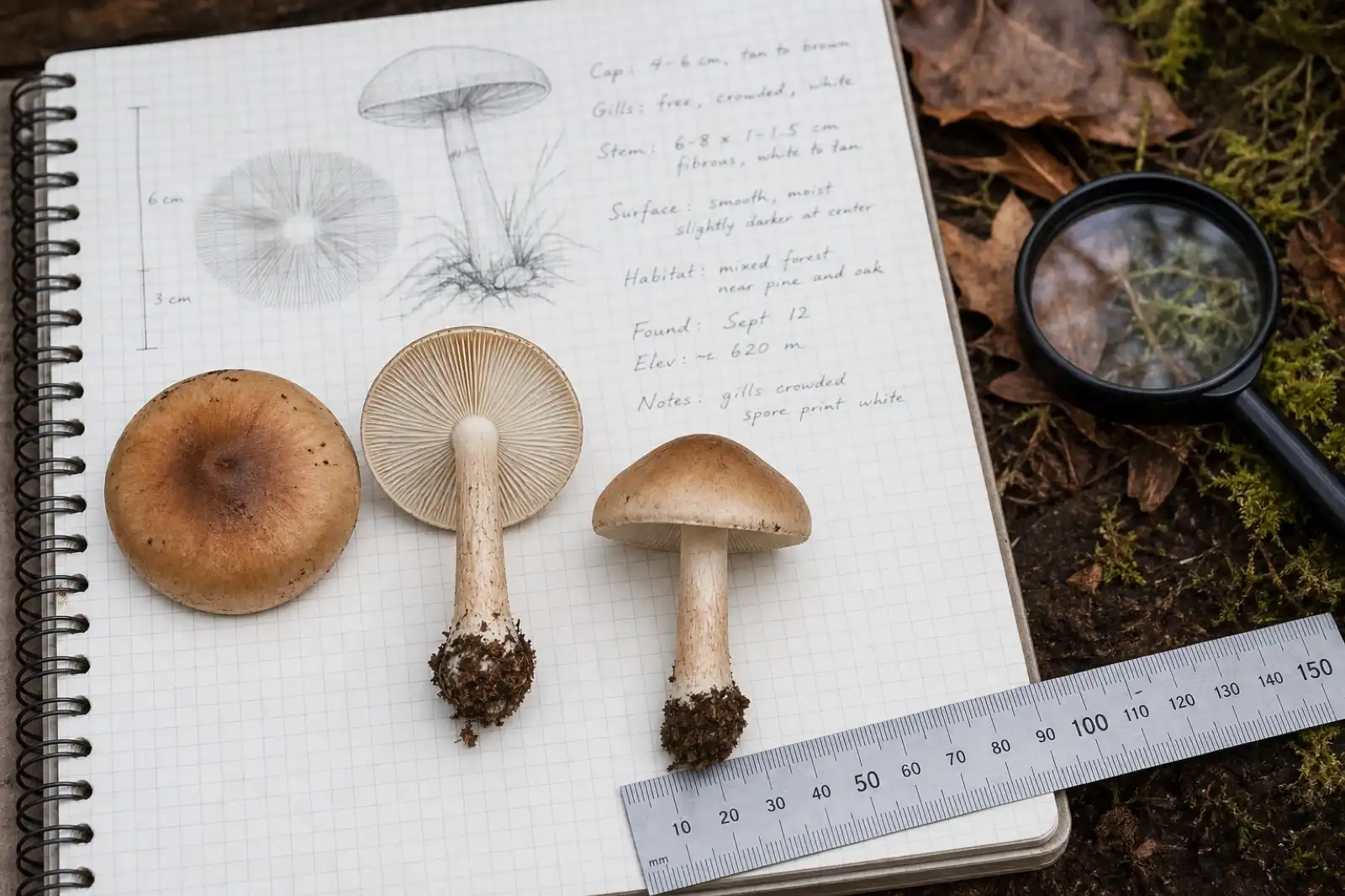
How to Identify Mushrooms: A Beginner's Field Guide
Build an identification from the whole specimen, substrate, habitat, spore deposit, and location—not from a single photograph.
Continue exploring
Browse more practical guides in Mushroom Encyclopedia or visit the mushroom encyclopedia.