Health
Mushroom Beta-Glucans: Evidence, Sources, and Limits
Fungal beta-glucans differ in structure, source, dose, and preparation; evidence for one purified product cannot validate every mushroom food or supplement.
By MushroomScope Editorial Team · · Updated · Editorially reviewed
Evidence context
Food, extracts, and supplements differ
Health conclusions depend on species, fungal part, preparation, dose, population, and measured outcome.
Open the nutrition evidence hub →Medical limit
Educational, not medical advice
Do not delay diagnosis or replace prescribed care with mushroom foods or supplements.
Read the editorial policy →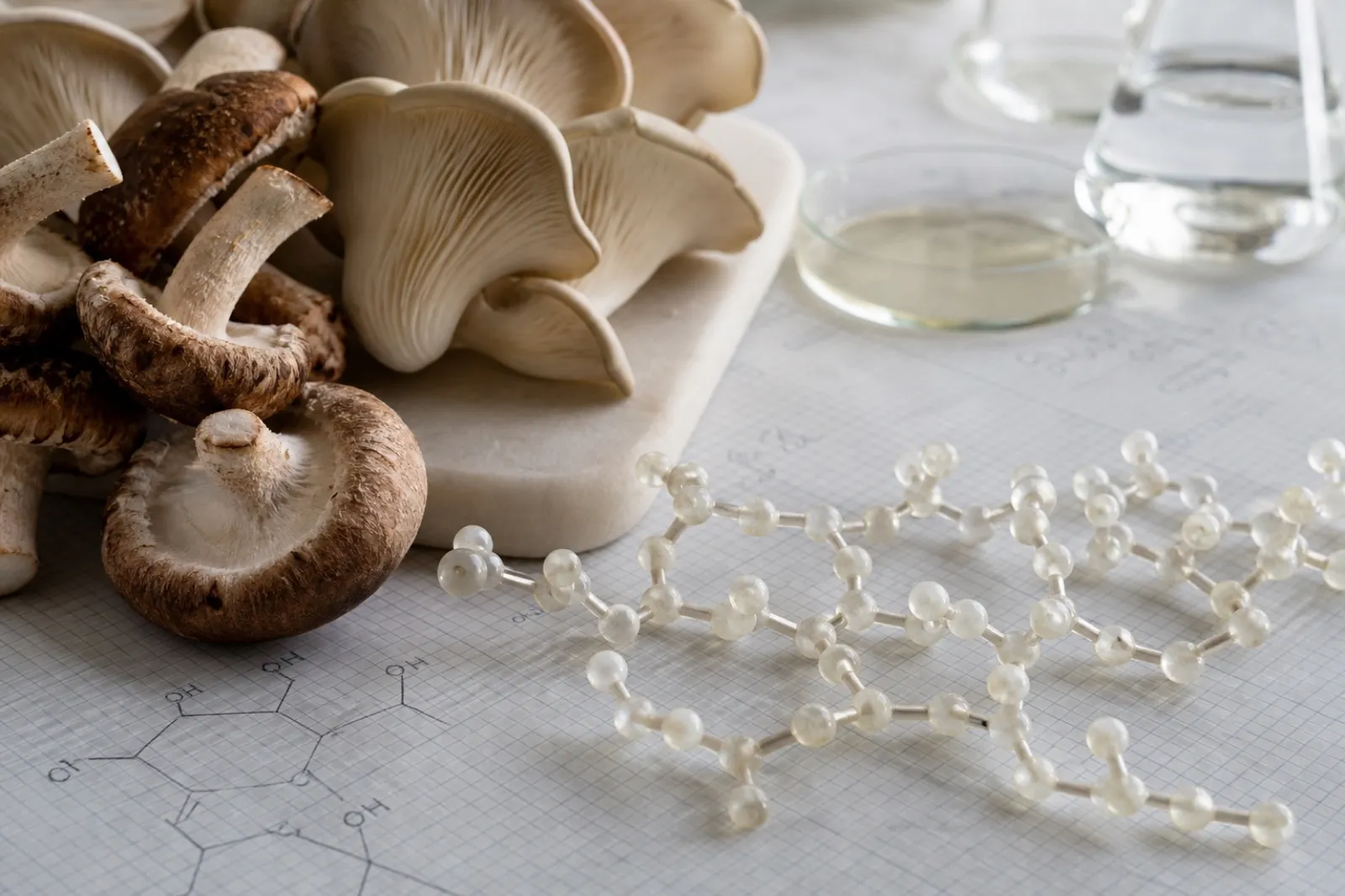
August 2026 editorial note: Beta-glucan claims should be read alongside the exact species, fungal part, preparation, and dose. For related claim checks, see mushrooms and the immune system and mushrooms and gut health.
The short answer
Mushroom beta-glucans are a family of dietary-fiber-like compounds, not a single interchangeable ingredient. A study of one named fungal preparation cannot establish that every mushroom food, powder, or extract has the same effect. When assessing a product or a claim, match the exact species, part, preparation, dose, and outcome to the research.
This distinction is especially important for immune claims. Changes in a laboratory marker, or a result from one small product trial, do not by themselves show that a different product prevents illness or is appropriate alongside medical treatment.
Why the source and structure matter
Beta-glucans are glucose polymers found in fungi, yeast, oats, barley, and other organisms. Their linkage pattern, branching, molecular mass, solubility, extraction process, and surrounding food matrix can differ. Fungal cell walls commonly contain beta-(1→3) backbones with beta-(1→6) branches, but that broad description still does not identify a product’s structure, purity, or dose.
For example, evidence and permitted food claims associated with oat beta-glucan should not be transferred to a mushroom extract. Likewise, a result for a purified yeast beta-glucan does not validate a whole culinary mushroom, a mycelium-on-grain powder, or another fungal species. “Contains beta-glucans” is a composition statement; it is not proof of a particular health outcome.
What randomized trials show
A 2021 systematic review identified 34 randomized trials of orally administered fungal beta-(1→3,1→6)-D-glucans. It included products from yeast, Aureobasidium pullulans, oyster mushroom, shiitake, and reishi, with doses from 2.5 to 1,000 mg per day and study periods up to 6.5 months. That range is useful context, but it is not a dosing recommendation: participants, preparations, comparison groups, and outcomes varied substantially.
The review reported signals in some respiratory, allergy, wellbeing, metabolic, and adjunct-treatment settings, while cellular and molecular immune findings were inconsistent. Its authors called for more work on dose and mechanisms. The careful conclusion is narrower than “boosts immunity.” An immune-marker change is not automatically protection from infection, and fewer self-reported symptoms in one product trial does not establish effectiveness across the category.
Cancer-treatment studies need particular care. Some clinical research has examined fungal beta-glucans as adjuncts, but this does not make an over-the-counter mushroom product a cancer treatment. Anyone receiving cancer therapy should discuss any supplement, including its exact label and dose, with their oncology team before using it.
How to read a beta-glucan label
Use a label as a starting point, not proof of effectiveness. Before treating one product as comparable to a study, look for these details:
- Identity: Does it name the fungal species and say whether it uses fruiting bodies, mycelium, or a mixed material?
- Amount and method: Does it report a beta-glucan amount per serving and identify the assay, rather than only a broad “polysaccharides” percentage?
- Lot-specific documentation: Can the company provide a certificate of analysis for the purchased lot, including microbial and contaminant testing where relevant?
- Research match: Is there human research on that same preparation and dose for the outcome being advertised?
“Polysaccharides 30%” is not equivalent to “beta-glucans 30%”; total polysaccharides can include starch and other carbohydrates. The NIH Office of Dietary Supplements notes that independent quality seals can provide manufacturing and label-accuracy information, but they do not establish a product’s safety or effectiveness. No single seal substitutes for evidence on the actual preparation.
Food versus extract
Edible mushrooms can contribute fiber and other nutrients as foods. Concentrated extracts create a different exposure and may not share the same evidence or safety profile. A product studied in capsules is not automatically comparable with a meal, tea, powder, or multi-ingredient blend.
Do not use a supplement to replace a varied diet or prescribed treatment. People who take medicines, have a medical condition, are pregnant or breastfeeding, are preparing for surgery, or receive immune-modifying or cancer treatment should ask a qualified clinician or pharmacist about the exact product. Bring the label or a photo of it; “mushroom supplement” alone is usually not enough information to assess a possible interaction.
Use the supplement label guide to evaluate products and the oyster mushroom guide for species context.
A practical way to weigh a claim
When a headline promises support for immunity, energy, glucose, or another health outcome, pause and separate four questions: what is in the product, what exact outcome was studied, who was studied, and how certain is the result? A reliable answer often includes uncertainty. Prefer sources that identify the intervention, report the study design and limitations, and avoid using one ingredient name as a shortcut for a medical promise.
Distinguish clinical outcomes from immune measurements
Beta-glucan studies may measure symptoms, infection episodes, days absent from work, quality-of-life scores, blood-cell activity, cytokines, antibody responses, glucose, lipids, or other laboratory values. These outcomes do not answer the same question.
A change in a cytokine or immune-cell assay shows that a measurement differed under study conditions. It does not automatically mean participants avoided infection, recovered faster, or experienced a net health benefit. Conversely, a self-reported symptom difference can be clinically interesting while remaining vulnerable to expectation, recall, multiple comparisons, and incomplete blinding.
When reading a trial, identify the prespecified primary outcome, absolute difference, uncertainty interval, attrition, adverse-event collection, and whether the effect was independently replicated. Do not let the broad phrase “immune support” merge unlike endpoints.
Why dose cannot be separated from preparation
A milligram amount does not fully describe exposure. Two fungal beta-glucan preparations can differ in branching, molecular size, solubility, purification, aggregation, and surrounding material. An assay may report beta-glucan mass without showing that the material matches a trial product.
The 2.5–1,000 mg daily range reported across trials in the 2021 systematic review illustrates heterogeneity, not a consumer dosing window. Selecting the largest published number ignores differences in organism, product, population, outcome, and safety monitoring.
There is also no general rule that more is better. Without a demonstrated dose-response relationship for a specific preparation and endpoint, increasing intake can add cost or adverse effects without increasing benefit.
Understand common assay limitations
Product labels may report total glucans, alpha-glucans, beta-glucans, or total polysaccharides. These values depend on the analytical method, sample preparation, moisture basis, and calculation. Results from unlike methods should not be compared as if they were measured on one scale.
Alpha-glucan can provide context about starch or related carbohydrate, particularly in products involving grain-grown mycelium, but it is not a complete authenticity test. A low alpha-glucan result does not prove the species, fungal part, absence of adulteration, or clinical equivalence.
A useful certificate names the finished-product lot, method, laboratory, units, specification, and result. Ask whether the percentage is measured by weight in the finished powder and whether moisture is accounted for. A generic supplier certificate does not necessarily cover the bottle purchased.
Compare whole foods without making treatment claims
Cultivated mushrooms can be part of a varied diet and contribute fiber, micronutrients, and culinary variety. Their cell-wall beta-glucans remain within a food matrix alongside water, protein, other carbohydrates, and many compounds affected by species, maturity, storage, and cooking.
That food context is different from a purified or concentrated extract. It is inaccurate to take an extract trial, calculate an apparent equivalent weight of mushrooms, and claim that a meal produces the same exposure. Extraction yield, digestibility, structure, and study standardization interrupt that conversion.
Likewise, the absence of a supplement-style clinical effect does not make mushrooms nutritionally valueless. Food recommendations and treatment claims are separate questions. Our mushroom nutrition guide uses food-composition data rather than supplement extrapolation.
Keep oat, barley, yeast, and fungal claims separate
Oat and barley beta-glucans are generally linear beta-(1→3,1→4)-glucans with a food and regulatory evidence base different from common fungal beta-(1→3,1→6) structures. A cholesterol-related claim supported for a qualifying cereal product cannot be transferred to mushroom powder simply because both contain “beta-glucan.”
Yeast beta-glucans may share broad linkage language with fungal materials while differing in source, manufacturing, purification, and product evidence. Even within mushrooms, an oyster-mushroom preparation and a reishi extract are not one intervention.
Always follow the claim back to its exact source material. Category-wide language is convenient for marketing and often scientifically too broad.
Evaluate adjunct cancer research conservatively
Some fungal polysaccharide preparations have been studied as adjuncts in particular oncology settings. “Adjunct” means studied alongside standard care, not as its replacement. Products, countries, treatment regimens, endpoints, and regulatory contexts differ.
A trial involving a defined medical preparation does not validate an over-the-counter blend with an unrelated species, extraction, dose, or manufacturing standard. Intermediate immune outcomes also cannot substitute for survival, disease progression, symptoms, quality of life, and carefully characterized harms.
Anyone receiving cancer therapy should discuss the exact product and complete ingredient list with the oncology team before use. Do not delay or replace surgery, radiation, chemotherapy, immunotherapy, targeted therapy, or other prescribed care.
Consider safety even when the ingredient sounds familiar
“Fiber-like” does not mean risk-free in every form or population. Concentrated products may cause gastrointestinal symptoms or allergic reactions, and multi-ingredient formulas add separate interaction risks. Small trials may not detect uncommon or delayed harms.
People taking medicines, preparing for surgery, pregnant or breastfeeding, managing immune or autoimmune conditions, or living with liver or kidney disease should obtain individualized advice. Bring the exact label, dose, and lot rather than asking generally about beta-glucan.
Stop a suspected product and seek urgent care for trouble breathing, facial or throat swelling, fainting, seizure, severe weakness, or another serious reaction. Retain the package and timing information for clinical assessment and appropriate adverse-event reporting.
Use a product-equivalence worksheet
Before applying a paper to a product, place the study and label side by side and record:
- organism and strain where reported;
- fungal, yeast, cereal, or other source;
- fruiting body, mycelium, cell wall, or purified fraction;
- extraction and purification;
- measured beta-glucan structure or composition;
- actual daily amount and schedule;
- participant population and concurrent treatment;
- study duration and primary outcome;
- adverse-event monitoring; and
- whether the finished commercial lot was studied.
Mark every unknown rather than assuming a match. If the study preparation cannot be identified or the retail product hides its individual amounts, the evidence connection is weak.
A six-step claim screen
- Define the exact promise. “Supports health” is too vague; prevention, symptom reduction, laboratory change, and treatment are different claims.
- Identify the material. Record source, species, fungal part, extraction, assay, and lot.
- Find human evidence. Separate trials from cell and animal research.
- Check product equivalence. Match dose, preparation, population, duration, and outcome.
- Judge certainty and importance. Look beyond statistical significance to bias, replication, absolute effect, and harms.
- Review personal risk. Consider medicines, conditions, surgery, pregnancy, and prescribed care with a qualified clinician or pharmacist.
If a claim fails at identity or equivalence, a confident health conclusion is not justified. Better packaging, a higher percentage, or a longer bibliography cannot repair that missing link.
What the evidence supports saying today
It is accurate to say that fungal beta-glucans are structurally diverse compounds studied in human trials and preclinical research. Some defined preparations have produced signals for particular outcomes that warrant further research.
It is not accurate to say that all mushroom beta-glucans “boost immunity,” share oat beta-glucan’s cholesterol evidence, prevent infection, or treat cancer. The evidence belongs to specific preparations and questions.
For consumers, the most useful next step is not searching for the largest percentage. It is verifying the product identity, assay, lot testing, research match, and interaction context described in the mushroom supplement guide.
References
Source quality notes
MushroomScope cites sources that match the page scope, such as taxonomic databases, extension guidance, food-safety agencies, food-composition databases, and peer-reviewed or institutional health references. Sources support context and uncertainty; they do not turn an online page into specimen identification, medical advice, or a tested recipe record.
Frequently asked questions
Are all beta-glucans the same?
No. Source, branching, molecular size, solubility, purification, food matrix, and dose affect biological behavior and prevent simple class-wide claims.
Do mushroom beta-glucans have the same cholesterol evidence as oat beta-glucan?
No. Oat and fungal beta-glucans have different structures and evidence bases; claims for one source should not be transferred to another.
Does a polysaccharide percentage prove beta-glucan content?
No. Total polysaccharides can include starch and other carbohydrates. A meaningful certificate should identify the validated assay and result for the tested lot.
Does more beta-glucan on a label mean a stronger health effect?
No. A larger reported amount does not establish comparable structure, purity, absorption, dose response, safety, or a clinically meaningful benefit.
Can beta-glucan supplements replace vaccination or medical treatment?
No. Current evidence does not support using a mushroom or fungal beta-glucan product as a replacement for vaccination, diagnosis, or prescribed treatment.
Related guides
health
Mushroom Supplements: Labels, Testing, and Safety
Learn how to check mushroom supplement identity, fungal part, extraction, dose, lot testing, claims, interactions, and regulatory limits.
health
Turkey Tail Mushroom Research: PSK, Products, and Safety
Turkey tail research on PSK and other extracts is product- and setting-specific; it does not validate self-treatment, foraged material, or every supplement.
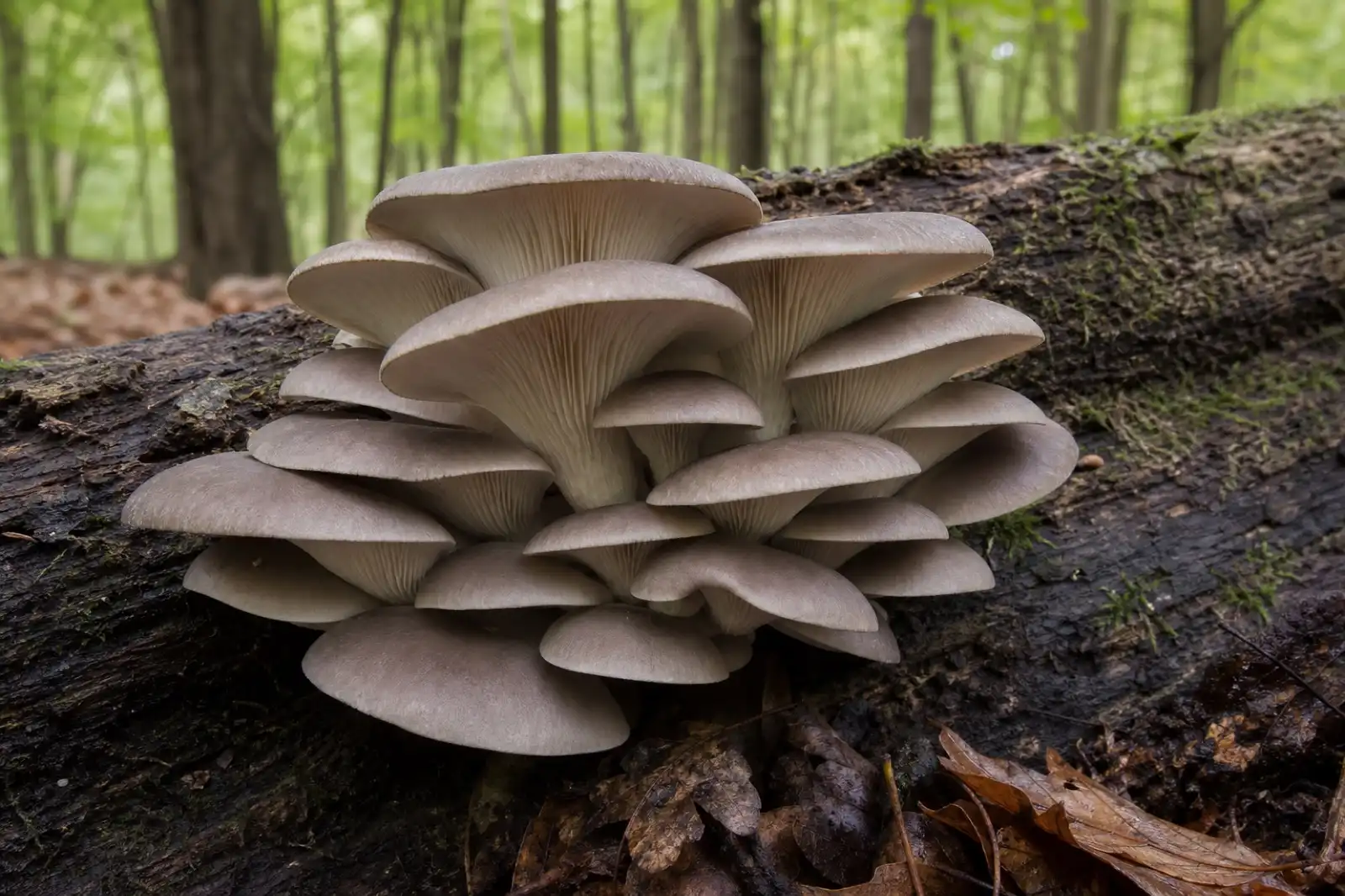
mushrooms
Pleurotus ostreatus: Oyster Mushroom Identification and Growing Guide
A careful guide to Pleurotus ostreatus identification, habitat, home cultivation, nutrition, lookalikes, food safety, and research limitations.
Continue exploring
Browse more practical guides in Health or visit the mushroom encyclopedia.