Mushroom Encyclopedia
Pleurotus ostreatus: Oyster Mushroom Identification and Growing Guide
A careful guide to Pleurotus ostreatus identification, habitat, home cultivation, nutrition, lookalikes, food safety, and research limitations.
By MushroomScope Editorial Team · · Updated
Species context
Treat profiles as reference material
Species profiles summarize documented traits, taxonomy, and lookalikes, but natural variation can be substantial.
Use the safety checklist →Decision limit
A profile cannot authenticate a specimen
Do not eat a wild mushroom from an online match, single feature, or generated image.
Read the safety disclaimer →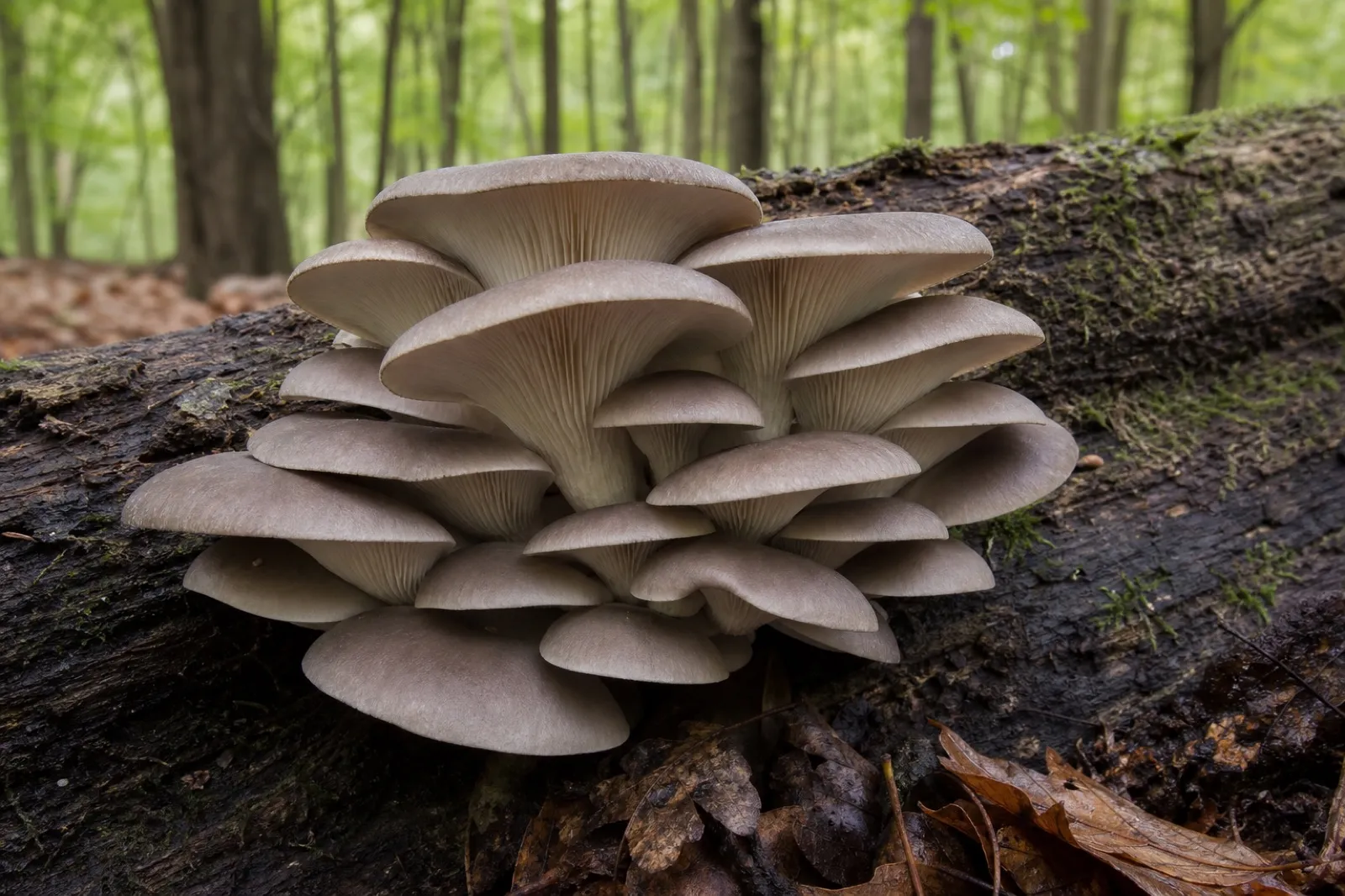
Quick facts
- Scientific name
- Pleurotus ostreatus
- Common names
- oyster mushroom, pearl oyster mushroom, tree oyster
- Taxonomy
- Pleurotus · Pleurotaceae
- Edibility context
- Edible: A widely cultivated edible species, normally cooked before eating.
- Spore print
- White to pale lilac-gray.
- Toxicity context
- None Known: Cultivated oyster mushrooms are established foods, but spores can irritate sensitized workers and wild lookalikes require expert assessment.
- Season
- September, October, November, December, January, February
- Growing difficulty
- Easy
- Regions
- Europe, North America, temperate Asia, cultivated worldwide
Safety limit: These labels summarize documented context; they never authenticate a wild specimen. Cooking does not make a poisonous species safe.
Separate a named oyster crop from a wild oyster-shaped cluster
Pleurotus ostreatus is a wood-decaying basidiomycete known for layered clusters of oyster-shaped caps. It is both an ecologically important decomposer and a major cultivated food. The name “oyster mushroom,” however, is also applied to several Pleurotus species. A market label therefore identifies a product group more reliably than it proves a species-level determination.
This is a species account, not a remote identification or medical consultation. A retail label may reliably identify a cultivated food crop without proving that a wild lookalike is P. ostreatus. Conversely, a wild shelf cluster cannot be cleared for eating because its caps resemble a supermarket oyster. Keep lot and culture records for a crop; keep whole-specimen, wood, region, and underside records for a wild observation.
For the thick-stemmed cultivated form sold as king trumpet, use the separate king oyster mushroom guide; it explains why that crop phenotype and its host-linked species complex should not be folded into this P. ostreatus account.
A high-confidence record starts with provenance. For a cultivated mushroom, note the producer, strain or culture name if available, substrate, harvest date, and storage history. For a wild observation, record precise habitat without publicly exposing a sensitive population, photograph the attachment and underside, note nearby trees, and make a spore print when appropriate. The habitat identification guide shows how to record wood and host evidence without guessing from the nearest tree. Do not taste an unidentified mushroom.
Read decurrent gills, attachment, and wood together
Look for laterally attached caps growing in shelves, pale gills that descend the attachment, white flesh, and a white to faintly lilac spore deposit. Cap color is variable and influenced by strain and temperature. A cluster may have almost no visible stems. Accurate field identification also records the wood, season, odor, texture, and nearby trees; photographs of the cap alone omit several decisive characters.
Macroscopic characters
- Cap or upper surface: Fan-, shell-, or oyster-shaped; gray, gray-brown, or tan, often paler toward the margin.
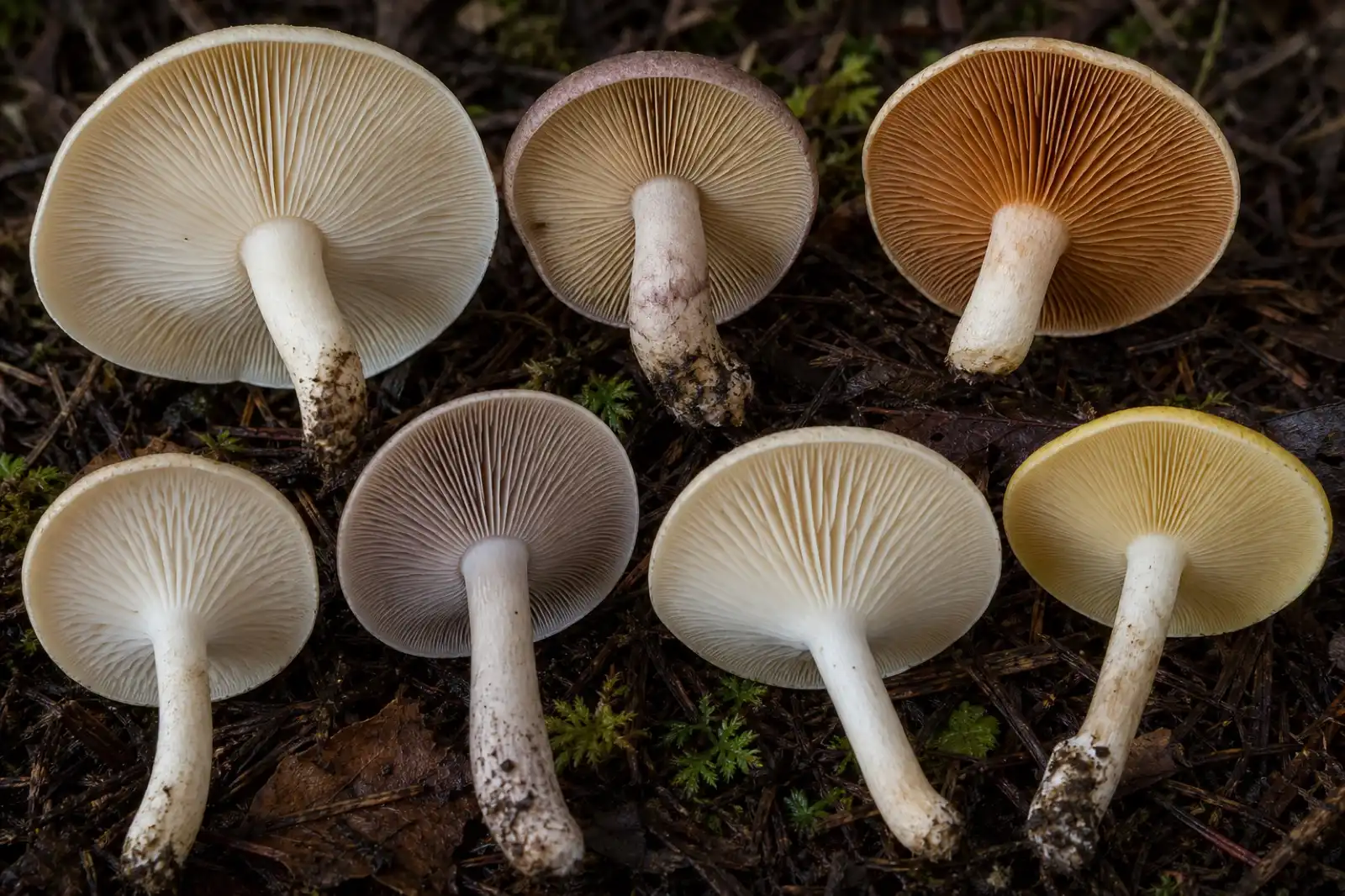
- Fertile surface: White to cream gills run distinctly down the attachment or short stem.
- Stem or attachment: Short, lateral, off-center, or absent; white and often hairy near the base.
- Flesh: White, firm when young, with a mild fungal aroma; tougher with age.
- Spore print: White to pale lilac-gray.
Record an oyster cluster from tight primordia through expanded caps. Measure cap width, stem position, stem length, flesh thickness, and how far the gills descend; photograph the common base and the wood connection before detaching it. Color can shift from dark gray to tan with strain, temperature, age, and light, while crowded or carbon-dioxide-stressed cultivated clusters can exaggerate stems. A pale lilac-gray deposit supports the record but does not identify every pleurotoid mushroom.
Build a developmental cluster record
Do not reduce a cluster to one mature cap. Photograph the youngest rolled margins, mid-stage shells and oldest flattened caps in the same frame, then repeat the underside view. In a coherent P. ostreatus cluster, the gills should continue down the short lateral attachment across those stages; a central stem, sharply ending gills or a different fruiting surface changes the candidate set. Record whether caps arise from one fused base or several points along the wood, because a cropped photograph can make scattered fruit bodies appear clustered.
Cap color is weak when separated from temperature, light and strain. Cool-grown cultivated crops may be dark gray while other authenticated crops are tan, and aging margins can bleach. A useful record therefore treats color as a dated, white-balanced observation and gives more weight to the gill attachment, flesh, growth architecture and substrate. If a specimen is destined for microscopy or sequencing, connect every image and note to the same voucher identifier.
Similar species
- Pleurotus pulmonarius: A closely related pale oyster species; separation may require ecology, microscopy, or DNA.
- Pleurocybella porrigens: A thin white conifer-associated species; substrate and structure differ, and casual comparison is unsafe.
- Omphalotus species: Orange, gilled wood-decayers that are poisonous; color, growth form, and other characters must be evaluated.
The comparison list is not exhaustive. Pleurotus ostreatus, P. pulmonarius, and other members of the genus can overlap in market language while differing in ecology, season, morphology, and sometimes laboratory characters. Geographic checklists and local keys matter because the candidate set changes by continent and habitat. Apps can organize observations, but their suggestions remain hypotheses. If consumption is contemplated, obtain in-person confirmation from a qualified local identifier who can inspect the whole material.
Scientific Classification
| Rank | Name |
|---|---|
| Kingdom | Fungi |
| Phylum | Basidiomycota |
| Class | Agaricomycetes |
| Order | Agaricales |
| Family | Pleurotaceae |
| Genus | Pleurotus |
| Species | Pleurotus ostreatus |
The Pleurotus ostreatus complex has been applied broadly in cultivation and field reporting, and common “oyster” labels also cover P. pulmonarius, P. columbinus, P. eryngii, and other crops. Preserve the culture label, supplier, accession if available, geography, and method used by each source. Do not silently assign a blue, summer, phoenix, or king-oyster product to P. ostreatus because the package uses the family resemblance.
Map hardwood decay without treating season as proof
In nature the fungus digests lignocellulose in dead or weakened wood, commonly hardwood. Cultivators reproduce that role with straw, hardwood pellets, sawdust blocks, or logs. Fruiting bodies are only the temporary reproductive structures; most of the organism is mycelium within the substrate. Never harvest from treated lumber, roadside waste, or contaminated industrial sites because decomposer mushrooms can contact environmental pollutants.
Known range represented here: Europe, North America, temperate Asia, cultivated worldwide. Typical substrates: hardwood logs, pasteurized straw, supplemented hardwood sawdust. Wild fruiting is often associated with cool, wet periods, while controlled cultivation is possible throughout the year.
For a wild oyster record, trace the cluster to exposed or buried wood and document whether the host is standing dead, fallen, wounded but living, or processed timber. Bark, leaves, buds, end grain, and site history can support a host name; a cluster apparently emerging from soil may actually connect to a buried root. Moist cool weather often favors fruiting, but a cultivated escape or irrigated landscape can break a simple seasonal rule.
Test the apparent wood connection
A shelf growing at soil level may emerge from a buried root, stump or log. Clear loose litter only when permitted and photograph the attachment before disturbing it. “On soil” and “on wood” support different comparisons, so uncertainty should remain explicit when the connection cannot be seen. Also record bark, end grain and nearby tree evidence separately: naming the nearest standing tree as the host is not defensible when roots and fallen wood overlap.
The core name on this page is the temperate P. ostreatus concept represented by the cited taxonomy record. Pale warm-season oysters may instead be treated as P. pulmonarius or another regional lineage, and North American versus European name use is not perfectly interchangeable. This boundary matters for a species record but usually matters less for a correctly labeled cultivated food package. Preserve collection country, date and the authority used rather than backfilling a species name from the English word “oyster.”
The pink oyster guide treats the warm-adapted P. djamor complex, coral color changes, culture provenance, and the orange hairy Phyllotopsis comparison as a separate identification and growing intent.
Leave part of a fresh oyster cluster attached so the substrate and developmental sequence remain available to other observers and for spore dispersal. When collecting is permitted, retain the common base, representative caps, a section through cap and stem, and a dried voucher with the host record. Dense urban or roadside fruiting also requires a contamination-history decision separate from taxonomic identification.
Choose a crop system before setting a fruiting room
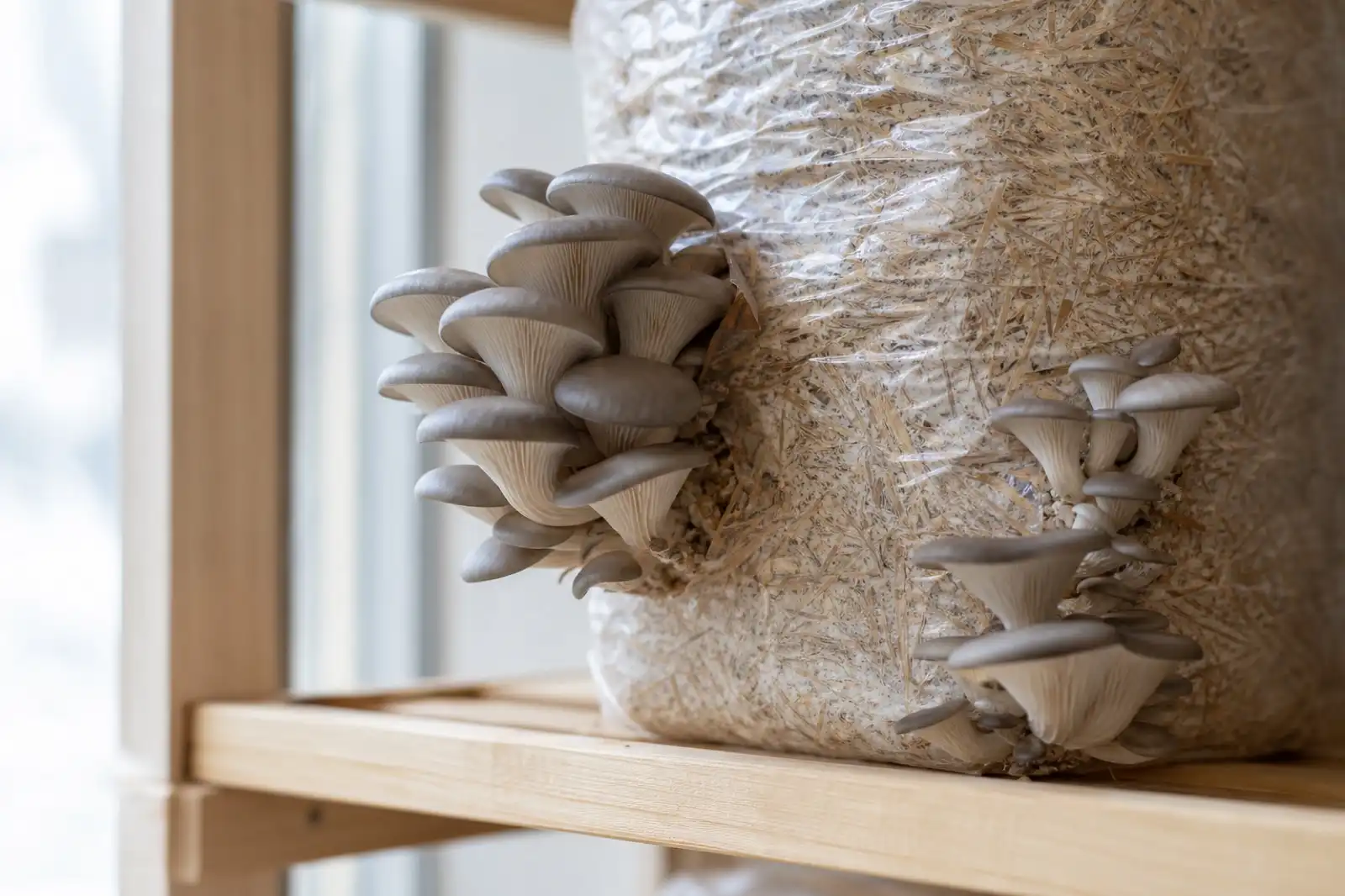
Use a verified commercial culture and a tested substrate process. Straw is commonly chopped, hydrated, pasteurized, cooled, and inoculated; supplemented sawdust generally needs more rigorous sterilization. Those are different production systems, not interchangeable recipes: moisture measurement, heat treatment, supplementation, bag geometry, and contamination risk change together. The home oyster growing guide covers a beginner workflow; this page explains why a species label alone does not set a universal temperature or yield.
Incubate according to the strain supplier, then provide indirect light, high humidity, and sufficient fresh air. Long stems with small caps can indicate excess carbon dioxide, but cramped clusters, low humidity, temperature, light, substrate density, and harvest timing can also change form. Record batch, substrate, room temperature, relative humidity, air exchange observations, first-pin date, and flush weights before altering one variable at a time. Harvest clusters while margins remain tender, and keep the growing area clean between flushes.
A safe cultivation workflow
- Choose verified material. Buy spawn or a fruiting block from a specialist supplier that identifies the culture and provides strain-specific parameters.
- Match the substrate. Use hardwood logs or pasteurized straw only through a proven recipe. Moisture and heat treatment must suit the method.
- Separate clean and dirty work. Clean tools and surfaces, wash hands, label every batch, and keep finished fruiting areas away from substrate preparation waste.
- Monitor colonization. Healthy appearance depends on the species and culture. Do not assume every white growth is the intended fungus; odor and unexpected pigments are warning signs.
- Initiate fruiting deliberately. Temperature, humidity, light, oxygen, and carbon dioxide interact. Follow the culture supplier rather than copying one universal number.
- Harvest and cool promptly. Use clean tools, avoid saturating fruit bodies, refrigerate culinary crops, and document yield and abnormalities.
Oyster cultivation changes with substrate and container. Straw particle length and pasteurization, hardwood particle distribution and supplementation, bag filter, block density, slit geometry, shelf loading, crop-zone carbon dioxide, humidity, and air speed can all change cluster form. Keep those variables in the batch record, isolate green growth or sour odor, and never treat an unexpected fruit body as the intended Pleurotus crop based on shape alone.
Diagnose the fruiting interface before changing the room
The bag opening determines where evaporation and oxygen exposure occur. A compact side slit concentrates a cluster; stripping away the entire bag exposes more substrate, increases drying area and can scatter pins. Before changing humidity or fan settings, record cut shape, cut area, block orientation and distance from the air outlet. Compare blocks from the same inoculation lot at the same developmental time, since a better-looking cluster on a different strain is not a controlled comparison.
Read morphology as a response pattern rather than a one-symptom recipe. Long stems and small caps can be consistent with elevated carbon dioxide, but a shelf-edge airflow gradient is stronger evidence than one odd cluster. Cracked or leathery margins point toward excessive drying, while persistent surface droplets show wetting without proving that room relative humidity is adequate. The pinning and fruiting conditions guide explains the room variables; the species record here supplies the oyster-specific fan-shaped endpoint.
Keep food composition separate from extracts and mechanisms
Oyster mushrooms are nutritious foods, not medicines. Food-composition data support their contribution of fiber, protein, and several micronutrients. Laboratory studies of beta-glucans, lovastatin-like compounds, or antioxidant activity can help researchers form hypotheses, but they do not justify promising cholesterol control, cancer treatment, or immune enhancement from an ordinary serving. Human outcomes depend on dose, preparation, population, and study quality.
For food questions such as whether mushrooms provide fiber or protein, the oyster mushroom nutrition guide separates species, serving mass, water loss, added cooking ingredients, and food-versus-extract evidence. The broader mushroom nutrition guide compares ordinary food portions across mushrooms. Nutrient values still vary by strain, substrate, water content, maturity, ultraviolet exposure, processing, and cooking. USDA FoodData Central is useful for representative values, but a database average is not a laboratory analysis of a particular package.
Oyster-mushroom research spans edible servings, dried powders, isolated polysaccharides, fermentation materials, cell assays, and animal models. Results belong to the tested material, dose, comparator, and population. A mechanistic result about a purified fraction cannot establish that a dinner serving prevents disease, and nutrient values for raw cultivated caps cannot be transferred unchanged to dried powder or a substrate-containing mycelial product.
An oyster supplement should state the Pleurotus species, culture or identity method, fungal part, residual substrate, extraction process, serving mass, lot, and contaminant results. Generic “oyster mushroom complex” language cannot show equivalence to a cited preparation. Keep supplement decisions separate from the culinary page and from occupational spore exposure, which depends on room concentration and work practice rather than an oral serving.
Cook cultivated food, and keep wild and occupational risks distinct
Cook before routine consumption and introduce a new mushroom in a modest portion. Gastrointestinal intolerance and allergy can occur. Heavy occupational spore exposure has been associated with respiratory sensitization, so frequent indoor growers should ventilate fruiting rooms and consider appropriate respiratory protection. For wild collections, obtain in-person confirmation from a qualified local identifier; pale shelf fungi and orange Omphalotus species cannot be ruled out by an app photograph.
General food practice still applies: source cultivated mushrooms from reputable producers, transport them cool, wash hands and utensils, prevent contact with raw animal foods, and cook with clean equipment. Cooking can reduce microbial risk and improve digestibility, but it cannot make a poisonous species safe and may not destroy every toxin or environmental contaminant.
Children, older adults, pregnant people, and immunocompromised individuals can face greater consequences from foodborne infection. Follow national and local recall advice. For severe vomiting, persistent diarrhea, confusion, jaundice, breathing difficulty, or symptoms after eating an unidentified wild mushroom, contact emergency services or a poison center immediately; do not wait for an online identification.
Match the cut to the cluster anatomy
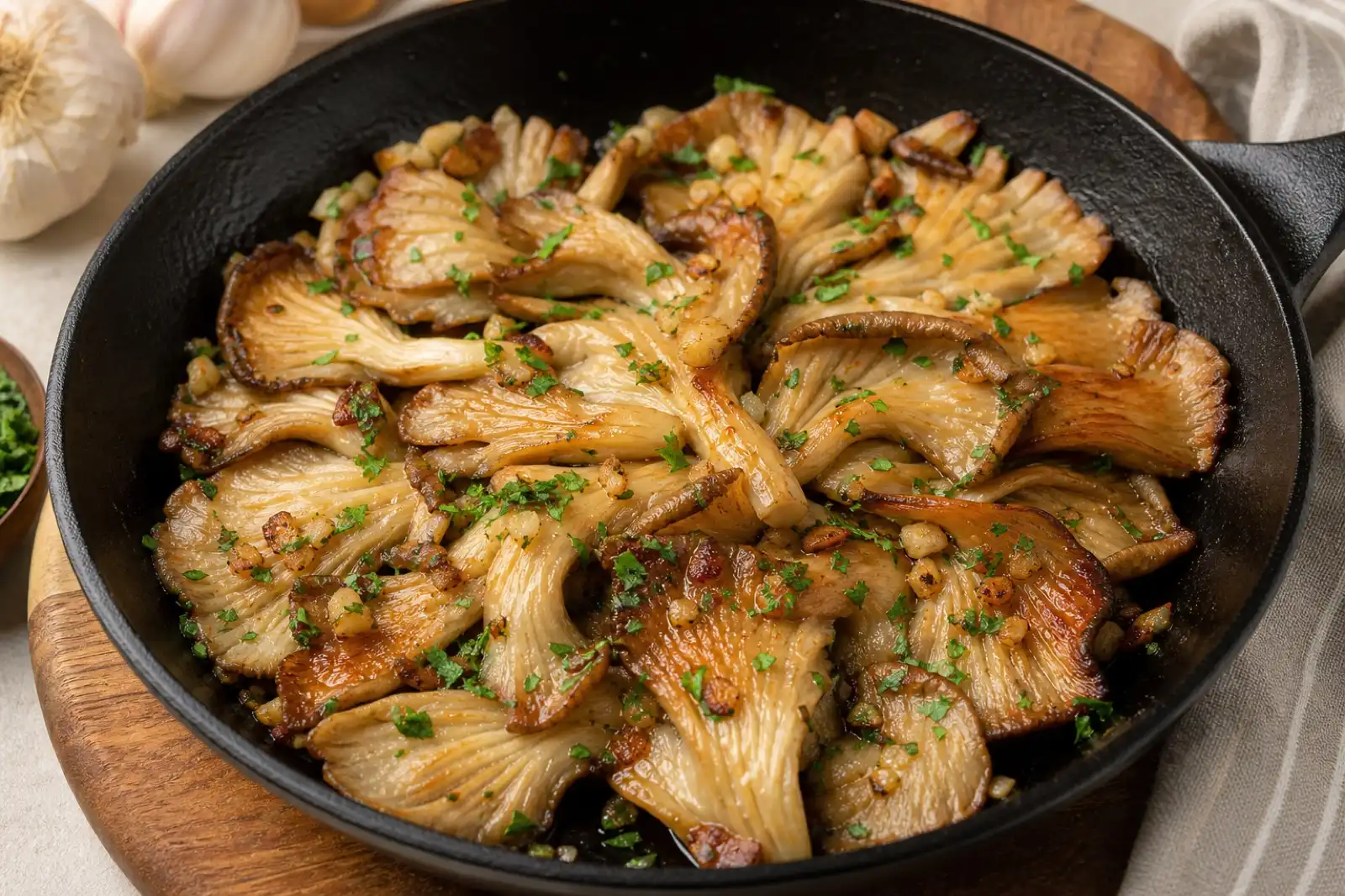
Treat a cultivated cluster as two textures. The thin cap and outer gill-bearing edges lose water quickly and can brown in broad contact with a hot pan; the fused base is denser and may remain chewy. Trim only the compressed substrate-bearing portion, then tear the remaining cluster along its natural seams so the pieces expose flat surfaces without shredding the caps. Crowding turns released water into a steaming bath, so cook in batches when the pan cannot hold one loose layer.
Salt timing is a texture decision, not a universal prohibition. Early salt can draw moisture into the pan, which is useful if the cook allows that liquid to evaporate before browning; later salt makes the dry-browning stage easier to see. Finish only after the liquid has cleared and the thickest attachment pieces are hot and tender. This mechanism distinguishes a species guide from the site’s recipe pages: the garlic-butter oyster method provides quantities and timing, while this section explains why cluster geometry changes the method.
References
- National Center for Biotechnology Information. NCBI Taxonomy Browser. Used for a current lineage check; NCBI notes that nomenclature should also be assessed against specialist literature.
- U.S. Department of Agriculture. FoodData Central. Food-composition reference; values vary by sample and preparation.
- Penn State Extension. Mushroom Food Safety. Production hygiene and preventive-control context.
- Schoch CL, et al. NCBI Taxonomy: a comprehensive update on curation, resources and tools. Database (Oxford). 2020.
- U.S. Food and Drug Administration. Selecting and Serving Produce Safely. General produce handling guidance.
Editorial review: September 11, 2026. No named mycologist, cultivation specialist, clinician, or dietitian reviewed this page. Scientific names and public-health recommendations should be rechecked at every substantive update.
Source quality notes
MushroomScope cites sources that match the page scope, such as taxonomic databases, extension guidance, food-safety agencies, food-composition databases, and peer-reviewed or institutional health references. Sources support context and uncertainty; they do not turn an online page into specimen identification, medical advice, or a tested recipe record.
Frequently asked questions
Can this mushroom be identified from a photograph?
No. A photograph can support documentation, but a defensible identification of Pleurotus ostreatus also considers substrate, location, developmental stage, underside, spore deposit, odor, texture, and sometimes microscopy or DNA. Never make an edibility decision from an image alone.
Is it safe to eat?
oyster mushroom is an established food when it comes from a reputable cultivated source and is stored and cooked properly. Individual allergy or intolerance is still possible. A wild specimen needs independent expert confirmation.
Can beginners grow it?
The database rates cultivation as easy. Beginners should use authenticated spawn or a reputable ready-to-fruit block, follow the supplier's temperature and hygiene instructions, and discard cultures showing unexplained mold colors or foul odors.
Does it have proven health benefits?
It has nutritional or research interest, but that wording must not be converted into a treatment claim. Laboratory findings do not prove clinical benefit, and human evidence must match the exact species, preparation, dose, and outcome.
How should it be stored?
Refrigerate fresh cultivated mushrooms promptly in breathable food-safe packaging and use them while sound. Keep dried material sealed, dry, and away from heat. Follow local recall notices and discard spoiled or contaminated products.
Related guides
growing
How to Grow Oyster Mushrooms at Home
Grow oyster mushrooms at home with a supplier-provided fruiting block: set up a clean observation routine, follow the culture label, and handle harvests safely.
recipes
Garlic Butter Oyster Mushrooms
Make garlic butter oyster mushrooms with cultivated oyster mushrooms, clear steps, practical substitutions, and conservative food-safety guidance.
identification
Mushroom Gill Types: Attachment, Spacing, and Color
Compare free, attached, notched, adnate, and decurrent mushroom gills while recording spacing, short gills, edge details, bruising, and color changes.
Continue exploring
Browse more practical guides in Mushroom Encyclopedia or visit the mushroom encyclopedia.