Identification
Mushroom Gill Types: Attachment, Spacing, and Color
Compare free, attached, notched, adnate, and decurrent mushroom gills while recording spacing, short gills, edge details, bruising, and color changes.
By MushroomScope Editorial Team · · Updated
Safety first
Use as a field-record guide
Document the whole mushroom, habitat, substrate, and region before comparing names or photographs.
Open the identification safety hub →Decision limit
Do not use this as an edibility verdict
Wild mushroom consumption decisions require qualified local, in-person confirmation of the complete specimen.
Read the safety disclaimer →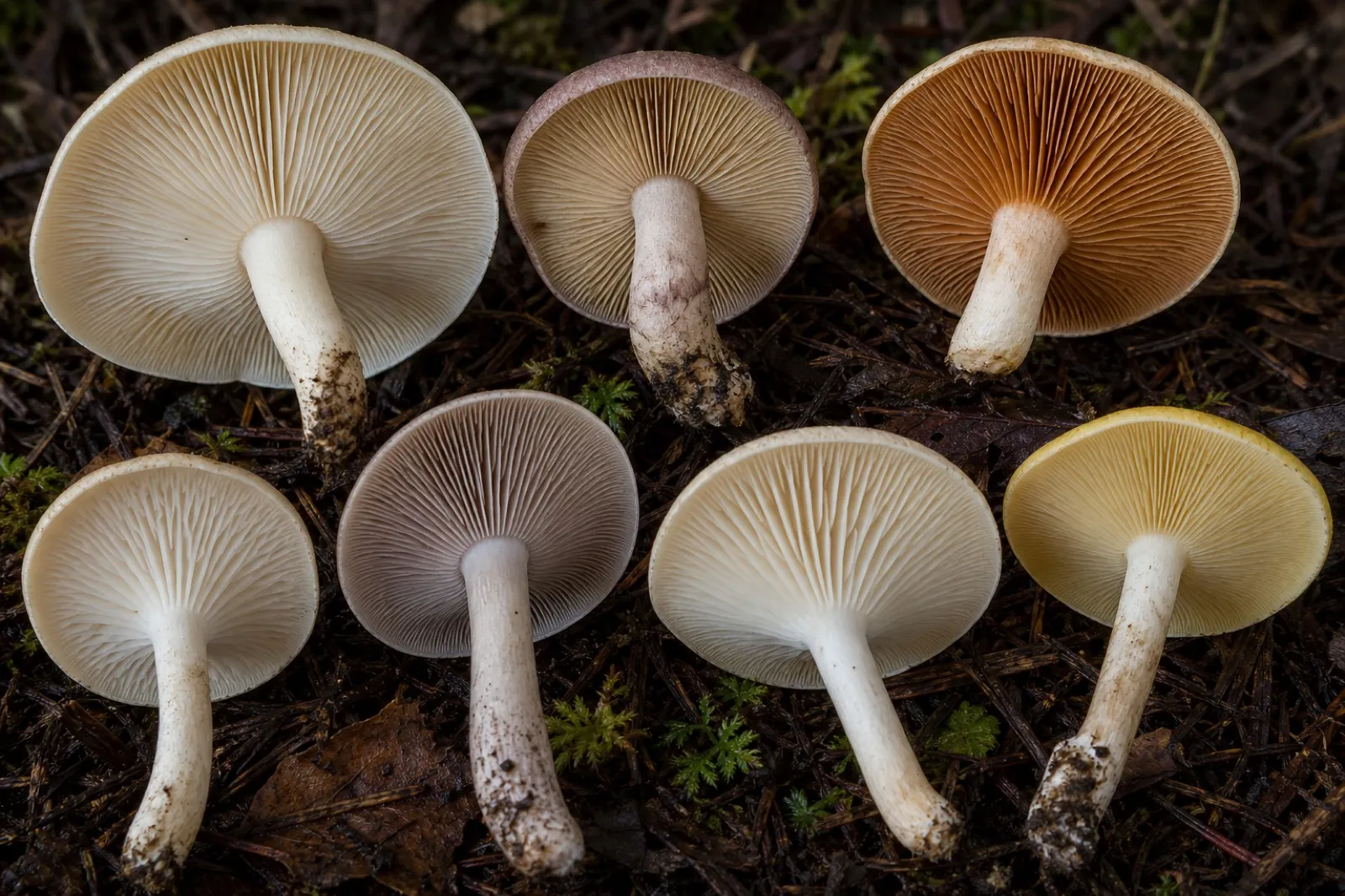
Use gill structure as one part of a complete identification
Compare free, attached, notched, and decurrent gills while recording spacing, color changes, and short gills. The central task is gill attachment and development. A defensible observation separates what was directly seen from what was inferred. Common names, image-search results, and app suggestions can generate hypotheses, but none establishes identity or edibility.
Gill terminology is useful only when attached to a specimen record. Photograph the intact cap-to-stem junction before cutting, then section one young and one mature fruit body through the center. Record whether the cap expanded after collection, whether the stem was torn from the cap, and whether short gills end between full-length blades. Those details prevent handling damage from being misread as a naturally free, notched, or decurrent attachment.
What to examine
- attachment to the stem: Record the feature in plain language, add a measurement or photograph, and note variation among specimens.
- spacing and thickness: Record the feature in plain language, add a measurement or photograph, and note variation among specimens.
- forking or cross-veins: Record the feature in plain language, add a measurement or photograph, and note variation among specimens.
- color at maturity: Record the feature in plain language, add a measurement or photograph, and note variation among specimens.
- bruising or latex: Record the feature in plain language, add a measurement or photograph, and note variation among specimens.
Attachment can change in appearance as a cap opens: a narrowly attached young gill may look notched later, while a torn stem can leave false gaps. Photograph the junction at the same angle across ages and describe what is actually visible before selecting a glossary term. Gill color and spacing also shift as spores mature or tissue dries, so pair the attachment record with substrate, veil remnants, spore deposit, flesh changes, and a regional key.
Name the attachment without forcing it
Gill attachment describes the relationship between the blade and the stem at the point where they meet. It is easiest to observe on a fresh, intact specimen viewed from the side. A close overhead photograph can hide the junction, and a damaged or very mature mushroom may not retain a clean boundary. When the feature is unclear, record the uncertainty rather than selecting the nearest word in a chart.
| Field term | What to record | Important limit |
|---|---|---|
| Free | The gills stop short of the stem, leaving a visible gap. | A tight view may make a small gap difficult to see. |
| Adnexed | The gills meet the stem by a narrow portion. | The distinction from broadly attached gills can be subtle and age-dependent. |
| Adnate | The gills meet the stem along a broad, straight attachment. | Stem shape and shrinkage can change the apparent width. |
| Notched / sinuate | A shallow notch or inward curve appears just before the gill meets the stem. | Photograph the actual junction; do not infer a notch from cap shape. |
| Decurrent | The gills continue visibly down the stem. | Record how far they run; this one trait does not settle identity. |
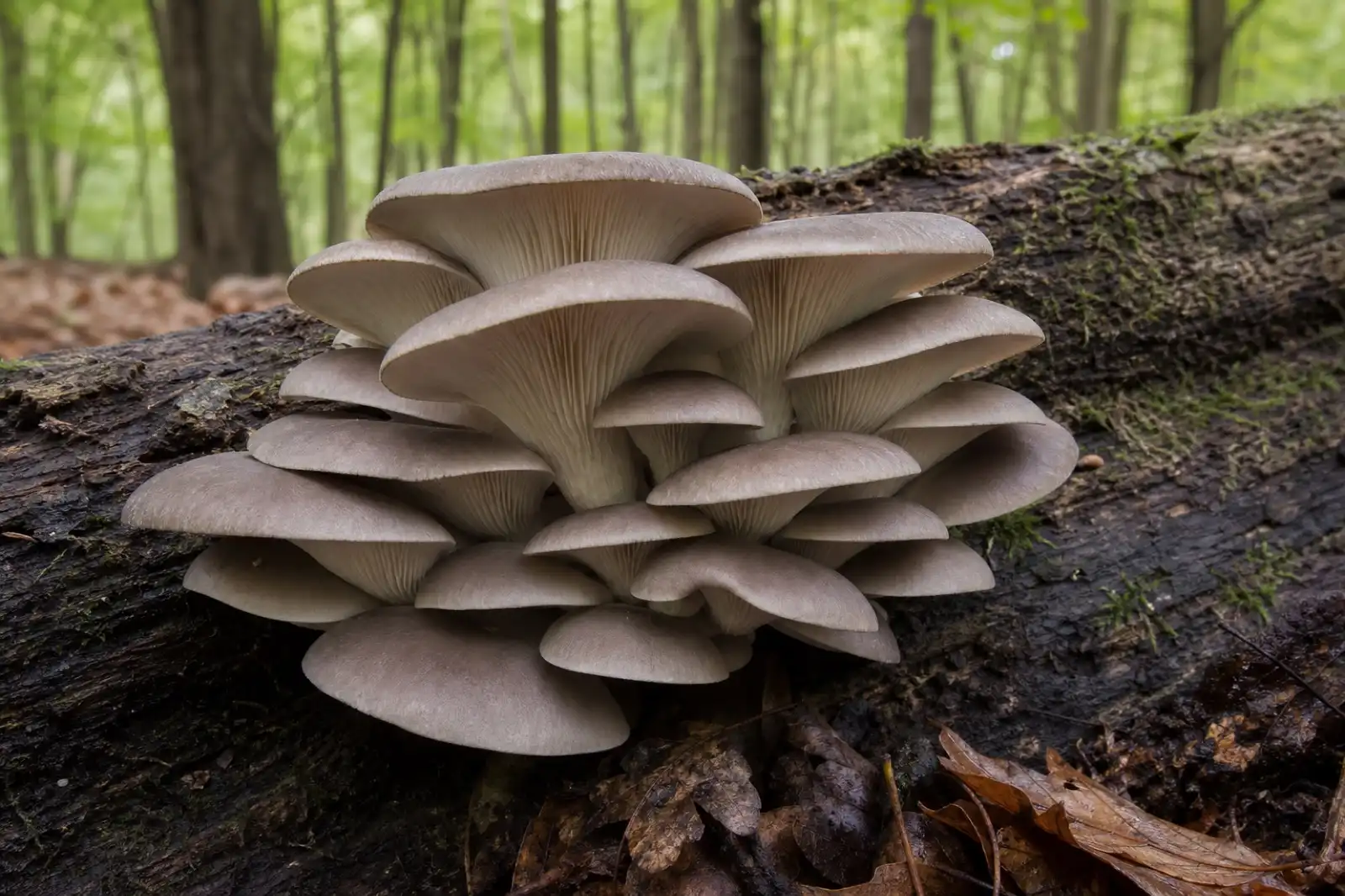
University of Florida’s oyster mushroom material uses “decurrent” for gills that run down the stem. That concrete definition is helpful when describing a specimen, but it is not a shortcut from feature to species. An oyster-like fruit body also needs habitat, growth form, stem position, surface, spore information where relevant, and a locally appropriate comparison. See the oyster mushroom guide for species context, not an eating decision based on a gill word.
Record gills in context
Before assigning an attachment term, hold the specimen so the cap edge, gill plane, and stem are all visible. Note whether the stem is central, off-center, lateral, or nearly absent; the mushroom stem-features guide gives a separate record for that part of the observation. A lateral-stemmed wood-inhabiting mushroom can make a junction look different from a centrally stemmed ground species, especially after the cap curls or dries.
Write a plain-language note next to the technical term. For example: “Pale gills appear to continue 3–5 mm down an off-center stem; two young specimens photographed.” This preserves the observation if a later key uses a different term or if another observer sees the boundary differently. Never scrape, cut, or remove the stem base merely to make the underside look tidier: the hidden base can hold decisive structures.
Growth stage is part of the observation. In very young caps the gills may be concealed by the margin; in aging caps they may separate, darken, curl, or become insect-damaged. Photograph several fruit bodies from the same cluster where collection is lawful. If they do not agree, report the variation. A field record is stronger when it preserves variation than when it makes every specimen fit one label.
Spacing, short gills, edges, and color
Attachment is only one gill character. Record whether gills are crowded, close, or distant, but include a scale or comparison so the word can be checked. Note whether shorter blades are present between full-length gills, whether blades fork, and whether cross-veins connect them. Describe the gill edge separately if it is colored, serrated, or visibly different from the face. These details can be useful in a key, yet none is reliable enough alone for a consumption decision.
Color deserves a time stamp. Describe it under ordinary natural light before bruising or handling changes it, then photograph both young and mature material. “White” is often a camera interpretation rather than a precise field observation; cream, gray, pinkish, brownish, or darkening notes may be more useful when tied to a fresh image. A spore-print color record can add a separate observation when it is safe, lawful, and relevant to a regional key.
Do not force pores, teeth, ridges, folds, or a nearly smooth fertile surface into a gill vocabulary. True gills are blade-like structures; a chanterelle-like folded surface, a bolete’s pores, and a toothed fungus each need their own description. Saying “not true gills” is more informative than calling every underside feature a gill, and it reduces misleading image-search matches.
A careful photo sequence
A repeatable set of photographs allows a local expert to assess what a single beauty shot cannot show. Use the mushroom photo checklist as the full workflow, then add these gill-specific views:
- Photograph the group in place with its substrate and nearby plants visible.
- Take an underside view in which the cap edge and the gill-to-stem junction are both in focus.
- Take a side-on close view of one intact junction; include a scale only if it does not cover characters.
- Photograph cap top, full stem, and the undisturbed base before picking, where collection is permitted.
- Photograph young and mature fruit bodies separately, and note any change in color or attachment appearance.
- Keep original files and write location, date, habitat, and substrate while the details are fresh.
Good photos document, but they do not replace physical examination. The University of Washington’s identification guidance likewise emphasizes that mushroom identification is difficult and that potentially poisonous mushrooms should not be eaten based on a tentative match. Do not taste unidentified mushrooms to test a feature, and do not use an app’s confidence score as an edible/not-edible verdict.
When one field word is not enough
Technical terms are useful because they make an observation searchable and comparable, not because they make an uncertain specimen certain. A key may ask for gill attachment together with a spore-deposit color, microscopic structure, substrate, season, and geographic range. If any decisive field character is absent, write “not observed” rather than filling the blank from an online image. The resulting record can still help a qualified local identifier, and it avoids converting a provisional vocabulary lesson into a false species name.
Conflicting characters are valuable information. A mushroom that seems to have decurrent gills but has the wrong substrate, growth habit, or spore observation for a proposed match should remain unresolved until the conflict is explained by a reliable regional key or an in-person expert. Keep notes, original photographs, and any lawful voucher material separate from food. This conservative boundary matters most when someone is considering eating a wild mushroom: no page, chart, photo set, or gill term can provide that confirmation.
A repeatable field method
- Photograph the group and its substrate before disturbance.
- Record cap, underside, attachment, stem, complete base, flesh, odor without inhaling closely, and any bruising.
- Measure several specimens and document young and mature stages.
- Make a spore deposit only when safe and useful; keep it away from food-preparation surfaces.
- Compare the complete character set with a regional key and current taxonomy.
- Keep conflicting or incomplete records unidentified.
Interpretation limits
An underside photograph can support a morphology lesson, but it rarely shows whether a blade is brittle, waxy, detachable, forked, cross-veined, or interrupted near the margin. A remote reviewer also cannot correct a junction already sliced away. When a key depends on microscopic edge cells, spores, or tissue arrangement, preserve material under one collection number and state which character remains unobserved instead of upgrading confidence from visual agreement alone.
For suspected poisoning, contact emergency services or a poison center immediately. Preserve uncooked material, cooked leftovers, packaging, and photographs if it is safe to do so. Do not wait for a social-media identification. North Carolina Poison Control specifically advises treating unknown mushroom ingestion as potentially serious; use your local poison-center or emergency contact rather than relying on a remote identification.
Connect gill observations with the rest of the specimen
Use the mushroom stem-features guide to document rings, bases, and surface structures that must be interpreted alongside gill attachment. The chanterelle versus jack-o’-lantern comparison demonstrates a high-risk case where blunt folds and true blades lead to different hypotheses. Neither vocabulary page authenticates a specimen for eating.
Preserve attachment changes across development
Photograph young and mature gills at the same angle because cap expansion can alter the apparent relationship to the stem. Record short gills, forks, cross-veins, edge color, bruising, and whether the stem separated naturally or was torn. Attachment vocabulary narrows a key but never authenticates edibility on its own.
The saffron milk cap guide shows why gill attachment must be recorded together with latex emergence, later staining, host trees, and regional taxonomy.
References
Source quality notes
MushroomScope cites sources that match the page scope, such as taxonomic databases, extension guidance, food-safety agencies, food-composition databases, and peer-reviewed or institutional health references. Sources support context and uncertainty; they do not turn an online page into specimen identification, medical advice, or a tested recipe record.
Frequently asked questions
Can gill attachment confirm that a mushroom is edible?
No. This guide organizes observations only. Never eat a wild mushroom unless a qualified local expert has examined the complete specimen in person.
Is one photograph enough for identification?
No. Photograph the cap, fertile surface, intact stem base, habitat, substrate, and several developmental stages, and record location and date.
What should I do when features conflict?
Keep the identification unresolved. Recheck local keys and current taxonomy, preserve the original observations, and seek qualified in-person help.
What does decurrent mean?
Decurrent gills visibly continue down the stem. The term records one attachment pattern; it does not identify a species or establish edibility.
What should I photograph to document gill attachment?
Photograph an undisturbed underside from the side and close to the stem, then show the intact stem base, cap top, substrate, and several ages. Include a scale and natural-light color context where possible.
Related guides
mushrooms
Pleurotus ostreatus: Oyster Mushroom Identification and Growing Guide
A careful guide to Pleurotus ostreatus identification, habitat, home cultivation, nutrition, lookalikes, food safety, and research limitations.
identification
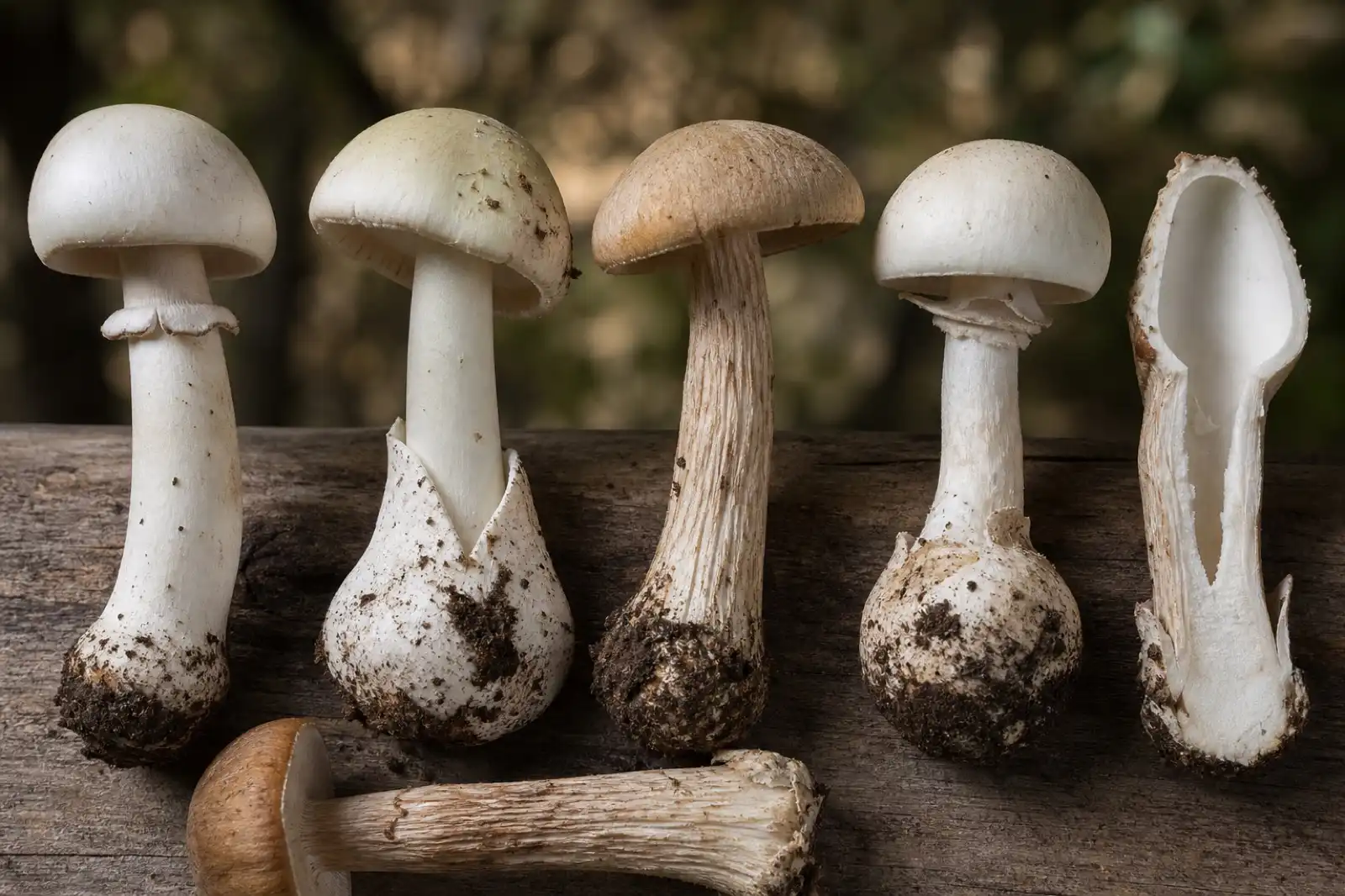
Mushroom Stem Features: Rings, Volvas, Texture, and Base
Document mushroom stem shape, attachment, rings, volvas, buried bases, internal structure, bruising, and texture without using one feature to decide edibility.
identification
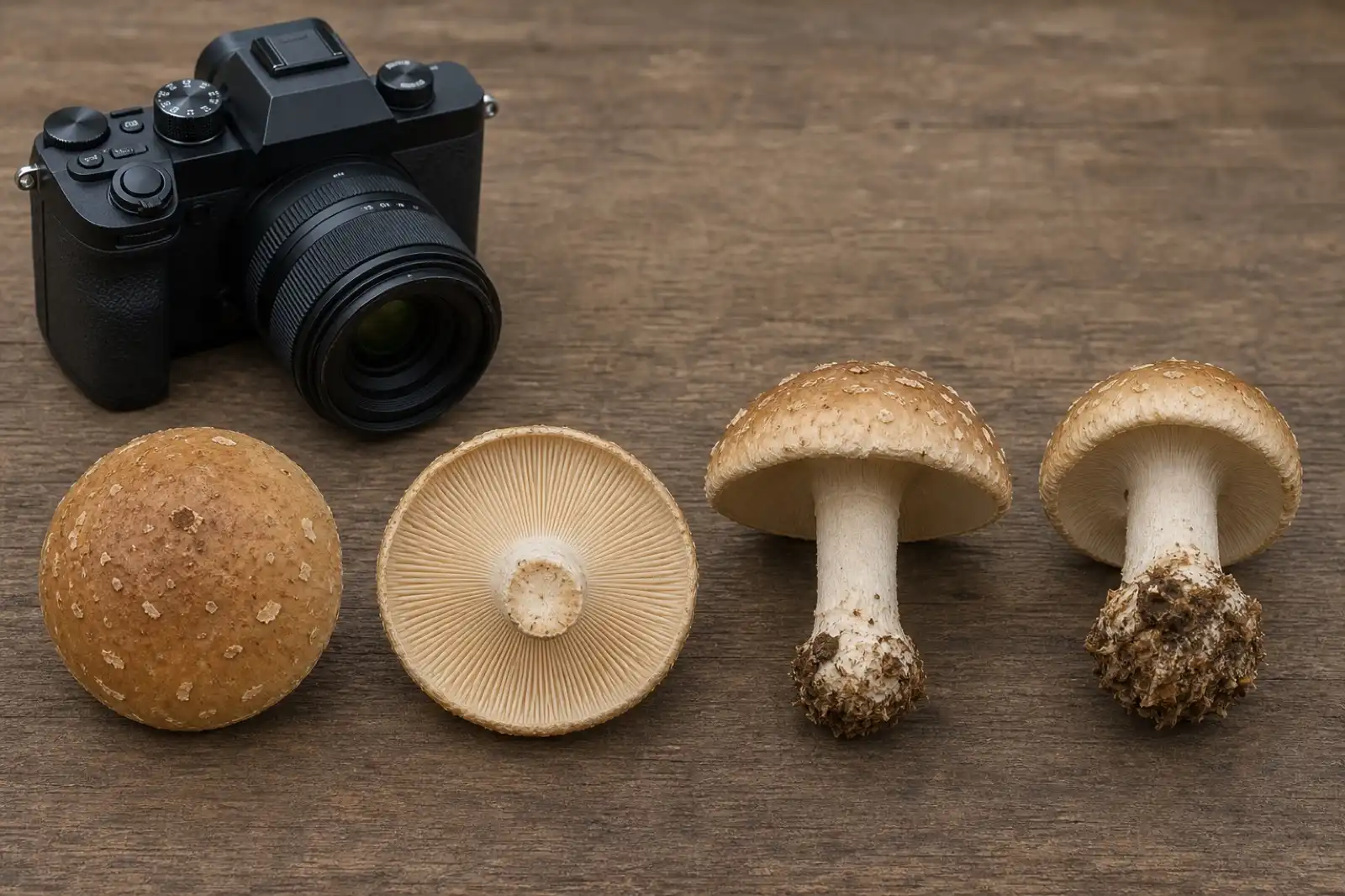
Mushroom Photography Checklist for Identification
Capture the cap, underside, complete stem base, habitat, scale, and specimens at different ages before asking for identification help.
Continue exploring
Browse more practical guides in Identification or visit the mushroom encyclopedia.