Mushroom Encyclopedia
Lactarius deliciosus: Saffron milk cap Species Guide
Learn Saffron milk cap identification, habitat, season, lookalikes, safety, food context, and cultivation limits with current taxonomy and sources.
By MushroomScope Editorial Team · · Updated
Species context
Treat profiles as reference material
Species profiles summarize documented traits, taxonomy, and lookalikes, but natural variation can be substantial.
Use the safety checklist →Decision limit
A profile cannot authenticate a specimen
Do not eat a wild mushroom from an online match, single feature, or generated image.
Read the safety disclaimer →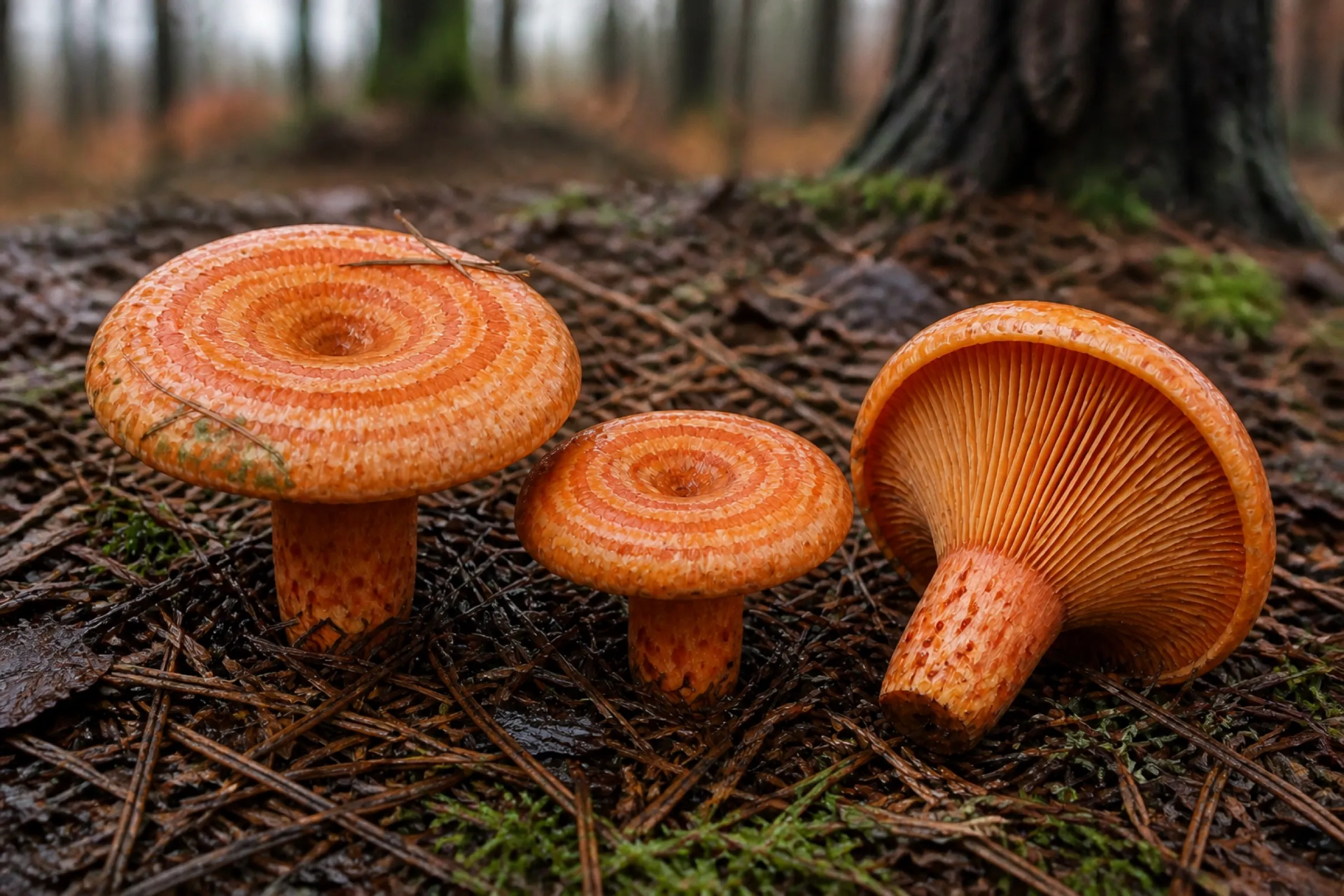
Quick facts
- Scientific name
- Lactarius deliciosus
- Common names
- Saffron milk cap
- Taxonomy
- Lactarius · Russulaceae
- Edibility context
- Edible: This database label is context, not remote clearance of a wild specimen; identity, preparation, spoilage, contamination, and individual reaction matter.
- Spore print
- Pale cream.
- Toxicity context
- None Known: Risk includes misidentification and individual reaction. Consult current local toxicology guidance before any food decision.
- Season
- August, September, October, November
- Growing difficulty
- Expert
- Regions
- Europe, introduced with pines elsewhere
Safety limit: These labels summarize documented context; they never authenticate a wild specimen. Cooking does not make a poisonous species safe.
Identification overview
Orange zoned caps and gills exude orange latex and often stain green with handling or age. Orange decurrent gills release colored latex when cut. Short orange stem with shallow darker pits. Brittle orange flesh producing carrot-orange latex. Observe several ages because rain, drying, insects, and decomposition can alter color and texture. Photograph the undisturbed growth, upper surface, fertile surface, complete attachment, and a lengthwise section. A pale cream spore deposit is supporting evidence, never a species verdict.
Habitat and season
A pine-associated mycorrhizal mushroom on forest soil. The documented range represented here includes Europe and introduced with pines elsewhere. Typical substrates or settings include pine forest soil and needle litter. Fruiting records commonly occur in August, September, October, November, but latitude, elevation, rainfall, and host condition shift the calendar.
Ecology is part of the identification. Record whether the mushroom arises from soil or wood, whether wood is living or dead, and which trees are nearby. Obtain permission, respect protected areas, and avoid removing an entire local population.
Similar species
- Lactarius deterrimus — spruce-associated with different staining and ecology.
- Other orange milkcaps — latex color changes and host trees distinguish regional species.
This list is not exhaustive. The possible comparison set changes by region, and some separations require microscopy, chemical reactions, culture records, or DNA. Image-recognition tools can organize observations but cannot clear a specimen for consumption.
Food and safety context
Saffron milk cap has a documented food-use context when the organism is correctly identified and the material is fresh, clean, and cooked. That reputation does not transfer to a wild specimen identified online. Individual allergy, gastrointestinal intolerance, spoilage, environmental contamination, and cross-contamination remain possible. Cooking does not make a poisonous species safe.
For severe vomiting, persistent diarrhea, confusion, jaundice, breathing difficulty, or any symptoms after an unidentified wild mushroom, contact emergency services or a poison center promptly. Keep uncooked material, trimmings, photographs, and meal details for professional identification.
Cultivation context
This species is not a dependable beginner crop. Its ecology, host relationship, or slow perennial growth makes ordinary indoor block methods unsuitable; use a cultivated alternative for home food production. Never cultivate an unidentified wild collection for food. Isolate batches with unexpected colors, slime, insects, or persistent abnormal odor and do not attempt to rescue them for eating.
How to document a find
- Photograph the habitat and growth habit before moving anything.
- Record location, date, weather, substrate, nearby trees, and odor without tasting.
- Photograph the cap, fertile surface, stem or attachment, and base in natural light.
- Measure several mature specimens and make a spore deposit when appropriate.
- Compare the complete record with a current regional key and qualified local expertise.
Evidence limits and responsible use
For publication, this account should be read as a structured field profile rather than a shortcut to edibility. The most reliable use of the page is to compare a complete observation against several independent evidence categories: form, fertile surface, attachment, substrate, host context, season, region, odor, bruising or staining, and the condition of the material. Latex color and host tree are essential. Orange milk, green staining, brittle flesh, and pine association should be documented together rather than reduced to cap color. A single attractive photograph, market name, or app suggestion cannot replace that combined record.
Before any local use decision, separate three questions that are often blended together. First, does the collection belong to the broad morphological group described here? Second, does the local region actually support the species name used in the title, or is a related regional species more likely? Third, even if the identification is correct, is the material fresh, uncontaminated, legally collected, and appropriate for the intended use? Those questions require different evidence, and a weak answer to any one of them should stop a food or cultivation decision.
Photograph the specimen before handling, then document the underside, base or attachment, surrounding habitat, and a clean cross-section. For wood-associated fungi, include the host or substrate and whether the wood is living, dead, buried, or processed. For grassland or soil-fruiting fungi, include nearby trees, turf treatment, roadsides, livestock areas, and any potential contamination source. Do not rely on color alone; rain, sun exposure, age, frost, insects, and camera white balance can change the apparent palette enough to mislead a comparison.
The safety language in this article is intentionally conservative. Published edibility labels summarize historical or culinary context, not permission to eat an unknown specimen. Conditional species, medicinally marketed species, and familiar edible groups all still carry risks from lookalikes, spoilage, individual intolerance, and local taxonomic complexity. When symptoms follow a mushroom exposure, preserve photographs, leftovers, trimmings, and timing details, and contact emergency or poison-control services promptly.
Regional names, field-guide treatments, and marketplace labels may use Saffron milk cap broadly, narrowly, or historically. Recheck current local literature before treating the name on this page as a final species determination.
Field verification details
Saffron milk cap identification should start with the Lactarius pattern: brittle flesh, gills that exude colored latex when cut, and a mycorrhizal association with suitable host trees. For this species concept, orange zones on the cap, orange latex, green staining, and pine association are all important. Photograph the intact cap, decurrent gills, cut gill edge with fresh latex, stem pits if present, and nearby pine needles or host evidence. Latex color should be recorded immediately because it can change after exposure.
Orange milkcaps are a group, not a single risk-free visual category. Related Lactarius species may differ by host tree, staining behavior, taste, latex change, and regional taxonomy. Do not identify from cap color alone. Note whether the flesh is brittle rather than fibrous, whether the latex is carrot-orange, whether green staining appears on bruised areas, and whether the mushroom grows with pine rather than spruce or other hosts. Regional keys are especially useful because names applied in markets or older books may not match current taxonomy.
Food reputation should be tied to correct identity, freshness, and preparation. Older milkcaps can become brittle, dirty, insect-damaged, or strongly flavored. Some people react poorly to mushrooms that are widely eaten by others. Avoid tasting raw latex as an identification method; record color visually instead. Ecologically, saffron milk caps reflect a living tree partnership, so ordinary indoor block cultivation is not a beginner path. A strong published observation explains the host association, latex behavior, staining, and gill attachment together.
Reader decision checklist
Use this checklist to decide whether an observation is strong enough for learning, not whether it is safe to eat. For Saffron milk cap, the record is stronger when these points are answered in writing: orange latex is photographed fresh; green staining is noted or absent; pine host evidence is recorded; similar orange milkcaps are separated by host and latex behavior. If one of these points is missing, mark the identification as tentative and collect more evidence before comparing it with food, cultivation, or supplement information.
A good checklist entry includes both positive and negative evidence. Positive evidence explains what matches the species profile. Negative evidence explains what dangerous or common alternatives were ruled out and why. For example, a note that says “found on wood” is weak by itself, while a note that describes the exact wood, visible attachment, fertile surface, spore context, and excluded lookalikes is much stronger. This distinction matters because many mushroom mistakes happen when a field note records only the attractive matching feature and ignores the contradictory details.
For publication review, avoid language that turns uncertainty into confidence. Phrases such as “consistent with,” “supports,” and “requires local confirmation” are often more accurate than absolute identification claims when microscopy, DNA, or regional expert review has not been done. This article can help organize observations, but the final responsibility for a real specimen depends on local expertise, legal access, current taxonomy, and the condition of the material in hand.
Keep a dated record even when no specimen is collected. A useful record includes location at an appropriate privacy level, habitat, substrate or host, weather pattern, photographs from several angles, and notes on odor, staining, latex, or texture when relevant. Repeated observations across a season can be more educational than one rushed collection because they show how the same species changes with age, rain, drying, insects, and decay.
Taxonomy note: orange milkcap names vary with host tree and region, so pine association, latex behavior, and staining should be checked against current local treatments.
Use the GBIF record as a taxonomic starting point, then compare the entire observation with a current regional treatment. A name, a vivid cap color, or one orange latex photograph cannot settle a food decision when host evidence, mature gills, or local species boundaries are missing.
Read latex and staining as a timed sequence
For a milk cap, “orange latex” is only the first observation. Note the color immediately after a clean gill cut, then photograph the same injury after several minutes and again later. Record whether latex is abundant or scant, whether it changes independently, and whether the gills and flesh develop green patches where handled. Temperature, age, dryness, and prior damage can reduce visible latex, so a dry specimen does not become identifiable by cap color alone. Keep the cap surface, gill attachment, stem pits or scrobicules, hollowing, odor, and spore deposit in the same record.
The saffron milk cap name is also used for a regional complex rather than one universally interchangeable market item. European treatments commonly center Lactarius deliciosus, while similar orange-latex taxa associated with planted or native pines occur elsewhere. A useful determination therefore includes location and the pine partner, not just a photograph of concentric orange zones. If a precise species name matters, preserve a voucher and consult current regional keys or a local mycological specialist; older field names may not reflect later molecular boundaries.
Separate ecological evidence from eating decisions
Mycorrhizal association explains why these fungi appear with living pines and why block cultivation methods used for oyster mushrooms do not transfer directly. It does not establish edibility. Food decisions require a locally verified species, lawful collection, sound condition, and awareness that individual tolerance varies. Green staining is a known feature in this group, but no single color reaction clears a specimen for the table. The identification safety checklist provides a separate decision boundary for observations that remain incomplete.
Measure the cap, gills, and latex as one developmental record
Orange color alone collapses several milkcap taxa into an unsafe visual category. Build a record across young, expanded, and weathered fruit bodies from the same patch. Measure cap diameter, central depression, margin roll, gill spacing, stem length and width, and whether the stem contains pits or hollows with age. Photograph concentric cap zoning in neutral light, but treat weak zoning as an observation rather than an exclusion: rain, sun, abrasion, and maturity can mute it.
Make a clean gill cut and record the latex immediately, after one minute, and after ten minutes on both tissue and white paper. Record green staining separately on cap, gills, stem, and damaged flesh. The sequence matters because latex color at emergence, later oxidation, and old green bruising are different observations. Never infer a species from a single old stain. A regional key may also require spore ornamentation or molecular evidence where orange milkcaps overlap.
Treat the tree association as biological evidence
The Lactarius deliciosus name has been applied broadly, while related orange milkcaps partition among conifers and regions. Photograph nearby trees from base to canopy and collect cones, needles, or twigs when permitted. Record whether fruit bodies repeat beneath the same host line or occur near planted pines outside their native range. A park planting, plantation, dune pine, and mixed forest create different biogeographic questions even when the mushroom looks similar.
Mycorrhizal dependence also explains why this is not a straightforward indoor substrate species. A grow-bag recipe for saprotrophic oyster mushrooms does not transfer to a fungus whose life cycle is integrated with living roots. Reports of cultivation should specify the host plant, inoculation method, establishment interval, climate, and whether fruiting was actually documented. This ecological constraint distinguishes a scientific cultivation report from a generic “mushroom growing” claim.
References
- Global Biodiversity Information Facility. Lactarius deliciosus species record. Taxonomic backbone and occurrence context.
- National Center for Biotechnology Information. NCBI Taxonomy Browser. Independent lineage and nomenclature checkpoint.
- North American Mycological Association. Mushroom Poisoning Syndromes. Poisoning response and syndrome context.
- U.S. Food and Drug Administration. Selecting and Serving Produce Safely. General handling guidance for mushrooms used as food.
Editorial review: August 15, 2026. Taxonomy, regional range, and poison-response contacts should be rechecked at every substantive update.
Source quality notes
MushroomScope cites sources that match the page scope, such as taxonomic databases, extension guidance, food-safety agencies, food-composition databases, and peer-reviewed or institutional health references. Sources support context and uncertainty; they do not turn an online page into specimen identification, medical advice, or a tested recipe record.
Frequently asked questions
Can Saffron milk cap be identified from one photograph?
No. Identification requires the complete specimen, fertile surface, attachment, substrate, habitat, region, developmental stage, and sometimes microscopy or DNA.
Is wild Saffron milk cap safe to eat?
This page cannot clear a wild specimen for food. Obtain in-person confirmation from a qualified local identifier and follow local guidance; cooking cannot make a poisonous lookalike safe.
Where does Saffron milk cap grow?
A pine-associated mycorrhizal mushroom on forest soil. Regional records and host associations should be checked before applying this summary to a local collection.
What is the spore print of Saffron milk cap?
The expected deposit is pale cream, but print color overlaps among fungi and cannot confirm this species by itself.
Can Saffron milk cap be cultivated at home?
It is not a simple beginner crop; use authenticated commercial material and species-specific professional guidance rather than wild tissue.
Related guides
identification
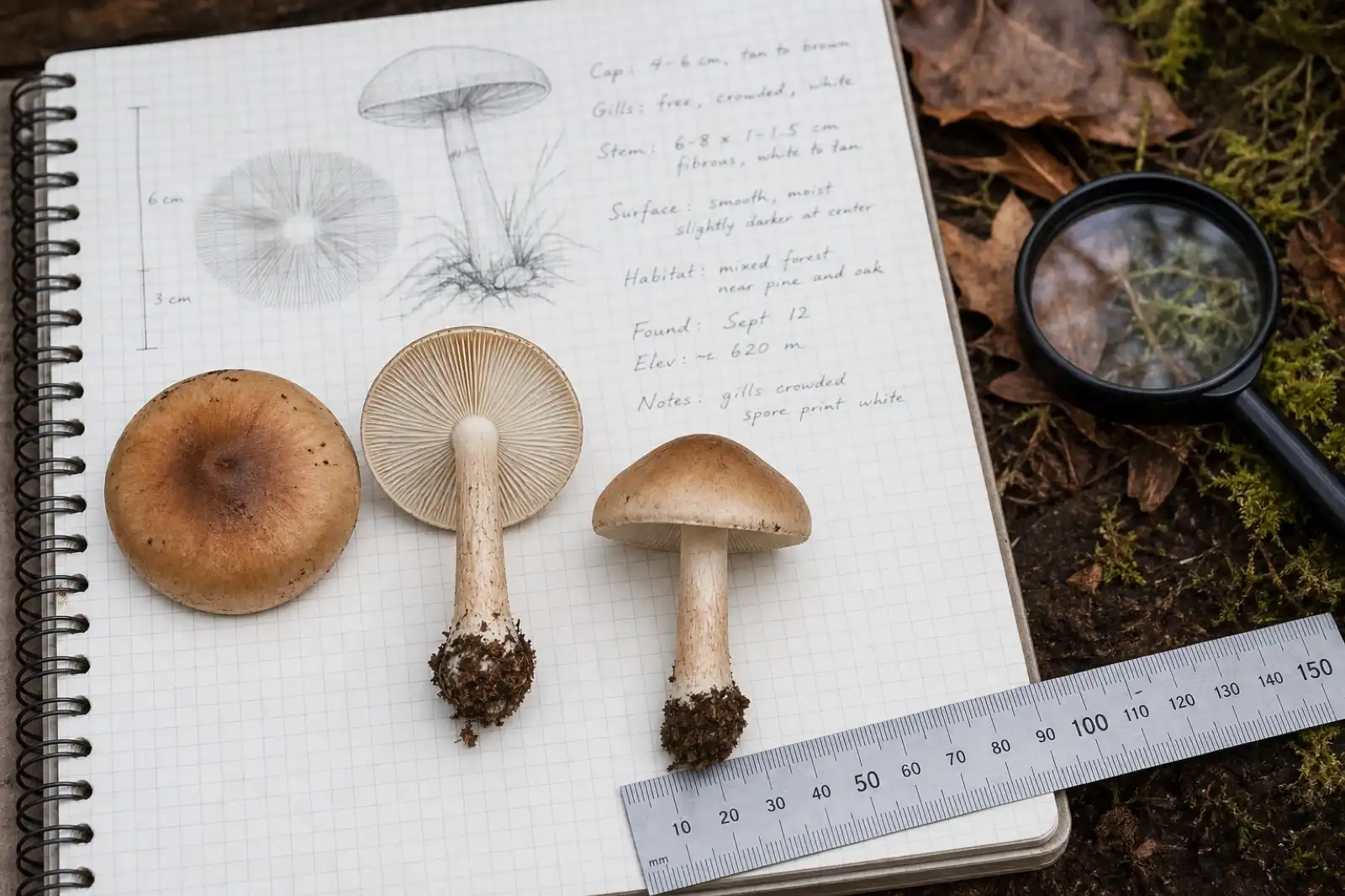
How to Identify Mushrooms: A Beginner's Field Guide
Build an identification from the whole specimen, substrate, habitat, spore deposit, and location—not from a single photograph.
identification
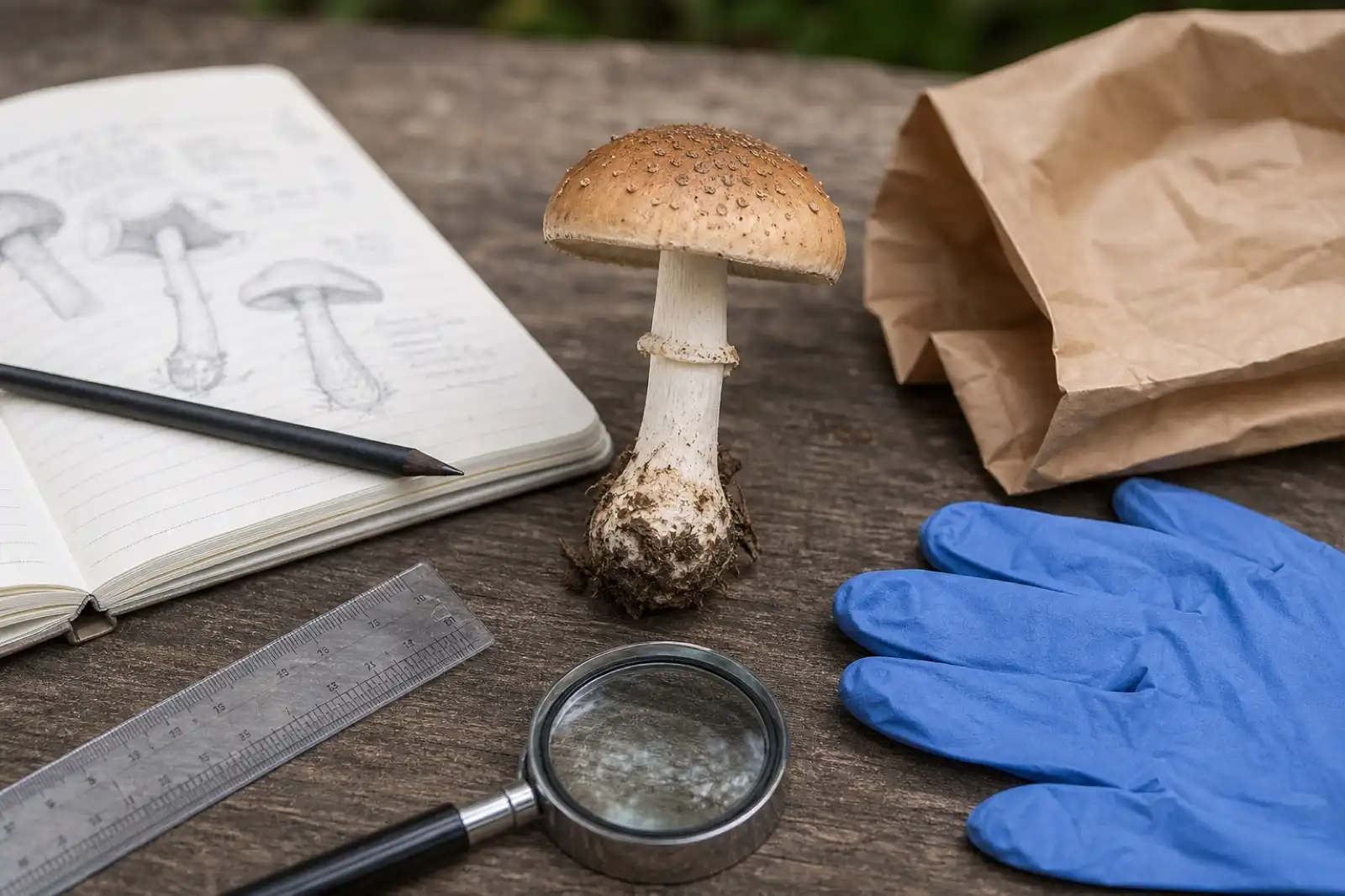
Mushroom Identification Safety Checklist
Use a conservative checklist before handling, documenting, or discussing any wild mushroom, especially when edibility is being considered.
mushrooms
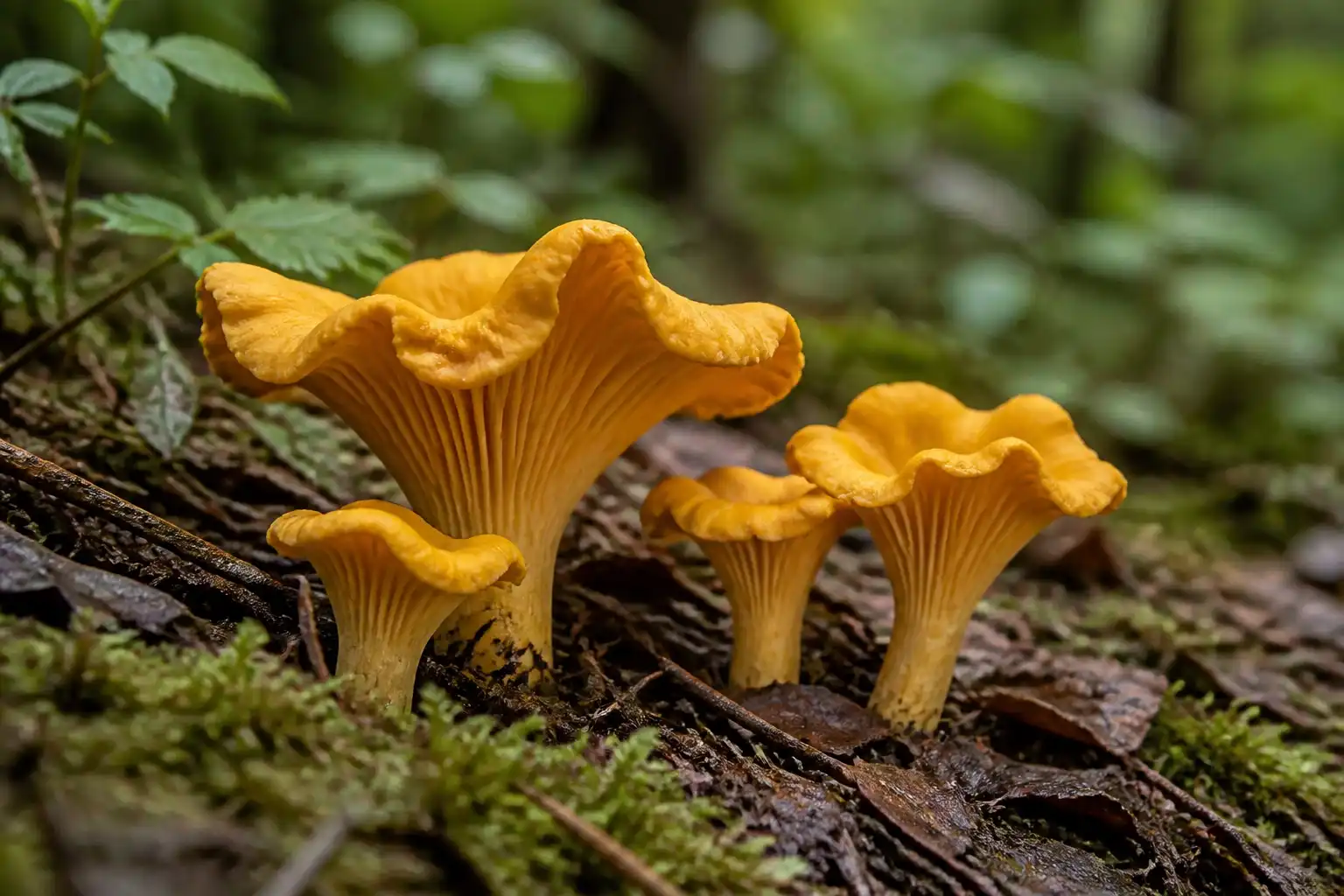
Cantharellus cibarius: Chanterelle Identification Guide
Learn chanterelle identification, false gills, habitat, season, poisonous lookalikes, edibility, nutrition, and why wild finds need local verification.
Continue exploring
Browse more practical guides in Mushroom Encyclopedia or visit the mushroom encyclopedia.