Mushroom Encyclopedia
Cantharellus cibarius: Chanterelle Identification Guide
Learn chanterelle identification, false gills, habitat, season, poisonous lookalikes, edibility, nutrition, and why wild finds need local verification.
By MushroomScope Editorial Team · · Updated
Species context
Treat profiles as reference material
Species profiles summarize documented traits, taxonomy, and lookalikes, but natural variation can be substantial.
Use the safety checklist →Decision limit
A profile cannot authenticate a specimen
Do not eat a wild mushroom from an online match, single feature, or generated image.
Read the safety disclaimer →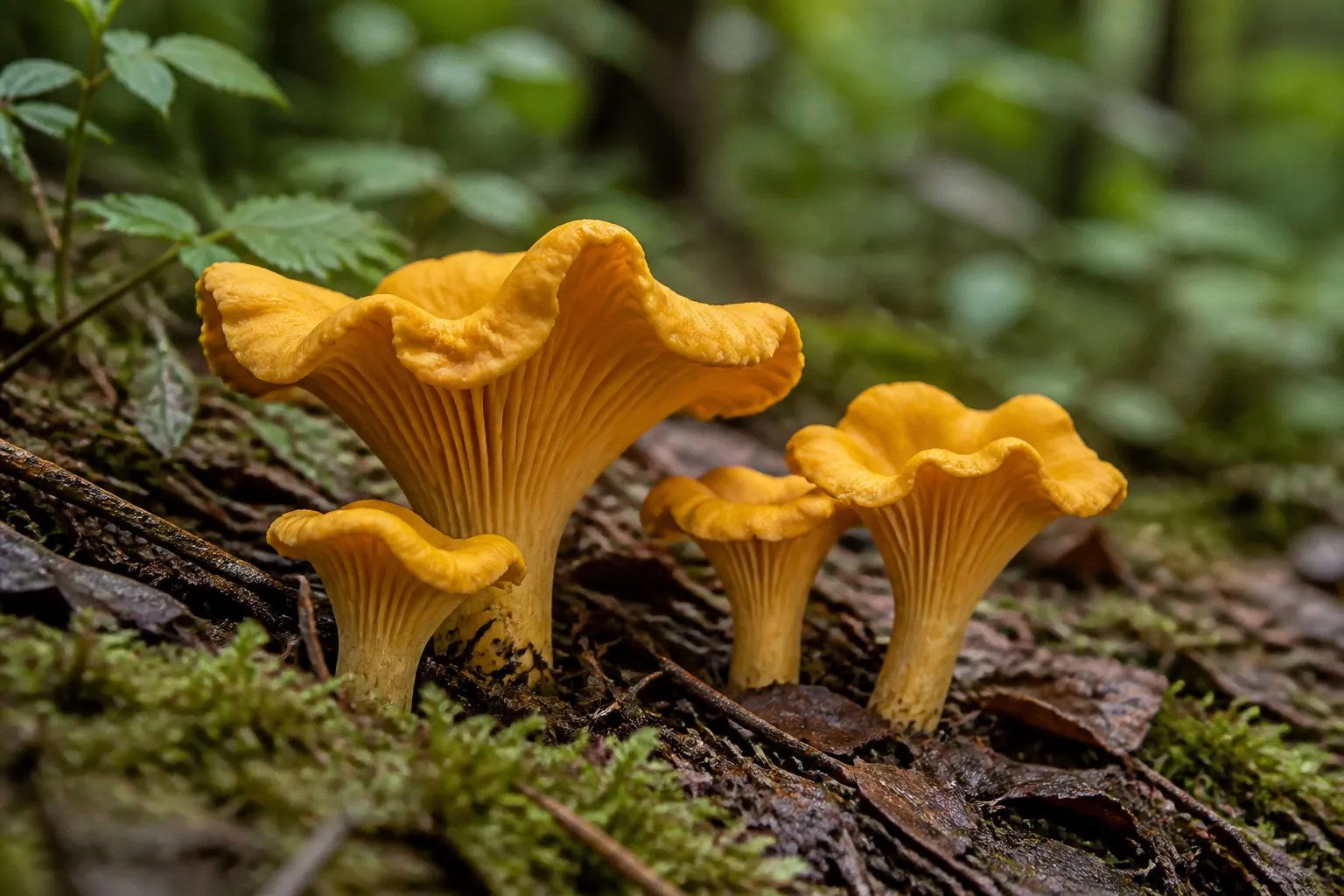
Quick facts
- Scientific name
- Cantharellus cibarius
- Fr.
- Common names
- golden chanterelle, chanterelle, girolle
- Taxonomy
- Cantharellus · Cantharellaceae
- Edibility context
- Edible: Chanterelles are established culinary mushrooms when correctly identified, fresh, and thoroughly cooked. Wild specimens require local expert confirmation because poisonous and inedible orange lookalikes occur.
- Spore print
- Pale cream to yellowish; print color varies and cannot confirm the species alone.
- Toxicity context
- None Known: No characteristic toxin is associated with correctly identified, properly handled C. cibarius, but misidentification, spoilage, contamination, and individual intolerance remain risks. Jack-o-lantern mushrooms can cause severe gastrointestinal poisoning.
- Season
- June, July, August, September, October, November
- Growing difficulty
- Expert
- Regions
- Europe for Cantharellus cibarius in the strict sense, related Cantharellus species occur across North America, temperate and boreal forests of the Northern Hemisphere
Safety limit: These labels summarize documented context; they never authenticate a wild specimen. Cooking does not make a poisonous species safe.
Begin with a chanterelle-group hypothesis, not an edible verdict
The golden chanterelle is recognizable as a woodland shape—yellow, vase-like, and often scented—but the familiar common name hides taxonomic complexity. Cantharellus cibarius is best understood as a European species in the strict sense. Mushrooms once given that name across North America and elsewhere may belong to other members of Cantharellus. A responsible identification therefore asks two questions: does the specimen fit the chanterelle group, and does local evidence support a species-level name?
This page explains the characters that make a chanterelle hypothesis stronger, the features that contradict it, and the lookalikes that make remote edibility advice unsafe. It is an educational species account, not a consumption clearance. Never eat a wild mushroom because it resembles an online photograph or matches a short checklist.
Compare folds, flesh, stem, and substrate together
Start with the whole mushroom and its setting. A typical chanterelle has a yellow to golden cap that becomes wavy and shallowly funnel-shaped with age. The underside bears blunt folds—often called false gills—that fork, cross-connect, and continue down the stem. Cut lengthwise, the stem and cap contain firm, solid, pale flesh. Many fresh collections smell faintly fruity, sometimes compared with apricot, but odor differs between observers and can fade in old or wet specimens.
The distinction between folds and true gills is important. True gills are thin, blade-like structures with relatively sharp edges and regular spaces. Chanterelle folds are lower, thicker, and more like wrinkles molded into the mushroom. Run a clean fingernail gently across a mature surface: the folds should not peel away as a separate layer. Do not use this single test as proof; some lookalikes have forked gills, and weathered chanterelles can have unusually pronounced folds.
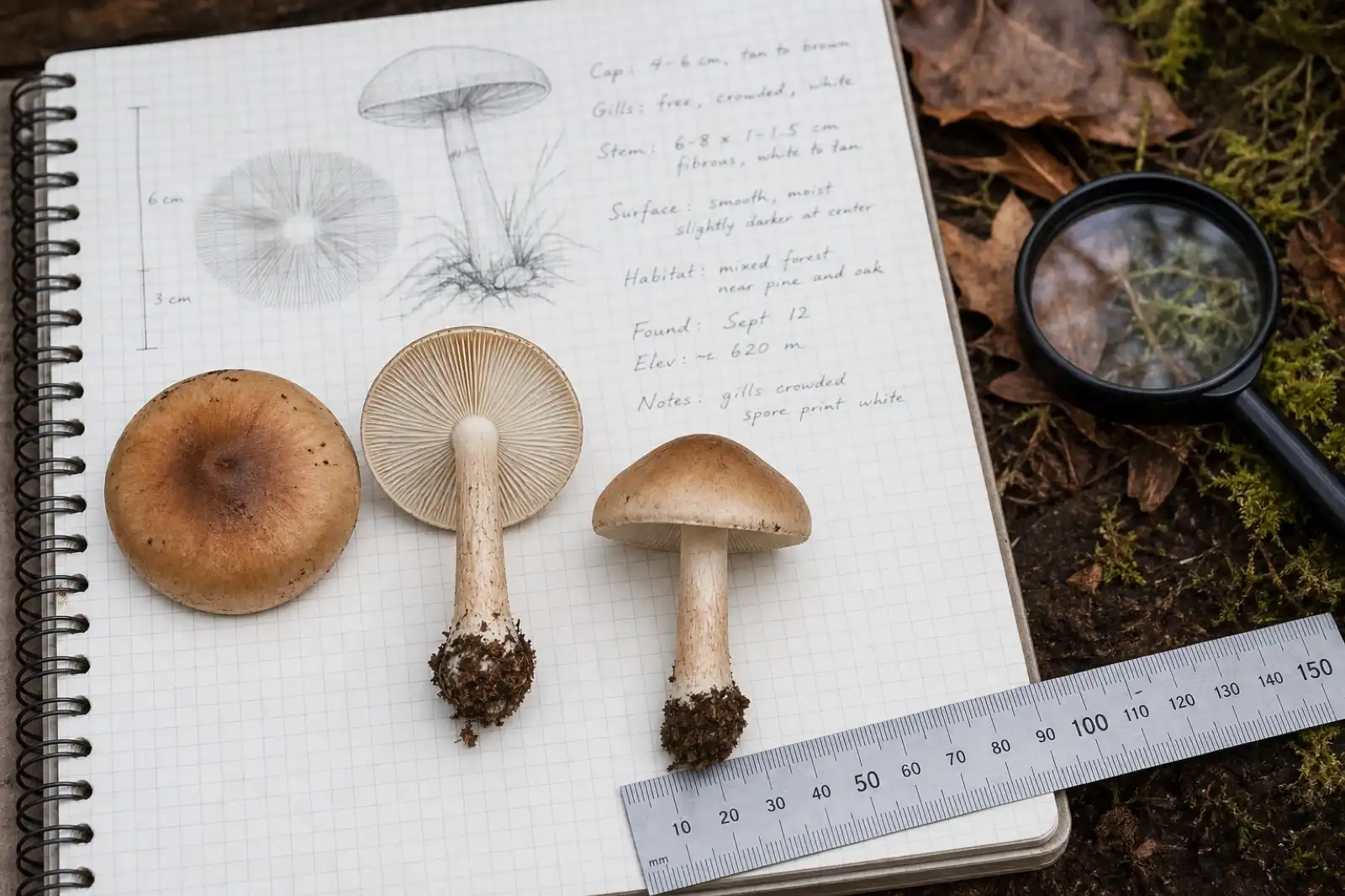
Record cap, underside, stem base, a lengthwise section, nearby trees, and the exact point where the mushroom meets the ground. A pale cream-to-yellowish spore deposit may support the assessment, but print color overlaps among many fungi. Microscopic features and DNA may be necessary when a regional species name matters.
Small, thin funnels with gray folds and hollow yellow stems require a separate comparison; the yellowfoot chanterelle guide documents that character set and its cool, moss-rich forest context. Do not stretch the golden-chanterelle profile to cover every yellow-stemmed member of Craterellus.
A practical field sequence
- Confirm that the mushrooms arise from soil, not obviously from a stump, log, or tight woody cluster.
- Photograph the undisturbed group, then the cap, underside, and complete stem base in natural light.
- Compare blunt decurrent folds with thin true gills.
- Slice one legally collected specimen from cap through stem and check that the flesh is solid and pale.
- Note nearby trees, soil, rainfall, odor, bruising, insect damage, and whether several ages are present.
- Use a current regional key and obtain in-person confirmation from a qualified local identifier before considering food use.
Document the false gills from several angles
An underside photograph taken straight on can flatten the relief and make blunt folds look sharper than they are. Add a side-lit oblique view showing how the ridges rise from the surface, fork, cross-connect, and continue down the stem. Photograph the junction between cap and stem, then include a close image with a ruler or scale in the same plane. Do not scrape or peel the entire fertile surface merely to perform an internet test.
Compare multiple ages from the same patch without assuming they are the same species. Young folds can be shallow, while older or dry specimens may show deeper relief. Insect damage, rain, soil, and camera sharpening can obscure the distinction between a rounded ridge and a thin blade. If the underside cannot be documented clearly, keep the identification unresolved.
Check the lengthwise section and complete base
Where collection is legal, cut one representative specimen from the cap center through the stem. Record whether the interior is solid or hollow, its fresh color, and any change after exposure. Chanterelle-group mushrooms typically show pale, firm internal flesh, but this character must agree with the outside structure, ecology, and regional key. A solid section alone is never an edibility test.
Excavate the base carefully rather than snapping the stem at soil level. Photograph attached soil, mycelium, buried woody material, and the relationship to nearby roots. A mushroom that seems ground-growing may originate from buried wood, which materially changes the comparison with clustered Omphalotus. Keep the habitat photographs linked to the same specimen number.
Use the scientific name within its geographic limits
| Rank | Name |
|---|---|
| Kingdom | Fungi |
| Phylum | Basidiomycota |
| Class | Agaricomycetes |
| Order | Cantharellales |
| Family | Cantharellaceae |
| Genus | Cantharellus |
| Species | Cantharellus cibarius |
Taxonomic databases are useful checkpoints, not substitutes for regional literature. GBIF and NCBI provide records under C. cibarius, while modern field treatments may divide older broad concepts into geographically distinct species. Preserve the name used by a source and check when the record was last reviewed.
When a guide uses “chanterelle” broadly, determine whether it means the genus Cantharellus, a regional species complex, or C. cibarius in the strict sense. Do not transfer a European name to a North American collection solely because the cap and folds look similar. Location, host association, microscopic evidence, and current regional taxonomy may support a different name.
A cautious public record can use “Cantharellus species” or “chanterelle-group mushroom” when the evidence supports the group but not the species. Record who proposed a narrower identification, which reference was used, and what evidence remains missing. That preserves useful information without presenting taxonomic confidence that the photographs cannot support.
Habitat and season
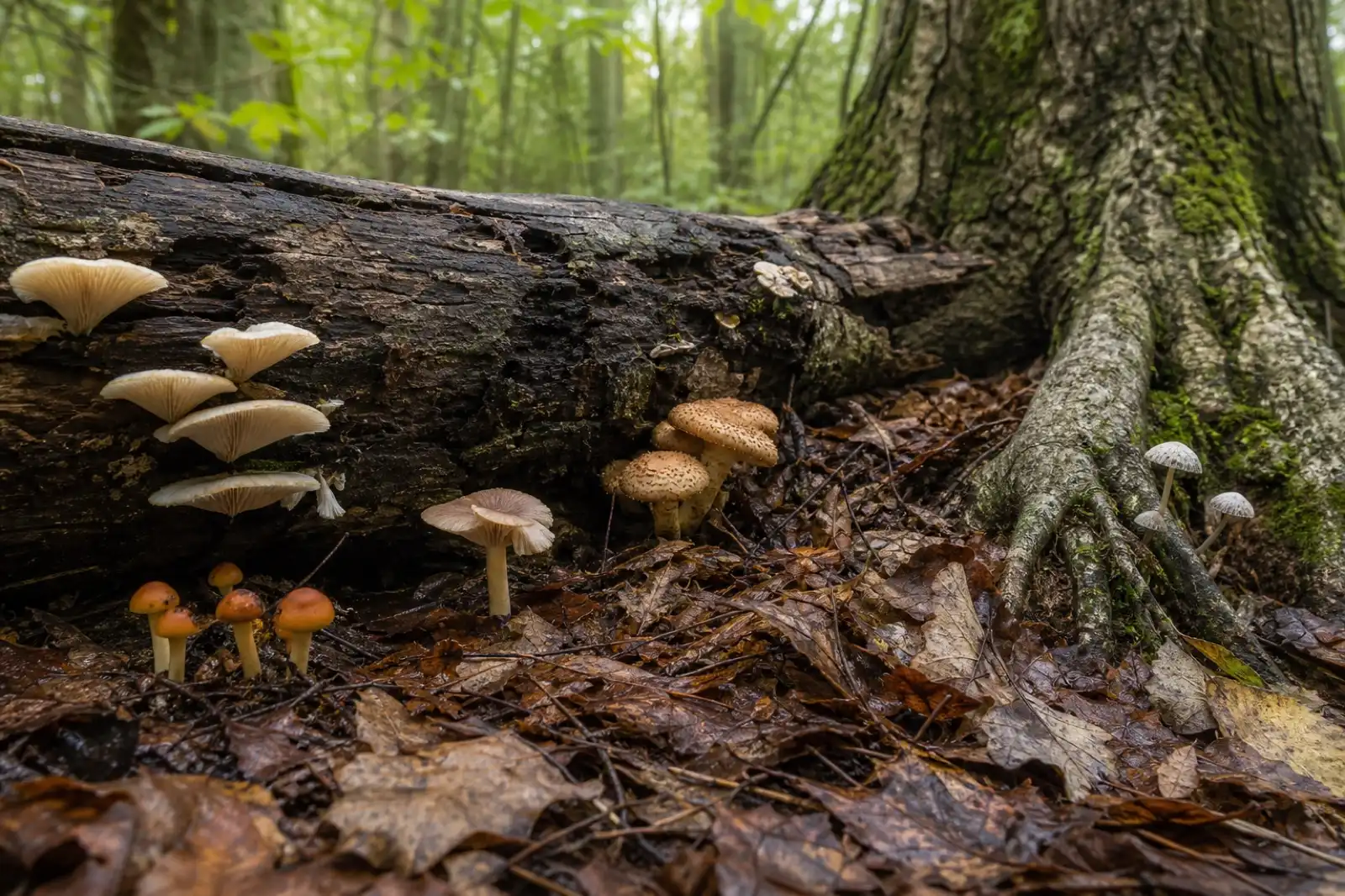
Chanterelles form ectomycorrhizal partnerships with living trees: fungal tissue helps exchange water and nutrients with plant roots. Fruiting bodies therefore emerge from forest soil, moss, or leaf litter where compatible hosts occur. They may appear singly, in loose groups, or in arcs, but they do not normally form the dense, overlapping clusters on wood that are characteristic of jack-o-lantern mushrooms.
Host associations vary by species and region and may include beech, oak, birch, pine, spruce, fir, or other trees. A mushroom can appear to grow from bare earth while actually connected to buried wood, so carefully inspect the substrate. Rainfall and soil moisture strongly affect fruiting. Summer-through-autumn is a useful orientation in many temperate areas, not a guarantee for a particular place or year.
Harvest law and conservation guidance differ. Obtain landowner permission, respect protected areas and collection limits, leave immature or old fruit bodies, and avoid raking moss or soil. Photographing and recording a specimen can be more valuable than collecting every mushroom in a patch.
Similar species and safety
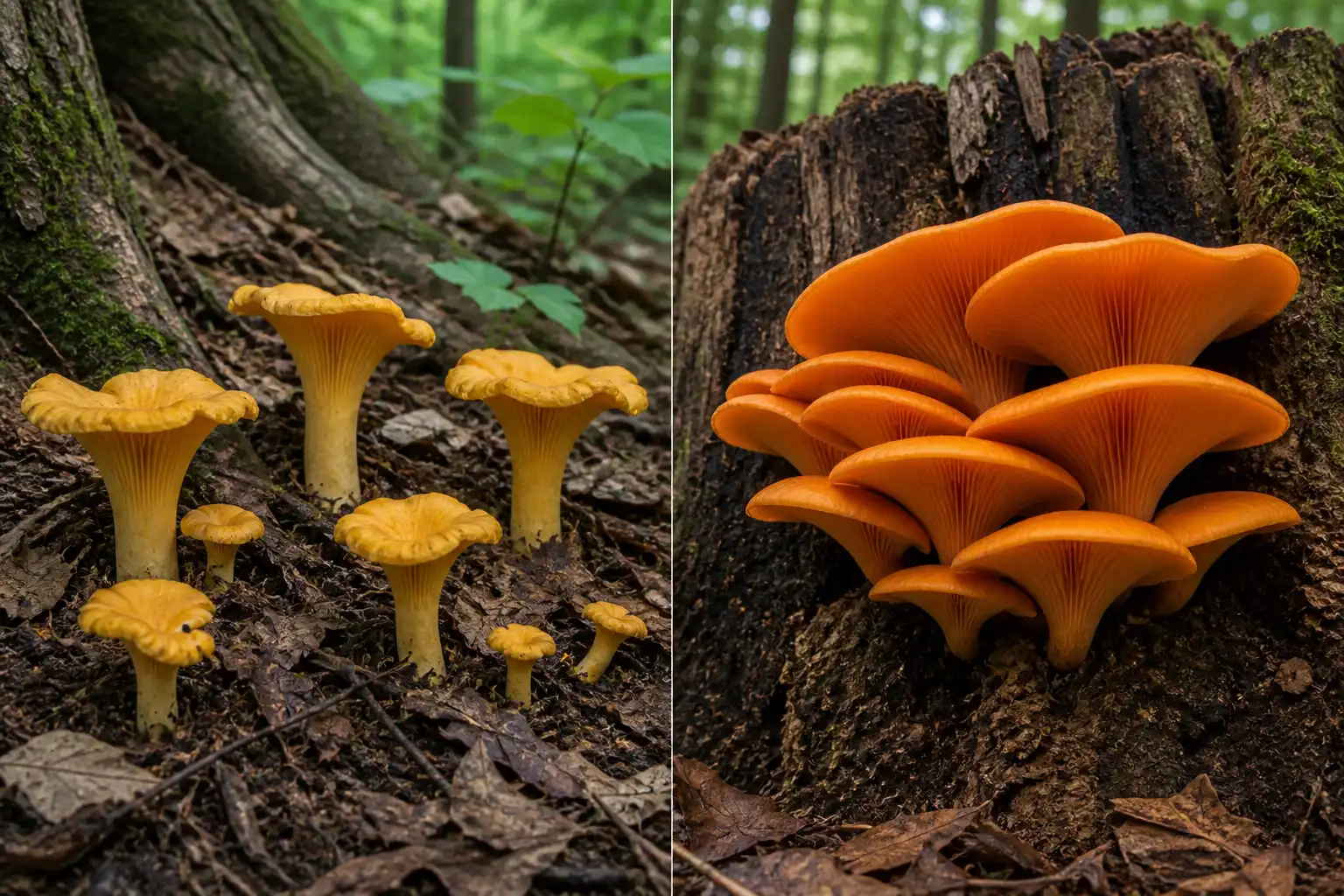
Jack-o-lantern mushrooms (Omphalotus species) are the most important comparison because they are poisonous and can cause intense vomiting, abdominal pain, and diarrhea. They commonly fruit in dense clusters from stumps, roots, or buried wood and have numerous thin, sharp true gills. Color is unreliable: both groups can be yellow-orange, and cameras or artificial lighting can shift it.
The false chanterelle, Hygrophoropsis aurantiaca, usually has softer flesh and many thin, repeatedly forked gills. Smooth chanterelles and yellowfoot chanterelles are legitimate relatives but have different structures and geographic patterns. The presence of other edible Cantharellus or Craterellus species does not reduce the need to establish the identity of the specimen actually collected.
The black trumpet guide treats a dark, hollow Craterellus form whose fertile surface is smoother and less ridge-like than the underside expected here. That comparison is useful for structure and habitat, not as a shortcut to an edible verdict.
Use the dedicated chanterelle versus jack-o-lantern comparison to build a side-by-side record. Do not score isolated traits and let a majority vote decide: a wood-growing cluster with true gills is contradictory evidence even if its cap color and general silhouette resemble a chanterelle. Likewise, a fruity odor is subjective and cannot cancel a structural mismatch.
If anyone develops symptoms after eating a wild mushroom, contact the local poison center or emergency service promptly. Keep uncooked specimens, trimmings, photographs, and meal details for professional identification. Do not induce vomiting unless a medical professional instructs you to do so.
Edibility and cooking
Correctly identified chanterelles are established culinary mushrooms valued for a firm texture and aromatic flavor. Brush away soil, trim damaged tissue, inspect for insects, and keep the mushrooms refrigerated. Cook them thoroughly in a dry pan first if they release substantial moisture, then add fat or seasoning. Do not serve spoiled, slimy, moldy, roadside, chemically exposed, or uncertain specimens.
First-time consumers should eat only a modest cooked portion because individual gastrointestinal intolerance can occur even with an established edible species. Cooking reduces ordinary microbial risk but cannot make a poisonous lookalike safe. Commercial cultivated mushrooms are a more controlled choice than an unverified wild collection.
Nutrition and health context
Fresh chanterelles contribute water, fiber, protein, minerals, and variable micronutrients while generally supplying little energy. FoodData Central can provide representative analyses, but values differ with species, soil, maturity, storage, and preparation. Wild fungi may also accumulate environmental contaminants, which is another reason to avoid polluted sites.
Nutrition evidence should not be converted into treatment claims. Laboratory studies of fungal compounds do not prove that a normal serving prevents cancer, treats infection, or replaces prescribed care. For most readers, the defensible benefit is culinary variety within a balanced diet.
Why chanterelles are not beginner grow-block mushrooms
Chanterelles are not beginner block mushrooms. Oyster mushrooms digest prepared plant material directly; chanterelles depend on a living root partnership and the surrounding soil community. Establishing compatible inoculated trees is possible in specialist research and production systems, but fruiting may be slow and inconsistent. A packet advertised as a quick indoor chanterelle kit should be treated cautiously unless the supplier documents the organism, host system, and verified production results.
For a practical home project, start with a reputable oyster or lion’s mane fruiting block and follow its instructions. Do not transplant wild soil or remove tree roots in an attempt to move a chanterelle patch.
References
- Global Biodiversity Information Facility. Cantharellus cibarius Fr.. Taxonomic backbone and occurrence context.
- National Center for Biotechnology Information. Taxonomy Browser: Cantharellus cibarius. Database lineage record.
- Kuo M. Cantharellus cibarius. MushroomExpert.Com. Morphological and taxonomic discussion, including limits of the name in North America.
- U.S. Department of Agriculture. FoodData Central. Searchable food-composition records for chanterelles and specified preparations.
- North American Mycological Association. Mushroom Poisoning Syndromes. Poisoning response and gastrointestinal syndrome context.
Last editorial review: August 24, 2026. Taxonomy, regional lookalikes, and poison-response contacts should be checked against current local sources.
Source quality notes
MushroomScope cites sources that match the page scope, such as taxonomic databases, extension guidance, food-safety agencies, food-composition databases, and peer-reviewed or institutional health references. Sources support context and uncertainty; they do not turn an online page into specimen identification, medical advice, or a tested recipe record.
Frequently asked questions
Are the ridges under a chanterelle cap true gills?
Typically no. Chanterelles have blunt, low, often forked folds that run down the stem and cannot be separated cleanly like thin blade-shaped true gills. This is useful evidence, but it is not sufficient by itself to establish identity or edibility.
How can I distinguish a chanterelle from a jack-o-lantern mushroom?
Compare the complete set of characters. Chanterelles usually have blunt decurrent folds, solid pale flesh, and a ground-growing association with trees. Jack-o-lantern mushrooms have thin true gills, often grow in dense clusters from wood or buried roots, and are poisonous. Obtain local expert confirmation before consumption.
Can a photograph confirm that a wild chanterelle is edible?
No. Photographs may omit the stem base, internal flesh, substrate, odor, bruising, spore deposit, or local lookalikes. A consumption decision requires the complete fresh specimen and confirmation by a qualified local identifier.
Can chanterelles be cultivated at home like oyster mushrooms?
Not by the usual beginner block method. Chanterelles form mycorrhizal partnerships with living plants, so reliable fruiting requires a compatible host and a complex soil ecosystem. Commercial kits that promise quick indoor chanterelle crops deserve skepticism.
When is chanterelle season?
Fruiting commonly follows warm, wet periods from summer into autumn, but timing varies with species, latitude, elevation, rainfall, soil, and host trees. Local records are more useful than a universal calendar.
Related guides
identification
Chanterelle vs. Jack-o-Lantern Mushrooms: Key Differences
Compare ridge-like folds, growth pattern, color, interior tissue, and habitat without treating an online comparison as an edibility verdict.
identification
How to Identify Mushrooms: A Beginner's Field Guide
Build an identification from the whole specimen, substrate, habitat, spore deposit, and location—not from a single photograph.
identification
Using Habitat to Identify Mushrooms
Record substrate, associated plants, soil, wood type, moisture, elevation, and fruiting pattern as identification evidence.
Continue exploring
Browse more practical guides in Mushroom Encyclopedia or visit the mushroom encyclopedia.