Mushroom Encyclopedia
Craterellus cornucopioides: Black trumpet Species Guide
Learn Black trumpet identification, habitat, season, lookalikes, safety, food context, and cultivation limits with current taxonomy and sources.
By MushroomScope Editorial Team · · Updated
Species context
Treat profiles as reference material
Species profiles summarize documented traits, taxonomy, and lookalikes, but natural variation can be substantial.
Use the safety checklist →Decision limit
A profile cannot authenticate a specimen
Do not eat a wild mushroom from an online match, single feature, or generated image.
Read the safety disclaimer →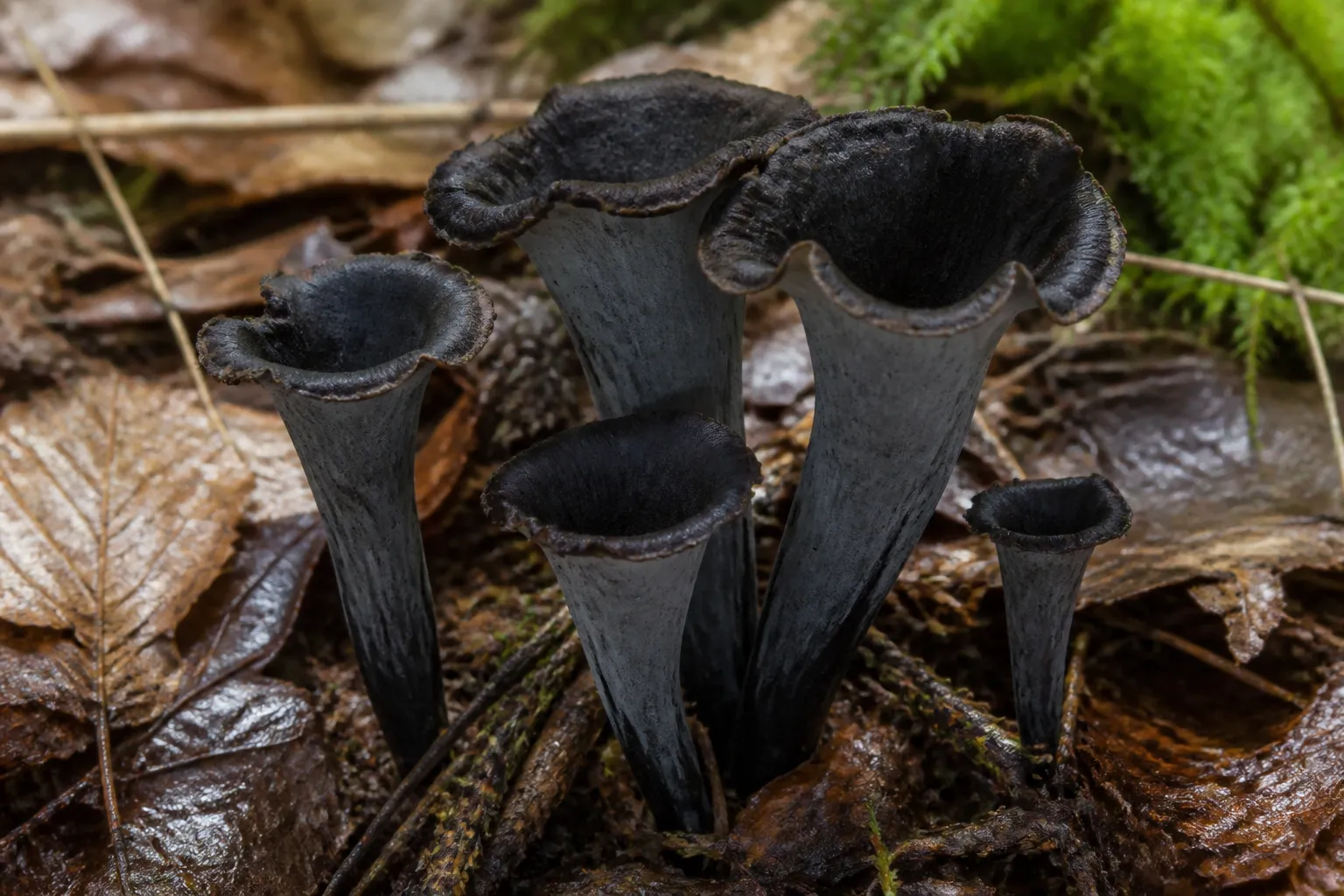
Quick facts
- Scientific name
- Craterellus cornucopioides
- Common names
- Black trumpet
- Taxonomy
- Craterellus · Hydnaceae
- Edibility context
- Edible: This database label is context, not remote clearance of a wild specimen; identity, preparation, spoilage, contamination, and individual reaction matter.
- Spore print
- White to pale cream.
- Toxicity context
- None Known: Risk includes misidentification and individual reaction. Consult current local toxicology guidance before any food decision.
- Season
- July, August, September, October
- Growing difficulty
- Not Cultivated
- Regions
- Europe, temperate North America
Safety limit: These labels summarize documented context; they never authenticate a wild specimen. Cooking does not make a poisonous species safe.
Identification overview
Dark gray to black, thin, hollow funnels with a wavy margin and no true gills. Smooth to faintly wrinkled outer fertile surface; the inner funnel is darker. Tapered hollow base continuous with the cap. Thin, flexible, gray-black flesh with a strong aroma when dried. Observe several ages because rain, drying, insects, and decomposition can alter color and texture. Photograph the undisturbed growth, upper surface, fertile surface, complete attachment, and a lengthwise section. A white to pale cream spore deposit is supporting evidence, never a species verdict.
Habitat and season
Mycorrhizal on forest soil, often among leaf litter near hardwoods. The documented range represented here includes Europe and temperate North America. Typical substrates or settings include woodland soil and leaf litter. Fruiting records commonly occur in July, August, September, October, but latitude, elevation, rainfall, and host condition shift the calendar.
Black trumpets are terrestrial mycorrhizal fungi, so verify that the narrowed base enters soil or litter rather than wood. Record the surrounding hardwood community, slope, drainage, moss and litter depth, and whether fruit bodies repeat along a contour or root zone. The nearest trunk is not automatically the partner; photograph several candidate trees and keep host assignment tentative unless local evidence supports it.
Similar species
- Craterellus fallax — a closely related North American name requiring regional interpretation.
- Urnula craterium — a spring cup fungus with thicker, tougher flesh and a different structure.
Regional naming is central to this comparison. European C. cornucopioides records should not automatically absorb North American material called C. fallax, and dark cups such as Urnula craterium differ in wall thickness, season, internal structure, and fertile surface. A useful determination combines the continuously hollow funnel, thin flexible wall, smooth-to-wrinkled outer hymenium, pale spores, woodland soil, season, and local taxonomic treatment.
Build a complete black trumpet observation
The common name is useful only after the shape has been described without the name. A useful field note starts with a cluster of dark, thin funnels rather than simply “black mushrooms.” In an intact collection, look for a continuously hollow interior that runs from the flared opening into the narrowed base. The edge is often irregular and rolled or wavy; it is not a separate, conventional cap set on a solid stem. Turn a specimen over. The outer surface is the spore-bearing surface and may be smooth, lightly wrinkled, or shallowly ridged, but it does not form the sharp, blade-like true gills familiar from many supermarket mushrooms.
Color alone is weak evidence. Wet material can read charcoal, smoke gray, brown-black, or nearly black, while dry material may become paler and more brittle. A camera can also make a shadowed hollow look blacker than it is. Record the surface texture, thickness, hollowness, attachment to the soil, and the way several mature specimens are distributed through the leaf litter. A lengthwise cut is especially helpful because it shows whether the central cavity is continuous rather than an accidental tear. Do not taste a wild specimen as an identification test.
Spore-print work can support a more complete record, but it has limits. Place a mature specimen on contrasting paper only after photographing it whole, keep the label with the specimen, and record how long the deposit developed. The expected pale deposit is compatible with black trumpet, not exclusive to it. A faint or absent print can result from age, humidity, handling, or an immature mushroom. If a regional key separates candidates with microscopic characters, a pale print does not remove the need for that next step.
Separate the name from regional lookalikes
Black trumpet is often used as a broad market and field name, while regional fungi can require more precise treatment. In parts of North America, Craterellus fallax is a closely related name that deserves local interpretation rather than automatic relabeling. A regional field guide, herbarium record, or mycological society can help establish which names and comparison species are actually documented where the find was made. The GBIF record is a useful starting point for taxonomy and occurrence context, but it is not a personal identification service.
One practical comparison is with dark cup-shaped fungi such as Urnula craterium. A cup fungus may seem similar in a quick overhead photograph, yet the feel, season, wall thickness, and whole form can be very different. Urnula is typically tougher and more substantial, and its spring timing can matter in regions where it occurs. Conversely, a fragile dark funnel in autumn leaf litter does not become a black trumpet simply because the picture matches an online search result. Habitat, season, fertile surface, and a complete specimen must agree at the same time.
Avoid treating “no obvious gills” as a pass/fail shortcut. Some fungi have folds, veins, pores, smooth surfaces, or damaged gills that a photograph conceals. Compare the undersurface under diffuse daylight, include a scale, and photograph more than one age. If the observation is intended for food, pause at any conflict between a guide and the specimen. A qualified local identifier should inspect the material in person; a webpage can explain distinguishing questions but cannot clear a harvest.
Harvest and kitchen decisions belong after identification
Correctly identified black trumpets have a culinary reputation because their thin flesh concentrates aroma when fresh or dried. That culinary context is not a safety endorsement for any wild collection. Gather only where collecting is permitted, leave very young or deteriorating material, and use a ventilated container so the collection is not held warm and wet. Keep one collection and location separate from another until identity is resolved. This reduces the chance that an uncertain specimen is mixed into otherwise familiar food.
At home, sort again under good light. Discard material that is slimy, visibly moldy, badly insect-damaged, or smells persistently abnormal. Rinse only as needed, dry surfaces promptly, and cook as part of normal food handling. The FDA’s produce-safety guidance is relevant to handling but is not mushroom-identification guidance. It does not make a questionable wild specimen acceptable, and cooking cannot reliably neutralize toxins from a mistaken species.
Anyone who is trying a verified edible mushroom for the first time should use a modest, well-cooked portion and avoid serving it to a person with a known sensitivity without appropriate caution. This is a practical food decision, not a diagnostic rule. If illness follows an unidentified or disputed wild mushroom, preserve leftovers and uncooked material, note the time and amount eaten, and contact local emergency services or a poison center. The North American Mycological Association’s poisoning material explains why prompt, accurate specimen information matters.
Use habitat notes to make a future identification stronger
The phrase “near hardwoods” is a starting observation, not a guarantee of association. Note the nearest trees, whether the mushroom came from mineral soil, deep leaf litter, a mossy bank, or buried woody debris, and whether other fruiting bodies were nearby. A black trumpet may appear scattered or in a small group that is easy to miss against dark leaves. Photograph the group before lifting it. Then photograph the outer fertile surface, the interior, and the base against a ruler or other scale.
Keep the record tied to the collection rather than relying on memory: date, broad locality, weather, elevation if relevant, substrate, nearby plants, and a brief note about odor and texture. Never publish sensitive locations for protected species or private land without permission. For a learning collection, a local fungal club can often explain which details make the record useful and which regional alternatives need examination. For a food collection, that same in-person review should happen before preparation, not after.
Repeated, careful notes also reveal why a single web image is insufficient. Young, rain-soaked, frost-affected, and dried specimens can each look different. The safest outcome of an incomplete record is “unresolved,” not a confident species label. This site’s mushroom identification guide and safety checklist provide a repeatable way to document that uncertainty, while the habitat guide and spore-print method explain two supporting observations.
For a related but differently colored funnel, compare the yellowfoot chanterelle guide, especially its hollow yellow stem and gray, cross-veined folds. Shared funnel shape does not make the two field profiles interchangeable.
Frequently asked questions
Do black trumpets have true gills?
No. The outer surface may be smooth, wrinkled, or lightly ridged, but a name should not be assigned from that one trait. Check the hollow funnel, complete attachment, habitat, season, and regional comparison set together.
Why can black trumpets be difficult to spot?
Their dark, thin form can blend into damp leaf litter and shadow. Search slowly, photograph the group where it grows, and avoid using camouflage as identification evidence; many dark fungi share that setting.
Can a dried black trumpet be identified reliably?
Dried material may retain useful form and odor, but drying changes color and texture and removes habitat evidence. Treat a dried sample as supporting material for an expert, not as enough information to approve eating.
Is a pale spore print enough to confirm black trumpet?
No. It is a compatible supporting character whose value depends on a complete, correctly documented specimen and a regional key. Overlapping print colors occur in many fungi.
What should a beginner do with a possible black trumpet find?
Keep it separate, photograph every surface and its habitat, make no food decision, and seek an in-person opinion from a qualified local identifier. Contact a poison center or urgent medical service promptly if an unidentified mushroom has already been eaten and symptoms occur.
Food and safety context
Black trumpet has a documented food-use context when the organism is correctly identified and the material is fresh, clean, and cooked. That reputation does not transfer to a wild specimen identified online. Individual allergy, gastrointestinal intolerance, spoilage, environmental contamination, and cross-contamination remain possible. Cooking does not make a poisonous species safe.
If a disputed dark funnel has been eaten, medical response takes priority over refining its web identification. Contact emergency services or a poison center promptly for significant or developing symptoms. Save unwashed specimens from the exact collection, cooked leftovers, location and habitat frames, meal time, amount eaten, and symptom onset; do not mix material from a second patch into the sample.
Cultivation context
Black trumpet is not a practical sterile-block crop because fruiting is tied to a living tree–fungus relationship that ordinary sawdust recipes do not reproduce. Claims of simple indoor cultivation should identify the authenticated culture, host plant, inoculation design, duration, fruit-body voucher, and independent confirmation. For home production, choose a documented saprotrophic species instead of transferring wild tissue or an unverified “black trumpet” culture into a food project.
How to document a find
- Photograph the scattered or clustered fruiting pattern against leaf litter before lifting a specimen.
- Measure funnel height, opening width, wall thickness, and the length of the continuous hollow cavity.
- Show the dark inner surface, paler outer fertile surface, wavy margin, tapered base, and a longitudinal section.
- Record nearby trees, soil or litter attachment, rainfall, and a pale spore deposit from a labeled mature specimen.
- Compare C. cornucopioides, the locally used C. fallax concept, dark chanterelloid fungi, and seasonal cup fungi with a regional source.
References
- Global Biodiversity Information Facility. Craterellus cornucopioides species record. Taxonomic backbone and occurrence context.
- National Center for Biotechnology Information. NCBI Taxonomy Browser. Independent lineage and nomenclature checkpoint.
- North American Mycological Association. Mushroom Poisoning Syndromes. Poisoning response and syndrome context.
- U.S. Food and Drug Administration. Selecting and Serving Produce Safely. General handling guidance for mushrooms used as food.
Editorial review updated September 27, 2026. The revision added hollow-funnel measurements, regional-name boundaries, woodland transect records, and mycorrhizal cultivation limits; local taxonomy and emergency contacts remain time-sensitive.
Source quality notes
MushroomScope cites sources that match the page scope, such as taxonomic databases, extension guidance, food-safety agencies, food-composition databases, and peer-reviewed or institutional health references. Sources support context and uncertainty; they do not turn an online page into specimen identification, medical advice, or a tested recipe record.
Frequently asked questions
Can Black trumpet be identified from one photograph?
No. Identification requires the complete specimen, fertile surface, attachment, substrate, habitat, region, developmental stage, and sometimes microscopy or DNA.
Is wild Black trumpet safe to eat?
This page cannot clear a wild specimen for food. Obtain in-person confirmation from a qualified local identifier and follow local guidance; cooking cannot make a poisonous lookalike safe.
Where does Black trumpet grow?
Mycorrhizal on forest soil, often among leaf litter near hardwoods. Regional records and host associations should be checked before applying this summary to a local collection.
What is the spore print of Black trumpet?
The expected deposit is white to pale cream, but print color overlaps among fungi and cannot confirm this species by itself.
Can Black trumpet be cultivated at home?
It is not a simple beginner crop; use authenticated commercial material and species-specific professional guidance rather than wild tissue.
Related guides
identification
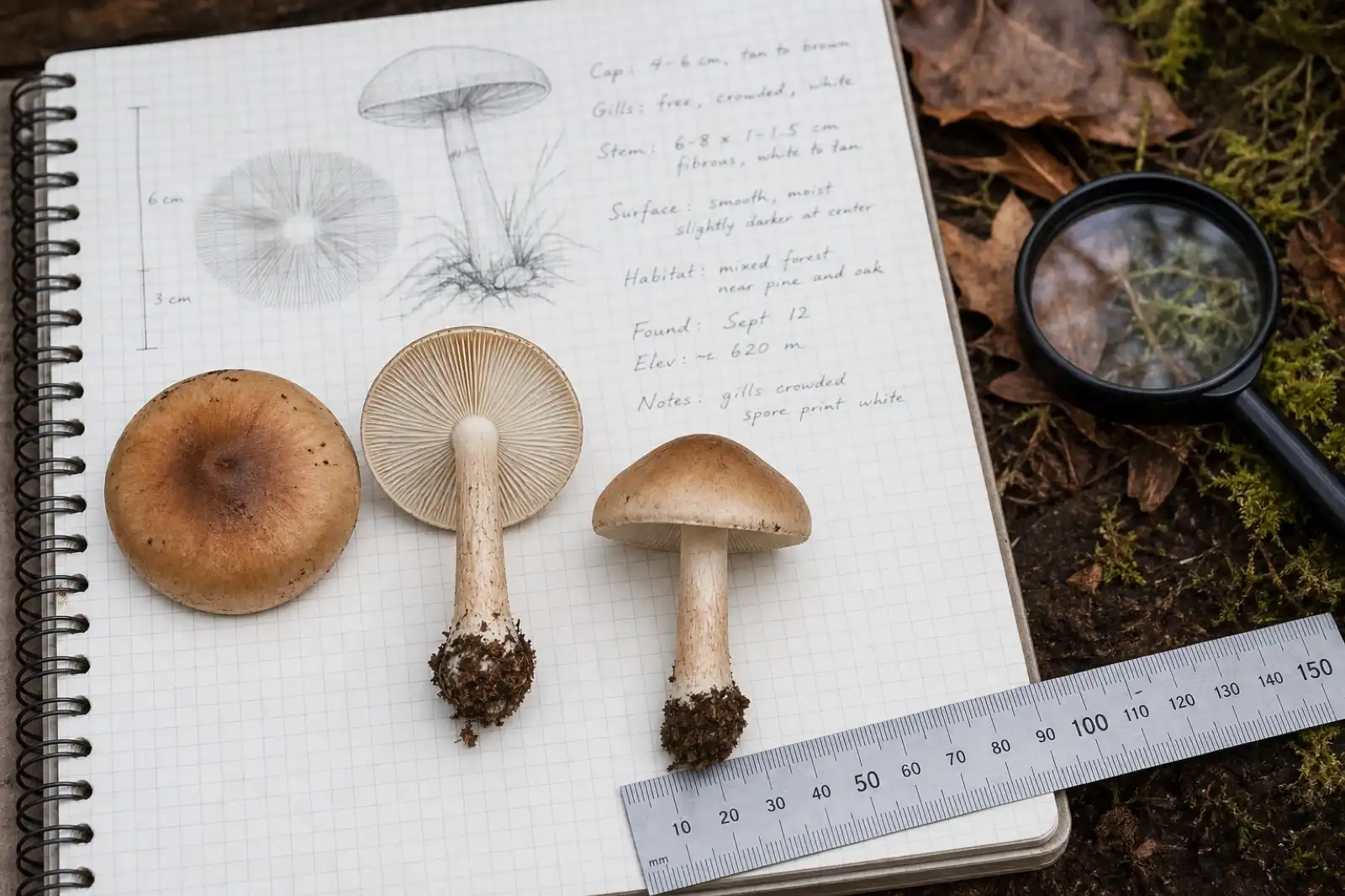
How to Identify Mushrooms: A Beginner's Field Guide
Build an identification from the whole specimen, substrate, habitat, spore deposit, and location—not from a single photograph.
identification
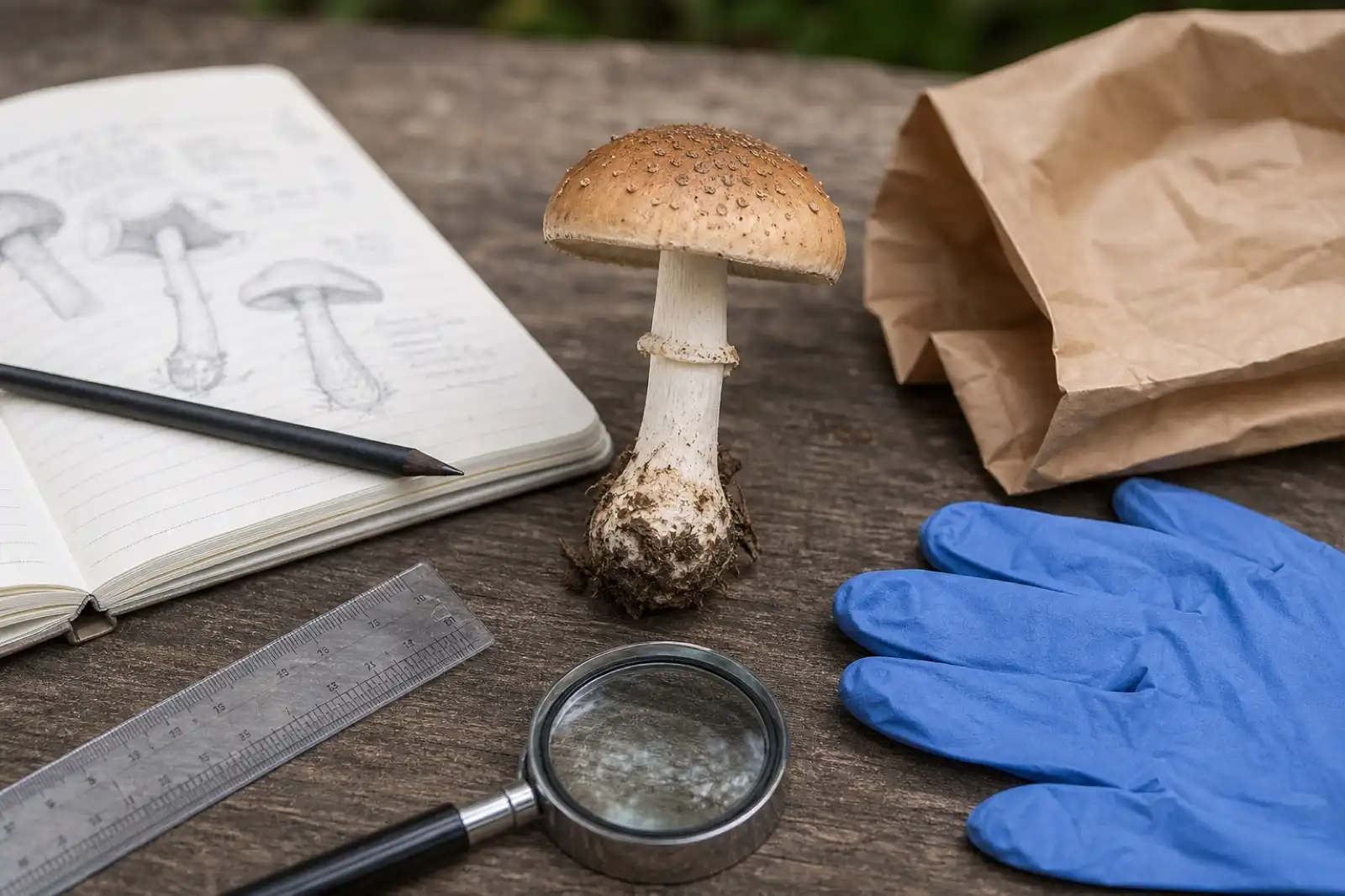
Mushroom Identification Safety Checklist
Use a conservative checklist before handling, documenting, or discussing any wild mushroom, especially when edibility is being considered.
identification
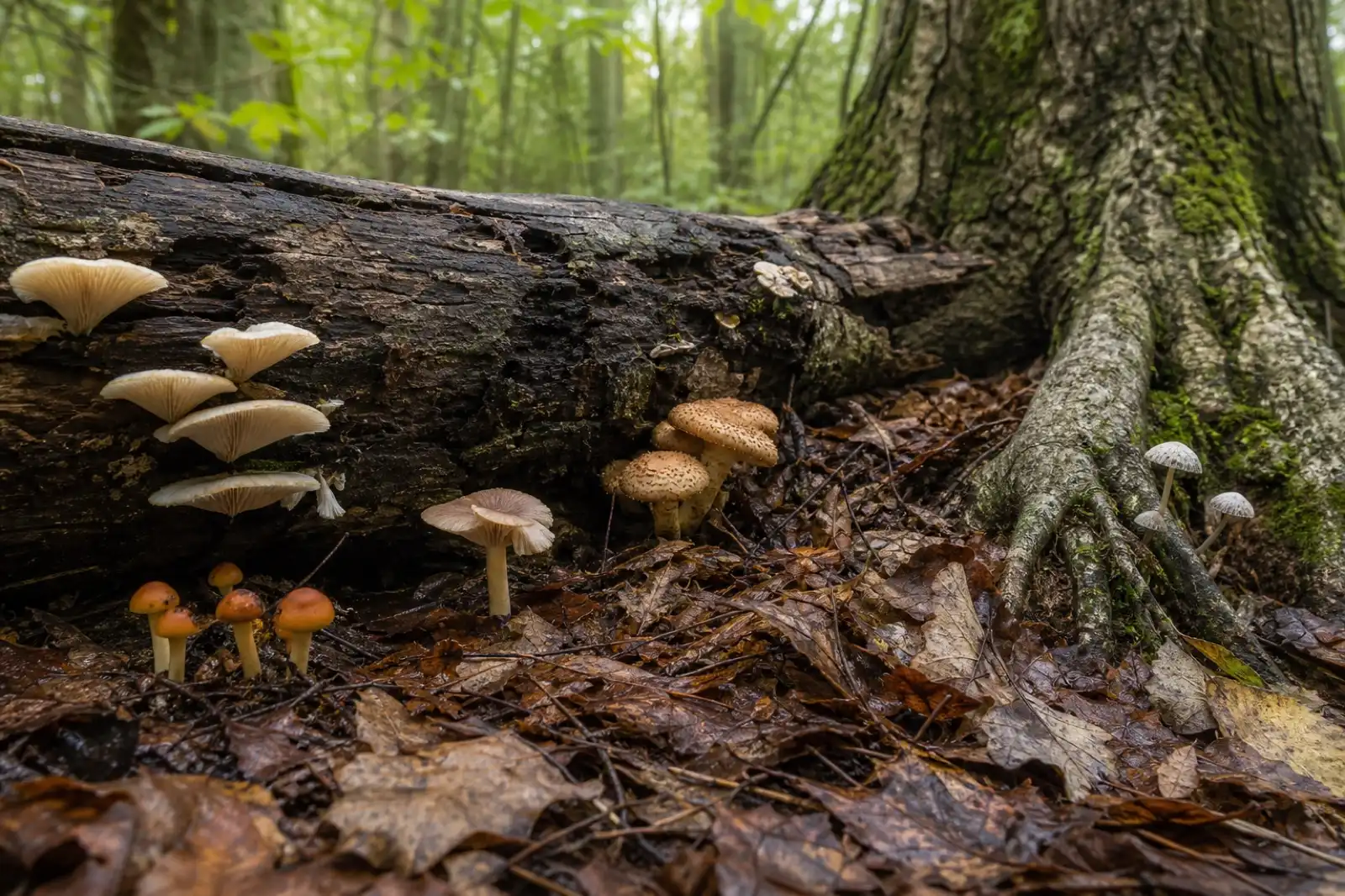
Using Habitat to Identify Mushrooms
Record substrate, associated plants, soil, wood type, moisture, elevation, and fruiting pattern as identification evidence.
Continue exploring
Browse more practical guides in Mushroom Encyclopedia or visit the mushroom encyclopedia.