Mushroom Encyclopedia
Yellowfoot Chanterelle: Craterellus tubaeformis Field Guide
Identify yellowfoot chanterelles by hollow yellow stems, gray folds, mossy conifer habitat, lookalikes, season, cooking qualities, and safety limits.
By MushroomScope Editorial Team · · Updated
Species context
Treat profiles as reference material
Species profiles summarize documented traits, taxonomy, and lookalikes, but natural variation can be substantial.
Use the safety checklist →Decision limit
A profile cannot authenticate a specimen
Do not eat a wild mushroom from an online match, single feature, or generated image.
Read the safety disclaimer →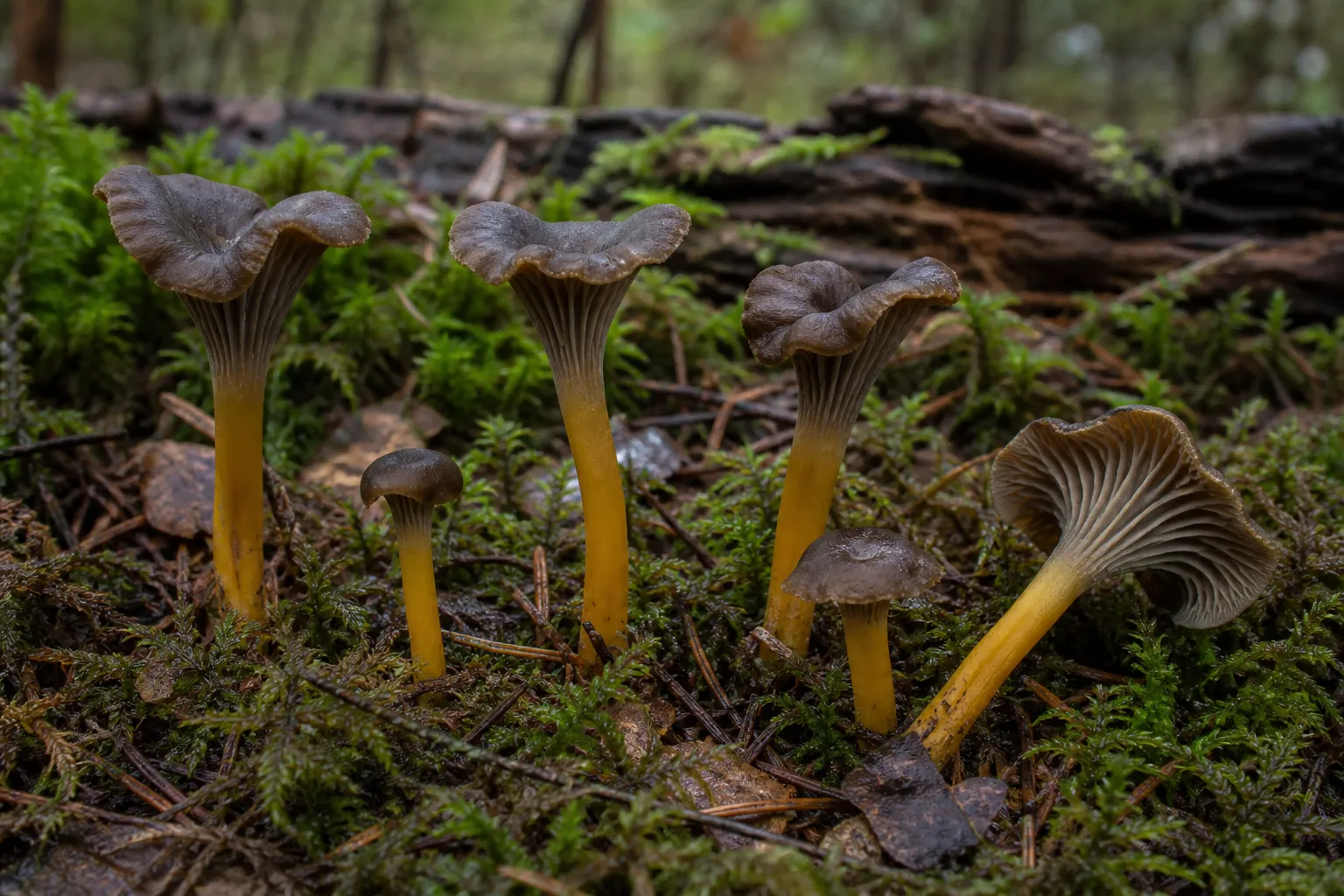
Quick facts
- Scientific name
- Craterellus tubaeformis
- Common names
- yellowfoot chanterelle, yellow foot, winter chanterelle, funnel chanterelle
- Taxonomy
- Craterellus · Hydnaceae
- Edibility context
- Edible: Culinary use applies only to correctly identified fresh specimens; this page cannot clear a collection for food.
- Spore print
- Cream to pale yellow.
- Toxicity context
- None Known: Principal hazards are misidentification, spoilage, contamination, and individual reaction.
- Season
- September, October, November, December
- Growing difficulty
- Not Cultivated
- Regions
- Europe, Asia, North America
Safety limit: These labels summarize documented context; they never authenticate a wild specimen. Cooking does not make a poisonous species safe.
What makes yellowfoot a separate identification problem
The yellowfoot chanterelle, Craterellus tubaeformis, is built on a different scale from the thick golden chanterelle most shoppers recognize. Its cap is thin and brown-gray, its fertile surface is gray and folded, and its narrow yellow stem is hollow. That combination explains the names yellowfoot, winter chanterelle, and funnel chanterelle, but common names vary across countries.
This page focuses on that slender late-season species concept. The broader chanterelle guide explains the familiar golden form; the black trumpet guide covers a dark, nearly smooth trumpet-shaped relative. Keeping those intents separate matters because color alone is weak evidence and regional books may apply older names differently.
No web page can certify a wild mushroom as edible. Use this account to record characters and choose a regional key, then obtain in-person confirmation from someone qualified to assess local fungi. Photograph apps and AI suggestions are hypotheses, not food-safety decisions.
Taxonomy and names need geographic context
Current databases place C. tubaeformis in Cantharellales and Hydnaceae. Older books may use Cantharellus tubaeformis or organize chanterelle-like fungi differently. Sequence work has also encouraged regional re-evaluation of material once placed under broad worldwide names. Record the exact name used by a source, its geography, and publication date rather than silently treating every yellow-stemmed funnel as one population.
A defensible observation saves location at a sensible privacy level, elevation, date, nearby trees, growth pattern, cap and underside photographs, a lengthwise section, and a spore deposit when appropriate. A database occurrence shows that a name has been reported; it does not verify your find.
Read the whole fruit body
Cap, folds, stem, and hollow section
Mature caps are thin and depressed to funnel-shaped. Their brown, ochre-brown, or gray-brown surface can darken when wet and fade as it dries; margins often become wavy. Surface color changes quickly with moisture, so one photograph under warm artificial light is poor evidence.
Turn the mushroom over. Yellowfoot has low, blunt, forked ridges or wrinkles rather than thin knife-edged gill blades. The folds usually descend the upper stem and may connect through cross-veins. They can be weak on some fruit bodies, making several mature specimens more informative than one button.
The stem is disproportionately slender, smooth, yellow to yellow-orange, and hollow. Slice one specimen vertically: a central cavity should continue through much of the stem and into the funnel. Do not rely on the cut alone, since insects and age can hollow other mushrooms. Identification comes from agreement among structure, ecology, spore evidence, geography, and expert comparison.
Build a useful field record
Photograph the troop before touching it, including moss, litter, woody debris, and trees. Document the cap above, folds at an angle, entire stem base, and a clean lengthwise section. Measure rather than estimate. Note whether texture is thin and flexible or brittle and gelatinous. If collection is legal, a cream-to-yellowish deposit can support the record, but cannot confirm the species; the spore-print method explains how paper color, moisture, and debris can mislead.
Moss, trees, and climate explain fruiting
Yellowfoot is mycorrhizal: its underground mycelium participates in an association with living tree roots. It is often recorded in damp, acidic, moss-rich conifer forest, sometimes seeming to emerge from rotten wood lying over soil. That impression does not make it a simple wood-decayer. Record whether the stem actually attaches to wood and which trees occupy the root zone.
Fruit bodies frequently appear in loose troops or broad patches rather than dense fused clusters. Cool wet weather can extend the season later than many fleshy chanterelles, supporting “winter chanterelle” in some regions. September through December is orientation, not a universal calendar: coastal climate, snow, elevation, drought, and rainfall can move fruiting by months.
Occurrence maps are useful for forming a regional hypothesis, not proving absence. Records cluster where observers work. Check conservation rules, avoid trampling moss beds, and leave mature fruit bodies for other observers and spore dispersal.
Lookalikes require different tests
Other yellow-stemmed funnels
Craterellus lutescens is a close comparison in parts of Europe. Descriptions often emphasize stronger orange tones and a smoother or less folded fertile surface, but regional concepts require a current key. This is the kind of separation for which a common name and photograph are insufficient.
Golden chanterelles and black trumpets
Golden Cantharellus species are typically thicker, fleshier, and more uniformly yellow-orange, with a solid rather than slender hollow stem. Black trumpets are hollow funnels but dark gray to black and often have a comparatively smooth outer fertile surface. Weathered specimens blur color boundaries, so structure remains essential.
Gelatinous and gilled mushrooms
Leotia lubrica can share mossy habitat and yellow-green tones, but it is gelatinous with a distinct rounded head rather than descending folds. Small gilled mushrooms on buried wood can create a more consequential error. Sharp separate blades are not the blunt false gills expected here. Stop rather than forcing a fit. The identification safety checklist offers a record-first workflow.
Culinary quality depends on thin texture
Correctly identified yellowfoot chanterelles are valued because thin flesh cooks quickly and funnel shapes hold sauces. Their structure also traps grit, needles, and insects. Trim the dirty base, split larger funnels, and brush or rinse briefly as needed; prolonged soaking can waterlog them. Cook promptly.
A wide pan lets moisture evaporate before butter or oil is added for browning. Overcrowding steams the mushrooms and makes thin stems limp. Their size suits omelets, pasta, soups, and mixed dishes, while gentle drying can preserve aroma. Quality has declined when caps become slimy, sour-smelling, heavily insect-damaged, or water-soaked.
Documented edibility is not permission to eat an online identification. Use only specimens independently confirmed by a qualified local expert, collected legally from an uncontaminated site, and kept cold. Cook thoroughly and try a modest portion the first time.
Why it is not a beginner cultivation crop
Yellowfoot depends on living trees and a forest soil community. That biology differs from oyster or shiitake mushrooms fruiting on treated plant material. A culture growing on agar, patent, or research observation does not demonstrate a dependable home method.
Claims for “yellowfoot grow kits” should be checked for scientific name, authenticated culture, intended outcome, and evidence the seller has fruited the organism. For a first indoor crop, choose a documented saprotroph and follow the beginner growing guide rather than transferring wild tissue into food production.
Collection decisions should protect both evidence and habitat
Before collecting, decide what question the specimen needs to answer. A photograph may be enough for a seasonal observation; a difficult taxonomic record may require one or two complete mature fruit bodies, a spore print, dried material, and notes that can accompany a herbarium voucher. Taking a basketful before establishing identity destroys context and does not improve the diagnosis. Regulations, landowner permission, protected-species rules, and local harvest limits always take priority.
Moss beds are easily compressed. Approach from durable ground, photograph the undisturbed patch, and avoid repeatedly lifting the same moss mat to search for stems. A small fruit body may share its below-ground mycorrhizal network with nearby trees even when it seems attached to a twig. Record the apparent attachment rather than pulling apart a large area to prove it.
For a voucher, keep collections from different patches separate, label each packet with date and site, and dry promptly using appropriate guidance. Do not mix a confirmed collection with later mushrooms merely because their cap color matches. Ecological notes made on site are difficult to reconstruct at home and often carry more diagnostic value than an extra close-up.
Preservation changes texture, flavor, and identification characters
Yellowfoot’s thin flesh loses water quickly. In the kitchen, that can make careful low-temperature drying effective, but it also means an uncovered refrigerator sample may shrivel before it is assessed. Store food collections cool in breathable packaging and process them promptly. Do not seal wet mushrooms in an unrefrigerated plastic bag, where condensation and microbial deterioration can accelerate.
Drying darkens colors and can flatten the folds, so photograph fresh characters before preservation. Freezing raw thin mushrooms can damage texture; cooks commonly sauté first or dry them, but the safest method depends on a correctly identified, sound collection and ordinary food-storage controls. Preservation does not rescue spoiled material, remove environmental contaminants, or neutralize an unidentified toxic species.
Document the hollow channel without destroying the whole collection
Select one representative mature fruit body and make a clean longitudinal section from cap center through the stem base. Photograph the channel with a scale and record whether it is continuous, narrow, partly collapsed, or filled by debris. Thin yellowfoot stems can flatten during transport, so a crushed specimen is weaker evidence than a fresh section. Retain intact specimens to document the external stem color and fertile surface.
Measure several caps and stems rather than treating the largest individual as typical. Record cap width, stem length and diameter, wall thickness, fold spacing, degree of branching, and how far the folds descend. Pair every measurement with maturity because young funnels may be shallower and fertile folds less developed. These observations distinguish a population description from a single attractive photograph.
Read folds by profile, branching, and cross-veins
True gills form thin blade-like plates with relatively sharp edges. Yellowfoot instead has low, blunt ridges that fork, reconnect through cross-veins, and run down the stem. View them from the side under diffuse light and photograph the transition from cap to stem. Do not decide from underside color alone: gray, cream, and yellow tones shift with age, moisture, and camera processing.
Compare several fruit bodies in the same patch. If some have sharp detachable blades while others have blunt folds, treat the collection as potentially mixed and keep it out of food use. Small forest mushrooms can grow intermingled, and a correct specimen in one photograph does not authenticate everything gathered nearby.
Map the wet-forest microhabitat
Record whether the fruit bodies arise through live moss, needle litter, decayed wood over soil, a bank, or saturated ground. Photograph the canopy and plausible living host trees, then note slope, drainage, recent rainfall, and whether the patch lies beside a seep or stream. “Found in moss” is useful but incomplete because moss covers very different soil and host settings.
Repeated mapped observations can reveal whether fruiting follows late-season rain, cooling soil, or persistent moisture at that site. They do not create a universal calendar. Latitude, elevation, ocean influence, snow cover, and local Craterellus concepts all affect timing, so a December name such as winter chanterelle should not be used as a date-based identification test.
Keep regional yellowfoot names provisional
The yellow-stemmed funnel chanterelles include regionally interpreted taxa such as Craterellus tubaeformis and C. lutescens. Color and fold development overlap, while field guides may differ in the names applied to local populations. Use a current regional key and record which concept it follows; microscopy or sequence evidence may be needed where ranges and characters overlap.
For a public observation, a genus-level or group-level identification with complete photographs is more useful than an overconfident species name. Preserve location at an appropriate privacy level, date, host context, measurements, and an image of the sectioned stem. Those records allow a local expert to reassess the name without repeating the collection.
Cook thin fruit bodies by moisture state
Yellowfoot’s thin flesh loses water quickly. Sort out litter and damaged specimens before washing, clean in small batches, and dry the surface so added water does not turn the pan into a steaming bath. Cook only a correctly identified, fresh collection, using a broad hot pan and modest batch depth; add fat or finishing liquid with attention to the recipe rather than relying on a fixed time.
Dried yellowfoot becomes light and brittle and can trap grit in the funnel. Store it fully dry in a clean sealed container, inspect for moisture or insects, and rehydrate hygienically. Drying concentrates flavor by removing water but also removes identification characters, so complete the identification record before preservation and never authenticate an unknown dried mix from appearance alone.
Evidence limits, safety, and editorial method
This article uses Kew and GBIF for nomenclature and occurrence context, a specialist description for macroscopic comparison, NAMA for poison-response guidance, and FDA material for general handling. These sources answer different questions. No named mycologist, clinician, or dietitian reviewed this page; its status is editorial.
If illness follows a wild mushroom meal, do not wait for an online reply. Contact emergency services or a poison center, especially for persistent vomiting or diarrhea, confusion, breathing difficulty, jaundice, or delayed symptoms. Keep uncooked specimens, trimmings, photographs, packaging, and meal timing for investigation. Cooking cannot turn a poisonous lookalike into safe food.
References
- Royal Botanic Gardens, Kew. Craterellus tubaeformis record. Nomenclatural checkpoint.
- GBIF. Craterellus tubaeformis. Taxonomic backbone and occurrence context.
- First Nature. Craterellus tubaeformis. Macroscopic description and European comparisons.
- NAMA. Mushroom Poisoning Syndromes. Poison-response context.
- FDA. Selecting and Serving Produce Safely. General handling guidance.
Editorial review: August 28, 2026. Taxonomy, distribution, regional lookalikes, and poison-response contacts are rechecked at substantive updates.
Source quality notes
MushroomScope cites sources that match the page scope, such as taxonomic databases, extension guidance, food-safety agencies, food-composition databases, and peer-reviewed or institutional health references. Sources support context and uncertainty; they do not turn an online page into specimen identification, medical advice, or a tested recipe record.
Frequently asked questions
What separates yellowfoot from a golden chanterelle?
Yellowfoot is usually smaller and thinner, with a hollow yellow stem, brown-gray funnel cap, and grayish blunt folds. Golden chanterelles are generally fleshier and yellow-orange, but neither description confirms a wild specimen.
Does yellowfoot have true gills?
No. Its fertile surface has low, blunt, forked, often cross-veined folds that run down the stem. Sharp blade-like gills point away from Craterellus tubaeformis.
Where does yellowfoot grow?
Records commonly place it in cool, damp, moss-rich forests, especially with conifers. Host associations and season vary by region.
Can a photograph confirm yellowfoot is edible?
No. A food decision requires the whole specimen, fertile surface, hollow section, habitat, region, maturity, and in-person assessment by a qualified local identifier.
Can yellowfoot be cultivated at home?
It is a mycorrhizal forest fungus rather than a dependable indoor block crop. Culture growth does not equal a repeatable beginner fruiting method.
Related guides
mushrooms
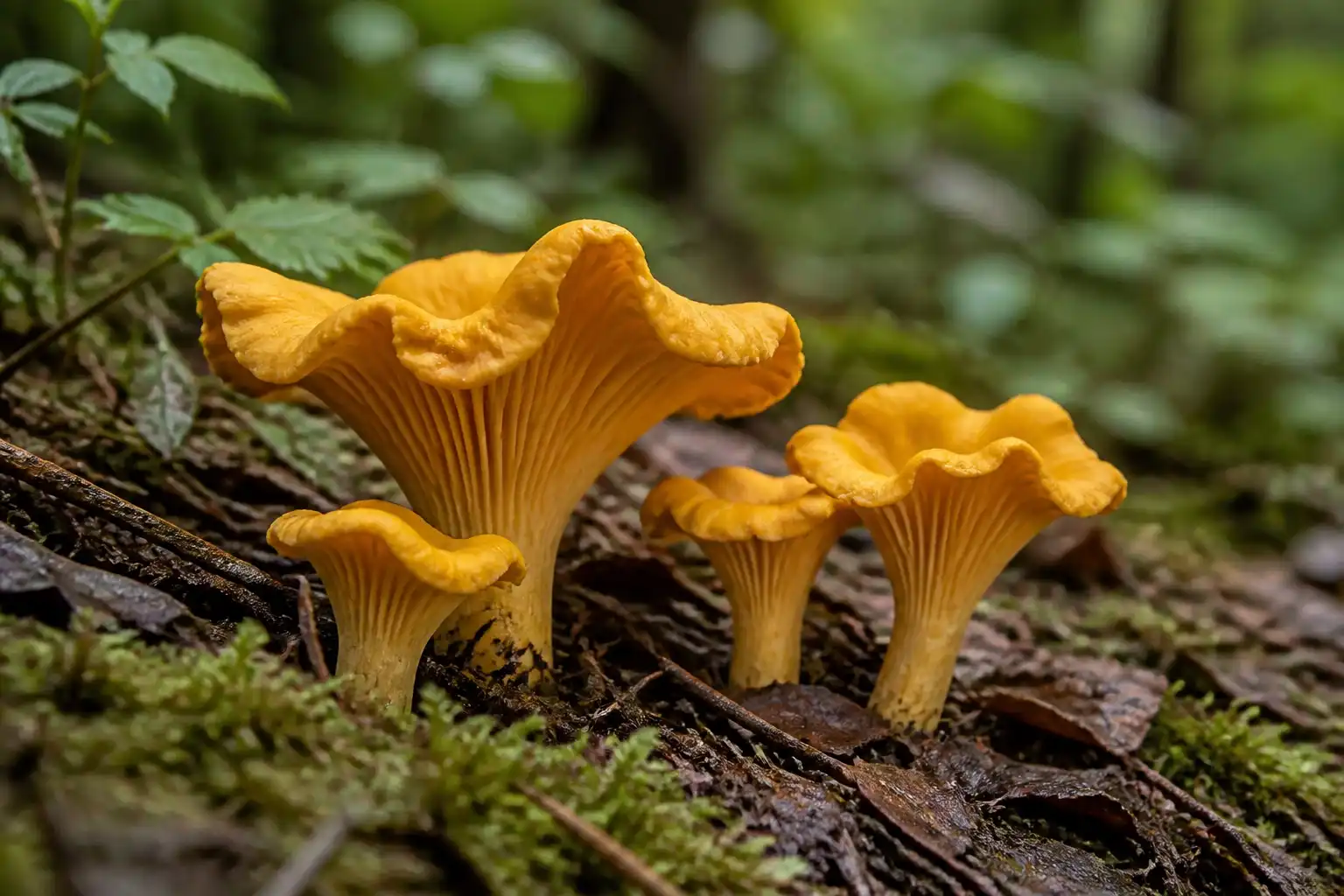
Cantharellus cibarius: Chanterelle Identification Guide
Learn chanterelle identification, false gills, habitat, season, poisonous lookalikes, edibility, nutrition, and why wild finds need local verification.
mushrooms
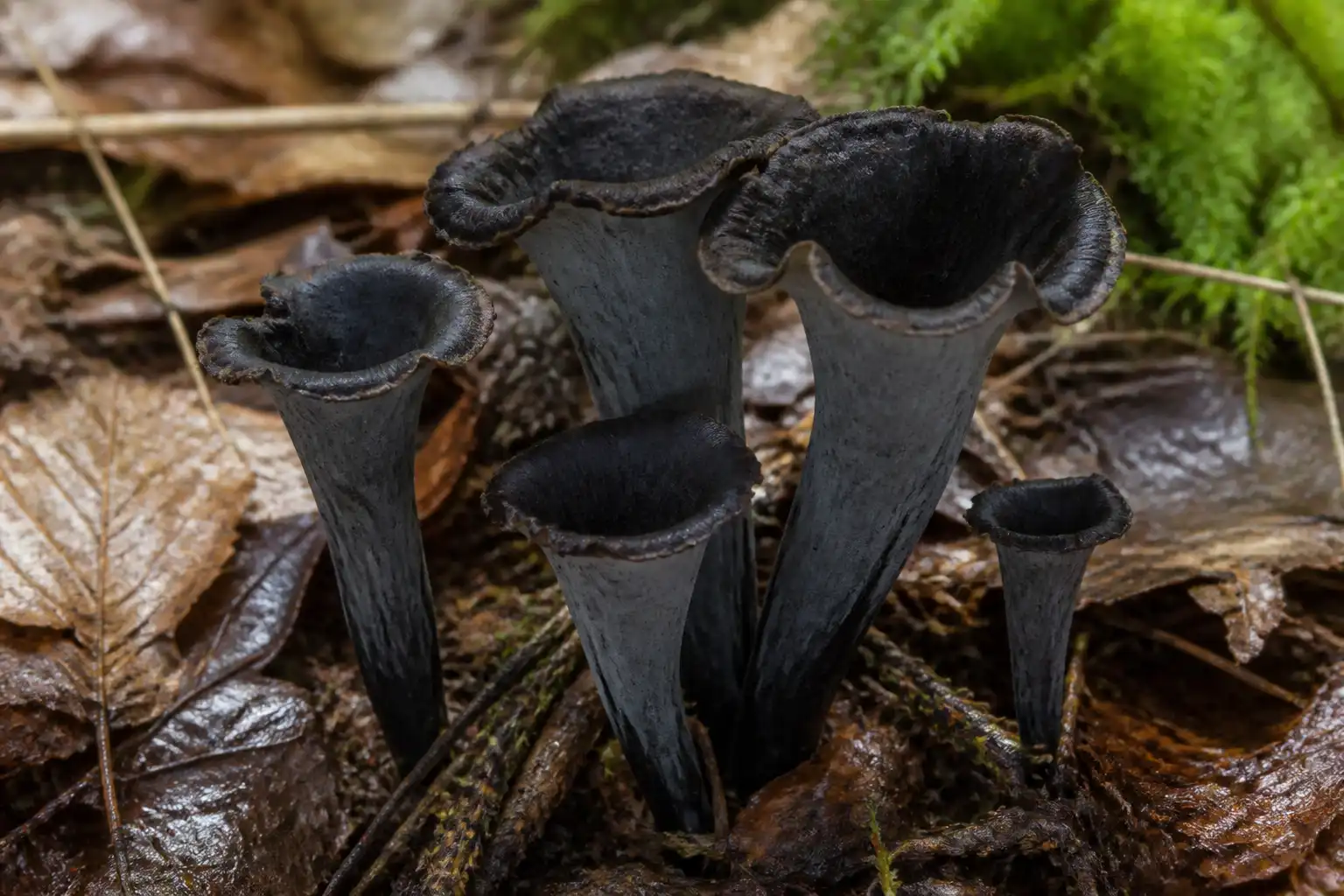
Craterellus cornucopioides: Black trumpet Species Guide
Learn Black trumpet identification, habitat, season, lookalikes, safety, food context, and cultivation limits with current taxonomy and sources.
identification
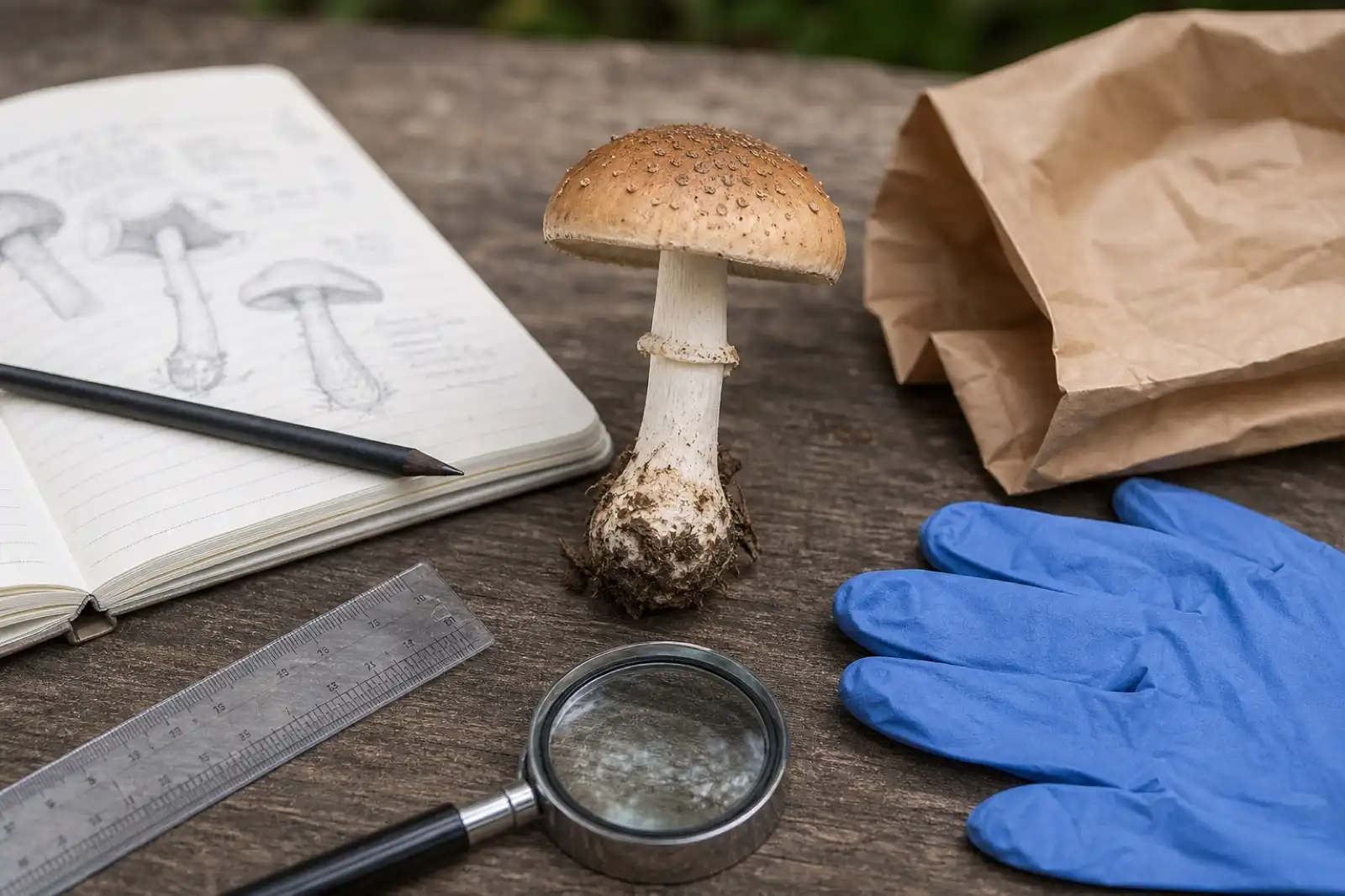
Mushroom Identification Safety Checklist
Use a conservative checklist before handling, documenting, or discussing any wild mushroom, especially when edibility is being considered.
Continue exploring
Browse more practical guides in Mushroom Encyclopedia or visit the mushroom encyclopedia.