Mushroom Encyclopedia
King Oyster Mushroom: Pleurotus eryngii Ecology and Cultivation
Understand king oyster morphology, Mediterranean plant associations, controlled crop shaping, dense-stem cooking, food evidence, and wild-identification limits.
By MushroomScope Editorial Team · · Updated
Species context
Treat profiles as reference material
Species profiles summarize documented traits, taxonomy, and lookalikes, but natural variation can be substantial.
Use the safety checklist →Decision limit
A profile cannot authenticate a specimen
Do not eat a wild mushroom from an online match, single feature, or generated image.
Read the safety disclaimer →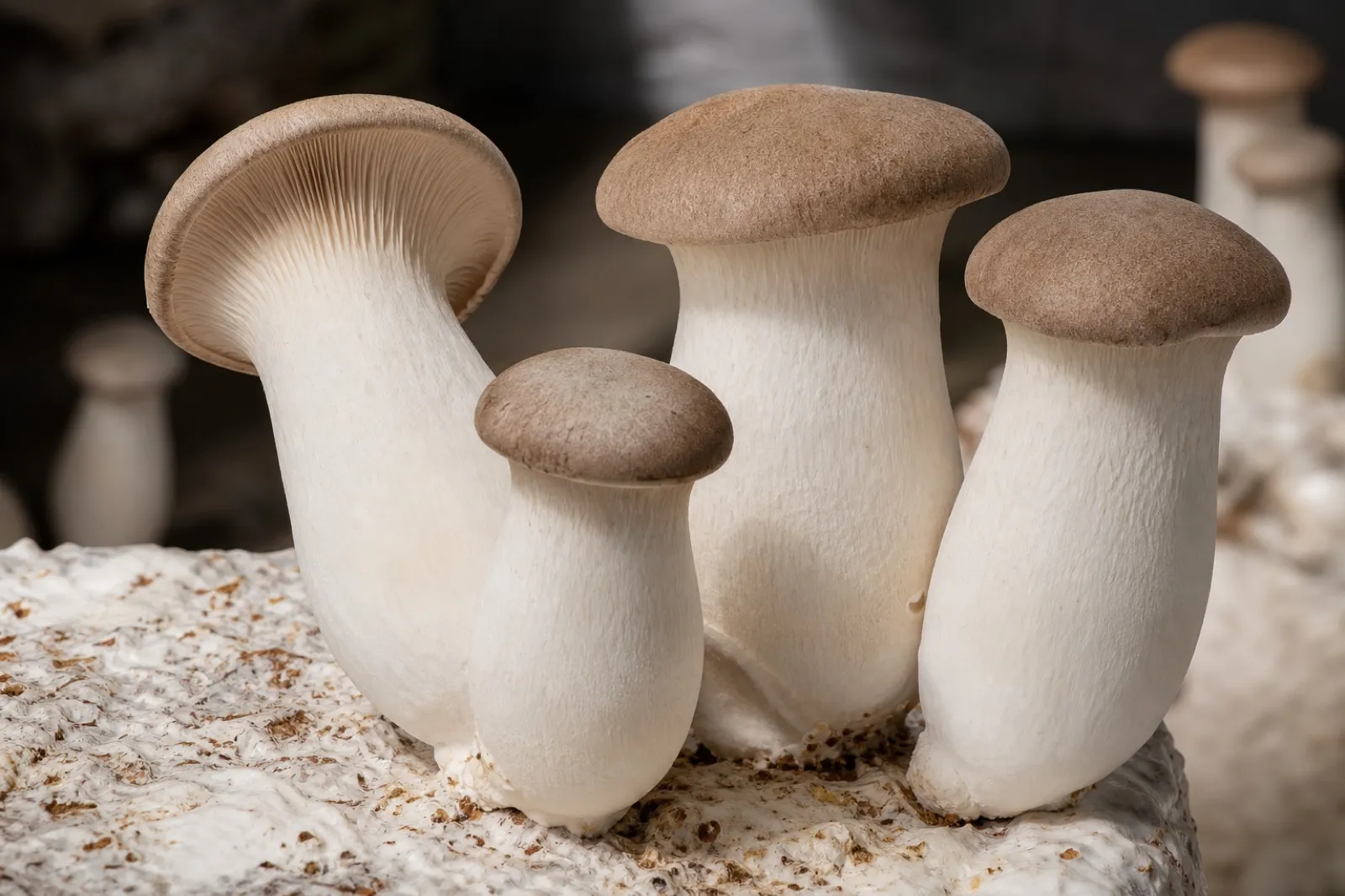
Quick facts
- Scientific name
- Pleurotus eryngii
- Common names
- king oyster mushroom, king trumpet mushroom, eryngii
- Taxonomy
- Pleurotus · Pleurotaceae
- Edibility context
- Edible: Widely cultivated and valued for a dense stem; cook thoroughly.
- Spore print
- White.
- Toxicity context
- None Known: No characteristic poisoning syndrome is associated with cultivated food use, though allergy, intolerance, contamination, and wild misidentification remain possible.
- Season
- September, October, November, December, January, February, March, April
- Growing difficulty
- Moderate
- Regions
- Mediterranean region, southern Europe, North Africa, western and central Asia, cultivated worldwide
Safety limit: These labels summarize documented context; they never authenticate a wild specimen. Cooking does not make a poisonous species safe.
Introduction
Pleurotus eryngii is the thick-stemmed member of the oyster mushroom group most often sold as king oyster or king trumpet. Unlike the shelf-forming P. ostreatus, cultivated fruit bodies are frequently encouraged to develop a substantial central stem and a relatively modest brown cap. Both parts are edible, and the dense stem retains structure during roasting, searing, and braising.
King oyster needs two evidence tracks. A supermarket fruit body is an intentionally shaped crop whose thick stem reflects strain, vessel geometry, thinning, light, and gas exchange. A wild P. eryngii record belongs to a Mediterranean or steppe ecological complex associated with particular herbaceous plants. This guide keeps those tracks separate so a commercial phenotype is not used as a field-identification shortcut.
For a crop record, retain the producer or culture code, substrate dry mass, container opening, number of pins retained, harvest mass, and cap-to-stem grading rule. For a wild record, photograph the soil attachment, nearby putative Apiaceae host, complete gills and stem, regional setting, and multiple ages. These records answer different questions and should not be merged simply because both specimens have tan caps and pale decurrent gills.
Identification
Commercial king oysters have a stout white stem, tan-brown cap, pale decurrent gills, white flesh, and white spores. Shape is heavily influenced by cultivation conditions. Elevated carbon dioxide can elongate stems, while air exchange and light change cap development. Because morphology is plastic and several Pleurotus taxa are similar, a shop label should not be treated as proof for a wild specimen.
Macroscopic characters
- Cap or upper surface: Convex then flatter, tan to brown, usually smaller relative to the thick stem than in other cultivated oysters.
- Fertile surface: White to cream gills descend slightly to clearly down the upper stem.
- Stem or attachment: Very thick, solid, white, central to eccentric, and prized for its firm texture.
- Flesh: Dense, white, firm, and slow to soften compared with many oyster mushrooms.
- Spore print: White.
Measure cap width, stem length, stem width at midpoint, gill descent, and cap-to-stem mass across a representative tray. Developmental photographs should show pins before thinning, early cap expansion, and the chosen harvest stage. A white spore deposit supports Pleurotus placement but does not distinguish king oyster from related pale-spored oysters; authenticated culture provenance is stronger evidence for a farm crop.
Similar species
- Pleurotus nebrodensis: A rare related taxon with conservation importance; commercial and wild names should not be interchanged casually.
- Pleurotus ostreatus: Usually forms broader shelf-like clusters with thinner, more lateral stems.
- Other Pleurotus species: Species boundaries may require microscopic or molecular evidence.
Separation from P. ostreatus should use growth habit, stem position and mass, cap expansion, ecology, and culture identity rather than one photograph. P. nebrodensis is a conservation-sensitive regional relative whose name must not be borrowed for market appeal. Other members and varieties of the P. eryngii complex may require host, geography, microscopy, mating studies, or sequence data; an app cannot evaluate those boundaries reliably.
Scientific Classification
| Rank | Name |
|---|---|
| Kingdom | Fungi |
| Phylum | Basidiomycota |
| Class | Agaricomycetes |
| Order | Agaricales |
| Family | Pleurotaceae |
| Genus | Pleurotus |
| Species | Pleurotus eryngii |
Within the P. eryngii complex, names have been associated with geography and host-linked forms. Preserve the exact name, strain identifier, voucher, sequence accession, and date used by a study rather than silently translating every result to retail “king oyster.” A cultivation trial on one commercial strain and a field report from a named host population are not interchangeable taxonomic evidence.
Habitat
The species complex is linked in nature with steppe and Mediterranean plants, especially members of Apiaceae. Commercial production instead uses sterilized mixtures based on hardwood sawdust and agricultural materials. This difference illustrates why ecological notes belong in identification records: the same species can express a cultivated form that does not resemble fruit bodies produced under exposed outdoor conditions.
Known range represented here: Mediterranean region, southern Europe, North Africa, western and central Asia, cultivated worldwide. Typical substrates: supplemented hardwood sawdust, agricultural by-product blends, commercial sterilized blocks. Outdoor fruiting varies regionally; indoor production is scheduled year-round.
Wild king oysters are unusual among familiar oyster mushrooms because records are tied to the roots and dead tissues of large herbaceous hosts rather than ordinary shelf clusters on logs. Document open grassland, steppe, dune, scrub, or field-edge context; photograph the candidate host’s leaves, stem, inflorescence or dry remains; and show how the fruit body meets soil near the root zone. “On the ground” without host evidence is incomplete.
Some host-linked king-oyster populations and close relatives have narrow ranges or conservation concern. Check local status before collecting, avoid excavating host roots, and record sensitive coordinates privately. One permitted representative may be enough for a voucher; leaving immature and mature fruit bodies preserves the population’s reproductive opportunity and gives later observers material to examine.
The eryngii name covers an ecologically distinctive complex
Wild king-oyster records should not be interpreted as ordinary wood-oyster records. Members of the P. eryngii complex are associated with roots and dead tissues of large herbaceous plants, particularly Apiaceae, across steppe and Mediterranean systems. Host association, geography, and microscopic or molecular evidence can therefore matter when separating named varieties or related taxa. A thick stem and tan cap are not enough to transfer a supermarket name to a wild observation.
Commercial production changes the ecological setting. Sterilized sawdust and agricultural blends let authenticated cultures fruit away from native plant associates, while ventilation and bottle or bag geometry reshape the fruit body. The cultivated form belongs in a species account but should not become a field-identification template. The broader oyster species guide covers shelf-forming P. ostreatus intent separately.
Growing Guide
King oysters are less forgiving than basic straw-grown oysters. Producers normally use filter-patch bags or bottles containing hydrated, supplemented substrate that has been properly sterilized. After colonization, a cool pinning phase, humidity, light, and controlled ventilation shape the crop. Growers may thin pins so fewer fruit bodies become larger. Home cultivators should follow a strain-specific supplier protocol and avoid sealing fruiting containers without gas exchange.
A safe cultivation workflow
- Choose verified material. Buy spawn or a fruiting block from a specialist supplier that identifies the culture and provides strain-specific parameters.
- Match the substrate. Use supplemented hardwood sawdust or agricultural by-product blends only through a proven recipe. Moisture and heat treatment must suit the method.
- Separate clean and dirty work. Clean tools and surfaces, wash hands, label every batch, and keep finished fruiting areas away from substrate preparation waste.
- Monitor colonization. Healthy appearance depends on the species and culture. Do not assume every white growth is the intended fungus; odor and unexpected pigments are warning signs.
- Initiate fruiting deliberately. Temperature, humidity, light, oxygen, and carbon dioxide interact. Follow the culture supplier rather than copying one universal number.
- Harvest and cool promptly. Use clean tools, avoid saturating fruit bodies, refrigerate culinary crops, and document yield and abnormalities.
King-oyster substrate is commonly supplemented and therefore demands a validated sterilization and clean-inoculation process. Record hydration by mass, core sterilization schedule, inoculation rate, filter condition, and colonization time. Sour odor, wet uncolonized pockets, green sporulation, bacterial slime, or an unexpected fruit body requires isolation and disposal according to the grower’s contamination plan; trimming the visible defect does not validate the remaining block.
Crop shape records must include air, position, and thinning
King oyster morphology is deliberately managed. Record bag or bottle opening, rack position, number of retained pins, crop-zone temperature and humidity, ventilation state, and cap-to-stem proportions at harvest. A long stem can be a desired market form, but the same shape cannot prove that carbon dioxide was correct: crowding, strain, light, block geometry, and measurement position also contribute.
Compare batches with the same grading rule. Weigh saleable stems and caps together unless the market actually separates them, and record trim rather than hiding it inside gross yield. A high biological-efficiency number can coexist with cracked caps, soft bases, or poor shelf life. The batch-record guide provides a traceable structure, while the flush-management guide separates later yield from the shelf time used to obtain it.
Interpret king oyster food data by product form
King oyster is a high-moisture food, so fresh weight and dry weight answer different questions. A database entry per 100 grams of raw mushroom cannot be transferred directly to a sautéed portion that has lost water and absorbed oil. Match the species or product name, raw or cooked state, edible portion, and serving mass before comparing protein, fiber, sodium, or energy.
The thick stem also changes the plate without creating a special clinical effect. It supplies firm texture and savory flavor that can replace some volume of a more energy-dense ingredient, but that recipe substitution—not an isolated mushroom compound—determines the finished meal. USDA FoodData Central provides reference values for sampled foods; it is not a certificate for a particular farm, strain, or package.
Extract, polysaccharide, cell-culture, and animal studies should not be narrated as benefits of a cooked serving. A concentrated test material may differ in identity, solvent, dose, and composition. This page therefore makes no claim that king oyster treats cholesterol, diabetes, cancer, infection, or immune disorders. The nutrition guide explains how to compare matched food records without converting composition into a medical promise.
Dense stems need a different cooking decision
King oyster’s culinary identity rests less on a health claim than on structure. The thick stem has much less open gill area than a broad oyster cap and can be sliced across the grain into rounds, cut lengthwise into planks, scored, or shredded. Equal thickness matters because a thin edge can dry before the center of a thick piece heats through. Surface moisture must evaporate before strong browning develops, so crowding a cool pan tends to steam pieces and leave their exterior pale.
For seared rounds or planks, wipe away loose substrate, trim only the dry base, and use a broad pan with space between pieces. Moderate initial heat lets the center warm; a hotter finishing phase drives browning after released water evaporates. Salt timing, oil quantity, slice thickness, and pan material change the result, so visual and tactile cues transfer better than one minute count. The garlic-butter oyster technique is designed for more delicate caps and must be adjusted for dense stems.
Braising trades surface crispness for even tenderness and flavor absorption. Shredding exposes more surface for a pulled texture, but small fibers dry quickly under prolonged high heat. Cook cultivated mushrooms thoroughly and cool leftovers promptly in shallow containers. Culinary performance does not authenticate a wild specimen, and pleasant smell or successful browning is never an edibility test.
Safety
Buy from a reputable food producer, keep refrigerated, and cook until tender and steaming. Do not use a cultivation block that smells putrid, develops unexplained colorful molds, or comes from an unknown culture. Individuals with mushroom allergy should avoid it. Wild Pleurotus-like mushrooms require expert confirmation, particularly in regions where rare relatives occur; collecting a rare species can also create conservation harm even if it is technically edible.
For cultivated king oysters, buy intact, firm fruit bodies without wet collapse at the dense stem base. Keep the package cold, retain lot information until use, trim substrate residue with a clean knife, and prevent contact with raw animal foods. The thick stem can remain cool at the center when pieces are very large, so cut consistently and cook through; browning is a texture choice, not proof that an uncertain wild mushroom is safe.
Recall action is lot-specific: follow the producer and regulator notice rather than relying on smell or appearance, and discard affected packages as directed. Anyone with mushroom allergy should avoid the food. After illness involving a wild or mislabeled mushroom, contact emergency services or a poison center promptly and preserve the uncooked material, packaging, lot code, meal amount, and symptom timeline for professional assessment.
References
- National Center for Biotechnology Information. Pleurotus eryngii taxonomy records. Current lineage and sequence-linked nomenclature context for the complex.
- U.S. Department of Agriculture. FoodData Central. Matched food-composition records whose form and serving basis must be checked before comparison.
- Penn State Extension. Mushroom Food Safety. Hygiene and preventive-control principles relevant to supplemented-substrate production.
- Zervakis GI, et al. A reappraisal of the Pleurotus eryngii complex. Host-linked and geographic variation underlying the complex concept.
- U.S. Food and Drug Administration. Selecting and Serving Produce Safely. Handling and recall context for cultivated food products.
Substantive update: September 16, 2026. Added crop-shape batch variables, flush economics, matched product-form nutrition interpretation, and clearer separation between food and extract evidence. Editorial review only; no named clinician or mycologist reviewed this page.
Source quality notes
MushroomScope cites sources that match the page scope, such as taxonomic databases, extension guidance, food-safety agencies, food-composition databases, and peer-reviewed or institutional health references. Sources support context and uncertainty; they do not turn an online page into specimen identification, medical advice, or a tested recipe record.
Frequently asked questions
Can this mushroom be identified from a photograph?
No. A photograph can support documentation, but a defensible identification of Pleurotus eryngii also considers substrate, location, developmental stage, underside, spore deposit, odor, texture, and sometimes microscopy or DNA. Never make an edibility decision from an image alone.
Is it safe to eat?
king oyster mushroom is an established food when it comes from a reputable cultivated source and is stored and cooked properly. Individual allergy or intolerance is still possible. A wild specimen needs independent expert confirmation.
Can beginners grow it?
The database rates cultivation as moderate. Beginners should use authenticated spawn or a reputable ready-to-fruit block, follow the supplier's temperature and hygiene instructions, and discard cultures showing unexplained mold colors or foul odors.
Does it have proven health benefits?
It has nutritional or research interest, but that wording must not be converted into a treatment claim. Laboratory findings do not prove clinical benefit, and human evidence must match the exact species, preparation, dose, and outcome.
How should it be stored?
Refrigerate fresh cultivated mushrooms promptly in breathable food-safe packaging and use them while sound. Keep dried material sealed, dry, and away from heat. Follow local recall notices and discard spoiled or contaminated products.
Related guides
mushrooms
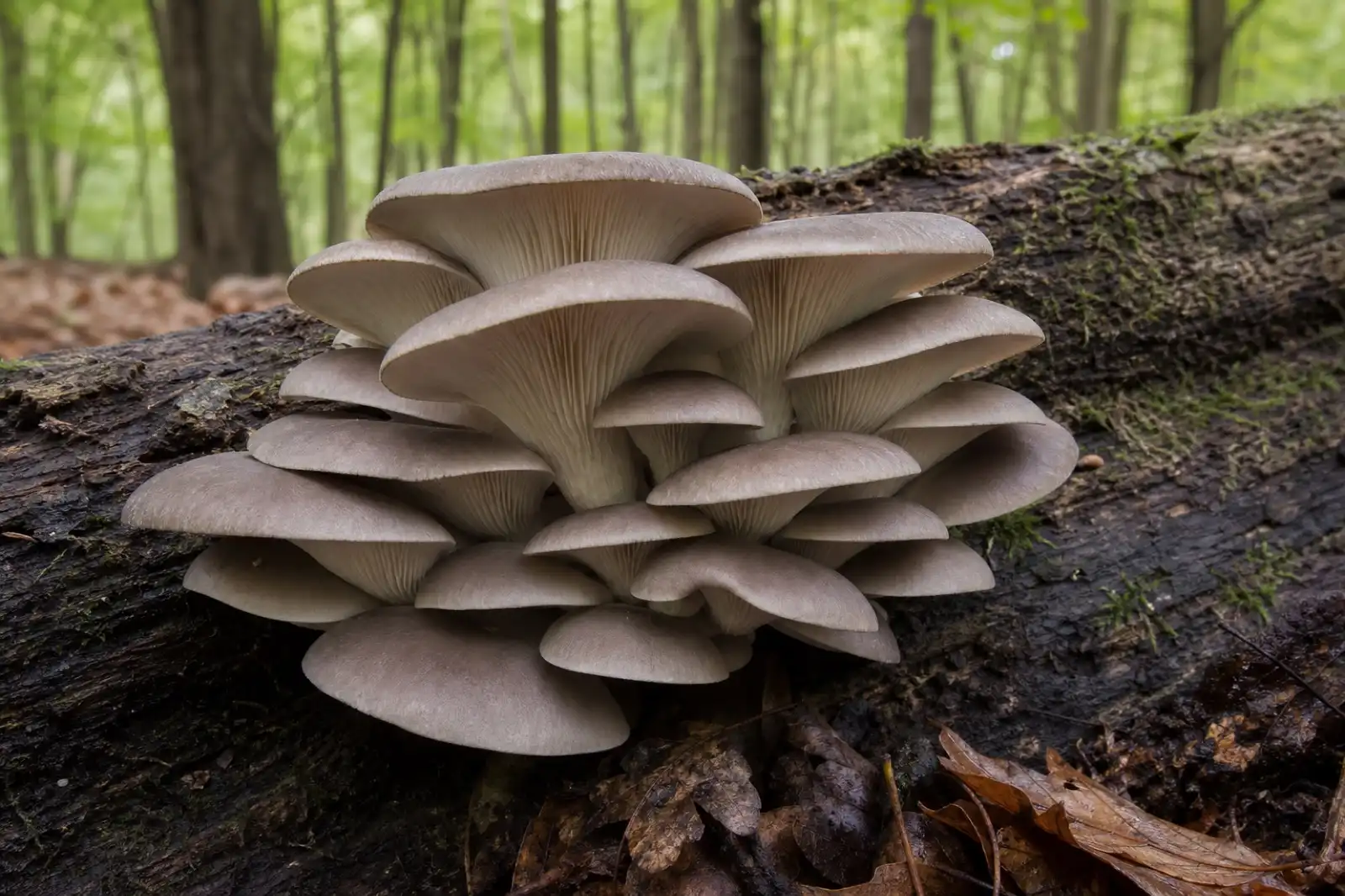
Pleurotus ostreatus: Oyster Mushroom Identification and Growing Guide
A careful guide to Pleurotus ostreatus identification, habitat, home cultivation, nutrition, lookalikes, food safety, and research limitations.
growing
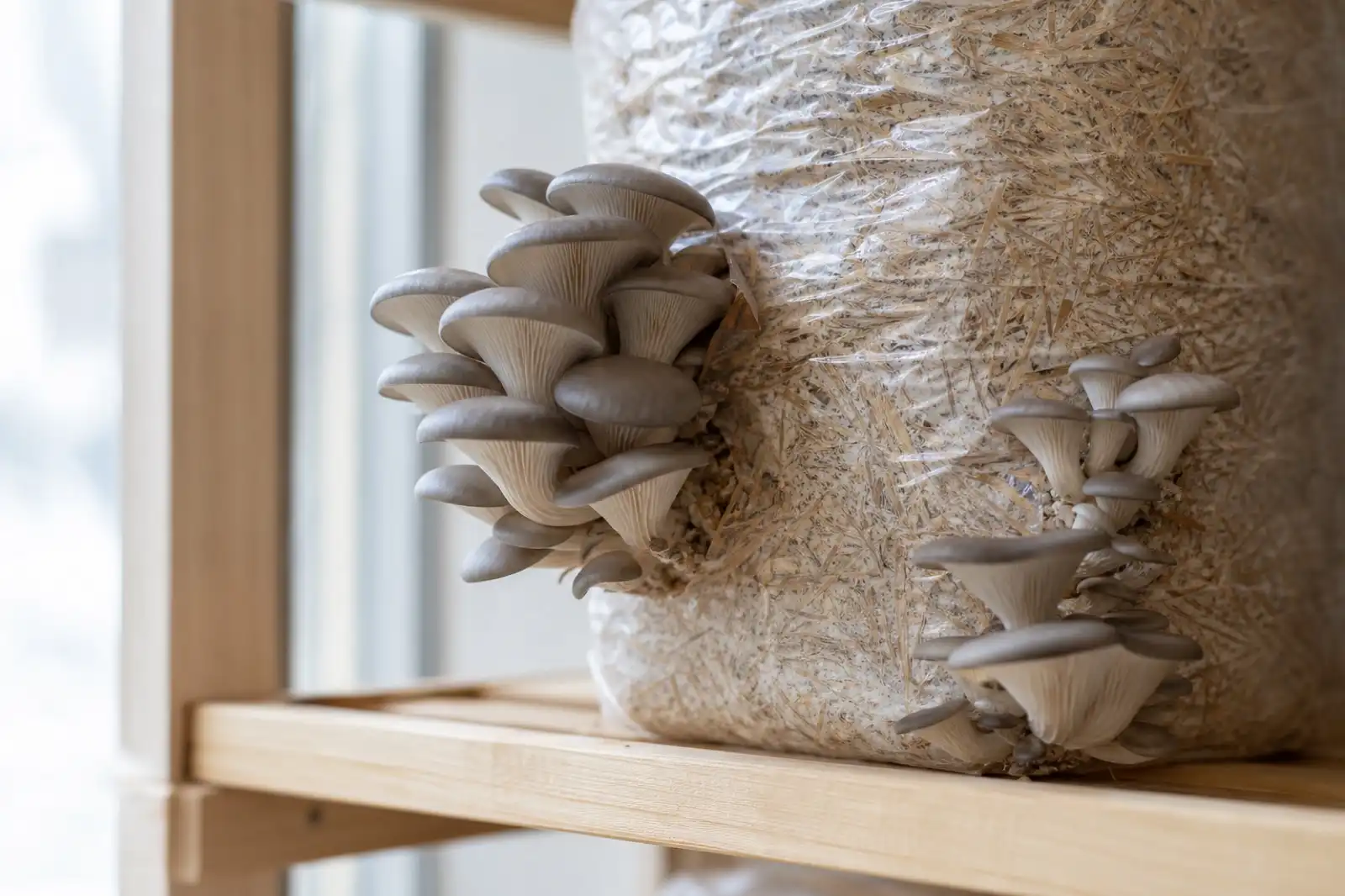
How to Grow Oyster Mushrooms at Home
Grow oyster mushrooms at home with a supplier-provided fruiting block: set up a clean observation routine, follow the culture label, and handle harvests safely.
recipes
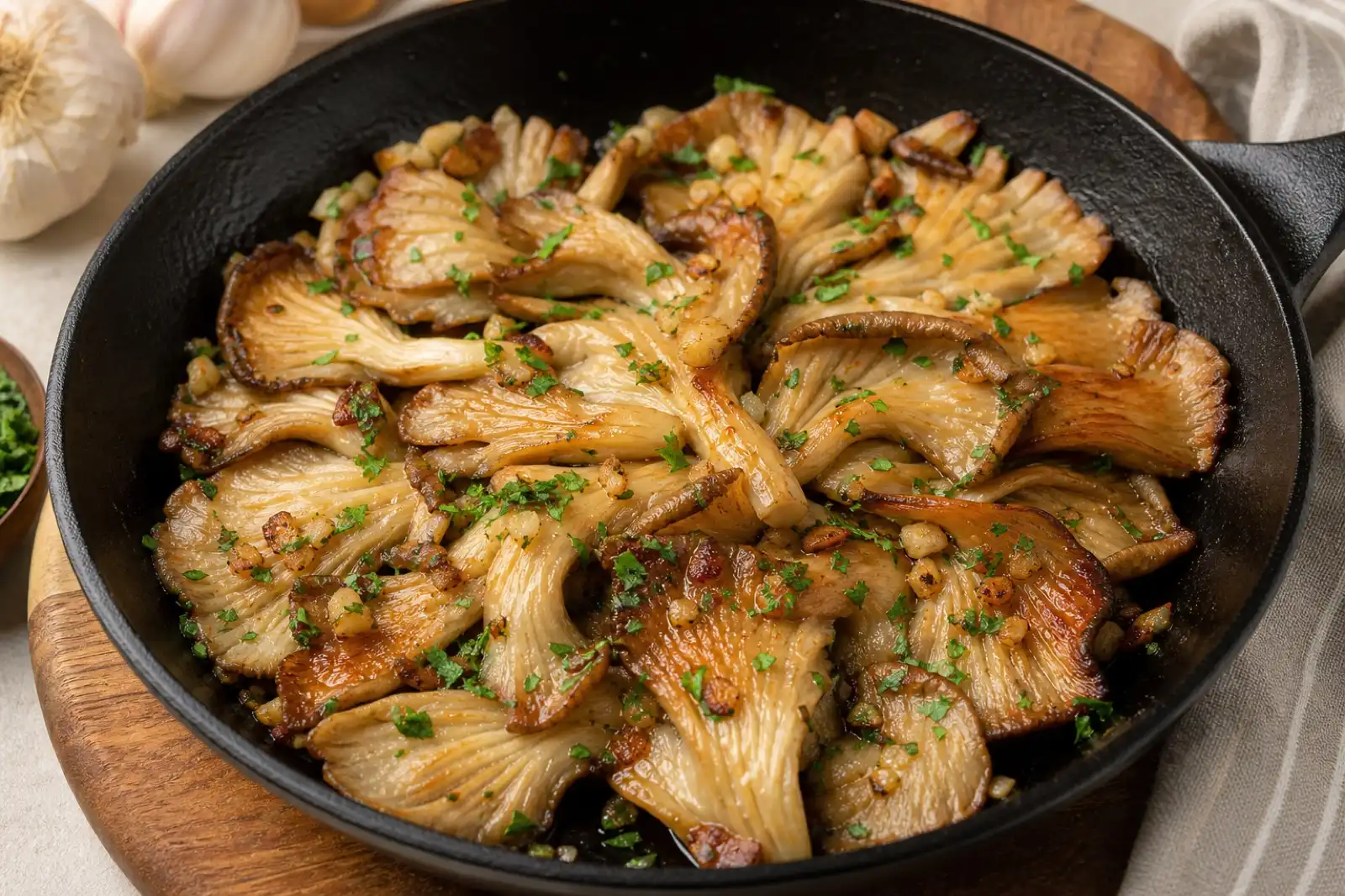
Garlic Butter Oyster Mushrooms
Make garlic butter oyster mushrooms with cultivated oyster mushrooms, clear steps, practical substitutions, and conservative food-safety guidance.
Continue exploring
Browse more practical guides in Mushroom Encyclopedia or visit the mushroom encyclopedia.