Growing
Mushroom Flush Management: Decide When to Rest, Refruit, or Retire a Block
Manage mushroom flushes with defined harvest windows, block condition checks, room capacity, water control, quality records, and conservative exit decisions.
By MushroomScope Editorial Team · · Updated
Growing method
Start with authenticated culture
Use supplier-identified spawn or blocks and record substrate, stage, temperature, humidity, and visible changes.
Open the beginner growing hub →Food safety
Discard suspect batches
Unusual colors, slime, insects, or abnormal odor should be treated as a safety concern, not a climate tweak.
Review contamination guidance →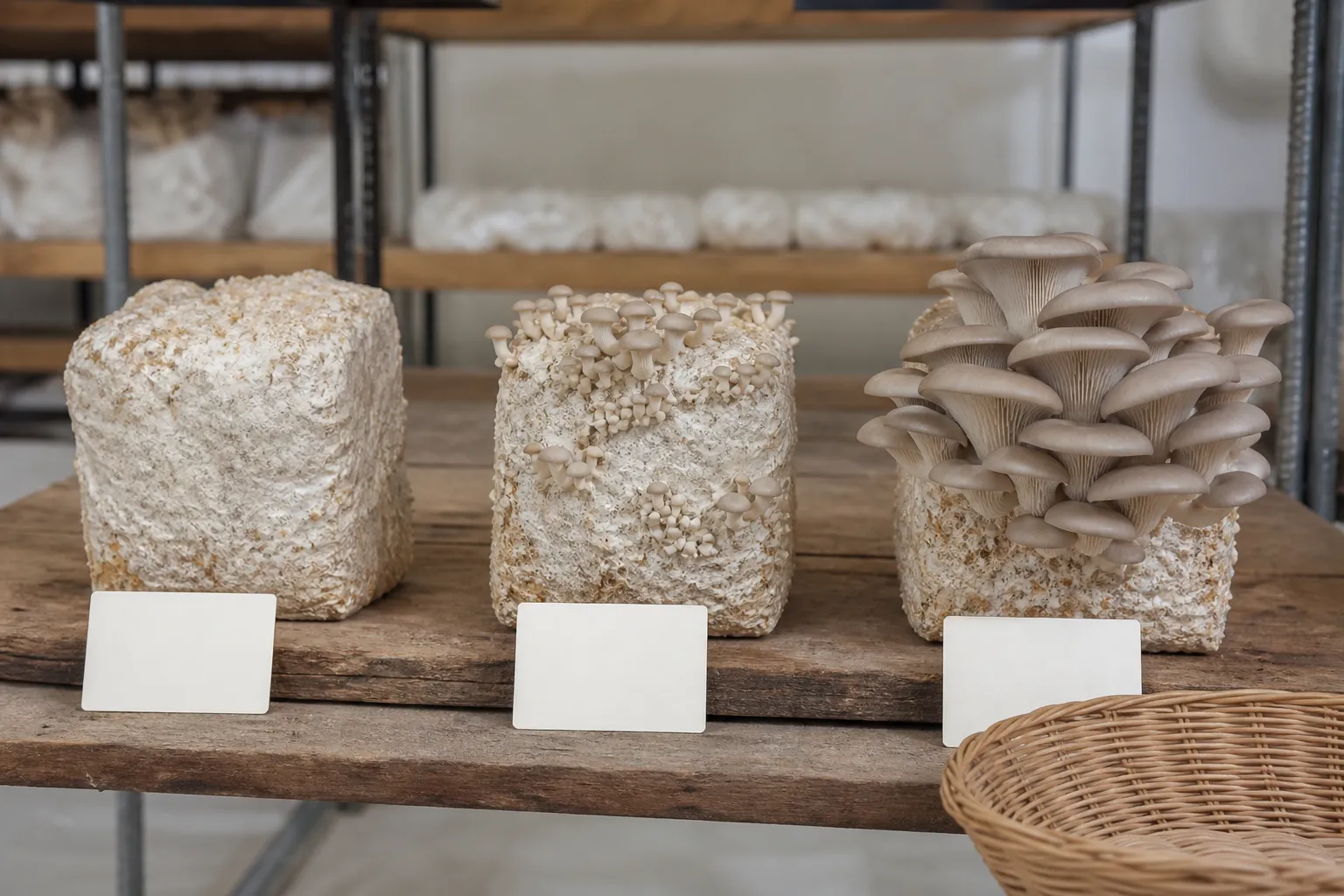
A flush is a wave of mushroom production, but the boundary is partly operational: it depends on how harvests are grouped and when the grower considers the next production period to begin. “Second flush” therefore does not guarantee a particular day, weight, or quality. Species, strain, substrate, block size, first-harvest damage, water balance, room conditions, and the supplier’s method all shape what happens next.
Flush management is a resource-allocation decision as well as a biological observation. Keeping an old block occupies shelf area, humidity, labor, and sanitation attention that might support a new batch. Retiring too early may discard useful production; waiting without an exit rule can reduce room throughput and increase handling. This guide provides a record-based framework, not a universal soaking schedule or promise that a block will fruit again.
Define a flush consistently
Choose a rule that fits the production system: a harvest wave separated by a stated rest interval, or all picks associated with one initiation event. Record individual harvest dates even when they are summarized into a flush. Do not move a late cluster between flushes simply to improve a comparison. A consistent boundary makes yield, labor, and room-day calculations interpretable.
Species with continuous or irregular production may not fit tidy waves. In that case, report the actual harvest schedule and use defined time windows. The word “flush” should clarify records, not force biology into a pattern the crop did not show.
Close the first harvest without damaging the block
Use the harvest method recommended for the species and production format. Remove the intended cluster cleanly, minimize substrate tearing, and record large wounds, loose block material, torn bags, retained stems, or excessive debris. Do not dig into a block to make it look clean. Tools, hands, containers, and work surfaces should follow the farm’s hygiene procedure.
Separate edible product from substrate trim and suspect material. The harvest timing guide covers maturity cues, while the storage guide covers postharvest handling. Flush management begins after those harvest decisions; it does not redefine questionable product as usable.
Assess block condition before planning another cycle
Record surface condition, structural integrity, odor only when normal handling already exposes it, remaining moisture indicators, insects, unusual pigment, slime, and the pattern of uncolonized material. Keep suspect blocks contained and away from clean production. A web image cannot identify contamination, and cutting into a questionable block can spread material.
Use a predetermined disposition rule. A damaged but otherwise normal block may remain eligible under the supplier’s procedure; a leaking, foul, pest-infested, or suspicious unit may require isolation and disposal. The contamination guide provides conservative observation boundaries.
Treat water replacement as a method-specific decision
Fruit bodies remove substantial water, so later production depends partly on water balance. That does not mean every block should be soaked, injected, or heavily misted. Water method, duration, temperature, cleanliness, drainage, bag design, block integrity, species, and strain interact. Follow the ready-to-fruit block supplier or a tested production protocol for the exact format.
Record block mass before and after any approved rehydration step when practical, plus water source, container, time, and drainage. Avoid adding unmeasured water to a nutrient-rich damaged block. Standing water and saturated surfaces are not substitutes for internal moisture.
Use a rest period with observable entry criteria
A rest period is not simply neglect. Set the location, temperature range, airflow, light, humidity approach, inspection frequency, and maximum duration from the chosen method. Keep blocks off dirty floors and protect them from splash. Record when they leave the first production stage and what observation will qualify them for re-initiation.
Do not copy a fixed number of days from another species or bag size. Some blocks show renewed surface growth or primordia; others remain inactive. The decision should combine supplier guidance, block condition, environment, and the operation’s capacity rather than waiting for an internet countdown.
Reintroduce fruiting conditions deliberately
Move eligible blocks into the appropriate environment and record room, rack, position, date, and settings. Avoid abrupt improvisations intended to “shock” a reluctant block unless they belong to a validated protocol. Temperature, humidity, fresh air, and light must fit the species and stage, and sensor placement should describe crop exposure rather than only controller output.
The fruiting conditions guide explains interacting variables. Change one controllable factor at a time when troubleshooting. If all settings are changed together, a later pin set cannot show which intervention mattered.
Track pins, aborts, maturity, and harvest quality
Record first visible primordia, distribution across openings, development rate, aborts, cluster form, stem proportion, cap or tooth condition, and harvest date. Later flushes may arise from different sites and may be less uniform. Photograph the same block face with a batch identifier and scale when comparing stages.
Use the same harvest and grading definitions used for the first flush. A later crop should not receive a looser quality standard merely because it is smaller. Keep gross mass, trim, discard, and saleable mass separate, and note whether damage arose during growth, harvest, cooling, or packing.
Calculate the value of room time
Cumulative biological efficiency can rise while operational performance falls. Track the additional harvest against days of shelf occupancy, labor, water, energy, cleaning, and opportunity cost. A third flush that adds modest mass may be worthwhile for a home grower with empty space but unattractive for a full commercial room.
Use consistent weights and the production definitions introduced in the grain spawn guide, then add yield per block-day or room-day when capacity is the limiting resource. State the flush window and denominator so another reader understands what the result includes.
Prevent old and new batches from confusing sanitation
Later-flush blocks have been handled longer and may shed substrate or spores. Organize traffic so they do not pass over new, clean materials. Use defined shelves or zones, clean tools between groups, remove debris promptly, and record room turnover. Do not let a desire for one more harvest delay removal of a suspect block.
The growing troubleshooting guide helps separate a healthy but underperforming crop from a suspect batch that needs isolation. Flush age is not itself contamination, but time and handling change the operational risk profile.
Set retirement criteria before the block declines
Define mandatory exit triggers—suspected contamination, pests, structural failure, unacceptable odor during normal handling, unsafe packaging damage—and operational triggers such as maximum room days, no pins by a decision date, quality below grade, or marginal yield below a chosen threshold. Predefined criteria reduce the temptation to keep a favorite batch indefinitely.
Record removal date, final disposition, cumulative harvests, reason, and any cleanup required. Spent substrate may have a local compost use only when it is appropriate, free of prohibited material, and accepted by the destination. It should not be marketed as sterile or disease-free.
Also record whether the exit was mandatory or economic. That distinction matters when reviewing performance: a block discarded for suspected contamination is not equivalent to a healthy block retired because shelf capacity was needed. Preserve both counts so a short production cycle cannot look efficient by hiding safety-related losses.
Use completed flush records to plan the next batch
Compare distributions, not only the best block. Review how many units reached each flush, time between harvests, later-flush saleable mass, failures, room days, and quality. Group results by species, strain, substrate, season, and room only when sample sizes and records justify it. A single prolific block is a useful observation, not a production forecast.
Change one variable in the next planned comparison and retain the rest. If a later flush is consistently uneconomic, revise the exit rule; if it is valuable only when rooms are underfilled, make capacity part of the rule. The strongest schedule is explicit enough to improve when new evidence arrives.
Measure water balance without prescribing a universal soak
When a supplier or validated block protocol calls for rehydration, weigh a representative block before treatment, after drainage, and before the next harvest. Record water source, temperature, contact method, contact time, drainage time, bag damage, and the scale used. Mass gain is a process observation, not proof that the block absorbed water uniformly or that another species needs the same treatment.
Compare later development with untreated or historically comparable blocks only when culture, block format, age, first-flush removal, and room conditions match. Pooling, leakage, softened packaging, abnormal odor, or suspect growth are exit signals, not reasons to extend treatment. If the protocol does not call for soaking, do not invent a soak merely because the block feels light; surface drying, internal water distribution, and substrate structure cannot be diagnosed reliably by hand feel alone.
Keep a cohort ledger from start to retirement
A useful later-flush report begins with every block eligible after the first harvest. For each decision date, record how many were resting, rehydrated, returned to fruiting, pinning, harvested, retired for safety, or retired for capacity. This survival-style view prevents the yield of a shrinking group of successful blocks from being presented as though the entire batch repeated fruiting.
Add saleable grams and labor minutes for each interval, not just the cumulative harvest. A practical decision line might compare additional saleable grams per occupied shelf-day with the expected value of loading a new block, while keeping mandatory contamination and pest exits outside the economic calculation. The threshold belongs to the facility and market; publishing the inputs is more transferable than presenting one universal “number of flushes.”
Frequently asked questions
What is a mushroom flush?
A flush is a production wave defined by the grower’s harvest rules; boundaries should be consistent enough for meaningful records.
Will every block produce a second flush?
No. Species, strain, substrate, first harvest, water balance, environment, contamination, and time all affect later production.
Should I soak every mushroom block between flushes?
No universal soaking rule applies; follow the culture or block supplier’s method and avoid unvalidated water additions to damaged or suspect blocks.
Why is the second flush smaller?
Later flushes often have fewer remaining resources and different water balance, but the pattern varies and cannot diagnose a problem by itself.
When should a block be retired?
Retire it according to predefined safety, quality, time, space, and economic criteria rather than waiting indefinitely for another mushroom.
References
- Penn State Extension — Mushroom production and harvesting
- Cornell Small Farms — Indoor Production
- Cornell Small Farms — Harvest to Market Guide
Editorial boundaries
These sources support indoor-production and harvest context, but they do not establish a universal rest, soaking, or re-fruiting schedule. MushroomScope has not had this flush-management draft reviewed by a named cultivation or food-safety professional. Follow the authenticated culture or block supplier’s method, isolate suspect material, and obtain qualified local advice when product or worker safety is involved.
Source quality notes
MushroomScope cites sources that match the page scope, such as taxonomic databases, extension guidance, food-safety agencies, food-composition databases, and peer-reviewed or institutional health references. Sources support context and uncertainty; they do not turn an online page into specimen identification, medical advice, or a tested recipe record.
Frequently asked questions
What is a mushroom flush?
A flush is a production wave defined by the grower’s harvest rules; boundaries should be consistent enough for meaningful records.
Will every block produce a second flush?
No. Species, strain, substrate, first harvest, water balance, environment, contamination, and time all affect later production.
Should I soak every mushroom block between flushes?
No universal soaking rule applies; follow the culture or block supplier’s method and avoid unvalidated water additions to damaged or suspect blocks.
Why is the second flush smaller?
Later flushes often have fewer remaining resources and different water balance, but the pattern varies and cannot diagnose a problem by itself.
When should a block be retired?
Retire it according to predefined safety, quality, time, space, and economic criteria rather than waiting indefinitely for another mushroom.
Related guides
growing
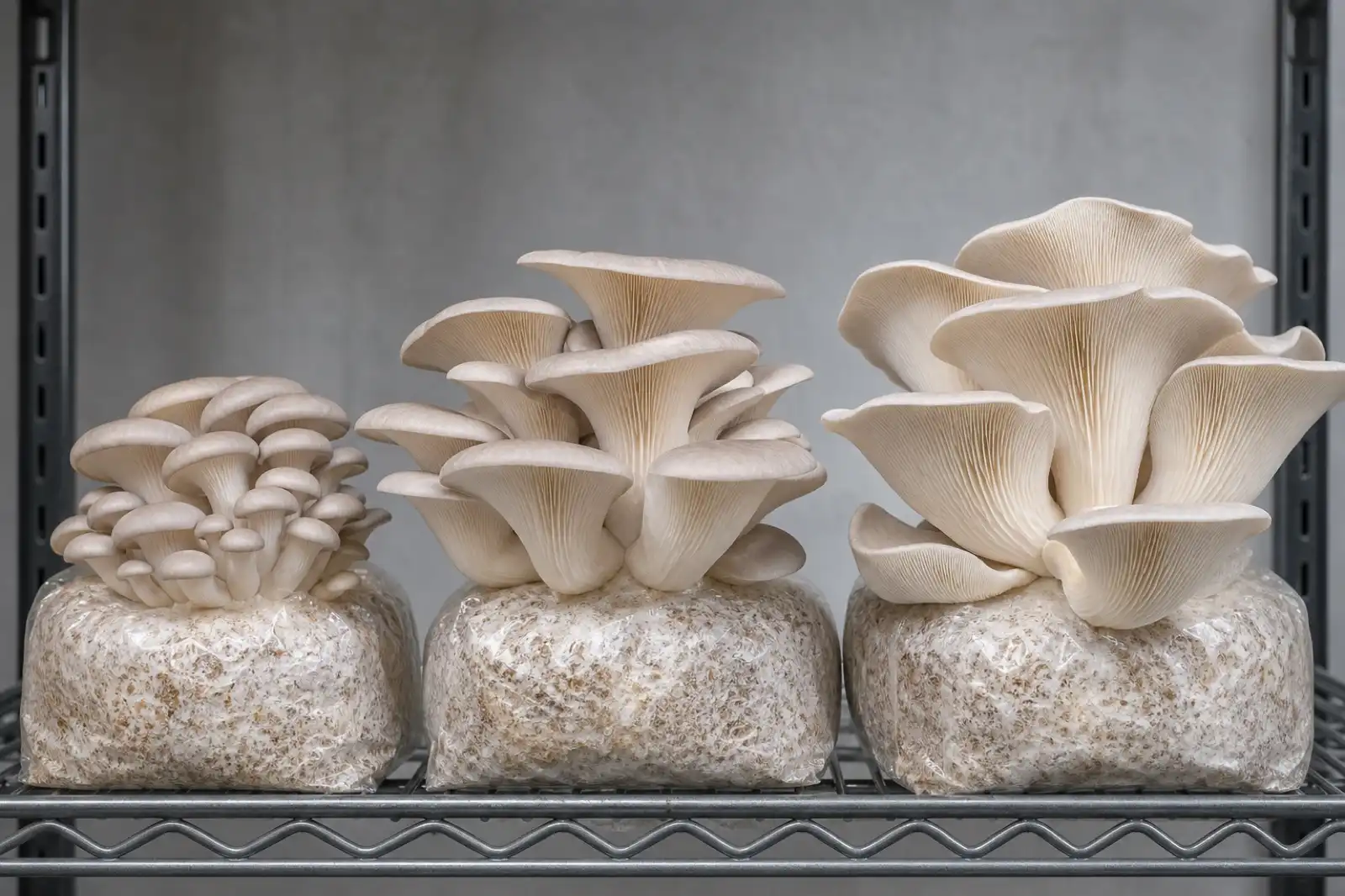
When to Harvest Cultivated Mushrooms
Learn when to harvest cultivated oyster, lion's mane, shiitake, and other mushrooms using species-specific maturity cues, clean handling, and prompt cooling.
growing
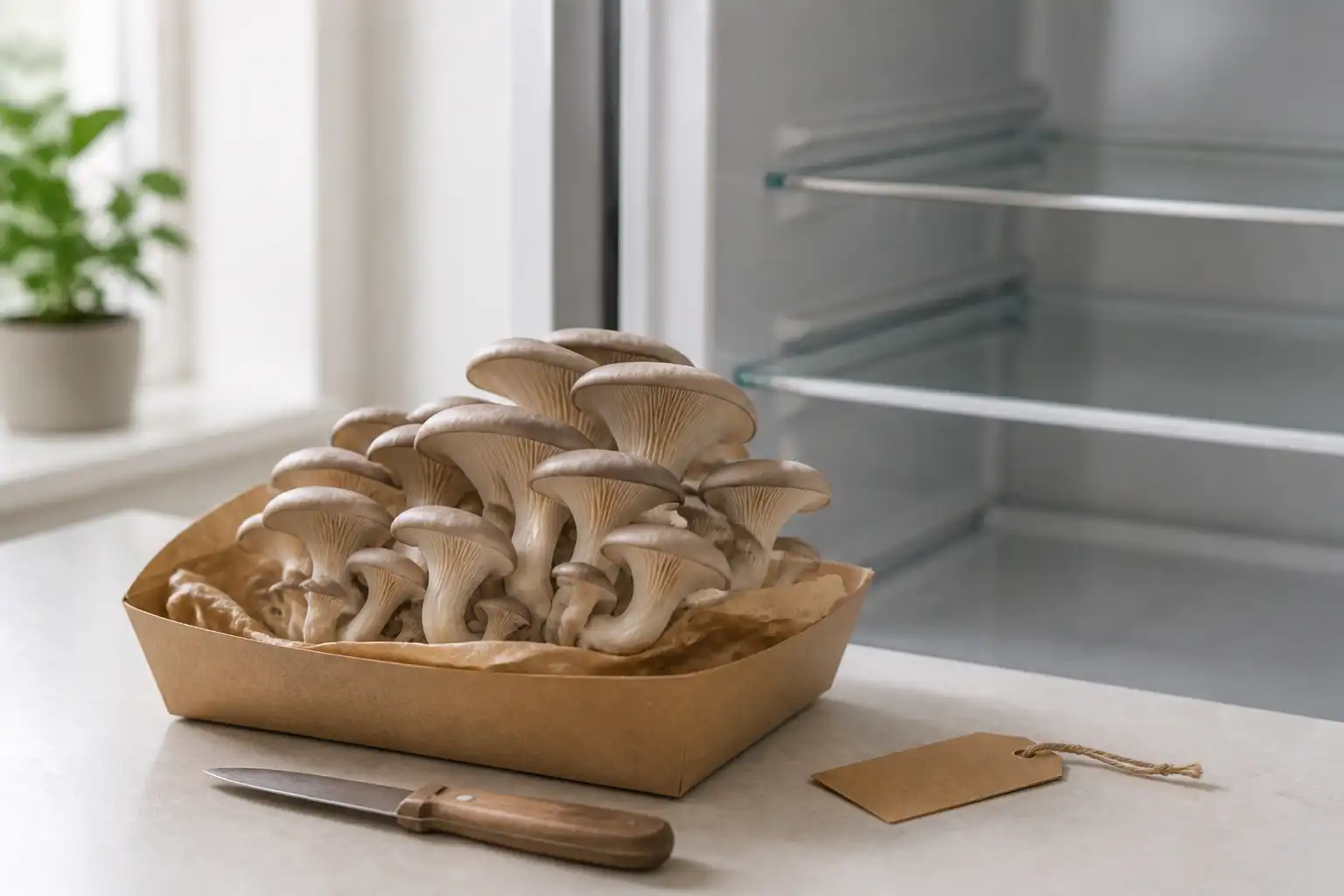
How to Store Homegrown Mushrooms After Harvest
Keep homegrown culinary mushrooms cool, clean, and dry after harvest without treating a storage method as proof that food is safe.
growing
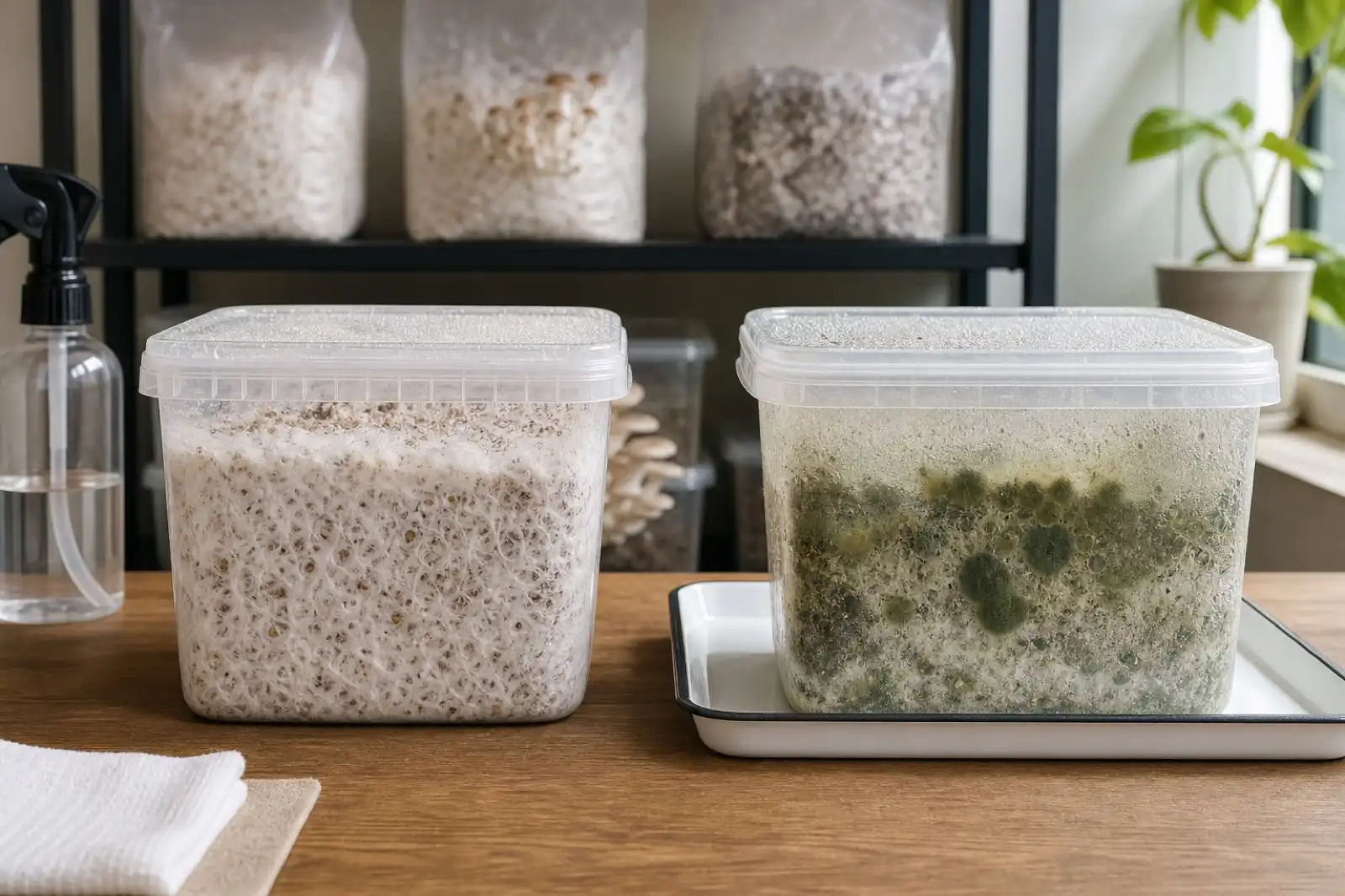
Mushroom Contamination: Isolate, Record, and Prevent Repeat Problems
Recognize mushroom contamination without relying on color alone; isolate suspect batches, avoid food salvage, document the workflow, and prevent repeat issues.
Continue exploring
Browse more practical guides in Growing or visit the mushroom encyclopedia.