Growing
Mushroom Grain Spawn: How to Choose and Use It Safely
Use mushroom grain spawn as a labeled, clean inoculum for a documented growing method; learn what to verify, what to record, and when not to use it.
By MushroomScope Editorial Team · · Updated
Growing method
Start with authenticated culture
Use supplier-identified spawn or blocks and record substrate, stage, temperature, humidity, and visible changes.
Open the beginner growing hub →Food safety
Discard suspect batches
Unusual colors, slime, insects, or abnormal odor should be treated as a safety concern, not a climate tweak.
Review contamination guidance →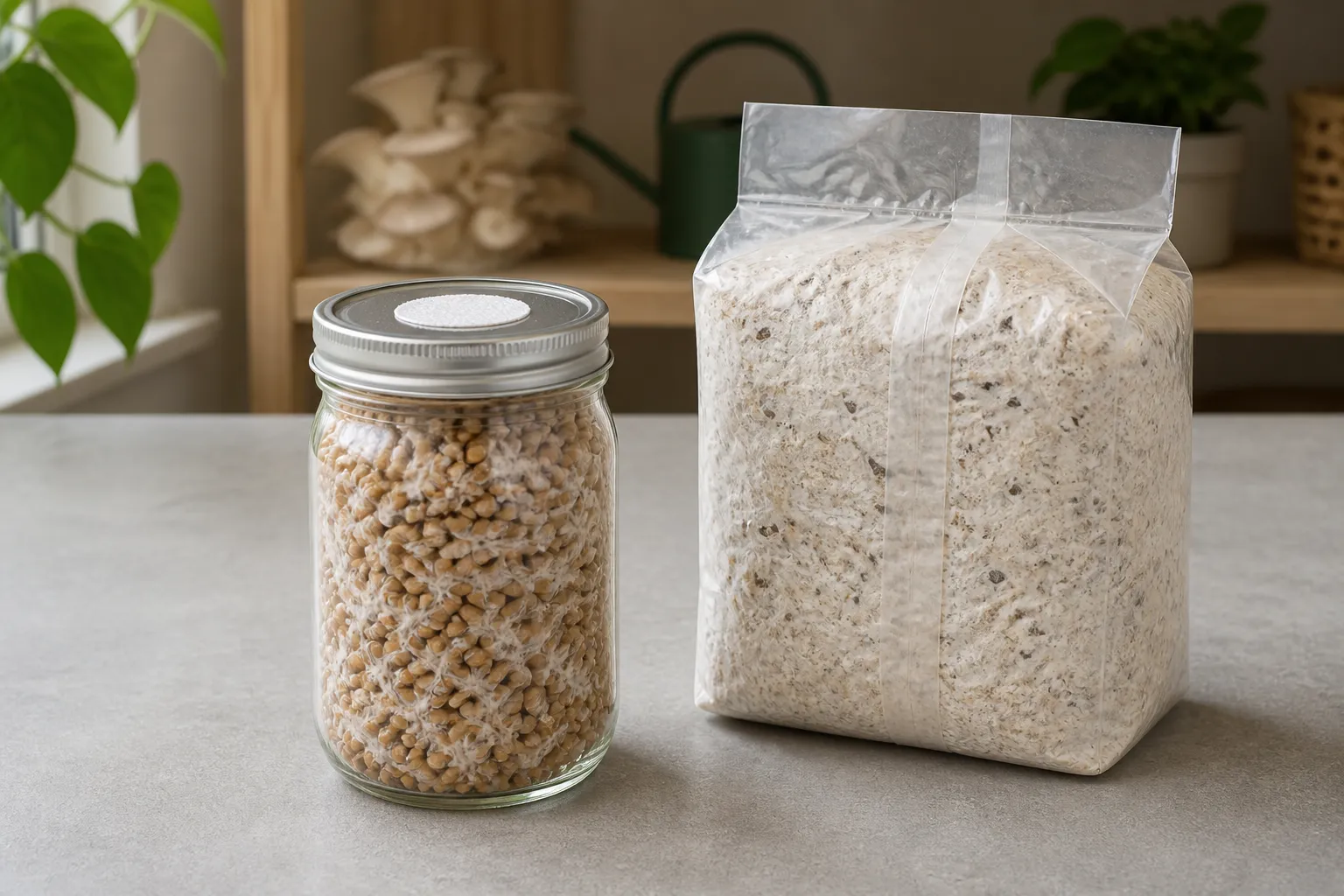
What grain spawn is—and what it is not
Grain spawn is prepared grain carrying the growing mycelium of a named mushroom culture. Cornell describes spawn as mycelium used to inoculate a new substrate; it can be made on grain, sawdust, plugs, or other materials. That makes grain spawn an inoculum, not a finished fruiting medium, a food ingredient, or evidence that any particular growing method will work.
The most useful question is not “How do I make grain spawn?” but “What role does the supplier’s grain spawn play in my documented system?” For a first project, buying labeled material or starting with a ready-to-fruit block keeps the culture-production question separate from the fruiting question. Cornell notes that spawn production is highly specialized and that a small contamination can multiply when it reaches bulk substrate.
Match the spawn form to the actual project
Start with a named culture and a real production system, then choose the form the method calls for. Cornell distinguishes outdoor systems such as logs and wood-chip beds from more controlled indoor bag or block systems. Those systems use different substrates, cleanliness requirements, timelines, and fruiting conditions. “Grain spawn” on a product page is not permission to apply it to any wood, straw, bag, or container.
| Project goal | Better first question | What to keep with the batch record |
|---|---|---|
| Ready-to-fruit block | Does the supplier provide the block’s fruiting instructions? | Culture label, arrival date, fruiting instructions, harvest dates |
| Prepared indoor substrate | Is the species, treatment, and inoculation method documented together? | Spawn label, substrate source, treatment record, inoculation date |
| Outdoor bed or logs | Does this culture form belong to the chosen outdoor method? | Species, spawn form, wood or chip source, location, weather notes |
If the label does not name the culture, intended substrate, storage instructions, or supplier contact, choose another source. A package photograph or a colonized-looking grain is not a substitute for identity and provenance.
What a responsible purchase record looks like
Keep a single record from delivery through harvest. It can be a notebook page, a label, or a simple spreadsheet. The useful fields are modest: supplier, culture name, order or lot reference when provided, arrival date, packaging condition, storage guidance, intended method, substrate source, inoculation date, and later observations.
This prevents a common troubleshooting trap: changing temperature, moisture, substrate, and ventilation at the same time without knowing which decision mattered. It also gives a supplier enough context to answer an issue. The mushroom substrate guide provides a culture-first way to choose materials; the beginner growing guide helps keep a first project deliberately simple.
Use only the method that belongs to the culture
Penn State explains that commercial spawn production uses prepared grain and mycelium, while Cornell describes inoculation as bringing spawn into contact with a suitable substrate. Those broad descriptions are not home recipes. The appropriate material treatment and clean-work boundary depend on the exact culture and system.
Follow the supplier’s written method or an applicable extension resource for the named project. Do not invent a heat-treatment schedule, additive, container, or ventilation arrangement from a generic grain-spawn guide. When the plan reaches substrate treatment, use the sterilization versus pasteurization guide as a decision aid, not as a replacement for method-specific instructions.
When to stop rather than expand a batch
Do not use online photographs or a smell test to certify a culture. If packaging is leaking, provenance is unclear, or you observe unexpected color, slime, insects, or a persistent foul odor, keep the material away from healthy cultures and food-preparation areas. Record what arrived, contact the supplier, and follow its disposal advice if it confirms the material is unsuitable.
Do not mix questionable spawn into a larger substrate to “see what happens,” trim it, cook it, or taste anything produced from it. Penn State’s food-safety resources emphasize sanitation, documented controls, and hygienic handling in mushroom production. Those practices reduce risk in a known system; they do not convert an uncertain culture into food.
Inspect commercial spawn before opening it
Confirm species, strain, supplier, lot, production or best-use date, storage instructions, and the substrate for which it was sold. Photograph the sealed package on arrival. Grain should be colonized in the pattern expected by that supplier, without unexplained wet pockets, slime, swelling, insects, foul odor, or green, black, orange, or pink growth.
Mycelium appearance differs by species and age. A fine culture is not automatically weak, and a very dense white mass is not proof of purity. If the filter, seal, or bag is damaged, isolate the package and contact the supplier before opening. Do not smell a suspect bag closely or open it in the clean work area.
Store spawn according to the supplier
Some spawn is shipped for immediate use; other products tolerate a specified refrigerated period. Follow the exact label because temperature and shelf life vary by species and carrier. Do not freeze unless the supplier explicitly permits it, and do not leave a delivery in direct sun or a hot vehicle.
Keep each lot separate and preserve its label. Rotation should use documented dates rather than memory. If spawn fruits inside the bag, becomes excessively wet, or passes its recommended window, ask the supplier whether it remains suitable instead of increasing the inoculation rate to compensate.
Prepare a clean inoculation sequence
Complete substrate treatment, cooling, labeling, and tool preparation before bringing spawn into the work area. Separate dirty substrate handling from clean inoculation. Wash hands, use clean clothing appropriate to the method, and sanitize surfaces with a documented product and contact time. Keep chemicals away from open cultures.
Arrange bags so each seal can be completed without reaching over open containers. Open one spawn lot only as long as necessary. Break up grain gently through the sealed bag when the supplier recommends it; do not crush kernels into paste. Transfer using the clean technique required by the validated process, then close substrate containers immediately.
This guide does not prescribe a universal inoculation percentage. Spawn rate interacts with species, substrate, particle size, moisture, treatment, temperature, and production target. Use an established formula from the supplier or extension program and record both spawn and wet or dry substrate weights so the ratio can be reproduced.
Label every inoculated unit
Include species, strain, spawn lot, substrate batch, treatment date, inoculation date, rate or weights, and operator. If bags from different spawn lots enter one chamber, keep their identifiers visible. Good labeling allows a repeated failure to be traced and prevents a healthy-looking bag of unknown identity from entering food production.
Photograph representative units at inoculation and fixed intervals without opening them. Record temperature at the bag location, not just room thermostat settings. Note interventions separately from observations so “moved shelf” or “reduced room heat” is not confused with colonization progress.
Interpret colonization without unnecessary handling
Expected growth rate and appearance are strain- and substrate-specific. Compare with supplier guidance rather than a universal day count. Inspect through the container for even advance, stalled wet areas, excessive metabolites, uncolonized kernels, or growth with an unexpected texture or color.
Shaking or mixing can redistribute mycelium and reveal recovery, but it also stresses culture and spreads contamination inside a container. Do it only at the stage and frequency supported by the method. A bag that fails to recover, develops slime, or shows competitor growth should be isolated.
Do not open a questionable unit to “let it breathe,” remove mold, or take a close sniff. Visible contamination may not be the full extent of the problem. Enclose it, move it away from clean cultures, document the batch, and follow supplier and local disposal guidance.
Decide whether to expand spawn or inoculate fruiting substrate
Grain-to-grain expansion multiplies the consequences of a hidden contaminant. It is an advanced culture step requiring validated sterilization, appropriate clean-air technique, and a limited expansion plan. Beginners should not repeatedly transfer commercial grain simply because each generation appears economical.
Use a fresh authenticated master or supplier-recommended generation structure. Record every parent-child relationship. If one parent produces abnormal bags, quarantine its descendants rather than mixing them into unrelated production.
For fruiting substrate, confirm the species is suited to that material and that treatment and hydration are complete. Grain spawn is nutrient-rich and can attract competitors; adding it to untreated garden waste, an unknown bucket, or waterlogged substrate does not create a safe shortcut.
Grain spawn is not a fruiting-room setting
Fresh-air exchange, light, humidity, and fruiting temperature belong to the stage and species being grown. Grain spawn itself cannot provide universal numbers for them. A strain that performs in one documented block system may behave differently in another substrate, at another scale, or after a different preparation.
For an accessible oyster-mushroom example that begins with a supplied block rather than a spawn-making workflow, see how to grow oyster mushrooms at home. If the aim is to understand failure signals while protecting other batches, use the contamination guide.
Audit the batch after inoculation
Summarize how many units were inoculated, colonized normally, stalled, or were isolated, and trace each result to spawn and substrate lots. Compare recovery after any planned shake and document unexpected growth without opening bags. Repeated failure from one parent lot is a reason to quarantine related units and consult the supplier, not to increase transfers.
References
Source quality notes
MushroomScope cites sources that match the page scope, such as taxonomic databases, extension guidance, food-safety agencies, food-composition databases, and peer-reviewed or institutional health references. Sources support context and uncertainty; they do not turn an online page into specimen identification, medical advice, or a tested recipe record.
Frequently asked questions
What is mushroom grain spawn used for?
Grain spawn is mycelium grown on prepared grain and used to introduce a known culture to its intended substrate. It is not the fruiting substrate, a meal ingredient, or a universal substitute for plugs, sawdust spawn, or a ready-to-fruit block.
Should a first-time grower make grain spawn at home?
Usually no. Cornell describes spawn production as a specialized, contamination-sensitive part of mushroom production. A first crop is easier to interpret when a reputable supplier provides labeled spawn or a ready-to-fruit block with method-specific instructions.
Can I use grain spawn with any mushroom substrate?
No. Match the named culture, spawn form, substrate, treatment, and production system to the supplier's documented method. Grain, straw, logs, wood chips, and supplemented blocks have different handling and contamination boundaries.
What should I do if a spawn package looks or smells unusual?
Keep it separate, record the batch details and photographs without opening it unnecessarily, and contact the supplier. Do not mix a questionable culture into bulk material, try to trim it for food, or identify it by online appearance alone.
Related guides
growing
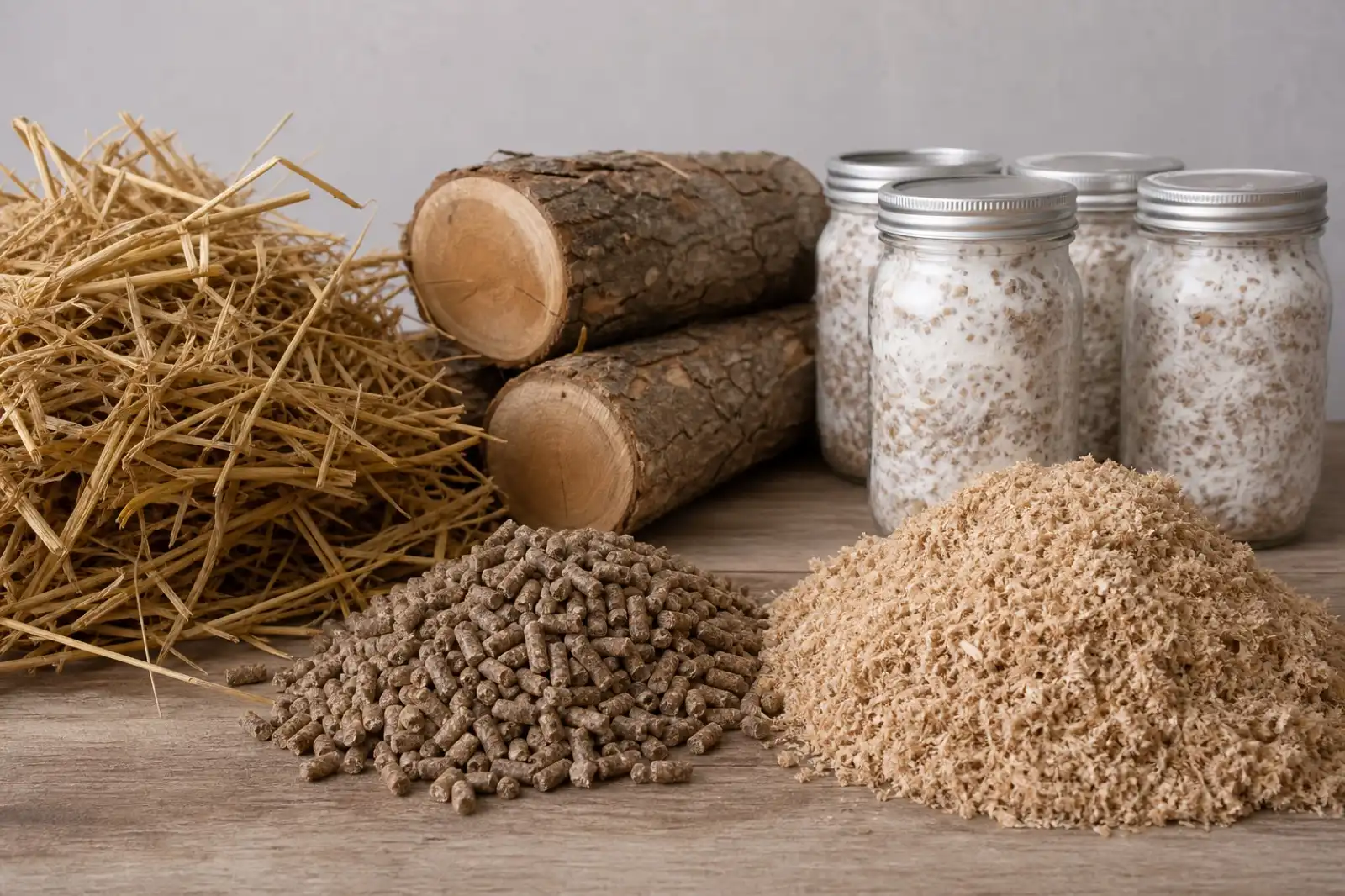
Mushroom Substrate Guide: Match Species to Method
Choose a mushroom-growing substrate by matching a labeled culture to a documented production method, site, and food-safety boundary.
growing
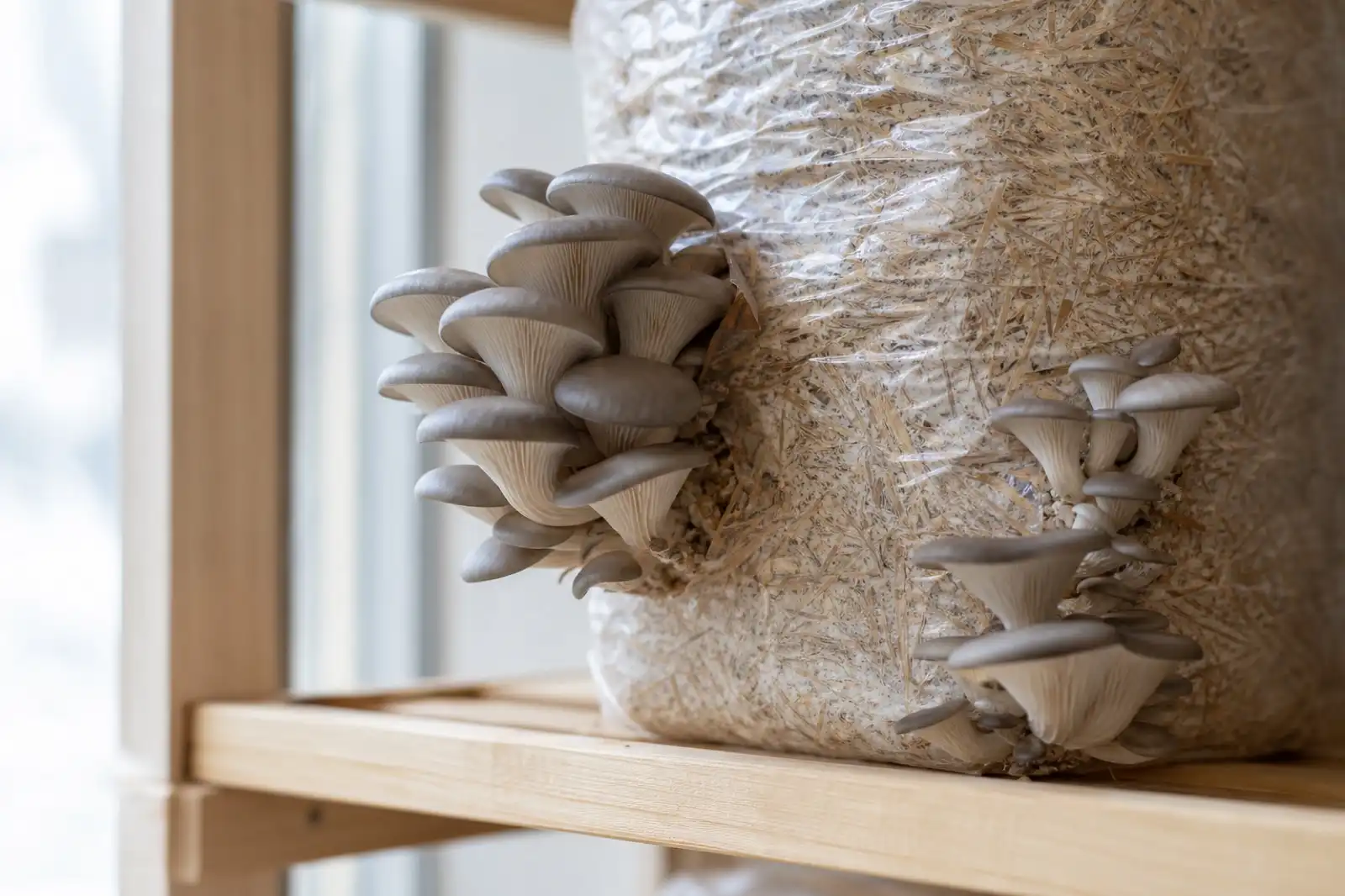
How to Grow Oyster Mushrooms at Home
Grow oyster mushrooms at home with a supplier-provided fruiting block: set up a clean observation routine, follow the culture label, and handle harvests safely.
growing
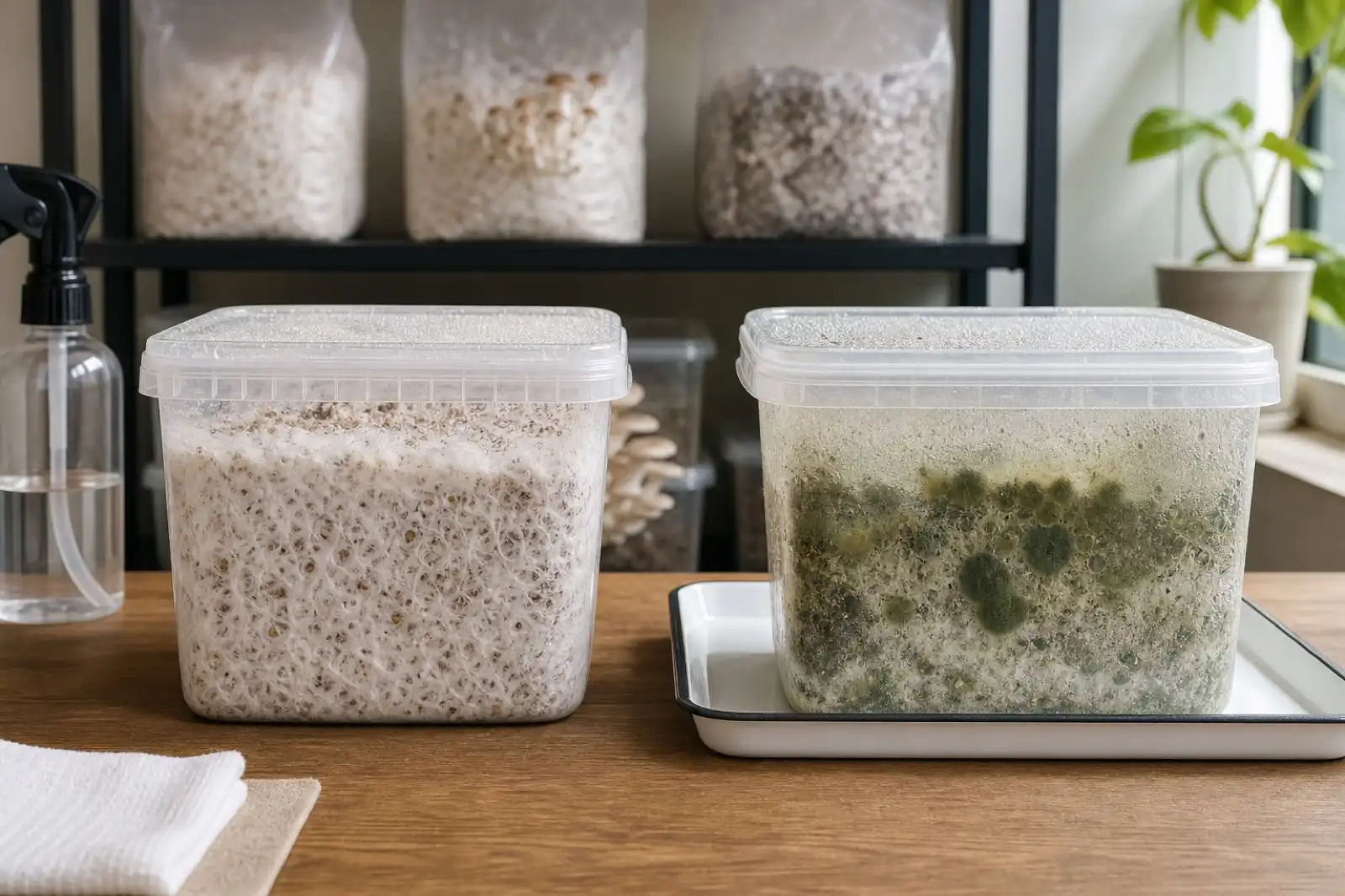
Mushroom Contamination: Isolate, Record, and Prevent Repeat Problems
Recognize mushroom contamination without relying on color alone; isolate suspect batches, avoid food salvage, document the workflow, and prevent repeat issues.
Continue exploring
Browse more practical guides in Growing or visit the mushroom encyclopedia.