Growing
Mushroom Contamination: Isolate, Record, and Prevent Repeat Problems
Recognize mushroom contamination without relying on color alone; isolate suspect batches, avoid food salvage, document the workflow, and prevent repeat issues.
By MushroomScope Editorial Team · · Updated
Growing method
Start with authenticated culture
Use supplier-identified spawn or blocks and record substrate, stage, temperature, humidity, and visible changes.
Open the beginner growing hub →Food safety
Discard suspect batches
Unusual colors, slime, insects, or abnormal odor should be treated as a safety concern, not a climate tweak.
Review contamination guidance →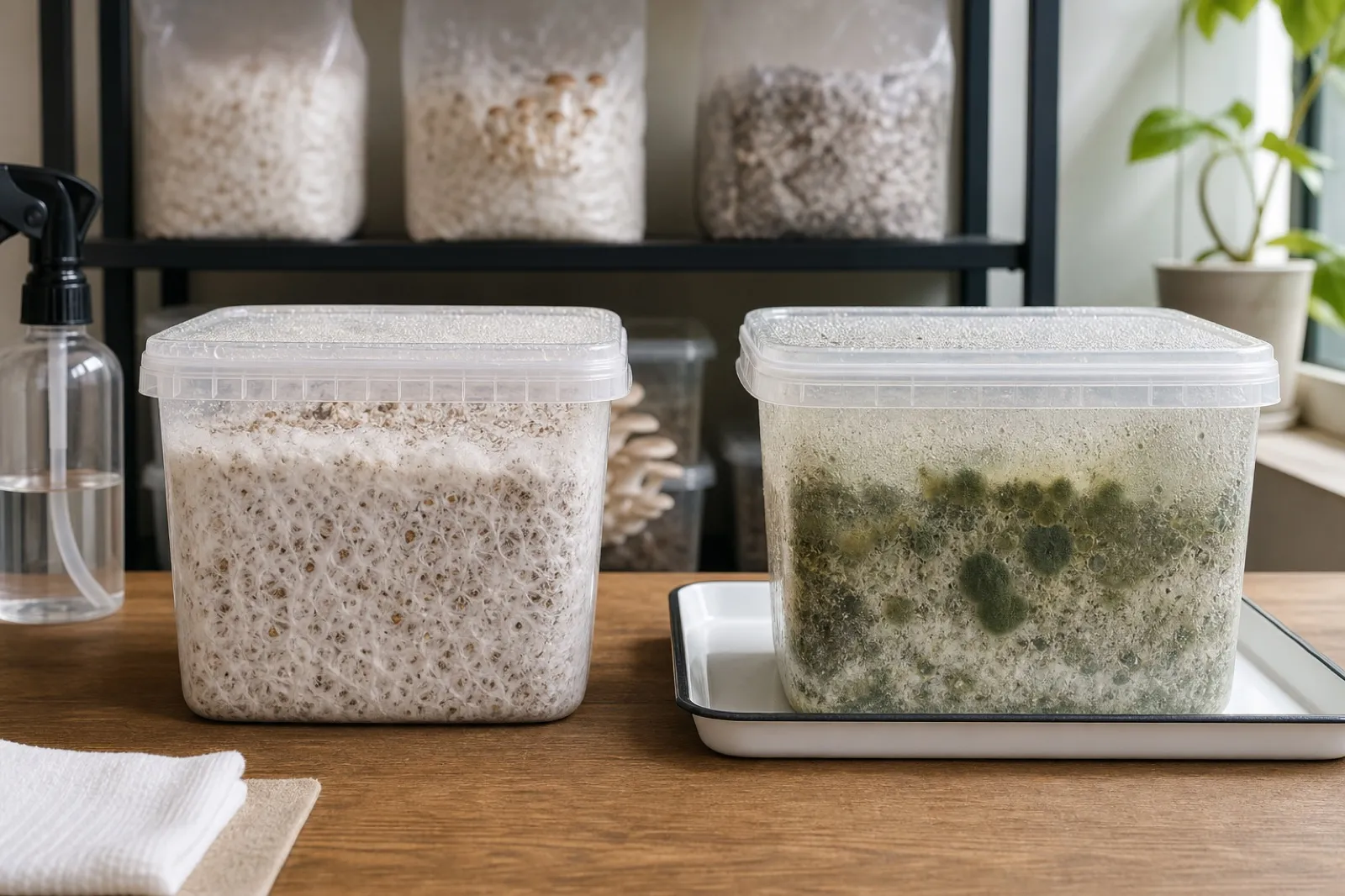
August 2026 growing note: The safest improvement is often a cleaner next batch, not rescuing a suspect one. Apply that rule especially to coffee-ground growing and small fruiting chamber experiments.
The safest first response
Unexpected growth, persistent wet areas, slime, insects, an unusual odor, or a stalled patch should trigger a simple response: isolate the batch, do not treat it as food, and write down what happened. Those signs can be useful warnings, but they do not identify the cause from a photograph or prove that any apparently normal part is safe.
This page is about protecting clean cultures and preventing repeat problems—not naming a mold from its color. NCAT identifies inoculation as a contamination-sensitive point in indoor production, while University of Maryland Extension emphasizes reliable spawn and clean clothing as practical risk controls. The most useful home response combines those upstream controls with careful batch records.
What counts as a reason to isolate
Use an isolation trigger whenever a batch differs from its documented normal pattern and you cannot explain the difference with confidence. Examples include a new pigment or texture, a wet uncolonized area, surface growth that does not match the expected culture, a persistent unusual odor, insect activity, leakage, or a sudden stall.
None of these clues is a home laboratory diagnosis. White growth can have more than one cause; green, yellow, black, or pink coloration can be affected by light, age, moisture, substrate, and multiple organisms. A photo match should never decide whether to eat, open, or rescue a crop. Treat uncertainty itself as the reason to separate the batch.
The five-step response
- Stop handling the batch near clean cultures. Label it with the date and “suspect.” Keep the container closed where that is part of the system; do not shake, scrape, or sniff it closely.
- Separate it calmly. Move it away from clean spawn, colonizing blocks, fruiting crops, and food-preparation areas. Avoid creating a trail of loose substrate or opening the bag for a better picture.
- Take a record, not a diagnosis. Note the culture and supplier, substrate and treatment, inoculation date, container, first observation, growing conditions, and recent handling. Add a photo only if you can do so without opening or disturbing the batch.
- Protect food decisions. Do not taste, trim around, wash, or harvest from material you have designated as suspect. FDA produce guidance reinforces that damaged or unsafe food should not be used as if surface cleaning resolves the underlying issue.
- Reset before returning to healthy batches. Follow the instructions for cleaning reusable surfaces and tools, wash hands, and use supplier or local disposal guidance. Do not reuse questionable spawn, substrate, or packaging in the next batch.
Plan the isolation route before moving the container
Identify where the batch will go and how it will be contained before lifting it. Choose a route that avoids clean cultures, harvested food, kitchen preparation, children, pets, fans, and high-traffic areas. If the original bag or container is leaking, use a suitable secondary container without opening, squeezing, or pouring the contents. Do not carry a loose suspect block through the growing room merely to place it outdoors.
Wear handling protection appropriate to the material, cleaning product, and supplier instructions. Gloves do not replace handwashing, and a household dust mask should not be represented as protection against every biological exposure. Avoid deliberately smelling a container or placing your face near vents and openings. If movement would release a visible cloud or cannot be done safely, stop and obtain local professional guidance.
Keep the isolation area separate from food storage and living spaces. Mark the batch clearly, record the move time and destination, and prevent accidental reopening. “Quarantine” should not become indefinite storage of degrading material; follow the spawn supplier and local waste authority for timely disposal.
Separate cultivation symptoms from exposure and illness
A stalled or misshapen crop may be a production problem, while slime, unexpected growth, leakage, heavy sporulation, or persistent foul odor may trigger a suspect-batch response. Neither branch can diagnose a person’s symptoms. Headache, respiratory irritation, rash, gastrointestinal illness, or other reactions require appropriate medical advice based on severity and circumstances, not a grow-room photograph.
If someone ate mushrooms from a suspect or unidentified batch, contact local emergency or poison-control services promptly. Preserve labels, uncooked material, leftovers, and photographs only when safe, and do not delay care while trying to name a mold or mushroom online. Do not induce vomiting unless a medical professional directs it.
For occupational or repeated household exposure, document the dates, tasks, materials, ventilation conditions, and symptoms without claiming causation. Share that record with the appropriate clinician, workplace-safety resource, extension service, or public-health authority.
Find the control point without guessing
Contamination can enter before, during, or after inoculation. A good record narrows the next experiment without pretending to provide certainty.
| Record this | Why it matters | A focused next check |
|---|---|---|
| Spawn supplier, species, strain, and lot | A shared culture source can connect otherwise separate failures. | Confirm the supplier’s storage and use guidance; do not reuse suspect spawn. |
| Substrate and treatment method | Straw, grain, and supplemented sawdust do not share one preparation standard. | Revisit the documented method for that exact material. |
| Post-treatment cooling and inoculation | A treated substrate can be re-exposed during cooling, opening, or mixing. | Review the clean-handling step before changing fruiting conditions. |
| Container, seal, and first observation date | Leakage or a repeated point in the timeline can show a pattern. | Compare closed healthy and suspect batches without opening either. |
| Temperature, humidity, and fresh-air changes | These affect culture performance but are not a visual diagnosis. | Change only one condition in a future batch. |
The pasteurization versus sterilization guide explains why treatment choice must match the substrate. The troubleshooting guide is for healthy-but-underperforming batches; if a batch is suspect, isolation comes first.
Keep clean and suspect work apart
Build the routine around direction: work with known-clean cultures before any questionable material, and never carry tools or gloves from a suspect batch back to a clean area without resetting. Penn State’s sanitation guidance for mushroom growing and packing environments is written for commercial operations, but its core logic is relevant at small scale: control places that can harbor contamination, keep cleaning routines systematic, and avoid cross-contact between areas. The grow-room sanitation guide turns that logic into separate debris removal, cleaning, label-directed sanitizing, verification, and room-release records.
This does not require pretending a home grow room is a commercial clean room. It does require reducing unnecessary handling, keeping surfaces cleanable, storing cultures as instructed, and keeping a simple record. If your setup cannot do that reliably, a purchased ready-to-fruit block is often the safer learning step.
Reset the area without creating a chemical hazard
Remove disposable debris according to local guidance before cleaning reusable surfaces. Use products only on materials and food-contact areas allowed by their labels, at the stated concentration and contact procedure. Never mix cleaning chemicals, transfer them into beverage containers, or apply them directly to a living culture as a rescue treatment.
Work from cleaner areas toward the location used for suspect handling, using fresh cleaning materials as needed so residue is not spread back across the room. Pay attention to handles, shelves, trays, tools, and other touched surfaces identified in the batch record. Clean harvest equipment separately from cultivation waste and allow food-contact items to return to their required usable condition before storage.
Ventilate and use personal protection as required by the product label. More chemical is not automatically more effective, and a strong odor does not prove sanitation. If the room, appliance, porous material, or ventilation system cannot be cleaned safely with available instructions, seek qualified guidance or retire the affected item rather than improvising.
Record what was discarded, what was cleaned, which product and instructions were followed, and when the area returned to clean work. This creates a defensible boundary between the incident and the next batch.
Avoid these common “fixes”
- Do not rely on color charts. They may describe a possibility, but not the organism, risk, or safe food decision.
- Do not cut away a visible patch. Removing what you can see does not verify the rest of the substrate or crop.
- Do not add more water, ventilation, or heat as a rescue test. These changes can spread the issue and erase useful evidence in the next batch.
- Do not open a suspect bag repeatedly to monitor it. More handling creates more opportunities for spread.
- Do not mix questionable and healthy material. Keep labels and disposal paths distinct.
- Do not escalate to disinfectants outside their labeled use. Chemicals, pressure equipment, and food contact surfaces need their own safety instructions; they are not a substitute for a suitable substrate workflow.
Learn from repeated failures without inventing a diagnosis
Compare failed and unaffected batches by shared fields: spawn supplier and lot, substrate source, treatment run, hydration, container type, inoculation session, shelf position, handling event, and first-observation date. A repeated association identifies a control point worth reviewing; it does not prove which organism caused the failure.
Do not change spawn, substrate, treatment, bag, room conditions, cleaning product, and handling technique simultaneously. Correct the clearest documented deviation first, then run a small labeled batch. If the same problem returns, preserve the records and contact the relevant supplier or extension resource rather than escalating to an increasingly complicated homemade process.
Look for false comparisons. A bag inoculated on another date or placed on another shelf may not be a valid control. Likewise, a visually white bag is not necessarily healthy and a slow bag is not necessarily contaminated. Compare the complete timeline and the supplier’s expected culture behavior.
When failures span several suppliers or methods, pause new production. Adding more batches while the workspace, water, storage, pest activity, or cleaning boundary remains uncertain can enlarge the problem and destroy useful evidence. Restart only with a bounded workflow whose inputs and checkpoints can be recorded.
When to seek additional help
For a commercial crop, a suspected food-safety incident, persistent worker exposure to dust or spores, or a repeated issue that affects multiple batches, contact a local extension service, food-safety authority, or the spawn supplier with your batch records. If anyone has eaten an unknown or suspect mushroom product and feels unwell, seek urgent local medical or poison-control advice rather than waiting for an online identification.
References
Source quality notes
MushroomScope cites sources that match the page scope, such as taxonomic databases, extension guidance, food-safety agencies, food-composition databases, and peer-reviewed or institutional health references. Sources support context and uncertainty; they do not turn an online page into specimen identification, medical advice, or a tested recipe record.
Frequently asked questions
Can I identify mushroom contamination by its color in a photo?
No. A color, texture, odor description, or online photograph can flag a batch for isolation, but it cannot reliably identify the organism or prove whether a crop is safe. Keep the batch separate and avoid food salvage.
Should I throw away mushrooms from a contaminated grow bag?
Do not assume fruiting bodies from a suspect batch are safe because they look normal. Stop treating the batch as food, isolate it, and follow supplier, local waste, and food-safety guidance rather than trying to clean or trim a visible problem away.
What is the first thing to record when contamination appears?
Record the culture and supplier, substrate and treatment, inoculation date, container, conditions, first observation, and any recent handling. That record is more useful for prevention than a confident diagnosis based on one visual sign.
Can more misting or more fresh air fix contamination?
No single environmental change reliably corrects contamination. Changing several conditions can hide the cause and spread the problem. Isolate the batch, protect clean cultures, and make one documented improvement only in a later batch.
Related guides
growing
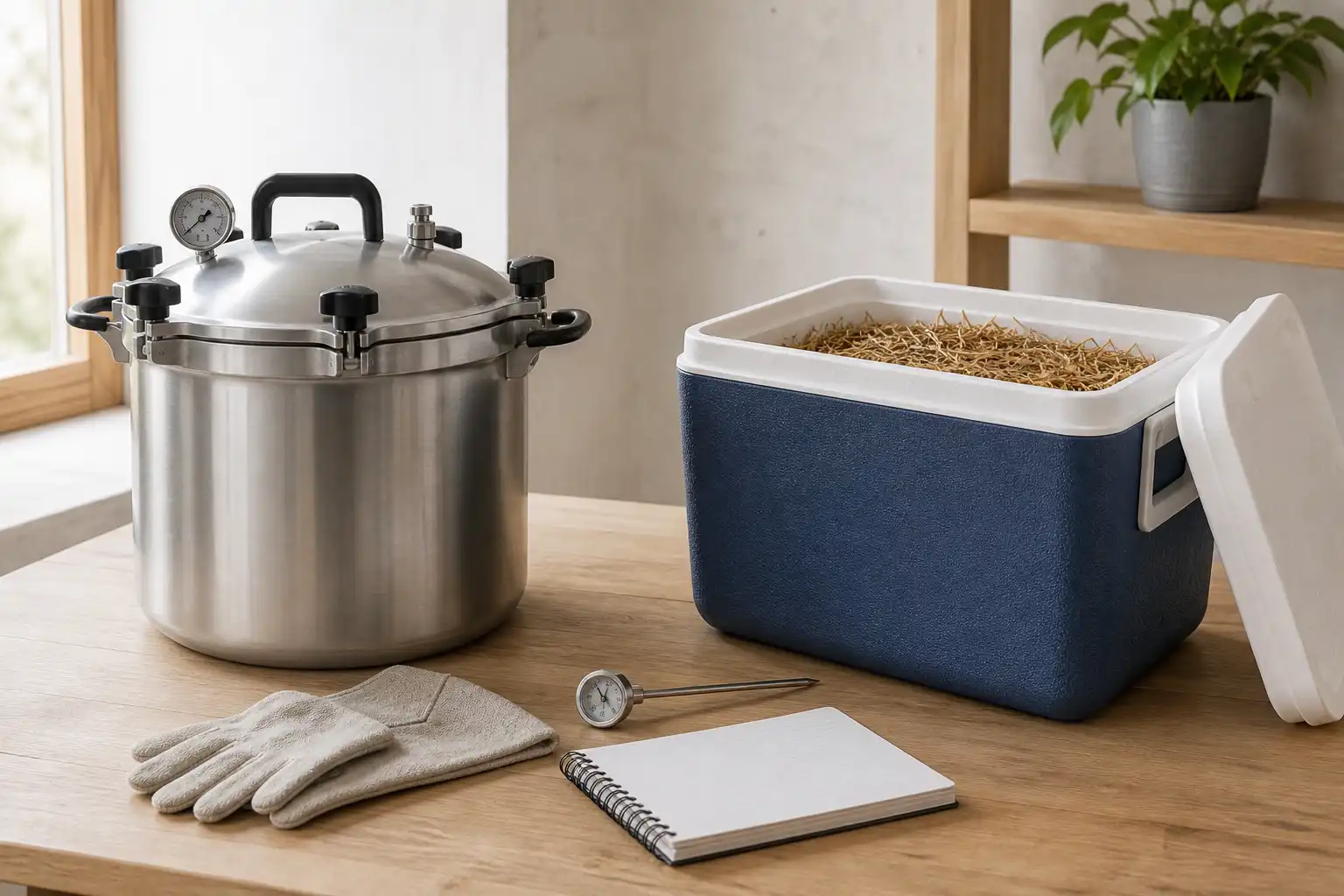
Pasteurize vs Sterilize Mushroom Substrate: A Home Grower’s Guide
Choose pasteurization or sterilization by substrate and workflow, then reduce contamination risk with a conservative, documented home-growing process.
growing
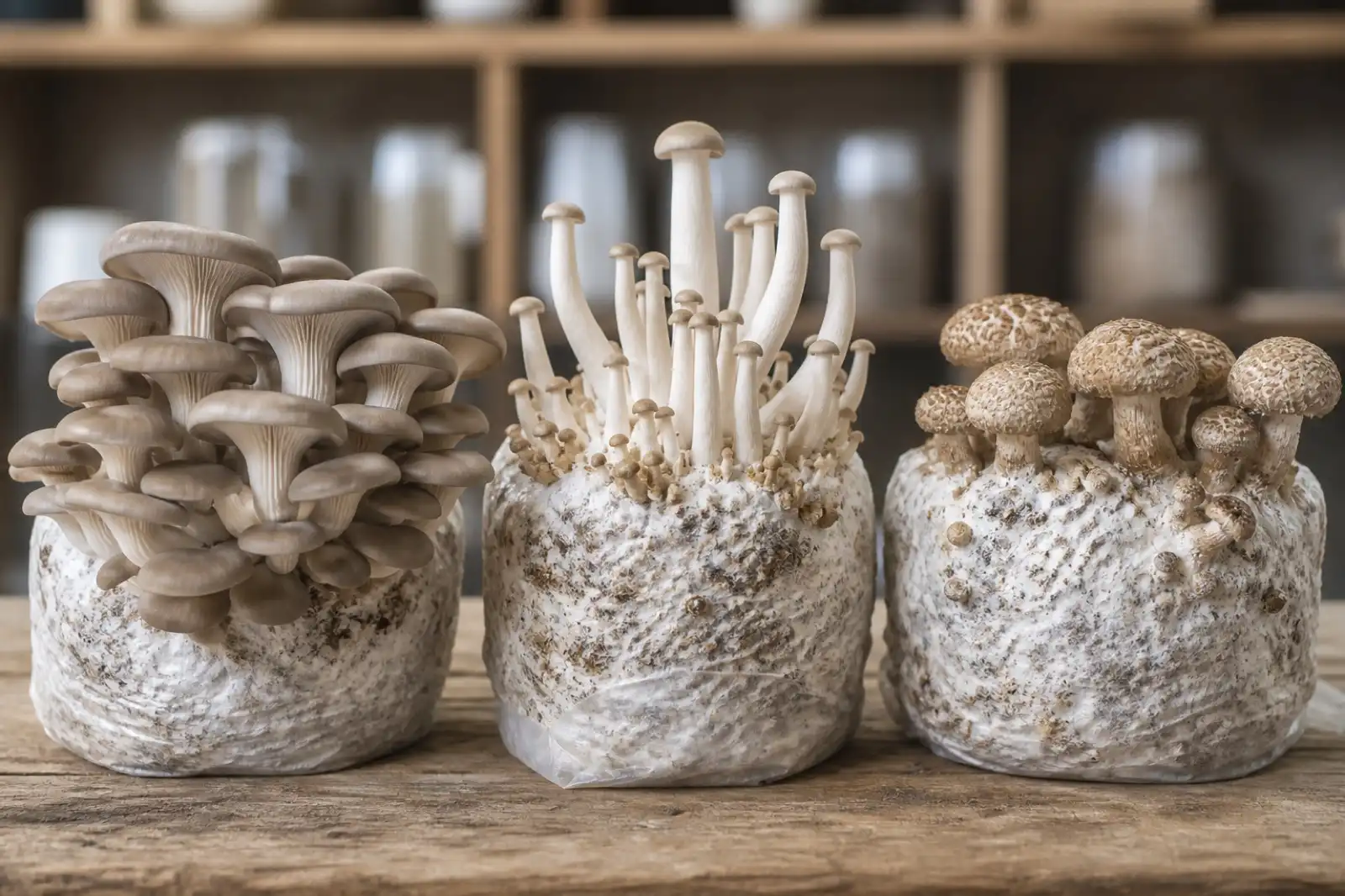
Mushroom Growing Troubleshooting: A One-Variable Logbook Method
Troubleshoot a home mushroom grow by separating contamination, moisture, fresh-air, temperature, and harvest-handling observations.
growing
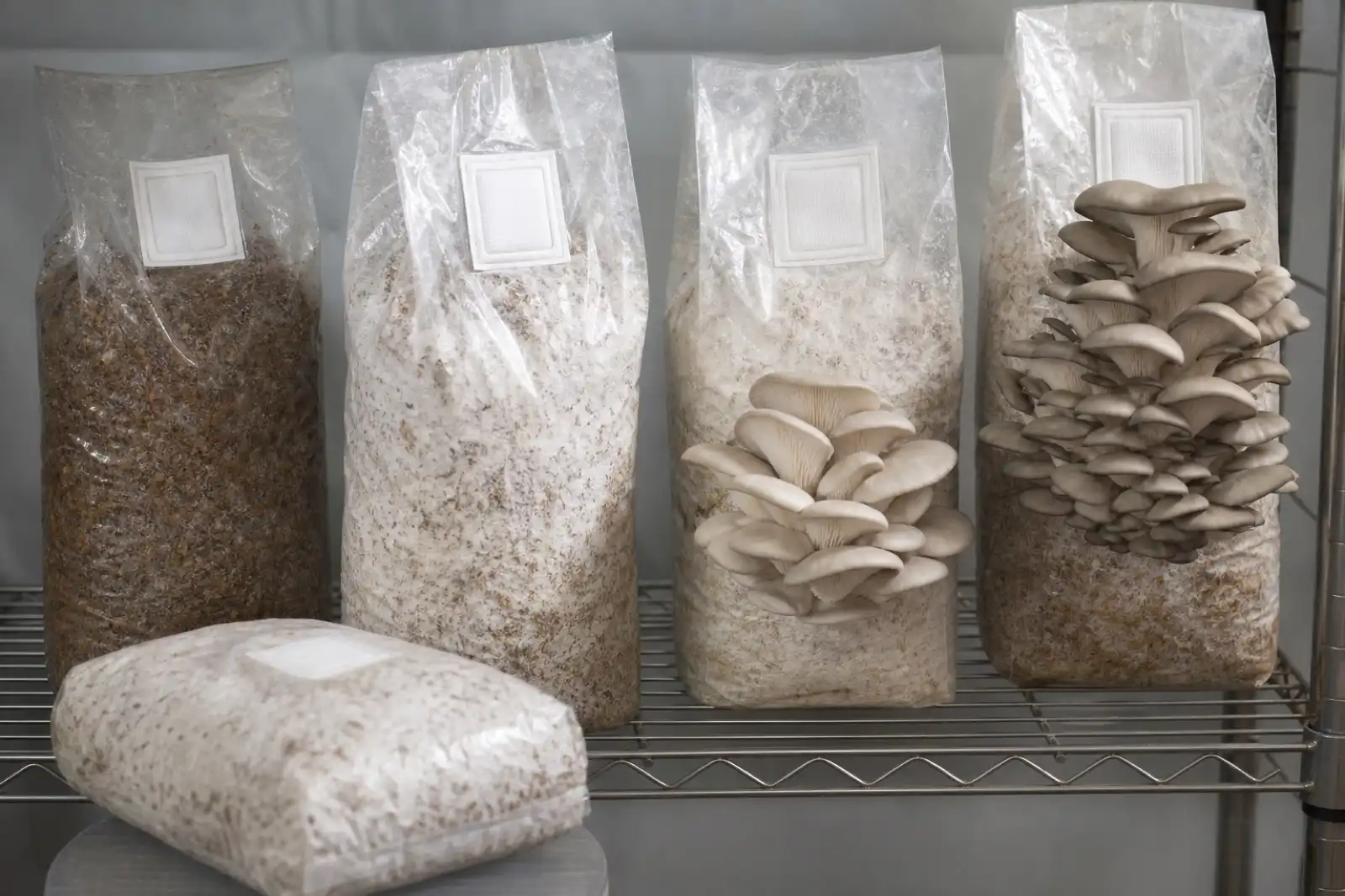
Mushroom Grow Bags: Selection, Filling, and Fruiting
Choose mushroom grow bags by filter, size, and substrate method; learn filling, hydration, sealing, colonization, fruiting cuts, and contamination limits.
Continue exploring
Browse more practical guides in Growing or visit the mushroom encyclopedia.