Growing
Mushroom Grow-Room Sanitation: Clean, Sanitize, Verify
Build a mushroom grow-room sanitation sequence that separates soil removal from sanitizing, controls traffic and standing water, and verifies results.
By MushroomScope Editorial Team · · Updated
Growing method
Start with authenticated culture
Use supplier-identified spawn or blocks and record substrate, stage, temperature, humidity, and visible changes.
Open the beginner growing hub →Food safety
Discard suspect batches
Unusual colors, slime, insects, or abnormal odor should be treated as a safety concern, not a climate tweak.
Review contamination guidance →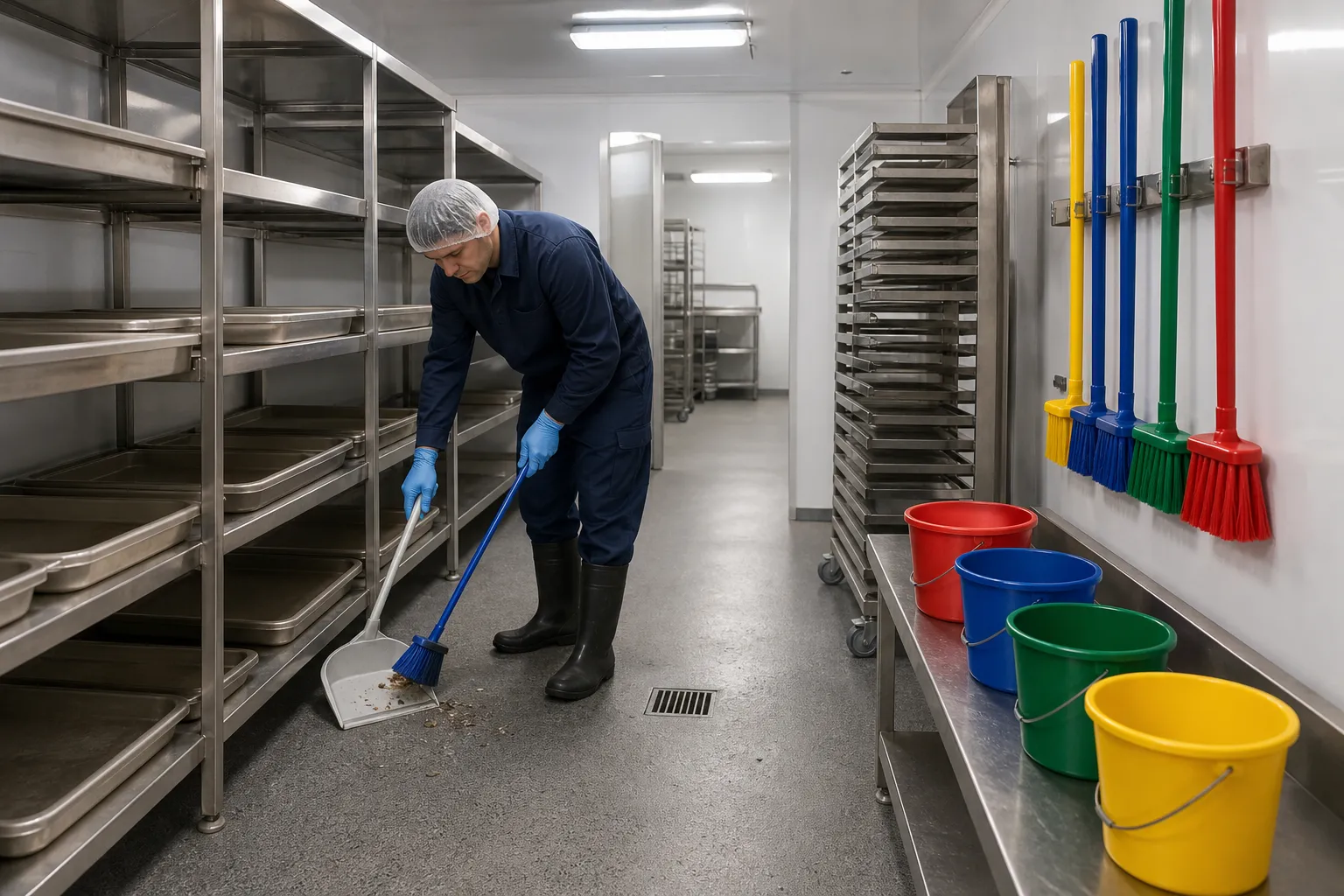
Cleaning and sanitizing are separate operations
Sanitation is a controlled sequence, not a stronger-smelling spray. Cleaning removes substrate, biofilm, grease, and other soil that can shield organisms; sanitizing or disinfection is applied afterward under a product’s registered label. A surface that looks bright may remain poorly cleaned, while a sanitizer applied over debris may fail. Worker safety, food-contact status, concentration, contact time, temperature, and rinsing instructions all matter.
Release evidence for this step
Record the soil found, cleaner used, mechanical action, rinse decision, and post-clean inspection separately from the later sanitizer or disinfectant record. A combined checkbox hides the most common failure: chemical contact with a surface that was never adequately cleaned. If residue remains in a rack joint or drain rim, return to cleaning instead of extending contact time and calling the surface released.
Design traffic from clean crops toward dirty rooms
Movement can carry pests and pathogens from old crops, waste zones, drains, footwear, carts, and tools into younger rooms or packing areas. Define one-way product and personnel flow where possible. Dedicate or color-separate tools by zone, schedule clean rooms before dirty rooms, and prevent maintenance equipment from crossing boundaries untreated. A footbath that is dirty or weakly maintained can become another contaminated reservoir.
Map people, tools, crop, and waste as separate flows
A single arrow marked “one way” is rarely enough. Draw routes for employees, harvest containers, substrate, crop waste, maintenance equipment, laundry, and cleaning tools. Identify every crossing point and specify what changes there: footwear, gloves, outerwear, wheels, containers, or timing. The map should explain how a dirty-room drain brush can never reach a packing or food-contact area.
Dry removal comes before wet cleaning
Remove dry debris with methods that do not aerosolize spores into adjacent crops. Collect spent substrate and culls directly into sound containers. Then pre-rinse only where water can drain safely, apply the appropriate cleaner, scrub inaccessible joints, rinse, inspect, sanitize, and allow drying as the label requires. Never use compressed air to scatter contaminated dust through a facility.
Control dust, splash, and drainage at the source
Bag or bin spent substrate beside the rack rather than carrying loose material across the room. Inspect drain capacity before introducing water, remove portable clean equipment, and work from high surfaces toward floors. Excess pressure turns a rinse into an aerosol and splash event; the objective is controlled removal, not visibly dramatic cleaning.
Select products by label and contact surface
Only use a chemical on the surfaces and in the manner allowed by its label. Food-contact and general-sanitation registrations are not interchangeable, and more concentrate is not automatically more effective or safer. Never mix chemicals unless the label explicitly directs it. Provide ventilation, personal protective equipment, secure storage, measuring tools, training, and access to safety information.
Build a product-use table from the current label
For each product, list the authorized surface, target use, dilution unit, water quality requirement, application method, minimum wet contact time, temperature range, rinse requirement, personal protection, storage limit, and incompatibilities. Link the table to the exact label revision. Do not copy a rate from a secondary chart when the registered label or local authorization has changed.
Drains, wheels, tools, and condensate are niches
Floor-wall junctions, drains, hollow frames, wheel housings, rack joints, humidifier reservoirs, fan guards, condensate pans, door seals, and reusable harvest containers deserve explicit attention. Standing water supports bacterial persistence and spreads soil through wheels and boots. Correct leaks and drainage defects instead of repeatedly spraying around them. Inspect overhead condensation before food or open containers enter the room.
Trend niches by exact location
Number drains, racks, humidifiers, carts, and doors so a repeat observation points to the same asset. A recurring wet floor beside drain D-03 suggests a slope, blockage, or condensate problem; “floor dirty” does not. Photograph inaccessible seams during inspection, record repair tickets, and keep drain-cleaning equipment physically segregated from all other brushes and squeegees.
Post-crop work must be isolated from live crops
Breaking down a finished or contaminated crop beside a young crop transfers risk. Seal or contain suspect material, plan its route, and clean transport equipment. Commercial steam-off procedures require validated time and temperature throughout the material, not merely hot room air; they are not safe home improvisations. This guide does not prescribe a universal chemical or steam schedule.
Validate heat at the coldest material, not the room display
Where a commercial post-crop heat process is used, the relevant evidence is the validated time-temperature history at representative cold locations within the crop and room. Air reaching a target briefly does not establish that dense substrate, rack shadows, or floor zones received the process. Keep this work within an engineered program; improvised steam in a sealed room creates burn, pressure, electrical, and structural hazards.
Verification closes the sanitation loop
Verification can include pre-operational visual inspection, concentration checks, contact-time records, ATP or indicator testing used within a validated program, and trend review. One negative swab does not prove an entire room is clean. Define sampling locations, frequency, limits, corrective actions, resampling, and release authority before a failure occurs.
Distinguish monitoring, verification, and environmental testing
Checking dilution and contact time monitors whether the procedure was performed. A pre-operational inspection verifies visible condition before release. ATP or microbiological sampling may support a validated program, but each has defined sites, methods, limits, and interpretation. None of these measurements independently proves sterility, and a result collected from one easy-to-reach surface cannot clear an entire room.
Write a room-specific standard procedure
A useful SOP names the room and surfaces, responsible role, protective equipment, tools, sequence, chemicals and exact labels, dilution method, contact time, rinse requirement, verification, corrective action, and record retention. Review it after construction changes or repeated contamination. The contamination guide supports crop diagnosis; sanitation records support prevention.
Room hygiene also depends on what enters with the crop. The grain spawn guide explains how to evaluate spawn before inoculation, while this sanitation plan governs rooms, tools, traffic, and cleanup after materials arrive.
Make deviations visible instead of perfecting the form
The record should show who found a failure, which room and asset were affected, what material may have been exposed, who placed it on hold, what was recleaned or repaired, and which result authorized release. The batch records guide shows how to connect that event to affected crop units. Never erase a missed step after the fact; close it with a dated correction and disposition.
Turn recurring failures into engineering changes
A sanitation deviation should identify whether the cause was execution, equipment, layout, or moisture control. Recleaning may close a one-time missed step, but it does not correct a floor that cannot drain, a hollow rack frame that retains slurry, or a cooling line that drips over product. Number drains, rack bays, carts, humidifiers, and doors so trend records point to the same asset. Map observations by crop stage and time: a clean pre-operational surface and a wet harvest-period surface answer different questions and should not be averaged together.
Set escalation rules before a failure. The procedure should name who can place a room or crop on hold, when maintenance must inspect an asset, what evidence is required after recleaning, and who has release authority. If a wheel repeatedly transports debris across a zone boundary, redesign the cart route or assignment. If condensation repeatedly appears beneath one supply line, connect the sanitation record with environmental readings from the grow-room sensors guide and repair the moisture source. Repeated chemical application is not a substitute for eliminating a niche.
Verification records should preserve unfavorable results. Record the exact location, time, room status, method, acceptance limit, result, correction, and resample. ATP, visual inspection, sanitizer concentration, and microbiological tests measure different things; none should be relabeled as proof that a room is sterile. Trend comparable measurements and investigate recurrence rather than rewarding a low room-wide average that conceals one persistent drain or joint.
Frequently asked questions
Prevent the sanitation process from contaminating clean areas
Cleaning itself moves soil. High-pressure water can aerosolize debris, floor splash can reach racks, and a brush used in a drain can transfer contamination to a food-contact surface. Work from higher and cleaner surfaces toward lower and dirtier ones, keep drain tools dedicated, control hose pressure, and remove clean portable equipment before washing the room. Do not clean while exposed harvested mushrooms are present.
Release the room only after surfaces are visibly clean, required contact time is complete, residues are handled according to the label, standing water is removed, and verification meets the written limit. Record deviations such as a clogged drain, damaged seal, expired test strip, or incomplete temperature cycle. A signature without these observations is not verification. Repeated failures at the same niche should trigger equipment or drainage redesign, not merely more chemical.
Cleaning and sanitizing are separate operations?
Sanitation is a controlled sequence, not a stronger-smelling spray. Cleaning removes substrate, biofilm, grease, and other soil that can shield organisms; sanitizing or disinfection is applied afterward under a product’s registered label.
Design traffic from clean crops toward dirty rooms?
Movement can carry pests and pathogens from old crops, waste zones, drains, footwear, carts, and tools into younger rooms or packing areas. Define one-way product and personnel flow where possible.
Dry removal comes before wet cleaning?
Remove dry debris with methods that do not aerosolize spores into adjacent crops. Collect spent substrate and culls directly into sound containers.
Select products by label and contact surface?
Only use a chemical on the surfaces and in the manner allowed by its label. Food-contact and general-sanitation registrations are not interchangeable, and more concentrate is not automatically more effective or safer.
Drains, wheels, tools, and condensate are niches?
Floor-wall junctions, drains, hollow frames, wheel housings, rack joints, humidifier reservoirs, fan guards, condensate pans, door seals, and reusable harvest containers deserve explicit attention. Standing water supports bacterial persistence and spreads soil through wheels and boots.
References
Source quality notes
MushroomScope cites sources that match the page scope, such as taxonomic databases, extension guidance, food-safety agencies, food-composition databases, and peer-reviewed or institutional health references. Sources support context and uncertainty; they do not turn an online page into specimen identification, medical advice, or a tested recipe record.
Frequently asked questions
Cleaning and sanitizing are separate operations?
Sanitation is a controlled sequence, not a stronger-smelling spray. Cleaning removes substrate, biofilm, grease, and other soil that can shield organisms; sanitizing or disinfection is applied afterward under a product’s registered label.
Design traffic from clean crops toward dirty rooms?
Movement can carry pests and pathogens from old crops, waste zones, drains, footwear, carts, and tools into younger rooms or packing areas. Define one-way product and personnel flow where possible.
Dry removal comes before wet cleaning?
Remove dry debris with methods that do not aerosolize spores into adjacent crops. Collect spent substrate and culls directly into sound containers.
Select products by label and contact surface?
Only use a chemical on the surfaces and in the manner allowed by its label. Food-contact and general-sanitation registrations are not interchangeable, and more concentrate is not automatically more effective or safer.
Drains, wheels, tools, and condensate are niches?
Floor-wall junctions, drains, hollow frames, wheel housings, rack joints, humidifier reservoirs, fan guards, condensate pans, door seals, and reusable harvest containers deserve explicit attention. Standing water supports bacterial persistence and spreads soil through wheels and boots.
Related guides
growing
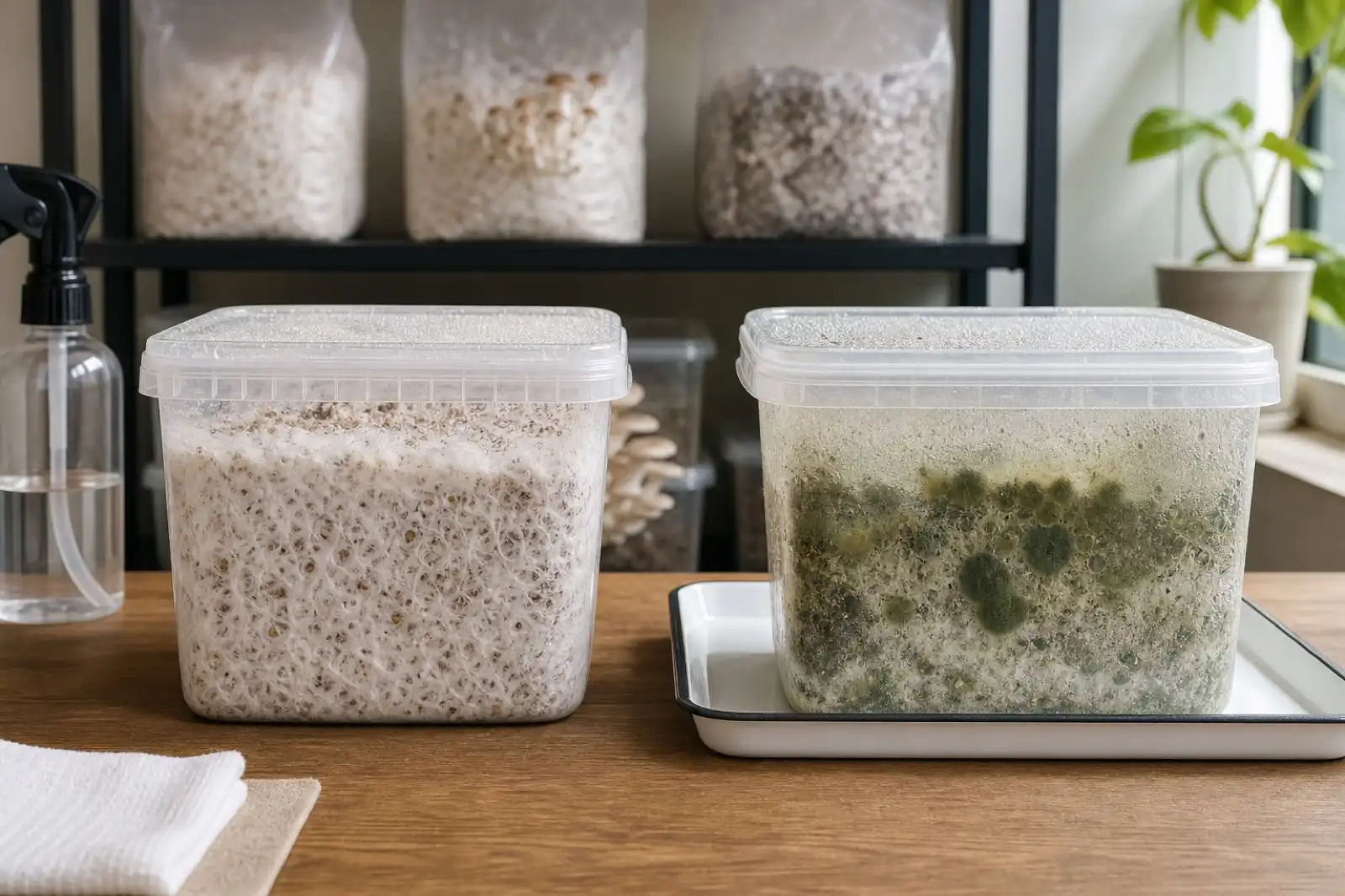
Mushroom Contamination: Isolate, Record, and Prevent Repeat Problems
Recognize mushroom contamination without relying on color alone; isolate suspect batches, avoid food salvage, document the workflow, and prevent repeat issues.
growing
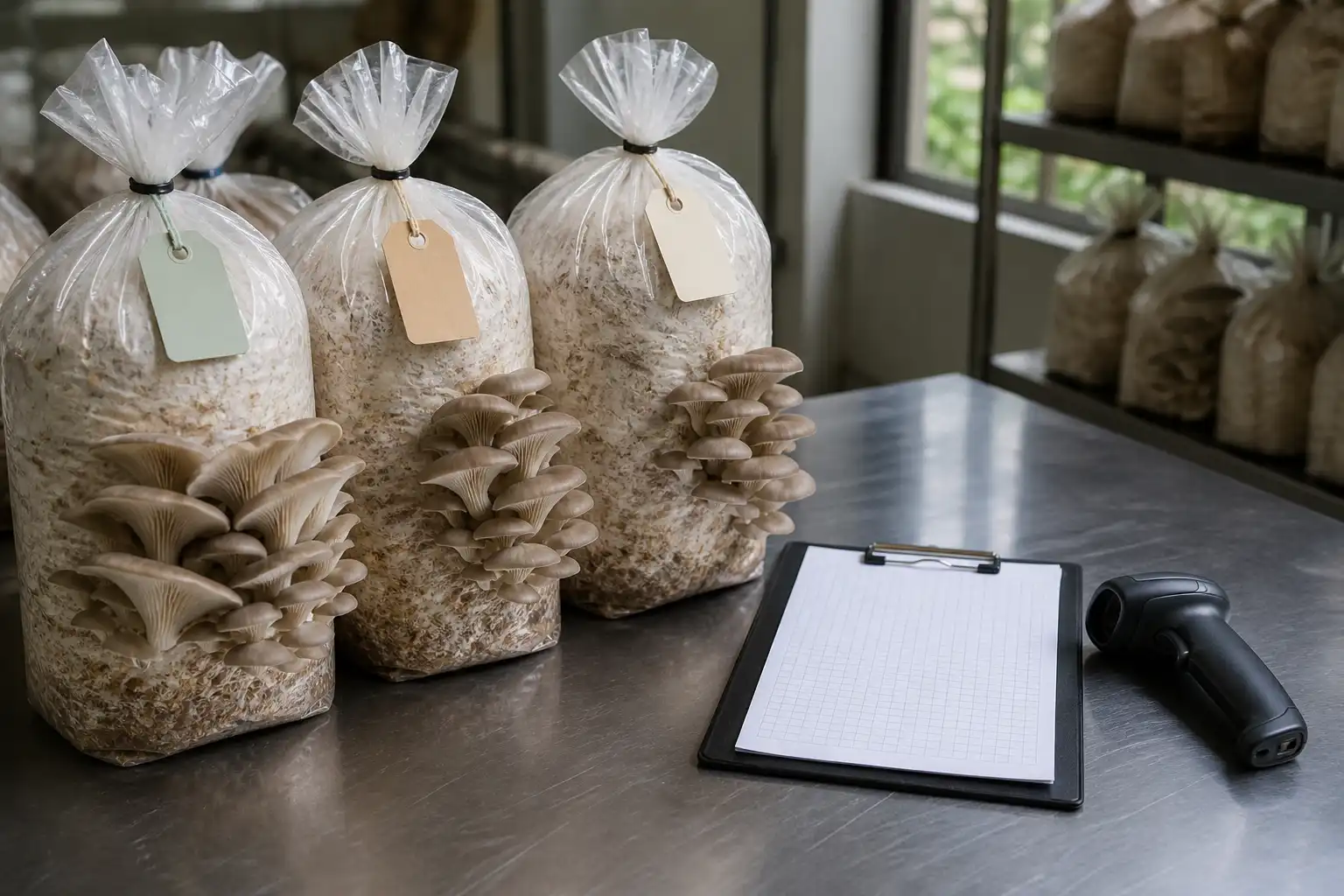
Mushroom Batch Records: Build Traceability From Culture to Harvest
Build mushroom batch records that connect culture, substrate, rooms, observations, harvests, deviations, and corrective actions without false precision.
growing
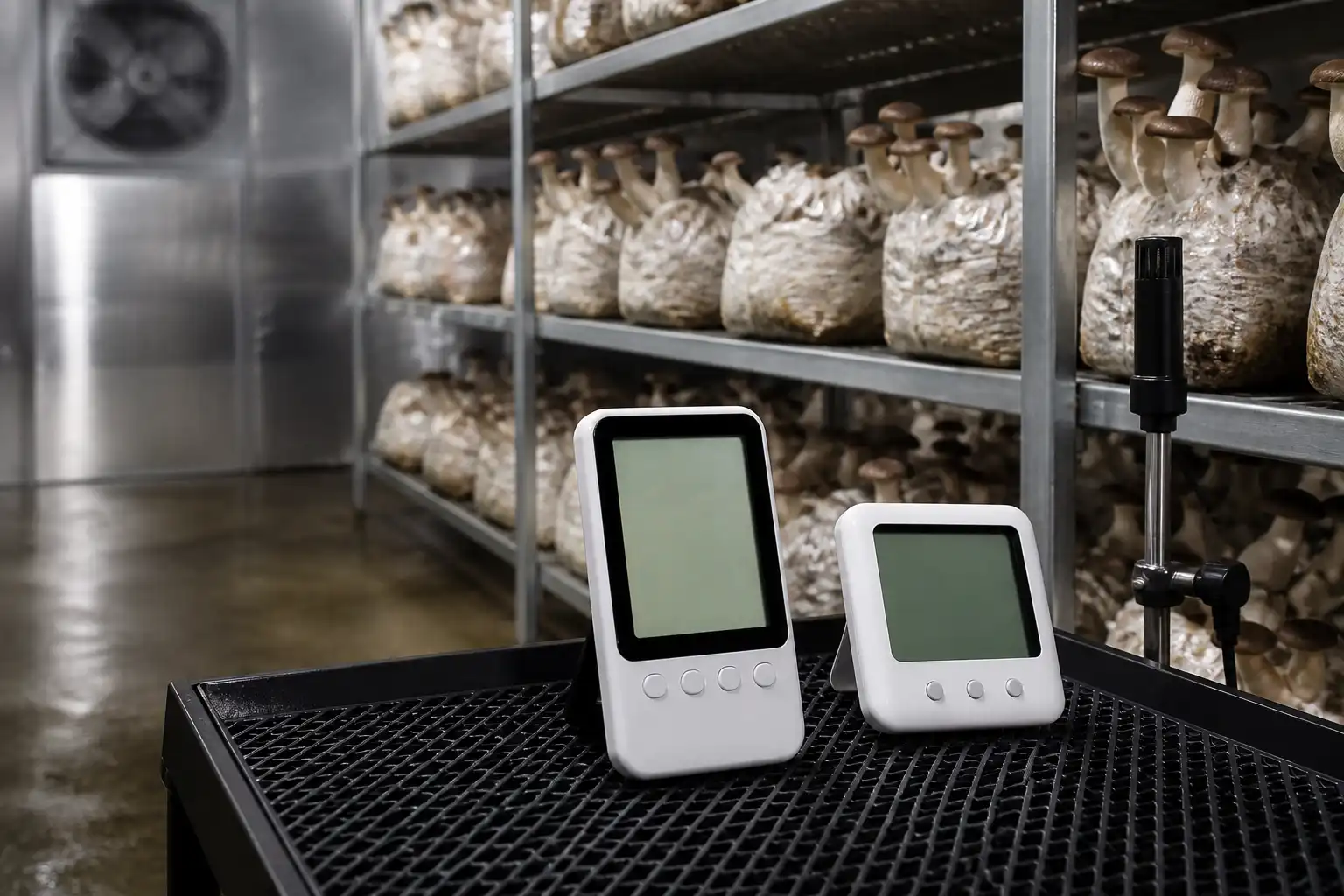
Mushroom Grow-Room Sensors: Placement, Calibration, and Logs
Place and verify temperature, humidity, and carbon-dioxide sensors in a mushroom grow room using reference checks, mapped locations, and useful logs.
Continue exploring
Browse more practical guides in Growing or visit the mushroom encyclopedia.