Growing
Mushroom Substrate Guide: Match Species to Method
Choose a mushroom-growing substrate by matching a labeled culture to a documented production method, site, and food-safety boundary.
By MushroomScope Editorial Team · · Updated
Growing method
Start with authenticated culture
Use supplier-identified spawn or blocks and record substrate, stage, temperature, humidity, and visible changes.
Open the beginner growing hub →Food safety
Discard suspect batches
Unusual colors, slime, insects, or abnormal odor should be treated as a safety concern, not a climate tweak.
Review contamination guidance →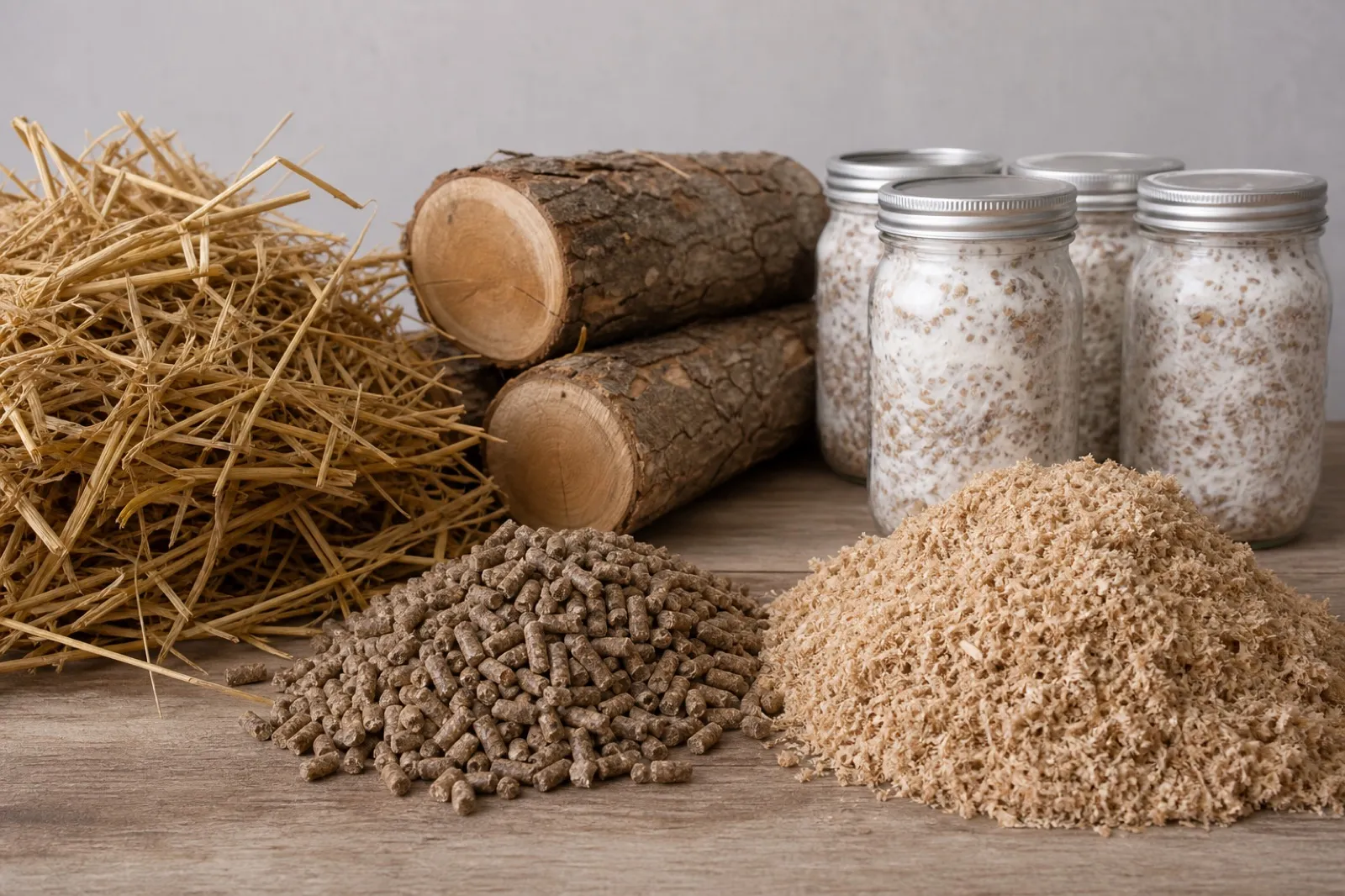
The decision is culture first, substrate second
“What substrate should I use?” is usually the wrong first question. A usable plan starts with a labeled culture and a production system, then selects the material that system is designed to use. Cornell’s cultivation resources distinguish outdoor beds, logs and stumps, and more controlled block or bag production. Those are not interchangeable just because they all involve wood or plant material.
Start with the seller’s species or strain label and written method. Then identify your actual goal: a small outdoor wine-cap bed, a shiitake log project, an oyster grow supplied as a ready-to-fruit block, or a more technical substrate-preparation project. If the label or instructions are missing, the safest improvement is to choose a different source—not to fill the gap with a universal online recipe.
| Starting system | Typical material match | What the material does not tell you | Best next decision |
|---|---|---|---|
| Wine-cap outdoor bed | Mixed hardwood wood chips, with straw only if the supplier specifies it | Whether a sunny, flooded, or uncertain site will work | Check site history, shade, drainage, and the spawn instructions. |
| Shiitake log project | Appropriate hardwood logs | The drilling, inoculation, seasonal, or harvest details | Use a shiitake-log method from the culture supplier or extension guidance. |
| Oyster or lion’s-mane block | Supplier-prepared sawdust block or another documented production substrate | That every sawdust or pellet product can be substituted | Begin with the supplied block or an established species-specific workflow. |
| Straw-based project | Straw only with a culture and preparation method that calls for it | Whether it needs the same treatment as a supplemented indoor block | Follow that method’s sanitation and hydration instructions. |
This matrix is a selection tool, not a promise of yield. Species, strain, substrate source, local weather, preparation, and handling all matter. Cornell’s outdoor table, for example, lists wine cap with mixed hardwood chips and beds, while shiitake is paired with logs and oyster mushrooms with other wood-based methods.
Use a traceability check before handling material
Before opening spawn or preparing substrate, make a short batch record:
- Culture name, supplier, and any lot or order reference supplied.
- Intended production system and supplier instructions saved with the record.
- Substrate type, source, and whether its treatment or prior use is known.
- Preparation date, inoculation date, and the conditions you are meant to monitor.
- A separate note for every change, unusual observation, and harvest decision.
This is not administrative busywork. It prevents a common failure mode: changing material, moisture, temperature, and air at once, then having no way to tell which change mattered. It also makes it clear when the material itself is the uncertainty. Do not use treated, painted, or unknown wood waste for an edible-crop project, and do not assume that a material is acceptable merely because it resembles a recommended chip or sawdust product.
Match the complexity to the skill you want to learn
A ready-to-fruit block is often the clearest first system because the supplier has already made the culture and substrate decisions. You can practice observation, clean harvest handling, and one-variable troubleshooting without also trying to diagnose substrate formulation. The beginner growing guide explains how to make that baseline.
Preparing a substrate becomes worthwhile when you have a documented method and can keep the sequence controlled. Cornell describes cultivation as substrate preparation, inoculation, a spawn run, and fruiting; each stage has its own decision boundary. A moisture or treatment decision at preparation is not fixed by a fruiting-room humidity number later.
For a garden-scale wood-chip project, see the outdoor wine-cap bed guide. It narrows the system to a labeled culture, known mixed hardwood chips, a suitable site, and a weather log rather than presenting every substrate as a garden-bed candidate.
The companion wine-cap species guide explains why a hardwood-chip substrate and an inoculation record still do not identify every mushroom that later appears in the bed.
Treat heat treatment as method-specific
“Sterilize the substrate” is not an all-purpose instruction. Cornell notes that substrate preparation varies among chopping logs, preparing beds, pasteurizing straw, and mixing or sterilizing block materials. The appropriate treatment and cleanliness level depend on the culture, material, and documented system.
Follow the procedure that belongs to the chosen method. Do not improvise time, temperature, additives, or container handling based on a label like “hardwood” or “straw.” If your project specifically calls for substrate treatment, use the sterilization versus pasteurization guide alongside the spawn supplier’s instructions. If the source method is missing, that is a reason to pause the preparation step.
Compare common substrate families by use
Hardwood sawdust and pellets are common for wood-decaying species such as lion’s mane and many oysters, but supplemented hardwood becomes nutrient-rich and generally needs stricter treatment and clean inoculation. Verify that pellets contain untreated hardwood without binders, fuels, coatings, or unknown additives.
Straw is lower in nutrition and physically airy when chopped and hydrated correctly. It is often paired with oyster mushrooms and pasteurization-based workflows. Dirty, moldy, chemically treated, or repeatedly wet straw is unsuitable. Particle size affects packing and oxygen; long rigid stems create gaps, while material chopped too finely can compact.
Logs are a long-duration outdoor substrate for species matched to the tree. Use freshly cut, healthy, untreated wood of a verified species and follow spawn-supplier timing. Dead, decayed, painted, pressure-treated, or unidentified landscaping wood should not enter food cultivation.
Manure, compost, paper, coffee grounds, and agricultural by-products can support selected methods but require expertise about composition, contaminants, treatment, and local food rules. “Waste” is not automatically clean or sustainable. Beginners should use a documented single-source material rather than an uncontrolled mixture.
Measure hydration instead of relying on a squeeze test alone
Water availability affects colonization, gas exchange, bag structure, and bacterial risk. Weigh dry material and added water according to a validated formula, accounting for the starting moisture of fresh ingredients. Record final wet weight and batch yield. A hand squeeze can be a secondary check, but hand strength and particle size make it poorly reproducible.
Overwet substrate can create dense anaerobic zones, pooling, and slow recovery. Underhydrated material may colonize unevenly and dry before fruiting. Correct the recipe before inoculation; adding unmeasured water to a partly colonized bag is not a safe repair.
Allow hot treated material to cool in a protected container. Condensation on a bag wall does not by itself reveal internal hydration, and opening repeatedly to “dry it out” introduces contamination.
Match the container to heat, air, and handling
Use bags, jars, buckets, or beds designed for the chosen method. Filter bags must be compatible with the treatment temperature and provide the intended gas exchange. A melted seal, wet filter, blocked patch, or bag pressed against a sharp rack can compromise an otherwise correct substrate.
Buckets suit some pasteurized low-nutrient methods when holes, cleaning, drainage, and spawn rate follow a proven design. Jars are useful for defined small batches but need correct lids and headspace. Outdoor beds require clean site selection, runoff control, species-appropriate material, and protection from uncontrolled food claims.
Never improvise pressure-vessel loads beyond manufacturer instructions. Container size and packing affect heat penetration, so a cycle copied from a smaller jar may not validate a dense bag.
Run a small documented pilot
Before scaling, prepare a batch size that can be weighed, treated, cooled, inoculated, and isolated safely. Label culture, strain, spawn lot, substrate sources, dry weights, water, supplements, treatment, container, inoculation date, and incubation location.
Keep one change per comparison. If hardwood species, supplementation, hydration, spawn rate, and temperature all change together, a good or bad outcome cannot identify the cause. Compare colonization speed, uniformity, contamination, fruiting response, yield, and quality across repeated batches rather than declaring success from one bag.
Keep suspect cultures out of the food workflow
Unexpected mold, slime, persistent foul odor, insects, leakage, or unclear culture history changes the task. It is no longer routine yield troubleshooting and it is not a signal to trim, rinse, cook, or taste the material. Isolate it from healthy cultures and food-preparation areas, then follow supplier or applicable local disposal guidance.
Penn State’s mushroom food-safety guidance and FDA produce guidance support clean tools and containers, separation from raw animal foods, and prompt refrigeration of sound culinary produce. Those handling steps begin after you have a known, sound crop; they cannot make an uncertain culture safe. The homegrown mushroom storage guide covers the dated refrigerator record that follows a normal harvest.
Retire and dispose of substrate without spreading problems
At the end of production, separate sound spent substrate from bags with insects, foul odor, slime, or unexpected growth. Remove questionable units in closed secondary containment rather than breaking them apart near active cultures. Clean shelves, trays, and tools using their documented procedure before another batch enters the area.
Sound spent substrate may be composted or used as a soil amendment where local rules and the original inputs allow. That does not authenticate any later outdoor mushrooms as food. Treated wood, chemical residues, plastics, and contaminated material require disposal suited to the actual components.
Review yield and contamination by substrate batch before changing the recipe. A low-yield block may reflect culture age, spawn quality, fruiting conditions, or harvest timing rather than substrate alone. Preserve representative photographs and weights so the next decision is based on comparable evidence.
For a new material, obtain a specification or trustworthy source description. Record species of wood or crop residue, particle size, moisture on receipt, storage conditions, and any supplement. If the origin or treatment history cannot be established, do not use it for culinary production.
References
Source quality notes
MushroomScope cites sources that match the page scope, such as taxonomic databases, extension guidance, food-safety agencies, food-composition databases, and peer-reviewed or institutional health references. Sources support context and uncertainty; they do not turn an online page into specimen identification, medical advice, or a tested recipe record.
Frequently asked questions
What is the best substrate for growing mushrooms at home?
There is no best material in isolation. Start with an authenticated culture and its documented method: Cornell distinguishes, for example, wine-cap beds using hardwood chips from shiitake logs and more controlled bag or block systems. A ready-to-fruit block is often the lowest-complexity first system.
Can I use any hardwood chips or sawdust for edible mushrooms?
No. The material must match the culture and method, and its source needs to be known. Avoid treated, painted, or unknown wood waste. Use the spawn supplier's instructions for chip, sawdust, log, or prepared-block specifications instead of assuming that a material's appearance makes it suitable.
Do I need to sterilize every mushroom substrate?
No single treatment applies to every substrate. Cornell separates bed preparation, log work, and controlled block production; the treatment and cleanliness level depend on the documented system. Do not improvise a sterilization process or treat a suspect culture as food.
Related guides
growing
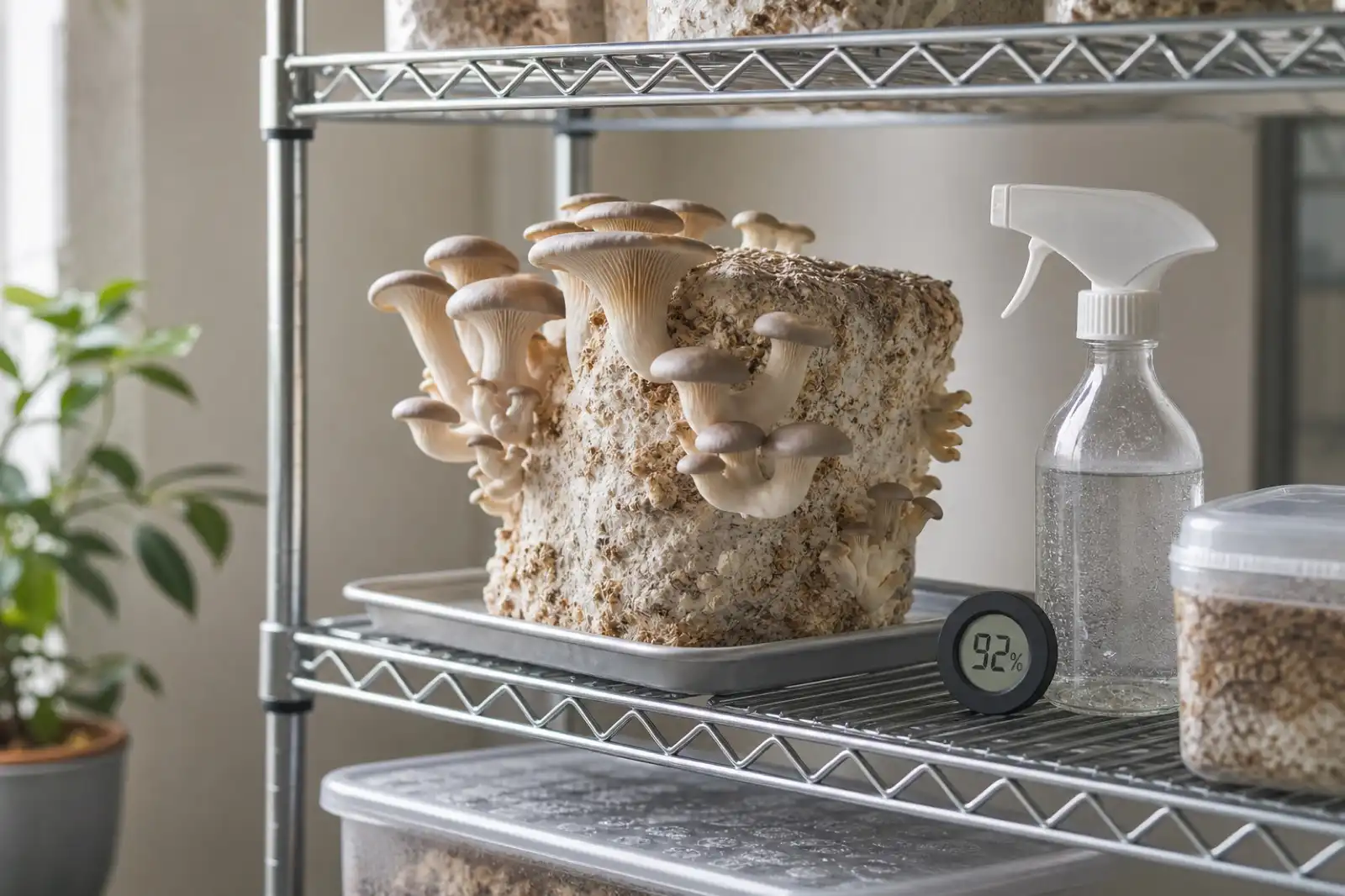
Beginner's Guide to Growing Mushrooms at Home
Choose a low-complexity first mushroom grow, set a written decision boundary, and keep food safety separate from yield troubleshooting.
growing
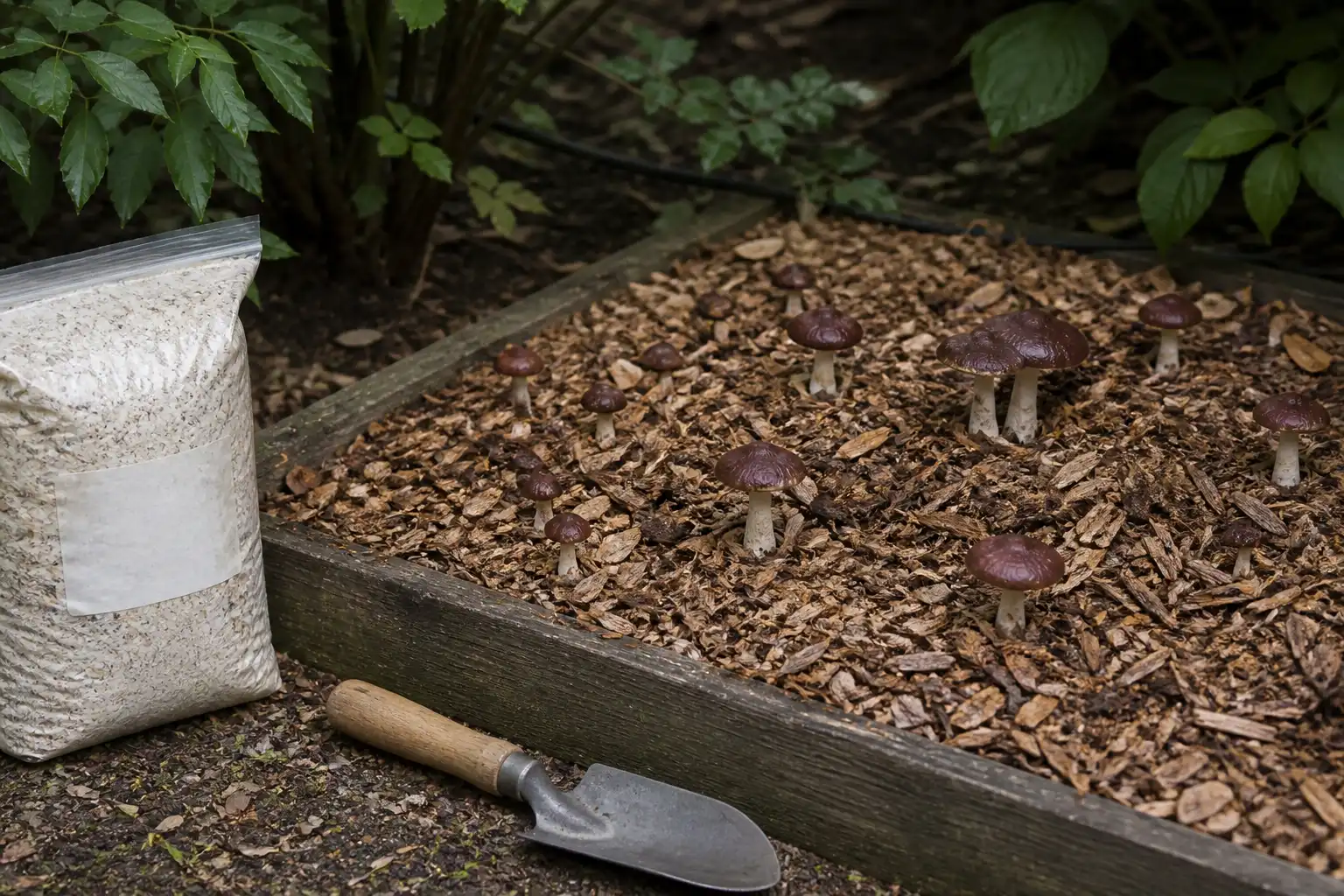
How to Start a Wine Cap Mushroom Bed
Plan a shaded wine cap mushroom bed with labeled spawn, hardwood chips, a simple observation log, and clear food-safety boundaries.
growing
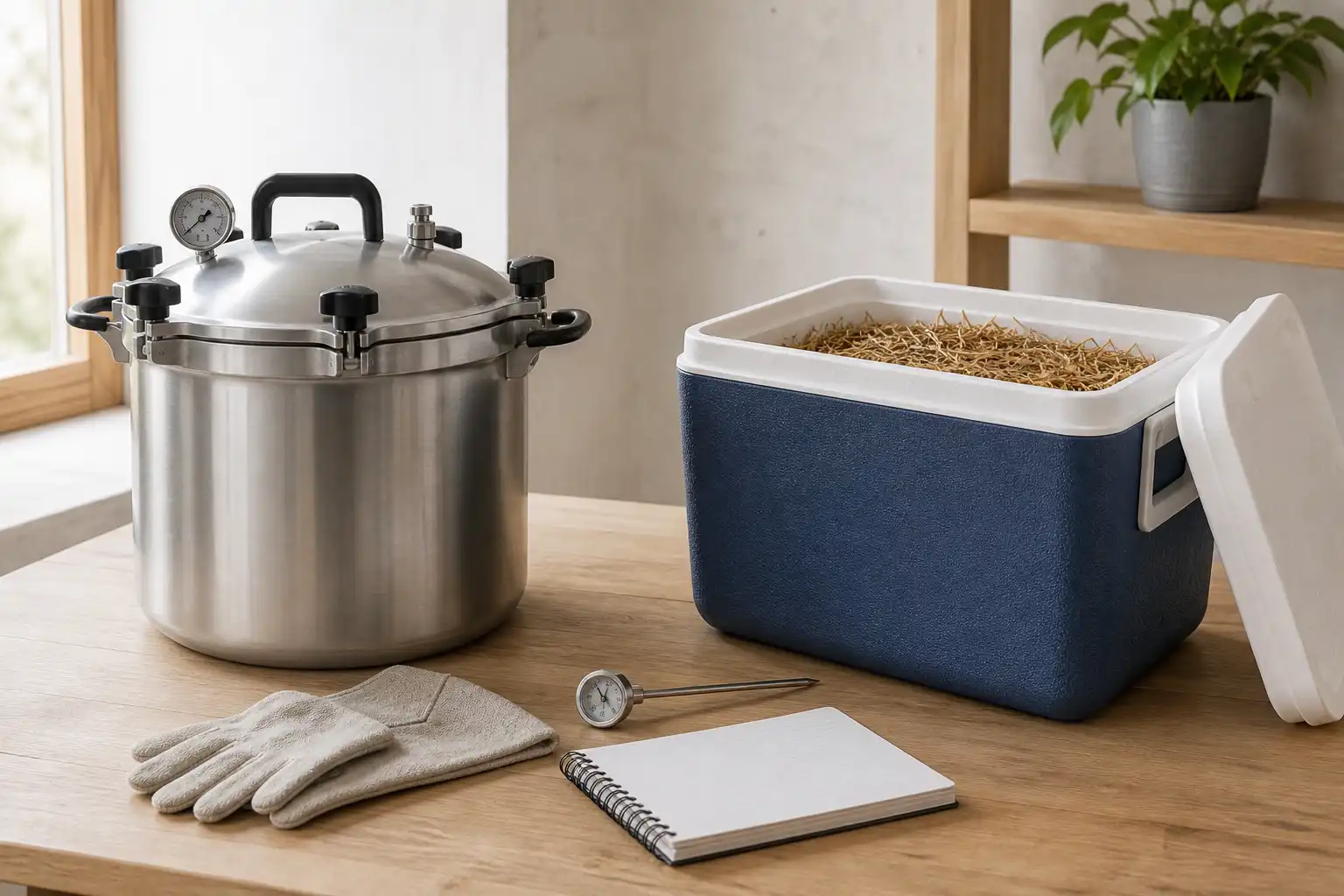
Pasteurize vs Sterilize Mushroom Substrate: A Home Grower’s Guide
Choose pasteurization or sterilization by substrate and workflow, then reduce contamination risk with a conservative, documented home-growing process.
Continue exploring
Browse more practical guides in Growing or visit the mushroom encyclopedia.