Mushroom Encyclopedia
Stropharia rugosoannulata: Wine cap Species Guide
Learn Wine cap identification, habitat, season, lookalikes, safety, food context, and cultivation limits with current taxonomy and sources.
By MushroomScope Editorial Team · · Updated
Species context
Treat profiles as reference material
Species profiles summarize documented traits, taxonomy, and lookalikes, but natural variation can be substantial.
Use the safety checklist →Decision limit
A profile cannot authenticate a specimen
Do not eat a wild mushroom from an online match, single feature, or generated image.
Read the safety disclaimer →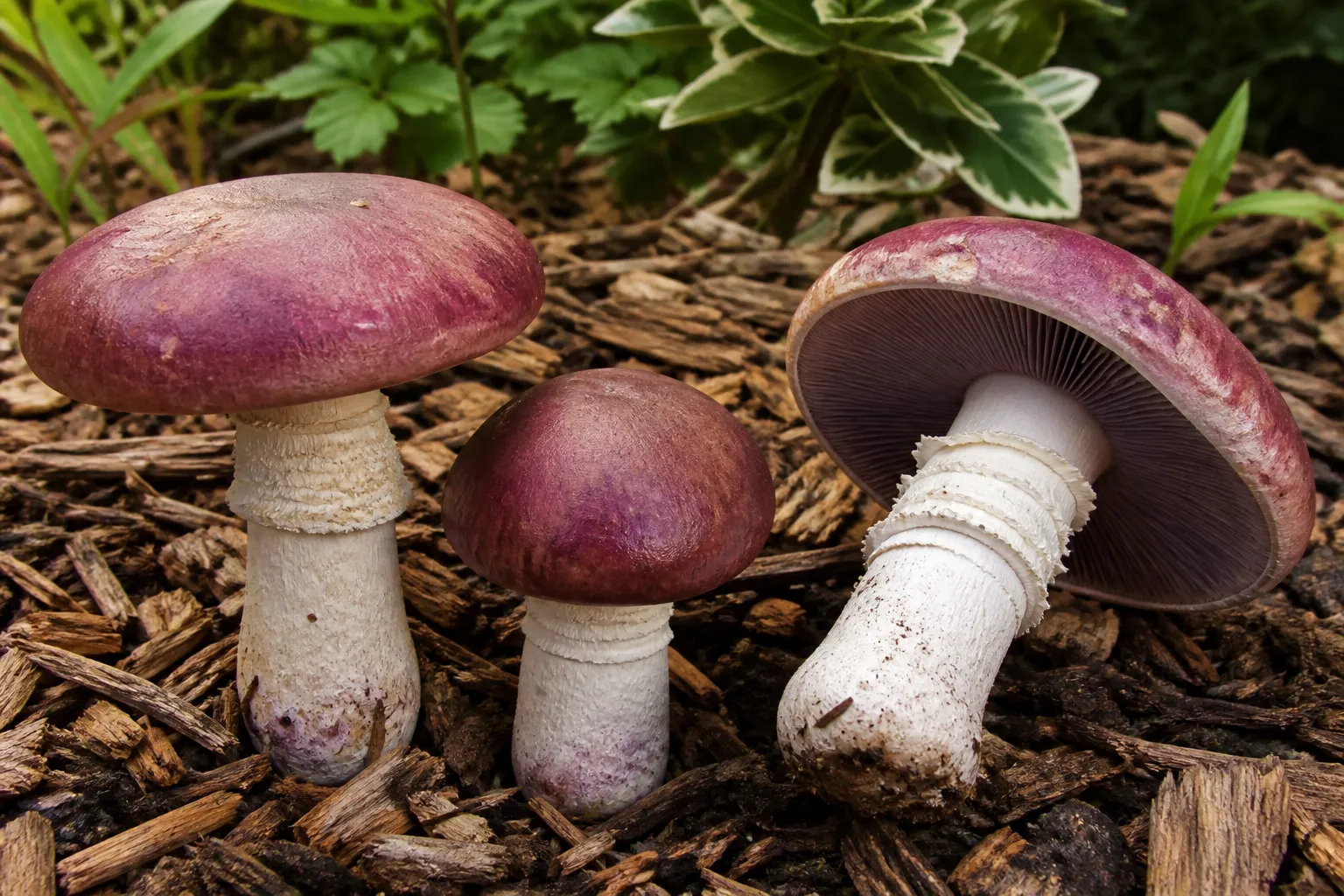
Quick facts
- Scientific name
- Stropharia rugosoannulata
- Common names
- Wine cap
- Taxonomy
- Stropharia · Strophariaceae
- Edibility context
- Edible: This database label is context, not remote clearance of a wild specimen; identity, preparation, spoilage, contamination, and individual reaction matter.
- Spore print
- Purple-brown.
- Toxicity context
- None Known: Risk includes misidentification and individual reaction. Consult current local toxicology guidance before any food decision.
- Season
- May, June, July, August, September, October
- Growing difficulty
- Easy
- Regions
- Europe, North America, introduced elsewhere
Safety limit: These labels summarize documented context; they never authenticate a wild specimen. Cooking does not make a poisonous species safe.
Identification overview
Broad burgundy to reddish-brown caps that fade with age, pale crowded gills becoming purple-brown, and a substantial ring. True gills begin pale and mature toward purple-brown. Stout pale stem with a persistent cogwheel-like ring. Firm white flesh; cap color may fade tan in sun. Observe several ages because rain, drying, insects, and decomposition can alter color and texture. Photograph the undisturbed growth, upper surface, fertile surface, complete attachment, and a lengthwise section. A purple-brown spore deposit is supporting evidence, never a species verdict.
Habitat and season
A saprotroph of wood chips, mulch, and rich garden beds. The documented range represented here includes Europe and North America and introduced elsewhere. Typical substrates or settings include hardwood chips and mulch and rich soil. Fruiting records commonly occur in May, June, July, August, September, October, but latitude, elevation, rainfall, and host condition shift the calendar.
Wine caps often fruit where hardwood chips meet rich soil, so “on the ground” is not a sufficient substrate record. Pull mulch aside beside—not through—the cluster and note chip species if known, chip age, depth, irrigation, compost additions, and whether white rope-like mycelium binds the bed. Photograph stems emerging through the chips and record whether the bed was intentionally inoculated. A managed mulch bed can explain abundance, but it does not authenticate every brown-capped mushroom growing there.
Similar species
- Leratiomyces ceres — usually smaller and bright red-orange on wood chips.
- Other Stropharia species — spore color and ring details require a current key.
Separate wine caps from other mulch inhabitants with a combination of the burgundy-to-tan cap sequence, pale young gills maturing purple-brown, a robust pale stem, and the thick radially grooved or cogwheel-like ring. Leratiomyces ceres is commonly smaller and orange-red, while other Stropharia may share dark spores without the same stature and ring. Photograph the ring before it tears or becomes coated with spores; microscopy and a regional key may still be necessary when weather erases the color contrast.
Read the cap, gills, and ring as one profile
Wine cap is a common name for Stropharia rugosoannulata, a robust agaric often encountered in wood-chip or mulch settings. A useful observation begins with the whole profile: a broad wine-red to reddish-brown cap, a stout pale stem, crowded true gills, and a substantial ring. Cap color changes with weather, sunlight, and age, so it is less dependable than a complete record. Young gills can be pale and later develop purple-brown tones as spores mature. Photograph both a young and mature specimen when possible, without assuming that either one image represents every stage.
The conspicuous ring is often described as rugged or cogwheel-like, reflected in the species epithet rugosoannulata. It can be damaged, partly lost, or obscured by debris, and it should not be treated as a stand-alone confirmation. Record where it sits on the stem, how it looks above and below, and whether any veil remnants occur at the cap margin. A lengthwise cut shows flesh and stem structure but cannot replace habitat or a regional comparison. Do not taste a wild mushroom as an identification test.
A purple-brown spore deposit is compatible evidence once the mushroom has been documented intact. Make a print from a mature specimen only if it does not erase the evidence needed for another reviewer, and label the print with date and collection context. Spore color overlaps among fungi, while an incomplete print may reflect humidity or age. The best value of a print is as one checked character in a larger set, not as the final answer.
Distinguish a cultivated-bed context from a safe identification
Wine caps are saprotrophic and may fruit in hardwood chips, mulch, rich garden beds, and other woody organic material. That setting can be meaningful, especially where authenticated spawn has been deliberately installed, but it is not a license to assume every red-brown mushroom in chips is a wine cap. Ask whether the bed was inoculated, what material was added, how long ago, and whether different mushrooms are fruiting in the same area. A garden can host many uninvited species as well as an intended crop.
Leratiomyces ceres is one possible wood-chip comparison: it is commonly smaller and can be bright red-orange. Other Stropharia species require a current key because gill color, ring details, cap surface, and regional range may matter. The GBIF species record provides taxonomic and occurrence context, and the NCBI taxonomy resource is a separate nomenclature checkpoint; neither service identifies a home or wild specimen from a photograph. If a character conflicts with the expected profile, stop the food decision and seek local expertise.
Document the substrate precisely. “Mulch” can mean fresh hardwood chips, aged landscaping material, mixed compost, straw, or soil with buried wood, each of which changes the comparison set. Include photos of the surrounding bed, the attachment point, the underside, the ring, and a group at different ages. Record the date, broad location, weather, and whether the mushrooms were from known commercial spawn. This makes an expert review far more useful than a detached cap photo.
Use verified spawn and conservative garden practice
For home cultivation, start with authenticated commercial wine-cap spawn and follow the supplier’s strain-specific instructions. This guide does not prescribe a universal inoculation rate, depth, temperature, or harvest interval because those parameters vary by strain, substrate, climate, and supplier method. The related substrate guide explains how substrate choice affects mushroom culture, and the outdoor mushroom bed guide provides a general planning framework. Neither should be used to identify an unexpected mushroom in an existing bed.
Keep batch records: supplier, lot if supplied, inoculation date, wood-chip source, watering conditions, and any unusual growth. Use clean tools, avoid moving questionable material between beds, and do not attempt to “rescue” a crop that develops persistent abnormal odors, extensive slime, or unfamiliar fruiting bodies. A bed can be productive while still requiring careful observation; the presence of an intended species does not make unrelated visitors edible.
Harvest only fruiting bodies already confirmed as the cultivated target, and separate them from unknown material. Refrigerate promptly and use normal clean food-preparation practices. FDA produce-safety advice supports hygienic handling, but it does not validate species identity. Cooking does not reliably render a poisonous lookalike safe, and individual digestive intolerance remains possible even with correctly identified food.
Make food decisions after a complete check
Wine caps have a culinary use context when identity is established and mushrooms are fresh, clean, and properly cooked. Before preparing a confirmed collection, inspect each specimen for decay, visible mold, abnormal persistent odor, or heavy insect damage. Discard compromised material rather than trimming it into a meal. Keep a first-time serving modest and avoid presenting a mushroom as risk-free; food reactions can be individual.
For an uncertain wild or garden collection, the correct next step is documentation and qualified in-person review, not an online comparison. Use this site’s identification guide and safety checklist to organize photos and observations. If an unidentified mushroom has been eaten and symptoms occur, retain leftovers, uncooked pieces, photographs, and timing information, then contact local emergency services or a poison center promptly. NAMA’s poisoning resource explains why those details matter.
Do not make medical claims from a mushroom’s culinary reputation. The practical safety boundary is clear: a webpage can help describe a candidate and growing context, but it cannot clear a specimen for eating. An unresolved collection stays out of the kitchen.
Frequently asked questions
Why is the ring important on a wine cap?
The robust, textured ring is a useful part of the profile, but it can be damaged or lost. Evaluate it with cap color, gill maturation, spore color, substrate, and the regional comparison set rather than using it alone.
Can wine caps grow in ordinary mulch?
They may fruit in suitable woody beds when grown from authenticated spawn, but many fungi also inhabit mulch. A red-brown mushroom in a bed is not identified by substrate alone.
Does a purple-brown spore print confirm wine cap?
No. It is supporting evidence from a mature, documented specimen. Other fungi can overlap in print color, and a print cannot replace a full identification.
Is a home-grown wine cap automatically safe to eat?
No. Confirm that the fruiting body matches the authenticated cultivated species and that no unknown mushrooms are mixed in. Freshness, preparation, and individual tolerance also matter.
What should I do with an unfamiliar mushroom in an inoculated bed?
Photograph it in place, keep it out of food, compare it through a qualified local identifier if needed, and maintain a separate record from the intended crop. Seek urgent professional advice if an unidentified mushroom was eaten and symptoms develop.
Food and safety context
Wine cap has a documented food-use context when the organism is correctly identified and the material is fresh, clean, and cooked. That reputation does not transfer to a wild specimen identified online. Individual allergy, gastrointestinal intolerance, spoilage, environmental contamination, and cross-contamination remain possible. Cooking does not make a poisonous species safe.
If illness follows a mulch-bed mushroom meal, contact the local poison center or emergency service promptly and say that a wood-chip species was suspected. Keep uncooked caps and complete stem bases, cleaning scraps, the culture or spawn label if the bed was inoculated, photographs of other mushrooms in the bed, and meal timing. Mixed flushes can occur in cultivated beds, so the fact that wine-cap spawn was added does not prove the identity of every fruit body harvested later.
Cultivation context
Outdoor cultivation usually begins with authenticated S. rugosoannulata spawn layered through fresh, untreated hardwood chips or a documented chip-and-straw mix in a shaded bed. Record spawn lot, bed area and depth, chip source, installation date, moisture checks, and first fruiting rather than copying an indoor oyster schedule. Add water to keep the interior damp without creating stagnant, sour pockets. Before harvest, inspect each fruit body independently because unrelated mulch fungi can fruit through the same bed; an unexpected gill color, missing ring, different stature, slime, or persistent off odor is a reason to isolate the collection rather than rescue it for food.
How to document a find
- Photograph the habitat and growth habit before moving anything.
- Record location, date, weather, substrate, nearby trees, and odor without tasting.
- Photograph the cap, fertile surface, stem or attachment, and base in natural light.
- Measure several mature specimens and make a spore deposit when appropriate.
- Compare the complete record with a current regional key and qualified local expertise.
References
- Global Biodiversity Information Facility. Stropharia rugosoannulata species record. Taxonomic backbone and occurrence context.
- National Center for Biotechnology Information. NCBI Taxonomy Browser. Independent lineage and nomenclature checkpoint.
- North American Mycological Association. Mushroom Poisoning Syndromes. Poisoning response and syndrome context.
- U.S. Food and Drug Administration. Selecting and Serving Produce Safely. General handling guidance for mushrooms used as food.
Editorial review: September 27, 2026. Taxonomy, mulch-bed ecology, regional comparisons, cultivation records, and poison-response contacts were rechecked editorially; no named mycologist or clinician reviewed this page.
Source quality notes
MushroomScope cites sources that match the page scope, such as taxonomic databases, extension guidance, food-safety agencies, food-composition databases, and peer-reviewed or institutional health references. Sources support context and uncertainty; they do not turn an online page into specimen identification, medical advice, or a tested recipe record.
Frequently asked questions
Can Wine cap be identified from one photograph?
No. Identification requires the complete specimen, fertile surface, attachment, substrate, habitat, region, developmental stage, and sometimes microscopy or DNA.
Is wild Wine cap safe to eat?
This page cannot clear a wild specimen for food. Obtain in-person confirmation from a qualified local identifier and follow local guidance; cooking cannot make a poisonous lookalike safe.
Where does Wine cap grow?
A saprotroph of wood chips, mulch, and rich garden beds. Regional records and host associations should be checked before applying this summary to a local collection.
What is the spore print of Wine cap?
The expected deposit is purple-brown, but print color overlaps among fungi and cannot confirm this species by itself.
Can Wine cap be cultivated at home?
Authenticated commercial culture can be cultivated with a proven supplier method; keep clean batch records and discard suspect material.
Related guides
identification
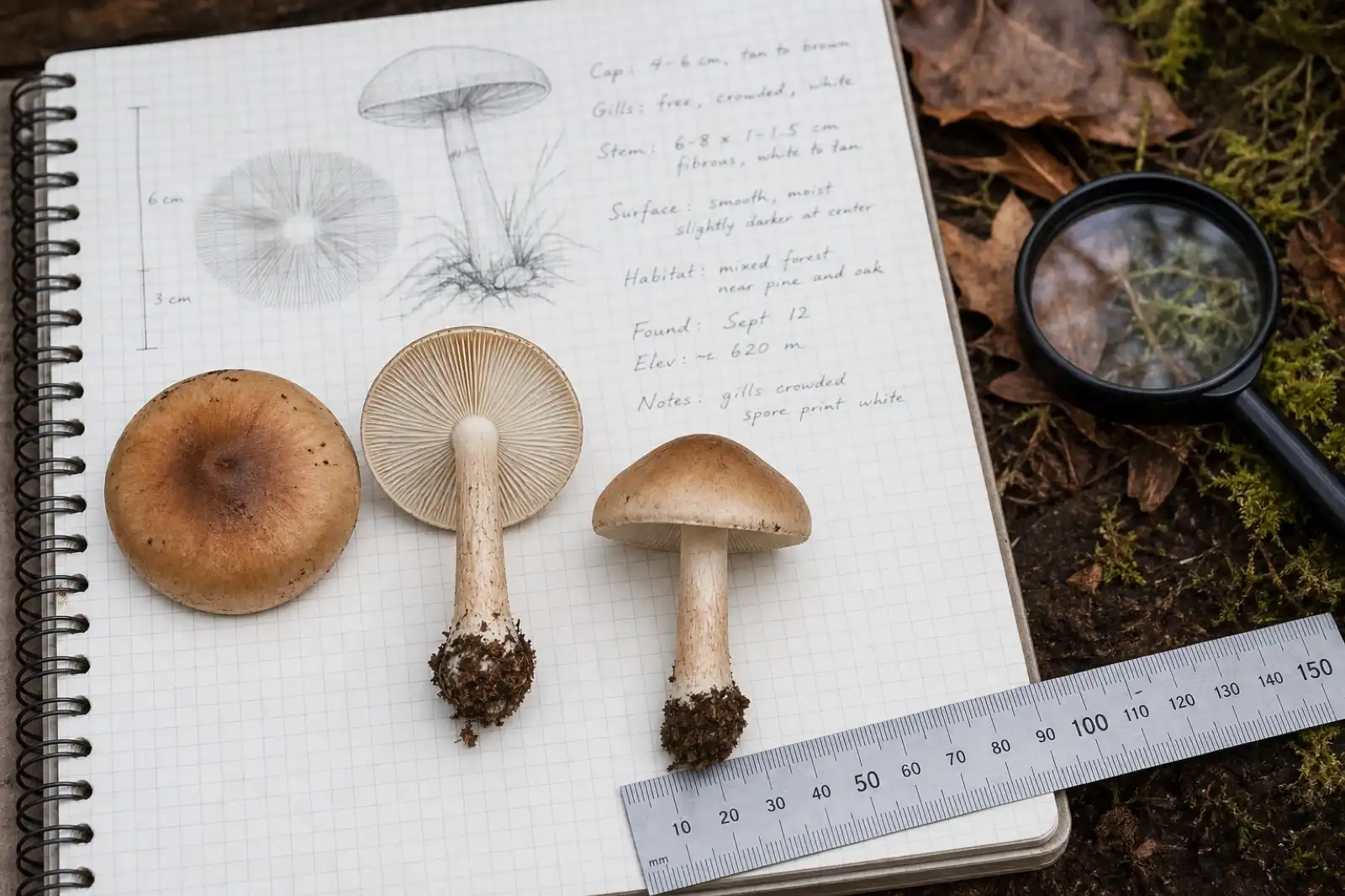
How to Identify Mushrooms: A Beginner's Field Guide
Build an identification from the whole specimen, substrate, habitat, spore deposit, and location—not from a single photograph.
identification
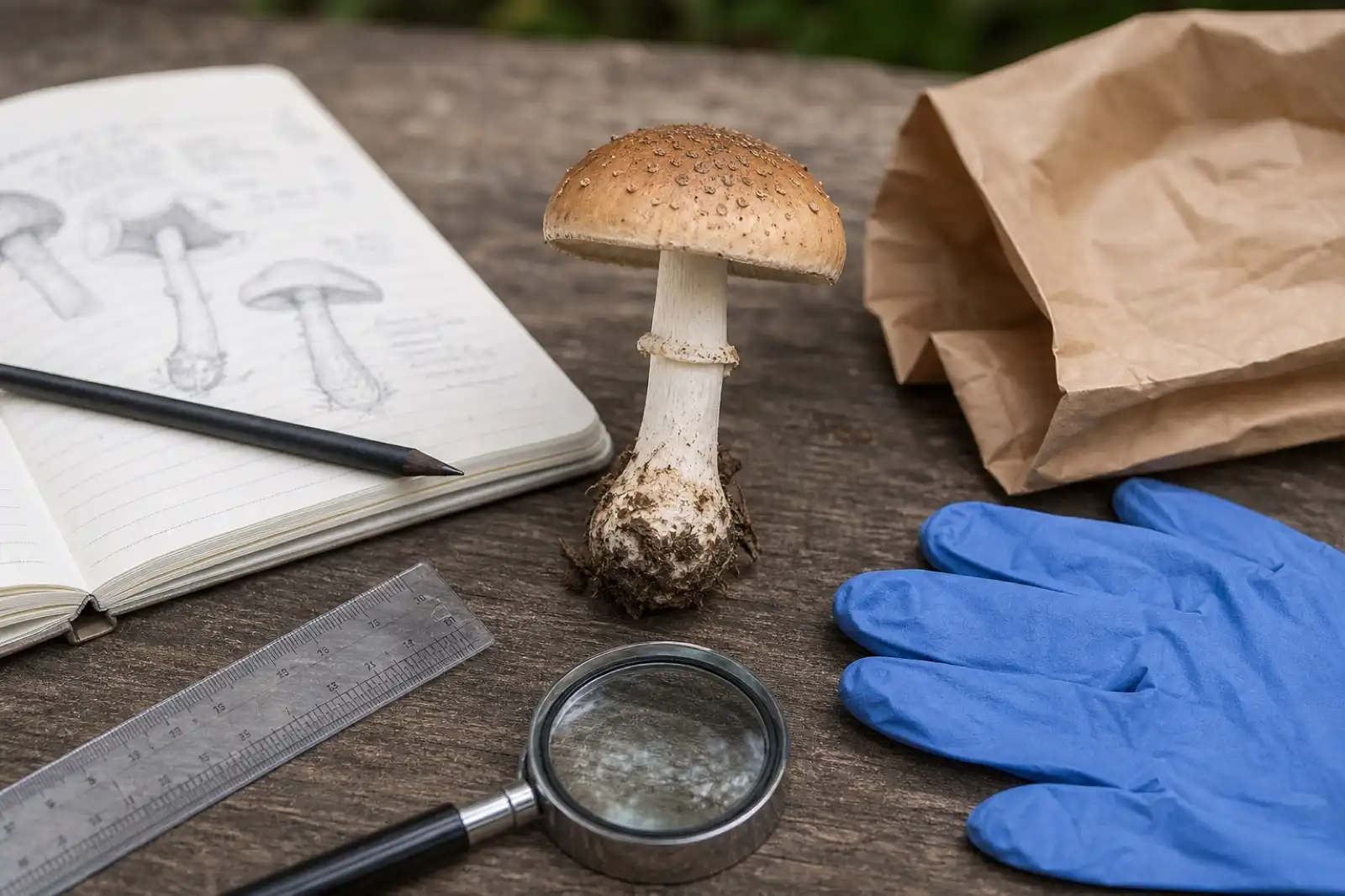
Mushroom Identification Safety Checklist
Use a conservative checklist before handling, documenting, or discussing any wild mushroom, especially when edibility is being considered.
growing
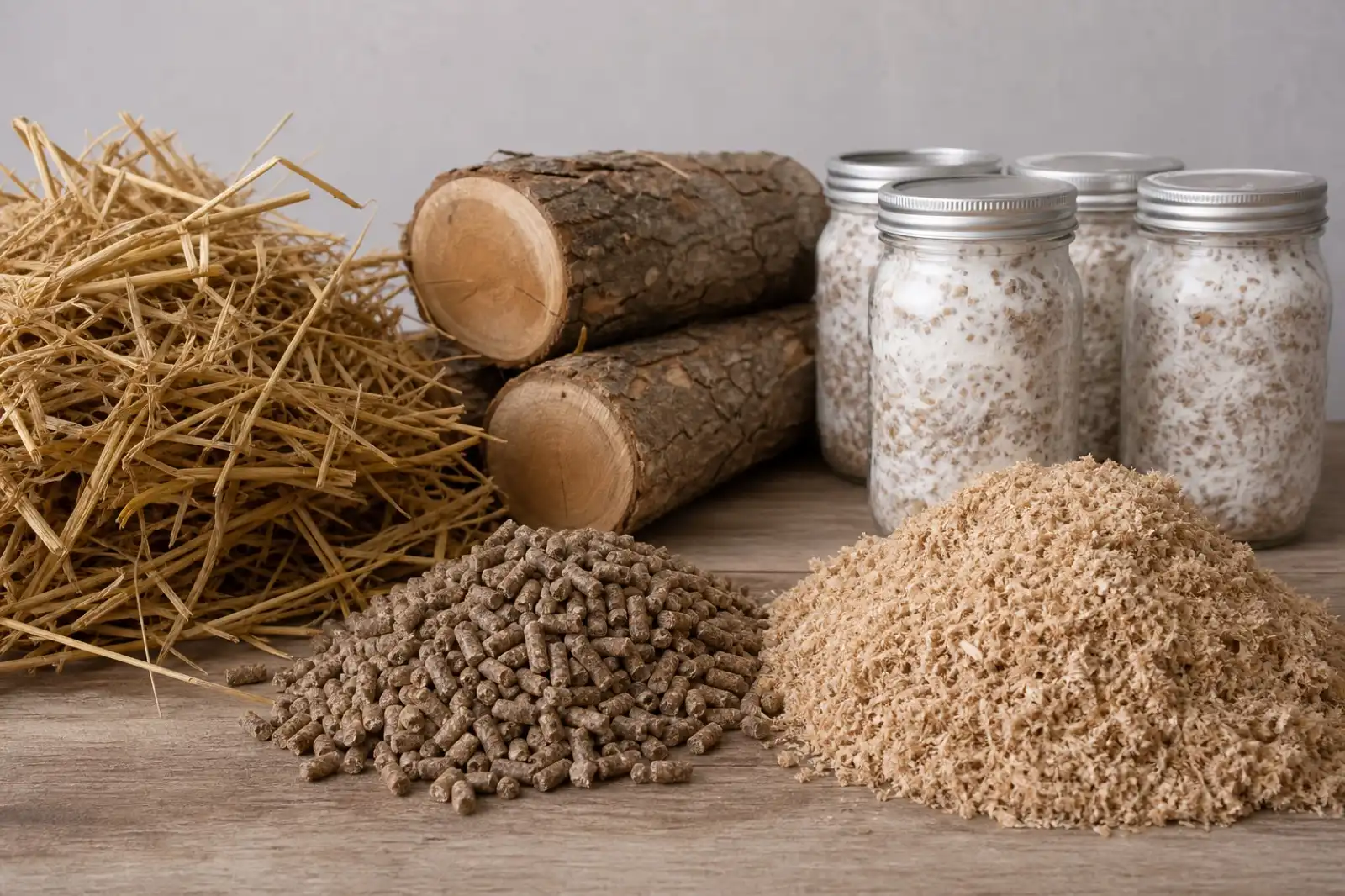
Mushroom Substrate Guide: Match Species to Method
Choose a mushroom-growing substrate by matching a labeled culture to a documented production method, site, and food-safety boundary.
Continue exploring
Browse more practical guides in Mushroom Encyclopedia or visit the mushroom encyclopedia.