Growing
How to Store Homegrown Mushrooms After Harvest
Keep homegrown culinary mushrooms cool, clean, and dry after harvest without treating a storage method as proof that food is safe.
By MushroomScope Editorial Team · · Updated
Growing method
Start with authenticated culture
Use supplier-identified spawn or blocks and record substrate, stage, temperature, humidity, and visible changes.
Open the beginner growing hub →Food safety
Discard suspect batches
Unusual colors, slime, insects, or abnormal odor should be treated as a safety concern, not a climate tweak.
Review contamination guidance →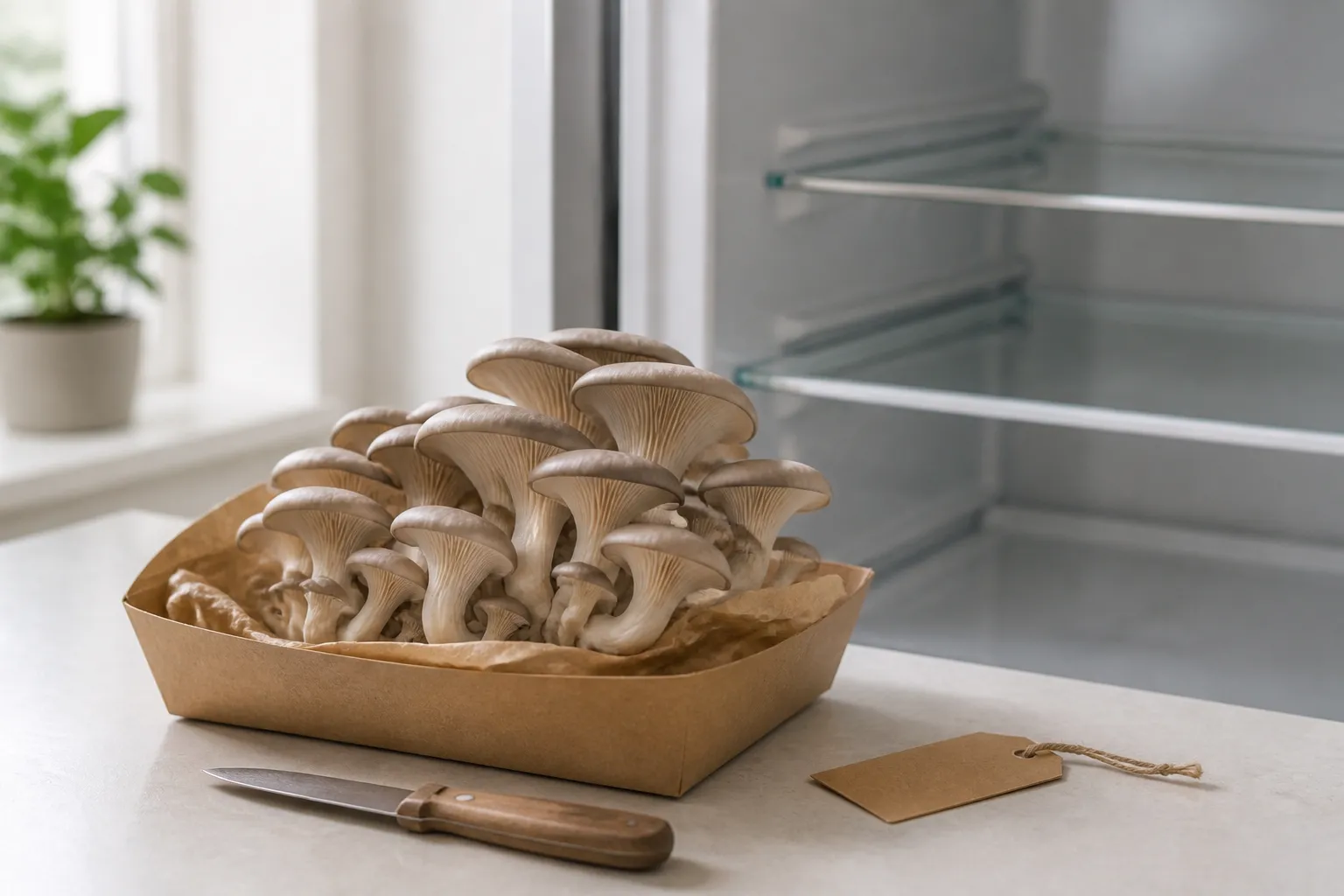
The short answer: cool, clean, dated, and not overhandled
Homegrown mushrooms are perishable produce after harvest. Put a sound crop into a clean container, label the harvest date, and refrigerate it promptly. The U.S. Food and Drug Administration (FDA) specifically lists mushrooms among the perishable produce that should be kept in a clean refrigerator at 40°F / 4°C or below.
This is a storage guide for cultivated culinary mushrooms from an authenticated culture. It does not make an unidentified wild mushroom edible, validate a homegrown crop with an uncertain history, or replace a supplier’s storage direction. If the crop looked suspect before harvest—unexpected mold, slime, leakage, pests, or a persistent foul odor—treat it as a safety problem, not a storage problem. See the contamination guide for the isolation boundary.
Start with a clean harvest boundary
Storage quality is set before the refrigerator door opens. Use clean hands, a visually clean knife or harvest tool, and a clean food-contact container. The North Carolina Department of Agriculture and Consumer Services notes that mushrooms move through harvesting, packing, storage, and transport as produce, and identifies sanitary tools, containers, refrigeration sanitation, and record keeping as part of the food-safety workflow.
That is why a freshly picked cluster should not be placed on a cutting board that just held raw chicken, or in a container with old produce debris. Keep mushrooms separate from raw meat, poultry, seafood, and the utensils used with them. If you sell mushrooms, local rules and commercial produce-safety obligations may be stricter than this home-oriented guide.
Do not use a rinse to fix dirty handling
Wash hands before and after handling food. If you decide to rinse mushrooms before cooking, use clean running water shortly before preparation—not soap, detergent, or a commercial produce wash. The FDA says washing can reduce bacteria on produce but does not eliminate it, so washing is not a way to salvage a questionable crop or a substitute for clean harvesting.
For routine storage, follow the culture supplier’s packaging instructions if supplied. The useful decision is not “paper versus plastic” as a universal rule; it is whether the container stays clean, avoids raw-food cross-contact, and does not leave the crop sitting in visible water or persistent condensation.
Refrigerate promptly and verify the temperature
Move harvested mushrooms to a clean refrigerator as soon as practical. FDA food-storage guidance says to refrigerate or freeze perishables right away and not leave foods requiring refrigeration at room temperature for more than two hours—one hour when air temperature is above 90°F / 32°C. It also advises keeping the refrigerator at or below 40°F / 4°C and checking it with an appliance thermometer.
Use those values as a safety boundary, not as a promise about exact shelf life. Species, maturity, harvest cleanliness, moisture, packaging, and refrigerator performance all affect quality. Rather than relying on a generic “good for seven days” claim, write the harvest date down and use the crop promptly according to the supplier’s direction and its actual condition.
| Check | Practical action | Why it matters |
|---|---|---|
| Refrigerator temperature | Keep a thermometer in the refrigerator and confirm it is at or below 40°F / 4°C. | A dial setting does not prove the food is cold enough. |
| Time out of refrigeration | Record the harvest time and refrigerate promptly. | Time and temperature together matter; a calendar date alone cannot show safe handling. |
| Container | Use a clean, food-safe container and follow supplier-specific packaging advice. | A container should protect the crop without transferring residue or trapping standing water. |
| Placement | Keep mushrooms away from raw animal foods and their drips. | Separation limits cross-contact with pathogens from other foods. |
| Before cooking | Check the dated record and the crop’s condition; discard if suspect. | Neither a clean-looking cap nor a normal smell can prove food safety. |
Move from harvest to refrigeration as one workflow
Prepare the clean container, date label, and refrigerator space before cutting or twisting the cluster. This prevents a harvested crop from sitting warm while the grower searches for packaging or rearranges raw foods. If several blocks are ready, harvest and label one batch at a time so culture, block, date, and condition remain traceable.
Remove obvious loose substrate with a clean method appropriate to the cultivated species, but do not turn sorting into prolonged room-temperature handling. Separate damaged or questionable material immediately. A clean-looking portion should not be mixed with mushrooms from a block already classified as suspect, and one old batch should not be topped up with a fresh harvest under the older label.
Place the container where cold air can circulate and where liquids from raw animal foods cannot drip onto it. Do not crowd the refrigerator so tightly that its measured temperature becomes uneven. Check the appliance thermometer at the location recommended by its manufacturer and record unusual readings, door failures, or power interruptions with the batch.
Transport time belongs in the same record. If mushrooms must travel before refrigeration, use a clean food-safe system appropriate for perishables and document the time away from controlled cooling. A cool-feeling vehicle, shaded bag, or outdoor winter temperature is not a verified refrigerator.
Choose packaging by what it does in your refrigerator
Packaging should protect mushrooms from dirty surfaces and cross-contact while avoiding visible standing water and excessive crushing. A shallow paper tray, paper bag, vented food-safe container, or supplier-recommended package can behave differently depending on species, refrigerator airflow, fill depth, and initial moisture. There is no single container that corrects unsafe harvest handling or warm storage.
Do not tightly compress delicate clusters to save shelf space. Crowding can bruise caps, trap moisture between surfaces, and make condition harder to inspect. Use a clean liner only if it is intended for food contact, and replace it when it becomes saturated or dirty rather than layering a fresh sheet over residue.
If using a reusable container, wash and sanitize it according to its material and current food-safety guidance, then allow it to reach a clean, usable condition before adding the harvest. A container that still smells of chemicals, old food, compost, or prior spoilage should not be used. Never reuse a grow bag, substrate tub, chemical bucket, or unknown packaging as a harvest container merely because it is available.
Label the outside without allowing ink, adhesive, or an unclean marker to contact the food. Include harvest date and time, culture or block identifier, and preservation action. If mushrooms are cooked or frozen later, add that date rather than replacing the original harvest information.
Handle moisture without creating a false sense of safety
Fresh mushrooms can lose quality when they are bruised, held warm, or kept wet. Do not soak harvested mushrooms, leave them in puddled water, or let a reusable container remain visibly dirty. The mushroom produce-safety fact sheet warns that humid mushroom environments can support pathogens and calls for preventing standing water and condensation as well as cleaning harvest utensils, shelves, and reusable packing containers.
If condensation appears, do not conclude that the food is unsafe solely from a wet surface; instead, check the storage history, clean or replace the container if appropriate, and follow the supplier’s direction. If the crop is slimy, leaking, moldy, or persistently off-smelling, discard it rather than trying to dry it out or cut away a visible area.
Distinguish expected surface moisture from an unknown history only as a quality observation, not a safety verdict. Check whether the mushrooms entered storage wet, whether the container changed, whether the refrigerator remained within its target, and whether another food leaked nearby. Record the decision and avoid repeatedly opening and warming the package simply to watch it.
Do not put warm cooked mushrooms into the same container as the remaining raw harvest. Prepared leftovers follow their own cooling and storage guidance, with ingredients and cooking time added to the record. Likewise, a marinade, sauce, or layer of oil does not make questionable raw mushrooms safe or extend an undocumented storage history.
Freeze only a sound, promptly handled crop
Freezing is for a crop that was handled safely first—not for resetting the clock on food left warm or showing spoilage. FDA guidance states that freezing stops bacterial growth but does not kill most bacteria, and quality can decline over time. Prepare and freeze mushrooms using a reliable, species-appropriate cooking or preservation method; then label the package with the date and method.
If a refrigerator has lost power, keep the door closed as much as possible and use a thermometer or the applicable food-safety guidance to decide what to keep. Do not use smell or appearance as the deciding test. When the handling history is uncertain, the safer choice is to discard the food.
Freeze in clean food-safe portions sized for one use, remove only the amount needed, and follow the selected preservation method for the cultivated species. Write both harvest and freezing dates on the package. Avoid thawing and refreezing as a routine storage strategy; follow authoritative food-safety guidance when a package has partly thawed or warmed.
Freezer burn and texture loss are quality problems, whereas unsafe pre-freezing handling is a safety problem. Freezing cannot reverse the latter. Discard a package with unknown identity, a failed seal plus uncertain exposure, or a history that no longer supports a safe decision.
Use a conservative keep-or-discard decision
Begin with the record: authenticated cultivated culture, sound block at harvest, clean tools and container, prompt cooling, verified refrigerator conditions, and known dates. Then inspect the actual mushrooms before preparation. A complete favorable record supports using an apparently sound crop; it does not guarantee that hazards are absent.
Discard when the batch came from a suspect grow, crossed an unsafe time-temperature boundary, contacted raw-food drips or an unclean container, or developed mold, slime, leakage, or a persistent off odor. Do not taste, rinse, cook, dry, freeze, or trim it to settle uncertainty. When illness occurs after eating mushrooms, obtain appropriate medical or poison-control advice and retain relevant labels or leftovers only if safe to do so.
When two batches with different histories were accidentally mixed, use the less certain history for the combined food rather than assuming the sound batch cancels the questionable one. For a household member with an allergy or prior reaction, storage quality does not remove individual risk; seek medical guidance appropriate to that person.
A simple after-harvest record
One short label prevents a lot of guesswork. Record the culture or product label, harvest date and time, refrigerator temperature check, container change if any, and whether the crop was frozen or cooked. This is especially useful after an unusually warm harvest day or a power interruption.
The record also keeps storage separate from cultivation troubleshooting. If the crop formed poorly, revisit mushroom-growing troubleshooting and the harvest guide with the supplier’s strain-specific information. Do not change a culture’s fruiting settings based on a refrigerator-storage issue.
References
Source quality notes
MushroomScope cites sources that match the page scope, such as taxonomic databases, extension guidance, food-safety agencies, food-composition databases, and peer-reviewed or institutional health references. Sources support context and uncertainty; they do not turn an online page into specimen identification, medical advice, or a tested recipe record.
Frequently asked questions
Should I wash homegrown mushrooms before refrigerating them?
Do not use washing as a substitute for clean harvesting and handling. If mushrooms need washing before preparation, use clean running water shortly before cooking, then keep the produce and utensils away from raw meat and unclean surfaces.
Can I store mushrooms at room temperature after harvest?
Do not leave perishable harvested mushrooms at room temperature while you decide what to do with them. Refrigerate or freeze perishables promptly; the FDA's two-hour rule is shorter when the air is above 90°F / 32°C.
Can I cut off mold or a soft patch and keep the rest?
No. A suspicious, moldy, leaking, slimy, or foul-smelling homegrown crop is a discard-and-isolate situation, not a trimming decision. Appearance and odor cannot reliably rule out foodborne hazards.
Related guides
growing
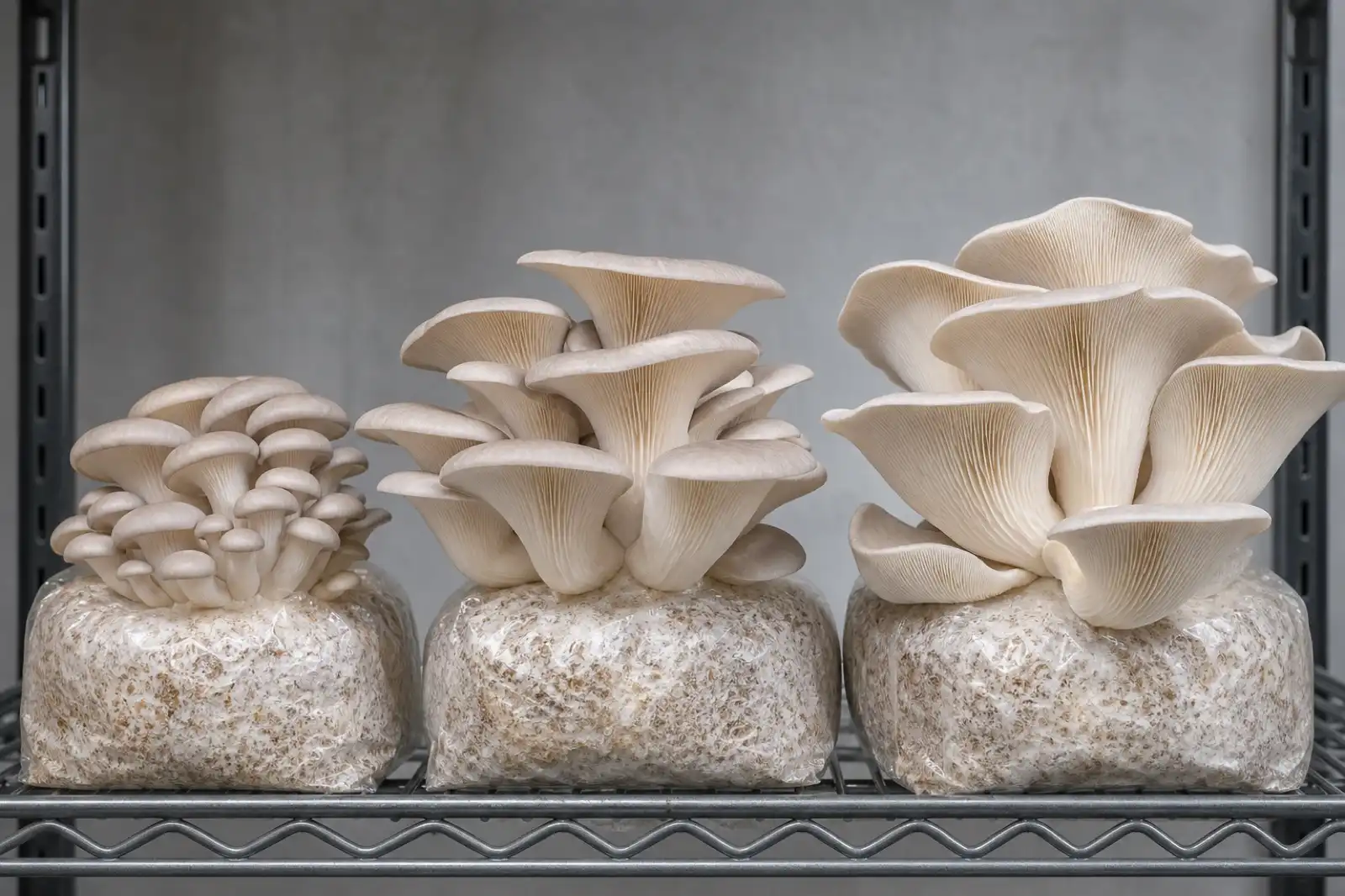
When to Harvest Cultivated Mushrooms
Learn when to harvest cultivated oyster, lion's mane, shiitake, and other mushrooms using species-specific maturity cues, clean handling, and prompt cooling.
growing
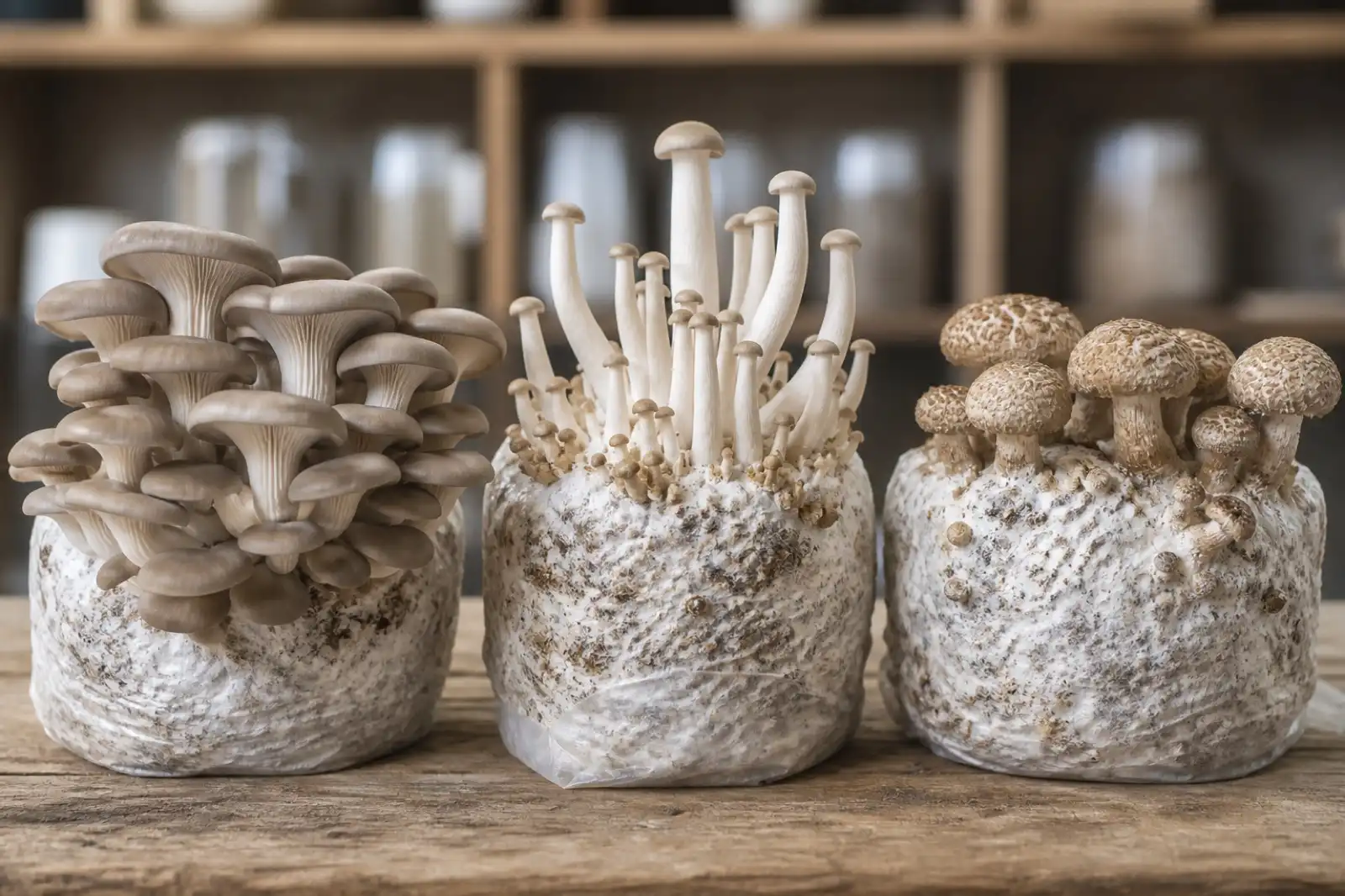
Mushroom Growing Troubleshooting: A One-Variable Logbook Method
Troubleshoot a home mushroom grow by separating contamination, moisture, fresh-air, temperature, and harvest-handling observations.
growing
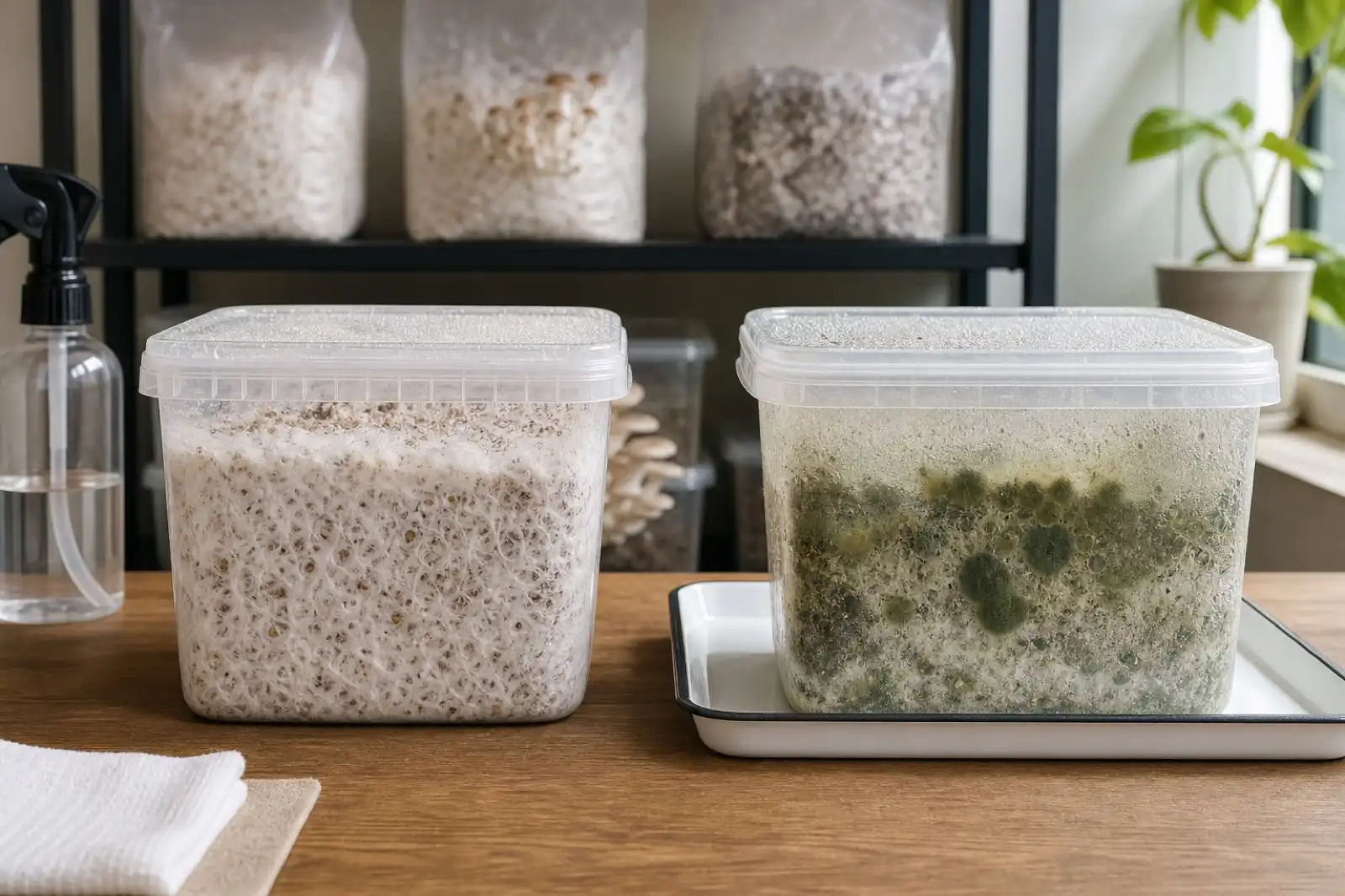
Mushroom Contamination: Isolate, Record, and Prevent Repeat Problems
Recognize mushroom contamination without relying on color alone; isolate suspect batches, avoid food salvage, document the workflow, and prevent repeat issues.
Continue exploring
Browse more practical guides in Growing or visit the mushroom encyclopedia.