Growing
When to Harvest Cultivated Mushrooms
Learn when to harvest cultivated oyster, lion's mane, shiitake, and other mushrooms using species-specific maturity cues, clean handling, and prompt cooling.
By MushroomScope Editorial Team · · Updated
Growing method
Start with authenticated culture
Use supplier-identified spawn or blocks and record substrate, stage, temperature, humidity, and visible changes.
Open the beginner growing hub →Food safety
Discard suspect batches
Unusual colors, slime, insects, or abnormal odor should be treated as a safety concern, not a climate tweak.
Review contamination guidance →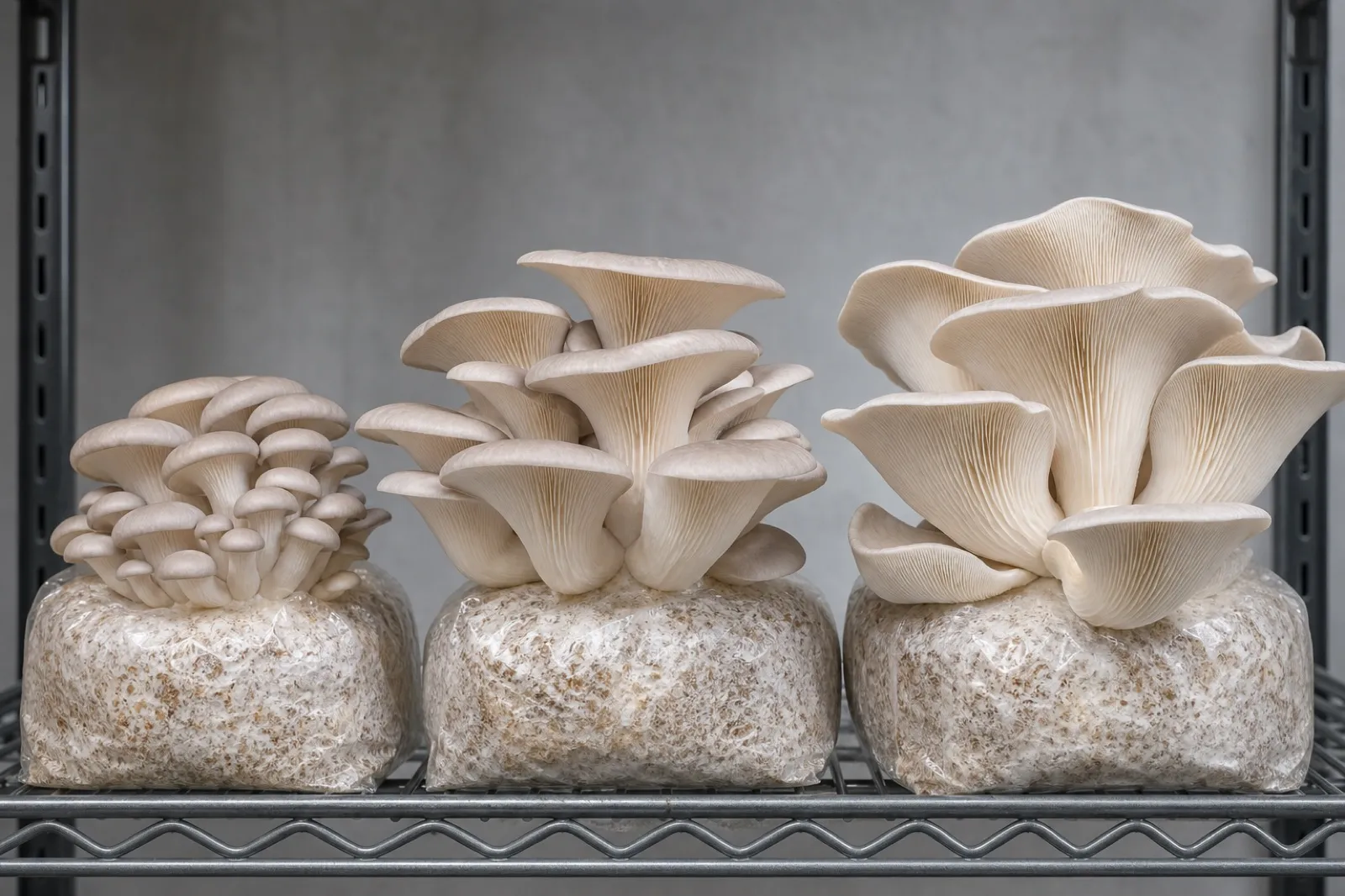
Why harvest timing cannot be reduced to a calendar date
Harvest timing depends on species and intended use; prioritize supplier guidance, clean handling, and prompt cooling. This guide covers a conservative home workflow for oyster mushrooms, shiitake, lion’s mane using colonized fruiting substrate. Exact parameters depend on the strain and supplier; universal temperature or humidity numbers can be misleading.
For harvest training, a reputable ready-to-fruit block provides a known culture and supplier maturity cues. Retain the label and photograph the same cluster daily as its cap margin, teeth or veil changes. That sequence is more useful than comparing the crop with an unrelated internet image.
Harvest is a quality decision rather than a single calendar date. Species, strain, block size, temperature, fresh-air exchange, and intended market all change the useful window. A supplier may describe a typical number of days, but the fruit bodies in front of you are the stronger cue. Record both the predicted window and the observed morphology so the next flush can be planned from the actual culture rather than from a generic internet schedule.
This page concerns authenticated cultivated mushrooms. It does not provide a method for deciding whether a wild mushroom is edible. Never transfer a “harvest-ready” appearance from a grow-kit photograph to an outdoor specimen; unrelated species can share color, cap shape, or clustered growth.
Materials and preparation
Prepare the harvest station for the crop actually being removed: a tray that supports a wide oyster cluster, a clean knife for lion’s mane, or shallow containers that do not crush shiitake caps. Keep the block identifier with the tray so fruit from an isolated or questionable batch cannot be mixed into a sound lot.
Before the expected harvest window, prepare a clean food-safe tray, clean hands or gloves appropriate to the workflow, a clean knife if the supplier recommends cutting, labels, and breathable or otherwise appropriate produce packaging. Make refrigerator space in advance. Trying to locate containers while mature mushrooms sit warm encourages bruising and delayed cooling.
Clean the working area without spraying household chemicals toward exposed fruit bodies. If a chemical is used on a nearby surface, follow its label, observe required contact time, and prevent residue from touching the crop. A visibly dirty knife should not be made “clean” by a quick wipe; wash and sanitize equipment using a documented food-handling procedure.
Create a repeatable harvest record
At minimum, record the culture supplier and strain, batch identifier, substrate, fruiting start date, harvest date and time, approximate weight, and any unusual odor, insects, discoloration, or texture. Photographs from the same angle and distance help compare cap expansion or spine development. Include a ruler or scale beside—not pressed into—the crop when size matters.
Environmental readings are useful only when their location and instrument are known. A humidity sensor outside the fruiting chamber does not describe conditions at the block. Note where the sensor was placed, whether it was recently checked, and any deliberate changes to air exchange, misting, or temperature.
Read maturity cues by cultivated species
No single sign applies to every cultivated mushroom. Use the authenticated culture label first, then compare several visible and tactile cues. Color alone is weak because lighting, hydration, strain, and camera processing change its appearance.
Oyster mushrooms: watch the cluster edge
Oyster mushrooms are usually harvested as a cluster while caps are well formed but edges remain slightly rolled or only beginning to flatten. Waiting until the margins turn strongly upward often produces a more fragile cluster and heavier spore release. Cap size alone is unreliable: crowded clusters can make many small caps, while a well-positioned cluster may make fewer large ones.
Inspect the entire attachment point. A cluster can have mature outer caps and small inner mushrooms that will not develop well once the cluster is removed. Follow the supplier’s recommendation on whether to harvest together. Excessively long stems and small caps more often indicate inadequate fresh-air exchange than “not ready”; correct the environment for the next flush rather than holding an already mature cluster indefinitely.
Lion’s mane: assess tooth length, density, and color together
Young lion’s mane begins as compact white tissue. As it matures, distinct hanging teeth lengthen and the mass becomes less tightly packed. Many growers harvest while the teeth are clearly developed and the fruit remains white to cream and firm, before extensive yellowing, drying, or softness. Exact tooth length varies by strain and conditions, so the block supplier’s photographs and instructions take priority over a universal measurement.
Pinkish tones can occur during development or from environmental stress, while yellowing can accompany age or drying; neither color by itself establishes safety. Unexpected slime, foul odor, spreading non-mushroom growth, or tissue breakdown calls for isolation and supplier advice, not a taste test.
Shiitake: look at cap expansion and tissue condition
Shiitake harvest timing is commonly judged by how far the cap has opened, the condition of the margin, and the firmness of the fruit body. A partly unrolled margin is often preferred for texture and shelf life, whereas fully flattened caps may be suitable for immediate use but can be more delicate. Strain and market preference matter, and a block may produce mushrooms of different sizes at the same stage.
Do not confuse cracked decorative surface patterns with spoilage; some shiitake develop patterned caps under certain conditions. Evaluate odor, firmness, underside condition, and the health of the block as a whole. Use the shiitake log guide when working with authenticated outdoor logs, where weather and fruiting cadence differ from indoor blocks.
Cornell’s log-production guidance makes the maturity test more reproducible: gills should be visible and the outer cap edge slightly curled under, rather than tightly closed or already flat. It reports a typical 7–10 days from shocking to harvest for log-grown shiitake, with colder conditions slowing development. That interval belongs to the documented log system; it should not be copied to an indoor block of another strain. Record the shock date, daily cap-margin stage, air temperature, and harvest date so the timing becomes a batch observation instead of a universal promise.
Turn maturity into a measured batch decision
A photograph labeled “ready” is useful only when its viewpoint, scale, and culture are known. Build a short maturity series for each authenticated strain. Photograph the same cluster at a fixed distance at least once per day as it approaches harvest, and record the traits that actually changed: cap-edge position for oysters and shiitake, tooth development and color for lion’s mane, attachment firmness, surface moisture, and visible defects. Keep environmental readings beside the observation rather than treating them as substitutes for morphology.
For lion’s mane, Cornell’s post-harvest guide gives a practical production reference: teeth about 1 cm long and hanging downward. Treat that as a documented commercial cue, not a taxonomic rule or an exact threshold for every strain. A dense, white, firm fruit with downward teeth may be at a useful quality stage; yellowing, drying, softening, or branchy growth still needs to be interpreted alongside the supplier’s strain guidance and the recorded fruiting environment.
For oyster mushrooms, track the proportion of the cluster whose cap margins remain rolled, have just flattened, or have turned upward. The cluster can pass its best handling window while a few inner pins remain small. For shiitake, record gill visibility and the margin as tightly curled, slightly curled, level, or upturned. These ordinal stages are more repeatable than “small,” “medium,” and “large,” and they let a grower compare shelf quality and yield without pretending that size alone measures maturity.
Separate three decisions in the record:
- Maturity: Does the authenticated crop match the intended stage for immediate cooking, short storage, sale, or drying?
- Quality: Is it firm, clean, acceptably shaped, and free of excessive drying, bruising, insects, or mechanical damage?
- Safety: Is the culture provenance intact, the block free from unexplained growth or odor, and the handling history acceptable?
A crop can be mature but poor in quality, or visually attractive but unsafe because its identity or handling record is broken. Harvest timing cannot repair a failed safety decision. Keeping the three judgments separate also prevents a flat shiitake cap or upturned oyster margin from being mislabeled “contamination” when it may simply be beyond the preferred market stage.
Decide whether to harvest, wait, or isolate
Use a three-way decision rather than assuming every visible fruit should be eaten.
- Harvest: the fruit matches multiple supplier maturity cues, feels sound, smells normally mushroom-like, and comes from a healthy authenticated block.
- Wait and recheck: the fruit is still developing, the block appears healthy, and waiting remains within the supplier’s expected window. Take a time-stamped photograph and reassess rather than repeatedly touching it.
- Isolate and investigate: there is unexpected colored growth, slime, foul or chemical odor, insect damage beyond the planned threshold, or rapidly collapsing tissue. Move it away from other cultures without shaking spores through the growing area.
Environmental defects do not automatically make a crop unsafe, but they can overlap with contamination. A dry edge, elongated stem, or small cap should prompt a review of fruiting conditions. A foul odor or spreading mold requires a different response. The contamination guide explains conservative stop conditions.
Record the decision at cluster level
Assign each harvest a block ID, flush number and cluster position. For oysters, record the dominant cap-margin stage and whether the cluster was removed intact. For lion’s mane, record tooth development, color and firmness. For shiitake, record gill exposure, cap-margin position and stem firmness. These fields explain quality variation more directly than a generic statement that the room was “ready.”
Remove the crop without damaging the block
Follow the supplier’s recommended technique. For an oyster cluster, support the base and use a controlled twist or a clean cut so the cluster comes away without tearing a deep cavity. For lion’s mane, a clean knife may produce a neater removal than pulling. For individual shiitake, grasp or cut according to the production method and avoid crushing adjacent immature fruit bodies.
Trim substrate debris over a waste tray, not over clean packaged mushrooms. Do not rinse the block or dig into it to chase small fragments. Damaged substrate exposes nutrient-rich material and may make the next flush less predictable. After harvest, remove only clearly dead remnants using the supplier’s procedure and return the block to its documented rest or rehydration cycle.
Weigh the untrimmed and sale- or kitchen-ready crop separately if yield tracking matters. This distinguishes biological production from trimming loss. Note whether the cluster was unusually wet, dry, dense, or fragile; those observations are more useful for the next cycle than a weight without context.
Fruiting and troubleshooting
Interpret defects against the crop’s location and maturity record. Long oyster stems on the sheltered side of a rack, cracked shiitake caps nearest a dry inlet, or yellow lion’s mane at the oldest positions suggest different corrective trials. A suspect odor, slime or unexplained growth is a stop-and-isolate event rather than a reason to extend the harvest window.
If caps flatten sooner than expected
Rapid opening may reflect a warm environment, the strain’s normal pattern, or a missed observation interval. Harvest sound mature fruit, document the conditions, and check the chamber more frequently during the next flush. Do not compensate by sharply changing several controls at once; a dramatic humidity or ventilation swing can introduce new problems.
If the crop dries or cracks before maturity
Review surface moisture, air movement, temperature, and sensor placement. Misting the fruit body heavily is not a universal solution and can leave standing water. Correct the chamber according to the culture supplier’s system, remove pooled water, and make one measured change. Severely dried tissue may not recover its intended texture even if humidity rises.
If mushrooms release many spores
Heavy spore deposition usually means a spore-producing species was allowed to mature well into its release window. Harvest, clean the space with appropriate respiratory and surface precautions, and shorten the observation interval next time. People with respiratory conditions should avoid concentrated spores and seek individual medical guidance if symptoms occur. Fresh-air exchange should move air safely, not distribute spores through occupied rooms.
If only part of a cluster looks abnormal
Do not casually cut away an unexplained slimy, moldy, or foul-smelling section and serve the rest. Isolate the cluster and block, photograph the issue, and consult the supplier. Physical bruising on a known crop is different from unknown growth, but when the cause cannot be distinguished confidently, discard rather than attempt food salvage.
Harvest and storage
Harvest timing is species-specific. Use the culture supplier’s maturity cues, avoid soaking fruit bodies, and cool the crop promptly in clean food-safe packaging. Follow local produce guidance and recall notices. The growing library provides related workflows, while the species encyclopedia explains biology and identification limits.
Brush away clean loose substrate or trim the base with a clean tool. A brief rinse may be appropriate immediately before cooking, but soaking mushrooms before storage adds surface water and accelerates quality loss. Package loosely enough to avoid crushing and use a food-safe system that manages condensation. Sealing warm mushrooms tightly traps moisture; cool them promptly according to applicable produce-safety guidance.
Separate batches and label each package so a later quality problem can be traced. Do not mix a questionable cluster into sound harvested mushrooms. Keep produce away from raw meat, poultry, seafood, dirty tools, and chemical storage. The refrigerator should remain at or below 40°F (4°C), but local regulations and commercial requirements may be more specific.
Plan the second flush after the first harvest
A block often needs a rest or rehydration step before another flush, but the method is species- and product-specific. Follow the supplier rather than automatically soaking every block. Record the resting period, any rehydration, the new pin date, and second-flush yield. A declining yield can be normal; repeated foul odor, competitor growth, insect infestation, or structural breakdown is a reason to retire the block.
Keep spent substrate out of production areas while deciding how to dispose of it. Outdoor composting may be appropriate where local rules allow, but a contaminated block should not be broken apart near active crops or used to establish an uncontrolled food patch. Clean the fruiting area before introducing a new batch.
Build a harvest checklist for the next batch
Before picking, confirm the culture identity, maturity cues, block health, clean tools, clean tray, and available cold storage. During picking, avoid crushing, separate questionable material, and record weight and observations. After picking, trim cleanly, package, cool, label, clean the space, and schedule the next inspection or supplier-directed rest.
A checklist should improve consistency without pretending that all strains behave identically. Revise it when the supplier changes, a new species is introduced, or records reveal a repeated issue. Compare one variable at a time—such as observation frequency or airflow—rather than treating a single successful flush as proof that every parameter was optimal.
Measure the cooling delay, not only the picking time
The useful post-harvest clock begins when tissue is detached, not when it reaches the refrigerator. Record harvest completion, trimming completion, packaging and the time the package enters validated cold storage. A large warm cluster packed tightly can retain heat; a refrigerator air display does not show how quickly the center of that package cooled. Commercial operations should validate their own process under applicable food-safety rules, while home growers can at least avoid leaving harvested mushrooms on a warm counter during cleanup.
Compare packaging only within a matched crop. Note package type, fill mass, condensation, bruising, odor and usable mass after a fixed interval. Perforation or breathable packaging can manage moisture differently from a sealed warm container, but the correct system depends on temperature control, product and intended storage time. Do not infer safety from appearance alone, and discard mushrooms with spoilage signs according to local guidance.
Compare flushes without confusing mass and quality
A second flush may differ in cluster count, individual size, maturity synchrony and trimming loss. Record gross harvested mass, clean usable mass and days from rehydration or rest to first harvest. Dividing usable mass by block or dry-substrate basis answers a different question from reporting the single largest cluster. Keep these denominators visible when deciding whether waiting for another flush is worthwhile.
Also record what ended the observation: the planned number of flushes, declining quality, contamination, pests, block breakdown or a supplier-defined limit. A late cluster should not be served merely to improve cumulative yield. The biological-efficiency guide explains yield denominators; this page keeps the maturity and handling decision separate from production accounting.
References
Source quality notes
MushroomScope cites sources that match the page scope, such as taxonomic databases, extension guidance, food-safety agencies, food-composition databases, and peer-reviewed or institutional health references. Sources support context and uncertainty; they do not turn an online page into specimen identification, medical advice, or a tested recipe record.
Frequently asked questions
Is when to harvest cultivated mushrooms suitable for beginners?
This guide rates the method easy. A reputable ready-to-fruit block is simpler than preparing sterile cultures or supplemented substrate.
What should I do with unusual mold or odor?
Isolate the material, stop handling it near other cultures, and do not eat from it. Follow supplier or local disposal guidance.
Can I clone a wild mushroom for food production?
Beginners should use authenticated commercial spawn. A wild specimen may be misidentified or carry organisms unsuitable for a food-growing workflow.
What is the best time of day to harvest cultivated mushrooms?
Time of day matters less than maturity, cleanliness, and prompt cooling. Harvest when you can inspect the crop carefully, use clean tools, and refrigerate it without delay.
Should I harvest an entire cluster or individual mushrooms?
Follow the culture supplier's guidance. Oyster clusters are commonly removed together, while some other cultivated species can be picked individually. Avoid leaving damaged tissue that becomes a contamination site.
Related guides
growing
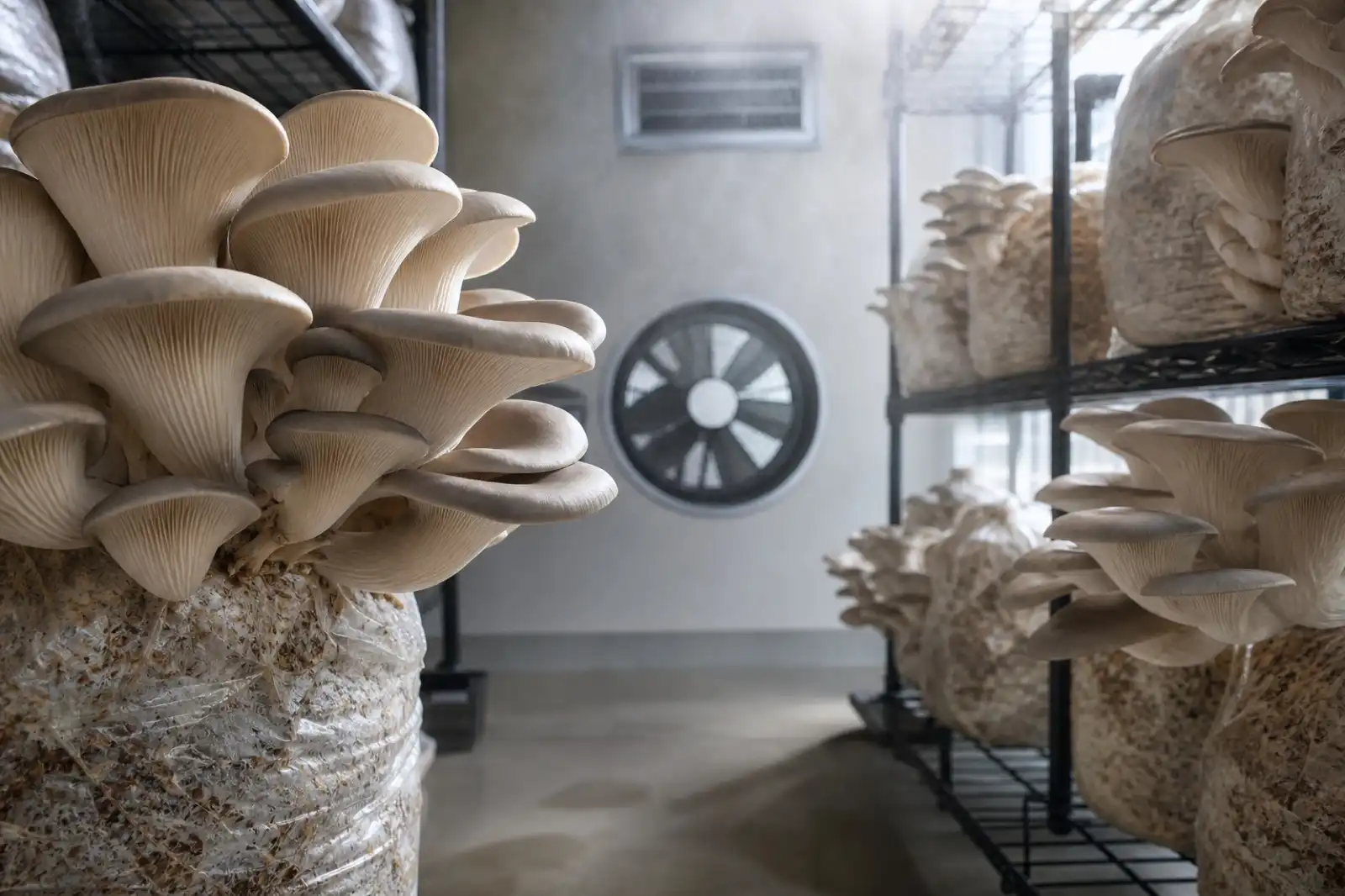
Mushroom Fruiting Conditions: Humidity, Air, Light, and Temperature
Use humidity, fresh air, light, and temperature as a linked observation system for authenticated cultivated mushroom blocks—not a universal settings chart.
growing
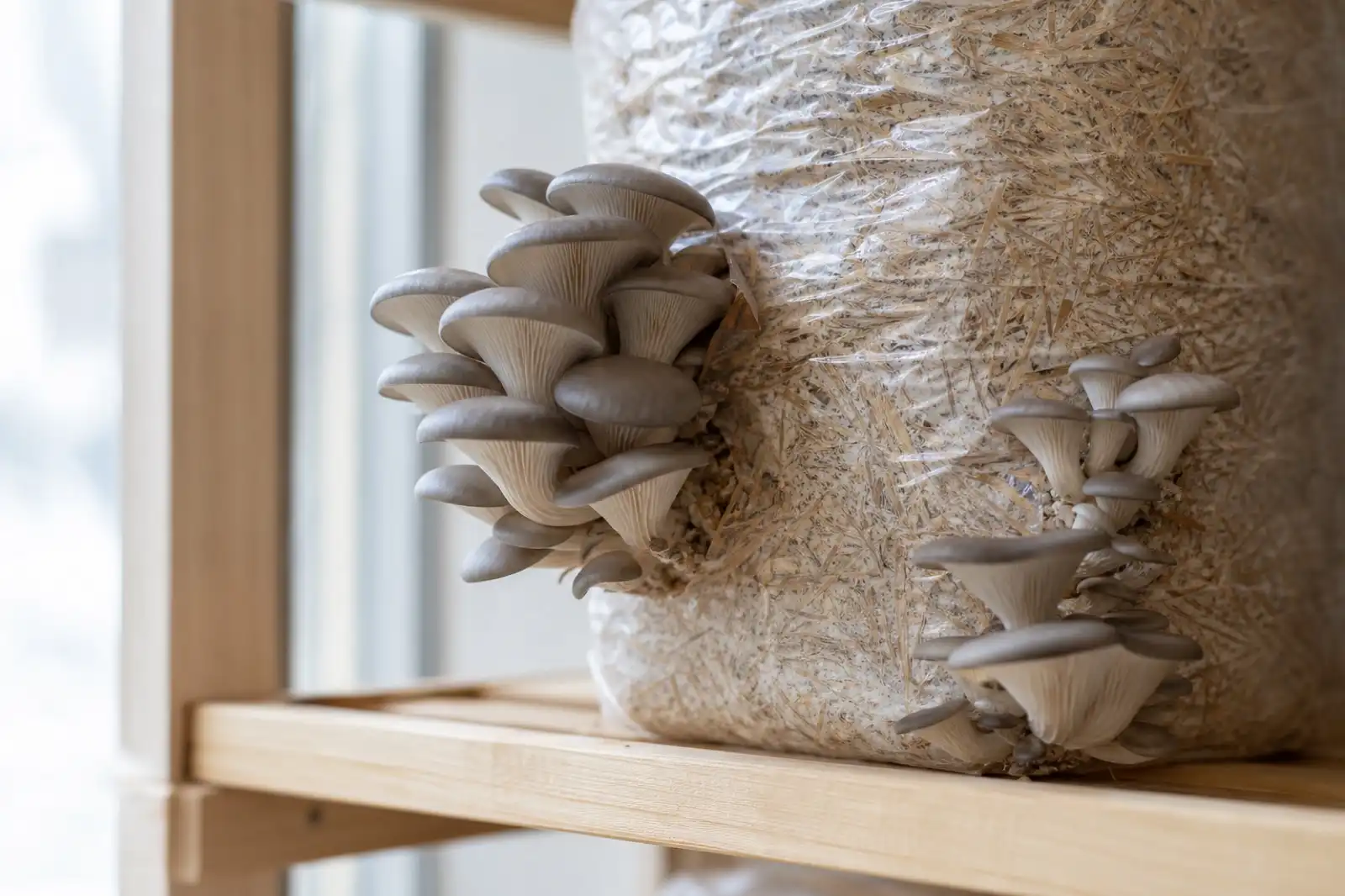
How to Grow Oyster Mushrooms at Home
Grow oyster mushrooms at home with a supplier-provided fruiting block: set up a clean observation routine, follow the culture label, and handle harvests safely.
growing
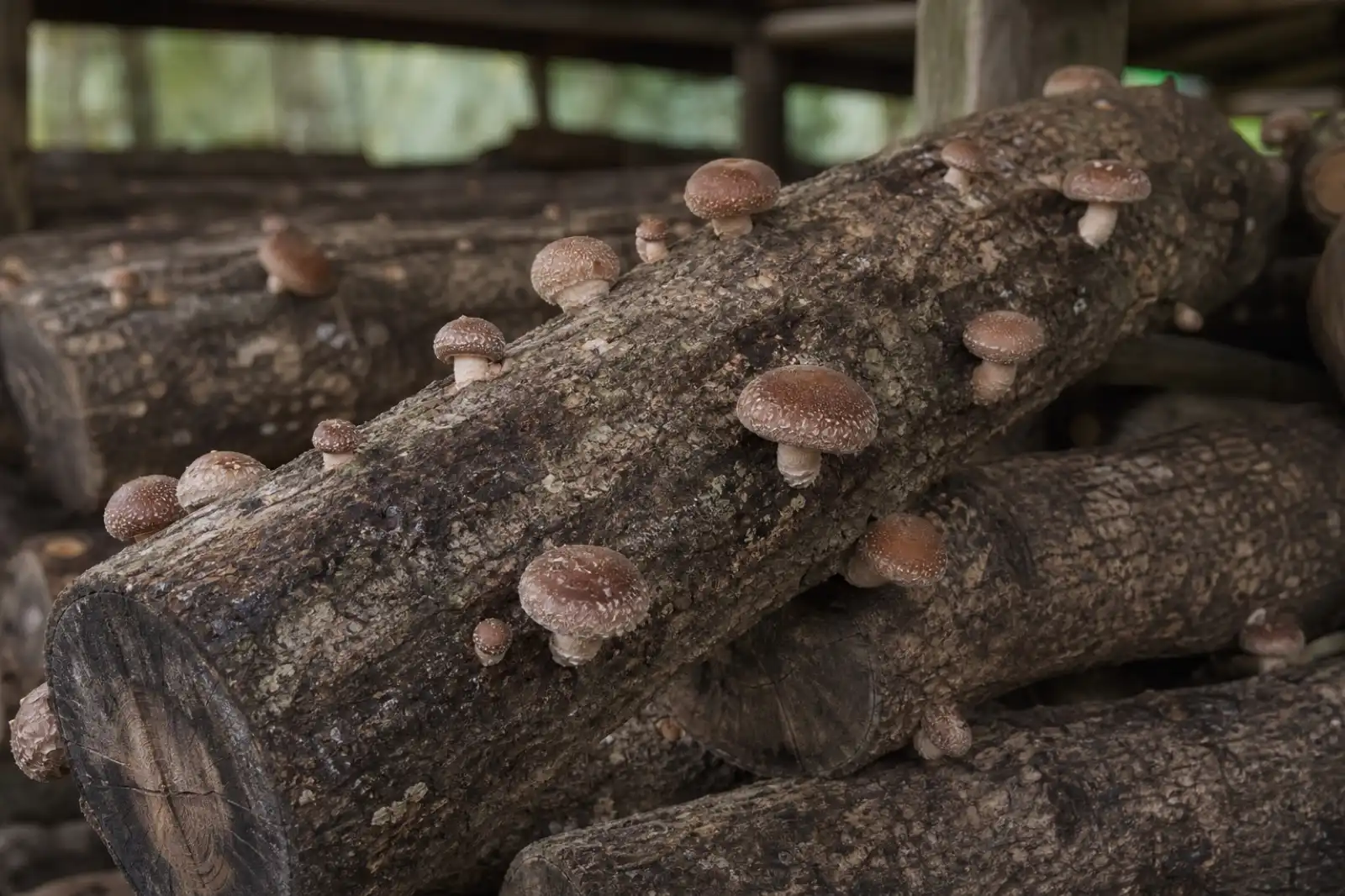
How to Grow Shiitake Mushrooms on Logs
Log cultivation is slow but durable: use suitable fresh hardwood, authenticated shiitake spawn, correct inoculation, and patient incubation.
Continue exploring
Browse more practical guides in Growing or visit the mushroom encyclopedia.