Health
Oyster Mushroom Nutrition: Protein, Fiber, and Cooking
Compare oyster mushroom protein, fiber, calories, micronutrients, serving sizes, and cooking changes without confusing food with extracts.
By MushroomScope Editorial Team · · Updated · Editorially reviewed
Evidence context
Food, extracts, and supplements differ
Health conclusions depend on species, fungal part, preparation, dose, population, and measured outcome.
Open the nutrition evidence hub →Medical limit
Educational, not medical advice
Do not delay diagnosis or replace prescribed care with mushroom foods or supplements.
Read the editorial policy →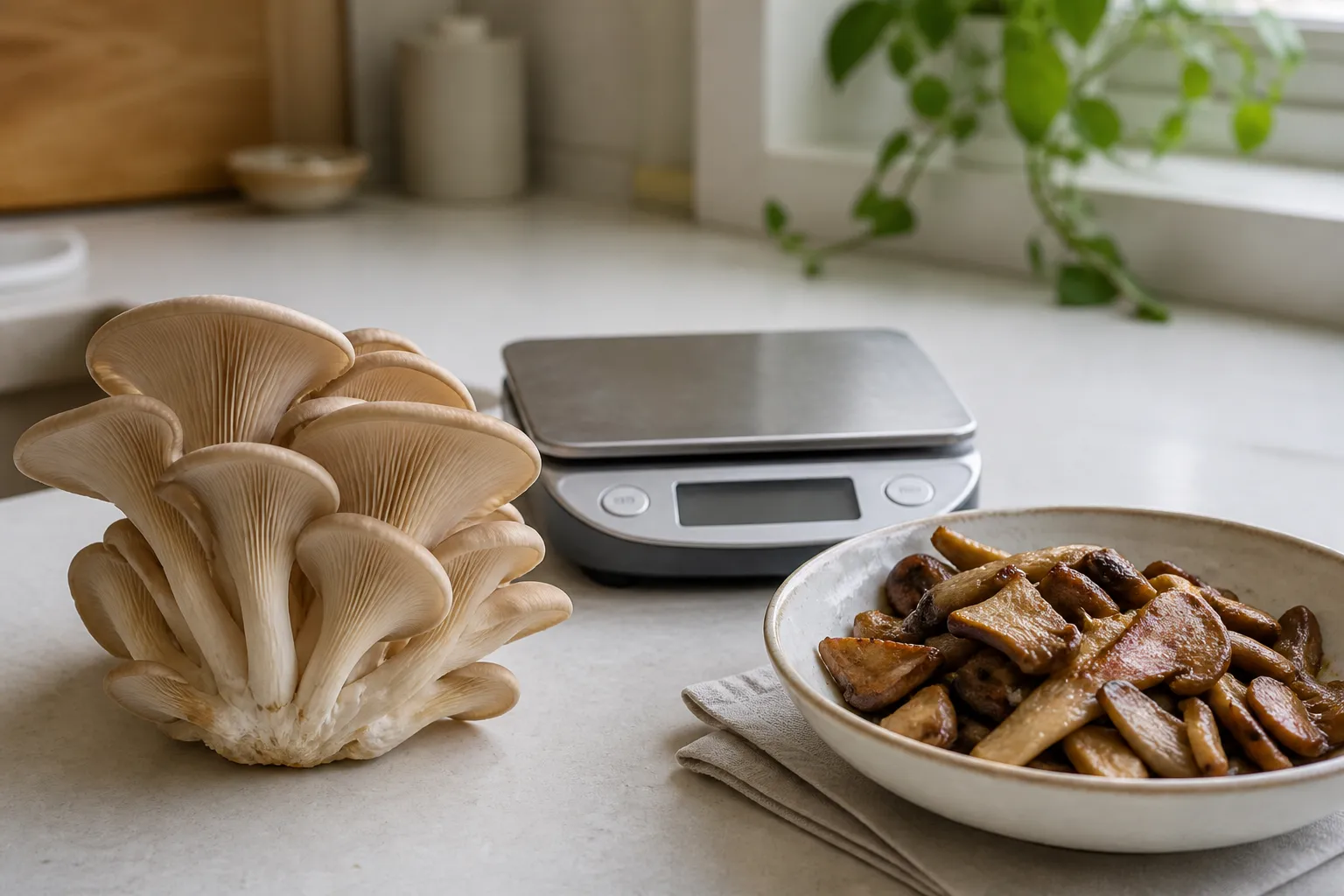
Review status: Editorial review only. No named dietitian, physician, or other clinical expert independently reviewed this page.
Direct answer: oyster mushrooms contain both protein and fiber
Oyster mushrooms provide dietary fiber and protein, but they are not best understood as either a fiber supplement or a concentrated protein food. Fresh mushrooms contain substantial water, so a realistic serving supplies modest macronutrient amounts alongside flavor, texture, and micronutrients. Someone asking whether oyster mushrooms are “protein or fiber” should compare the actual serving with the foods it replaces rather than attaching a single nutrient identity to the mushroom.
If the goal is protein, assess the complete meal. Legumes, tofu, eggs, fish, meat, dairy foods, nuts, or other chosen protein sources will usually contribute more protein per practical serving. If the goal is fiber, compare the whole plate with legumes, whole grains, vegetables, fruit, nuts, and seeds. Oyster mushrooms can contribute to either total, but a favorable category word does not show that one serving meets a personal target.
The most defensible number comes from a Nutrition Facts label for the product in hand or a USDA FoodData Central entry that matches the species and form. A search snippet may silently mix raw mushrooms, cooked mushrooms, dried powder, or a different Pleurotus species. The broader mushroom nutrition guide explains this serving-basis problem across culinary mushrooms; this page applies it specifically to oyster mushrooms.
Define which oyster mushroom food you are measuring
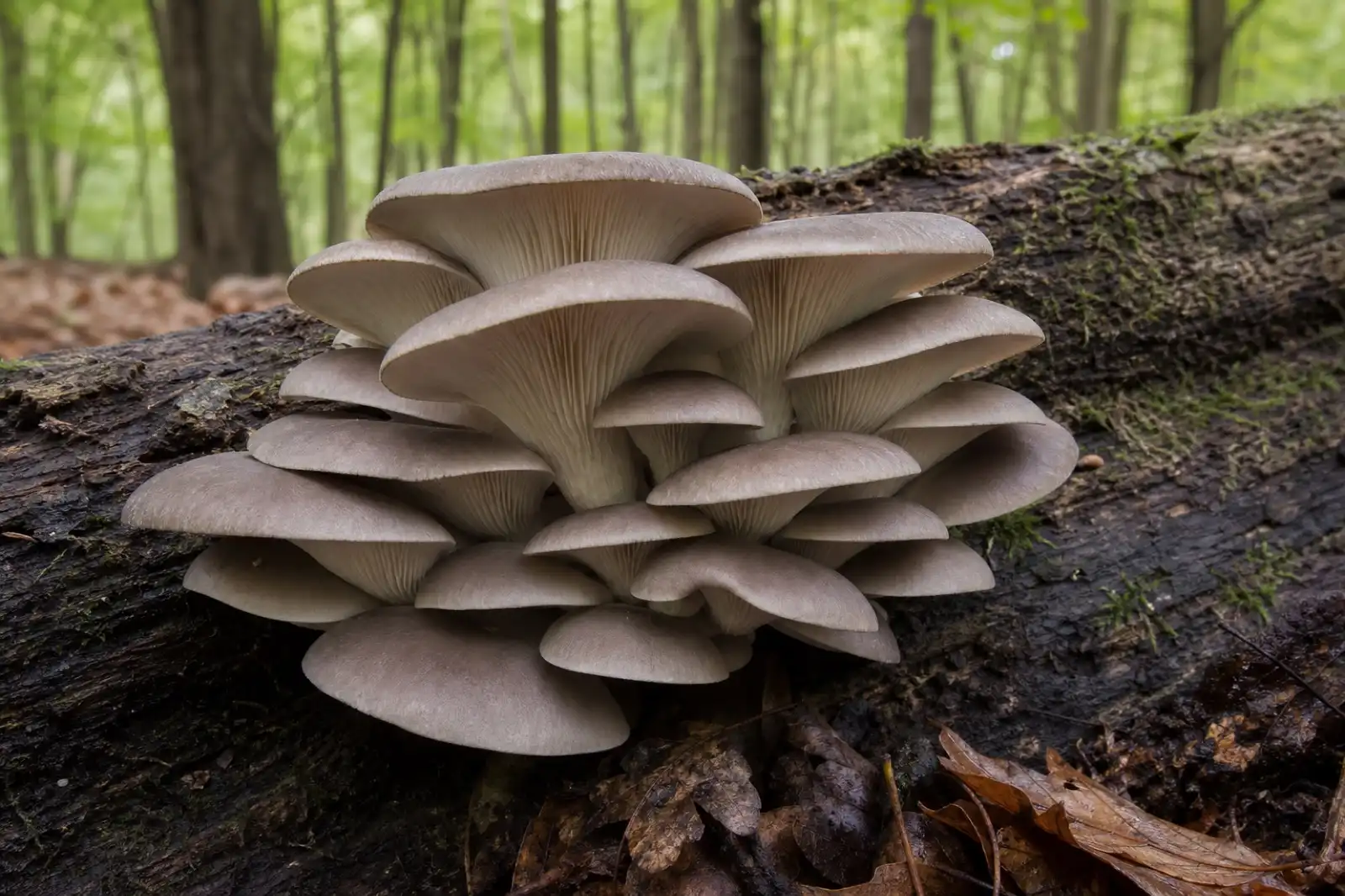
“Oyster mushroom” is a market group as well as a common name. The temperate oyster, Pleurotus ostreatus, is a frequent database reference, while retail clusters may be P. pulmonarius, P. eryngii, pink or golden oyster species, or a producer’s labeled strain. Those foods share culinary similarities but should not be assumed to have identical laboratory values.
Record the label name, scientific name when supplied, fresh or dried state, raw or cooked state, brand or producer, serving mass, and preparation. A cultivated cluster sold for food is also a different evidence object from a wild shelf fungus. This article does not identify wild mushrooms or clear them for eating; the oyster species guide explains anatomy, ecology, and lookalike boundaries separately.
Water content is the largest reason casual comparisons fail. One hundred grams of fresh mushrooms includes far more water than one hundred grams of dried powder. Drying concentrates most nonvolatile constituents per gram because water has been removed; it does not create protein or fiber. A tablespoon of powder and a plate of fresh mushrooms also represent different serving masses, so compare both per 100 grams and per stated serving before interpreting the result.
Read calories and macronutrients on a like-for-like basis
Begin with the serving size. Copy calories, protein, total carbohydrate, dietary fiber, total fat, and sodium from the same label or database record. Then note whether the record includes cooking fat, sauce, breading, or salt. Do not combine calories from a plain raw entry with protein or fiber from a cooked recipe entry; that produces a meal that never existed.
Fresh oyster mushrooms are generally a low-energy-density food because much of their mass is water and they contain relatively little fat before cooking. That description changes when a recipe adds oil, butter, coconut milk, cheese, batter, or concentrated sauce. Those ingredients may be appropriate, but nutrition claims should describe the finished dish. “Low calorie” on the raw ingredient does not automatically characterize a fried or cream-based preparation.
Protein quality is also more than the printed gram total. A mixed diet supplies amino acids from many foods, and a mushroom serving need not imitate meat to be useful. Conversely, calling oyster mushrooms a “meat replacement” because they have savory flavor and chew does not prove that a swap preserves protein, iron, vitamin B12, calories, or another nutrient important to a particular diet. Compare the complete old and new meals when making a substitution.
Fiber is present, but the meal determines its significance
Fungal cell walls contain materials classified within dietary fiber measurements, including beta-glucans and chitin-associated structures. This supports the ordinary statement that oyster mushrooms contribute fiber. It does not justify a fixed value for every strain or recipe, and it does not establish that a serving prevents or treats a digestive, metabolic, cardiovascular, or immune condition.
Serving context matters. A small garnish contributes less fiber than a substantial cooked portion, while a mushroom-and-barley soup may obtain much of its fiber from barley and vegetables. A product label advertising beta-glucans may refer to a measurement method, an extract, or a broad polysaccharide assay. Check what was measured and in which material instead of converting the phrase into a clinical promise.
People increasing fiber rapidly may notice gastrointestinal discomfort, but symptoms are not specific to one component. Portion size, accompanying foods, individual tolerance, allergy, food spoilage, and underlying conditions can all matter. Persistent or severe symptoms require appropriate medical assessment rather than a self-diagnosis based on this page.
Micronutrients vary by production and processing
Oyster mushrooms can contribute several B vitamins and minerals, but exact amounts depend on strain, substrate, maturity, storage, water loss, and analytical sample. A database value is a representative observation, not a certificate for the cluster in a refrigerator. Use it for planning at a reasonable level of precision, not to claim that a particular serving contains an exact laboratory quantity.
Vitamin D deserves special caution. Mushrooms can form vitamin D2 after ultraviolet exposure, but exposure differs between crops and products. A cluster grown and handled without meaningful ultraviolet exposure should not be assumed to be a rich source simply because another product was UV-treated. When vitamin D matters, use the package declaration or a matched analyzed entry and consider the rest of the diet and any clinician-directed supplementation.
Mineral values can also look more impressive after drying because the comparison uses less water. That concentration does not mean dried powder has become a balanced meal, and it may bring more sodium or other ingredients when sold as a flavored blend. Check the ingredient list and serving size together with the nutrient panel.
Cooking changes weight before it changes interpretation
Heat drives water from oyster mushrooms. If a raw batch loses substantial mass in the pan, the cooked food may show more protein, fiber, or minerals per 100 grams even if the total batch did not gain those nutrients. This is a denominator change. To estimate a home recipe, weigh the edible raw mushrooms, record added ingredients, and weigh the cooked yield. Divide recipe totals by the actual cooked portions rather than applying a raw value to the finished weight.
Oil absorption and evaporation occur together. A hot uncrowded pan encourages water to leave and surfaces to brown; a crowded pan retains liquid longer. Neither method has one universal nutrition result because the quantity of cooking fat retained, liquid discarded, and final yield differ. The cooked-versus-raw guide explains how yield factors prevent false comparisons.
Cooking also matters for food quality and texture. Trim the compressed substrate-bearing base, separate the cluster into pieces with similar thickness, use clean equipment, and cook the thick attachment portions until tender and hot. The garlic-butter oyster method gives a specific preparation, while this guide explains how its ingredients and yield affect nutrition interpretation.
Food, powder, and extract are different evidence objects
An ordinary cooked serving, a whole-mushroom powder, mycelium grown on grain, and a concentrated extract are not interchangeable. They differ in water, fungal material, carrier ingredients, extraction, dose, and intended use. A laboratory finding for an isolated compound does not demonstrate that eating oyster mushrooms produces the same exposure or health outcome.
Human studies must be matched just as carefully. Ask which species and fungal part were used, how the material was prepared, the daily dose, duration, population, comparison group, and measured endpoint. A change in a laboratory marker is not automatically a meaningful reduction in disease, and a small product-specific trial does not validate every oyster mushroom food or supplement.
This distinction keeps a useful food from being burdened with medical promises. Oyster mushrooms can be chosen for taste, culinary variety, and measured nutrient contribution without claiming that they lower cholesterol, treat diabetes, prevent cancer, or “boost” immunity. People considering concentrated products should use the mushroom supplement guide and review the exact label with an appropriate clinician or pharmacist when medicines or health conditions are involved.
Build a reproducible serving comparison
Select two foods or recipes and write down the question first: total calories, protein, fiber, sodium, vitamin D, or another nutrient. Match the basis—per serving for meal planning and per 100 grams for composition—then confirm that both entries describe the same raw, cooked, or dried state. Record the database identifier or package date so the comparison can be checked later.
Include every material that changes the finished dish. Count cooking oil, butter, sauces, grains, cheese, and salt; record cooked yield and number of portions. If replacing another food, compare the two complete plates rather than mushroom against a single isolated nutrient. State uncertainty openly when the species, yield, or database match is imperfect.
This workflow can show that a chosen serving contributes some protein and fiber, that added fat dominates calories, or that a UV-treated product supplies declared vitamin D. It cannot establish an individual treatment effect, and it should not be reported with more precision than the source data support.
Storage, recalls, and individual tolerance
Buy cultivated mushrooms from a traceable source, refrigerate them promptly, and use them while firm and sound. Discard mushrooms with extensive slime, decay, or an abnormal odor rather than trying to rescue them through cooking. Keep raw animal foods separate, wash hands and utensils, and refrigerate cooked leftovers promptly according to local food-safety guidance.
Follow recalls for the named product and lot. Foodborne risk is not visible in a nutrient panel, and a clean-looking cluster is not proof that every production and handling control succeeded. People at greater risk from foodborne illness should follow advice from their healthcare team and public-health authorities.
Allergic or other adverse reactions can occur. Trouble breathing, facial or throat swelling, fainting, confusion, severe weakness, persistent vomiting, or other severe symptoms require urgent care. Preserve the package, lot, leftovers, preparation details, amount eaten, and timing. Do not use an online nutrition article to determine whether a wild specimen was edible or whether a serious reaction is safe to watch at home.
Frequently asked questions
Are oyster mushrooms a protein food?
They contain protein, but a normal fresh serving is not a concentrated protein source comparable gram-for-gram with legumes, eggs, fish, meat, or many soy foods.
Do oyster mushrooms contain fiber?
Yes. They contribute dietary fiber, but the amount depends on species, food form, serving mass, and the database or label used.
Why do cooked values differ from raw values?
Cooking changes water weight and may add oil, salt, or sauce. Compare raw with raw and cooked with a genuinely similar cooked preparation.
Are oyster mushrooms high in vitamin D?
Not automatically. Vitamin D varies with ultraviolet exposure, production, handling, and the specific analyzed product; use a matched label or database entry.
Do beta-glucans prove a health benefit?
No. The presence of a cell-wall component does not establish a clinical outcome from an ordinary serving, and extract studies cannot be assigned to cooked food.
References
- USDA Agricultural Research Service. FoodData Central. Food-composition records and documentation.
- U.S. Food and Drug Administration. How to Understand and Use the Nutrition Facts Label. Serving and label interpretation.
- U.S. Department of Agriculture and U.S. Department of Health and Human Services. Dietary Guidelines for Americans. Whole-diet context.
- Penn State Extension. Mushroom Food Safety. Production and handling context.
Source quality notes
MushroomScope cites sources that match the page scope, such as taxonomic databases, extension guidance, food-safety agencies, food-composition databases, and peer-reviewed or institutional health references. Sources support context and uncertainty; they do not turn an online page into specimen identification, medical advice, or a tested recipe record.
Frequently asked questions
Are oyster mushrooms a protein food?
They contain protein, but a normal fresh serving is not a concentrated protein source comparable gram-for-gram with legumes, eggs, fish, meat, or many soy foods.
Do oyster mushrooms contain fiber?
Yes. They contribute dietary fiber, but the amount depends on species, food form, serving mass, and the database or label used.
Why do cooked values differ from raw values?
Cooking changes water weight and may add oil, salt, or sauce. Compare raw with raw and cooked with a genuinely similar cooked preparation.
Are oyster mushrooms high in vitamin D?
Not automatically. Vitamin D varies with ultraviolet exposure, production, handling, and the specific analyzed product.
Do beta-glucans prove a health benefit?
No. The presence of a cell-wall component does not establish a clinical outcome from an ordinary serving, and extract studies cannot be assigned to cooked food.
Related guides
mushrooms
Pleurotus ostreatus: Oyster Mushroom Identification and Growing Guide
A careful guide to Pleurotus ostreatus identification, habitat, home cultivation, nutrition, lookalikes, food safety, and research limitations.
health
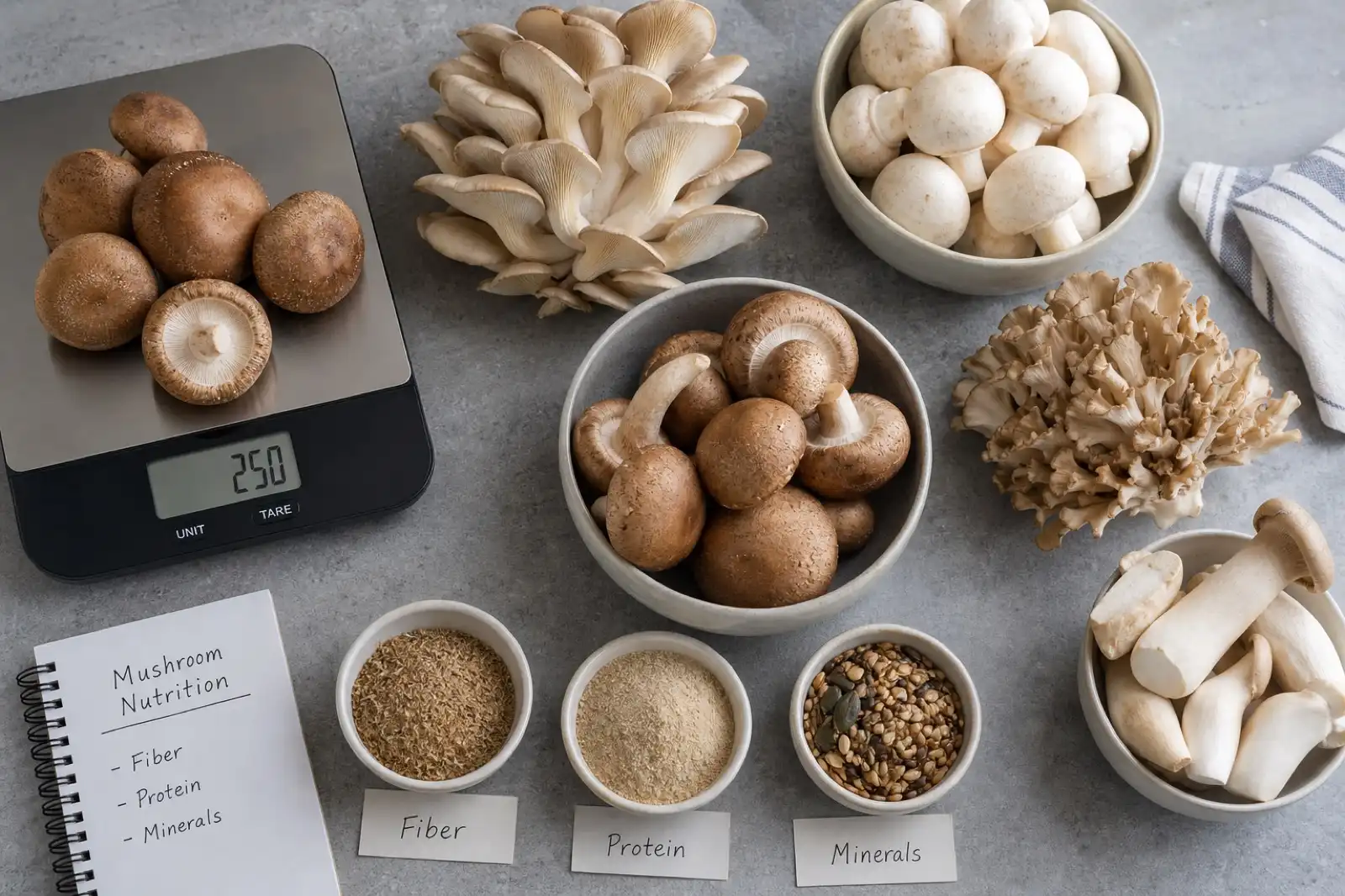
Mushroom Nutrition: Fiber, Protein, Calories, and Vitamins
Are mushrooms a source of fiber or protein? Compare calories, fiber, protein, vitamins, food forms, serving sizes, and preparation without overstating benefits.
health
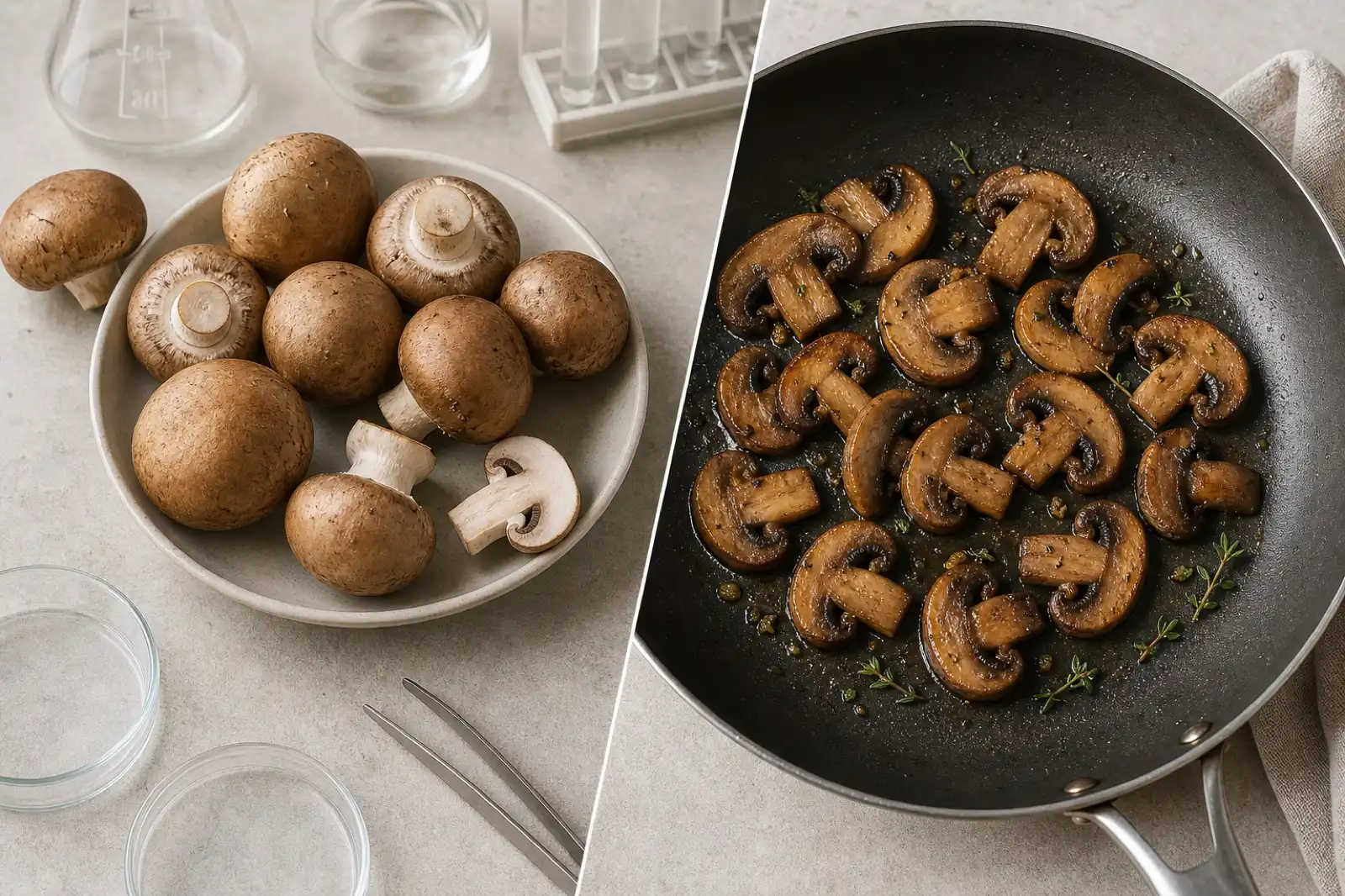
Cooked vs. Raw Mushrooms: Nutrition and Safety
Cooking changes water content, texture, digestibility, and measured nutrient concentration; it also supports safer produce handling.
Continue exploring
Browse more practical guides in Health or visit the mushroom encyclopedia.