Mushroom Encyclopedia
Pink Oyster Mushroom (Pleurotus djamor): Species and Growing Guide
Learn how pink oyster mushrooms differ from other oyster fungi, why their color fades, how warm-climate cultivation works, and why wild finds need verification.
By MushroomScope Editorial Team · · Updated
Species context
Treat profiles as reference material
Species profiles summarize documented traits, taxonomy, and lookalikes, but natural variation can be substantial.
Use the safety checklist →Decision limit
A profile cannot authenticate a specimen
Do not eat a wild mushroom from an online match, single feature, or generated image.
Read the safety disclaimer →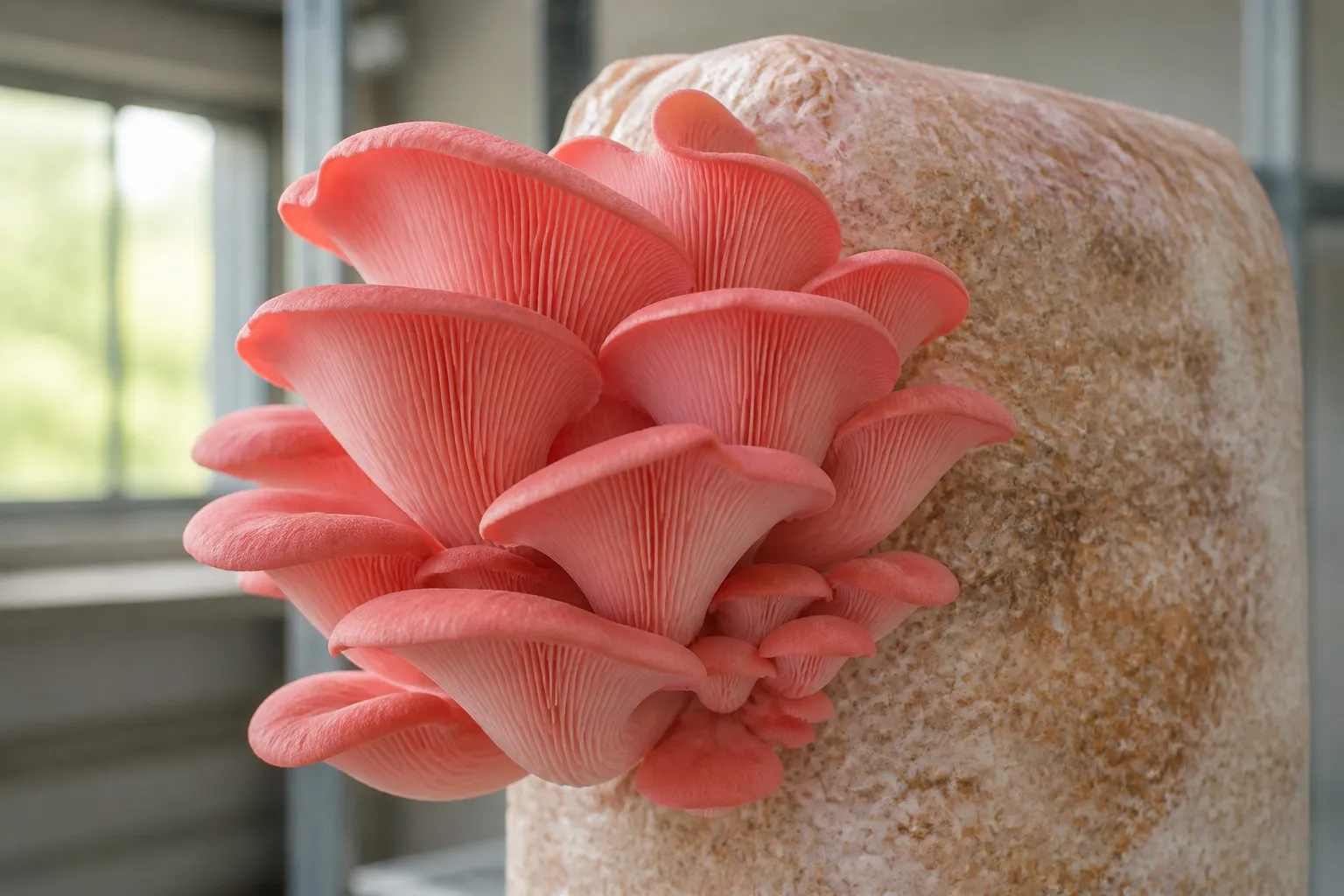
Quick facts
- Scientific name
- Pleurotus djamor
- Common names
- Pink oyster mushroom
- Taxonomy
- Pleurotus · Pleurotaceae
- Edibility context
- Edible: This database label is context, not remote clearance of a wild specimen; identity, preparation, spoilage, contamination, and individual reaction matter.
- Spore print
- White to pale pinkish.
- Toxicity context
- None Known: Risk includes misidentification and individual reaction. Consult current local toxicology guidance before any food decision.
- Season
- May, June, July, August, September
- Growing difficulty
- Easy
- Regions
- tropical Americas, Asia, cultivated worldwide
Safety limit: These labels summarize documented context; they never authenticate a wild specimen. Cooking does not make a poisonous species safe.
Identification overview
Vivid pink fan-shaped caps form dense shelves, with pinkish decurrent gills and short lateral stems. The flesh is pale pink, tender, and quick to fade after harvest. Observe several ages because rain, drying, insects, and decomposition can alter color and texture. Photograph the undisturbed growth, upper surface, fertile surface, complete attachment, and a lengthwise section. A white to pale-pinkish spore deposit is supporting evidence, never a species verdict.
The pink color is memorable but not a stand-alone character. Cultivated strains range from pale blush to saturated coral, while heat, light, age, handling, and cooking can mute the pigment. Mature caps often flatten and develop wavy margins. The gills should radiate from beneath the cap and run down the short, off-center attachment in the decurrent pattern typical of oyster mushrooms. A cluster with ordinary central stems, free gills, a ring, a volva, or a uniformly hairy orange cap does not fit this account.
The name also needs a taxonomic boundary. NCBI records Pleurotus djamor in Pleurotaceae, while recent phylogenetic work treats the pink-capped P. djamor complex as a group in which morphology and geography do not always resolve every lineage. That matters most for wild records and cultures without traceable provenance. A retail grow kit labeled pink oyster supports a cultivation record, but its label is not proof that an unrelated wild collection belongs to the same species.
Habitat and season
A tropical hardwood decomposer widely cultivated on plant residues. The documented range represented here includes tropical Americas and Asia and cultivated worldwide. Typical substrates or settings include hardwood and pasteurized straw and supplemented sawdust. Fruiting records commonly occur in May, June, July, August, September, but latitude, elevation, rainfall, and host condition shift the calendar.
For a wild pink shelf fungus, document the exact hardwood attachment, decay stage, climate zone, and whether caps arise from one lateral base. For a cultivated cluster, replace habitat guesses with culture provenance: supplier, strain or lot, substrate formula, incubation temperature, fruiting temperature, and harvest age. Keeping wild ecology and production history separate prevents a striking coral color from doing taxonomic work that only attachment, gills, spores, region, and traceable culture can support.
Pink oysters are warm-adapted wood decomposers rather than the cool-weather gray oysters many temperate growers know. The University of Florida IFAS oyster-growing guide includes P. djamor among colorful oyster species and emphasizes that species and ambient conditions influence fruit-body color. A warm grow room can therefore suit an authenticated pink-oyster strain while being inappropriate for a cool-fruiting strain sold under another oyster name.
Wild occurrence data must be read cautiously. A point on a biodiversity map may represent a preserved specimen, research observation, or imported record, and older names can be reassigned. Use GBIF for broad occurrence context, then consult a current regional mycota or herbarium record before describing the fungus as native, established, or seasonal in a particular place.
Similar species
- Other Pleurotus species — cultivated strains vary and species identity may require culture records.
- Phyllotopsis nidulans — orange hairy caps with an unpleasant odor and different spores.
The most useful comparison begins with surface texture and attachment. Pink oysters should have a smooth to finely textured fan-shaped cap, decurrent gills, and a short lateral attachment. Phyllotopsis nidulans is usually orange-yellow with a conspicuously hairy or tomentose upper surface and often a strong odor; other Pleurotus cultures may be pale, gray, yellow, or weakly pink. A faded harvested cluster may lose its best color clue, so use culture records or a current regional key rather than an image match.
Separate a pink cultivar from a wild identification
Other Pleurotus species can develop cream, tan, gray, yellow, or faintly pink tones, and commercial naming is not always taxonomic naming. Compare cap surface, gill attachment, substrate, temperature history, culture label, and provenance rather than choosing a species from color alone. The oyster mushroom species guide explains the broader Pleurotus form, while the oyster mushroom lookalikes guide provides a conservative comparison workflow.
Phyllotopsis nidulans is often orange rather than coral pink, typically has a hairy or finely shaggy cap, and may have a strong unpleasant odor. Those differences are screening characters, not an edibility test. Regional wood-inhabiting fungi add further possibilities, and a damaged or faded cluster can lose the color that first attracted attention.
Food and safety context
Pink oyster mushroom has a documented food-use context when the organism is correctly identified and the material is fresh, clean, and cooked. That reputation does not transfer to a wild specimen identified online. Individual allergy, gastrointestinal intolerance, spoilage, environmental contamination, and cross-contamination remain possible. Cooking does not make a poisonous species safe.
If illness follows a pink or orange shelf-mushroom meal, contact the local poison center or emergency service promptly. Preserve uncooked clusters with their attachment, the grow-kit or retail label and lot number when applicable, trimmings, photographs, preparation details, and symptom timing. Report whether the material was wild, home-grown, or purchased; that provenance helps investigators distinguish misidentification from spoilage, allergy, or a contaminated batch.
For cultivated pink oysters, harvest quality changes quickly. Caps with dry, curled edges are past their best texture; surfaces that are slimy, leaking, sour-smelling, or visibly moldy are discard signals. Refrigerate promptly in breathable packaging and keep the mushrooms separate from raw meat. Their dramatic raw color commonly softens toward salmon, peach, or beige during cooking, so color loss is not evidence that the pan is unsafe or the strain was mislabeled.
Use high heat and enough pan area to release moisture without steaming the whole batch. The texture can be more delicate than thick-stemmed king oysters, and thin edges brown first. A first-time eater should begin with a modest portion of a fully cooked, correctly sourced product because individual allergy or gastrointestinal intolerance remains possible.
Cultivation context
Begin with authenticated pink-oyster spawn or a labeled ready-to-fruit block and retain the supplier’s lot and strain instructions. Warm-fruiting does not mean “as hot as possible”: compare air and block temperature at the crop, ventilation, surface moisture, pin count, days to harvest, and yield for that specific batch. Never expand an unidentified wild culture for food. Isolate a bag with green sporulation, wet bacterial patches, unexpected pigmented growth away from fruit bodies, insects, or a persistent sour odor; the normal pink of the mushrooms is not a general clearance for colored growth elsewhere in the substrate.
Match the method to a warm-growing strain
A controlled study of P. djamor culture and yield found that results differed with temperature, medium, grain, substrate, and spawn rate. In that experiment, mycelial growth was strongest at 24–28°C, paddy straw colonized faster than sugarcane bagasse, and the best yield among tested combinations came from paddy straw with a 4% spawn dose. These are results for that culture and experimental system—not universal home-growing set points. Supplier instructions remain the operational baseline because strain, bag size, substrate density, supplementation, ventilation, and measurement location change the outcome.
For a first crop, use a reputable ready-to-fruit block or authenticated spawn rather than cloning a market mushroom. The home oyster growing guide covers the clean-work sequence, and the substrate guide explains why hydration and heat treatment depend on the chosen material. Label the culture, substrate recipe, inoculation date, room readings, first pin date, and harvest weight so later changes have a real comparison.
Read cap form as an environmental record
Long attachments and undersized caps can accompany insufficient fresh-air exchange, while cracking and dry margins can indicate that the fruiting surface dried faster than the room sensor suggests. Waterlogged caps are not the solution: free water can damage texture and increase bacterial risk. Measure near the fruiting block, provide gentle air movement without a direct drying blast, and change only one variable at a time.
Pink oysters grow and age quickly under warm conditions. Inspect at least daily once pins form. Harvest while caps remain firm and before margins become extensively flattened or brittle, following the supplier’s maturity cue. Cool the crop promptly. A second flush may be possible, but yield and timing vary; remove old tissue cleanly and discard a block with persistent foul odor, colored mold, insect infestation, or soft decay.
Distinguish normal growth from contamination
White mycelium spreading through the intended substrate can be normal, but color alone never certifies a culture. Pink fruit bodies do not make pink, green, black, or orange patches elsewhere in the bag automatically acceptable. Compare changes over time, location, texture, and odor without opening a suspect bag in a clean workspace. When provenance is lost or contamination is plausible, isolate and discard rather than tasting or attempting a rescue flush.
How to document a find
- Photograph the habitat and growth habit before moving anything.
- Record location, date, weather, substrate, nearby trees, and odor without tasting.
- Photograph the cap, fertile surface, stem or attachment, and base in natural light.
- Measure several mature specimens and make a spore deposit when appropriate.
- Compare the complete record with a current regional key and qualified local expertise.
For cultivated material, replace the field-location step with a batch record: supplier and lot, strain label, substrate, inoculation date, incubation conditions, fruiting-room measurements, and photographs at pinning and harvest. That record helps separate a strain response from an equipment problem and prevents an attractive color from becoming the only evidence attached to the crop.
What this guide does not establish
This page does not establish that every pink oyster sold commercially is genetically identical, that a wild pink shelf fungus is edible, or that one cultivation trial predicts a home yield. It also does not turn laboratory antioxidant or antimicrobial results into a human health benefit. Those questions require authenticated material and study designs matched to the claim.
The useful conclusion is narrower: Pleurotus djamor is a recognized warm-adapted oyster-mushroom species complex with pink, decurrent-gilled fruit bodies and established cultivation research. Provenance, complete morphology, ecology, and regional expertise remain necessary whenever the question moves from growing a labeled culture to naming or eating a wild specimen.
References
- Global Biodiversity Information Facility. Pleurotus djamor species record. Taxonomic backbone and occurrence context.
- National Center for Biotechnology Information. NCBI Taxonomy Browser: Pleurotus djamor. Independent lineage and nomenclature checkpoint.
- University of Florida IFAS Extension. Grow Your Own Oyster Mushrooms at Home. Species color context and a home-scale oyster cultivation framework.
- Chowdhury G, Sharma R, Sarkar U. Cultural Studies and Yield Attributes of Pink Oyster Mushroom. BioResources. 2024;19(1):1696–1706. Culture, substrate, spawn-rate, and yield results for one tested system.
- North American Mycological Association. Mushroom Poisoning Syndromes. Poisoning response and syndrome context.
- U.S. Food and Drug Administration. Selecting and Serving Produce Safely. General handling guidance for mushrooms used as food.
Editorial review: September 27, 2026. Taxonomic scope, warm-strain cultivation evidence, lookalike boundaries, food handling, and poison-response contacts were rechecked editorially; no named mycologist or clinician reviewed this page.
Source quality notes
MushroomScope cites sources that match the page scope, such as taxonomic databases, extension guidance, food-safety agencies, food-composition databases, and peer-reviewed or institutional health references. Sources support context and uncertainty; they do not turn an online page into specimen identification, medical advice, or a tested recipe record.
Frequently asked questions
Can Pink oyster mushroom be identified from one photograph?
No. Identification requires the complete specimen, fertile surface, attachment, substrate, habitat, region, developmental stage, and sometimes microscopy or DNA.
Is wild Pink oyster mushroom safe to eat?
This page cannot clear a wild specimen for food. Obtain in-person confirmation from a qualified local identifier and follow local guidance; cooking cannot make a poisonous lookalike safe.
Where does Pink oyster mushroom grow?
A tropical hardwood decomposer widely cultivated on plant residues. Regional records and host associations should be checked before applying this summary to a local collection.
What is the spore print of Pink oyster mushroom?
The expected deposit is white to pale pinkish, but print color overlaps among fungi and cannot confirm this species by itself.
Can Pink oyster mushroom be cultivated at home?
Authenticated commercial culture can be cultivated with a proven supplier method; keep clean batch records and discard suspect material.
Related guides
mushrooms
Pleurotus ostreatus: Oyster Mushroom Identification and Growing Guide
A careful guide to Pleurotus ostreatus identification, habitat, home cultivation, nutrition, lookalikes, food safety, and research limitations.
growing
How to Grow Oyster Mushrooms at Home
Grow oyster mushrooms at home with a supplier-provided fruiting block: set up a clean observation routine, follow the culture label, and handle harvests safely.
identification
Oyster Mushroom Lookalikes and Identification Tips
Compare oyster mushroom lookalikes with conservative field observations, documentation steps, safety limits, and reasons to seek local expert help.
Continue exploring
Browse more practical guides in Mushroom Encyclopedia or visit the mushroom encyclopedia.