Identification
Oyster Mushroom Lookalikes and Identification Tips
Compare oyster mushroom lookalikes with conservative field observations, documentation steps, safety limits, and reasons to seek local expert help.
By MushroomScope Editorial Team · · Updated
Safety first
Use as a field-record guide
Document the whole mushroom, habitat, substrate, and region before comparing names or photographs.
Open the identification safety hub →Decision limit
Do not use this as an edibility verdict
Wild mushroom consumption decisions require qualified local, in-person confirmation of the complete specimen.
Read the safety disclaimer →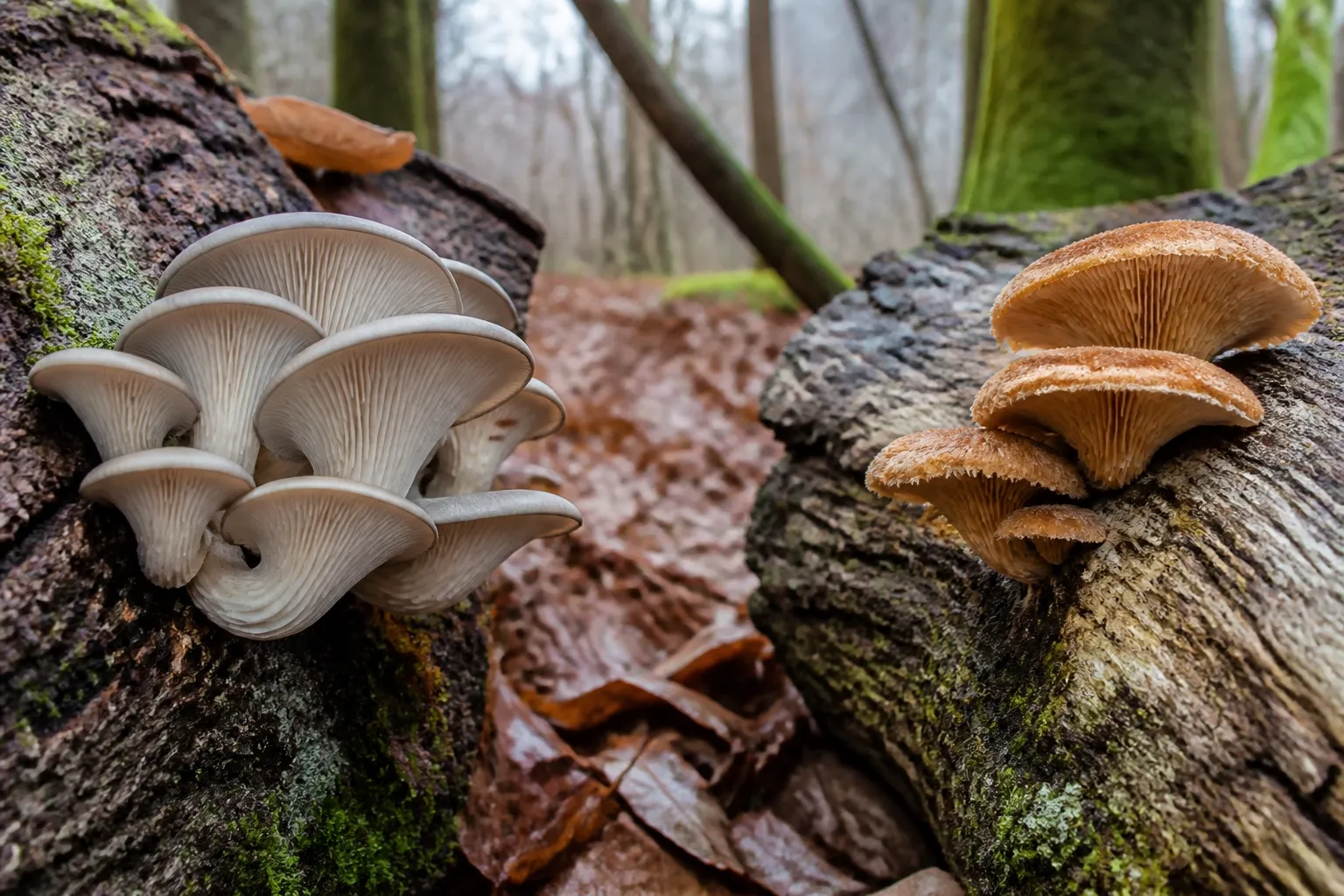
Identification overview
Oyster mushrooms are often described as pale, shelf-like mushrooms with decurrent gills growing from wood. That description is useful, but it is not enough for an edibility decision. The safer workflow is to document a complete character set, compare it with current local resources, and leave the mushroom uneaten when any decisive feature is missing or conflicting.
This page is educational. It cannot identify your specimen, and it cannot make a wild mushroom safe to eat from photos.
Oyster-like mushrooms are a good example of why common-name identification can become risky. The broad shape is memorable, but many mushrooms form shelves, fans, clusters, or overlapping caps. A beginner may notice the shelf-like form and stop looking too early. A careful observer keeps going: underside, stem attachment, substrate, odor, spore deposit, region, season, and developmental stage all need attention.
The purpose of this guide is not to make readers afraid of learning. It is to separate learning from eating. You can photograph, compare, and discuss oyster-like mushrooms while still keeping them out of the kitchen. That separation is one of the best safety habits a new forager can build.
Features to examine
Record the cap shape, cap color in natural light, underside, gill attachment, stem position, substrate, odor, spore deposit, and growth pattern. Include young and mature specimens if present. A single perfect-looking cap is less useful than a complete set of observations from the same cluster.
Common oyster-type features can vary with age, moisture, and species. Some oyster mushrooms have short lateral stems; some appear almost stemless. Color can shift from pale cream to gray or tan. Because of that variation, field guides and local experts matter more than a generic image match.
Cap and growth pattern
Oyster mushrooms often grow in overlapping shelves or fans, but the growth pattern must be recorded precisely. Are the mushrooms attached to a log, stump, standing dead tree, or buried wood? Are they in a dense cluster, a loose group, or a single fruit body? Are young and mature specimens present together? These details can support or weaken a candidate identification.
Photograph the cluster before removing anything. Include the surrounding wood or ground, then take closer images of the cap surface. Natural light matters because phone cameras can shift pale cream, gray, tan, and yellow tones. If you change brightness or saturation later, keep the original image too.
The cap edge also changes with age. Young caps may look rolled or thick, while older caps can flatten, wave, split, dry, or darken. A mature, weathered mushroom may no longer match a clean field-guide photo. That is why several ages from the same cluster are more useful than one attractive specimen.
Underside, stem, and spore record
The underside is central to oyster-style identification. Document whether the fertile surface has true gills, how those gills attach, whether they run down the stem, and how crowded they are. A blurry underside photo is one of the most common reasons an online discussion cannot progress.
The stem should be photographed from the side and base. Oyster mushrooms are often lateral or off-center, but “short stem” is not a complete diagnosis. Record whether there is ring-like tissue, a volva-like base, unusual fibers, or a stem that contradicts the oyster candidate. If collection is legal and appropriate, preserve the complete base rather than cutting the mushroom off at the cap.
A spore deposit can add information, but it does not decide edibility alone. Make it on clean, non-food surfaces and keep it separate from anything you plan to eat. Record the color in natural light. If the spore color conflicts with your candidate, do not force the identification.
Lookalike thinking
The risk is not only one famous lookalike. The broader mistake is turning “on wood and shelf-shaped” into “edible oyster.” Other fungi can fruit in shelves, clusters, or overlapping fans. Some may have different gill attachment, tougher texture, brighter color, unusual odor, different spore color, or a habitat detail that contradicts oyster identification.
If a specimen has orange tones, an unusual ring or veil tissue, growth away from visible wood, an unexpected spore deposit, or a smell that does not fit your local key, stop. Conflicting evidence should lower confidence immediately.
Odor and texture are supporting clues only
Many field descriptions mention odor or texture, but neither should be treated as a safety test. Odor is subjective, changes with age, and can be hard to describe. Some people perceive anise-like, mushroomy, mild, or unpleasant notes differently. Texture also changes with maturity and weather.
If odor is part of your local key, record it gently without close inhalation, especially if the specimen is decaying or unknown. Do not taste an unidentified mushroom as an identification shortcut. Tasting is not needed for beginner oyster-like documentation and can create unnecessary risk.
Texture can support observation after other features are recorded. Tough, leathery, slimy, brittle, or unusually colored tissue may signal that the specimen is not the simple edible candidate someone expected. But again, texture is a clue, not a green light.
Field documentation method
- Photograph the cluster before touching it, including the log, stump, or tree.
- Photograph the cap surface and underside in natural light.
- Record whether the mushrooms are truly attached to wood or possibly emerging from buried wood.
- Keep the complete base if collection is legal and appropriate.
- Make a spore deposit only away from food surfaces.
- Compare the full record with a regional key and seek qualified local confirmation.
The broader how to identify mushrooms guide explains why complete observations matter. The mushroom gill types guide can help with underside vocabulary.
Confidence checklist before any kitchen decision
Before a specimen moves anywhere near food, ask whether the full mushroom is documented, whether the substrate is clear, whether the underside matches a current local key, whether the spore deposit is consistent, and whether regional lookalikes have been considered. If one of those answers is missing, the identification is not complete enough for eating.
Also separate learning confidence from eating confidence. It is fine to say “this looks oyster-like” while still keeping the specimen out of the kitchen. That distinction protects beginners from turning a useful observation into a risky conclusion. When discussing a find online, include the uncertainty in the caption so others do not read the post as an edibility endorsement.
Regional variation matters
Oyster mushroom common names can cover multiple species and local forms. Tree host, season, climate, and region can change which lookalikes are realistic. A checklist copied from another country may omit the species that matter in your area. Use local field guides, local mushroom clubs, and current biodiversity records as supporting context rather than relying on one global description.
Online identification etiquette
If you ask for help online, provide the full context: location at least to region, habitat, substrate, cap, underside, stem, base, spore print if available, odor notes, and several photos. State clearly that you are asking for learning support, not permission to eat. Remote helpers cannot inspect the specimen directly, and responsible communities usually avoid giving meal clearance from photos.
Avoid posting only a plated or cooked mushroom and asking whether it is safe. Once mushrooms are cooked, many diagnostic details are gone, and the situation may already be urgent if someone ate them. If ingestion has occurred and there is uncertainty, contact emergency services or a poison center rather than waiting for comments.
Why apps and image search are limited
Image-recognition tools can be useful for generating comparison candidates, but they are not a foraging authority. They may overemphasize cap shape or color and underweight the stem base, substrate, spore deposit, region, or dangerous local lookalikes. A confident app label can feel reassuring even when the input image lacks critical features.
Use app results as a starting list, then test each candidate against a current regional key and expert input. If the app, field guide, and your specimen disagree, the disagreement is not a puzzle to force. It is evidence that the mushroom remains unresolved.
Safety limits
Never eat an oyster-like mushroom because an app, search result, or online comment matched one photograph. Remote viewers cannot check all texture, odor, microscopic, and habitat details. For suspected poisoning, contact emergency services or a poison center immediately and preserve remaining material if it is safe to do so.
When in doubt, leave it out of the kitchen. This is especially important when cooking for children, older adults, pregnant people, immunocompromised people, or anyone with a history of mushroom reactions.
Practical bottom line
Oyster-like mushrooms can be rewarding to study because their broad form is easy to notice, but that same recognizability can create premature confidence. Treat “oyster-like” as a starting observation, not a final identification. The safer workflow is complete documentation, local comparison, expert confirmation when food is involved, and no eating when evidence is incomplete.
Frequently asked questions
Do oyster mushrooms always grow on wood?
They are associated with wood, including logs, stumps, and sometimes buried wood. Visible substrate is still only one clue. Record the whole setting and do not use substrate alone as proof.
Is a white spore print enough to confirm oyster mushrooms?
No. A spore print can support an identification, but it does not replace cap, gill, stem, habitat, season, and local lookalike checks.
Can store-bought oyster mushrooms help me learn?
Yes, for learning general structure and cooking behavior. Store-bought mushrooms are identified food products, while wild specimens require separate, local, in-person identification.
References
- North American Mycological Association. Mushroom Poisonings.
- NCBI. Taxonomy Browser.
- Global Biodiversity Information Facility. Species Search.
Source quality notes
MushroomScope cites sources that match the page scope, such as taxonomic databases, extension guidance, food-safety agencies, food-composition databases, and peer-reviewed or institutional health references. Sources support context and uncertainty; they do not turn an online page into specimen identification, medical advice, or a tested recipe record.
Frequently asked questions
Can this guide confirm a wild oyster mushroom is edible?
No. It organizes observations only. Eat wild mushrooms only after qualified local in-person confirmation of the complete specimen.
Are all shelf-like mushrooms on wood oyster mushrooms?
No. Shelf-like growth on wood is only one observation. Color, fertile surface, stem attachment, spore deposit, odor, season, region, and local lookalikes all matter.
What should I do if an oyster identification feels uncertain?
Keep the mushroom unidentified and do not eat it. Preserve photos and notes, then consult a qualified local mycologist or mushroom club.
Related guides
mushrooms
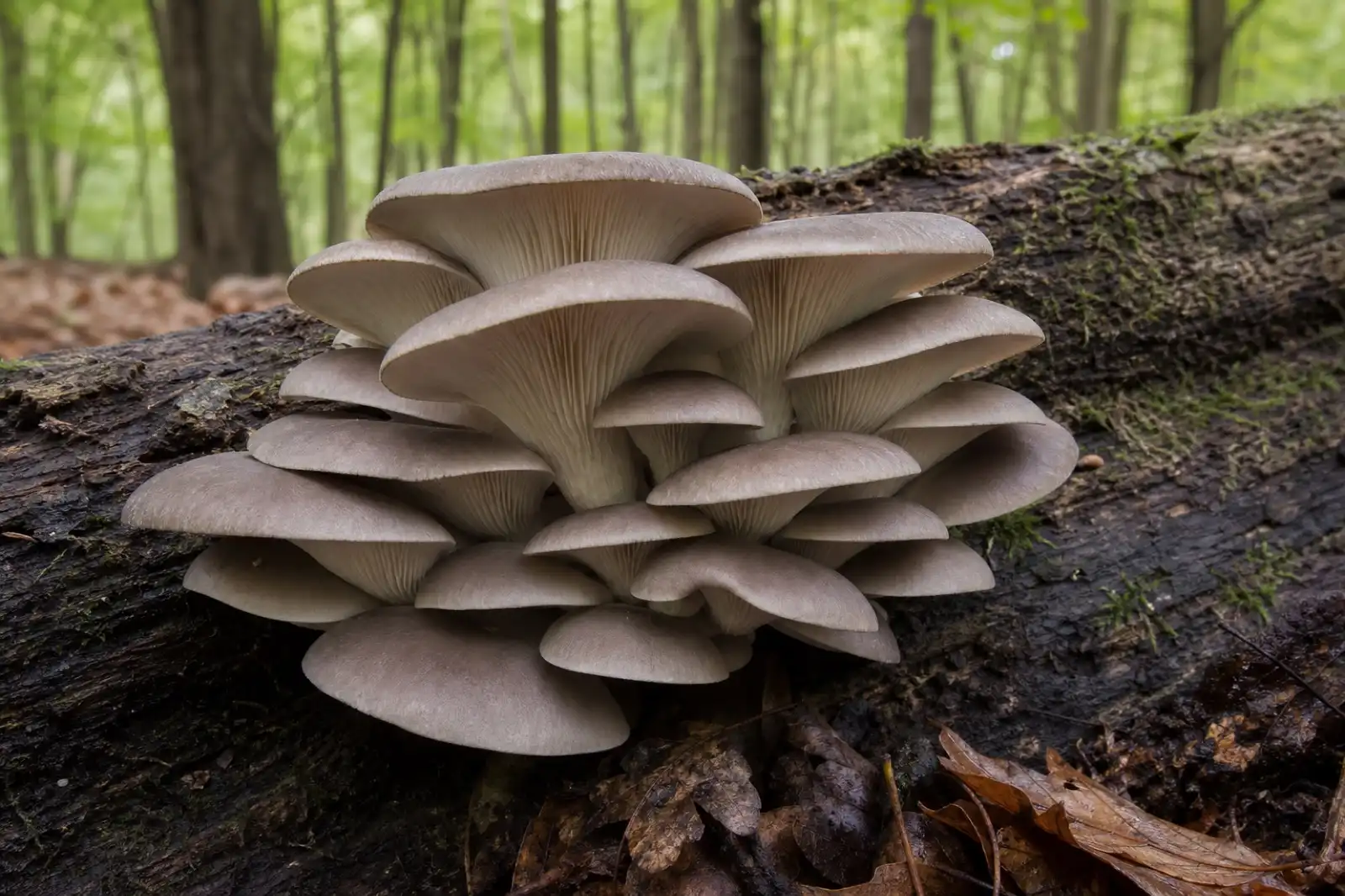
Pleurotus ostreatus: Oyster Mushroom Identification and Growing Guide
A careful guide to Pleurotus ostreatus identification, habitat, home cultivation, nutrition, lookalikes, food safety, and research limitations.
identification
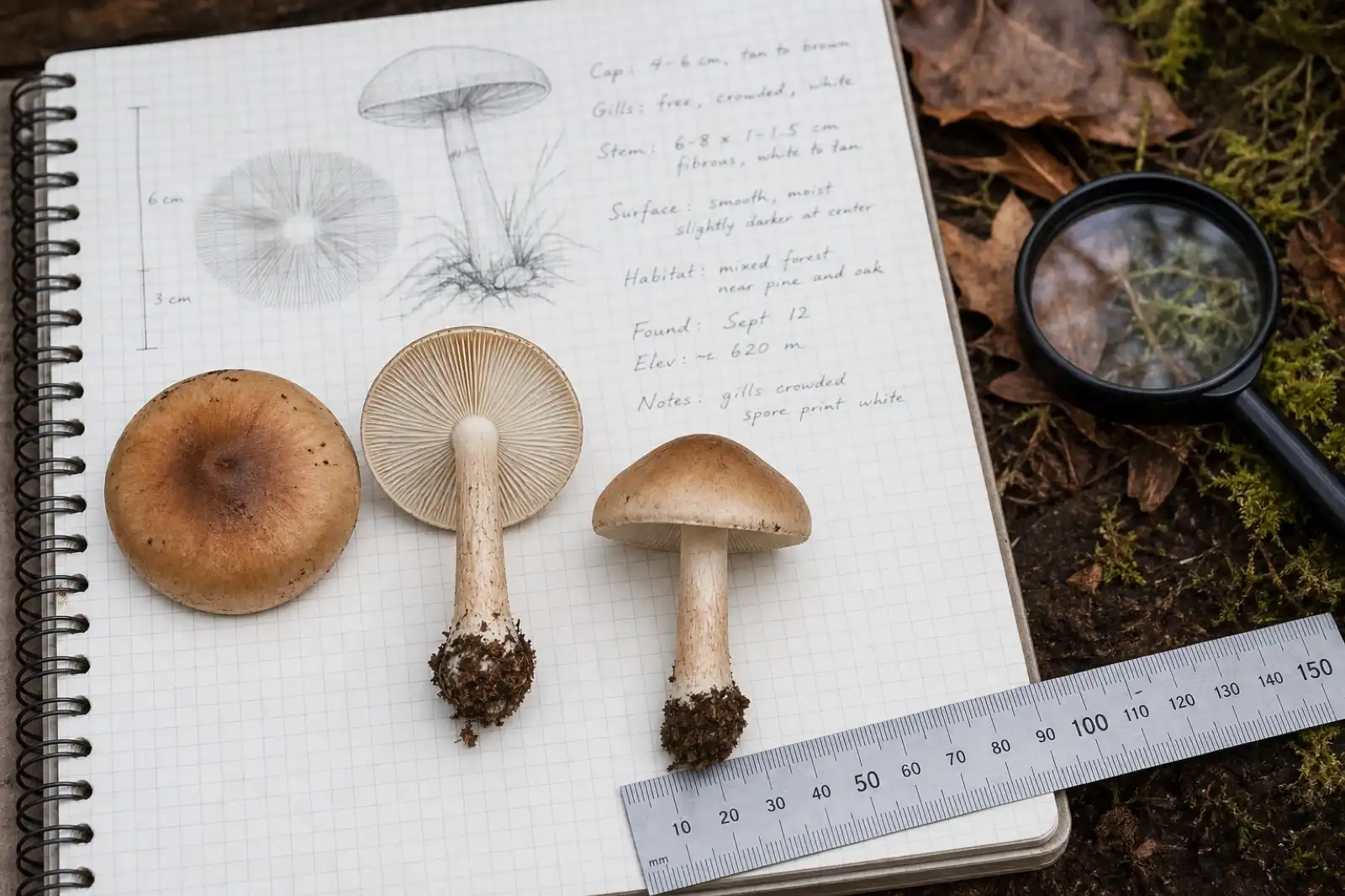
How to Identify Mushrooms: A Beginner's Field Guide
Build an identification from the whole specimen, substrate, habitat, spore deposit, and location—not from a single photograph.
identification
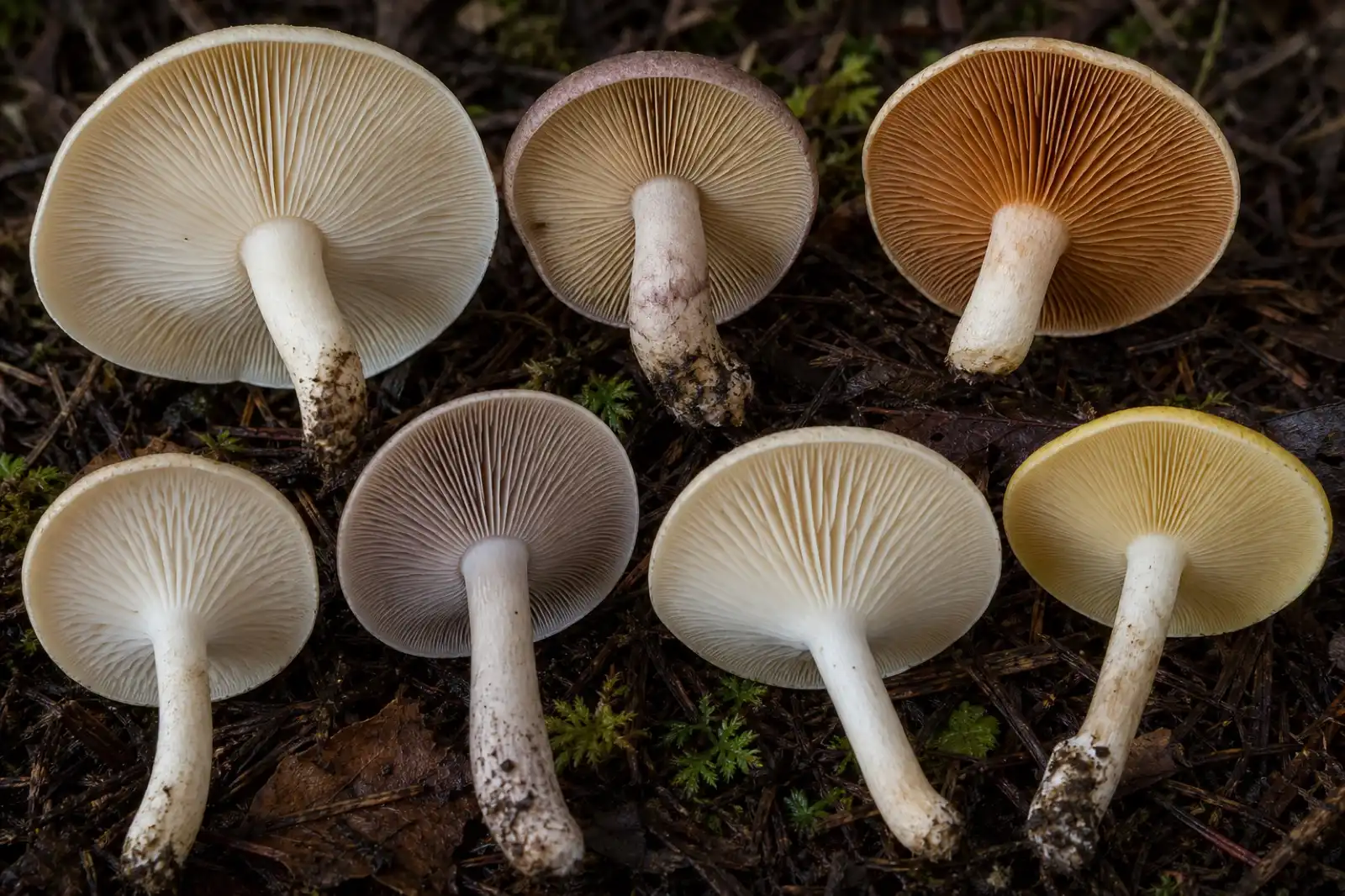
Mushroom Gill Types: Attachment, Spacing, and Color
Compare free, attached, notched, adnate, and decurrent mushroom gills while recording spacing, short gills, edge details, bruising, and color changes.
Continue exploring
Browse more practical guides in Identification or visit the mushroom encyclopedia.