Health
Medicinal Mushroom Safety: Products, Interactions, and Red Flags
Evaluate medicinal mushroom supplement safety through identity, dose, interactions, quality testing, adverse-event response, and evidence limits.
By MushroomScope Editorial Team · · Updated · Editorially reviewed
Evidence context
Food, extracts, and supplements differ
Health conclusions depend on species, fungal part, preparation, dose, population, and measured outcome.
Open the nutrition evidence hub →Medical limit
Educational, not medical advice
Do not delay diagnosis or replace prescribed care with mushroom foods or supplements.
Read the editorial policy →
Review status: Editorial review only. No named physician, dietitian, pharmacist, or other clinical expert independently reviewed this page.
Safety begins with the exact product
“Medicinal mushroom” covers different species, fungal parts, extraction methods, doses, and multi-ingredient formulas. Safety cannot be assigned to the category as a whole. A familiar culinary name does not make a concentrated extract equivalent to food, and natural origin does not exclude pharmacologic effects, allergy, contamination, adulteration, or interaction with treatment. The safest review identifies the exact exposure before discussing possible benefit.
Why “medicinal mushroom” is not one exposure
Reishi fruiting-body extract, turkey-tail-derived preparations, Cordyceps products, lion’s mane powders, and maitake fractions have different evidence and risk questions. Even within one name, labels may contain mycelium grown on grain, spores, fruiting body, or a proprietary blend. Combining products makes causality harder to determine and can duplicate ingredients. The mushroom supplement guide provides a product-comparison framework.
Read the label as a traceability document
A useful label states scientific identity, fungal part, serving mass, extract ratio with context, other ingredients, allergens, manufacturer, lot, and expiration or best-by information. “Polysaccharides” alone does not prove fungal beta-glucan content because starch and other carbohydrates can contribute to broad assays. A certificate is most useful when it matches the lot and names methods, limits, laboratory, and date rather than displaying a generic marketing page.
The comparison that matters
“Medicinal mushroom” covers different species, fungal parts, extraction methods, doses, and multi-ingredient formulas. Safety cannot be assigned to the category as a whole. The useful comparison keeps species or product, dose, preparation, population, and outcome aligned rather than borrowing certainty from a different exposure.
Interactions depend on person and treatment
Supplements may alter medication absorption, metabolism, excretion, bleeding tendency, glucose control, blood pressure, sedation, or immune activity. The relevant risk depends on the ingredient, dose, timing, health condition, and complete medication list. A webpage cannot clear a combination. Pharmacists and prescribing clinicians need the container or full label, not just the phrase mushroom complex, to screen it meaningfully.
Surgery, pregnancy, and higher-risk situations
People preparing for surgery should disclose supplements well before the procedure because bleeding, anesthesia, glucose, and medication-management questions can matter. Pregnancy and breastfeeding usually lack adequate product-specific data. Children, transplant recipients, people receiving chemotherapy or immunotherapy, and those with liver, kidney, bleeding, autoimmune, or severe allergic conditions warrant a particularly conservative approach. Absence of a warning on a label is not evidence of safety.
Recognize and document adverse events
Stop a suspected product and seek advice if a new symptom follows use. Urgent signs include trouble breathing, throat or facial swelling, fainting, confusion, severe weakness, uncontrolled bleeding, yellow skin or eyes, dark urine, or persistent vomiting. Preserve the bottle, lot, receipt, dose, start time, other exposures, and symptom timeline. Reporting serious events helps regulators detect patterns that a small premarket dataset may miss.
Questions to ask before accepting the claim
- For supplement safety, was the outcome measured in people, animals, cells, or a chemical assay?
- Does the tested species, fungal part, preparation, and dose match the food or product?
- Was the outcome prespecified, clinically meaningful, and measured long enough?
- Were adverse events, withdrawals, funding, and conflicts reported?
- Has an independent group replicated the result?
Testing can reduce—not eliminate—uncertainty
Third-party testing may check identity, microbes, heavy metals, pesticides, or selected adulterants, depending on the program. Certification does not establish clinical effectiveness, guarantee every possible contaminant is absent, or prove that the tested ingredient matches a cited trial. Request scope and lot-level evidence. Products bought through changing marketplace sellers also require verification of seller and storage chain.
Medical claims are a regulatory warning sign
In the United States, dietary supplements are not FDA-approved for safety and effectiveness before sale. Claims to diagnose, treat, cure, or prevent disease are drug claims, even when surrounded by traditional-use language. Testimonials, white coats, before-and-after stories, and lists of laboratory pathways do not replace controlled clinical outcomes. The reishi evidence review shows how product mismatch can inflate a claim.
A conservative pre-use checklist
Before use, define the goal; list medicines, supplements, allergies, diagnoses, pregnancy status, and planned procedures; identify one product and dose; check the evidence for that exact preparation; and decide stop rules. Avoid starting several products together. Do not use supplementation to postpone diagnosis or substitute for prescribed care. Our editorial policy explains why these pages use editorial review without inventing named clinical endorsement.
A reader’s evidence worksheet
Product identity failures that change the safety assessment
Common names are an unstable starting point. Taxonomic revisions, imported labels, mixed formulas, and absent authentication can leave uncertainty about the organism. The fungal part changes exposure too: mature fruiting body, spores, cultured mycelium, fermentation liquid, and grain-containing biomass are not equivalent. A safety report about one material cannot be casually assigned to another. If identity and part are missing, the correct response is unresolved uncertainty, not an assumption that the product is gentle.
Extraction and formulation add practical hazards beyond the mushroom. Alcohol or hot-water extraction changes the chemical mixture; piperine, caffeine, herbs, vitamins, sweeteners, and proprietary blends introduce separate interactions and allergens. Capsules can obscure odor or spoilage cues present in food. Gummies and drink powders may create accidental-access concerns for children. Review the entire ingredient panel and serving instructions, including how many units produce the stated dose, rather than focusing on the front-label species.
Quality evidence should answer a specific question. DNA testing may support identity but may not quantify active material or remain informative after extraction. Beta-glucan testing does not screen for heavy metals. A microbial panel does not rule out pesticides or undeclared drugs. “Lab tested” is therefore incomplete without the analyte, method, result, acceptance limit, laboratory, batch, and date. Even a comprehensive certificate describes the tested sample and cannot prove that storage and distribution preserved every later unit.
Adverse-event reasoning should consider timing without assuming causation. Note when each dose was taken, when symptoms began, whether they improved after stopping, other new foods or medicines, and whether the product was restarted. Rechallenge can be dangerous and should not be attempted simply to prove the cause. Clinicians and regulators can weigh alternative explanations while still taking the report seriously. A lack of published case reports may reflect underreporting, uncertain product identity, or limited use rather than confirmed safety.
Marketing language can conceal escalation. “Supports healthy cells” beside cancer imagery, “balances glucose” beside diabetes testimonials, or “immune defense” during chemotherapy may imply treatment without naming it directly. Evaluate the net impression, not one disclaimer in small print. Products promising rapid cures, secret formulas, replacement of medicines, or results across unrelated diseases deserve rejection and, where appropriate, reporting to regulators.
Supplement safety audit: write the claim in one sentence without words such as supports, boosts, detoxifies, or wellness. Name the exact outcome and time frame. Then record the study design, participant number, comparison group, attrition, preparation, dose, funding, and absolute result. Separate statistical significance from clinical importance. If the paper studies a concentrated ingredient while the claim concerns cooked food, mark that as an indirect comparison. If it studies a surrogate marker while advertising promises disease prevention, mark that as an outcome mismatch. Uncertainty should remain visible rather than being converted into a recommendation.
Supplement traceability: photograph the full label and retain its lot number. Compare every ingredient with the paper rather than matching only the mushroom name. Ask what the control received and whether participants could guess their assignment. Look for preregistration and whether the reported primary outcome matches the registered one. A single study can inform a decision, but reliability grows through consistent results, appropriate methods, clinically meaningful endpoints, and independent replication.
Frequently asked questions
What this guide deliberately does not clear
No checklist can certify a supplement safe for an individual. Passing identity and contaminant tests does not resolve allergy, dose, interaction, surgery, pregnancy, or disease-specific questions. A pharmacist can assess a medicine combination only with accurate ingredient and dose information, while a treating clinician may need laboratory results and treatment timing. If those inputs are incomplete, postponing use is a reasonable safety decision.
This guide also does not create class-wide dosing. Clinical studies use different preparations, and a tolerable amount in a small short trial is not a universal safe upper limit. Escalating until an effect is felt is especially unreliable because desired sensations may be nonspecific while toxicity can be delayed. Follow a legitimate label only after the use decision is appropriate, and never exceed it to reproduce a study involving a different preparation.
Food and supplement reports should remain separated in safety summaries. A digestive reaction after a large mushroom meal, occupational respiratory exposure to spores, and possible liver injury after a multi-ingredient extract involve different routes and causal questions. Combining them into a single side-effect list can both alarm readers about ordinary food and understate concentrated-product uncertainty. Precise product description improves care and future evidence.
Are medicinal mushroom supplements FDA approved?
No. In the United States, dietary supplements are not approved by FDA for safety and effectiveness before sale.
Can mushroom supplements interact with medicines?
Yes. The risk is product- and person-specific, so a clinician or pharmacist needs the exact label and complete medication list.
Does third-party testing prove a product works?
No. Testing may reduce selected quality risks but does not establish clinical benefit.
What information should I keep after a reaction?
Keep the container, lot, ingredient panel, dose, timing, receipt, and symptom record, and seek appropriate care.
Is a culinary mushroom automatically safe as an extract?
No. Concentration, processing, dose, co-ingredients, and exposure duration can differ substantially from food.
References
Source quality notes
MushroomScope cites sources that match the page scope, such as taxonomic databases, extension guidance, food-safety agencies, food-composition databases, and peer-reviewed or institutional health references. Sources support context and uncertainty; they do not turn an online page into specimen identification, medical advice, or a tested recipe record.
Frequently asked questions
Are medicinal mushroom supplements FDA approved?
No. In the United States, dietary supplements are not approved by FDA for safety and effectiveness before sale.
Can mushroom supplements interact with medicines?
Yes. The risk is product- and person-specific, so a clinician or pharmacist needs the exact label and complete medication list.
Does third-party testing prove a product works?
No. Testing may reduce selected quality risks but does not establish clinical benefit.
What information should I keep after a reaction?
Keep the container, lot, ingredient panel, dose, timing, receipt, and symptom record, and seek appropriate care.
Is a culinary mushroom automatically safe as an extract?
No. Concentration, processing, dose, co-ingredients, and exposure duration can differ substantially from food.
Related guides
health
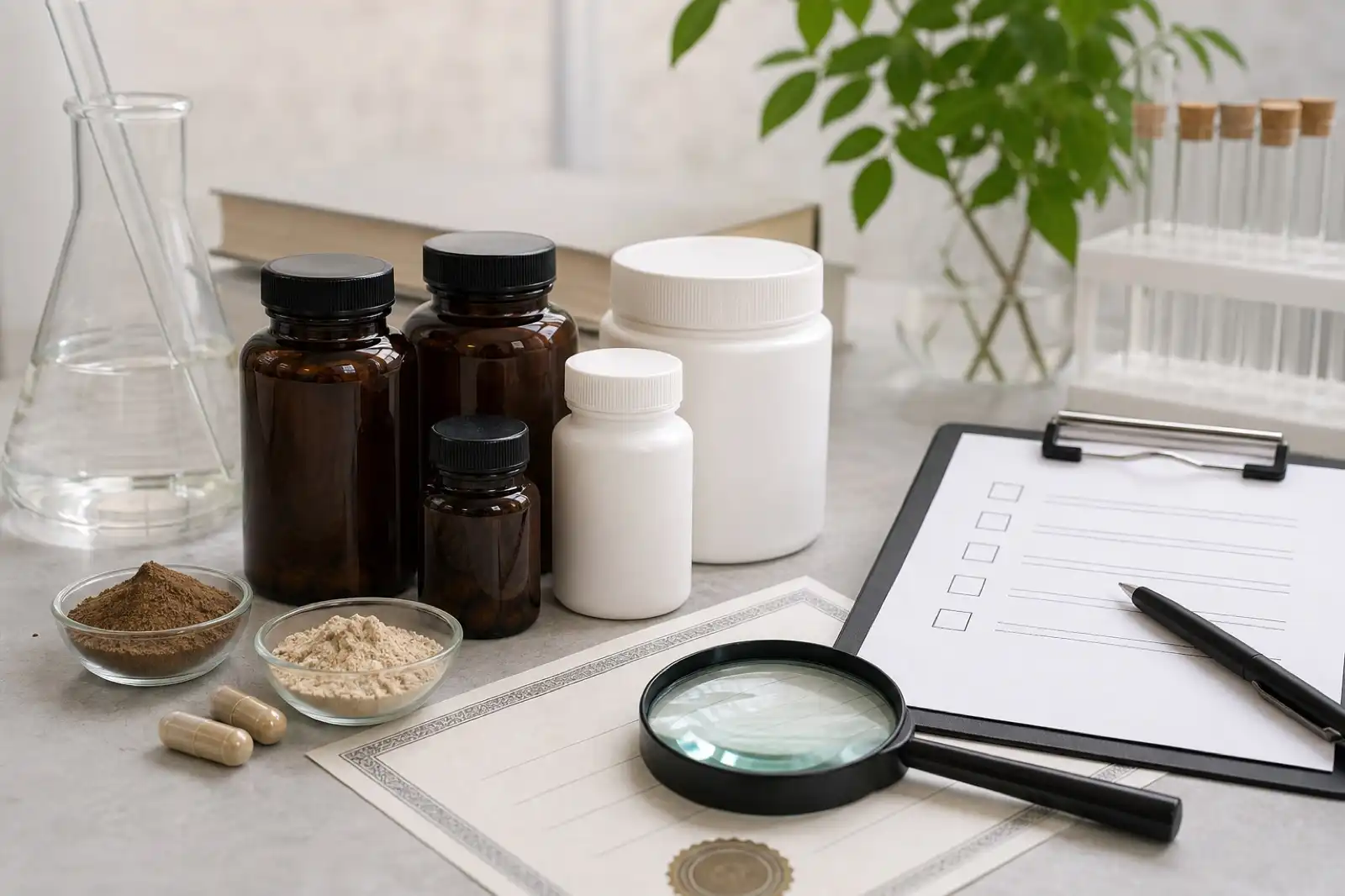
Mushroom Supplements: Labels, Testing, and Safety
Learn how to check mushroom supplement identity, fungal part, extraction, dose, lot testing, claims, interactions, and regulatory limits.
health
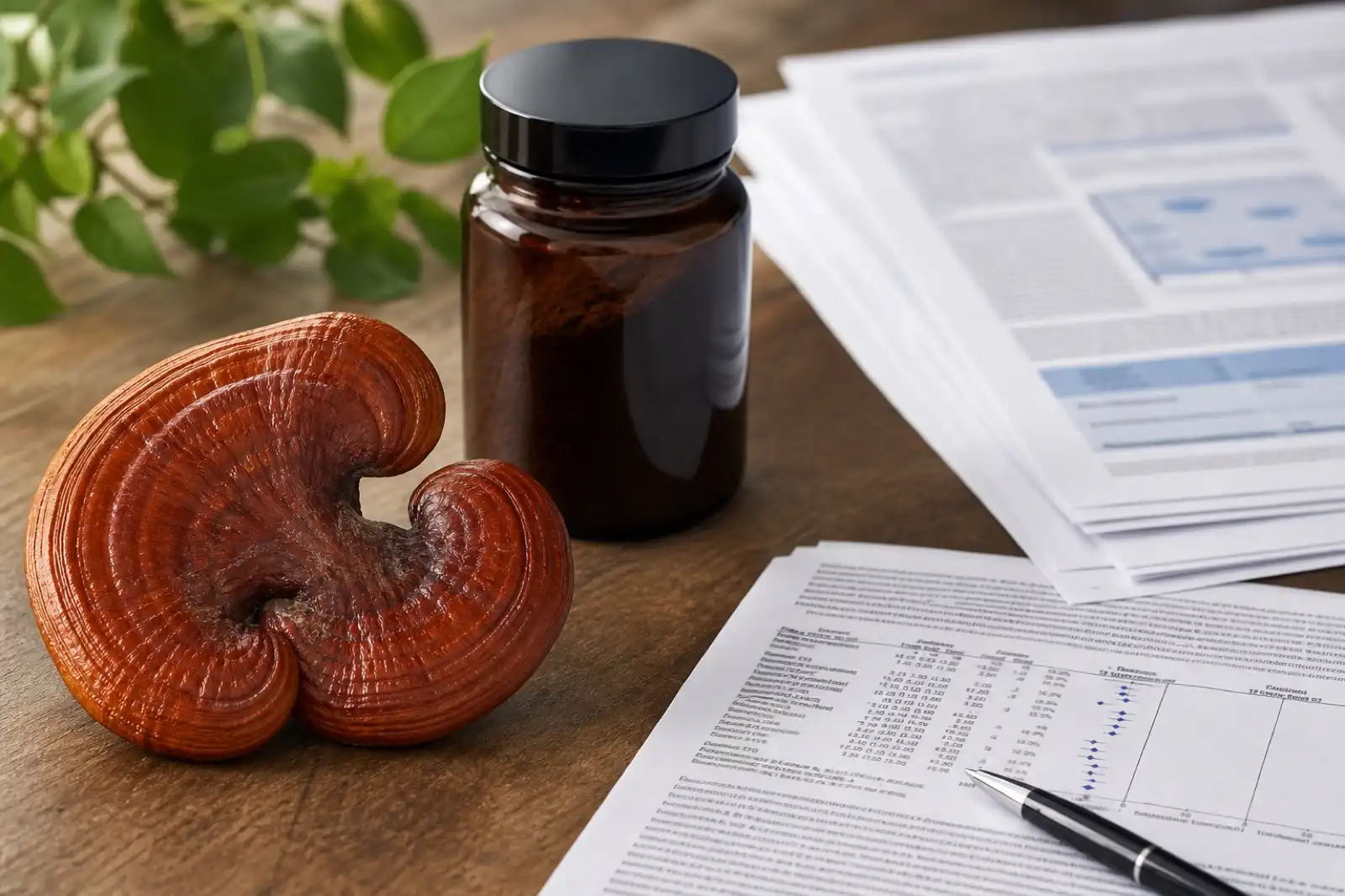
Reishi Mushroom Benefits: Evidence and Safety Review
Clinical evidence for reishi remains product-specific and uncertain; it does not support replacing cancer treatment or other prescribed care.
health
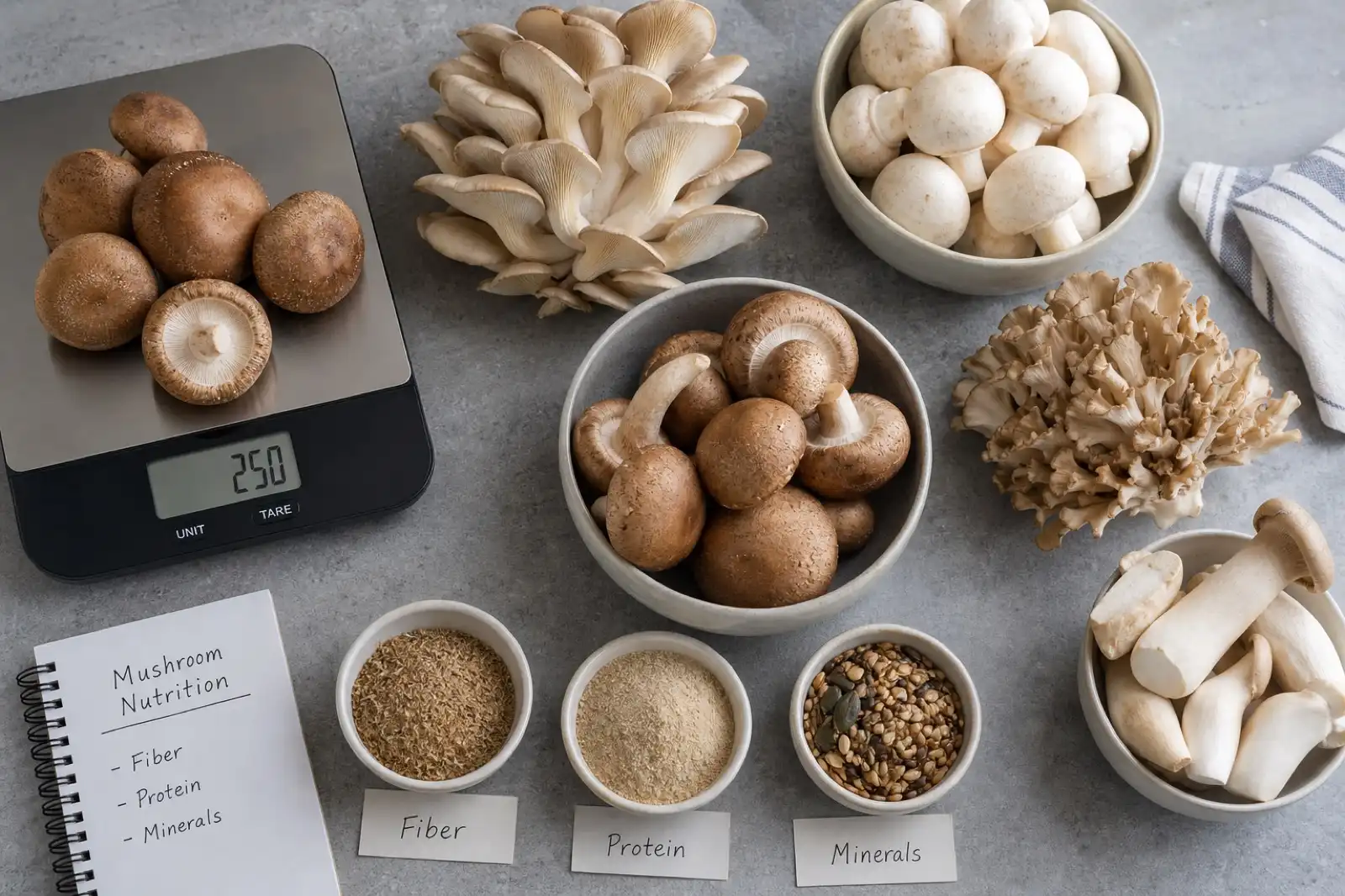
Mushroom Nutrition: Fiber, Protein, Calories, and Vitamins
Are mushrooms a source of fiber or protein? Compare calories, fiber, protein, vitamins, food forms, serving sizes, and preparation without overstating benefits.
Continue exploring
Browse more practical guides in Health or visit the mushroom encyclopedia.