Mushroom Encyclopedia
Inonotus obliquus: Chaga Species Guide
Learn Chaga identification, habitat, season, lookalikes, safety, food context, and cultivation limits with current taxonomy and sources.
By MushroomScope Editorial Team · · Updated
Species context
Treat profiles as reference material
Species profiles summarize documented traits, taxonomy, and lookalikes, but natural variation can be substantial.
Use the safety checklist →Decision limit
A profile cannot authenticate a specimen
Do not eat a wild mushroom from an online match, single feature, or generated image.
Read the safety disclaimer →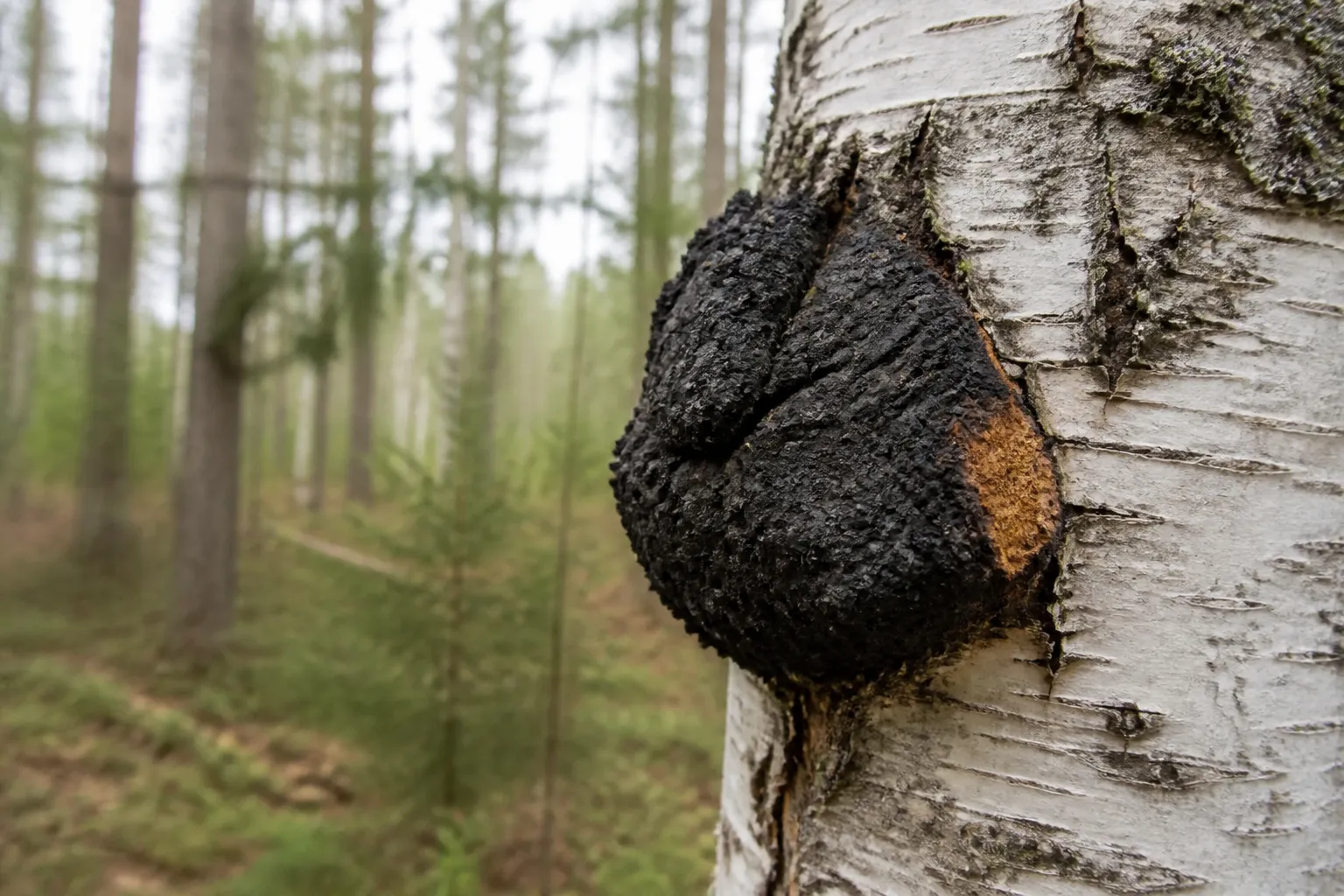
Quick facts
- Scientific name
- Inonotus obliquus
- Common names
- Chaga
- Taxonomy
- Inonotus · Hymenochaetaceae
- Edibility context
- Inedible: This database label is context, not remote clearance of a wild specimen; identity, preparation, spoilage, contamination, and individual reaction matter.
- Spore print
- Yellowish when the rare fruit body sporulates.
- Toxicity context
- Unknown: Risk includes misidentification and individual reaction. Consult current local toxicology guidance before any food decision.
- Season
- January, February, March, April, May, June, July, August, September, October, November, December
- Growing difficulty
- Not Cultivated
- Regions
- northern Europe, northern Asia, northern North America
Safety limit: These labels summarize documented context; they never authenticate a wild specimen. Cooking does not make a poisonous species safe.
Identification overview
A sterile black cracked conk with a rusty-brown interior, usually on living birch; the true fruit body forms later under bark. The harvested conk has no visible gills or pores; it is not the sexual fruit body. No stem; the sterile mass erupts through bark. Hard black exterior with corky orange-brown internal tissue. Observe several ages because rain, drying, insects, and decomposition can alter color and texture. Photograph the undisturbed growth, upper surface, fertile surface, complete attachment, and a lengthwise section. A yellowish deposit from the rare fruit body is supporting evidence, never a species verdict.
Habitat and season
A birch-associated pathogen of northern forests. The documented range represented here includes northern Europe and northern Asia and northern North America. Typical substrates or settings include living birch and occasionally other hardwoods. Fruiting records commonly occur in January, February, March, April, May, June, July, August, September, October, November, December, but latitude, elevation, rainfall, and host condition shift the calendar.
Ecology is part of the identification. Record whether the mushroom arises from soil or wood, whether wood is living or dead, and which trees are nearby. Obtain permission, respect protected areas, and avoid removing an entire local population.
Similar species
- Tree burls — woody plant growth rather than fungal tissue.
- Other black cankers — require host, internal structure, and expert examination.
This list is not exhaustive. The possible comparison set changes by region, and some separations require microscopy, chemical reactions, culture records, or DNA. Image-recognition tools can organize observations but cannot clear a specimen for consumption.
Food and safety context
Chaga is not treated here as a culinary mushroom. Do not taste it or infer safety from traditional use, tea marketing, or the absence of an obvious warning label. Individual allergy, gastrointestinal intolerance, spoilage, environmental contamination, and cross-contamination remain possible. Cooking does not make a poisonous species safe.
For severe vomiting, persistent diarrhea, confusion, jaundice, breathing difficulty, or any symptoms after an unidentified wild mushroom, contact emergency services or a poison center promptly. Keep uncooked material, trimmings, photographs, and meal details for professional identification.
Cultivation context
This species is not a dependable beginner crop. Its ecology, host relationship, or slow perennial growth makes ordinary indoor block methods unsuitable; use a cultivated alternative for home food production. Never cultivate an unidentified wild collection for food. Isolate batches with unexpected colors, slime, insects, or persistent abnormal odor and do not attempt to rescue them for eating.
How to document a find
- Photograph the habitat and growth habit before moving anything.
- Record location, date, weather, substrate, nearby trees, and odor without tasting.
- Photograph the cap, fertile surface, stem or attachment, and base in natural light.
- Measure several mature specimens and make a spore deposit when appropriate.
- Compare the complete record with a current regional key and qualified local expertise.
Publication review notes
For publication, this account should be read as a structured field profile rather than a shortcut to edibility. The most reliable use of the page is to compare a complete observation against several independent evidence categories: form, fertile surface, attachment, substrate, host context, season, region, odor, bruising or staining, and the condition of the material. Treat the visible black mass as a sterile canker-like structure, not a normal cap-and-stem mushroom. The host tree, interior color, and attachment matter more than a dramatic exterior texture. A single attractive photograph, market name, or app suggestion cannot replace that combined record.
Before any local use decision, separate three questions that are often blended together. First, does the collection belong to the broad morphological group described here? Second, does the local region actually support the species name used in the title, or is a related regional species more likely? Third, even if the identification is correct, is the material fresh, uncontaminated, legally collected, and appropriate for the intended use? Those questions require different evidence, and a weak answer to any one of them should stop a food or cultivation decision.
Photograph the specimen before handling, then document the underside, base or attachment, surrounding habitat, and a clean cross-section. For wood-associated fungi, include the host or substrate and whether the wood is living, dead, buried, or processed. For grassland or soil-fruiting fungi, include nearby trees, turf treatment, roadsides, livestock areas, and any potential contamination source. Do not rely on color alone; rain, sun exposure, age, frost, insects, and camera white balance can change the apparent palette enough to mislead a comparison.
The safety language in this article is intentionally conservative. Published edibility labels summarize historical or culinary context, not permission to eat an unknown specimen. Conditional species, medicinally marketed species, and familiar edible groups all still carry risks from lookalikes, spoilage, individual intolerance, and local taxonomic complexity. When symptoms follow a mushroom exposure, preserve photographs, leftovers, trimmings, and timing details, and contact emergency or poison-control services promptly.
Field verification details
A careful chaga record begins with the tree, not with the black exterior. Note whether the host is birch, whether the trunk is living or dead, and whether the growth emerges from a wound, knot, old branch scar, or cracked bark. The sterile conk should show a dark, cracked outer surface and an orange-brown to rusty interior when a small legal sample is examined. Do not confuse that interior with ordinary woody grain; true plant burls remain continuous with the wood and lack the same fungal tissue pattern. Because harvesting can damage trees and local rules vary, documentation should come before removal.
The most common identification mistake is treating every black mass on birch as chaga. Fire scars, cankers, burls, old polypores, and weathered wounds can all look dramatic from a distance. Photograph the growth from several angles, include the whole trunk, and record the forest type. A useful comparison photo includes the bark texture above and below the mass, the point of emergence, and any nearby fruiting bodies. If the material is intended for study, preserve a small dry sample with date and host notes rather than relying on memory.
Chaga is often discussed in supplement and tea contexts, but this species account does not make health claims. Concentrated extracts, self-prepared teas, and material from polluted roadsides or treated land raise questions that are separate from identification. People with medical conditions, medication use, kidney-stone history, pregnancy, or planned surgery should treat supplement claims cautiously and seek professional medical advice. From an ecological perspective, chaga is part of a long interaction with living birch; removing large amounts from many trees can reduce habitat value and is rarely justified for casual curiosity.
Reader decision checklist
Use this checklist to decide whether an observation is strong enough for learning, not whether it is safe to eat. For Chaga, the record is stronger when these points are answered in writing: host is verified as birch or clearly recorded as uncertain; black exterior and rusty interior are documented together; tree burl and canker alternatives have been considered; harvest legality and tree impact are addressed. If one of these points is missing, mark the identification as tentative and collect more evidence before comparing it with food, cultivation, or supplement information.
A good checklist entry includes both positive and negative evidence. Positive evidence explains what matches the species profile. Negative evidence explains what dangerous or common alternatives were ruled out and why. For example, a note that says “found on wood” is weak by itself, while a note that describes the exact wood, visible attachment, fertile surface, spore context, and excluded lookalikes is much stronger. This distinction matters because many mushroom mistakes happen when a field note records only the attractive matching feature and ignores the contradictory details.
The cover illustration is a teaching aid, not a specimen record: use it only to notice broad features worth documenting, then verify them against an intact local collection and an appropriate regional key.
For publication review, avoid language that turns uncertainty into confidence. Phrases such as “consistent with,” “supports,” and “requires local confirmation” are often more accurate than absolute identification claims when microscopy, DNA, or regional expert review has not been done. This article can help organize observations, but the final responsibility for a real specimen depends on local expertise, legal access, current taxonomy, and the condition of the material in hand.
Keep a dated record even when no specimen is collected. A useful record includes location at an appropriate privacy level, habitat, substrate or host, weather pattern, photographs from several angles, and notes on odor, staining, latex, or texture when relevant. Repeated observations across a season can be more educational than one rushed collection because they show how the same species changes with age, rain, drying, insects, and decay.
Distinguish the sterile conk from the reproductive stage
The familiar black, cracked chaga mass is a sterile conk produced from infected birch tissue; it is not a conventional shelf-shaped mushroom and does not display the pore surface that many field guides use for polypores. Record whether the mass is continuous with living bark, exposes a rusty-brown interior where already broken, and occurs on a birch that can be identified from independent bark, twig, bud, or leaf characters. Do not cut a healthy tree merely to expose color. Burl tissue, healed wounds, fire scars, and dark cankers can share a rough silhouette without having the same origin.
The sexual fruiting structure is a different, comparatively inconspicuous stage associated with dead or dying host tissue, commonly developing beneath bark and releasing spores after the bark splits. That life-cycle distinction matters: a black mass on a trunk is not proof that a collector has documented every stage of Inonotus obliquus, and absence of a visible pore layer on the conk is expected rather than diagnostic failure. A useful voucher record therefore joins host identification, trunk position, several scales of photography, date, and locality with microscopic or sequence evidence when a formal determination is required.
Birch condition, collection pressure, and evidence boundaries
Removing a conk does not demonstrate that the internal infection has been cured, and repeated harvesting can wound the host or degrade a site. Where collection is legal, landowner permission, local conservation rules, clean tools, and a deliberately limited take are minimum considerations. Apparent abundance at one tree should not be generalized to a region. Health claims also require separation between a named fungus, a chemically characterized preparation, a laboratory outcome, and a demonstrated human benefit; these are not interchangeable evidence steps. The supplements evidence guide explains why label identity and product form matter.
Separate the sterile conk from the hidden fruit body
The black mass commonly harvested as chaga is a sterile conk produced where Inonotus obliquus interacts with living host tissue; it is not the ordinary pore-bearing fruit body used to describe many polypores. A field record should therefore show the conk’s attachment to the trunk, the intact bark above and below it, and a fresh broken edge that reveals the rusty orange-brown interior. Record whether the host is alive, declining, or dead. A blackened wound on dead wood, charcoal, burl tissue, or another canker does not become chaga merely because its surface is cracked.
The sexual fruit body is uncommon and develops beneath loosened bark, often after host decline or death. Its temporary, resupinate pore surface is biologically distinct from the persistent sterile mass. This life-cycle separation matters because a collector who looks only for a familiar black exterior misses the feature that produces spores and may misdescribe the organism’s reproductive structure. Do not carve a living tree to search for it; document naturally exposed bark and leave uncertain material in place.
Host identity and geographic boundaries
Birch association is strong evidence only when the tree itself is documented. Photograph bark at several heights, twigs or leaves when present, and the surrounding stand; white bark alone does not establish a birch species. North American and Eurasian records involve different birch communities, climate histories, and naming practices, so a range map supports a hypothesis rather than confirming a collection. GBIF occurrence points also vary in voucher quality and coordinate precision. A responsible record retains the identifier, date, locality precision, host basis, and whether a specimen was deposited.
Chaga’s ecology is inseparable from the living host. Removing large conks wounds bark and does not eradicate the fungus already established in wood. Collection rules, protected-land restrictions, tree ownership, and sustainability guidance vary locally. For observation, repeated non-destructive photographs of the same marked trunk can document changes in cracking, exposed interior, host crown condition, and bark separation without treating the conk as a renewable crop.
Keep species evidence separate from product claims
A packet labeled chaga tea, powder, or extract cannot be authenticated from the field photograph on its label. Product assessment needs scientific identity, fungal material, extraction method, serving mass, lot, contaminant testing, and traceable manufacturer information. Chemical assays and cell experiments do not establish a clinical benefit, and concentrated products are not equivalent to a beverage prepared from an authenticated conk. The mushroom supplement guide explains how to compare the marketed material with the material actually studied.
This separation also protects identification work. Oxalate exposure, medicine interactions, allergy, contamination, and individual conditions are product and person questions; they cannot be resolved by confirming a birch-associated conk. A field determination should end with taxonomy and ecology. A use decision begins a new evidence review and, where health conditions or medicines are involved, belongs with a clinician or pharmacist who can inspect the exact product.
Birch supports more than one conspicuous fungus: the birch polypore guide explains how an annual bracket, its pore surface, and brown-rot record differ from chaga’s sterile conk.
References
- Global Biodiversity Information Facility. Inonotus obliquus species record. Taxonomic backbone and occurrence context.
- National Center for Biotechnology Information. NCBI Taxonomy Browser. Independent lineage and nomenclature checkpoint.
- North American Mycological Association. Mushroom Poisoning Syndromes. Poisoning response and syndrome context.
- U.S. Food and Drug Administration. Selecting and Serving Produce Safely. General handling guidance for mushrooms used as food.
Editorial review: August 15, 2026. Taxonomy, regional range, and poison-response contacts should be rechecked at every substantive update.
Source quality notes
MushroomScope cites sources that match the page scope, such as taxonomic databases, extension guidance, food-safety agencies, food-composition databases, and peer-reviewed or institutional health references. Sources support context and uncertainty; they do not turn an online page into specimen identification, medical advice, or a tested recipe record.
Frequently asked questions
Can Chaga be identified from one photograph?
No. Identification requires the complete specimen, fertile surface, attachment, substrate, habitat, region, developmental stage, and sometimes microscopy or DNA.
Is wild Chaga safe to eat?
This page cannot clear a wild specimen for food. Obtain in-person confirmation from a qualified local identifier and follow local guidance; cooking cannot make a poisonous lookalike safe.
Where does Chaga grow?
A birch-associated pathogen of northern forests. Regional records and host associations should be checked before applying this summary to a local collection.
What is the spore print of Chaga?
The expected deposit is yellowish when the rare fruit body sporulates, but print color overlaps among fungi and cannot confirm this species by itself.
Can Chaga be cultivated at home?
It is not a simple beginner crop; use authenticated commercial material and species-specific professional guidance rather than wild tissue.
Related guides
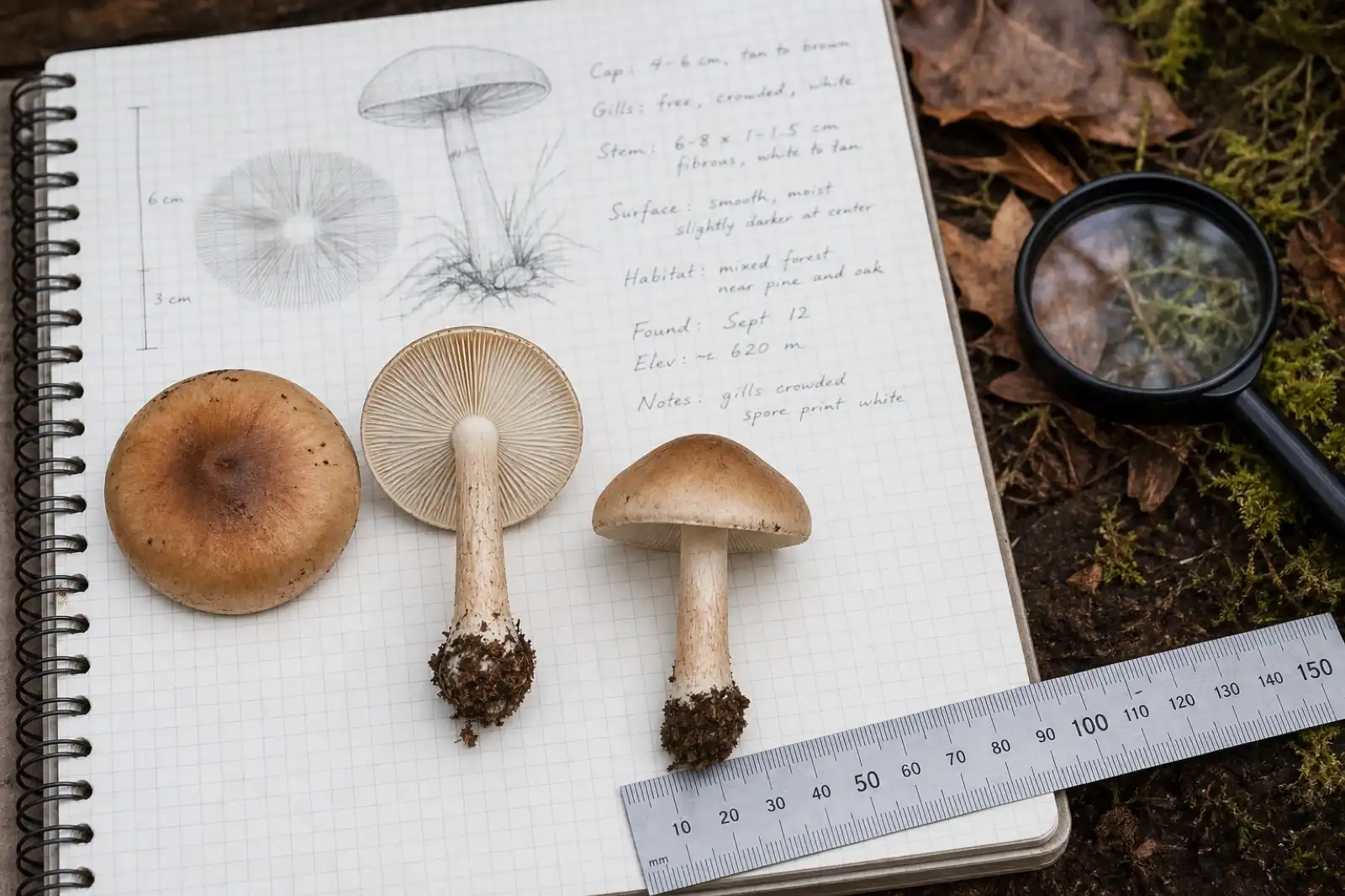
identification
How to Identify Mushrooms: A Beginner's Field Guide
Build an identification from the whole specimen, substrate, habitat, spore deposit, and location—not from a single photograph.
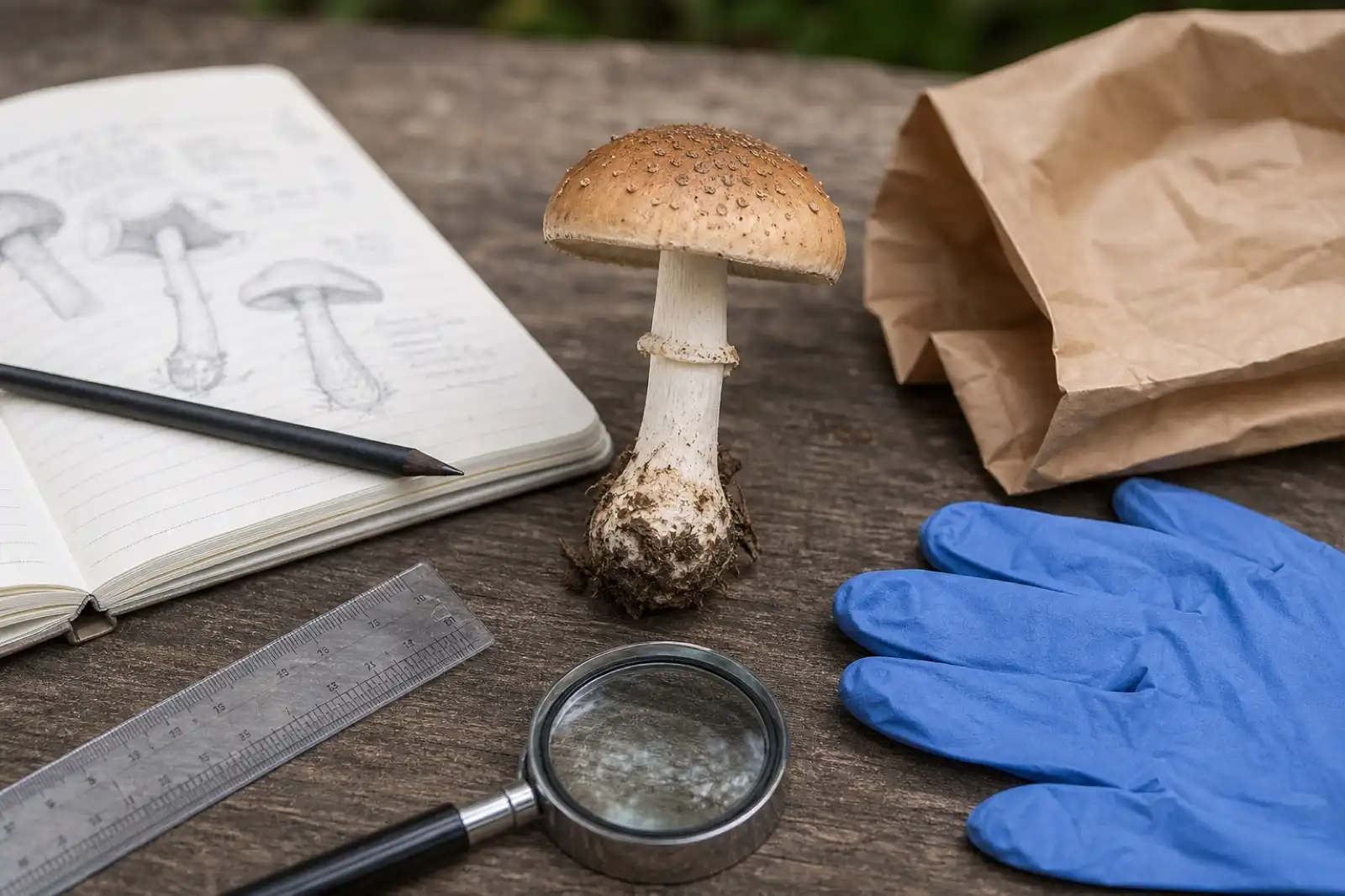
identification
Mushroom Identification Safety Checklist
Use a conservative checklist before handling, documenting, or discussing any wild mushroom, especially when edibility is being considered.
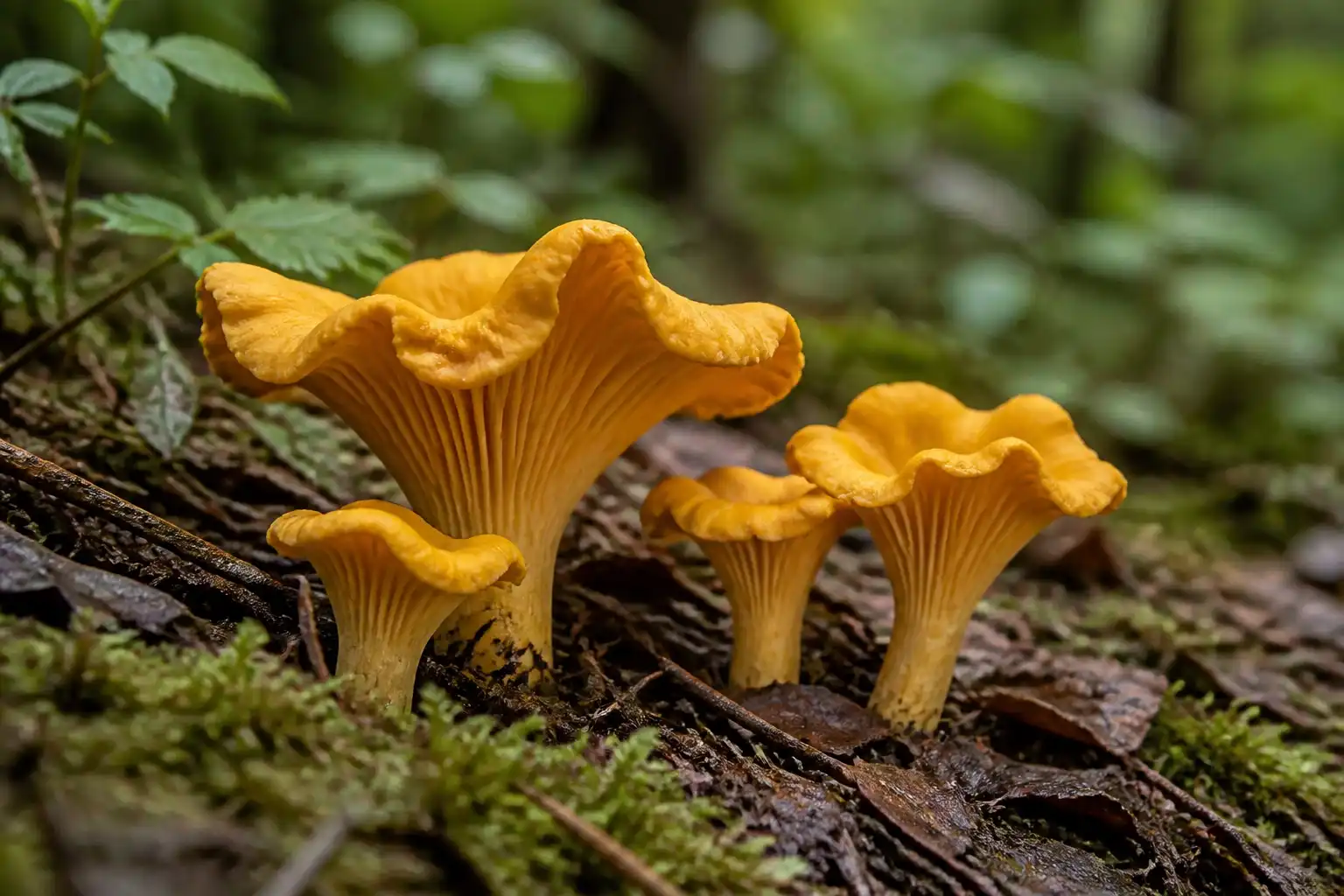
mushrooms
Cantharellus cibarius: Chanterelle Identification Guide
Learn chanterelle identification, false gills, habitat, season, poisonous lookalikes, edibility, nutrition, and why wild finds need local verification.
Continue exploring
Browse more practical guides in Mushroom Encyclopedia or visit the mushroom encyclopedia.