Mushroom Encyclopedia
Birch Polypore: Fomitopsis betulina Host and Decay Guide
Identify birch polypore through verified birch host evidence, annual bracket development, fine white pores, brown-rot context, and perennial lookalike separation.
By MushroomScope Editorial Team · · Updated
Species context
Treat profiles as reference material
Species profiles summarize documented traits, taxonomy, and lookalikes, but natural variation can be substantial.
Use the safety checklist →Decision limit
A profile cannot authenticate a specimen
Do not eat a wild mushroom from an online match, single feature, or generated image.
Read the safety disclaimer →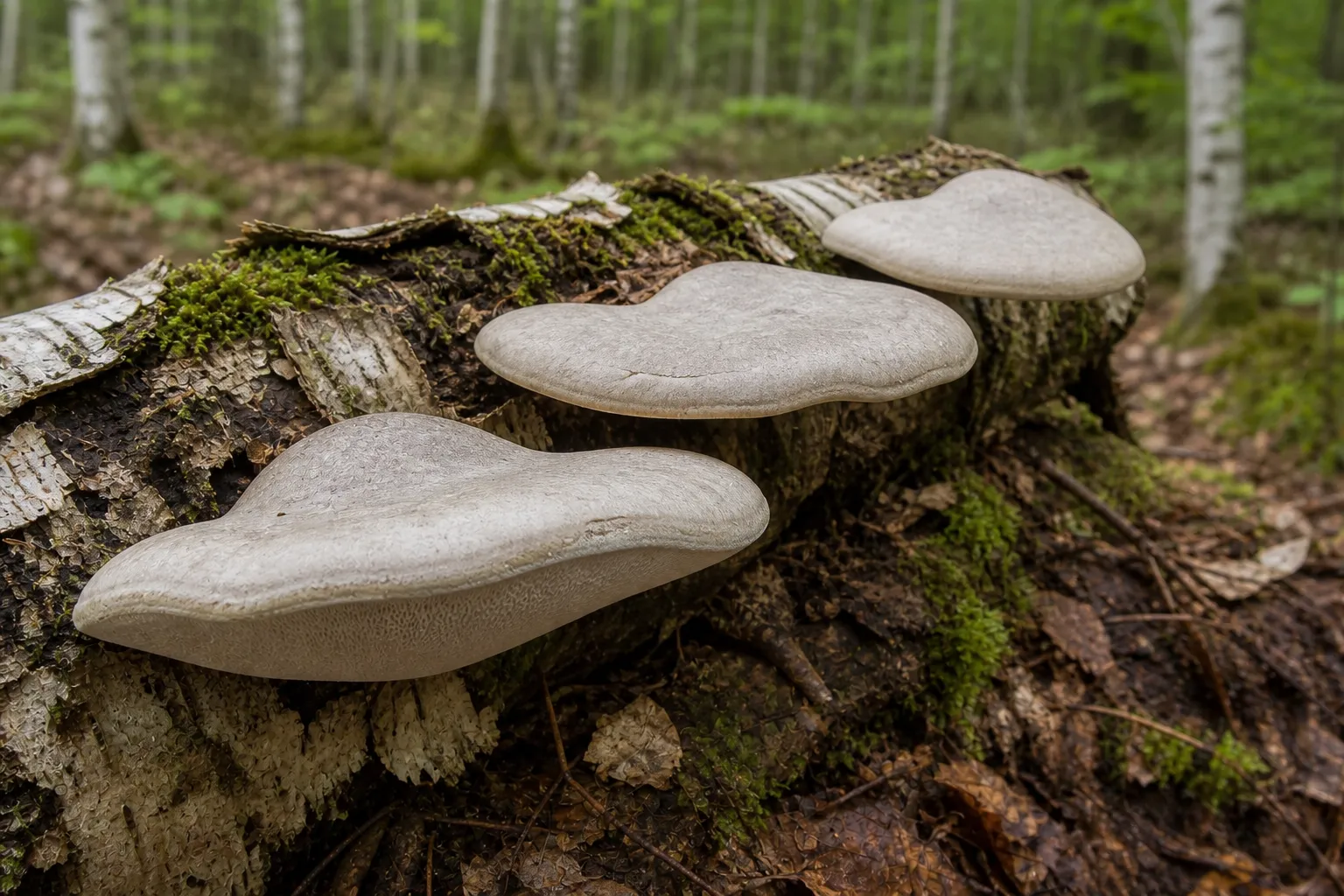
Quick facts
- Scientific name
- Fomitopsis betulina
- Common names
- Birch polypore
- Taxonomy
- Fomitopsis · Fomitopsidaceae
- Edibility context
- Inedible: This database label is context, not remote clearance of a wild specimen; identity, preparation, spoilage, contamination, and individual reaction matter.
- Spore print
- White.
- Toxicity context
- None Known: Risk includes misidentification and individual reaction. Consult current local toxicology guidance before any food decision.
- Season
- August, September, October, November, December
- Growing difficulty
- Not Cultivated
- Regions
- Northern Hemisphere
Safety limit: These labels summarize documented context; they never authenticate a wild specimen. Cooking does not make a poisonous species safe.
Identification overview
Smooth pale brown to gray kidney-shaped brackets found almost exclusively on birch. White pore surface with small round pores. Short lateral attachment or no distinct stem. White, corky, and increasingly tough with age. Observe several ages because rain, drying, insects, and decomposition can alter color and texture. Photograph the undisturbed growth, upper surface, fertile surface, complete attachment, and a lengthwise section. A white spore deposit is supporting evidence, never a species verdict.
Habitat and season
A birch specialist causing brown rot in dead and weakened trees. The documented range represented here includes Northern Hemisphere. Typical substrates or settings include birch trunks and birch branches. Fruiting records commonly occur in August, September, October, November, December, but latitude, elevation, rainfall, and host condition shift the calendar.
Ecology is part of the identification. Record whether the mushroom arises from soil or wood, whether wood is living or dead, and which trees are nearby. Obtain permission, respect protected areas, and avoid removing an entire local population.
Similar species
- Fomes fomentarius — harder, hoof-shaped, and perennial with layered growth.
- Piptoporellus species — related brackets separated by microscopic and geographic evidence.
This list is not exhaustive. The possible comparison set changes by region, and some separations require microscopy, chemical reactions, culture records, or DNA. Image-recognition tools can organize observations but cannot clear a specimen for consumption.
Food and safety context
Birch polypore is not treated here as a culinary mushroom. Do not taste it or infer safety from traditional use, tea marketing, or the absence of an obvious warning label. Individual allergy, gastrointestinal intolerance, spoilage, environmental contamination, and cross-contamination remain possible. Cooking does not make a poisonous species safe.
For severe vomiting, persistent diarrhea, confusion, jaundice, breathing difficulty, or any symptoms after an unidentified wild mushroom, contact emergency services or a poison center promptly. Keep uncooked material, trimmings, photographs, and meal details for professional identification.
Cultivation context
This species is not a dependable beginner crop. Its ecology, host relationship, or slow perennial growth makes ordinary indoor block methods unsuitable; use a cultivated alternative for home food production. Never cultivate an unidentified wild collection for food. Isolate batches with unexpected colors, slime, insects, or persistent abnormal odor and do not attempt to rescue them for eating.
How to document a find
- Photograph the habitat and growth habit before moving anything.
- Record location, date, weather, substrate, nearby trees, and odor without tasting.
- Photograph the cap, fertile surface, stem or attachment, and base in natural light.
- Measure several mature specimens and make a spore deposit when appropriate.
- Compare the complete record with a current regional key and qualified local expertise.
Verify birch before interpreting the bracket
Host evidence is the first high-value discriminator. Photograph bark pattern, attached twigs, buds or leaves, and the bracket on the same piece of wood. A fallen log beside living birches is not enough: storm movement, stacked firewood, and mixed woodland can separate a trunk from the nearest canopy. If the host remains uncertain, retain a pale-polypore identification rather than assigning Fomitopsis betulina.
Record whether the birch is standing, fallen, snapped, or reduced to a stump, plus diameter, bark retention, and decay stage. Brackets on a standing stem may indicate established internal decay even when the crown appeared normal earlier. That observation does not date infection or prove the fungus caused the tree’s original decline.
Track one annual bracket from soft margin to weathered shell
Young brackets are rounded and pale with a thick, rolled margin. Expansion produces the characteristic kidney or hoof-like side profile, a smooth buff-to-brown upper surface, and a fine white pore layer. With age the margin thins, the surface darkens or cracks, and the flesh changes from yielding and corky to tough. Photographing different ages on one trunk is more informative than merging them into one idealized description.
Measure projection from the wood, width across the bracket, and thickness at both attachment and margin. Photograph the pore surface with a scale and count pores across a known distance rather than describing them only as “small.” Slice one legally collected bracket vertically to show whether the flesh is uniform and corky or contains layered tubes associated with repeated perennial growth.
Connect brown rot to wood structure without overdiagnosing a tree
Birch polypore causes brown rot: cellulose and hemicellulose are preferentially degraded while modified lignin remains, and advanced wood can become brown, brittle, and cubically cracked. That decay mechanism explains why a heavily colonized birch section may lose strength. It does not allow a web page to calculate failure probability from a mushroom photograph.
For a standing tree near a path, building, or play area, record bracket height, number, trunk defects, lean, crown condition, recent storms, and the potential target zone, then consult a qualified arborist. Do not remove brackets as a “treatment”; they are fruit bodies of mycelium already within the wood. Cutting them off can also erase useful evidence before assessment.
Separate annual birch polypore from perennial hoof brackets
Fomes fomentarius often forms a harder, gray, hoof-shaped perennial bracket with distinct accumulated tube layers. A section through the bracket and a view of its attachment are more decisive than upper-surface color. Artist’s conks and other Ganoderma can show different crusts, pore bruising, and host ranges. Pale annual polypores on other hardwoods require their own regional comparison set.
The key is a conjunction: verified birch host, annual bracket, smooth pale-to-brown cap, fine white pores, short lateral attachment, and white corky flesh. Missing host evidence or visible perennial layers should lower confidence immediately. The habitat identification guide explains how to preserve substrate evidence, while the photo checklist covers the views needed for later review.
Traditional-use claims need material and evidence boundaries
Birch polypore appears in historical-use and laboratory literature, but a wild bracket, tea, powder, purified compound, cell experiment, and animal experiment are not interchangeable materials. Chemical composition varies with age, extraction method, geography, and specimen condition. Mechanistic findings do not establish a clinical treatment, dose, or safety profile.
This page does not recommend eating or self-treating with collected brackets. Old fruit bodies may be insect-damaged, moldy, or contaminated, and identification errors remain possible. Anyone using a commercial product should evaluate the exact ingredient, species authentication, lot testing, claims, and interactions with qualified medical guidance rather than transferring a traditional label to an unknown preparation.
Build a repeatable host-and-bracket record
Assign one observation number to host evidence, whole-tree or whole-log context, bracket upper surface, pore surface, side profile, attachment, measurements, and section. Record whether the bracket was still flexible, whether pores were clean or bruised, and whether multiple development stages shared the same wood. Revisit photographs can establish that a bracket is annual more reliably than memory.
Leave most fruit bodies in place. They produce spores, provide habitat, and document the decay process. Where collection is permitted and justified, one representative specimen with complete context is more useful than stripping a log. The cover image is an AI-generated teaching illustration and cannot substitute for these observations.
Preserve host evidence with the bracket record
Photograph birch bark, leaves or twigs, the attachment point, upper cap, pore surface, and side profile under one collection number. Weathered pale brackets on an uncertain host should remain unresolved. Host fit supports the name but does not replace pore, texture, age, range, and local expert review.
Use attachment geometry to reconstruct bracket development
A young Fomitopsis betulina begins as a pale, rounded swelling that expands into a hoof- or kidney-shaped annual bracket. Record where the cap meets the wood: a broad lateral attachment without a true stem is more informative than the cap outline alone. In a sequence on the same fallen birch, measure projection from the bark, width across the attachment, thickness near the base, and thickness at the actively growing margin. A thin, pale, rounded margin indicates current expansion; an older bracket becomes firmer, browner, and more cracked as weather and insects alter it.
Section one damaged or expendable bracket vertically. The pore tubes form a distinct layer beneath the pale context, and the upper crust is not equivalent to the soft interior. Photograph tube depth and context thickness with a scale. These measurements help separate a single annual fruit body from perennial hoof fungi that add visible tube layers over multiple seasons. Do not cut multiple intact brackets merely to repeat the same observation; retain the host, attachment, and aging sequence in the record.
Map birch decay without diagnosing tree risk from a fruit body
Birch polypore is strongly associated with birch, but “on birch” still needs verification. Photograph bark, twigs, buds, and any leaves independently of the fungus. On downed wood, note whether bark is retained, whether the trunk broke before or after extensive decay, and whether cubical brown-rot structure is visible in a naturally exposed surface. The bracket and the decay pattern support an ecological interpretation; neither dates colonization or proves why a standing tree failed.
Tree-risk decisions need more than a species name. A fruit body can indicate established internal decay, while stability also depends on remaining sound wood, stem diameter, root condition, lean, wind exposure, targets, and other defects. Keep this natural-history record separate from an arboricultural assessment. That boundary makes the page useful without turning a bracket photograph into a safety verdict.
References
- Global Biodiversity Information Facility. Fomitopsis betulina species record. Taxonomic backbone and occurrence context.
- National Center for Biotechnology Information. NCBI Taxonomy Browser. Independent lineage and nomenclature checkpoint.
- North American Mycological Association. Mushroom Poisoning Syndromes. Poisoning response and syndrome context.
- U.S. Food and Drug Administration. Selecting and Serving Produce Safely. General handling guidance for mushrooms used as food.
Substantive editorial update: September 16, 2026. Added host-verification, annual development, measurement, brown-rot mechanics, tree-risk boundaries, perennial-bracket separation, and evidence limits for traditional-use claims. No named mycologist, clinician, or arborist reviewed this page.
Source quality notes
MushroomScope cites sources that match the page scope, such as taxonomic databases, extension guidance, food-safety agencies, food-composition databases, and peer-reviewed or institutional health references. Sources support context and uncertainty; they do not turn an online page into specimen identification, medical advice, or a tested recipe record.
Frequently asked questions
Can Birch polypore be identified from one photograph?
No. Identification requires the complete specimen, fertile surface, attachment, substrate, habitat, region, developmental stage, and sometimes microscopy or DNA.
Is wild Birch polypore safe to eat?
This page cannot clear a wild specimen for food. Obtain in-person confirmation from a qualified local identifier and follow local guidance; cooking cannot make a poisonous lookalike safe.
Where does Birch polypore grow?
A birch specialist causing brown rot in dead and weakened trees. Regional records and host associations should be checked before applying this summary to a local collection.
What is the spore print of Birch polypore?
The expected deposit is white, but print color overlaps among fungi and cannot confirm this species by itself.
Can Birch polypore be cultivated at home?
It is not a simple beginner crop; use authenticated commercial material and species-specific professional guidance rather than wild tissue.
Related guides
identification
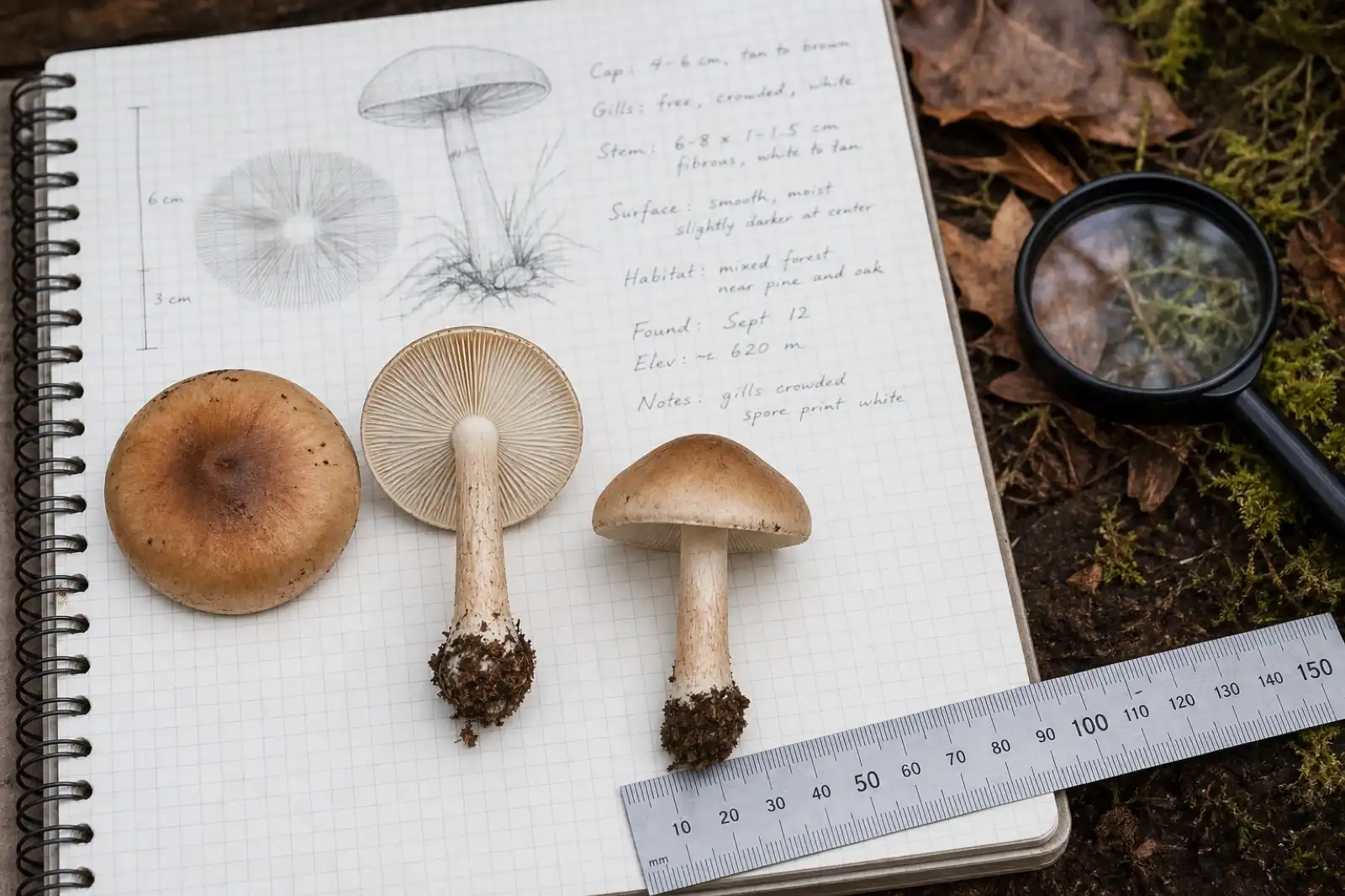
How to Identify Mushrooms: A Beginner's Field Guide
Build an identification from the whole specimen, substrate, habitat, spore deposit, and location—not from a single photograph.
identification
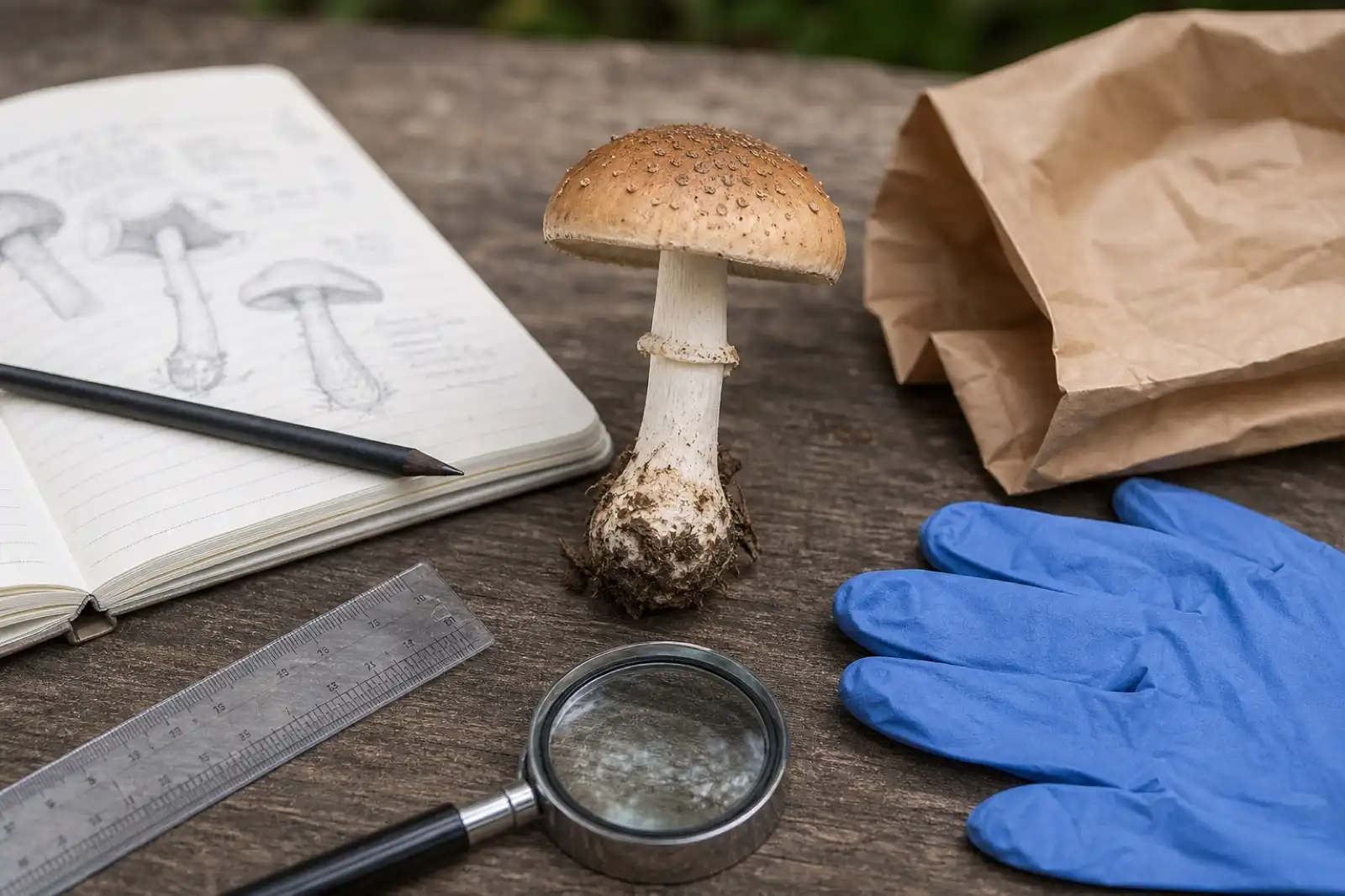
Mushroom Identification Safety Checklist
Use a conservative checklist before handling, documenting, or discussing any wild mushroom, especially when edibility is being considered.
mushrooms
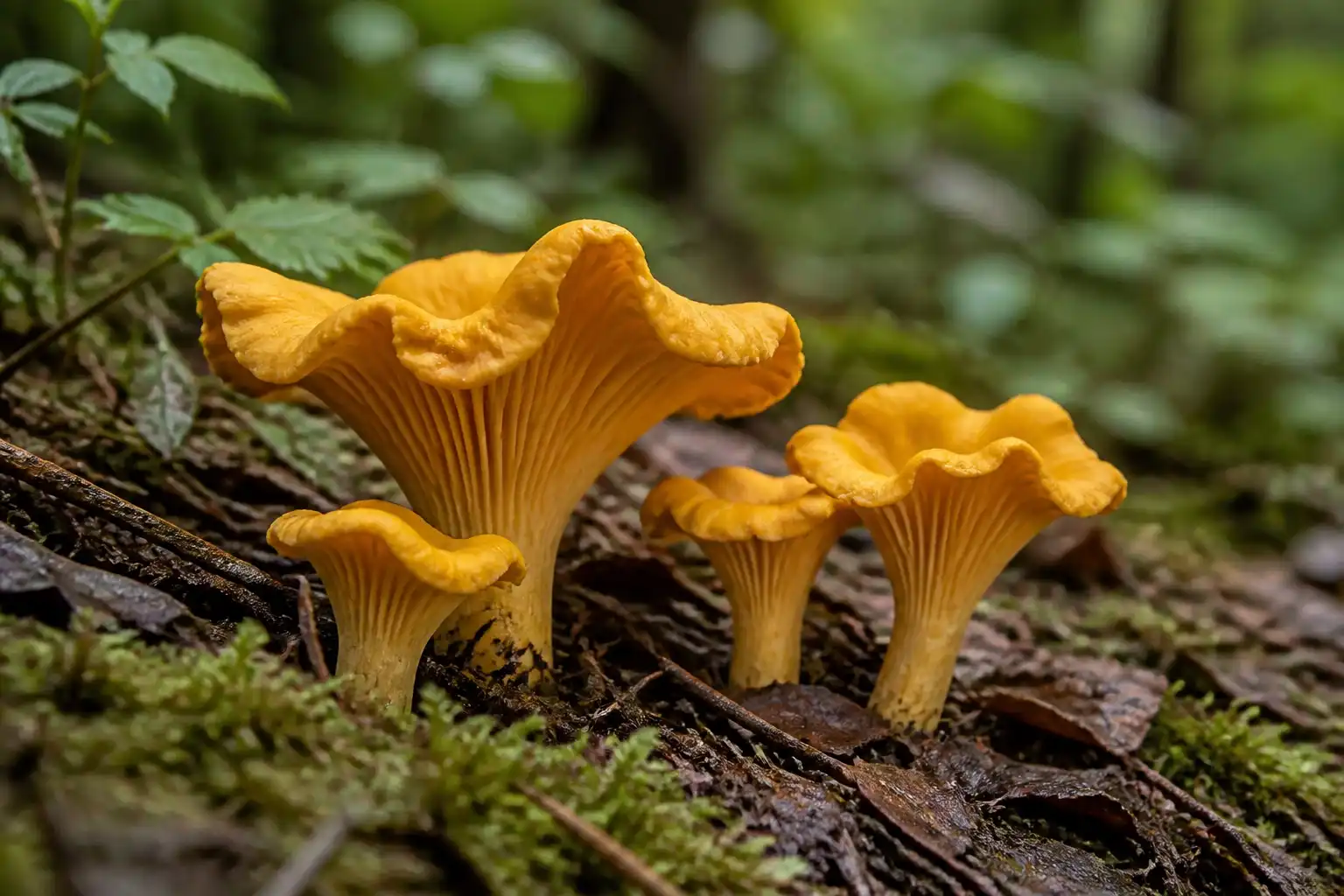
Cantharellus cibarius: Chanterelle Identification Guide
Learn chanterelle identification, false gills, habitat, season, poisonous lookalikes, edibility, nutrition, and why wild finds need local verification.
Continue exploring
Browse more practical guides in Mushroom Encyclopedia or visit the mushroom encyclopedia.