Health
Shiitake Health Benefits: Nutrition, Lentinan, and Evidence Limits
Review shiitake nutrition, lentinan research, dermatitis, supplement equivalence, and why food evidence does not establish disease treatment.
By MushroomScope Editorial Team · · Updated · Editorially reviewed
Evidence context
Food, extracts, and supplements differ
Health conclusions depend on species, fungal part, preparation, dose, population, and measured outcome.
Open the nutrition evidence hub →Medical limit
Educational, not medical advice
Do not delay diagnosis or replace prescribed care with mushroom foods or supplements.
Read the editorial policy →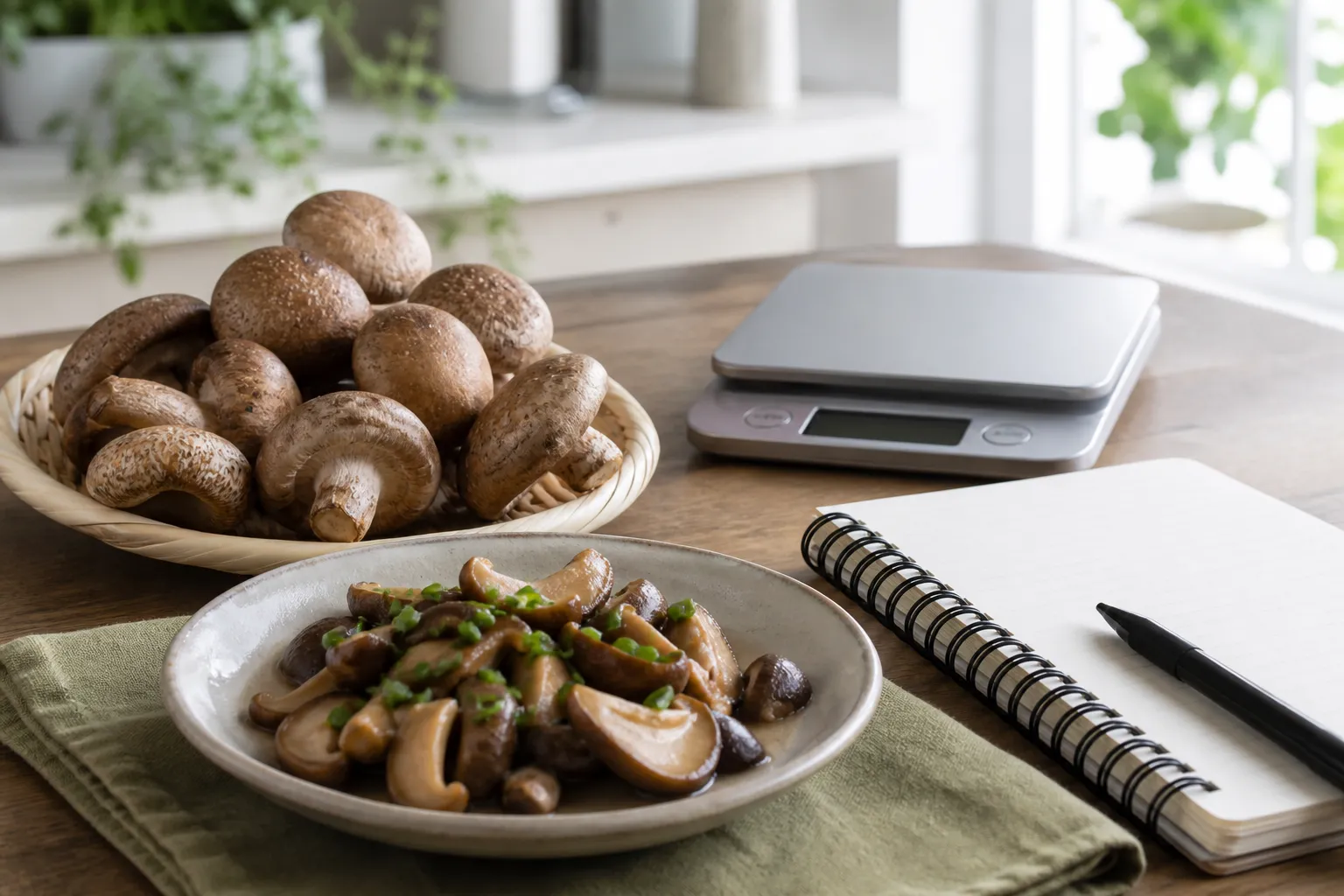
Review status: Editorial review only. No named physician, dietitian, pharmacist, or other clinical expert independently reviewed this page.
The useful answer is narrower than the marketing
Shiitake (Lentinula edodes) is a nutritious cultivated food. It can contribute fiber, modest protein, copper, selenium, and several B vitamins to a varied diet. That defensible statement is different from saying that a serving treats cancer, lowers cholesterol predictably, or “boosts” immunity. Research discussed under the shiitake name spans cooked caps, dried whole-mushroom powder, mycelial products, extracts, isolated compounds, laboratory experiments, animal models, and defined pharmaceutical preparations. They are not interchangeable exposures.
A practical evidence review begins with two questions: what material did people receive, and what outcome was actually measured? A laboratory marker is not automatically a meaningful clinical benefit. An adjunct studied alongside conventional treatment is not a replacement for that treatment. This page separates food composition from clinical claims so that a dinner ingredient is not made to carry conclusions from a different product.
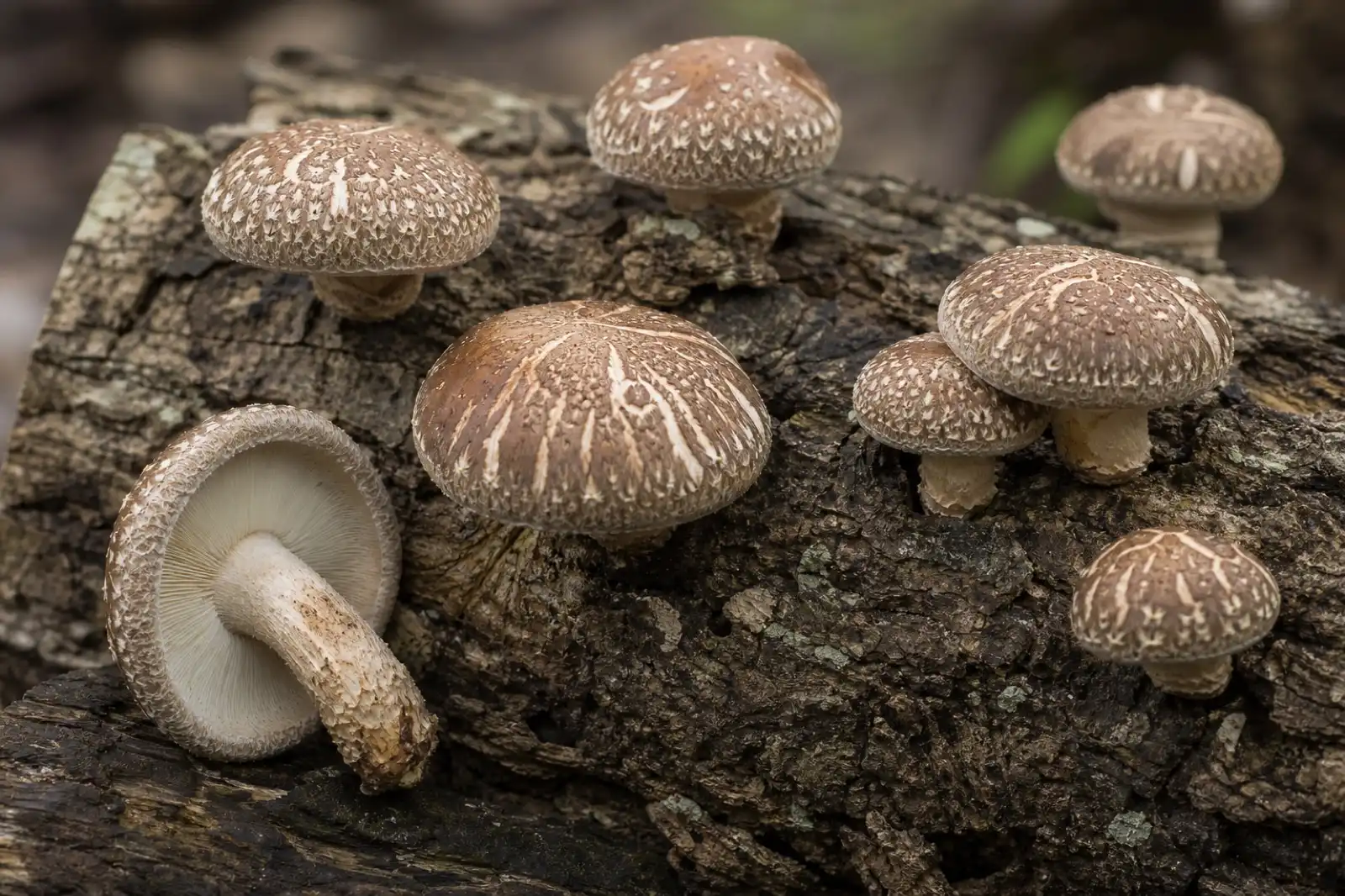
For species identity, cultivation, and morphology, use the shiitake mushroom guide. This guide is about human-health evidence and its limits.
Food composition changes with water, light, and serving size
Nutrition tables only become useful when the food form is matched. Fresh shiitake contains much more water than dried shiitake, so a 100-gram comparison makes the dried product look dramatically concentrated. Most people do not eat equal 100-gram portions of each. Rehydration adds water again, while soaking liquid, trimming, cooking loss, oil, salt, and sauces alter the final plate. A realistic comparison uses the amount actually eaten and the matching USDA FoodData Central entry rather than the largest number available.
Vitamin D deserves special care. Mushrooms can convert ergosterol to vitamin D2 after ultraviolet exposure, but the amount depends on production and postharvest treatment. A generic shiitake claim cannot establish the vitamin D content of a particular package. Check the label when the producer declares UV treatment, and do not assume a photographed brown cap is vitamin-D rich. People treating a diagnosed deficiency should follow clinical advice rather than substitute an uncertain food estimate for a prescribed dose.
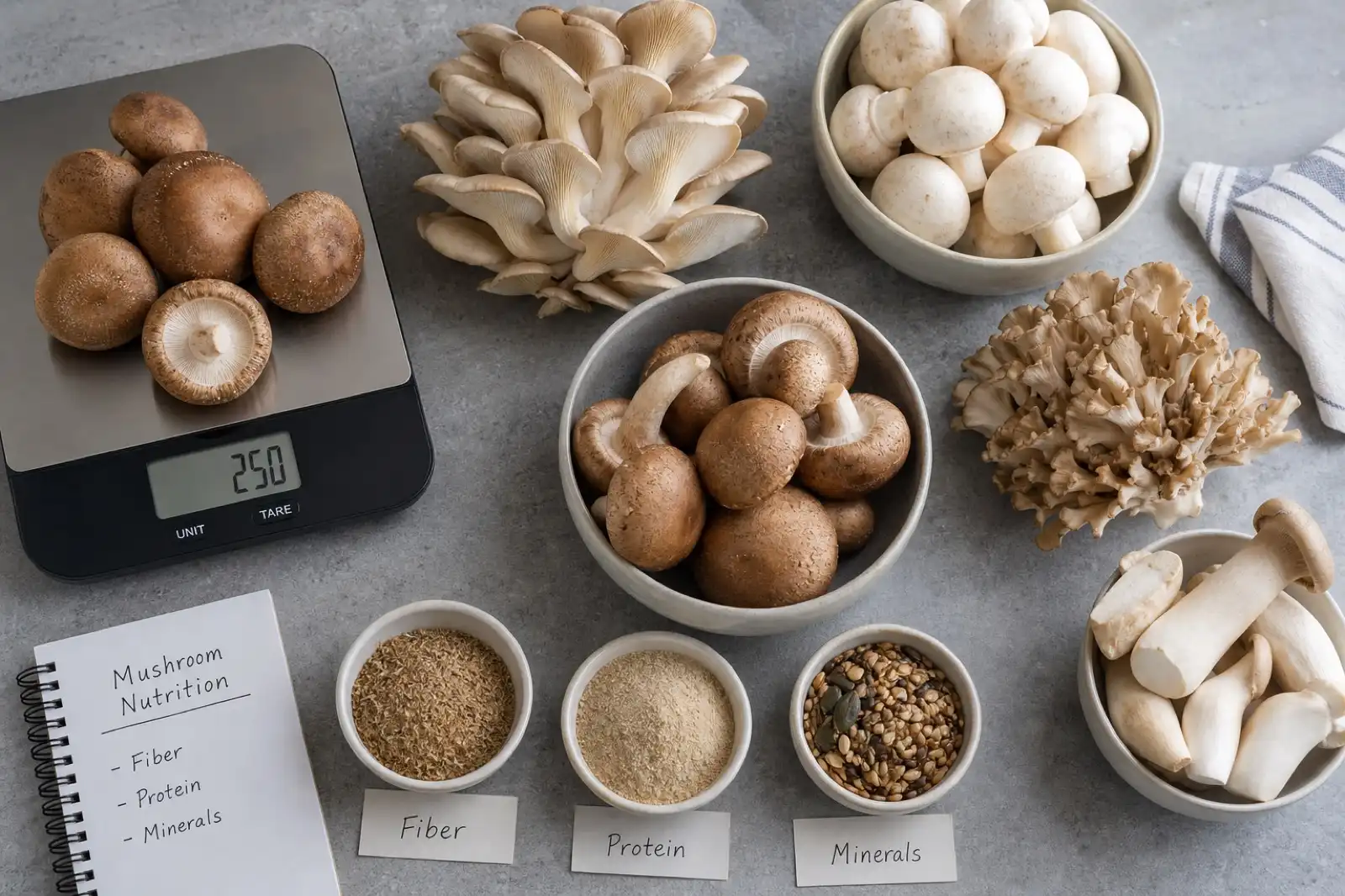
Shiitake is neither a concentrated protein food nor a reason to ignore the rest of a meal. Its value is culinary variety plus nutrients within the complete dietary pattern. The broader mushroom nutrition guide explains why “fiber or protein?” is the wrong either-or question.
Whole mushroom, mycelium, extract, and lentinan are different
“Shiitake” on a study title or supplement label does not identify the tested exposure. Whole fruiting-body powder retains a broad mixture of cell-wall material, carbohydrate, protein, minerals, and other compounds. Mycelial biomass may include residual growth substrate. A hot-water extract selects some soluble components and leaves others behind. Lentinan is a beta-glucan preparation with defined structural and manufacturing characteristics; it is not a synonym for every beta-glucan or every shiitake capsule.
Route matters as well. Evidence from a medically administered preparation cannot be transferred directly to an oral powder. Digestion, absorption, dose, purity, and quality controls differ. Even two oral extracts can differ in mushroom part, extraction ratio, solvents, marker compounds, and contaminants. A product page that cites lentinan research but never demonstrates that its lot contains a comparable preparation has not closed the equivalence gap.
When reading a claim, record the scientific name, fungal part, extraction method, marker compound, daily quantity, route, study duration, participant group, comparator, and prespecified outcome. Then compare those fields with the product in hand. The mushroom supplement guide gives a fuller label-audit workflow.
What lentinan cancer research can support
Lentinan has been studied as an adjunct to conventional cancer treatment, especially in research conducted in East Asia. “Adjunct” is the controlling word: participants received it alongside established care in specific regimens, not as proof that cooked shiitake or an over-the-counter powder can treat cancer. Study designs, cancer types, background therapies, administration routes, and outcome reporting vary. Some reviews describe signals of benefit, but heterogeneity and study quality limit broad conclusions.
These studies do not justify delaying surgery, radiation, chemotherapy, immunotherapy, hormonal therapy, or another prescribed treatment. They also do not establish a safe self-treatment dose. A person in cancer care should discuss any concentrated mushroom product with the oncology team because formulation uncertainty, adverse effects, liver or kidney function, bleeding risk, immune effects, and interactions can change the decision. Food used normally in meals is a separate question from high-dose extracts.
The accurate summary is that a defined shiitake-derived preparation has a research history in particular adjunctive settings. It is inaccurate to compress that history into “shiitake fights cancer.”
Cholesterol and immune claims remain preparation-specific
Shiitake compounds have been investigated for lipid and immune outcomes, but mechanistic plausibility is not the same as proven clinical benefit. Cell studies may reveal interactions with receptors or pathways; animal studies can test hypotheses under controlled exposures. Neither automatically predicts what a normal serving does in humans. Small human trials can be sensitive to baseline diet, participant risk, dose, duration, incomplete blinding, and selective outcomes.
A fall in one lipid marker does not establish fewer heart attacks or strokes. People prescribed statins or other cardiovascular treatment should not stop or reduce them on the basis of an extract study. Likewise, “immune support” is too vague to evaluate until the claim names the population, measured outcome, time frame, and trade-offs. More immune activity is not universally desirable, particularly for people with autoimmune disease, transplants, immune-modifying therapy, or cancer treatment.
The editorial rule used here is to report the material, outcome, and uncertainty together. If those details do not fit in a claim, the claim is probably doing more work than the evidence.
Shiitake dermatitis is a specific food-safety boundary
Shiitake dermatitis is a striking, intensely itchy eruption with linear or whip-like streaks. It is classically associated with eating raw or undercooked shiitake, although only a clinician can diagnose a rash and distinguish it from allergic, infectious, drug-related, or other causes. Onset can be delayed, so the mushroom meal may not be the first suspected exposure.
Thorough cooking is a sensible prevention step. It does not turn every reaction into a home-diagnosis problem, and it does not make a known allergy safe. Seek urgent medical care for breathing difficulty, facial or throat swelling, faintness, rapidly worsening symptoms, extensive blistering, mucosal involvement, or another severe reaction. For a less acute but persistent rash, document when shiitake was eaten, whether it was raw or cooked, when symptoms began, medicines and supplements used, and photographs over time for the clinician.
Food allergy is separate from shiitake dermatitis. Occupational exposure to spores or processing dust is also different from eating cooked mushrooms. Keeping those exposure routes separate prevents a vivid case report from becoming an indiscriminate warning—or a genuine warning from being dismissed.
Supplements add quality and interaction uncertainty
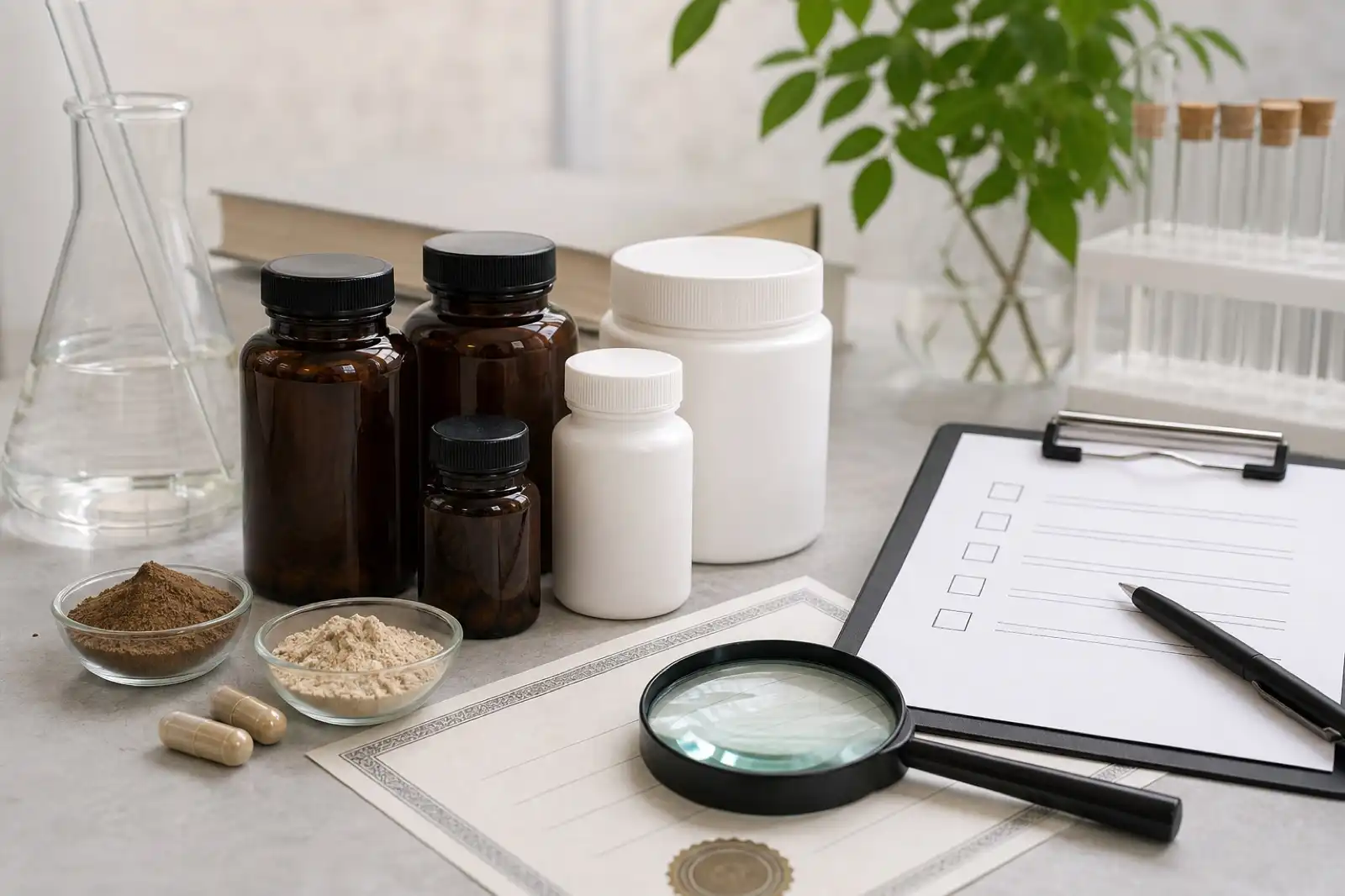
Retail supplements may differ in species authentication, fruiting body versus mycelium, residual substrate, extraction, concentration, undeclared ingredients, and batch testing. A certificate of analysis is most useful when it identifies the lot and laboratory, reports relevant methods and detection limits, and covers identity plus contaminants rather than presenting an undated marketing badge.
Concentrated use deserves individual advice during pregnancy or breastfeeding, before surgery, and for people with liver or kidney disease, allergies, autoimmune conditions, transplants, bleeding disorders, cancer, or multiple medicines. “Natural” does not answer questions about interaction, dose, contamination, or suitability. Report suspected adverse events to a clinician and the appropriate national regulator, retaining the label and lot number.
How to judge a shiitake headline in five checks
First, identify the material: food, powder, extract, purified fraction, or pharmaceutical preparation. Second, identify the evidence tier: laboratory, animal, observational, randomized trial, or systematic review. Third, inspect the outcome: marker, symptom score, adverse event, hospitalization, or survival. Fourth, ask whether the comparison and participant group match the person to whom the claim is being applied. Fifth, check absolute effect, uncertainty, duration, adverse events, and who funded the study.
This method often produces a less exciting conclusion, but a more useful one. Shiitake can be enjoyed as food; a defined derivative can be studied without proving that all shiitake products share its effect; and a safety signal can be taken seriously without treating every rash as self-diagnosable.
Audit exposure equivalence before borrowing a result
Build a row for the study and a row for the food or product being discussed. Compare scientific identity, fruiting body versus mycelium, fresh or dry mass, extraction solvent, extract ratio, marker compounds, daily quantity, route, duration, and lot testing. A blank field is an evidence gap, not permission to assume equivalence. If a trial used an injected or medically supervised lentinan preparation, an oral whole-mushroom powder fails the route and composition comparison immediately.
Dose units also need translation. Milligrams of a characterized fraction cannot be converted into “cups of shiitake” unless composition and recovery are measured. A label that lists only a proprietary blend does not reveal the amount of shiitake or lentinan. Even a declared beta-glucan percentage does not prove the same molecular structure, purity, or clinical exposure as the cited preparation.
Read treatment studies in absolute clinical context
When a paper reports a relative difference, look for the number of participants, baseline event rate, absolute difference, uncertainty interval, follow-up, withdrawals, adverse events, and whether the outcome was prespecified. A change in an immune marker is not automatically fewer symptoms, longer survival, or better quality of life. Subgroup findings and multiple endpoints require particular caution because chance findings become more likely as comparisons multiply.
Adjunct means added to standard care, not substituted for it. A study of a defined preparation alongside oncology treatment cannot support stopping treatment, self-dosing a retail extract, or describing cooked shiitake as anticancer therapy. Geography and regulatory context matter too: a medically used preparation in one health system may not be available, approved, or compositionally equivalent elsewhere.
Separate everyday food guidance from product decisions
For ordinary food use, verify the cultivated source, storage condition, and thorough cooking, then consider the entire meal. Shiitake can add flavor and texture without needing a therapeutic promise. Dried products should be stored as directed and rehydrated hygienically; soaking liquid and preparation practices change the served dish but do not transform it into a standardized extract.
For powders and extracts, record the exact label, lot, mushroom part, serving size, other ingredients, quality testing, and reason for use. People who are pregnant, preparing for surgery, receiving cancer therapy, using immunosuppressive or anticoagulant medicines, or managing allergies should discuss concentrated products with an appropriate clinician or pharmacist. This is a risk-screening step, not evidence that a specific interaction will occur.
Stop using a suspect product and seek medical advice for a significant rash or other concerning reaction. Breathing difficulty, facial or throat swelling, fainting, or rapidly worsening symptoms require urgent emergency evaluation. A photograph or article cannot distinguish shiitake dermatitis from every other eruption or determine whether another ingredient is responsible.
Frequently asked questions
Is shiitake proven to treat cancer?
No. Defined lentinan preparations have been studied as adjuncts in particular treatment settings, but shiitake food and retail supplements must not replace cancer care.
Does dried shiitake have more nutrients?
Drying removes water, so nutrients look concentrated per 100 grams. Compare realistic serving sizes, rehydration, and matching database entries.
What is shiitake dermatitis?
It is an itchy, streak-like eruption associated especially with raw or undercooked shiitake. Clinical assessment is needed because other conditions can look similar.
Is lentinan the same as shiitake powder?
No. Defined lentinan differs from whole-mushroom powder in composition, purity, dose, quality control, and sometimes route.
Should shiitake be cooked?
Yes. Thorough cooking is prudent for food safety and tolerance and reduces the risk associated with raw or undercooked shiitake.
References
- U.S. Department of Agriculture. FoodData Central. Food-composition records; choose the entry matching form and preparation.
- Oba K, et al. Individual patient based meta-analysis of lentinan for unresectable or recurrent gastric cancer. Preparation-specific adjunctive evidence, not evidence for culinary shiitake.
- Boels D, et al. Shiitake dermatitis recorded by French poison control centers. Clinical-pattern and exposure context.
- Memorial Sloan Kettering Cancer Center. Shiitake. Evidence, adverse-effect, and interaction cautions.
Source quality notes
MushroomScope cites sources that match the page scope, such as taxonomic databases, extension guidance, food-safety agencies, food-composition databases, and peer-reviewed or institutional health references. Sources support context and uncertainty; they do not turn an online page into specimen identification, medical advice, or a tested recipe record.
Frequently asked questions
Is shiitake proven to treat cancer?
No. Defined lentinan preparations have been studied as adjuncts in particular settings, but shiitake food or retail supplements must not replace cancer care.
Does dried shiitake have more nutrients?
Drying removes water, so nutrients look concentrated per 100 grams; realistic serving size, rehydration, and the exact database entry still matter.
What is shiitake dermatitis?
It is a distinctive itchy, streak-like eruption associated especially with raw or undercooked shiitake. Diagnosis and treatment require clinical assessment.
Is lentinan the same as shiitake powder?
No. A defined lentinan preparation differs from whole-mushroom powder in composition, purity, dose, and sometimes route.
Should shiitake be cooked?
Yes. Thorough cooking is prudent for food safety and tolerance and reduces the risk associated with raw or undercooked shiitake.
Related guides
mushrooms
Lentinula edodes: Shiitake Mushroom Identification and Cultivation
An evidence-aware guide to shiitake identification, hardwood cultivation, nutrition, dermatitis risk, safe cooking, classification, and FAQs.
health
Mushroom Nutrition: Fiber, Protein, Calories, and Vitamins
Are mushrooms a source of fiber or protein? Compare calories, fiber, protein, vitamins, food forms, serving sizes, and preparation without overstating benefits.
health
Mushroom Supplements: Labels, Testing, and Safety
Learn how to check mushroom supplement identity, fungal part, extraction, dose, lot testing, claims, interactions, and regulatory limits.
Continue exploring
Browse more practical guides in Health or visit the mushroom encyclopedia.