Health
Mushrooms and Blood Sugar: Food Evidence Without Treatment Claims
Review mushrooms, carbohydrate quality, meal context, glucose studies, medication safety, and why food associations do not prove diabetes treatment.
By MushroomScope Editorial Team · · Updated · Editorially reviewed
Evidence context
Food, extracts, and supplements differ
Health conclusions depend on species, fungal part, preparation, dose, population, and measured outcome.
Open the nutrition evidence hub →Medical limit
Educational, not medical advice
Do not delay diagnosis or replace prescribed care with mushroom foods or supplements.
Read the editorial policy →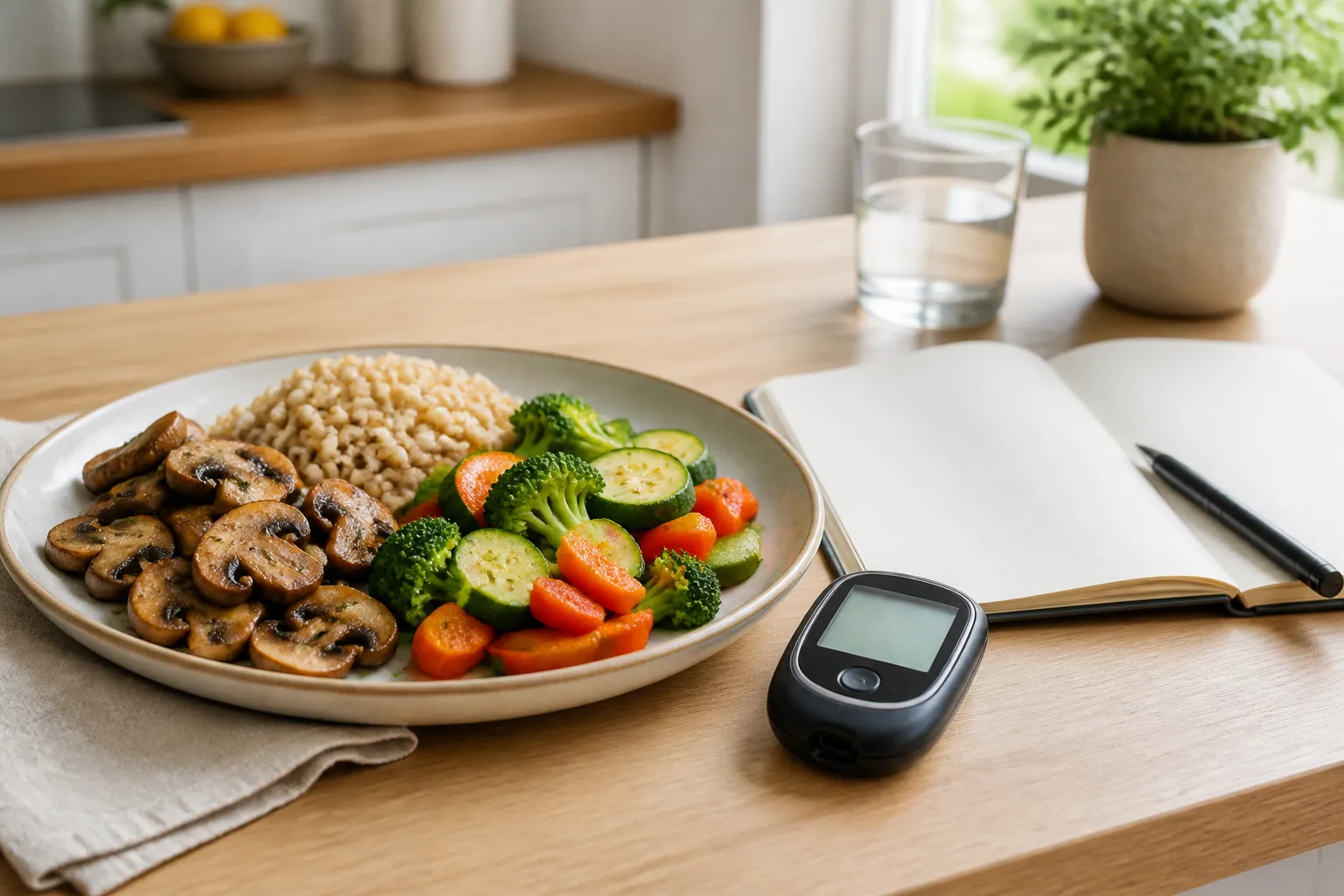
Review status: Editorial review only. No named physician, dietitian, pharmacist, or other clinical expert independently reviewed this page.
Mushrooms are a food choice, not diabetes treatment
Plain mushrooms are generally low in digestible carbohydrate per fresh serving and can fit many eating patterns. That does not mean they lower blood glucose independently or treat diabetes. The effect of a mushroom dish depends on portion, grain or starch, sauce, added sugar, fat, cooking, and what it replaces. Diabetes treatment decisions require individualized medical care, not a food headline.
The whole meal drives the glucose response
Post-meal glucose reflects the combined meal, digestion rate, insulin production and sensitivity, medications, activity, sleep, illness, and measurement timing. Mushrooms served with vegetables, legumes, and intact grains create a different exposure from breaded mushrooms with sweet sauce. A substitution study cannot tell whether mushrooms have a unique pharmacologic action unless other meal differences are controlled.
Fiber and carbohydrate claims need scale
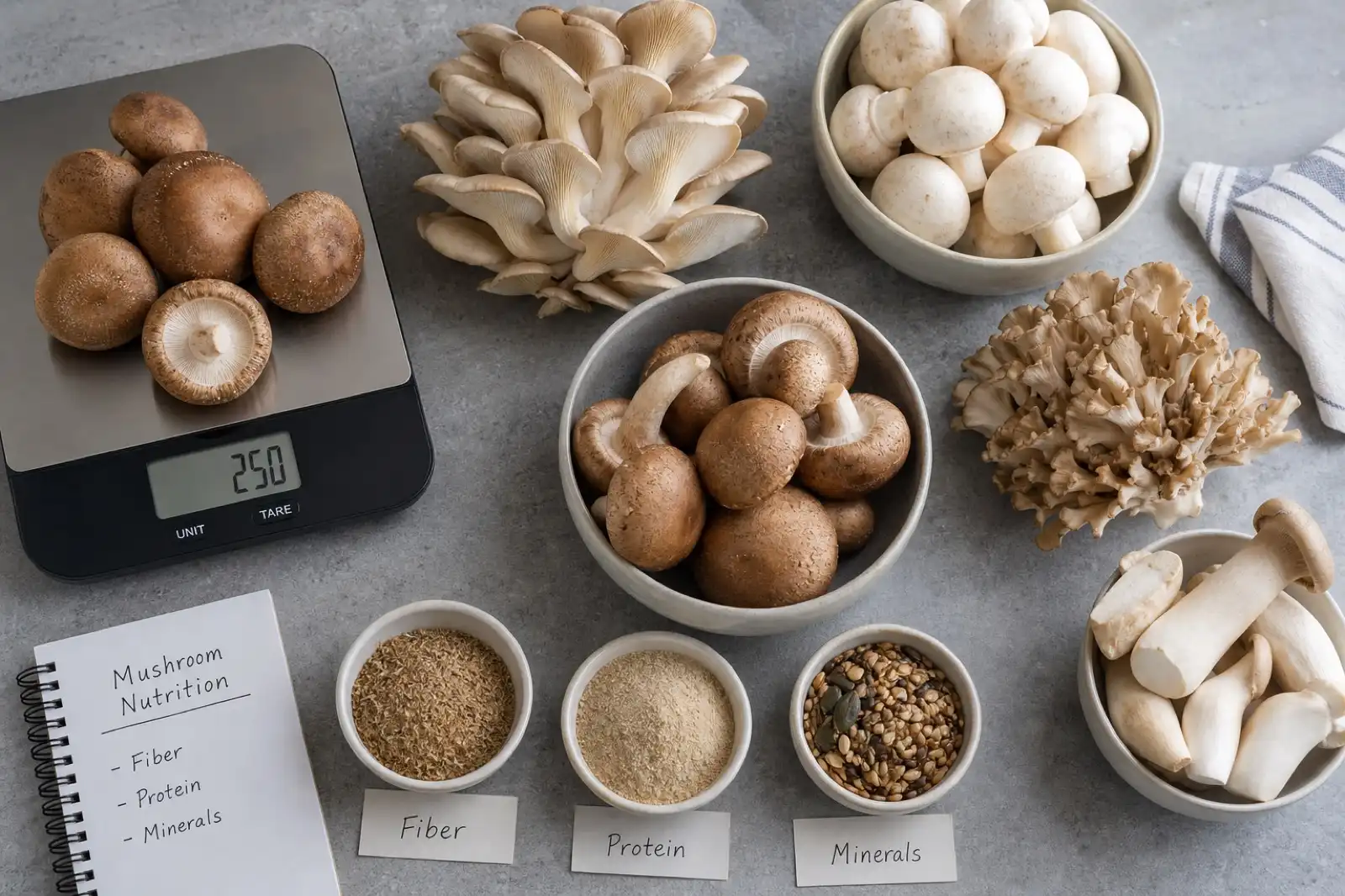
Mushrooms contribute fiber, but a typical fresh serving is not an exceptionally large fiber dose. Beta-glucans in fungal cell walls have structures distinct from cereal beta-glucans, and results for one purified fraction cannot be assigned to every mushroom. The nutrition guide provides food-level context rather than classifying mushrooms as a glucose-lowering agent.
The comparison that matters
Plain mushrooms are generally low in digestible carbohydrate per fresh serving and can fit many eating patterns. That does not mean they lower blood glucose independently or treat diabetes. The useful comparison keeps species or product, dose, preparation, population, and outcome aligned rather than borrowing certainty from a different exposure.
What observational studies can show
Prospective cohorts can test whether mushroom intake is associated with diabetes incidence or metabolic markers. People who eat more mushrooms may differ in overall diet, education, activity, healthcare, smoking, and body weight. Researchers adjust for measured factors, but residual confounding and inaccurate food-frequency reporting remain. Association can justify trials; it cannot prove that mushrooms caused lower risk.
Why extract trials do not describe dinner
Studies of concentrated powders, defined beta-glucans, or proprietary extracts deliver exposures unlike a cooked portion. Species, fungal part, extraction, dose, and duration must match before extrapolation. Animal models and cell work can clarify mechanisms but cannot set a safe human dose or authorize reducing insulin or oral medication.
Read glucose outcomes precisely
Fasting glucose, postprandial glucose, continuous-monitor readings, insulin, HOMA-IR, and HbA1c answer different questions. A short post-meal study cannot establish a durable HbA1c effect. A statistically significant shift may be too small to alter health. Trials also need an appropriate comparator, medication stability, prespecified outcomes, adherence, and adequate follow-up.
Questions to ask before accepting the claim
- For glucose claims, was the outcome measured in people, animals, cells, or a chemical assay?
- Does the tested species, fungal part, preparation, and dose match the food or product?
- Was the outcome prespecified, clinically meaningful, and measured long enough?
- Were adverse events, withdrawals, funding, and conflicts reported?
- Has an independent group replicated the result?
Medication and hypoglycemia safety
Anyone using insulin or medicines that can cause hypoglycemia should coordinate dietary changes and supplements with the treating team. Sweating, shaking, confusion, weakness, or altered consciousness can signal urgent low glucose, but symptoms vary; follow the personal treatment plan and seek emergency help when severe. Do not respond to a supplement claim by independently changing medicine.
Build a useful food experiment with a clinician
A practical food experiment changes one meal variable at a time, keeps the carbohydrate portion and measurement schedule consistent, and records the entire recipe. Home readings are affected by meter limits and technique, so patterns matter more than one number. A registered dietitian or diabetes clinician can help interpret results in relation to goals, medicines, kidney function, and nutritional adequacy.
Claims the current evidence cannot support
Evidence does not justify saying mushrooms reverse diabetes, replace medication, guarantee stable glucose, or make a high-carbohydrate meal harmless. It is reasonable to describe plain mushrooms as a low-energy ingredient that can add texture and displace some higher-energy ingredients. The nutrition guide explains food-level comparisons, while the nutrition evidence hub maps the broader evidence questions.
Separate ingredient displacement from a mushroom-specific effect
Replacing part of a refined-grain, processed-meat, or high-energy dish with mushrooms changes more than one variable. The revised meal may contain less available carbohydrate or energy, more water, a different fat profile, and a different portion volume. Those changes can be useful, but they should be described as properties of the substitution. Demonstrating a unique mushroom mechanism would require a comparator matched closely enough that the mushroom exposure is the meaningful difference.
Preparation details matter especially for glucose. A mushroom omelet, mushroom-barley soup, sweet teriyaki mushroom bowl, and breaded fried mushrooms have different carbohydrate loads and digestion patterns. Database values for plain raw mushrooms cannot represent these recipes. Portioning the starch, measuring sauces, and recording beverages often explains more of the post-meal response than debating small differences among mushroom species.
Continuous glucose monitors create abundant data but also invite overinterpretation. Interstitial readings lag blood glucose, sensors have error, and day-to-day responses vary. One flatter curve does not prove improved long-term control, while one spike does not establish that a food is forbidden. Compare repeated, similarly timed meals and use clinically agreed metrics. People without diabetes should not diagnose themselves from consumer sensor traces.
HbA1c estimates average glycemic exposure over a longer period but can be influenced by conditions affecting red blood cells and does not describe every high or low. Fasting glucose reflects a different window, and insulin-resistance indices are research estimates rather than interchangeable diagnoses. A paper that improves one marker should name that result precisely instead of being summarized as mushrooms fix blood sugar.
The appropriate dietary plan must also protect nutrition and quality of life. Extremely restricting carbohydrate can displace fiber-rich foods or conflict with medication. Kidney disease, pregnancy, older age, food insecurity, gastrointestinal disorders, and cultural eating patterns alter what is practical. A qualified team can translate evidence into portions and monitoring without assigning curative power to one ingredient.
Glucose evidence audit: write the claim in one sentence without words such as supports, boosts, detoxifies, or wellness. Name the exact outcome and time frame. Then record the study design, participant number, comparison group, attrition, preparation, dose, funding, and absolute result. Separate statistical significance from clinical importance. If the paper studies a concentrated ingredient while the claim concerns cooked food, mark that as an indirect comparison. If it studies a surrogate marker while advertising promises disease prevention, mark that as an outcome mismatch. Uncertainty should remain visible rather than being converted into a recommendation.
Glucose-product matching: photograph the full label and retain its lot number. Compare every ingredient with the paper rather than matching only the mushroom name. Ask what the control received and whether participants could guess their assignment. Look for preregistration and whether the reported primary outcome matches the registered one. A single study can inform a decision, but reliability grows through consistent results, appropriate methods, clinically meaningful endpoints, and independent replication.
A meal-planning example without a therapeutic promise
Suppose a usual dinner contains a large refined-grain portion, a creamy sauce, and little vegetable volume. A revised plate might use a smaller grain portion, cooked mushrooms and non-starchy vegetables for volume, and a clearly planned protein source. If post-meal glucose differs, the result belongs to the combined changes. It does not prove that mushrooms actively lowered glucose, and another person may respond differently.
To learn from the comparison, keep the grain type and measured portion consistent, use the same meter and timing, record activity and medication, and repeat rather than relying on one day. Do not manipulate medicine to make the experiment cleaner. If readings fall outside the personal action plan or symptoms occur, follow clinical instructions rather than continuing for the sake of data.
Restaurant meals are harder to compare because sauces, starches, and oil are not measured. Descriptions such as grilled or vegetable-rich do not reveal added sugar or portion. Asking for sauce on the side and noting the complete dish can make interpretation more useful, but the purpose is practical management, not perfect self-experimentation.
Mushroom supplements require a separate risk assessment. Concentrated fractions may be marketed using animal glucose results, and combining them with treatment can create unpredictable changes or distract from proven care. The evidence gap is not solved by calling a product food-based. Species identity, extraction, dose, contaminants, interactions, and human outcomes still need evaluation.
Count the carbohydrate that arrives with the mushrooms
The relevant comparison is the plated recipe, not the raw mushroom alone. Flour coatings, sweet glazes, rice, noodles, bread, and large milk-based sauces can contribute substantially more digestible carbohydrate than the mushrooms. Start with the labeled or database value for each ingredient, multiply by the amount actually used, and divide by the number of portions actually served. Restaurant descriptions rarely provide enough detail for an exact calculation.
For example, replacing part of a refined-grain portion with sautéed mushrooms changes both the carbohydrate amount and the food volume. If the rest of the plate, cooking fat, protein, and portion also change, the glucose result cannot be assigned to a mushroom compound. That meal may still be practical, but its benefit should be described as a whole-meal substitution rather than a demonstrated mushroom-specific effect.
Separate evidence tiers before drawing a conclusion
Food-composition data answer what a sampled food contained; they do not measure a person’s glucose response. Acute meal studies can compare responses over hours but cannot establish durable diabetes control. Longer randomized trials can address sustained outcomes when the intervention and comparator are credible, while observational cohorts describe associations that may remain confounded. Cell, animal, and extract experiments are mechanistic leads, not direct instructions for dinner or medication.
This hierarchy also prevents evidence laundering. A purified fungal polysaccharide tested at a defined dose should not be renamed “mushrooms” in a headline, and a result in animals should not be converted into a human serving. Check species, fungal part, processing, dose, comparator, population, outcome, and duration before deciding whether two studies address the same question.
Continuous glucose monitors do not identify a single cause
A CGM trace reflects sensor lag, timing, prior activity, sleep, stress, illness, medication, and the entire meal. One flatter curve after a mushroom dish is an observation, not proof of treatment. Compare like meals on more than one occasion using the personal monitoring plan supplied by the clinical team, and avoid changing medication or deliberately provoking high readings to create a cleaner experiment.
Compression, a new sensor, rapid glucose change, or readings inconsistent with symptoms may require confirmation under the device instructions. Urgent or repeated out-of-range readings belong in the person’s established care plan. The purpose of a food log is to support a qualified discussion, not to create a private diagnostic trial.
Frequently asked questions
Do mushrooms lower blood sugar?
Plain mushrooms can fit a diabetes eating pattern, but evidence does not establish them as an independent glucose-lowering treatment.
Are mushrooms low in carbohydrates?
Fresh plain mushrooms usually contain modest digestible carbohydrate, but the complete recipe and portion determine the meal exposure.
Can I replace diabetes medicine with mushroom supplements?
No. Do not stop or reduce prescribed treatment based on food or supplement claims.
Do mushroom beta-glucans work like oat beta-glucan?
Their structures and evidence differ, so effects should not be assumed equivalent.
How should I compare meals?
Keep portions and measurement timing consistent, record the full recipe, and interpret patterns with a qualified diabetes professional.
References
Source quality notes
MushroomScope cites sources that match the page scope, such as taxonomic databases, extension guidance, food-safety agencies, food-composition databases, and peer-reviewed or institutional health references. Sources support context and uncertainty; they do not turn an online page into specimen identification, medical advice, or a tested recipe record.
Frequently asked questions
Do mushrooms lower blood sugar?
Plain mushrooms can fit a diabetes eating pattern, but evidence does not establish them as an independent glucose-lowering treatment.
Are mushrooms low in carbohydrates?
Fresh plain mushrooms usually contain modest digestible carbohydrate, but the complete recipe and portion determine the meal exposure.
Can I replace diabetes medicine with mushroom supplements?
No. Do not stop or reduce prescribed treatment based on food or supplement claims.
Do mushroom beta-glucans work like oat beta-glucan?
Their structures and evidence differ, so effects should not be assumed equivalent.
How should I compare meals?
Keep portions and measurement timing consistent, record the full recipe, and interpret patterns with a qualified diabetes professional.
Related guides
health
Mushroom Nutrition: Fiber, Protein, Calories, and Vitamins
Are mushrooms a source of fiber or protein? Compare calories, fiber, protein, vitamins, food forms, serving sizes, and preparation without overstating benefits.
health
Cooked vs. Raw Mushrooms: Nutrition and Safety
Cooking changes water content, texture, digestibility, and measured nutrient concentration; it also supports safer produce handling.

health
Mushroom Supplements: Labels, Testing, and Safety
Learn how to check mushroom supplement identity, fungal part, extraction, dose, lot testing, claims, interactions, and regulatory limits.
Continue exploring
Browse more practical guides in Health or visit the mushroom encyclopedia.