Health
Fruiting Body vs. Mycelium: Understanding Mushroom Products
Fruiting bodies and cultured mycelium are different materials; substrate, extraction, identity testing, and measured constituents all affect comparison.
By MushroomScope Editorial Team · · Updated · Editorially reviewed
Evidence context
Food, extracts, and supplements differ
Health conclusions depend on species, fungal part, preparation, dose, population, and measured outcome.
Open the nutrition evidence hub →Medical limit
Educational, not medical advice
Do not delay diagnosis or replace prescribed care with mushroom foods or supplements.
Read the editorial policy →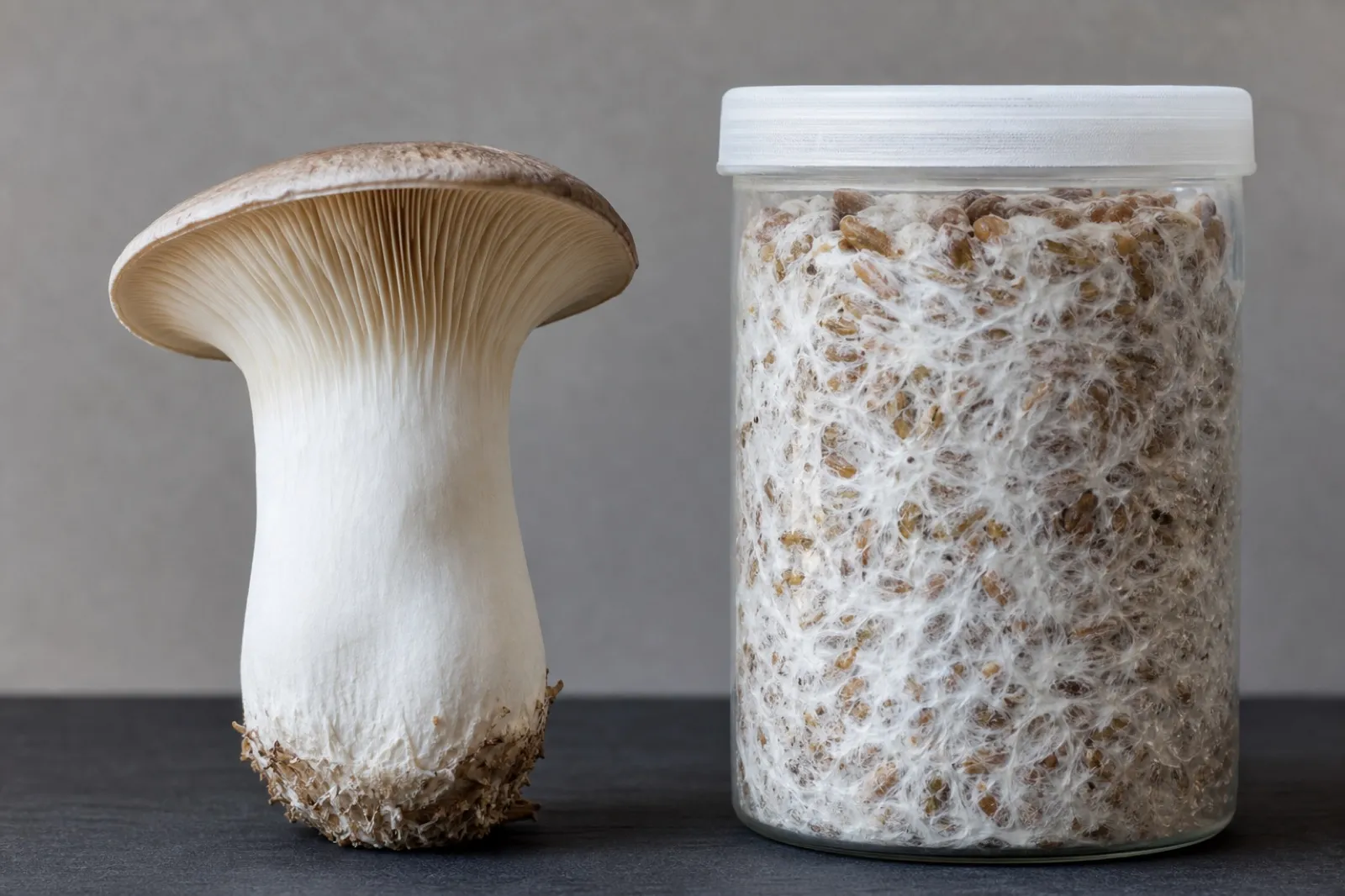
Key takeaways
Fruiting bodies and cultured mycelium are different materials; substrate, extraction, identity testing, and measured constituents all affect comparison. The useful question is not whether mushrooms are “healthy” in the abstract, but what material was studied, in whom, at what dose, against what comparison, and with which outcome. This page focuses on product composition and transparent labeling.
“Fruiting body” identifies the spore-bearing structure, while “mycelium” identifies the filamentous growth that colonizes a medium. Neither word supplies a composition certificate. Species, strain, harvested material, residual grain or other substrate, drying, extraction, and lot-to-lot processing determine what reaches the container. A useful comparison therefore starts with the material chain rather than assuming one fungal part is always superior.
Define fruiting body, mycelium, and growth substrate
The fruiting body is the spore-producing structure commonly recognized as a mushroom. Mycelium is the network of fungal filaments that grows through a food source or culture medium. Both are genuine fungal structures, but they are not interchangeable ingredients and neither is automatically superior for every research question.
Commercial mycelium may be separated from liquid culture or harvested together with a solid grain substrate. When colonized grain is dried and milled as one material, the resulting powder can contain substantial residual starch and other grain components. A label that says only “mycelium” may not reveal how much fungal biomass was separated from or remains mixed with substrate.
Fruiting-body powder can also vary. Species identity, maturity, drying temperature, particle size, storage, and extraction all influence composition. “100% fruiting body” describes a source part, not purity, potency, clinical effectiveness, or freedom from contaminants.
Compare whole powders with extracts
A whole powder is dried material that has been milled. An extract uses water, alcohol, or another controlled process to move selected soluble components into a concentrated preparation. Dual-extraction language generally indicates more than one solvent step, but it does not state the final composition by itself.
An extraction ratio such as 8:1 can be misunderstood. It may describe starting material relative to finished extract, yet it does not necessarily mean eight times the clinically relevant constituent, and methods differ among manufacturers. Look for measured compounds, test methods, serving mass, carrier ingredients, and a lot-specific certificate rather than comparing ratios alone.
Some extracts use maltodextrin or another carrier to improve drying and handling. That ingredient is not automatically evidence of fraud, but it should be declared so the buyer can understand the finished material. Conversely, “no fillers” does not prove identity or potency.
What the evidence can show
Evidence must match that chain. A compositional assay can report beta-glucan, alpha-glucan, moisture, marker compounds, or contaminants in one tested lot. It cannot prove a clinical outcome. A cell or animal experiment can explore a mechanism for a defined preparation, while a human trial evaluates its own dose, population, duration, comparator, and outcome. The label in hand should be traceable to the same material before a study is treated as relevant.
If a trial used a hot-water fruiting-body extract standardized to named constituents, its result does not transfer automatically to raw powder, home tea, fermented mycelium, or biomass that includes growth substrate. An “8:1” ratio describes an input relationship only when the manufacturer explains the starting material and extraction yield; it does not reveal identity, purity, or the quantity of a relevant constituent. Prefer lot-linked measurements over ratio language.
Match the product to the study material
Create a line-by-line comparison before applying a paper to a bottle. Record scientific species and strain if given; fruiting body, mycelium, culture filtrate, or mixed material; growth substrate; extraction solvent and ratio; named marker compounds; daily dose; trial duration; population; comparison group; and outcome. If several fields cannot be matched, the study is not direct evidence for that retail product.
This matters particularly for lion’s mane research. A trial using a specified fruiting-body preparation should not be cited as proof for an unspecified mycelial powder, and a study of a proprietary mycelial product should not be generalized to every fruiting-body capsule. The same discipline applies to reishi, turkey tail, cordyceps, and other marketed fungi.
Biological plausibility is also not equivalence. Two materials may both contain polysaccharides yet differ in structure, concentration, digestibility, and other compounds. A generic “beta-glucan” number does not show that the molecular form or biological effect matches a trial; the beta-glucan guide explains that limitation.
Read a product label in a fixed order
Start with the Supplement Facts panel and ingredient list, not the front-of-package claims. Identify the serving size and actual mass. Find the scientific name and check for spelling or outdated synonyms. Locate the part or material—fruiting body, mycelium, both, extract, or biomass—and the growth substrate if relevant.
Next record extraction method, ratio, standardized or measured compounds, carrier ingredients, capsule material, flavorings, and allergens. Check the manufacturer or responsible distributor, lot number, expiration or best-by date, storage instructions, and adverse-event contact. A QR code is useful only if it resolves to stable lot-specific information rather than generic marketing.
Terms such as “full spectrum,” “organic,” “wildcrafted,” “clinically studied,” and “professional strength” do not answer these composition questions. Certification can address a defined production standard, but it is not a clinical-outcome endorsement. Verify the certifier and scope rather than inferring what a logo means.
Evaluate laboratory documentation
A useful certificate of analysis identifies the exact product and lot, laboratory, test date, methods, specifications, and results. Identity testing should be appropriate to processed fungi; microscopy may work for recognizable powder structures, while chemical profiles or DNA methods have different strengths and limitations. DNA can be degraded by extraction and cannot quantify every ingredient in a mixture.
Contaminant testing may include heavy metals, microbial limits, pesticides, residual solvents, or mycotoxins depending on the material and jurisdiction. “Third-party tested” without laboratory, method, lot, and result is not enough to reproduce the claim. A certificate hosted only as an editable image deserves the same scrutiny as any other marketing document.
Beta-glucan and alpha-glucan results can help interpret fungal versus residual starch composition, but methods and reporting bases matter. Ask whether values are per serving or by dry weight and whether uncertainty is reported. Do not assume that a high polysaccharide figure represents one named active compound.
Evidence limitations
For a fruiting-body-versus-mycelium claim, check whether researchers compared the two materials directly or merely studied each in unrelated experiments. Sample size, prespecified outcomes, blinding, attrition, funding, and replication still matter, but so do culture medium and analytical method. A significant difference in one assay is not proof that one material produces a better health outcome.
Immune, cognitive, cancer, glucose, lipid, and inflammation claims frequently jump from a measured compound or laboratory response to a consumer promise. Ask whether the exact finished preparation was tested in people for that exact outcome. Words such as “supports” do not repair a missing bridge between fungal biomass chemistry and a clinically meaningful effect.
Publication bias and flexible analyses can make a small literature look more consistent than it is. Examine trial registration, prespecified primary outcomes, attrition, adverse-event reporting, and whether results were replicated by independent groups. A change in a laboratory biomarker is not automatically a change in symptoms, function, disease incidence, or survival.
When a product supplies multiple fungal species, herbs, vitamins, or stimulants, any observed effect cannot be assigned confidently to “the mushroom.” Likewise, a trial’s tolerability over several weeks does not establish long-term safety, pregnancy safety, or safety alongside every medicine.
Avoid false either-or conclusions
Marketing often frames the decision as “fruiting body good, mycelium bad” or the reverse. A better conclusion is conditional. Fruiting body can be the right match for a fruiting-body trial; a defined mycelial preparation can be the right match for research conducted on that preparation. An unspecified mixture with no identity or contaminant testing remains difficult to evaluate regardless of source part.
Price is not a substitute for transparency. A costly extract can be poorly documented, while a modest whole-food product can have clear sourcing and testing. The relevant question is whether claims match the exact material and evidence.
Safety and interactions
Risk assessment also follows the material. A concentrated extract can deliver different constituents and excipients from a culinary portion; grain-based biomass can introduce undeclared allergen or starch questions; any lot can have microbial, heavy-metal, pesticide, or identity problems. People who are pregnant or breastfeeding, preparing for surgery, receiving cancer treatment, managing liver or kidney disease, or using prescription medicines should take the exact label and lot information to a clinician or pharmacist.
US supplement availability is not premarket proof that a fruiting-body or mycelium claim works. Check whether the label names the organism with a scientific name, specifies the harvested material and substrate inclusion, lists extract solvents and other ingredients, identifies a lot, and provides accessible identity and contaminant testing. Search recalls and keep the package if an adverse event occurs.
Use a five-part product comparison workflow
Use culinary mushrooms as food and evaluate concentrated products as separate formulations. Before using a supplement, record scientific name, claimed fungal part, growth medium, whether substrate remains, extraction method, daily amount, excipients, lot, and the intended reason. Stop use and seek urgent care for breathing difficulty, facial or throat swelling, faintness, or another severe reaction; report the exact product rather than only the common mushroom name.
Before purchase, use a worksheet with five decisions: Can the material be identified precisely? Is a current lot-specific certificate available? Does the cited research match the material and dose? Are claims limited to outcomes the evidence measured? Has a clinician or pharmacist reviewed personal risks and medicines? A “no” does not prove harm, but it identifies uncertainty that advertising may conceal.
Do not replace prescribed care or delay diagnosis while trying a mushroom product. Introduce only one optional supplement change at a time, keep the bottle and lot number, and record timing of any symptom. Report serious adverse events through the applicable regulator and seek urgent care for breathing difficulty, facial swelling, fainting, severe rash, or other emergency signs.
The supplement buying guide provides a broader comparison process, while the lion’s mane evidence review demonstrates why a species name alone does not make products equivalent.
Explore related health evidence guides and species context in the mushroom encyclopedia.
Trace the material before comparing claims
A useful comparison begins before extraction. Write the production chain as separate fields: authenticated species or strain, growth medium, harvest point, separated or unseparated biomass, drying conditions, extraction solvent, concentration step, carrier, finished serving mass, and lot test. “Fruiting body” fills only one field in that chain. “Mycelium” fills another, and neither term identifies everything that reaches the capsule.
Liquid-culture mycelium can be recovered with relatively little solid growth medium, while solid-state mycelium may be harvested with grain or another substrate. Those are materially different products even when both use the same species name. Fruiting bodies can likewise be sold as whole powder, hot-water extract, alcohol extract, or an extract dried onto a carrier. Compare like with like before comparing a beta-glucan percentage or price per gram.
Interpret starch and glucan tests conservatively
High alpha-glucan or starch can be consistent with residual grain or an added carrier, but a single number does not identify its source. Low starch does not authenticate species, and high beta-glucan does not establish a clinical effect. Ask for the method, reporting basis, laboratory, lot, and uncertainty. Values reported by dry weight cannot be compared directly with milligrams per serving until serving mass and moisture basis are known.
Some fungal beta-glucans differ in branching, solubility, molecular size, and extraction. A total beta-glucan result therefore does not prove equivalence to the named preparation in a trial. Use the supplement-label framework to keep identity, composition, contamination, and efficacy as separate questions.
Build a lot-specific evidence worksheet
Place the retail label in one column and the study material in another. Compare scientific name, strain, fruiting body or mycelium, substrate, extraction, marker compounds, daily amount, duration, population, endpoint, and adverse events. Mark a field “not reported” rather than assuming a match. A missing extraction or substrate field is a real evidence gap, not a detail that marketing language can repair.
Then record the current lot number and certificate date. A generic certificate or a paper about the species does not show that the bottle contains the same preparation. This worksheet does not decide whether a supplement is appropriate for a person; it shows how much of the claimed evidence actually travels with the product. Medication, pregnancy, surgery, allergy, and disease questions still belong with a qualified clinician or pharmacist.
References
Source quality notes
MushroomScope cites sources that match the page scope, such as taxonomic databases, extension guidance, food-safety agencies, food-composition databases, and peer-reviewed or institutional health references. Sources support context and uncertainty; they do not turn an online page into specimen identification, medical advice, or a tested recipe record.
Frequently asked questions
Does fruiting body vs. mycelium: understanding mushroom products prove a medical benefit?
No. Nutrient data, traditional use, laboratory experiments, observational studies, and clinical trials answer different questions and cannot be treated as equivalent.
Can a mushroom supplement replace treatment?
No. Do not delay diagnosis or replace prescribed care. Discuss supplement use with a qualified clinician who knows your conditions and medicines.
How can product claims be evaluated?
Check the scientific species, plant or fungal part, preparation, dose, independent identity and contaminant testing, study population, and measured outcome.
Related guides
health
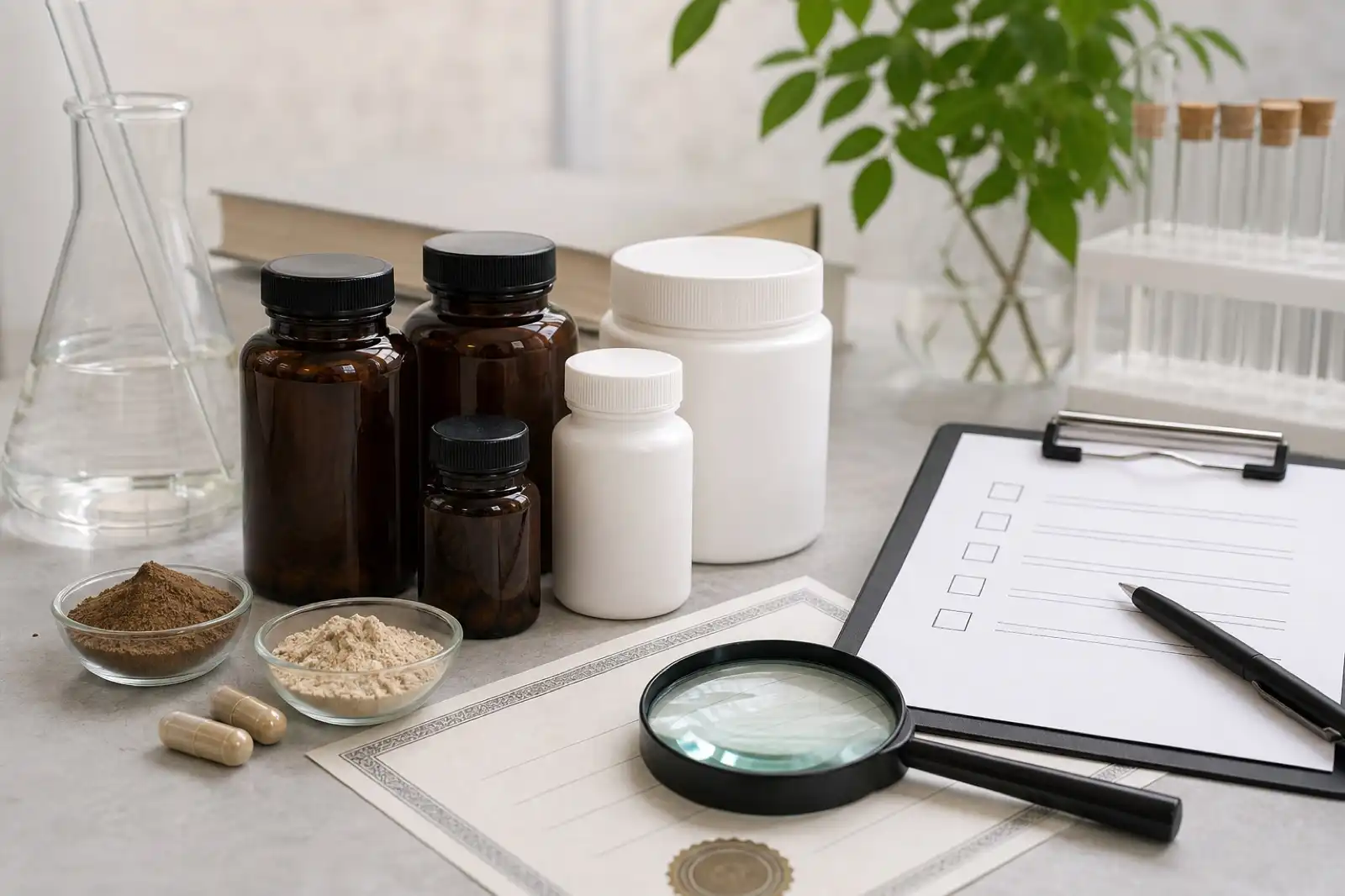
Mushroom Supplements: Labels, Testing, and Safety
Learn how to check mushroom supplement identity, fungal part, extraction, dose, lot testing, claims, interactions, and regulatory limits.
health
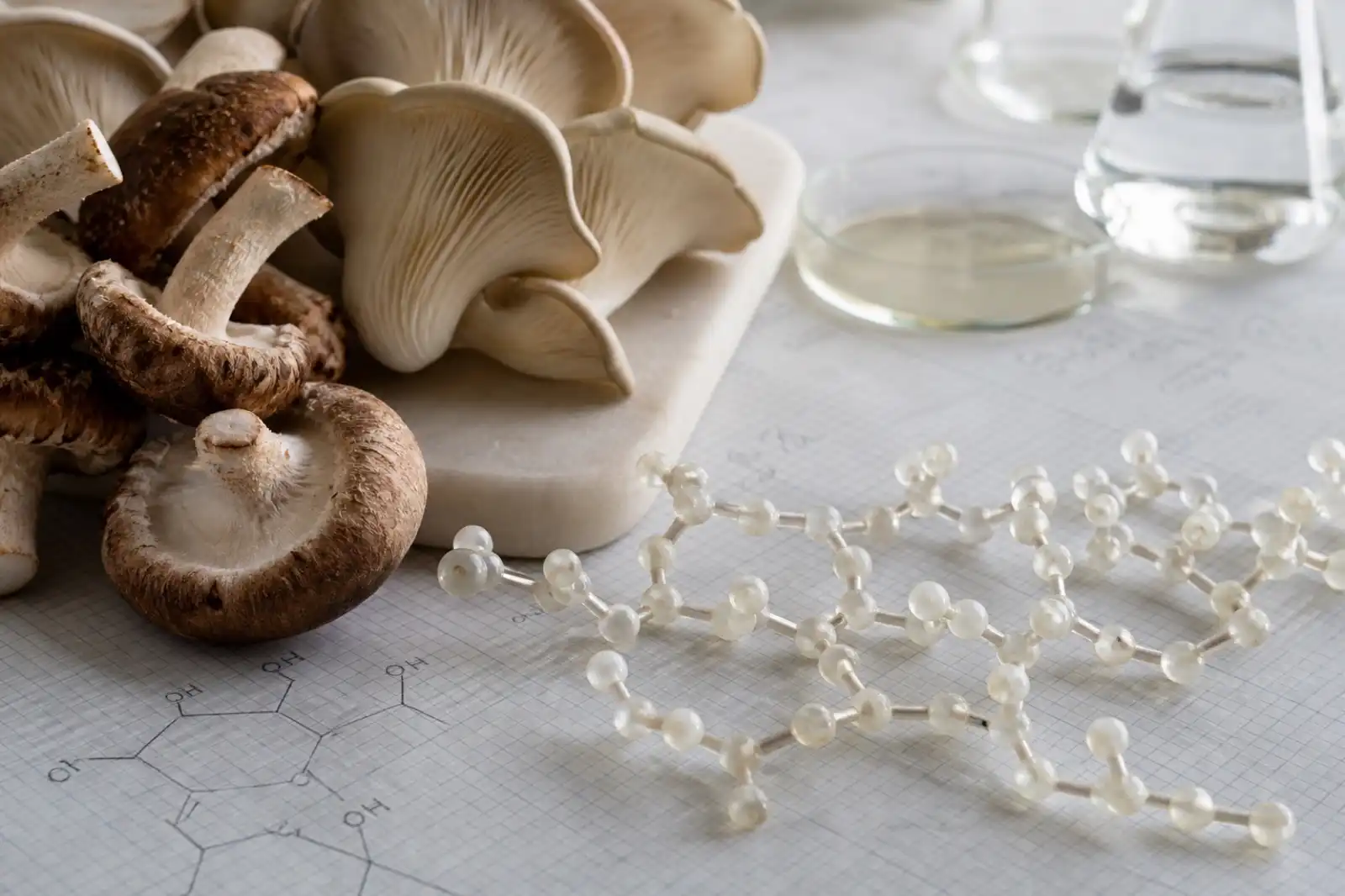
Mushroom Beta-Glucans: Evidence, Sources, and Limits
Fungal beta-glucans differ in structure, source, dose, and preparation; evidence for one purified product cannot validate every mushroom food or supplement.

health
Lion's Mane Benefits: What Human Research Can and Cannot Show
Small human trials of lion’s mane examine specific products and outcomes; they do not establish prevention or treatment of neurological disease.
Continue exploring
Browse more practical guides in Health or visit the mushroom encyclopedia.