Growing
Mushroom Inoculation Methods Compared
Compare agar, liquid culture, grain-to-grain, sawdust spawn, and plug spawn by substrate, scale, cleanliness, and traceability.
By MushroomScope Editorial Team · · Updated
Growing method
Start with authenticated culture
Use supplier-identified spawn or blocks and record substrate, stage, temperature, humidity, and visible changes.
Open the beginner growing hub →Food safety
Discard suspect batches
Unusual colors, slime, insects, or abnormal odor should be treated as a safety concern, not a climate tweak.
Review contamination guidance →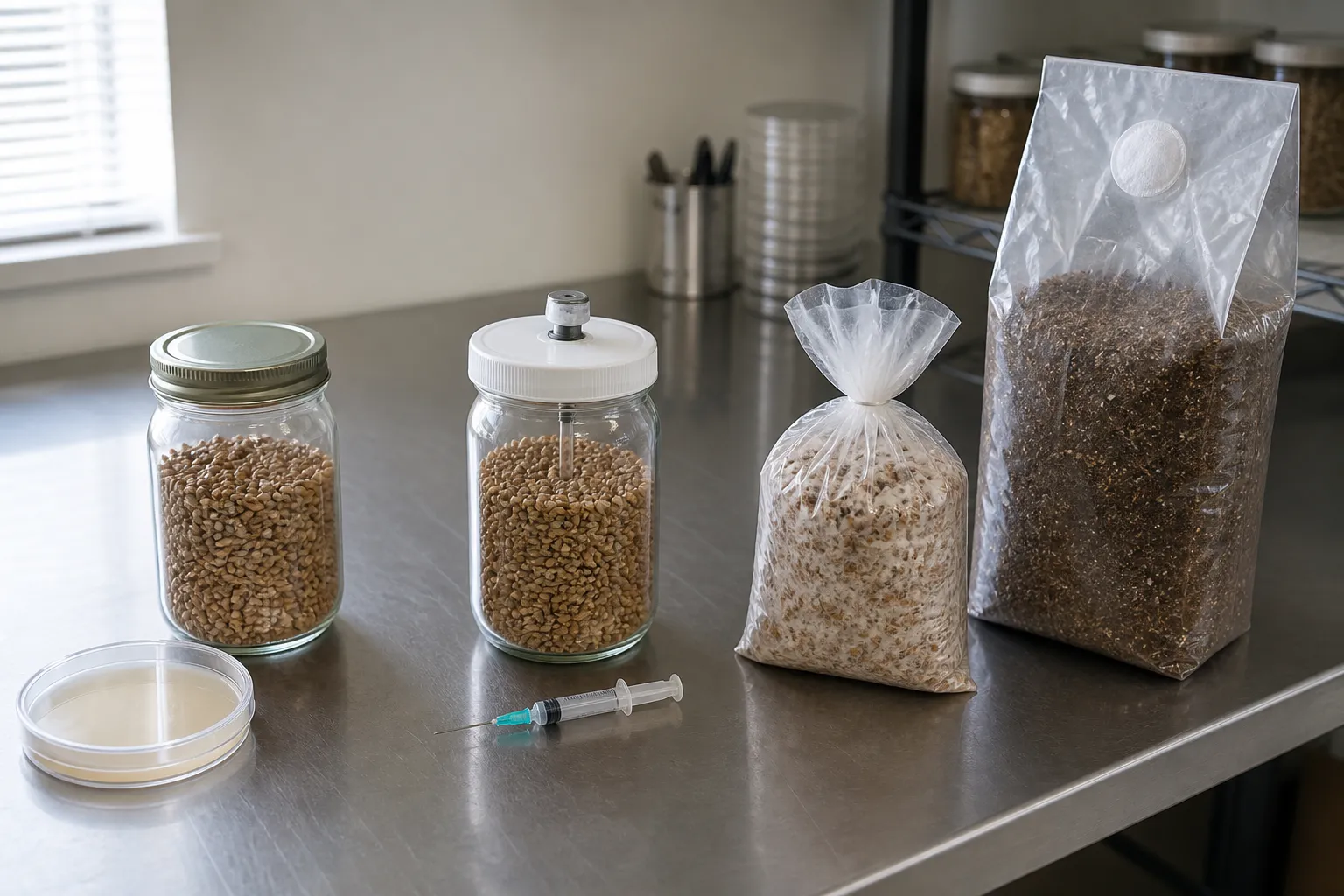
Editorial scope: This cultivation guide has no named laboratory reviewer. It describes traceable small-scale practice, not a validated sterility cycle or a guarantee that a culture is correctly identified.
Choose the method by the receiving substrate
Inoculation moves living mycelium into a prepared substrate. The best method is not the fastest in isolation; it is the method that matches the receiving material, equipment, scale, and ability to detect contamination. Agar excels at observation, liquid culture at distributable inoculation points, grain spawn at expansion into bulk substrate, sawdust spawn at wood-based production, and plugs at drilled outdoor logs.
Liquid culture can distribute mycelium through an injection port without opening a vessel. Cloudiness alone cannot distinguish healthy mycelium from bacteria or yeast, so test a small sample on agar before expansion. More liquid is not automatically better because excess moisture can create poorly aerated grain and spread contamination throughout the jar. For the broader workflow, use this related MushroomScope guide.
Compare methods by what the receiver needs
Start with the physical receiver rather than the inoculum on hand. A sealed grain jar needs distributed, recoverable inoculation points without excess liquid; a supplemented hardwood bag needs enough compatible spawn to recover before competitors; a fresh log needs plugs or sawdust placed through bark into sapwood. Write the receiver’s treatment, moisture, mass, container, and planned incubation range before choosing a method. This prevents a fast technique from being applied to a substrate it cannot reliably colonize.
Agar wedges provide visible selection
An agar plate makes the transfer edge visible before scale-up. Select from an actively expanding, labeled culture rather than from old, dried, crowded, or unexplained sectoring. The plate does not prove strain identity and cannot expose every organism, so connect it to supplier or master-culture records and use it as one inspection stage in a broader lineage system.
Cut wedges from an actively growing margin rather than old, dried, or heavily sectoring tissue. Record plate ID, transfer date, wedge count, receiving-jar ID, and whether a blank control was exposed during the session. A control that remains clean does not prove every transfer is clean, but growth on it reveals that the session itself cannot be interpreted confidently. The contamination guide explains why color, odor, and growth speed are observations rather than organism identification.
Measure recovery instead of praising plate appearance
Define the observation window before inoculation: time to first visible recovery, number of starting points that resume, direction of growth, and any wet, stalled, discolored, or sharply bounded zone. Photograph the same face of the jar on a schedule. Rhizomorphic or fluffy appearance varies with species, medium, temperature, and genetics; neither texture proves purity. Release the receiver only when its record meets a written acceptance rule.
Liquid culture trades speed for invisibility
Liquid culture can distribute mycelium through an injection port without opening a vessel. Cloudiness alone cannot distinguish healthy mycelium from bacteria or yeast, so test a small sample on agar before expansion. More liquid is not automatically better because excess moisture can create poorly aerated grain and spread contamination throughout the jar.
Treat a syringe as one sampled lot, not as proof of purity. Put a small, labeled sample on agar before committing production receivers, and keep those receivers quarantined while the test develops. Record the actual injected volume. Excess broth changes grain moisture and can move an invisible contaminant to many kernels at once; a smaller validated dose may be more informative than a visually dramatic cloud of growth.
Use a paired test when changing dose
If recovery seems slow, do not immediately double the liquid volume. Inoculate two otherwise matched small receivers with documented doses, retain an uninoculated control, and compare recovery and contamination. Match grain lot, hydration, sterilization load, cooling time, culture lot, and incubation position. A dose comparison is useful only when the other variables are controlled.
Grain and sawdust spawn distribute inoculum
Grain-to-grain transfer creates many colonized points and rapidly expands a clean master, but every generation also amplifies unnoticed problems. Sawdust spawn suits supplemented blocks and log methods where grain may attract animals outdoors. Plug spawn is convenient for drilled logs, yet log species, moisture, bark condition, drill spacing, and sealing matter more than the wooden dowel itself.
Grain-to-grain expansion is multiplication, so establish a generation ceiling and keep the parent-child relationship for every jar. Weigh donor grain and receiver grain instead of describing the rate as “a scoop.” Break up only a healthy, fully recovered donor; do not redistribute wet, sour, uncolonized, or oddly colored areas. A single failed child should be traced back to its donor and transfer session before siblings are released.
Match spawn carrier to the production substrate
Grain distributes many nutrient-rich points through straw or a fruiting block, but exposed grain can attract animals in outdoor beds and may be inappropriate for log work. Sawdust spawn fits wood-based receivers and spreads through drilled holes or supplemented blocks without introducing intact kernels. Record spawn mass as a percentage of wet receiver mass and keep that definition consistent; “ten percent spawn” is ambiguous unless the denominator is stated.
Plug spawn fits outdoor wood
Plug spawn is a delivery format, not the main determinant of log success. Record tree species, whether the log was living and sound when cut, diameter, cut date, storage exposure, drilling pattern, plug lot, wax, and inoculation date. Space holes in a documented staggered pattern and seal them using the supplier’s method. Old, dry, decayed, or unidentified wood can defeat an otherwise healthy plug lot.
Outdoor log work does not need an agar plate beside every log, but it still needs lineage evidence. Retain the plug supplier, species and strain label, lot number, storage dates, and one unopened label photograph. That record cannot verify the organism independently, yet it keeps a later fruiting or failure connected to the material actually used rather than to memory.
Separate outdoor establishment from indoor recovery
Log colonization is measured over seasons, not by comparing it with a grain jar. Keep logs shaded and protected from drying according to the species-specific supplier protocol, but do not infer internal colonization from surface mycelium alone. Map each log and hole pattern so a failed section can be related to bark damage, end drying, exposure, or inoculation coverage.
Design a clean, traceable workflow
Arrange work from cleanest and most valuable material toward dirtier tasks. Confirm that treated receivers have cooled to the validated range, inspect filters and seals, stage labels and sterile tools, and write the transfer plan before opening anything. Do not improvise an open flame around wet alcohol. A still-air box or filtered workstation reduces moving-air exposure only when its preparation and use are consistent; it does not rescue dirty inoculum or an inadequate substrate treatment.
Give every receiver a unique ID connected to inoculum lot, parent vessel, method, dose, operator, time, and treatment batch. Keep an uninoculated receiver from the same treatment load when diagnosing recurring failures. If that control fails, investigate treatment, sealing, cooling, or handling before blaming culture vigor. If only children of one donor fail, quarantine its siblings and review the lineage branch.
Release, hold, and reject are different outcomes
Write three outcomes before observation. Release means the receiver meets the expected recovery pattern and has no recorded rejection sign. Hold means evidence is incomplete—for example, a liquid-culture agar test has not matured or one sector needs another observation. Reject means the prewritten contamination or integrity threshold was crossed. Never open a suspect jar merely to smell it; isolate it and follow a disposal method appropriate to the container and local rules.
Frequently asked questions
Choose the method by the receiving substrate?
Choose by receiver and evidence needs. Agar offers an inspectable transfer point, liquid culture offers distribution through a port, grain or sawdust spawn supplies many colonized particles, and plugs place culture into drilled sapwood. None is universally fastest or cleanest.
Agar wedges provide visible selection?
Use an actively growing, labeled margin and record wedge count and parent plate. Agar exposes colony structure for selection, but appearance alone cannot establish genetic identity or exclude every bacterium, yeast, or mold.
Liquid culture trades speed for invisibility?
Test a sample on agar, record the injected volume, and hold production receivers until the test can be interpreted. A clear or cloudy broth is not a purity result, and excessive liquid can alter the receiver’s moisture balance.
Grain and sawdust spawn distribute inoculum?
Use measured donor mass, a generation limit, and parent-child lot records for grain expansion. Choose sawdust when a wood-compatible carrier is preferable, especially for blocks or outdoor methods where exposed grain creates practical problems.
Plug spawn fits outdoor wood?
Use plugs in recently cut, suitable logs according to the supplier’s tree, spacing, sealing, and seasonal directions. Log condition and moisture history often explain establishment better than the dowel itself.
References
- Cornell Small Farms. Specialty mushroom cultivation resources. Species, substrate, outdoor log, and production context.
- Penn State Extension. Spawning to casing in commercial mushroom production. Commercial spawn handling and production sequence.
- Centers for Disease Control and Prevention. Steam sterilization guidance. Principles and limits of monitored steam processes; not a substitute for a validated food-production cycle.
Source quality notes
MushroomScope cites sources that match the page scope, such as taxonomic databases, extension guidance, food-safety agencies, food-composition databases, and peer-reviewed or institutional health references. Sources support context and uncertainty; they do not turn an online page into specimen identification, medical advice, or a tested recipe record.
Frequently asked questions
Choose the method by the receiving substrate?
Inoculation moves living mycelium into a prepared substrate. The best method is not the fastest in isolation; it is the method that matches the receiving material, equipment, scale, and ability to detect contamination.
Agar wedges provide visible selection?
Agar lets a cultivator inspect colony form and transfer a clean leading edge before committing a large batch. A wedge into sterilized grain creates a small number of concentrated starting points, so recovery can be slower than a well-mixed liquid inoculum.
Liquid culture trades speed for invisibility?
Liquid culture can distribute mycelium through an injection port without opening a vessel. Cloudiness alone cannot distinguish healthy mycelium from bacteria or yeast, so test a small sample on agar before expansion.
Grain and sawdust spawn distribute inoculum?
Grain-to-grain transfer creates many colonized points and rapidly expands a clean master, but every generation also amplifies unnoticed problems. Sawdust spawn suits supplemented blocks and log methods where grain may attract animals outdoors.
Plug spawn fits outdoor wood?
Separate substrate preparation from inoculation. Sterilized nutrient-rich grain requires stricter aseptic handling than pasteurized low-nutrient bulk material.
Related guides
growing
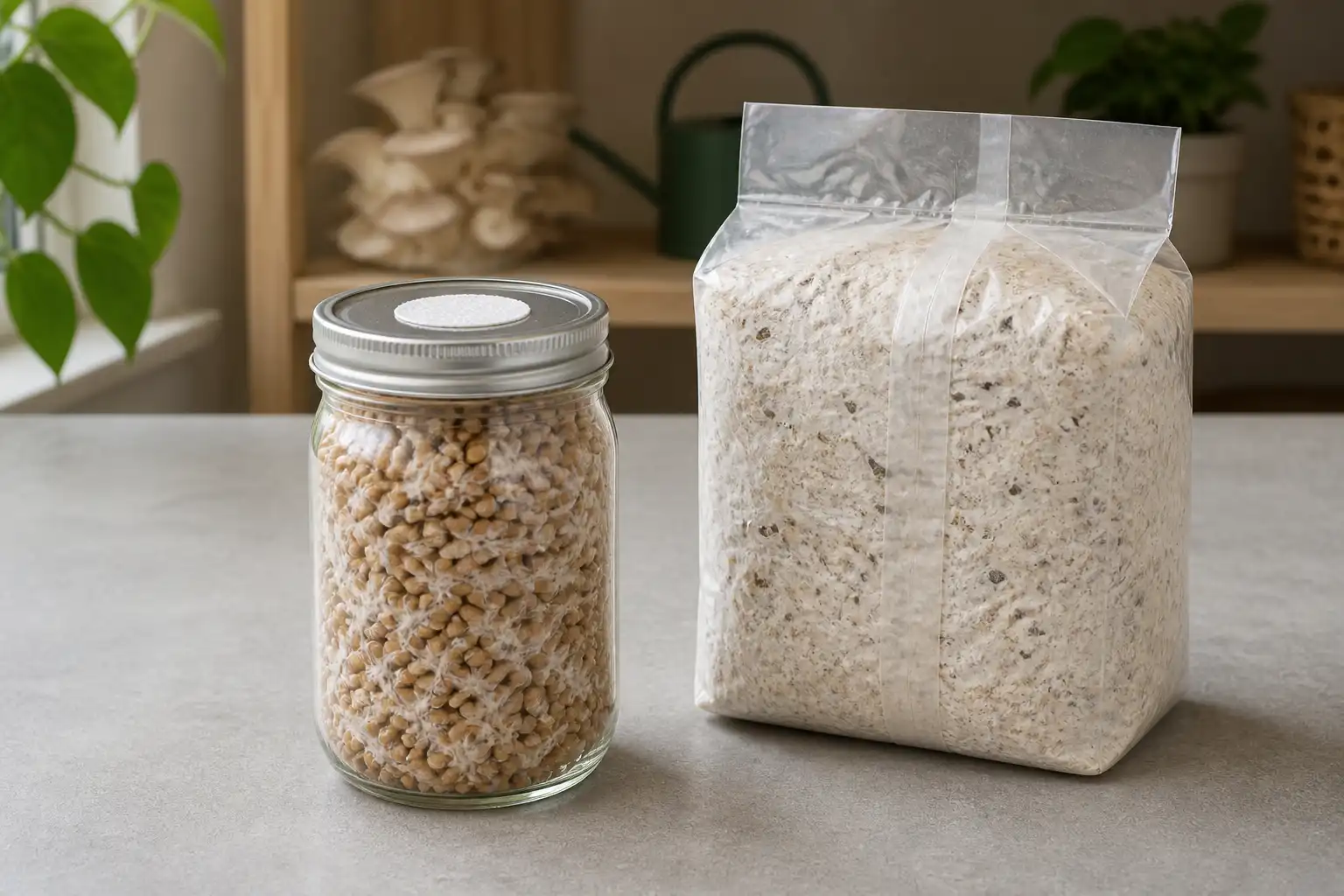
Mushroom Grain Spawn: How to Choose and Use It Safely
Use mushroom grain spawn as a labeled, clean inoculum for a documented growing method; learn what to verify, what to record, and when not to use it.
growing
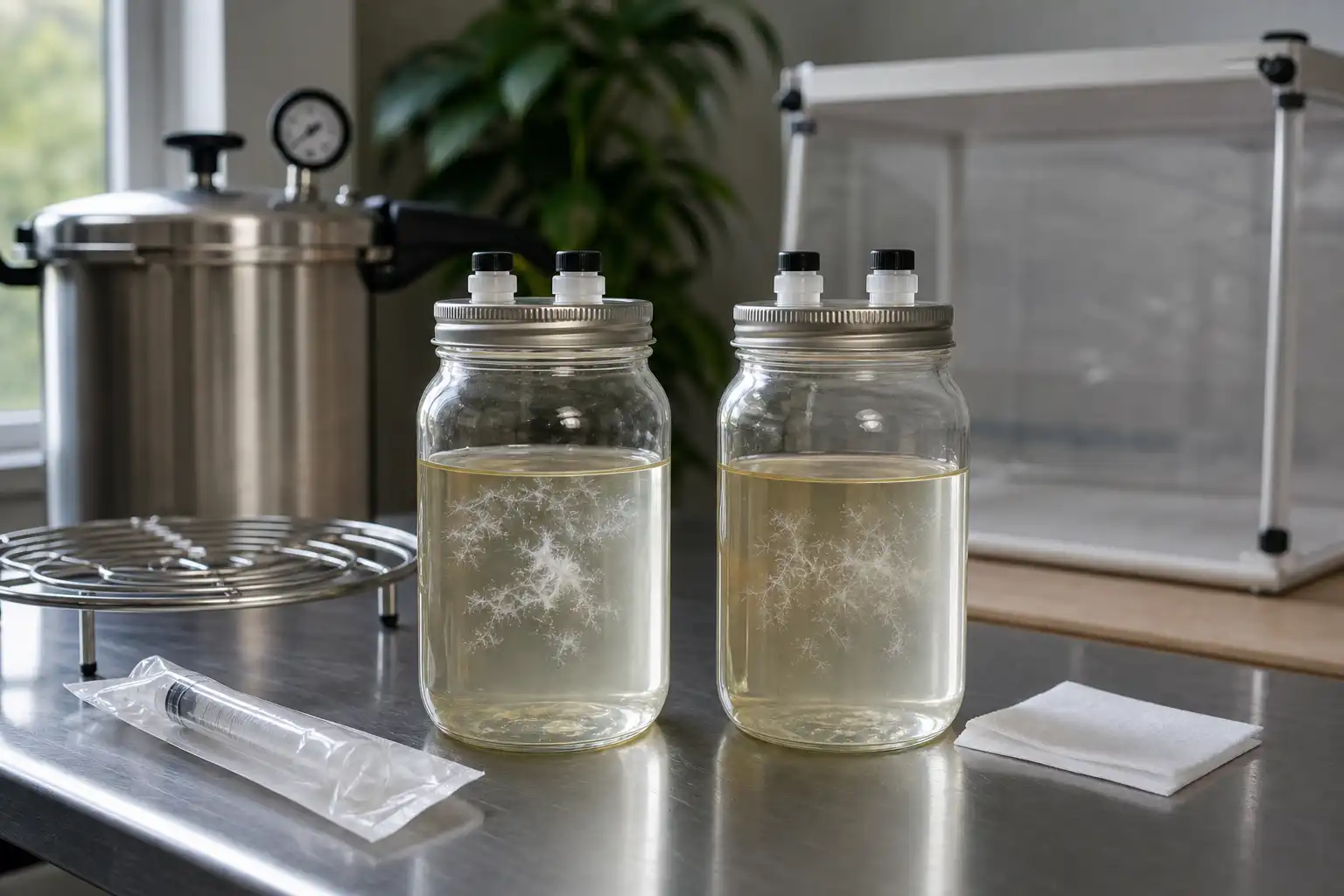
Mushroom Liquid Culture: Sterile Workflow and Test Protocol
Learn liquid culture as a controlled inoculum workflow: broth design, pressure sterilization, clean transfers, agar tests, storage, and contamination decisions.
growing
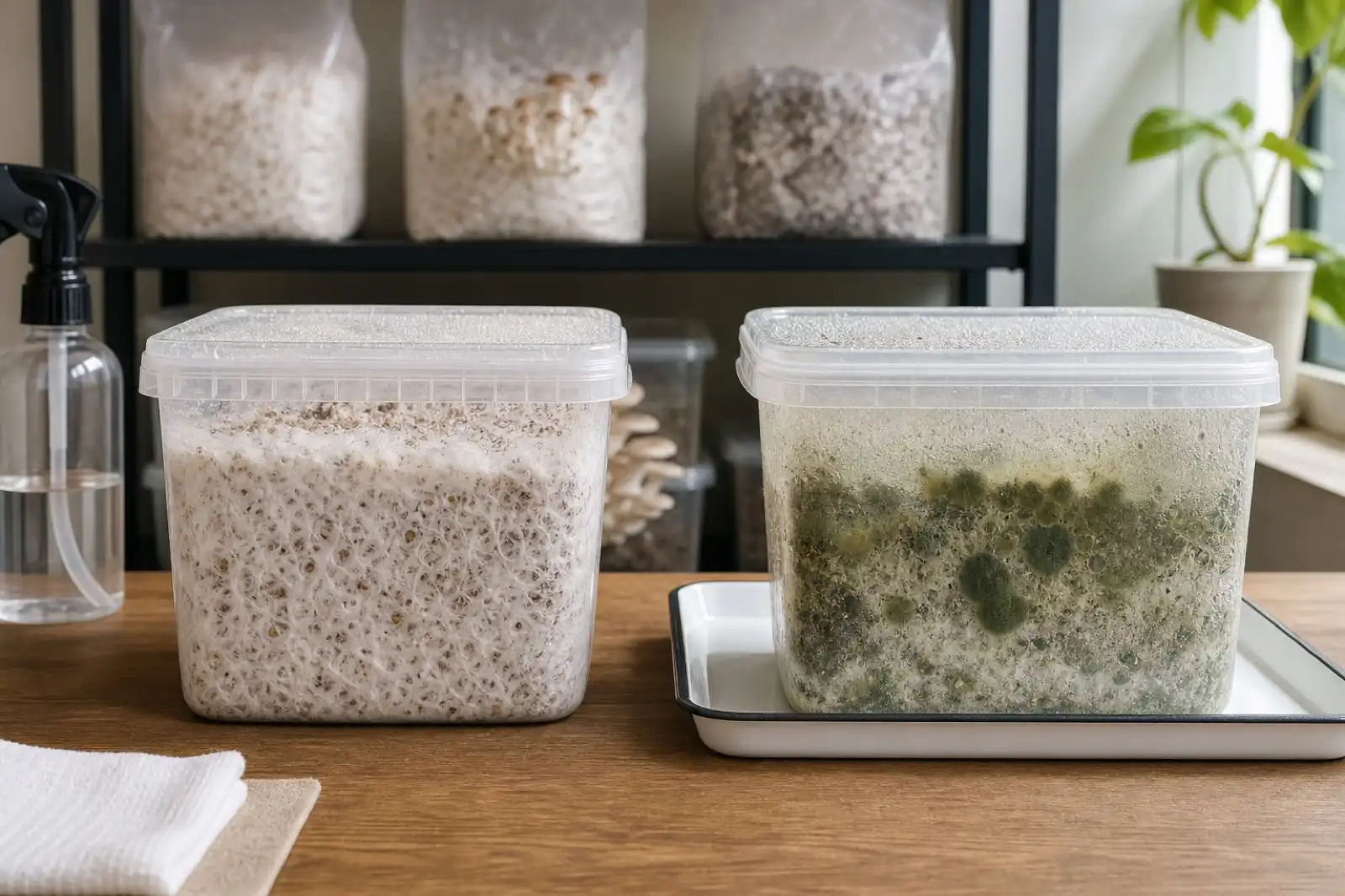
Mushroom Contamination: Isolate, Record, and Prevent Repeat Problems
Recognize mushroom contamination without relying on color alone; isolate suspect batches, avoid food salvage, document the workflow, and prevent repeat issues.
Continue exploring
Browse more practical guides in Growing or visit the mushroom encyclopedia.