Identification
Mushroom Seasons: A Field Guide to Timing and Safer Observation
Use season, weather, habitat, and repeat field notes to plan mushroom observations without treating a seasonal window as an identification or edibility test.
By MushroomScope Editorial Team · · Updated
Safety first
Use as a field-record guide
Document the whole mushroom, habitat, substrate, and region before comparing names or photographs.
Open the identification safety hub →Decision limit
Do not use this as an edibility verdict
Wild mushroom consumption decisions require qualified local, in-person confirmation of the complete specimen.
Read the safety disclaimer →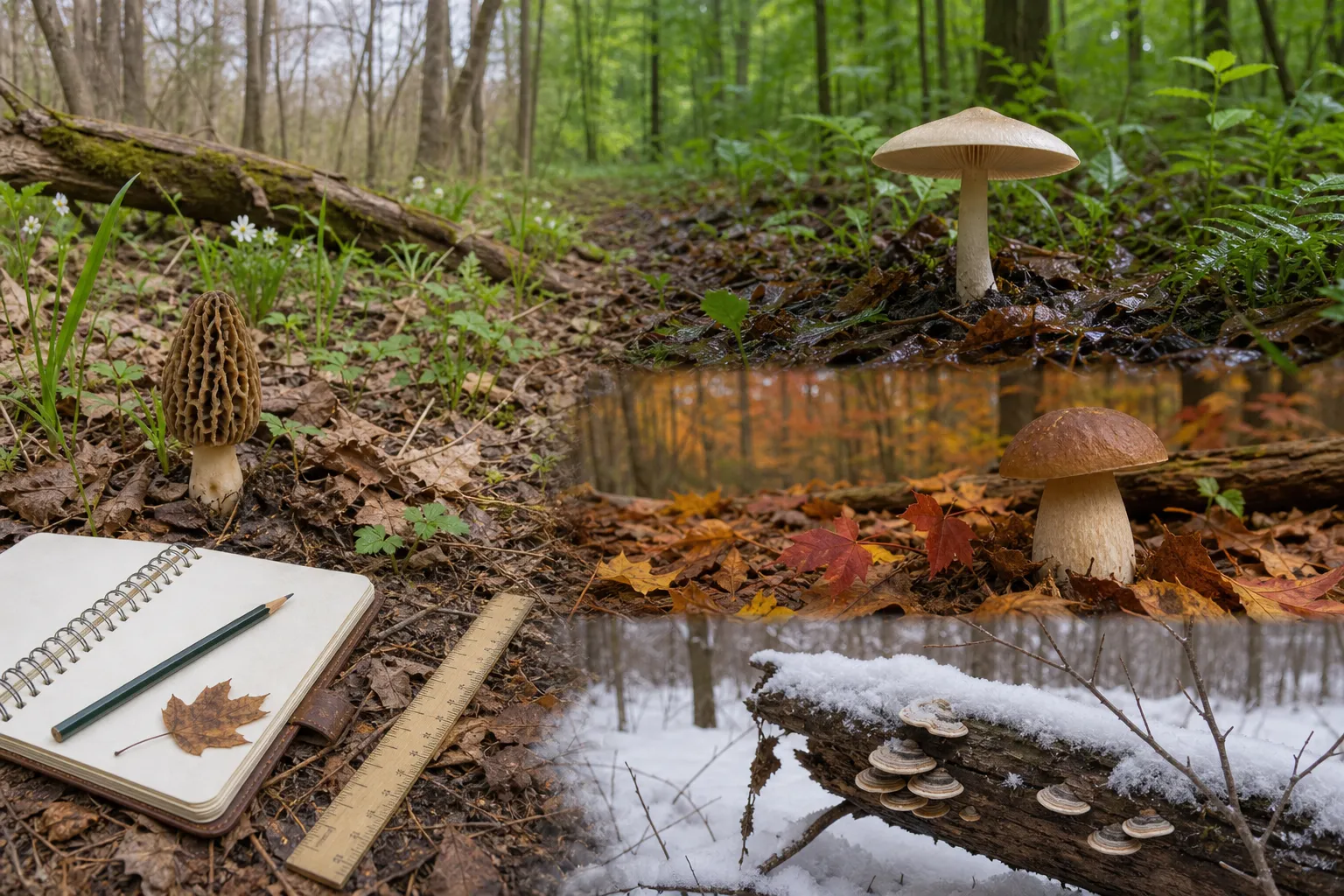
The short answer
Mushrooms do not run on one dependable national calendar. The visible fruiting body is an opportunity to observe a fungus, and that opportunity is shaped by species, local temperature, available moisture, substrate, host plants, elevation, and weather history. The U.S. Forest Service describes macrofungal fruiting as climate-driven and notes that temperature above freezing plus available moisture are important broad conditions. That is useful for planning a walk; it is not a prediction of a species or an edibility test.
The reliable approach is to keep a small, place-based record. Note where and when you found a fruiting body, what it grew from, recent weather, and the features of the complete specimen. Over time, those records reveal a local pattern without pretending that a month on a web page can confirm an identification.
What a “mushroom season” really means
The main organism is usually a hidden network in soil, litter, wood, or a host association. A mushroom is a temporary fruiting body, not proof that the fungus is newly present. A site can hold fungal growth long before conditions lead to a visible fruiting body, and it can fruit differently in two nearby years.
Think of season as a hypothesis for observation, not a label:
- Temperature: above-freezing conditions are a broad prerequisite for many fungi, but a warm spell does not tell you which species will fruit.
- Moisture and its timing: a soaking rain, humidity, soil moisture, and drying wind can matter differently for different fungi. “It rained yesterday” is a note, not a forecast.
- Substrate and host: a fungus on buried wood, a hardwood log, conifer litter, lawn soil, or a living tree has a different ecological context. Record that context first.
- Place: coast, mountain, city park, north-facing slope, irrigated lawn, and forest edge can have different conditions within the same region and week.
The habitat observation guide explains how to capture these details before a specimen is moved.
A conservative temperate-zone observation calendar
This is a way to plan repeated observations in temperate North America, not a species list. The dates shift with latitude, elevation, rainfall, and local climate. In the Southern Hemisphere, seasonal labels reverse; in tropical or arid regions, rainfall patterns can be more useful than a four-season calendar.
Spring: record the transition, not a promise
As soil thaws and leaf litter becomes moist, some fungi may fruit. Look for the context: fallen wood, last year’s leaf layer, particular trees, ground disturbance, and the sequence of warm and cool days. Penn State’s forest-mycology material gives morels in central Pennsylvania as a local spring example, while also tying their appearance to particular trees. That is a regional observation, not a rule to export elsewhere.
Spring is a good time to begin a site log because the vegetation and weather changes are obvious. Photograph the intact specimen from above, below, and at the base, then photograph the surrounding substrate and nearby plants. Do not infer a name from a spring date or a honeycomb-like cap.
Summer: watch microclimates after moisture
Summer heat can dry exposed ground quickly while shaded woods, mulched beds, irrigated areas, and decaying logs hold moisture longer. After a wet period, revisit the same sites rather than searching only once. Note the ground condition and whether the mushroom is solitary, clustered, or shelf-like.
The same site can produce different-looking fruiting bodies as they age, dry, or are damaged by insects. A fresh photograph with a ruler is more useful than a remembered color. Use the mushroom photo checklist to preserve the cap, fertile surface, stem, complete base, and habitat context.
Autumn: abundance does not reduce the identification burden
In many temperate forests, cooler weather and renewed moisture make autumn a visibly busy time. That does not make autumn mushrooms easier to identify. Penn State Extension emphasizes that the chance of misidentification is high enough that its Master Gardener program does not identify mushrooms, and it recommends experienced local guidance and reliable references instead.
When several mushrooms appear together, record each distinct kind separately. Similar-looking mushrooms can share a log, lawn, or leaf litter. Keep a number with every photo set; do not combine features from two specimens into one imagined identification.
Winter: keep looking at wood and records
Snow, frost, and a lack of familiar cap-and-stem mushrooms do not make fungi absent. Persistent bracket-like fruiting bodies and other wood-associated forms can still be useful subjects for observation. Record whether the object is fresh, weathered, soft, hard, or already releasing spores; a long-lasting fruiting body may not reveal when it first appeared.
Winter is also an ideal time to review your field notes. Map repeat sites, compare the same substrate across months, and list unresolved observations for a local club or knowledgeable identifier. Do not remove old fruiting bodies merely to make a record look complete.
A repeatable field-note method
Use one entry per observation. It takes only a few minutes and prevents a seasonal hunch from becoming a false identification.
- Start with location and permission. Record a broad locality, habitat type, date, and whether collecting is permitted. Do not publish a sensitive or private location without permission.
- Describe recent conditions. Note temperature feel, rain or dry period, ground moisture, and exposure. Avoid inventing exact rainfall or soil-temperature data you did not measure.
- Photograph before touching. Take wide habitat, cap, underside, stem, and complete-base photographs with a ruler. The identification guide shows why multiple independent characters matter.
- Record the substrate precisely. Write “on a fallen hardwood log,” “from lawn soil,” or “from conifer litter,” rather than simply “in the woods.” Name nearby trees only when you can do so confidently.
- Return after a few days if lawful. A follow-up image can show growth, drying, decay, or new fruiting bodies. It should not replace the original record.
- Leave the conclusion open. Use “unidentified,” “possible group,” or a field-guide lead until a qualified person can assess the complete evidence.
Compare visits without inventing precision
A useful seasonal record compares the same place in the same way. Choose a repeatable route or a few observation points, then note approximate search time, recent weather source, visible ground moisture, substrate condition, and which fruiting bodies were present. If you did not measure soil temperature, rainfall, or humidity, leave those fields blank rather than estimating a precise number from memory.
Photograph the wider site from a consistent direction when practical. This can reveal changes in shade, leaf cover, flooding, irrigation, mowing, fallen wood, or disturbance that a close mushroom image misses. Give each distinct fruiting body or cluster its own record number. A later visit can then be linked without merging two similar specimens into one false life history.
Absence is harder to document than presence. “No mushrooms grew here” is usually too strong; you can accurately write that none were observed along a defined route during a stated search period. Small, underground, short-lived, damaged, or visually concealed fruiting bodies may have been missed. This distinction makes year-to-year comparisons more honest.
When comparing online occurrence records, check whether each record was independently verified, photographed with diagnostic features, and located in a comparable habitat. Public observations can suggest when to look, but they inherit identification errors, uneven search effort, and geographic bias. Use them to form a field question, never to authenticate the specimen in front of you.
Adjust the calendar to climate and elevation
Four-season labels are convenient but not universal. At higher elevation, snow cover and temperature can delay a local window relative to a nearby valley. Coastal fog, irrigation, monsoon rainfall, drought, fire history, and urban heat can also create patterns that do not match a broad regional calendar. Record the conditions at the site instead of shifting a national chart by an assumed number of weeks.
In tropical settings, wet and dry periods may organize observations more usefully than spring, summer, autumn, and winter. In arid regions, a short moisture event can create a narrow opportunity, yet one storm still does not guarantee fruiting. In the Southern Hemisphere, month-based advice written for northern temperate regions is seasonally reversed and may involve completely different taxa and host plants.
Local expertise is therefore more valuable than a global “best month.” A regional mycological society, herbarium, extension resource, park naturalist, or current local flora may provide documented phenology and collection rules. Ask what geographic area and taxonomic concepts a calendar covers before applying it to your notes.
Store a seasonal record so it remains reviewable
Keep the original image files rather than only compressed social-media copies. Preserve capture date, a broad locality, specimen number, habitat, substrate, nearby plants, and the observer’s written notes together. Back up the record and avoid changing color or contrast in ways that could be mistaken for the original appearance; if an edited copy helps show structure, retain and label both versions.
Separate public sharing from the private research record. Exact coordinates may expose private land, sensitive species, or heavily visited sites. A qualified reviewer can receive location details through an appropriate channel without publishing them globally. Record landowner permission and collection status, because a photograph taken in place and a removed specimen may be governed differently.
At the end of a season, summarize what was actually observed: number of visits, date range, habitats checked, and unresolved specimens. Do not convert a small personal sample into claims about a whole region. The best outcome is a clearer plan for the next observation period and a set of specimens whose evidence can be assessed independently.
Avoid these seasonal shortcuts
- “It is morel season, so this must be a morel.” Season cannot rule out lookalikes.
- “Rain means every mushroom is fresh or safe.” Moisture affects appearance and does not reveal toxicity.
- “Nothing fruits here in winter.” Persistent wood fungi and local weather patterns make broad claims unreliable.
- “The app shows the same species nearby.” A location-tagged photo is not a complete identification and may itself be wrong.
- “The calendar says the season has ended.” An unusual local weather pattern can shift visible fruiting without changing the specimen’s required features.
Safety and next steps
Never eat a wild mushroom based on season, habitat, photographs, a single feature, or an online match. Penn State Extension’s safety guidance is direct: online identification is not a sound route to deciding what is edible, and experience distinguishing dangerous species matters. Keep complete photos and notes, use a current regional field guide, and seek qualified local, in-person identification before any consumption.
If a person may have eaten an unidentified wild mushroom, seek urgent local medical or poison-control advice. Do not wait for a seasonal prediction, social-media response, or web-page comparison. Retain uncooked material, leftovers, and photographs if it is safe to do so for professionals.
References
Source quality notes
MushroomScope cites sources that match the page scope, such as taxonomic databases, extension guidance, food-safety agencies, food-composition databases, and peer-reviewed or institutional health references. Sources support context and uncertainty; they do not turn an online page into specimen identification, medical advice, or a tested recipe record.
Frequently asked questions
What is the best month to look for mushrooms?
There is no universal best month. A fruiting window depends on the species, local climate, recent moisture, temperature, substrate, host plants, elevation, and geography. Use local records as a starting point and record what you observe.
Do mushrooms always appear after rain?
No. Rain can make conditions suitable for some fungi, but fruiting also depends on temperature, substrate, the organism's life stage, and local weather history. A rainy day does not predict a particular species.
Can mushroom season tell me whether a wild mushroom is edible?
No. Season is only one ecological observation. It cannot establish identity, rule out a dangerous lookalike, or determine edibility. Do not eat a wild mushroom without qualified, local, in-person identification.
Related guides
identification
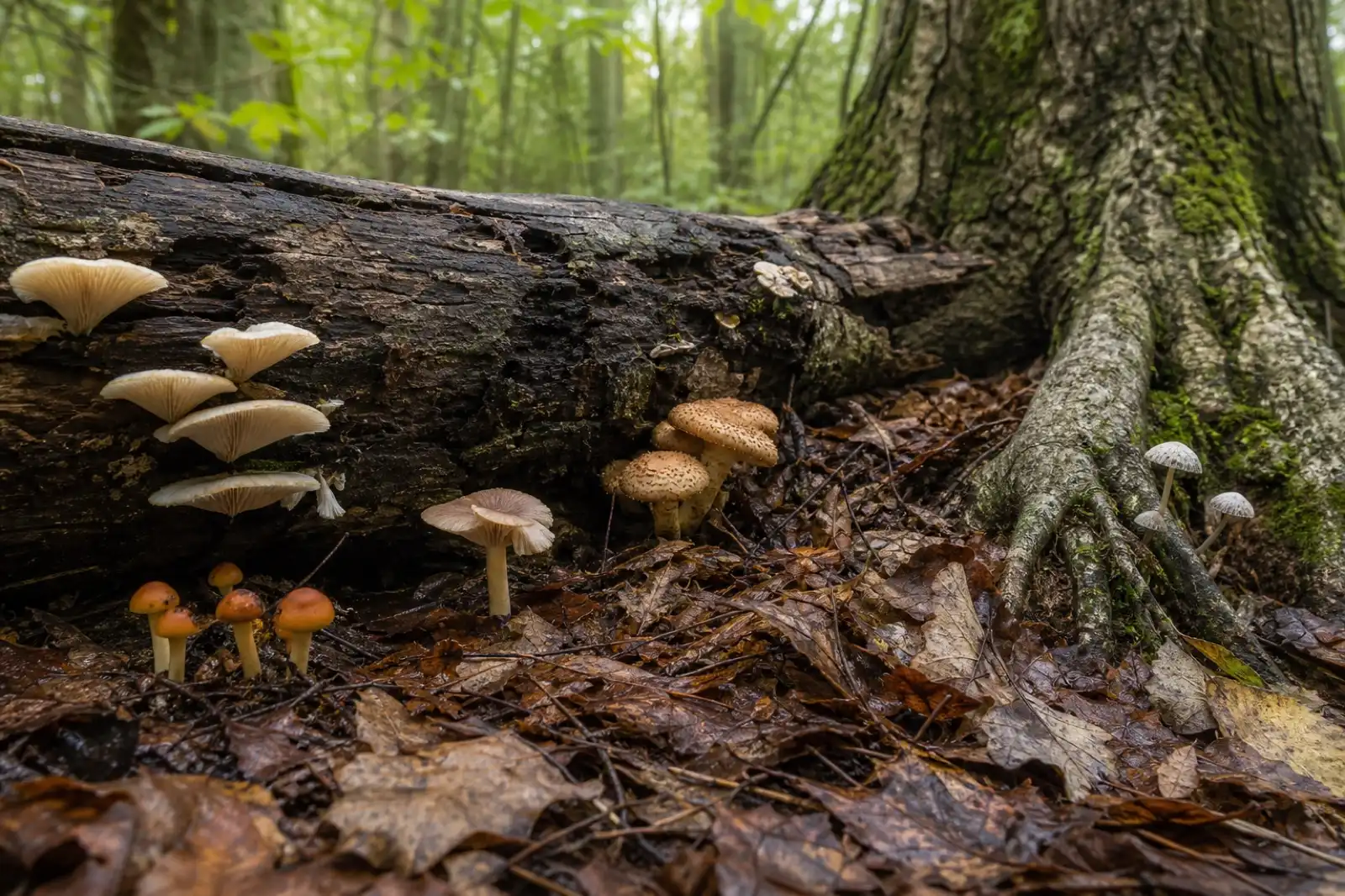
Using Habitat to Identify Mushrooms
Record substrate, associated plants, soil, wood type, moisture, elevation, and fruiting pattern as identification evidence.
identification
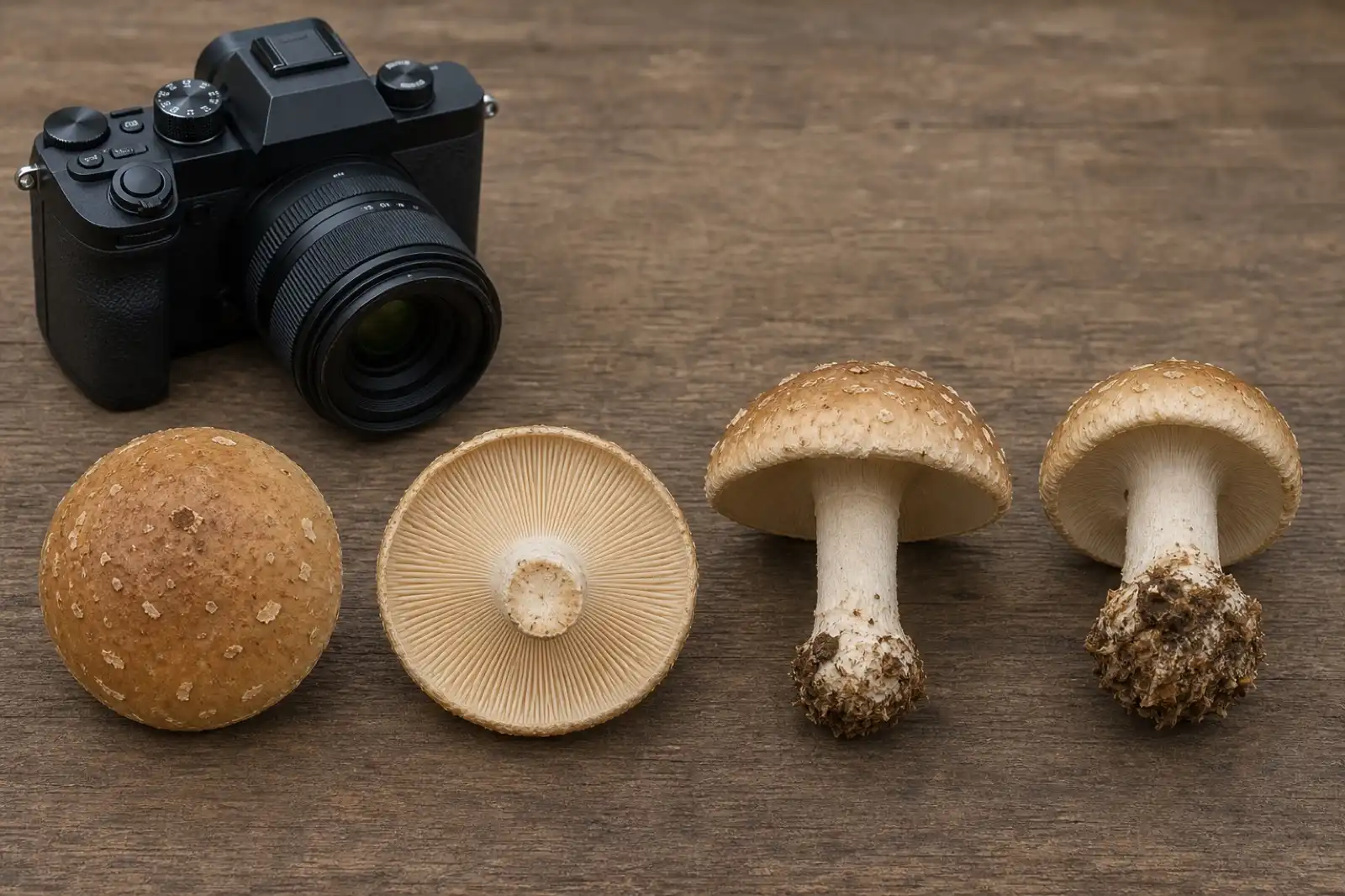
Mushroom Photography Checklist for Identification
Capture the cap, underside, complete stem base, habitat, scale, and specimens at different ages before asking for identification help.
identification
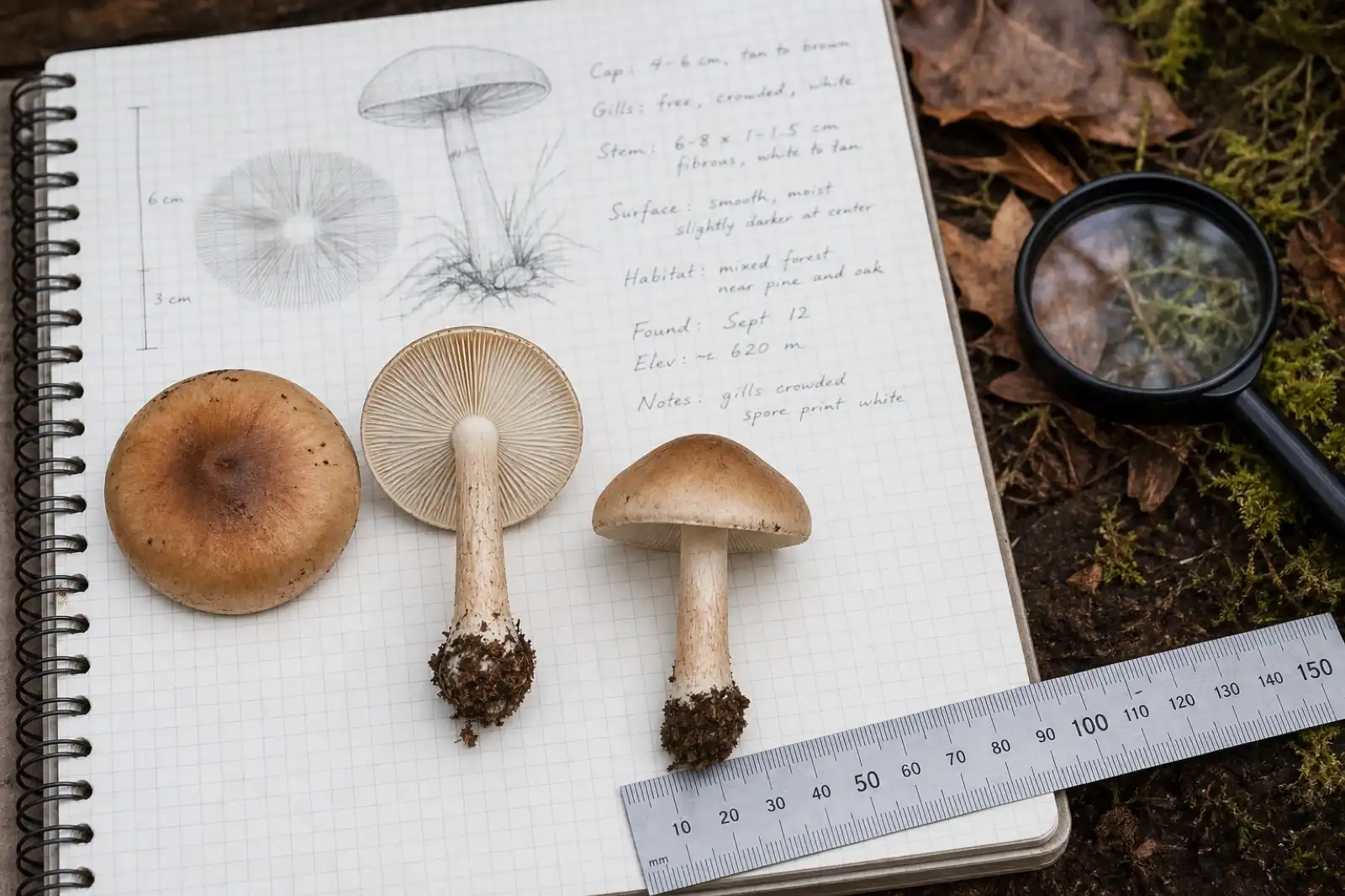
How to Identify Mushrooms: A Beginner's Field Guide
Build an identification from the whole specimen, substrate, habitat, spore deposit, and location—not from a single photograph.
Continue exploring
Browse more practical guides in Identification or visit the mushroom encyclopedia.