Mushroom Encyclopedia
Deadly Webcap (Cortinarius rubellus): Identification and Safety
Recognize deadly webcap habitat, rusty gills, cortina and lookalikes, and understand why delayed orellanine poisoning requires urgent medical advice.
By MushroomScope Editorial Team · · Updated
Species context
Treat profiles as reference material
Species profiles summarize documented traits, taxonomy, and lookalikes, but natural variation can be substantial.
Use the safety checklist →Decision limit
A profile cannot authenticate a specimen
Do not eat a wild mushroom from an online match, single feature, or generated image.
Read the safety disclaimer →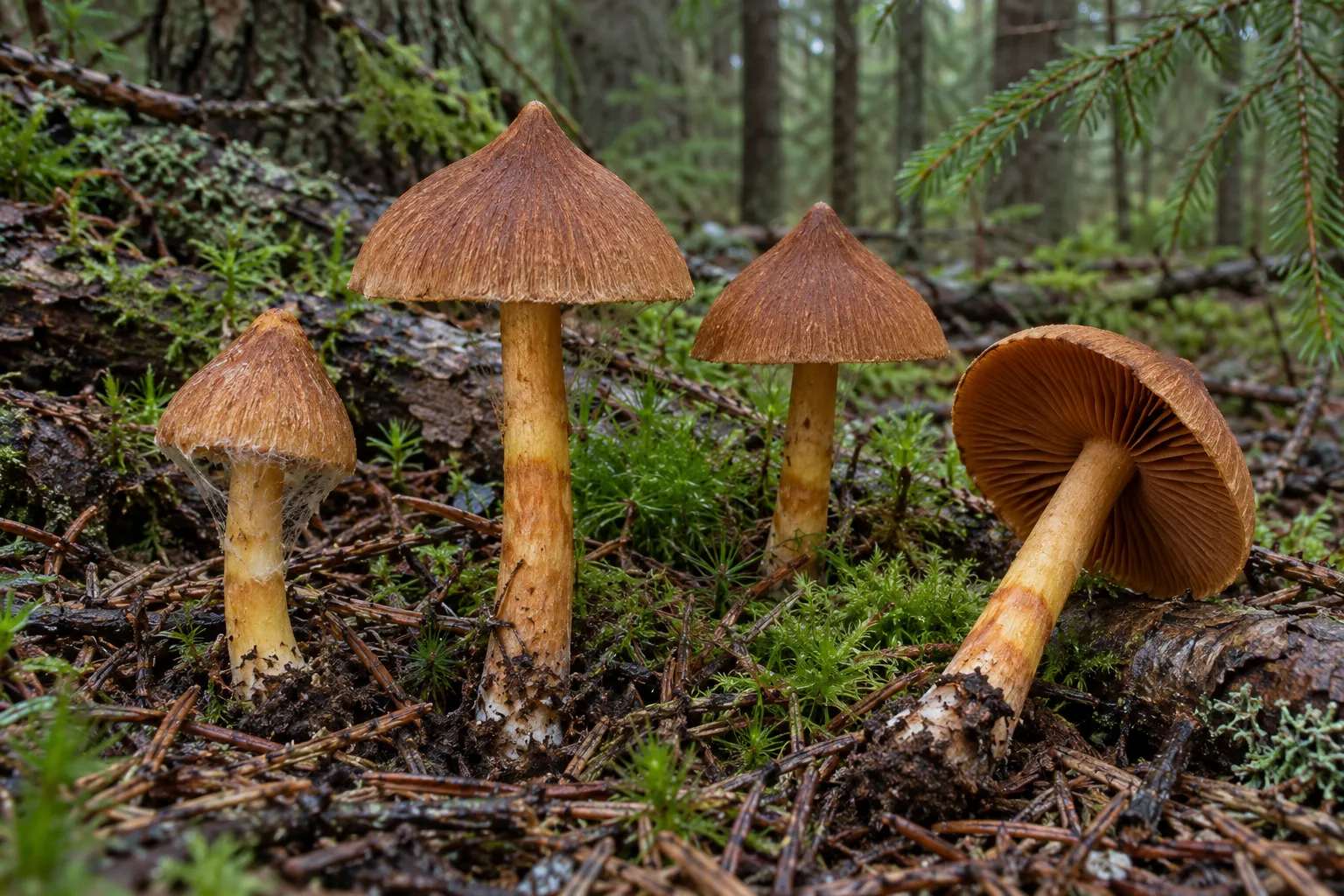
Quick facts
- Scientific name
- Cortinarius rubellus
- Common names
- Deadly webcap, Deadly cort
- Taxonomy
- Cortinarius · Cortinariaceae
- Edibility context
- Inedible: Deadly poisonous and never a food species.
- Spore print
- Rusty brown.
- Toxicity context
- Deadly: Contains orellanine, associated with delayed kidney injury that may require dialysis or transplantation.
- Season
- August, September, October, November
- Growing difficulty
- Expert
- Regions
- northern Europe, central Europe, temperate and boreal conifer regions
Safety limit: These labels summarize documented context; they never authenticate a wild specimen. Cooking does not make a poisonous species safe.
Treat possible ingestion as urgent before symptoms begin
Deadly webcap, Cortinarius rubellus, is an orellanine-containing mushroom associated with severe delayed kidney injury. The essential rule is temporal: a person may feel well for days after ingestion while injury develops. If this species or any unknown orange-brown webcap may have been eaten, contact a poison center or emergency medical service immediately. Do not wait for thirst, nausea, flank pain, reduced urine, or laboratory abnormalities.
Cooking does not create a safety pathway. Frying, boiling, drying, freezing, soaking, or discarding water should not be expected to remove the hazard. Do not taste a specimen. Keep children and pets away from collected material, prevent it from mixing with food mushrooms, and wash tools and surfaces after documentation.
Identification can support poison response, but it must not delay care. Preserve mushrooms, trimmings, cooked leftovers, photographs, collection location, meal time, estimated amount, and the names of everyone who ate the meal. A local mycologist may assist clinicians through an established network. Treatment decisions belong to medical professionals, and this editorial page has no named clinical reviewer.
Build the identification from a developmental series
The cap is typically orange-brown, tawny, or cinnamon and starts conical to bell-shaped with a pronounced pointed umbo. It may broaden with age while retaining the central point. The dry surface is finely fibrillose rather than slimy, with fibers aligned along the cap. Photograph young, expanding, and mature specimens because outline and veil evidence change rapidly.
Measure cap width and height rather than relying on “small” or “medium.” Use neutral light; warm forest light and phone processing can make multiple brown fungi converge on the same orange. Record surface condition after rain and again after drying if observing in place. Do not infer toxicity from color intensity: orellanine has no dependable field color test.
The margin of a young cap may connect to the stem through a cobwebby partial veil called a cortina. This structure is made of fine fibers, not a durable skirt. It can collapse onto the stem and become rusty as spores fall. A mature mushroom may show only a faint rusty band, so the collection should include untouched young stages whenever lawful and ecologically responsible.
Document the cortina before it disappears
Use side lighting or a macro view to show threads spanning the cap margin and upper stem. Avoid pulling the cap open, which creates torn fibers that can be mistaken for a natural cortina. Photograph the intact veil first, then the same numbered specimen after it expands naturally or after a documented section is made.
The stem is slender and yellow-orange to tawny. Irregular paler or yellowish bands may occur, and rusty spores can stain the upper portion. Unlike an amanita or many ringed wood mushrooms, deadly webcap does not normally carry a persistent membranous skirt. The veil and ring guide helps distinguish a cortina from a true ring without treating either feature as a species verdict.
Excavate the entire base when collection is permitted. Record shape, rooting, mycelial color, adhering soil, and nearby vegetation. A cut stem discards useful evidence. Keep specimens separate from edible collections in paper containers labeled with date and number; never use a food basket for a suspected poisonous species.
Follow gills and spores to rusty maturity
Young gills are orange to cinnamon and become rusty brown as spores mature. They are attached to the stem. Photograph the underside without forcing an immature cap. Describe spacing, attachment, edge color, and any unevenness across multiple specimens. A single camera angle cannot establish whether gills are truly attached.
A mature spore deposit is rusty brown, a defining genus-level clue for many webcaps. Make the print on contrasting surfaces and keep it linked to the specimen number. Rusty spores can collect on cortina fibers and create a band on the stem. That natural staining differs from a solid ring made of veil tissue.
Rusty spores do not identify C. rubellus by themselves. Cortinarius is one of the largest and most difficult mushroom genera, and many species combine brown-orange caps, rusty spores, and woodland habitat. Microscopic spore size, shape, ornamentation, cap tissue, chemical reactions, and DNA may be needed. For a consequential record, “orange-brown Cortinarius, species unresolved” is better than a confident guess.
Use spruce ecology without turning it into a shortcut
Deadly webcap is ectomycorrhizal, partnering with living tree roots. It is especially associated with spruce in acidic, mossy northern woodland. Record every plausible host within the root zone, not just the nearest trunk. Photograph needles, bark, cones, the wider stand, soil character, moss, slope, and drainage. Mixed woods may contain birch, pine, fir, and additional hosts that complicate a simple label.
The fungus appears terrestrial because fruit bodies rise from soil or moss, but its underground mycelium is linked to roots. It is not identified by rotten wood even when woody debris lies nearby. That ecological distinction helps separate it from orange-brown wood decomposers such as funeral bell, although no habitat feature can authorize eating an ambiguous specimen.
Range information changes prior probability, not morphology. The name is well established in Europe, while regional orange-brown webcaps elsewhere may represent different species. Records outside a documented range require extra scrutiny, current taxonomic literature, and preferably voucher-backed evidence. Online maps contain both absences of observation and possible misidentifications.
Compare deadly webcap with Cortinarius orellanus
The fool’s webcap, Cortinarius orellanus, is another orellanine-containing deadly species. It is often associated with broadleaf woodland rather than the spruce-centered ecology typical of C. rubellus, and its cap proportions and surface may differ. These are expert distinctions, not safety filters. If an orange-brown Cortinarius could belong to either toxic group, the correct food decision is the same: do not consume it.
Other webcaps can be yellow, red-brown, olive, violet, or gray and may share a pointed cap, banded stem, and rusty deposit. Some names have changed as DNA studies reorganize the genus. A regional key must match current nomenclature and geography. Old field-guide statements about edibility are especially unsafe because both taxonomy and poisoning knowledge have evolved.
No simple home chemical test detects orellanine safely. Ultraviolet reactions, color changes, or folk rules cannot replace laboratory analysis and expert identification. Never ingest a small amount as a test; a delayed toxin is precisely the case in which immediate taste and short-term comfort provide false reassurance.
Separate webcaps from orange woodland lookalikes
Some Laccaria have orange-brown caps and widely spaced gills. They lack the rusty cortina pattern and differ in spore characters, but faded or photographed specimens can look deceptively similar. Inocybe can have conical fibrillose caps and brown spores, yet has different veil, odor, microscopic, and ecological combinations; many Inocybe are also toxic.
The deadly funeral bell, Galerina marginata, grows from wood, usually has a more conventional ring zone, and contains amatoxins rather than orellanine. Its species guide shows why substrate and complete stem documentation matter. Confusing one deadly mushroom with another does not reduce urgency.
Edible chanterelles do not have true blade-like rusty gills, rusty spore deposits, or a cortina. Yet a novice sorting by orange-brown color in dim woodland can make a dangerous category error. Use structure before color, and never mix unidentified mushrooms into a harvest. The poisonous mushroom warning guide provides a conservative separation workflow.
Understand the delayed kidney-injury pattern
Orellanine toxicity is notable for a long latent period. Gastrointestinal discomfort, thirst, headache, weakness, flank pain, and changes in urination may be delayed for days, and the presentation varies. By the time symptoms are obvious, kidney injury may already be substantial. Published case series report acute and chronic renal injury, with some patients requiring dialysis or transplantation.
The absence of early vomiting does not rule out a dangerous exposure. That differs from several rapid gastrointestinal mushroom syndromes and explains why clinicians need the meal history even when the patient initially appears well. Dose, species, preparation, patient factors, and time to assessment influence the course; a website cannot calculate individual risk.
Medical teams may use repeated kidney-function tests, fluid and electrolyte assessment, toxicology consultation, and supportive or specialized care. Do not attempt to force fluids, induce vomiting, take activated charcoal without professional direction, or use supplements advertised for detoxification. Immediate expert advice is safer than any home protocol.
Preserve a chain of evidence for clinicians
Call for help first. Then place uncooked specimens, scraps, and leftovers in separate labeled containers. Retain photographs from the collection site, including habitat and complete bases. Write down the time collected, time cooked, time eaten, portion size, cooking method, all ingredients, every diner, and any symptoms. Preserve packaging if mushrooms were purchased.
Do not combine lots from different sites. One meal may contain several species, and a mixed bag can defeat later identification. Keep a representative specimen refrigerated as professionals direct, but do not delay travel to obtain a perfect sample. If no material remains, location photographs and meal history are still valuable.
Protect privacy when seeking identification. Share medical details with clinicians and the poison center, not a public social feed. A remote identifier may suggest a genus, but clinical monitoring cannot wait for online consensus. Temporary improvement or normal feelings in the first days are not clearance after a credible webcap exposure.
Make non-ingestion observations auditable
For field study, photograph the patch in place, then record cap profile, fibrils, gill stages, cortina, stem bands, full base, spore deposit, habitat, host candidates, date, weather, and broad location. Measure several specimens. Keep image processing neutral and include a color reference when possible.
If collection rules permit, dry one mature and one young voucher separately with labels. A regional expert or herbarium can decide whether microscopy or sequencing is warranted. Do not publish exact coordinates for a sensitive population. Clean equipment afterward and dispose of fragments where children and animals cannot reach them.
The most responsible conclusion makes uncertainty explicit. A page can teach which evidence to collect and why the toxin matters, but it cannot certify a photograph or declare an unknown mushroom edible. With deadly webcap, delayed toxicity turns uncertainty into an urgent safety boundary rather than an invitation to experiment.
For a non-gilled conifer-floor comparison, the bleeding tooth fungus guide shows how a visible toothed underside immediately redirects the record away from webcaps. Neither red-brown color nor woodland habitat should override the fertile surface.
References
- National Center for Biotechnology Information. Cortinarius rubellus taxonomy record. Name and lineage context.
- Merck Veterinary Manual. Mushroom toxins with latent periods longer than 24 hours. Orellanine mechanism and delayed renal syndrome.
- Reumaux et al. Orellanine toxicity after Cortinarius rubellus ingestion. Clinical case series reporting acute and chronic renal injury.
- North American Mycological Association. Mushroom poisoning syndromes. Poison-response context and syndrome overview.
Frequently asked questions
What does deadly webcap look like?
Typical records combine dry pointed orange-brown caps, rusty mature gills, yellow-orange banded stems, temporary cortina fibers, rusty spores, and spruce-associated acidic woodland.
Why is the poisoning dangerous?
Orellanine can injure kidneys after a symptom-free delay. Feeling well soon after a meal does not show that the exposure was harmless.
Does cooking make it safe?
No. Cooking, soaking, freezing, and drying do not provide a safe preparation method.
What should I do after possible ingestion?
Contact a poison center or emergency medical service immediately, even without symptoms. Preserve specimens, leftovers, photographs, times, and meal details.
Can an app identify it?
No. Temporary veil features, overlapping colors, and the diversity of Cortinarius require regional expertise and sometimes microscopy or DNA.
Source quality notes
MushroomScope cites sources that match the page scope, such as taxonomic databases, extension guidance, food-safety agencies, food-composition databases, and peer-reviewed or institutional health references. Sources support context and uncertainty; they do not turn an online page into specimen identification, medical advice, or a tested recipe record.
Frequently asked questions
What does deadly webcap look like?
Typical records show dry orange-brown pointed caps, rusty-brown mature gills, yellow-orange stems with irregular bands, cortina traces in young mushrooms, and growth with spruce in acidic woodland.
Why is deadly webcap poisoning dangerous?
Orellanine can cause delayed kidney injury. Symptoms may begin days after ingestion, so feeling well soon after a meal does not show that the exposure was safe.
Does cooking make deadly webcap safe?
No. Cooking, drying, freezing, or soaking should not be expected to make an orellanine-containing mushroom safe.
What should I do after possible ingestion?
Contact a poison center or emergency medical service immediately, even without symptoms. Preserve specimens, photographs, leftovers, timing, and meal details.
Can an app identify deadly webcap?
No. Cortinarius is diverse, the cortina is temporary, colors overlap, and consequential identification requires regional expertise and sometimes microscopy or DNA.
Related guides
identification
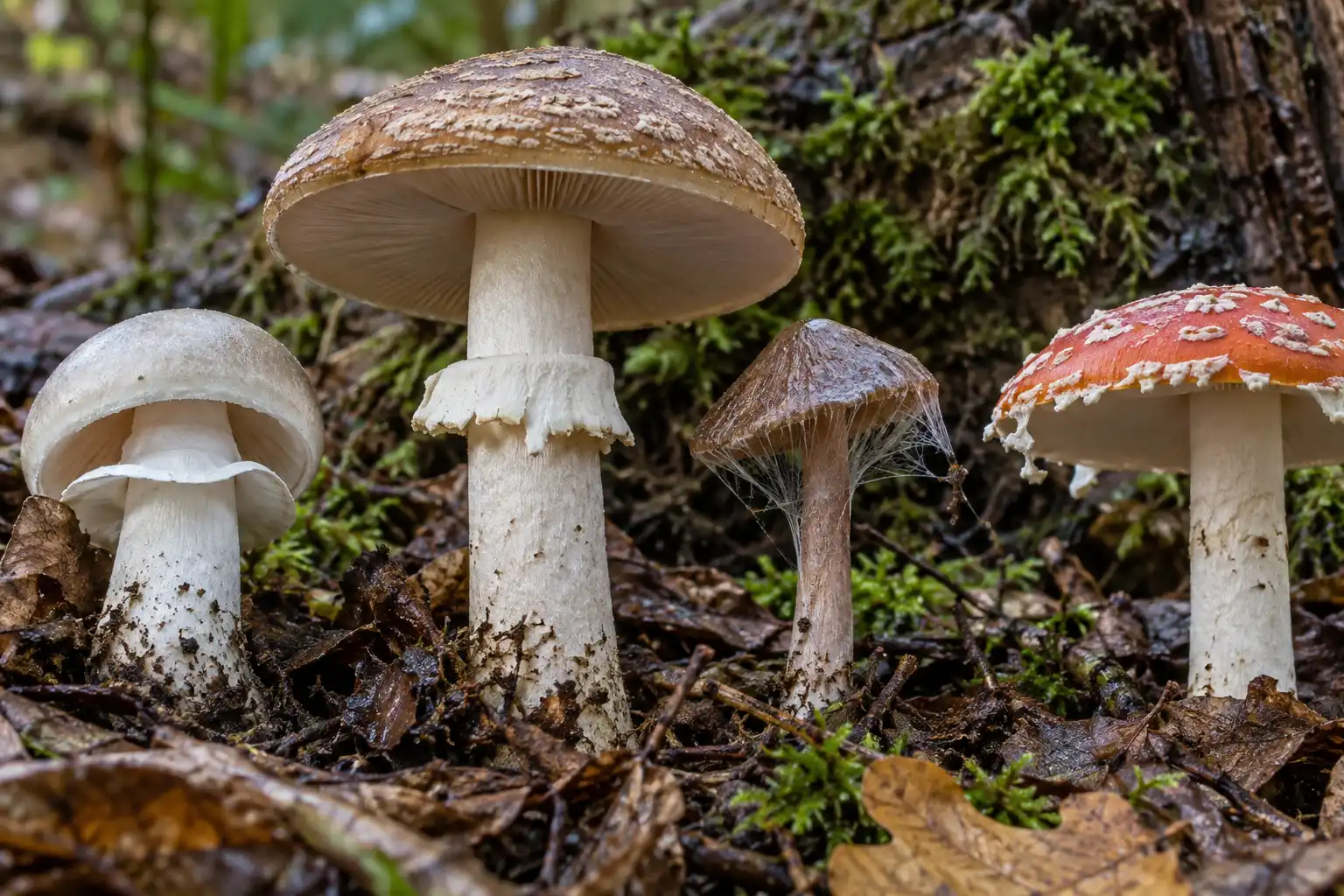
Mushroom Veils and Rings: Partial Veils, Cortinas, and Volvas
Document partial and universal veils, rings, cortinas, cap patches, and volvas across mushroom development without using any one remnant as an edibility test.
mushrooms
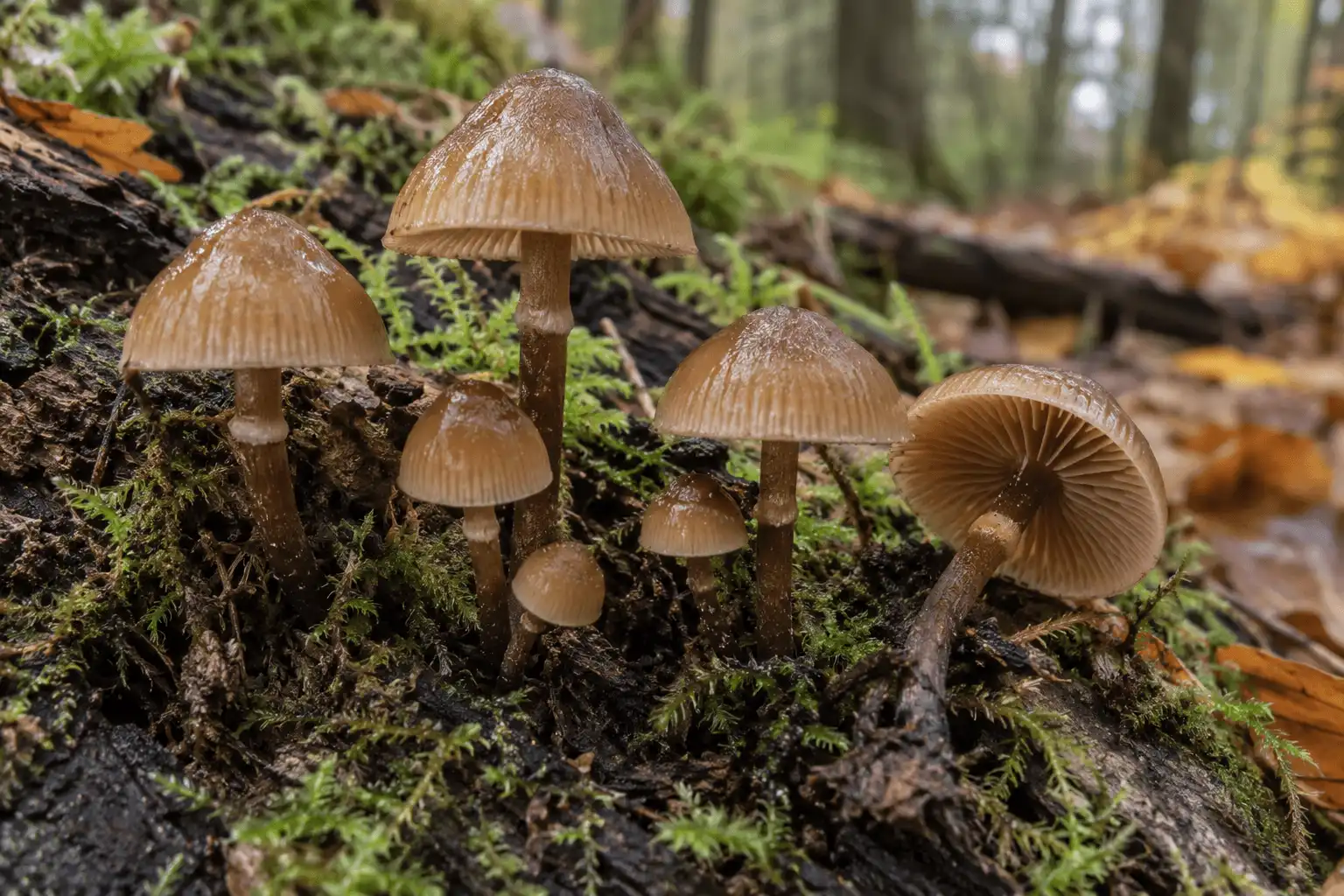
Funeral Bell Mushroom: Galerina marginata Safety Guide
Document deadly Galerina marginata by wood habitat, hygrophanous caps, brown spores, ring zones, microscopy, and strict separation from edible clusters.
identification
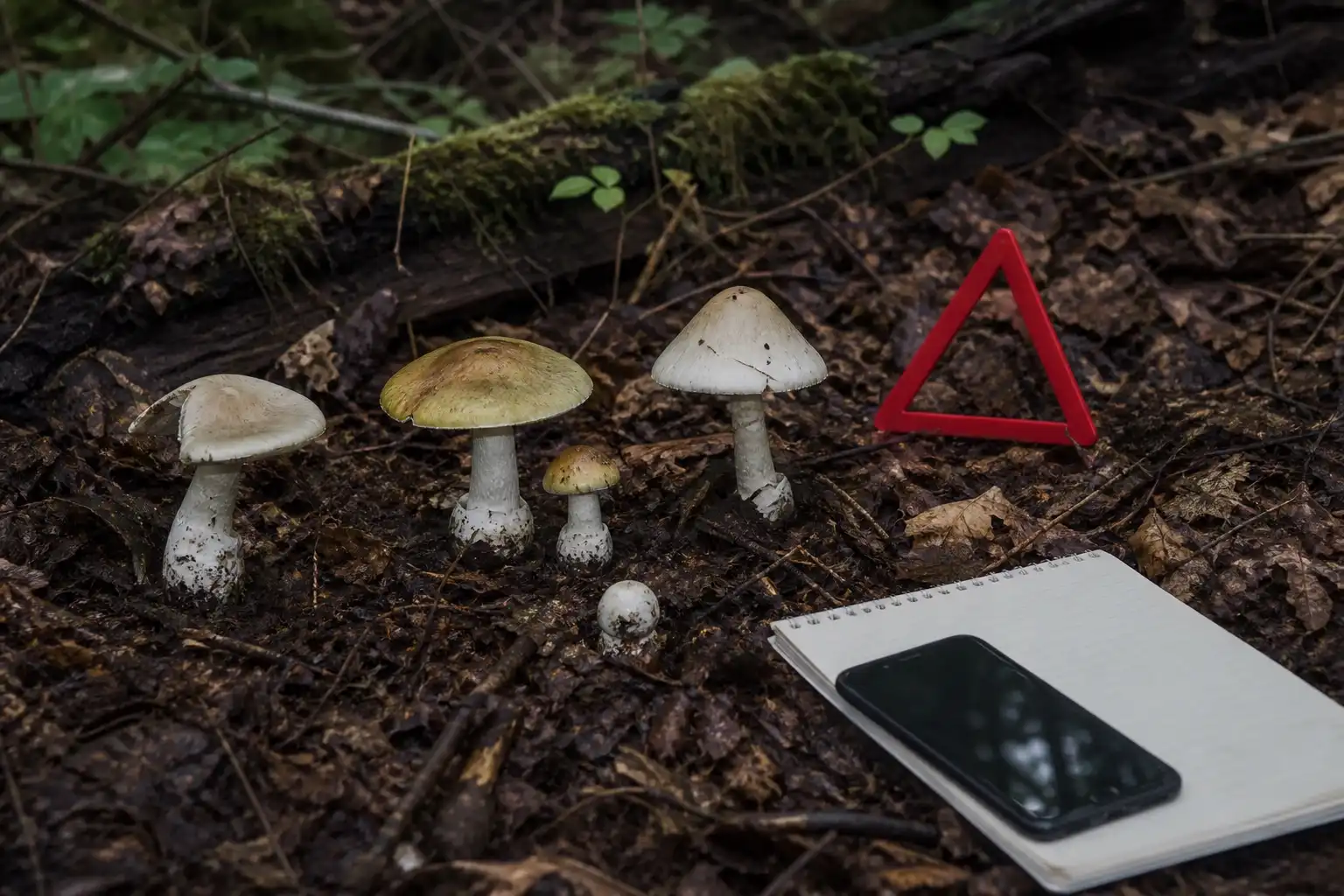
Poisonous Mushroom Warning Signs and Safety Rules
Learn why poisonous mushroom warning signs are unreliable alone, which safety rules matter, what to document, and when to seek urgent help.
Continue exploring
Browse more practical guides in Mushroom Encyclopedia or visit the mushroom encyclopedia.