Identification
Poisonous Mushroom Warning Signs and Safety Rules
Learn why poisonous mushroom warning signs are unreliable alone, which safety rules matter, what to document, and when to seek urgent help.
By MushroomScope Editorial Team · · Updated
Safety first
Use as a field-record guide
Document the whole mushroom, habitat, substrate, and region before comparing names or photographs.
Open the identification safety hub →Decision limit
Do not use this as an edibility verdict
Wild mushroom consumption decisions require qualified local, in-person confirmation of the complete specimen.
Read the safety disclaimer →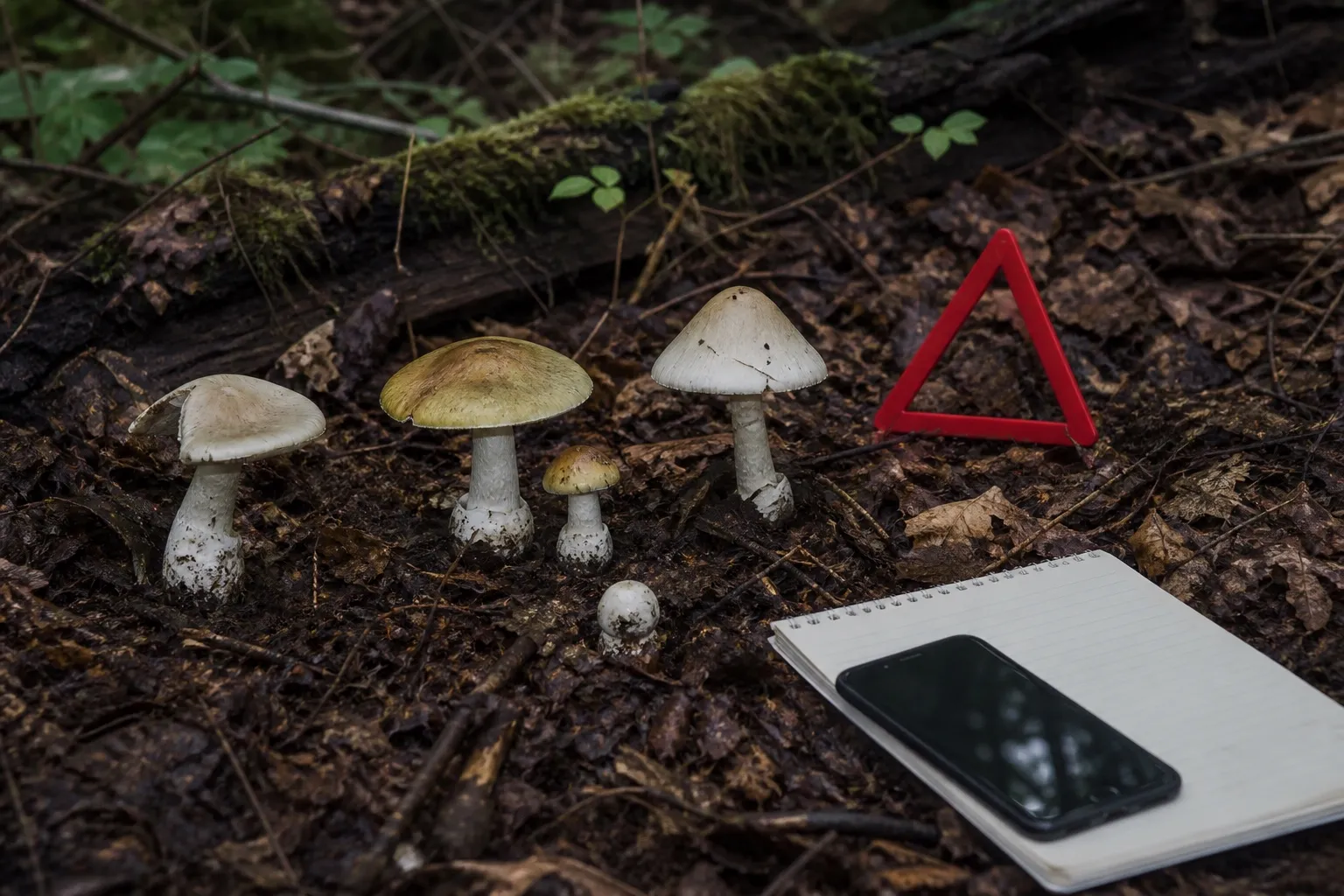
Identification overview
The most important poisonous mushroom warning sign is uncertainty. There is no universal color, odor, bruise reaction, insect damage pattern, or cooking method that proves a wild mushroom is safe. Dangerous mushrooms can look plain, attractive, or similar to edible species.
This guide is about safety rules and documentation. It cannot identify a specimen or decide edibility from a description.
The human brain likes simple rules, especially outdoors: avoid bright colors, avoid bad smells, avoid mushrooms insects ignore. Unfortunately, mushrooms do not follow those rules reliably. Some dangerous species are pale, ordinary-looking, pleasant-smelling, or similar to familiar edible mushrooms. Some harmless-looking specimens can still be unsafe because the identification is incomplete.
The safest approach is to replace folk rules with process rules. Do not eat unresolved mushrooms. Keep unknown specimens away from food. Document the complete mushroom before seeking help. Use local expertise. Treat possible ingestion as a medical situation rather than an internet puzzle.
Myths to avoid
Do not trust folk tests such as silver spoons, onion color changes, insect feeding, peeling caps, pleasant smell, or cooking thoroughly. These rules are unreliable and can create false confidence.
Also avoid relying on a single app result or image-search match. Identification depends on the complete mushroom, habitat, region, season, developmental stage, and sometimes microscopy or expert review.
Why folk tests persist
Folk tests persist because they are memorable and sometimes appear to work by coincidence. If someone uses a bad rule on a truly edible mushroom, the rule seems validated. The problem appears when the same rule is applied to a dangerous lookalike. A method that works only sometimes is not a safety method.
Insects and animals are especially misleading. Animal feeding does not prove human safety, and different species tolerate different compounds. Peeling a cap, changing water color, or cooking with a household object cannot identify mushroom toxins. A pleasant smell can occur in mushrooms that are not safe to eat.
Apps and image search can be useful for study, but they are not meal clearance. They may suggest candidates from incomplete photos and may not account for local lookalikes. Treat digital tools as comparison aids only.
Field safety rules
Keep unknown mushrooms out of food containers. Photograph them where they grow, collect only where legal and appropriate, and preserve the complete base if you need expert help. Wash hands after handling unknown specimens and keep them away from children and pets.
When documenting, record cap, underside, stem, base, odor, bruising, spore deposit, substrate, associated trees, location, date, and weather. The mushroom identification safety checklist gives a structured version of this process.
What a useful field record includes
A useful record starts before collection. Photograph the mushroom in place, including its substrate and surrounding habitat. Then photograph the cap, underside, stem, base, and any young or mature specimens nearby. If collection is legal and appropriate, keep the complete base intact. Cutting the mushroom at ground level may remove a decisive feature.
Record the date, region, weather, nearby trees, whether it grew on soil or wood, and whether the mushrooms were solitary, clustered, or in rings. Note odor cautiously without close inhalation. Make a spore deposit only on clean, non-food surfaces and keep it away from cooking areas.
These details do not make a mushroom edible by themselves. They make expert discussion more responsible. A blurry cap photo on a kitchen counter is rarely enough for a confident answer, and it is never enough for a beginner to override uncertainty.
Warning signs that are not enough
Some features deserve caution, such as a bulbous base, ring or veil tissue, unfamiliar spore color, unusual staining, or a mushroom growing in a high-risk lookalike context. The key point is that none of these works alone, and the absence of these features does not prove safety. A dangerous mushroom can lack the dramatic warning signs people expect.
A safer mental model is cumulative uncertainty. If the complete base is missing, the underside is not documented, the substrate is unclear, the mushroom is outside your experience, or local lookalikes have not been checked, the correct status is unresolved. Unresolved mushrooms do not belong in food.
Common high-risk decision errors
One common error is “edible until proven poisonous.” Wild mushrooms should be treated the opposite way for food decisions: unresolved until proven by appropriate expertise. Another error is comparing only to edible species. A responsible comparison also asks which dangerous local species could be confused with the specimen.
A third error is relying on confidence from a group. If several people repeat the same incomplete guess online, the guess can feel stronger than it is. Confidence is not evidence unless the underlying observations are complete and the reviewer is qualified for the region.
A fourth error is cooking first and asking later. Once mushrooms are chopped, mixed, or cooked, diagnostic features may be lost. If there is any doubt, keep specimens separate and uneaten until the identification process is complete.
A safer decision framework
Use three categories instead of two: identified for study, identified for eating, and unresolved. Many mushrooms can be interesting enough to photograph and compare while still remaining unresolved for food. Moving from study to eating requires local expertise, complete specimens, and a current regional reference, not just confidence from one feature.
For beginners, the best default is to separate field curiosity from meal planning. Bring food from known suppliers and study wild mushrooms as observations. This keeps learning enjoyable while removing pressure to make a risky decision at the end of a walk.
Children, pets, and yard mushrooms
Yard mushrooms create a different safety problem from foraging. Children and pets may taste small mushrooms before anyone has identified them. Remove accessible unknown mushrooms where practical, supervise outdoor play, and teach children not to taste outdoor mushrooms. Do not assume a lawn mushroom is harmless because it is small or common.
If a child or pet may have eaten a mushroom, collect remaining specimens if you can do so safely, photograph the site, and contact the appropriate emergency or poison resource. For pets, contact a veterinarian or animal poison control resource. Do not wait for online identification if ingestion is possible.
Keep study specimens labeled and separate from food. A paper bag marked “unknown mushroom for study—do not eat” is better than a loose specimen on a counter. Clean surfaces afterward, especially in kitchens or homes with children.
Special-risk situations
Extra caution is needed when children, pets, visitors, or vulnerable adults may access mushrooms. Small lawn mushrooms can be tempting to toddlers and dogs, and mixed wild mushrooms can be hard for clinicians to interpret after a meal. Keep specimens bagged, labeled, and away from food preparation areas.
Risk also rises when people combine alcohol, unfamiliar foods, or multiple wild species in one meal. If symptoms occur later, it becomes harder to know what was eaten and when. A conservative identification habit includes keeping notes and never mixing uncertain specimens into shared dishes.
Emergency documentation
If ingestion may have occurred, time matters. Contact emergency services or a poison center immediately. Preserve remaining raw mushrooms, cooked food, packaging, photos, and notes if it is safe. Record when the mushroom was eaten, how much may have been eaten, how it was prepared, who ate it, symptoms, and any medical conditions or medications involved.
Do not induce vomiting unless a medical professional instructs you to do so. Do not wait for symptoms to become severe. Some mushroom poisonings can have delayed symptoms, and a period of feeling better does not always mean the risk has passed.
Online communities can sometimes help identify a specimen, but they are not emergency care. Use them only if they do not delay professional help.
Household prevention
Keep unknown mushrooms away from kitchens, picnic baskets, children, and pets. If you bring specimens home for study, label them clearly, bag them separately from food, and clean the surface afterward. Teach children not to taste outdoor mushrooms, even tiny pieces, and keep yard specimens documented if pets show interest.
When to seek urgent help
If someone may have eaten an unknown mushroom, do not wait for symptoms or online identification. Contact emergency services or a poison center. Save uncooked specimens, cooked leftovers, vomit if medically relevant and safely collected, packaging, and photos. Timing and material can help clinicians and toxicologists.
Symptoms can be delayed, and delayed symptoms can be serious. Online comments are not emergency care.
Practical bottom line
There is no shortcut warning sign that makes mushroom safety simple. The safest rule is procedural: unresolved mushrooms do not become food. Study them, photograph them, learn from local experts, and keep emergency decisions separate from curiosity. When ingestion is possible, contact professional help first and preserve evidence.
Frequently asked questions
Are brightly colored mushrooms always poisonous?
No. Color alone is not reliable. Some dangerous mushrooms are pale or ordinary-looking, and some bright mushrooms are not deadly. Identification requires a full character set.
Can animals tell which mushrooms are safe?
No. Animal feeding does not prove human safety, and different species tolerate different compounds.
Is a mushroom safe if it smells good?
No. Odor can be useful in identification, but pleasant smell is not an edibility test.
Apply the warning signs to grassland groups
Compare the horse mushroom record with the parasol mushroom record: both require mature spores, intact bases and regional lookalikes, but they use different gill, ring, stem-pattern and staining evidence.
References
- North American Mycological Association. Mushroom Poisonings.
- CDC. Poisoning Prevention.
- Poison Control. Poison Help.
Source quality notes
MushroomScope cites sources that match the page scope, such as taxonomic databases, extension guidance, food-safety agencies, food-composition databases, and peer-reviewed or institutional health references. Sources support context and uncertainty; they do not turn an online page into specimen identification, medical advice, or a tested recipe record.
Frequently asked questions
Are there simple warning signs for poisonous mushrooms?
No simple rule is reliable. Dangerous mushrooms can look ordinary, and edible-looking features cannot prove safety.
Does cooking remove mushroom poison?
No. Cooking does not reliably destroy mushroom toxins or make an unidentified mushroom safe.
What should I do after a suspected mushroom poisoning?
Call emergency services or a poison center immediately. Preserve remaining mushrooms, cooked food, packaging, and photos if safe.
Related guides
identification
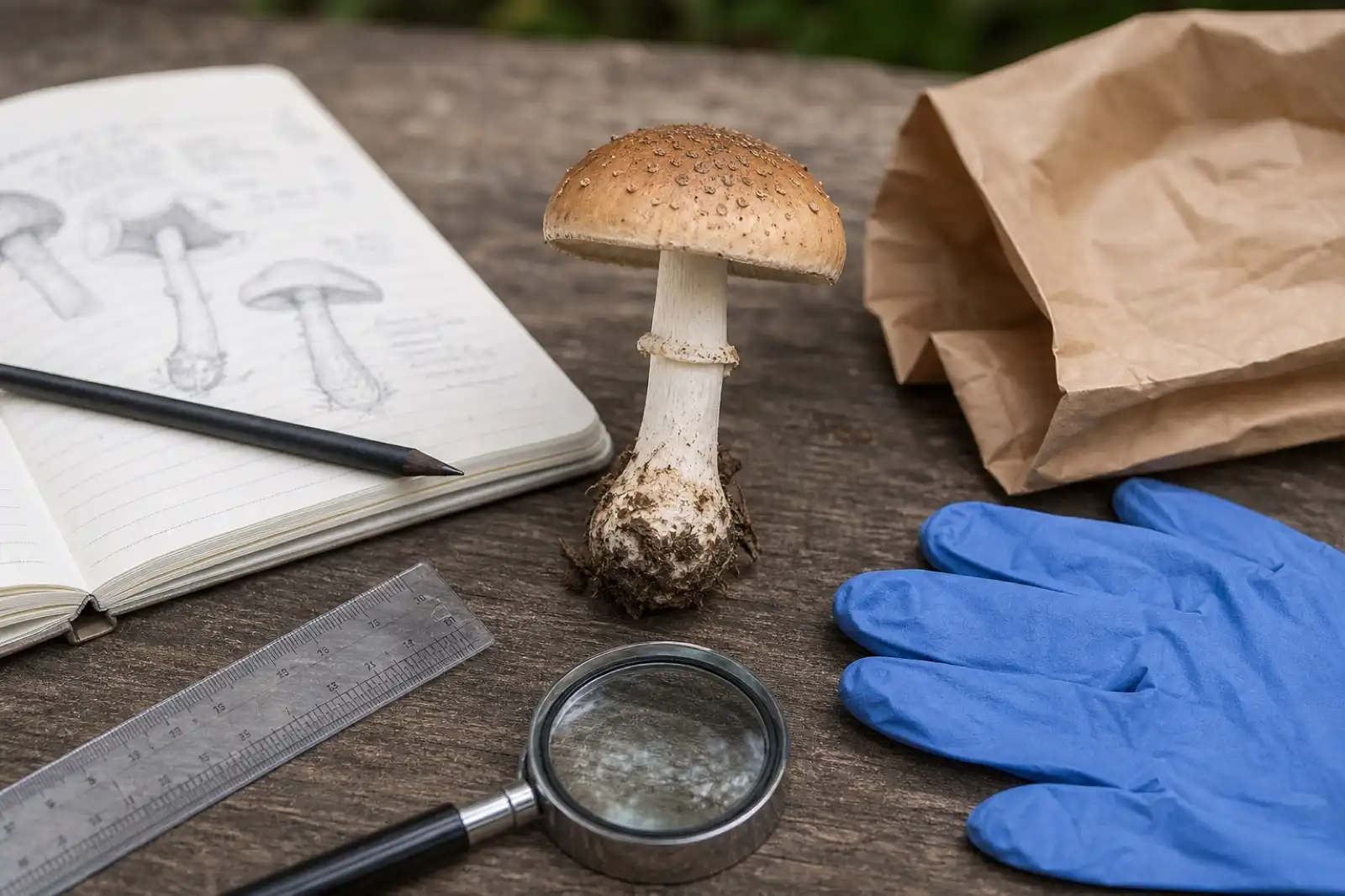
Mushroom Identification Safety Checklist
Use a conservative checklist before handling, documenting, or discussing any wild mushroom, especially when edibility is being considered.
identification
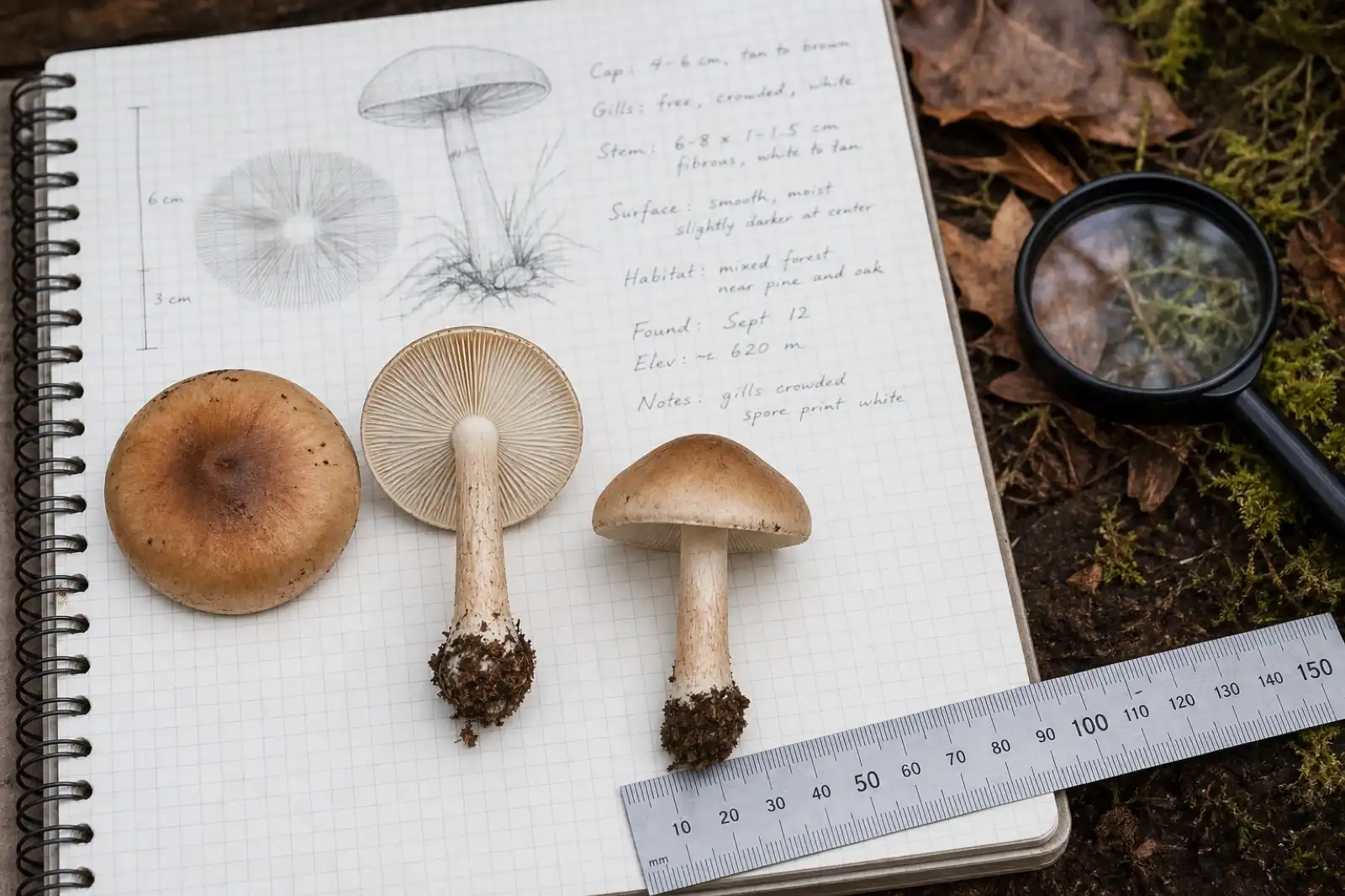
How to Identify Mushrooms: A Beginner's Field Guide
Build an identification from the whole specimen, substrate, habitat, spore deposit, and location—not from a single photograph.
identification
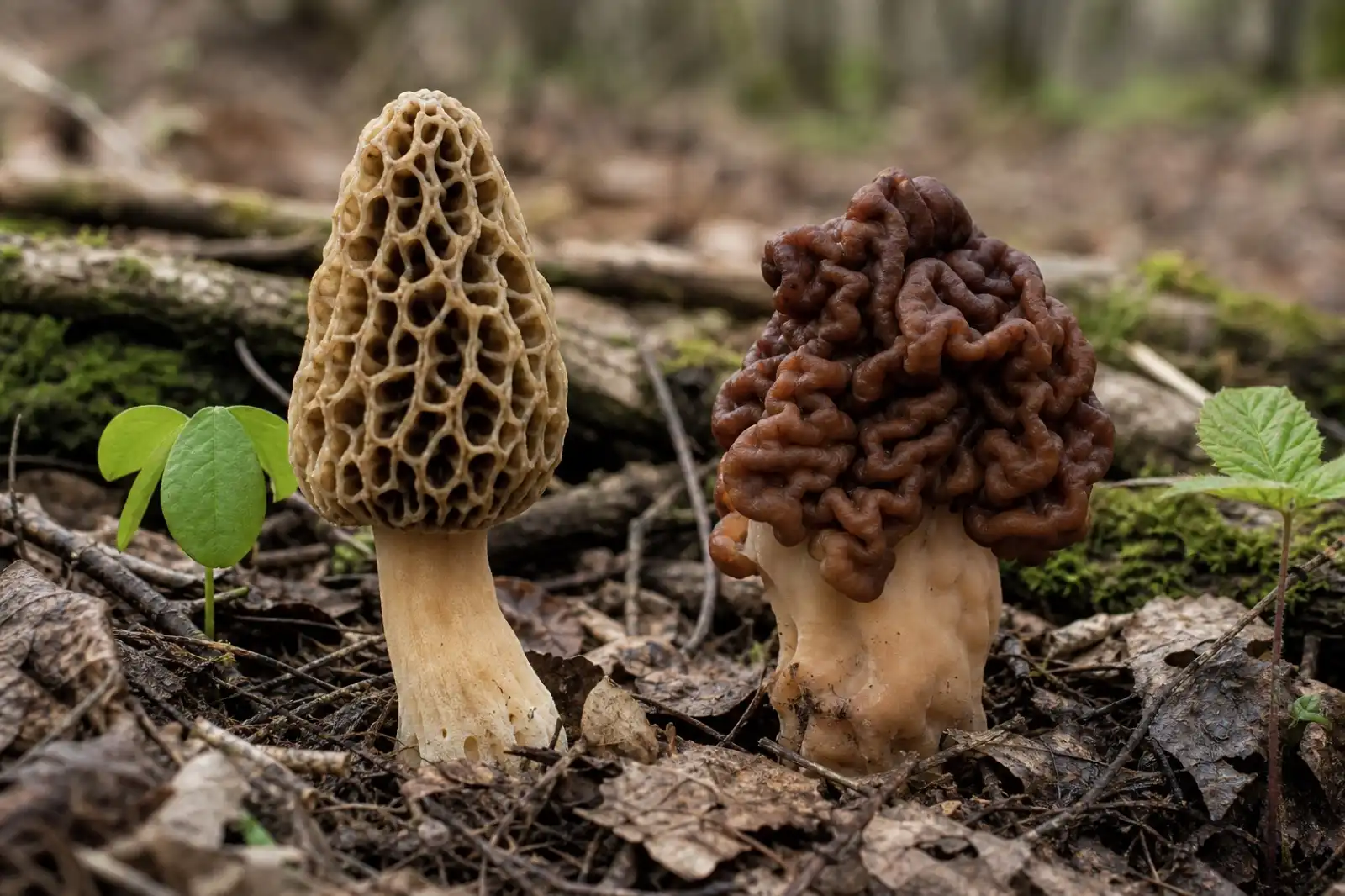
False Morel vs. Morel: Identification and Safety
Compare cap attachment, internal structure, folds, habitat, and season while treating every uncertain specimen as unsafe.
Continue exploring
Browse more practical guides in Identification or visit the mushroom encyclopedia.