Mushroom Encyclopedia
Tricholoma matsutake: Matsutake Species Guide
Learn Matsutake identification, habitat, season, lookalikes, safety, food context, and cultivation limits with current taxonomy and sources.
By MushroomScope Editorial Team · · Updated
Species context
Treat profiles as reference material
Species profiles summarize documented traits, taxonomy, and lookalikes, but natural variation can be substantial.
Use the safety checklist →Decision limit
A profile cannot authenticate a specimen
Do not eat a wild mushroom from an online match, single feature, or generated image.
Read the safety disclaimer →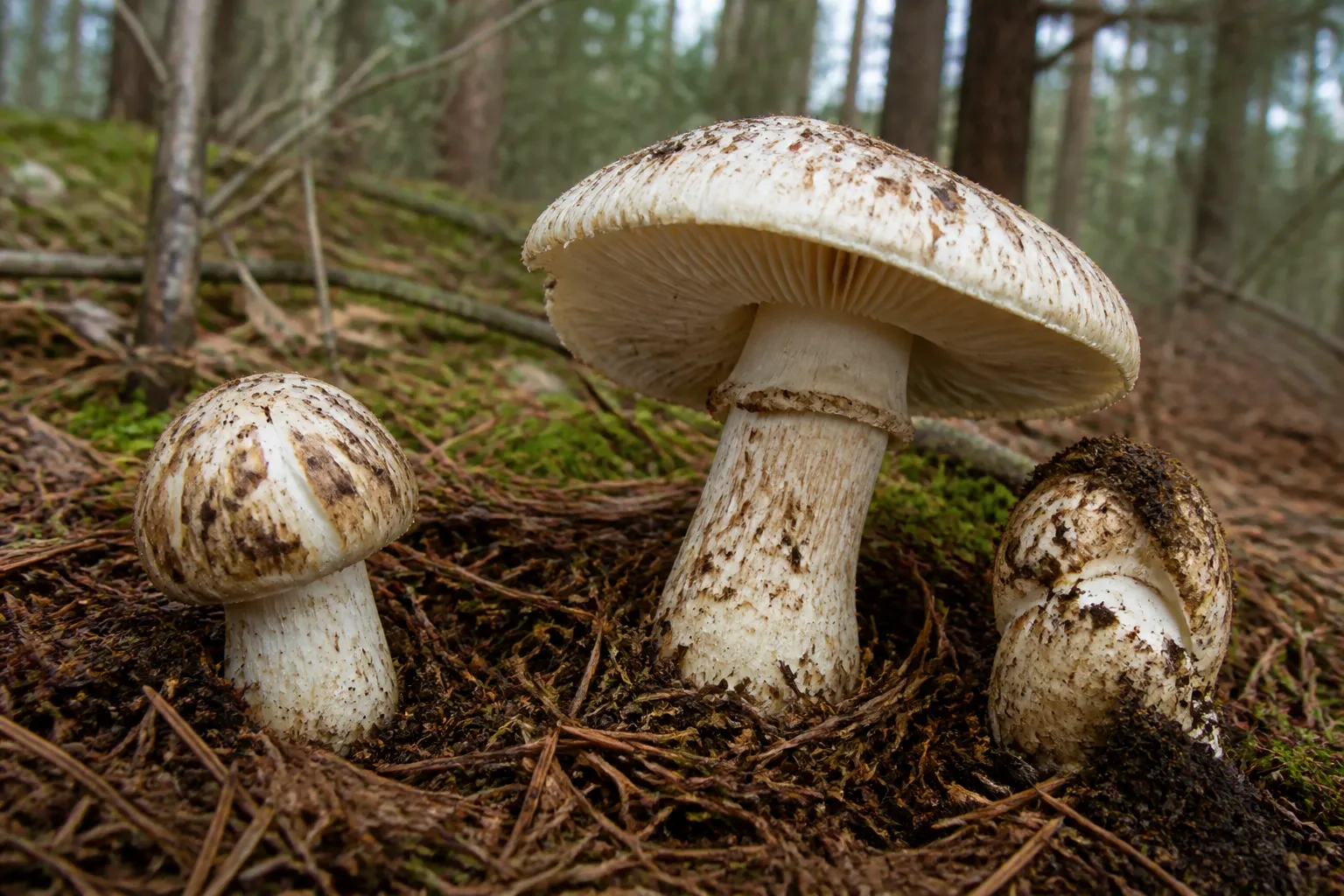
Quick facts
- Scientific name
- Tricholoma matsutake
- Common names
- Matsutake
- Taxonomy
- Tricholoma · Tricholomataceae
- Edibility context
- Edible: This database label is context, not remote clearance of a wild specimen; identity, preparation, spoilage, contamination, and individual reaction matter.
- Spore print
- White.
- Toxicity context
- None Known: Risk includes misidentification and individual reaction. Consult current local toxicology guidance before any food decision.
- Season
- August, September, October, November
- Growing difficulty
- Expert
- Regions
- East Asia, northern Europe
Safety limit: These labels summarize documented context; they never authenticate a wild specimen. Cooking does not make a poisonous species safe.
Identification overview
White firm mushrooms with brown fibrous scales, a partial veil, and a strong spicy-aromatic odor. White notched gills may spot brown with age. Solid white stem with a ring zone and brown fibers below. Dense white flesh with a distinctive but subjective aroma. Observe several ages because rain, drying, insects, and decomposition can alter color and texture. Photograph the undisturbed growth, upper surface, fertile surface, complete attachment, and a lengthwise section. A white. spore deposit is supporting evidence, never a species verdict.
Habitat and season
A mycorrhizal forest species associated with pines and other hosts. The documented range represented here includes East Asia and northern Europe. Typical substrates or settings include sandy forest soil and pine-associated soil. Fruiting records commonly occur in August, September, October, November, but latitude, elevation, rainfall, and host condition shift the calendar.
Matsutake ecology begins below ground. These fungi form ectomycorrhizal partnerships with living trees, and fruit bodies commonly arise from mineral soil and litter rather than from wood. Record the complete local tree community, soil texture, litter depth, slope, and whether several fruit bodies trace an arc or patch. Japanese Tricholoma matsutake and western North American matsutake concepts involve different regional host communities.
Similar species
- Tricholoma pardinum — a poisonous gray-scaled species.
- Amanita smithiana and related amanitas — dangerous white mushrooms with different base structures.
Build the comparison set for the collection region. Large white and brown-capped Tricholoma and pale Amanita can overlap in a hurried photograph, while the consequential characters include an intact base, veil architecture, gill attachment, odor recorded without tasting, host association, and microscopic evidence required by the local key. A market name or image-app suggestion cannot resolve those boundaries.
Food and safety context
Matsutake has a documented food-use context when the organism is correctly identified and the material is fresh, clean, and cooked. That reputation does not transfer to a wild specimen identified online. Individual allergy, gastrointestinal intolerance, spoilage, environmental contamination, and cross-contamination remain possible. Cooking does not make a poisonous species safe.
For severe vomiting, persistent diarrhea, confusion, jaundice, breathing difficulty, or any symptoms after an unidentified wild mushroom, contact emergency services or a poison center promptly. Keep uncooked material, trimmings, photographs, and meal details for professional identification.
Cultivation context
Matsutake cannot be treated like oyster spawn on a fruiting block. The fungus must establish a compatible root partnership in a suitable soil and microbial community, and the transition from root colonization to repeatable fruiting remains difficult to control. Research sites therefore address tree seedlings, soil horizons, competing vegetation, climate, and multi-year establishment—not a short indoor recipe. “Matsutake grow kit” claims need careful scrutiny of species identity and promised outcomes.
How to document a find
- Photograph the undisturbed fruit body emerging through litter and the surrounding host trees.
- Excavate one complete base where collection is lawful; do not cut off lower stem or veil tissue.
- Record cap fibers, gill attachment, ring position, stem surface, firmness, and odor across young and mature stages.
- Map the collection to the regional matsutake species concept rather than importing a distant name.
- Keep harvest lots separated by site and date so an expert can trace disagreements or adverse events.
Start with geography before using the matsutake name
“Matsutake” is a culinary and trade name applied to more than one closely related Tricholoma in different regions. Tricholoma matsutake is associated especially with Eurasian forests, while North American collections may be treated under names such as T. murrillianum or other regional taxa. Older books, market labels, and databases may not use the same species boundaries. A responsible record therefore begins with location and the current regional concept rather than transferring one scientific name worldwide.
Record country, broad region, elevation, forest type, soil or duff, and nearby potential host trees. Avoid publishing exact coordinates for sensitive or heavily harvested sites. A photograph of the surrounding stand is often more informative than another close-up of the cap because matsutake are ectomycorrhizal and their tree partnership is part of the evidence. A regional key or local mycological society can clarify which name applies.
This geographic caution is not merely academic. Similar large white-gilled mushrooms can have different safety profiles, and a commercially recognized name does not clear a wild specimen for eating. When species-level evidence is incomplete, “matsutake-group Tricholoma” is more defensible than a confident global label.
Examine the unopened and mature stages
Young matsutake often emerge partly buried, with a pale cap and a partial veil enclosing the gills. Soil and forest litter may cling firmly to the cap surface. As the mushroom expands, the veil tears and leaves a ring or ring zone on the stout stem. The cap can develop brownish fibrillose scales or patches, while the gills remain pale before age and damage alter them. Photograph both young and mature specimens because no single stage shows every character.
The stem is typically firm and substantial, with pale tissue above the veil zone and brownish fibrils or patterning below it in many collections. Excavate the complete base carefully where collection is legal; a snapped stem loses evidence needed to compare Amanita and other large pale mushrooms. Slice one representative specimen lengthwise to show whether the interior is solid, insect-damaged, waterlogged, or discolored.
Odor is famous but subjective. Descriptions range from spicy and resinous to cinnamon-like, fruity, or pungent. People differ in perception, and refrigeration, age, rain, and packaging change aroma. Record the odor in the observer’s own words without tasting and without letting it override contradictory anatomy. A familiar smell can support an already coherent identification, but it cannot establish edibility.
Treat gills, veil, and spore deposit as a set
The pale gills are attached in a way that must be interpreted with a regional key; camera angle and an unexpanded cap can make attachment difficult to see. Photograph the cap-stem junction from several sides and include a mature specimen. Note bruising, spacing, edge color, and whether gills are clean or spotted with age. Avoid forcing the cap open because the intact veil and natural development are useful evidence.
A pale or white spore deposit supports placement among white-spored Tricholoma-like mushrooms, but many hazardous fungi also have white spores. Make the print from a mature cap on contrasting surfaces, label it, and keep it linked to the same specimen photographs. Spore color is one line of evidence alongside ring structure, stem surface, cap texture, base, host, habitat, and geography.
The persistent veil is a particularly important character because many Tricholoma lack a ring. Document where the veil joins the cap margin in young specimens and what remains on the expanded stem. A vague “ring present” note is weaker than a clear side-lit photograph showing its texture, position, and whether it is membranous, fibrous, movable, or collapsing.
Compare dangerous and confusing lookalikes
Large pale Amanita species demand explicit exclusion. They may have white spores and a ring, but often show a volva, cup, rim, or other universal-veil material at the stem base. The base can be buried, so cutting a mushroom at ground level removes the most important evidence. Some Amanita are deadly. Never use odor, market value, or a brown-marked cap to dismiss that comparison.
Other Tricholoma species can overlap in size, color, odor, and forest habitat. Some cause gastrointestinal illness. Compare cap surface, gill attachment, veil development, stem pattern, odor, host association, region, and microscopic characters rather than relying on a single “matsutake smell.” The comparison set changes across continents, which is another reason a local key is essential.
Commercial mushrooms also require traceability. A market label may use a trade name broader than the taxonomic species, and high value can encourage substitution. Reputable sourcing, intact packaging, origin information, and cold-chain condition matter. This page cannot authenticate a product from appearance or price.
Ecology and ethical harvesting
Matsutake-group fungi form ectomycorrhizal partnerships with living trees. Their underground mycelium interacts with roots and soil over long periods, so they are not equivalent to saprotrophic mushrooms that fruit readily from a sawdust block. Fruiting is influenced by host species, stand age, soil properties, moisture, temperature, and seasonal weather. A calendar month without regional context is therefore only a rough orientation.
If harvesting is legal, minimize soil disturbance. Lift only the selected fruit body, replace displaced duff, avoid raking wide areas, and follow permits, quotas, and commercial-harvest rules. Leave immature and overmature specimens and avoid revealing sensitive sites. Different land managers may regulate personal and commercial collection separately.
A good ecological observation notes whether mushrooms are solitary, scattered, or in arcs; how deeply they are buried; which trees dominate; and whether the same patch fruits across years. Photograph without clearing the entire surface. Those details improve identification and preserve the site better than aggressive excavation.
Food handling after verified identification
Matsutake has a valued culinary history when the correct regional species is professionally identified and the mushrooms are fresh. That reputation does not apply to a specimen identified from this page. Wild food decisions require in-person assessment by someone competent with local Tricholoma and Amanita. Cooking cannot make a deadly lookalike safe.
For legitimately sourced mushrooms, keep them cold, dry, and separated from uncertain wild collections. Brush away debris and trim damaged tissue; avoid soaking because water affects texture and aroma. Discard specimens that are slimy, moldy, badly insect-damaged, or persistently abnormal in odor. Cook thoroughly using a trusted culinary method and try only a modest portion if the food is new to the diner.
Individual allergy and gastrointestinal intolerance remain possible. If symptoms follow a wild mushroom meal, contact local emergency services or a poison center promptly. Preserve uncooked specimens, trimmings, photographs, packaging, and meal details. Do not wait for an online identification and do not induce vomiting unless a medical professional instructs you to do so.
Why dependable home cultivation is difficult
Because matsutake depends on living host roots and a suitable soil community, ordinary indoor grow bags do not reproduce its ecology. Research and managed forest systems may establish mycorrhizal seedlings or study productive sites, but dependable fruiting requires far more than colonized grain or a block of hardwood sawdust. Claims of quick indoor matsutake harvests should be evaluated skeptically.
Do not transplant soil, roots, or wild tissue without understanding land rules, plant-health concerns, and ecological impact. Moving forest material can spread pests or pathogens and may damage the original site. For a beginner cultivation project, choose a verified saprotrophic species such as oyster mushroom or lion’s mane and follow supplier instructions.
A conservative identification record
Build the record in layers. First establish the region and likely local species concept. Then document forest habitat and host trees, the partly buried growth, pale cap with brownish fibrils, stout patterned stem, veil and ring zone, pale gills, complete base, solid section, odor notes, and white spore context. Compare local Amanita and Tricholoma species explicitly.
State what remains missing, including microscopy, expert confirmation, or current regional literature. Editorial images on MushroomScope communicate habitat and structure only; they are not specimen evidence. If the intended use is food, the threshold is higher than for a learning observation: unresolved identity means do not consume.
References
- Global Biodiversity Information Facility. Tricholoma matsutake species record. Taxonomic backbone and occurrence context.
- National Center for Biotechnology Information. NCBI Taxonomy Browser. Independent lineage and nomenclature checkpoint.
- North American Mycological Association. Mushroom Poisoning Syndromes. Poisoning response and syndrome context.
- U.S. Food and Drug Administration. Selecting and Serving Produce Safely. General handling guidance for mushrooms used as food.
- Yamada A, et al. Cultivation studies of edible ectomycorrhizal mushrooms. Mycoscience. Review of verified mycorrhization research, host relationships, and the limits of matsutake cultivation.
- Kim M, et al. Fungal interactions in Tricholoma matsutake shiro soils. Frontiers in Microbiology. Field evidence for host symbiosis and the distinctive shiro soil community.
Editorial review updated September 28, 2026. No named mycologist reviewed this page; regional taxonomy, conservation rules, and poison-response contacts require rechecking at each substantive update.
Source quality notes
MushroomScope cites sources that match the page scope, such as taxonomic databases, extension guidance, food-safety agencies, food-composition databases, and peer-reviewed or institutional health references. Sources support context and uncertainty; they do not turn an online page into specimen identification, medical advice, or a tested recipe record.
Frequently asked questions
Can Matsutake be identified from one photograph?
No. Identification requires the complete specimen, fertile surface, attachment, substrate, habitat, region, developmental stage, and sometimes microscopy or DNA.
Is wild Matsutake safe to eat?
This page cannot clear a wild specimen for food. Obtain in-person confirmation from a qualified local identifier and follow local guidance; cooking cannot make a poisonous lookalike safe.
Where does Matsutake grow?
A mycorrhizal forest species associated with pines and other hosts. Regional records and host associations should be checked before applying this summary to a local collection.
What is the spore print of Matsutake?
The expected deposit is white., but print color overlaps among fungi and cannot confirm this species by itself.
Can Matsutake be cultivated at home?
It is not a simple beginner crop; use authenticated commercial material and species-specific professional guidance rather than wild tissue.
Related guides
identification
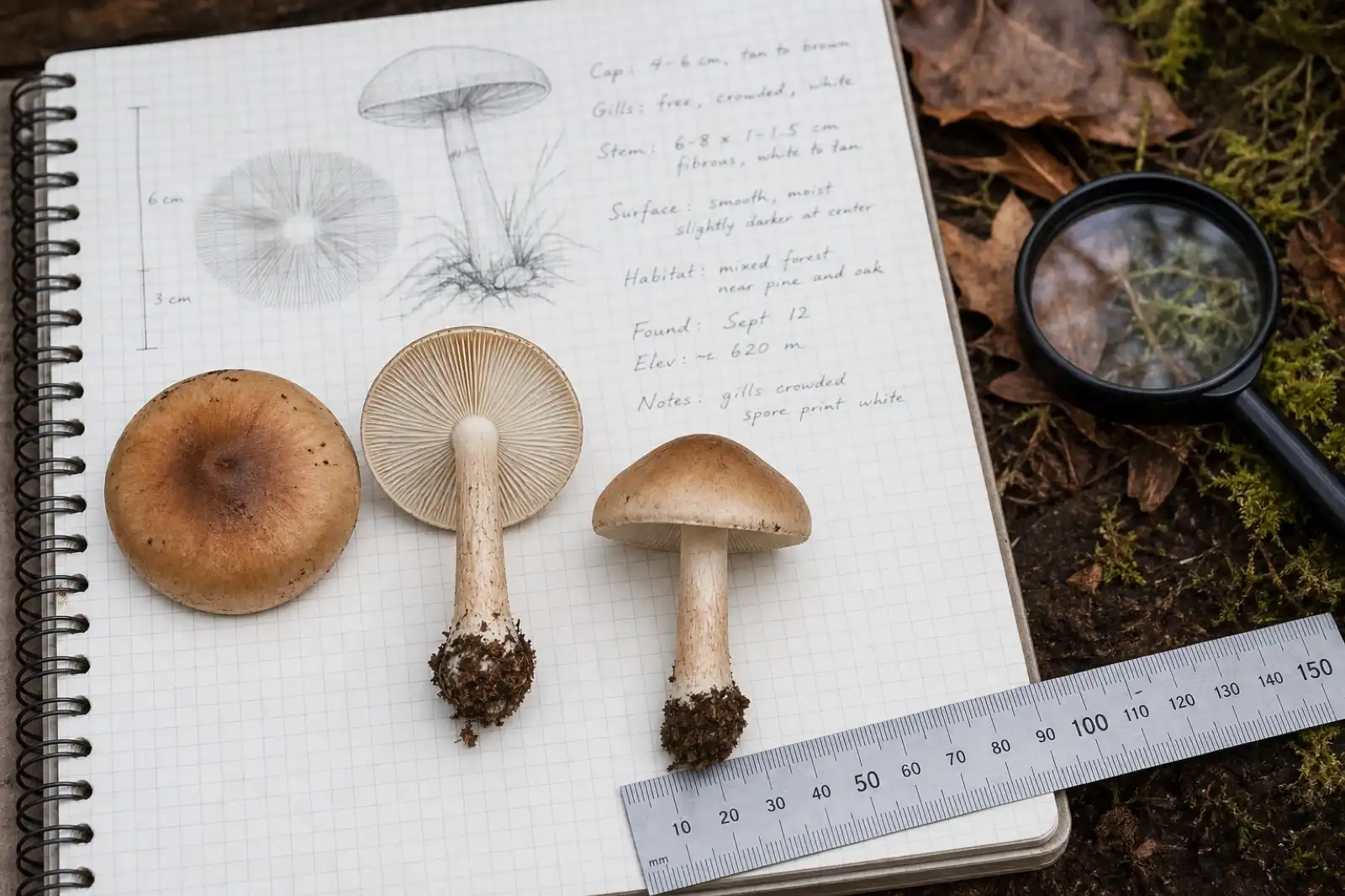
How to Identify Mushrooms: A Beginner's Field Guide
Build an identification from the whole specimen, substrate, habitat, spore deposit, and location—not from a single photograph.
identification
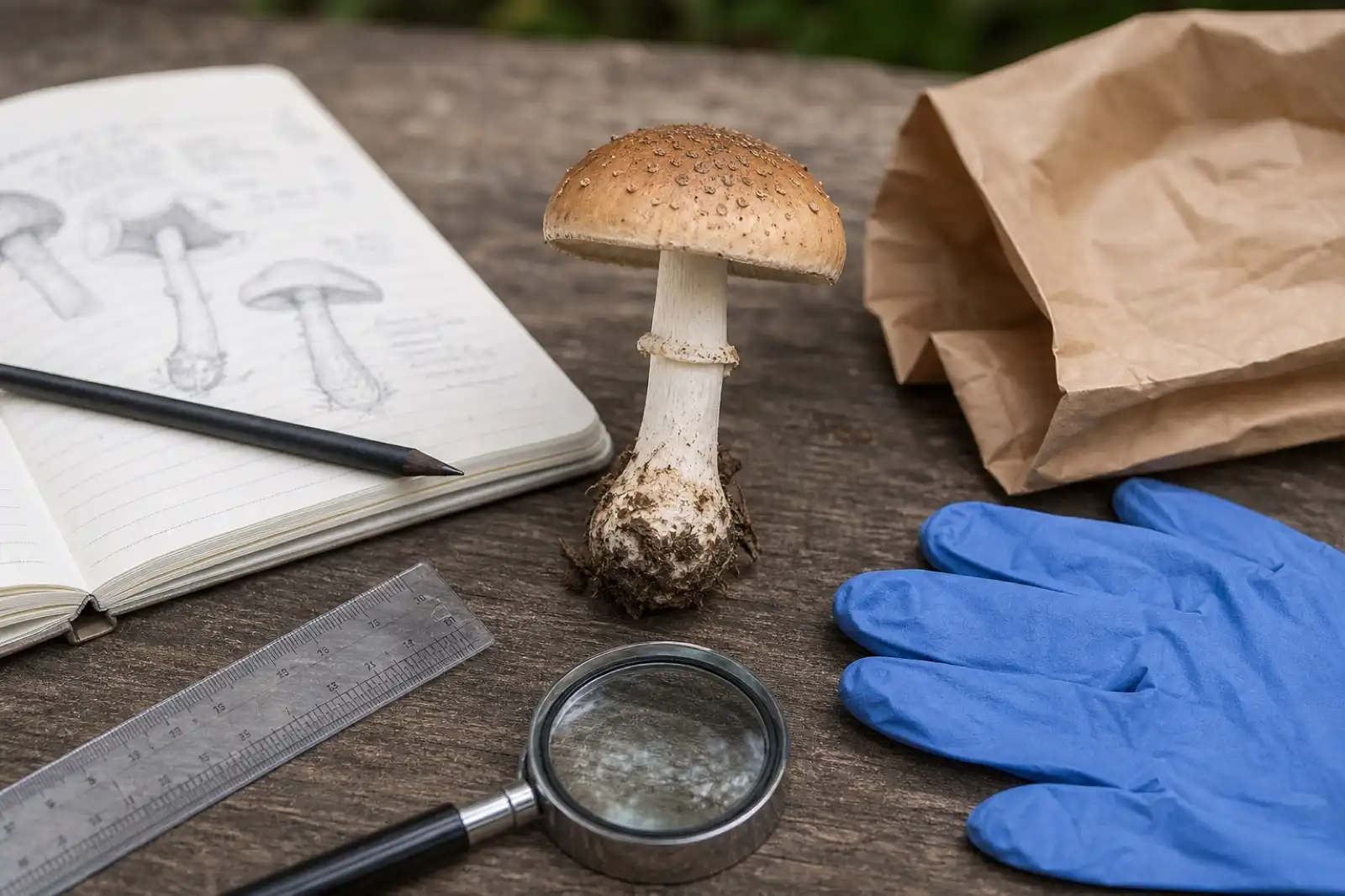
Mushroom Identification Safety Checklist
Use a conservative checklist before handling, documenting, or discussing any wild mushroom, especially when edibility is being considered.
mushrooms
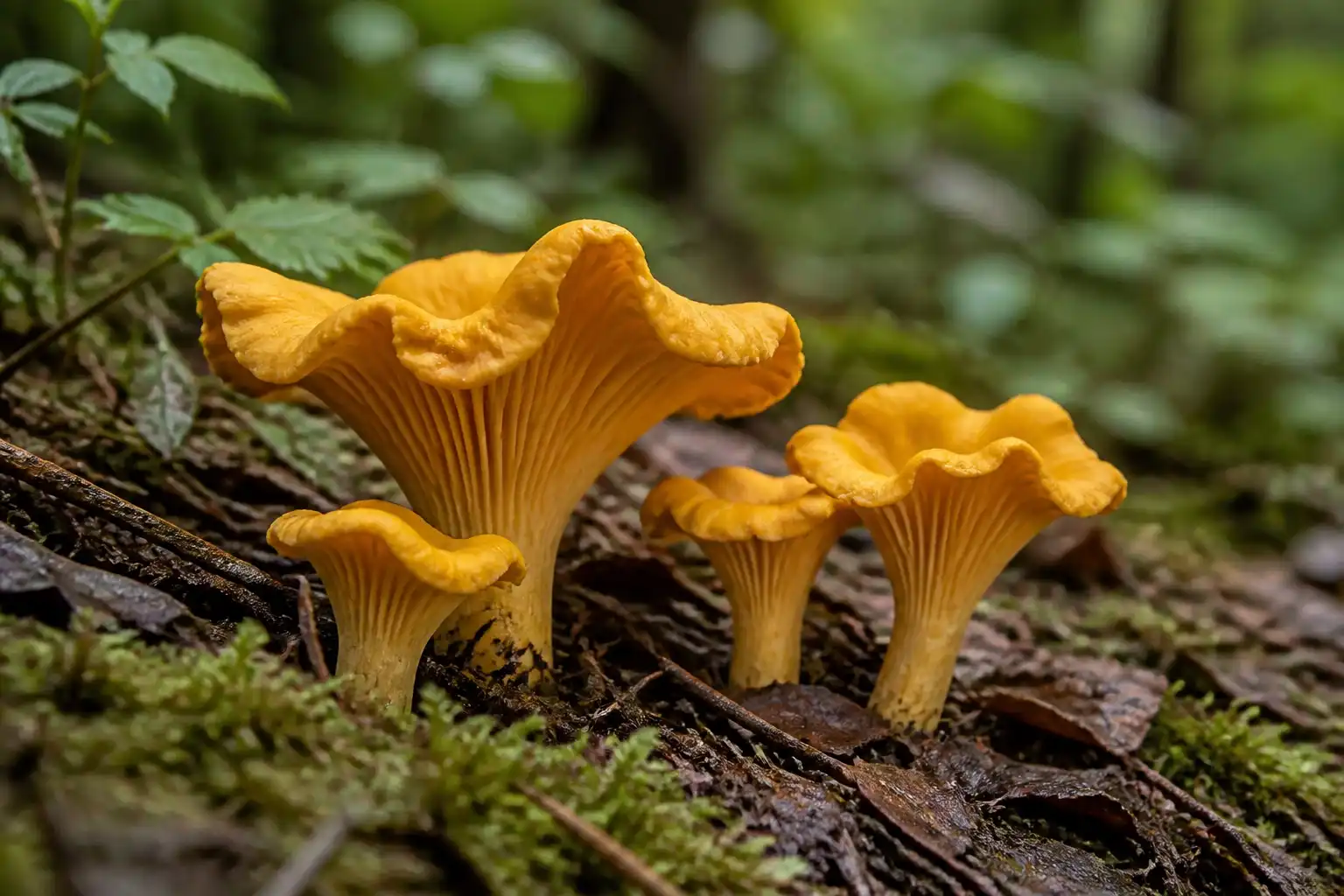
Cantharellus cibarius: Chanterelle Identification Guide
Learn chanterelle identification, false gills, habitat, season, poisonous lookalikes, edibility, nutrition, and why wild finds need local verification.
Continue exploring
Browse more practical guides in Mushroom Encyclopedia or visit the mushroom encyclopedia.