Mushroom Encyclopedia
Shaggy Mane Mushroom: Deliquescence, Habitat, and Lookalikes
Identify shaggy mane by its tall white scaled cap, free gills that dissolve from the margin, ringed stem, black spores, habitat, and lookalikes.
Species context
Treat profiles as reference material
Species profiles summarize documented traits, taxonomy, and lookalikes, but natural variation can be substantial.
Use the safety checklist →Decision limit
A profile cannot authenticate a specimen
Do not eat a wild mushroom from an online match, single feature, or generated image.
Read the safety disclaimer →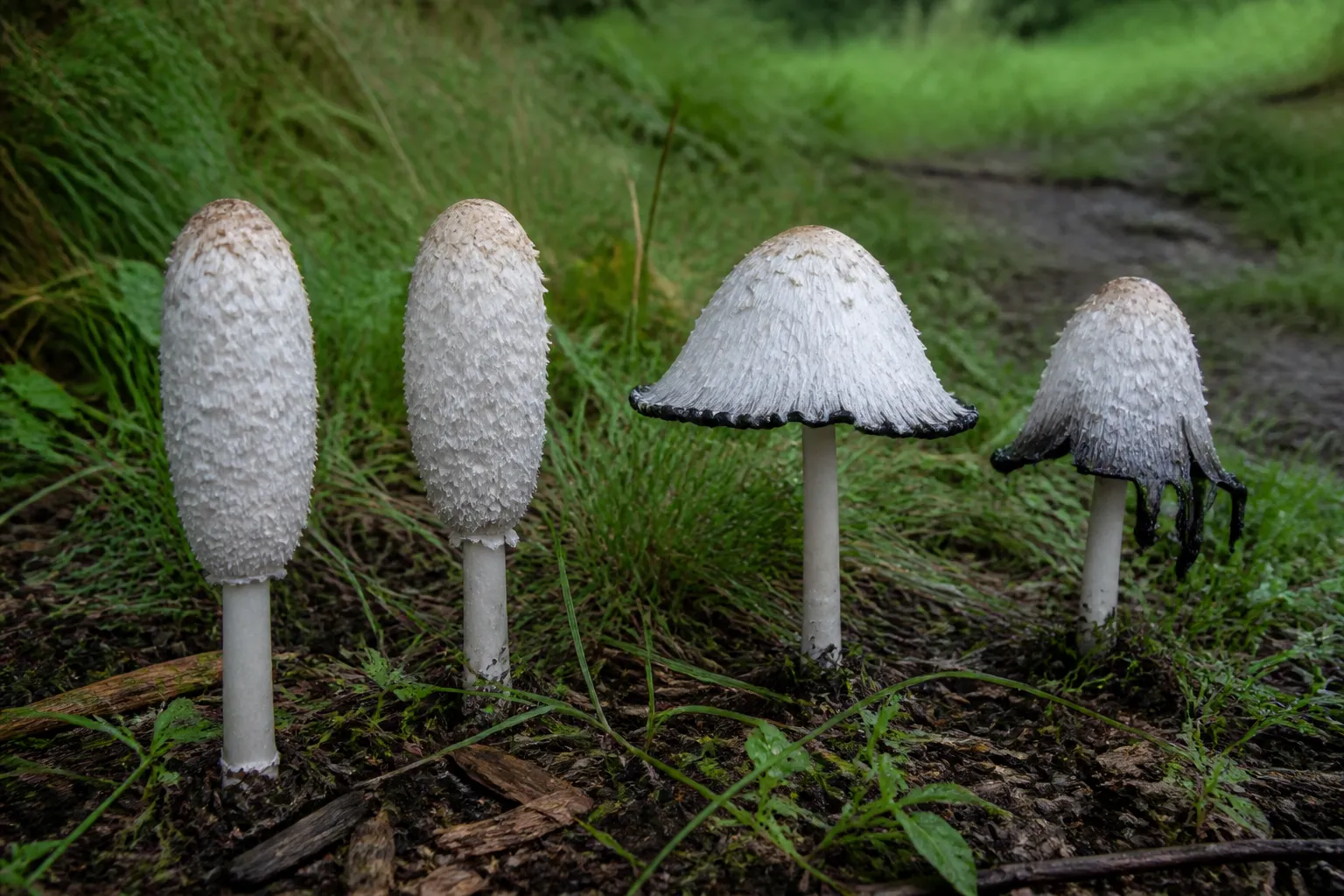
Quick facts
- Scientific name
- Coprinus comatus
- Common names
- Shaggy mane, Shaggy ink cap, Lawyer's wig
- Taxonomy
- Coprinus · Agaricaceae
- Edibility context
- Conditional: Has a food-use history only at a very fresh stage after correct identification and cooking; this guide does not clear a collection.
- Spore print
- Black.
- Toxicity context
- Moderate: Risks include confusion with other ink caps, rapid spoilage, contaminated habitats, and individual reactions; avoid unsupported alcohol assurances.
- Season
- April, May, June, September, October, November
- Growing difficulty
- Difficult
- Regions
- Europe, North America, temperate regions elsewhere
Safety limit: These labels summarize documented context; they never authenticate a wild specimen. Cooking does not make a poisonous species safe.
Shaggy mane is a mushroom whose identification unfolds on a clock. A young fruit body is a tall white cylinder covered in shaggy scales. Its cap soon opens, its gills change from white through pink to black, and the margin digests itself into dark liquid. That sequence is more informative than any one still photograph.
The accepted scientific name used here is Coprinus comatus. Despite the common phrase “inky cap,” it is not placed in the same modern genus as the smooth common inky cap, Coprinopsis atramentaria. Similar spore-dispersal behavior does not erase differences in structure, ecology, chemistry, or safety context.
Recognize the young cylindrical stage
Young caps are elongated and cylindrical, often taller than they are wide. The surface is white with many upturned shaggy scales and usually a tan to pale brown central disc. The margin initially hugs the stem. This “lawyer’s wig” outline is one of the most useful field characters.
Photograph several ages together. A single mature bell lacks the distinctive young silhouette, while an unopened button can hide gills, ring, and stem proportions. Natural variation exists, so use structure rather than demanding identical scale patterns.
Scales are veil tissue, not dirt
The cap surface breaks into conspicuous white fibrillose scales as it expands. They are integrated with the developing cap and point outward or upward. Rain can flatten or remove some, and handling can smear them.
Do not confuse soil stuck to a smooth cap with true shaggy ornamentation. Side light reveals raised texture. A tan central patch with a progressively shaggier white lower cap supports the species profile better than a uniformly granular mushroom.
Watch the gill-color sequence
The crowded gills are free from the stem. They begin white, pass through a pinkish stage, and turn gray-black as spores mature. Deliquescence begins near the lower cap margin and moves upward, converting gills and cap tissue into black fluid.
Record gill color by specimen age. White gills on a young cap and black gills on an older neighbor can represent one troop. Black gills alone are not specific, and a completely liquefied cap has lost much of the evidence required for a reliable name.
Deliquescence is a process, not decay alone
Ink caps actively digest cap tissue during spore release. A clean advancing black edge on a maturing cap is different from generalized bacterial slime or colored mold. Once progression is advanced, however, the material is also fragile and deteriorates rapidly.
Time-stamped photographs can document the change over hours. This developmental series is valuable for education but does not make old material suitable for food.
Stem, ring, and complete base
The stem is long, white, hollow, and relatively smooth. A thin ring may sit low or move along the stem and can disappear. The base may be slightly enlarged but should not have a loose sac-like volva.
Lift one permitted specimen with its base intact. Young white mushrooms with partial veils can create dangerous confusion if bases are trimmed. A missing ring on an old shaggy mane is possible; it should not be used to excuse a collection whose other structures disagree.
Black spores support the ink-cap profile
A mature but not fully dissolved cap can yield a black spore deposit. Use contrasting surfaces even though the expected color is dark, because thickness changes appearance. A print supports an ink-cap hypothesis but does not separate all black-spored species.
Advanced caps may release an inky suspension rather than a clean dry print. Document that limitation instead of treating black liquid as a substitute for all spore evidence.
Disturbed-ground ecology
Shaggy mane is saprotrophic and favors nutrient-rich disturbed soils: lawns, grassy verges, path edges, compacted ground, playing fields, and wood-chip margins. Troops may appear in lines or rings after rain and recur from the same buried organic zone.
Record land use. A visually perfect fruiting beside a busy road, chemically treated lawn, dog area, or industrial site has a different contamination context from one in a clean managed garden. Habitat informs both identification and whether food discussion should stop.
Season varies with rainfall and latitude
Spring and autumn flushes are common in temperate regions, but local rainfall and temperature control timing. Fruiting can be sudden and short-lived because caps deliquesce quickly.
Return visits are useful. A patch photographed in the evening may look dramatically different the next morning, allowing a developmental record without collecting many specimens.
Common inky cap is the key name confusion
Coprinopsis atramentaria usually forms dense clusters of smooth gray to gray-brown bell-shaped caps from buried wood, stumps, or root zones. It lacks the tall white shaggy-scaled young cap. Its alcohol-interaction risk is also central to its safety profile.
Common inky cap addresses a separate intent. Do not transfer a food label or alcohol claim from one “inky cap” to another based on a shared common-name fragment. When a mature specimen can still produce a deposit, compare it with the mushroom spore-color guide rather than inferring spore color from black cap fluid.
Mica cap and other deliquescent mushrooms
Coprinellus micaceus tends to be smaller, honey-brown, and densely clustered on wood or buried wood. Fine mica-like veil granules may be visible on fresh dry caps but can wash away. Its size and smooth bell profile differ from a robust shaggy mane.
Several Coprinopsis, Coprinellus, and related fungi blacken or collapse. Regional keys use cap veil, gill development, substrate, spores, cystidia, and other microscopic traits. “It made ink” is therefore a group observation, not a species verdict.
Young white lookalikes require the full base
An unopened shaggy mane may resemble other white mushrooms before the cap elongates and scales develop. Amanita species can carry universal-veil tissue, rings, white gills, and dangerous toxins. Large Chlorophyllum and other lawn mushrooms add further comparisons.
Never identify a button for food by cutting it in half and matching one picture. Photograph the intact exterior, excavate the complete base, and allow multiple specimens to mature naturally where safe. The identification safety checklist makes missing evidence explicit.
A practical documentation sequence
- Photograph the troop, soil setting, and land use before collecting.
- Record young cylinders, expanding bells, and deliquescent adults separately.
- Capture cap scales, central disc, free gills, ring, full stem, and base.
- Note gill-color progression and time of each image.
- Make a black spore deposit from a suitable mature cap.
- Section one specimen to record hollow stem and cap condition.
- Compare with a current regional key and qualified local identifier.
Use the complete identification guide to keep ecology and developmental evidence attached to the photographs.
Food history has an unusually narrow freshness window
Shaggy mane has a history of culinary use when very young, correctly identified, clean, and cooked. Its tissues deteriorate rapidly once gills begin darkening. A specimen can move from visually fresh to inky during transport, so ordinary “use within a few days” advice is not appropriate.
That food history is not a recommendation to forage. Mixed troops, roadside contamination, rapid spoilage, and individual reactions remain relevant. Never rely on cooking to correct a poisonous identification error.
Alcohol claims require restraint
Common inky cap is the classic coprine-associated alcohol interaction discussed by NAMA. Shaggy mane is not that classic species, but adverse reports have been associated with several mushrooms and misidentification between ink caps is possible. A web guide should not promise that alcohol is risk-free for every person and every collection.
Anyone considering a wild mushroom meal should use current local toxicology and medical guidance. This page does not provide individualized clearance or a waiting-period guarantee.
Handling a verified product
If using authenticated cultivated or expertly confirmed material, select closed white caps whose gills have not darkened. Keep cool and cook promptly. Reject inky, slimy, sour, or mixed specimens. Separate them from ready-to-eat foods and wash hands and tools.
Brief dry-pan cooking can release water before fat is added. The mushroom’s rapid change means preparation should begin only after all other meal components are ready.
Cultivation and observation value
Shaggy mane is a decomposer and can occur in managed organic soils, but its production is less standardized for beginners than oyster or shiitake blocks. Authenticated culture, substrate design, contamination control, and a harvest plan timed before deliquescence are necessary.
Its strongest home-learning value may be observation: mapping recurring fruiting, measuring cap change, and photographing gill progression without introducing an unknown culture into a food project.
Poisoning response
If symptoms occur after a wild mushroom exposure, contact local emergency services or a poison center promptly. Do not wait for remaining mushrooms to “look poisonous.” Keep uncooked specimens, trimmings, meal leftovers, photographs, and timing details for professional identification.
NAMA notes that onset timing can help clinicians evaluate syndromes, but readers should not self-diagnose or delay care based on a chart.
Image and evidence limits
The cover is an original AI editorial illustration showing the intended sequence from white cylindrical scaled caps to blackened margins. It was checked for clarity, separation from smooth common inky caps, natural habitat, and absence of text or watermark. It is not a voucher image and cannot confirm a specimen.
Review is editorial; no named clinical expert reviewed this draft. Taxonomy, toxicity guidance, and emergency contacts require a final pre-publication check.
Frequently asked questions
Is shaggy mane the same as lawyer’s wig?
Yes, both common names usually refer to Coprinus comatus, but common names should still be paired with a regional scientific determination.
Can I make ink from an old cap?
The black liquid has historical novelty uses, but handling decaying unknown material is not necessary for identification and should not enter food preparation areas.
Does the ring always remain visible?
No. It can be thin, movable, or lost. Search several ages and do not use one missing structure to override the rest of the record.
Can a lawn app identify shaggy mane?
It can suggest comparisons but cannot verify the base, spores, microscopic traits, site contamination, or edibility.
Why photograph the patch before collecting?
Growth pattern, soil disturbance, mixed species, and developmental stages can disappear once fruit bodies are separated.
References
GBIF and NCBI support name and lineage checks. NAMA supports poisoning-syndrome and alcohol-interaction boundaries. FDA supports handling of verified produce. The guide avoids a universal edibility or alcohol promise because identity, reports, and individual circumstances vary.
Draft editorial review: August 30, 2026. Recheck accepted taxonomy, regional comparisons, and current toxicology guidance before publication.
Source quality notes
MushroomScope cites sources that match the page scope, such as taxonomic databases, extension guidance, food-safety agencies, food-composition databases, and peer-reviewed or institutional health references. Sources support context and uncertainty; they do not turn an online page into specimen identification, medical advice, or a tested recipe record.
Frequently asked questions
What makes shaggy mane different from common inky cap?
Shaggy mane begins with a tall white cylindrical cap covered in upturned scales, whereas common inky cap usually forms smooth gray-brown clustered bells from buried wood.
Why does shaggy mane turn into black liquid?
The cap margin and gills self-digest as spores mature, a process called deliquescence that begins at the edge and progresses upward.
Does shaggy mane have the same alcohol interaction as common inky cap?
It is not the classic coprine-containing species, but adverse reports and identification errors make broad alcohol-safety promises inappropriate; use conservative local guidance.
Can an old black shaggy mane be identified reliably?
Advanced deliquescence destroys important cap and gill features. Document young and middle-aged specimens and leave a collection unresolved if only blackened remnants remain.
Are shaggy mane mushrooms safe to eat?
This page cannot approve wild material. Correct identity, very fresh condition, clean habitat, cooking, individual reactions, and qualified local confirmation all matter.
Related guides
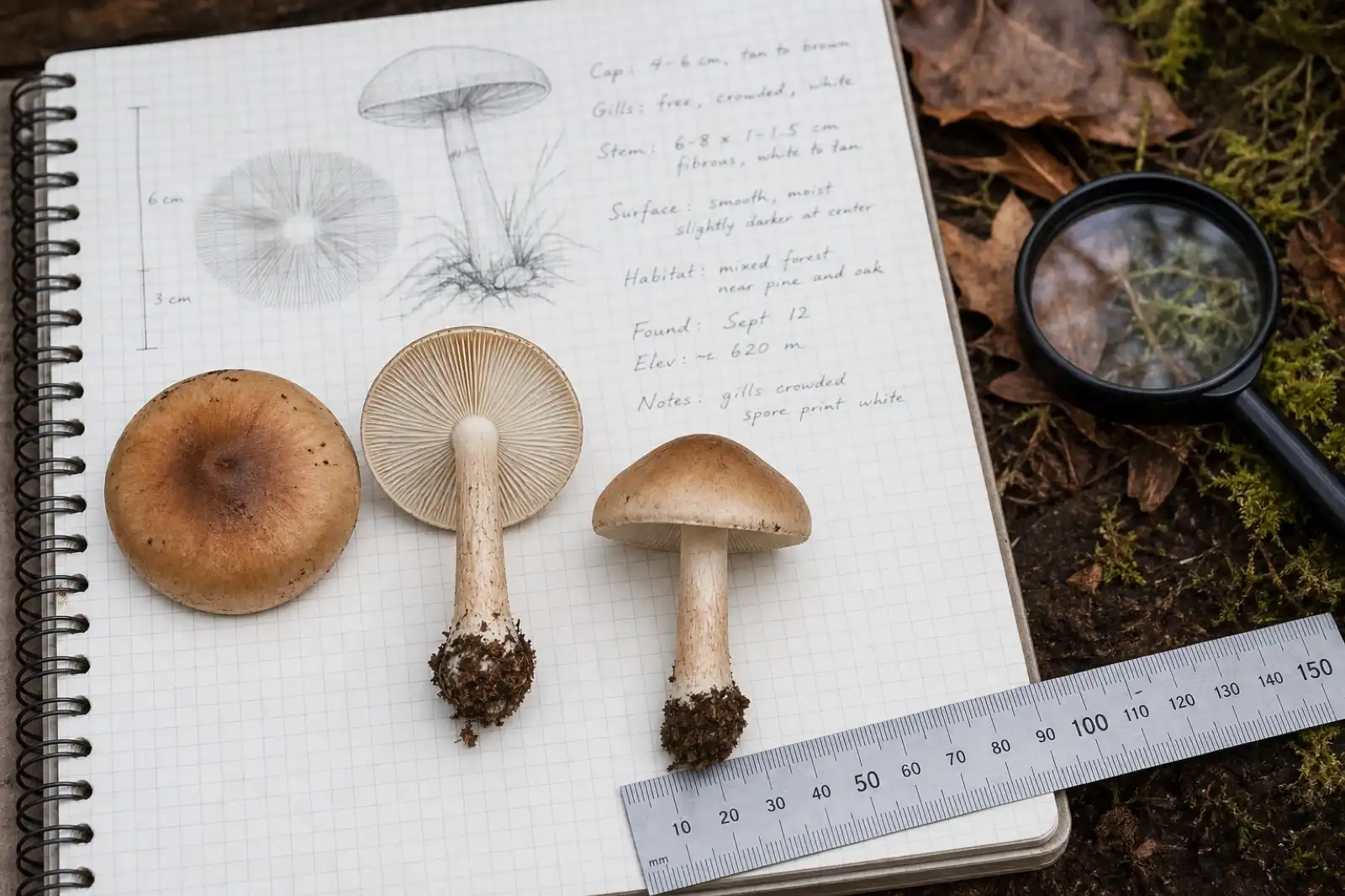
identification
How to Identify Mushrooms: A Beginner's Field Guide
Build an identification from the whole specimen, substrate, habitat, spore deposit, and location—not from a single photograph.
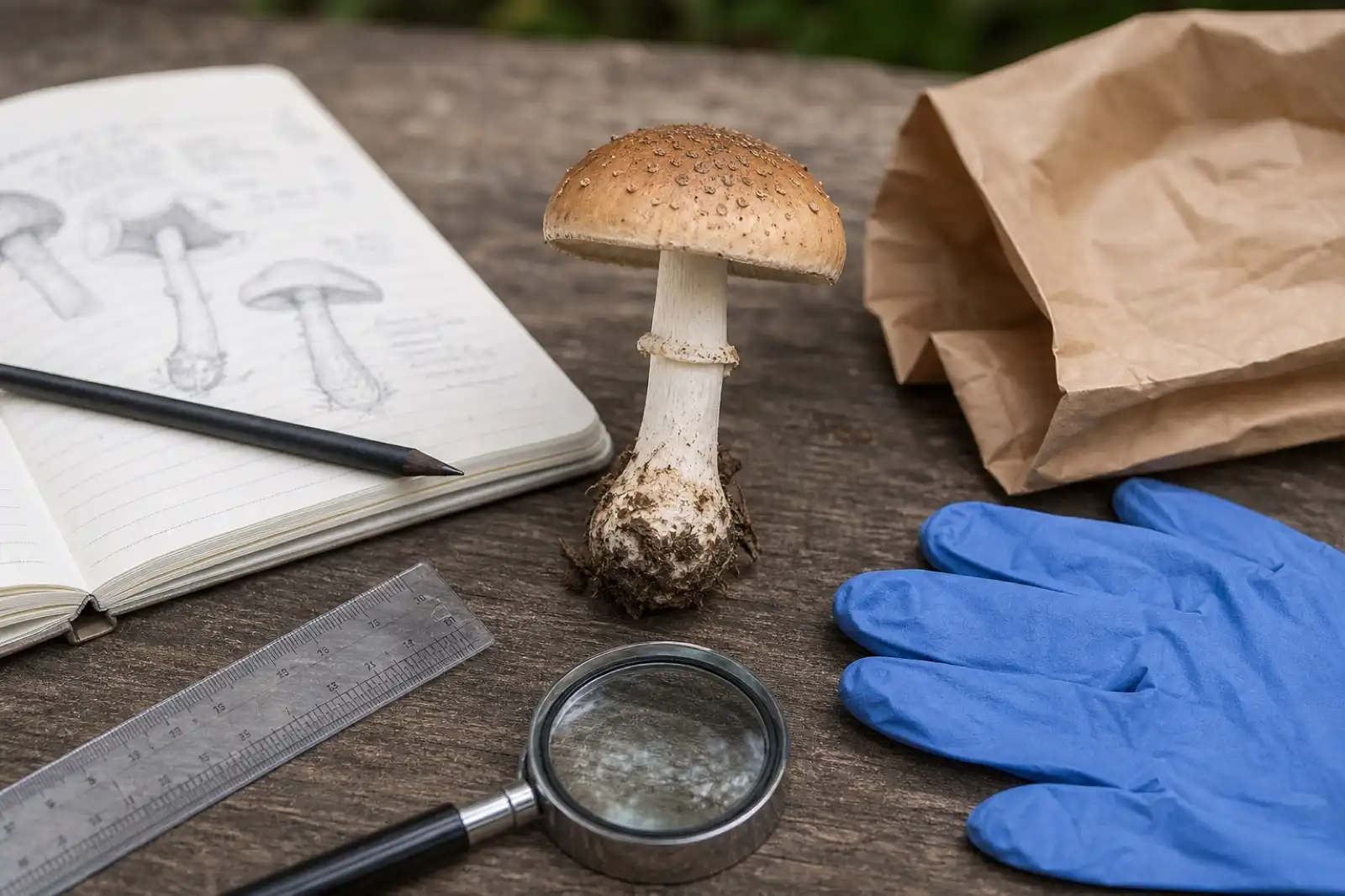
identification
Mushroom Identification Safety Checklist
Use a conservative checklist before handling, documenting, or discussing any wild mushroom, especially when edibility is being considered.
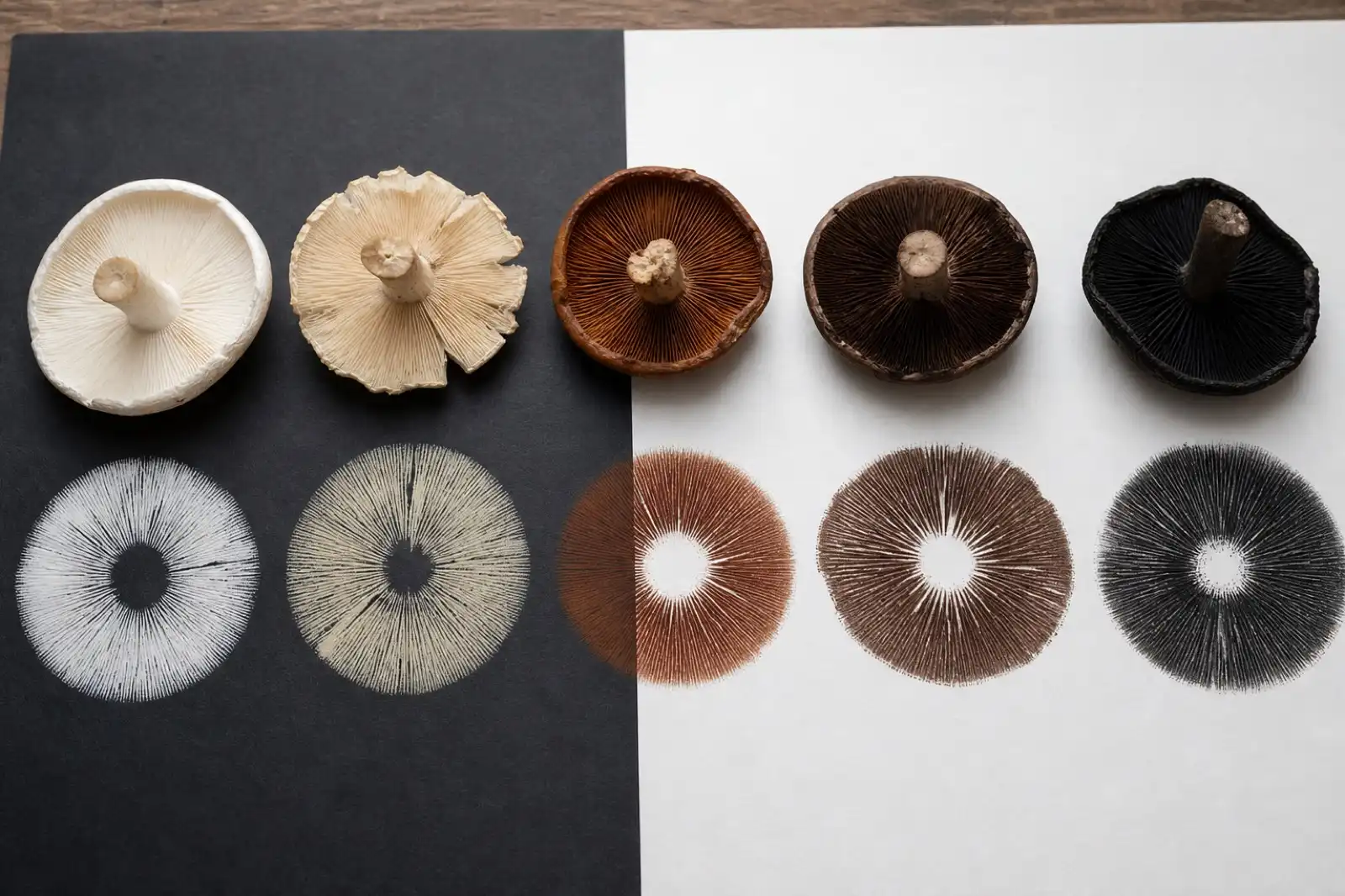
identification
Mushroom Spore Print Colors and How to Record Them
Use a controlled spore deposit to distinguish broad color groups while recognizing that print color alone never identifies a species.
Continue exploring
Browse more practical guides in Mushroom Encyclopedia or visit the mushroom encyclopedia.