Recipes
Fluffy Mushroom and Herb Omelet without Watery Filling
Cook a tender mushroom omelet by browning the filling separately, controlling pan heat, folding at the right moment, and storing leftovers safely.
By MushroomScope Editorial Team · · Updated
Food source
Cook identified edible mushrooms
Recipes assume mushrooms sold as food by a reputable supplier, not foraged specimens needing identification.
Open the recipe hub →Kitchen safety
Handle leftovers promptly
Cool leftovers in shallow containers, refrigerate promptly, and discard food held unsafely or showing spoilage.
Review preparation safety →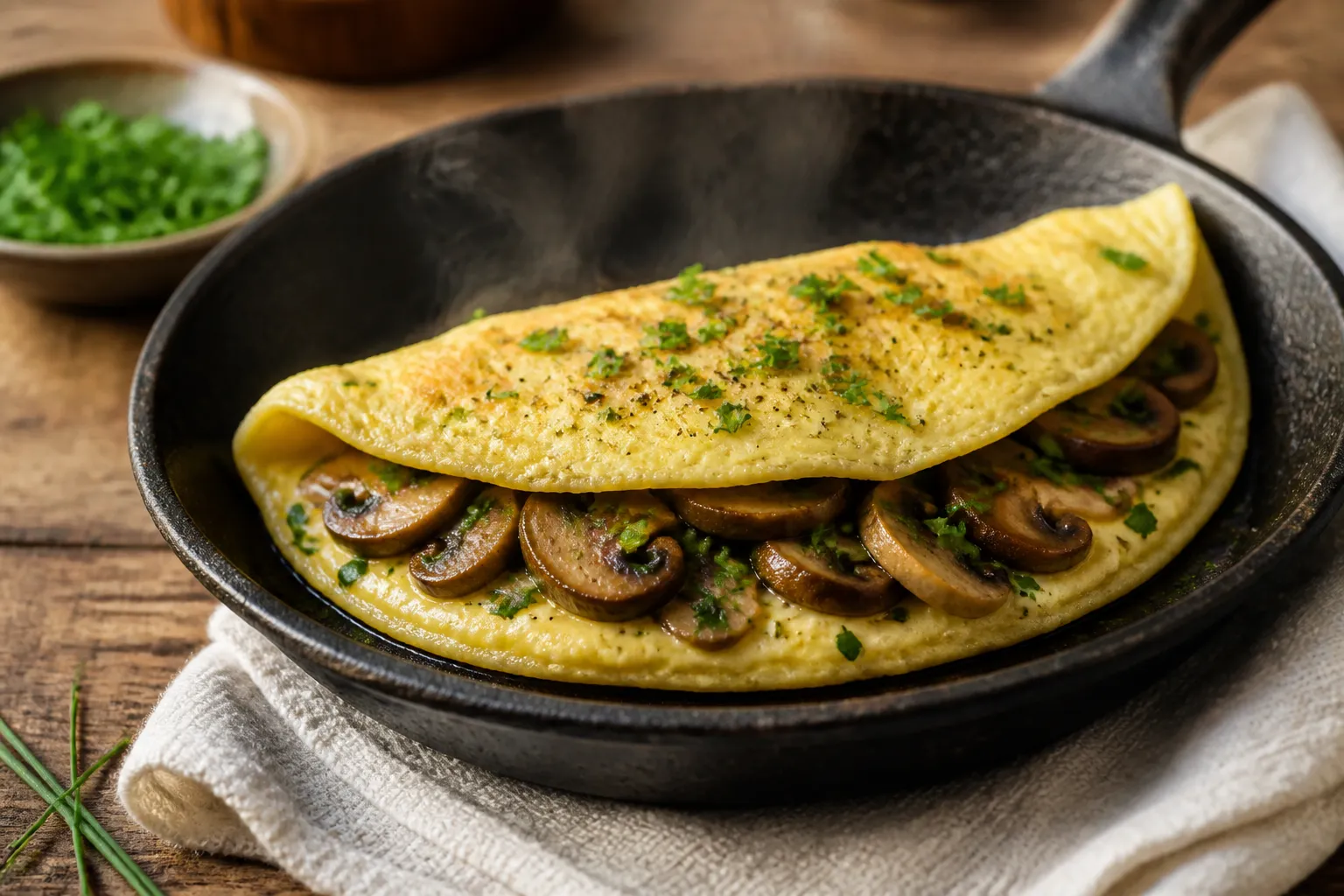
Recipe details
- Prep time
- 10 minutes
- Cook time
- 12 minutes
- Yield
- 1 generous serving
Ingredients
- 4 ounces cremini mushrooms, sliced 1/4 inch thick
- 3 large eggs
- 1 tablespoon water
- 1 tablespoon unsalted butter, divided
- 1 teaspoon olive oil
- 1 tablespoon chopped chives
- 1 tablespoon chopped parsley
- 1/4 teaspoon fine salt, divided
- Black pepper to taste
- 1 ounce grated cheese, optional
Instructions
- Clean and dry the mushrooms. Heat oil in an 8- to 10-inch skillet over medium-high and brown the slices in one layer for 5 to 7 minutes, seasoning near the end. Transfer to a plate.
- Beat eggs, water, half the salt, pepper, and half the herbs just until no separate whites remain.
- Wipe the pan if needed, lower heat to medium, and melt butter without browning it. Add eggs and stir broad curds toward the center while tilting uncooked egg to the edges.
- When the base is set and the surface remains moist but not liquid, place mushrooms and optional cheese over one half.
- Fold the bare half over the filling, cook 30 to 60 seconds more, slide onto a warm plate, and finish with remaining herbs.
A mushroom omelet fails most often because two ingredients with different timing are asked to cook together. Mushrooms need enough heat and exposed pan area to release water and brown. Eggs need gentler heat and a short cook to remain tender. Browning the filling first, removing it, and then cooking the eggs turns that conflict into a predictable sequence.
This version uses cultivated cremini for their compact texture and availability. Button mushrooms are the same cultivated species at a paler stage and work similarly. Other verified culinary mushrooms can be substituted, but their moisture and shape change the filling step.
The cremini guide explains the relationship among cremini, button, and portobello market forms. For the separate safety question of whether mushrooms should be cooked, see the cooked-versus-raw evidence guide.
The two-pan-stage principle
The recipe uses one skillet but two distinct heat environments. Medium-high heat evaporates mushroom water and develops browned flavors. The pan is then cooled to medium before butter and eggs enter. If eggs go into the hot mushroom stage, their proteins contract quickly, squeeze out water, and become rubbery.
Removing the cooked mushrooms also prevents them from blocking contact between liquid egg and pan. When added later, they remain distinct pieces instead of sinking into a wet scramble.
Choose and prepare the mushrooms
Select firm, dry cremini with closed or slightly opened caps and no sour odor or slime. Brush away clean debris. FDA guidance recommends running water rather than soap for produce; if rinsing, work quickly and pat dry.
Slice about 1/4 inch thick so pieces can brown without disappearing. Very thin slices dry into chips; thick wedges take longer than the egg phase can accommodate. Trim only a dry or discolored stem end rather than discarding sound stems.
Brown in one uncrowded layer
Heat oil over medium-high until it moves freely. Spread mushrooms so most touch the pan. Leave them undisturbed for two minutes, then turn and continue until released water evaporates and both faces show brown patches.
Salt near the end of this stage. Early salt is not automatically wrong, but it draws surface moisture while browning is trying to begin. If the skillet is small, use two batches. A crowded pan turns the intended filling into a gray stew.
Transfer the mushrooms to a plate, not a deep bowl, so residual steam escapes. They need only cool for the few minutes required to mix the eggs.
Beat eggs for uniformity, not maximum foam
Whisk eggs until yolks and whites form one consistent yellow mixture with no rope-like clear patches. Vigorous whipping can create large unstable bubbles that collapse in the pan. A tablespoon of water provides steam and slight lift; milk or cream adds richness but can make the curd softer and slower to set.
Mix in half the herbs, salt, and pepper. Reserve some herbs for the finish because their fresh aroma fades with heat. If using salted cheese, reduce added salt.
Match skillet size to egg quantity
Three eggs suit an eight- to ten-inch skillet. In a much larger pan, they form a thin sheet that overcooks before filling is placed. In a small pan, the center stays deep and liquid while the base browns.
Nonstick is forgiving, while well-seasoned carbon steel gives responsive heat. Stainless can work with sufficient preheating and fat but is less comfortable for a first omelet. Use a flexible silicone or thin wooden spatula that can lift an edge without tearing it.
Reset the heat before eggs enter
After removing mushrooms, wipe away burnt debris but keep clean browned flavor. Lower the burner to medium and wait briefly. Melt butter; it should foam gently rather than turn dark immediately. Rapid browning signals that the pan is still too hot.
Pour the eggs into the center. The edges should set within seconds without blistering. If they form a dark lace at once, lift the pan from the heat while stirring.
Build broad, tender curds
Pull set egg from the edge toward the center in broad strokes while tilting the skillet so liquid fills the exposed space. Repeat around the pan. This creates soft layers without breaking everything into small scrambled curds.
Stop active stirring when the bottom is continuous and the top is moist but no longer flowing freely. The residual heat and final fold will continue cooking. “Moist” means a glossy tender surface; pools of clear raw egg need more time.
Place filling without overloading
Arrange browned mushrooms over one half, keeping the outer rim clear. Add no more than one ounce of cheese if desired. Excess filling tears the fold and insulates a liquid center.
The mushrooms should be warm but not steaming wet. If liquid collected on their plate, leave it behind or reduce it briefly in the skillet before beginning the eggs.
Fold and finish at the correct moment
Run the spatula around the perimeter, lift the unfilled half, and fold it over the mushrooms. Cook thirty to sixty seconds, then slide onto a warm plate. The omelet should hold its shape while remaining tender inside.
USDA FSIS lists 160°F as the safe minimum for egg dishes. People who need a verified endpoint should measure the thickest filled portion with a clean instant-read thermometer rather than judging only a glossy surface.
Doneness for different diners
Classic French omelets may be very soft, but risk tolerance is not universal. Pregnant people, young children, older adults, and immunocompromised diners may need more conservative handling and fully cooked eggs based on current professional guidance.
Pasteurized shell eggs can reduce risk in preparations intended to remain softer, but they do not remove the need for refrigeration, clean utensils, or avoidance of cross-contamination.
Herb, cheese, and mushroom variations
Chives and parsley keep the basic version bright. Tarragon is stronger and should be used sparingly. Thyme belongs with the mushrooms during their final minute rather than raw egg. Soft goat cheese creates pockets; Gruyère melts evenly; Parmesan intensifies salt.
Oyster mushrooms should be torn and browned until their edges color. Shiitake caps work when sliced, with tough stems saved for stock. Maitake should be divided into small fans. Each substitute must be a verified food product, and each should finish releasing water before the eggs begin.
Dairy-free and lower-fat paths
Replace butter with olive oil and omit cheese for a dairy-free omelet. Oil produces a slightly different aroma but still lubricates the pan. Do not remove all fat unless the cookware is designed for it; sticking encourages aggressive scraping and overcooking.
For a lighter filling, add cooked spinach only after squeezing it thoroughly dry. Raw tomato, zucchini, and other watery vegetables should be cooked separately, just like mushrooms.
Serving without losing heat
Warm the plate with hot water and dry it before cooking the eggs. Omelets cool quickly because they are thin. Serve with toast, dressed greens, or roasted potatoes prepared in advance rather than leaving the folded omelet in the pan.
For two people, make two separate three-egg omelets instead of one six-egg version in the same small skillet. The larger mass changes timing and makes folding difficult.
Troubleshooting by texture
Water around the filling: mushrooms were under-browned or held in a steaming bowl. Reduce their liquid before adding.
Brown, tough exterior: the pan remained at mushroom-searing temperature or the filled omelet stayed too long over heat.
Torn fold: eggs were too thin, still liquid, stuck to the pan, or overloaded. Match pan size and reduce filling.
Dry small curds: the egg was stirred continuously like a scramble. Use broad strokes and stop once a base forms.
Raw center: the omelet was filled too early or too heavily. Return briefly over low heat and verify temperature when needed.
Storage and reheating
Fresh is best. USDA FSIS advises refrigerating cooked perishables within two hours and generally using leftovers within three to four days. Store in a shallow covered container. Discard an omelet left at room temperature beyond the recommended window.
Reheat gently in a covered skillet with a teaspoon of water, then uncover, or use short microwave intervals. Heat until hot throughout; USDA guidance uses 165°F for reheated leftovers. Repeated reheating toughens eggs and increases handling opportunities, so warm only the portion needed.
Safety and editorial disclosure
Use commercially sourced cultivated mushrooms or material confirmed by qualified local expertise. Cooking cannot correct a poisonous lookalike. Keep egg shells and any raw egg drips away from cooked filling and serving utensils, and wash hands after handling shells.
The cover is an original AI editorial illustration checked for a plausible fold, browned cultivated mushroom filling, skillet geometry, and absence of raw-egg imagery. It is not evidence of a kitchen test. This is culinary education, not individualized medical or nutrition advice.
Frequently asked questions
Can I prepare the mushrooms the night before?
Yes. Cool and refrigerate them promptly, then reheat briefly before filling so they do not chill the eggs.
Does adding water make the omelet watery?
One tablespoon disperses through three eggs and becomes steam. Excess liquid or wet filling is the larger problem.
Can egg whites replace whole eggs?
They can, but they set more firmly and lack yolk fat. Use lower heat and expect a different texture.
Should the pan be covered?
Usually not during the main cook. A brief cover can set a stubborn top, but trapped steam may make the surface wet.
Are mushroom omelets high in protein?
Eggs provide most of the protein. Exact nutrition depends on egg size, mushroom weight, fats, and cheese; use matched FoodData Central entries rather than assuming from the word “mushroom.”
Measure the filling before it reaches the eggs
Weighing is optional at home, but the yield explains many failures. About 115 g of raw sliced cremini should shrink substantially as water leaves; the cooked filling for a three-egg omelet needs to fit in a narrow band across one half without forming a mound. If liquid remains around the mushrooms, keep cooking before the eggs are started. Transfer the filling to a warm plate so the skillet can be wiped and its heat reset.
Add the egg mixture only after butter foams gently without browning. Pull broad curds from the edge toward the center while tilting uncooked egg into the gaps, then stop stirring before the surface is dry. The base must be strong enough to release, while the top remains moist but not freely liquid. Filling placed too early sinks through weak curds; filling placed after the surface dries prevents a clean fold and produces a rubbery seam.
Use residual heat deliberately. Fold, remove the pan from the burner, and allow a brief rest before sliding the omelet onto a warm plate. Carryover finishes the inner layer, so waiting for every visible patch to look dry in the pan overshoots the endpoint. For diners who need fully set eggs, use a food thermometer at the thickest filled section and follow current food-safety guidance rather than judging only the exterior color.
References
USDA FSIS supports the egg-temperature and leftover statements. FDA guidance supports produce washing and clean preparation. FoodData Central is the basis for ingredient-specific nutrient calculation. The editorial team did not conduct or claim an independent logged kitchen test; pan diameter, mushroom yield, burner response, fold timing, and thick-point temperature remain useful variables for readers to record in their own kitchen.
Editorial status: reviewed by the MushroomScope editorial team on September 28, 2026; no named chef or test kitchen independently validated this recipe.
Source quality notes
MushroomScope cites sources that match the page scope, such as taxonomic databases, extension guidance, food-safety agencies, food-composition databases, and peer-reviewed or institutional health references. Sources support context and uncertainty; they do not turn an online page into specimen identification, medical advice, or a tested recipe record.
Frequently asked questions
Why does a mushroom omelet become watery?
Mushrooms release water as they cook. Brown them separately until pooling stops, cool briefly, and add only a modest filling after the eggs have mostly set.
Should mushrooms be cooked before adding them to an omelet?
Yes. Pre-cooking concentrates flavor, removes excess water, and avoids leaving mushroom pieces undercooked during the egg's short pan time.
How do I keep an omelet fluffy rather than rubbery?
Beat just until uniform, use moderate heat, move the first curds gently, stop when the top is moist but not liquid, and fold without prolonged cooking.
What pan size works for a three-egg omelet?
An eight- to ten-inch nonstick or well-seasoned skillet gives enough area for a thin tender layer without making the eggs spread too far.
Can cooked mushroom omelet be refrigerated?
Yes, refrigerate promptly and use within three to four days, though texture is best fresh. Reheat until hot throughout without repeatedly cooling and reheating.
Related guides
recipes
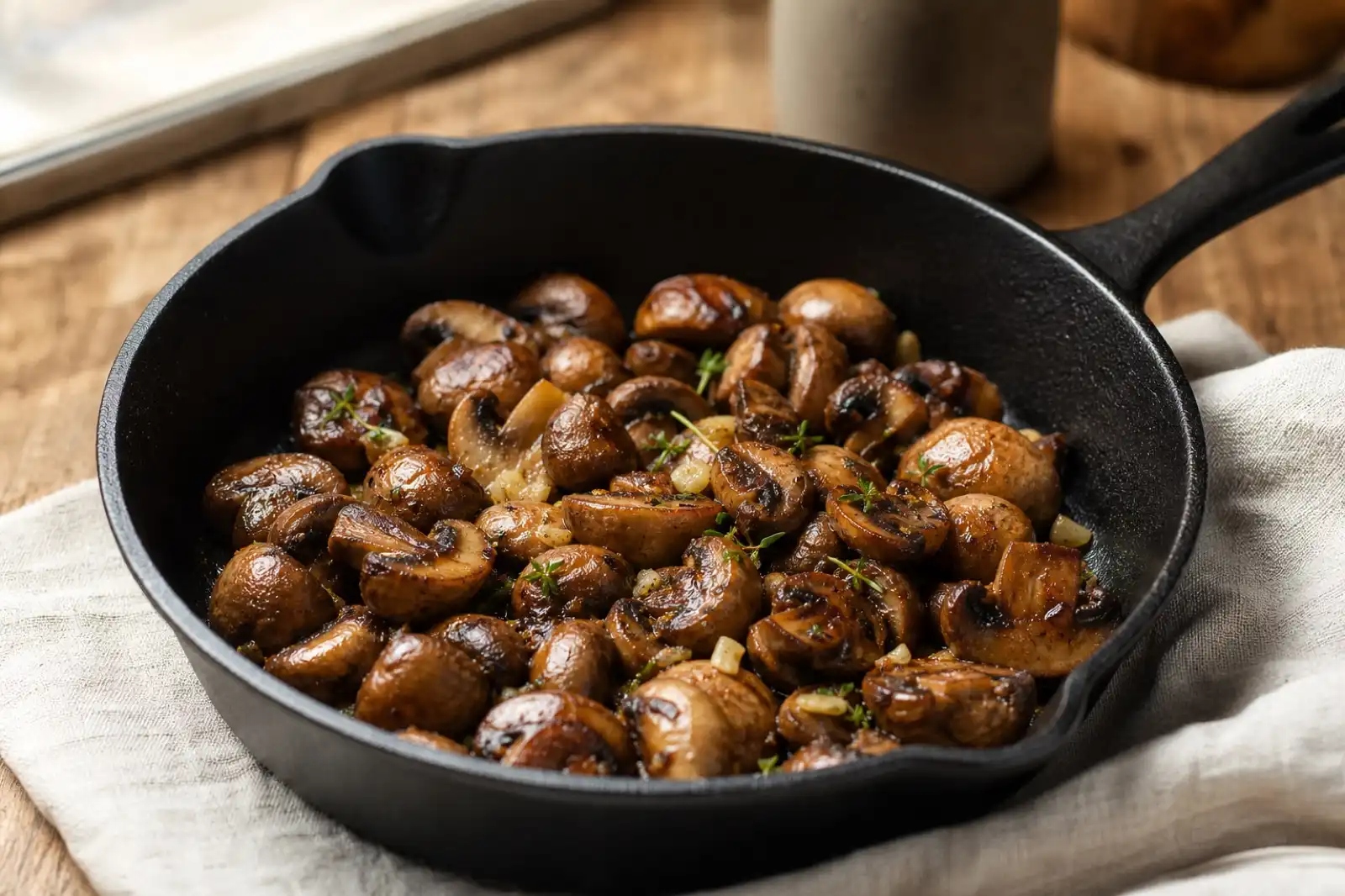
Easy Sautéed Mushrooms with Garlic and Herbs
Sauté cremini mushrooms with garlic and herbs using a wide-pan method, clear batch sizes, realistic timing, and safe storage advice.
mushrooms
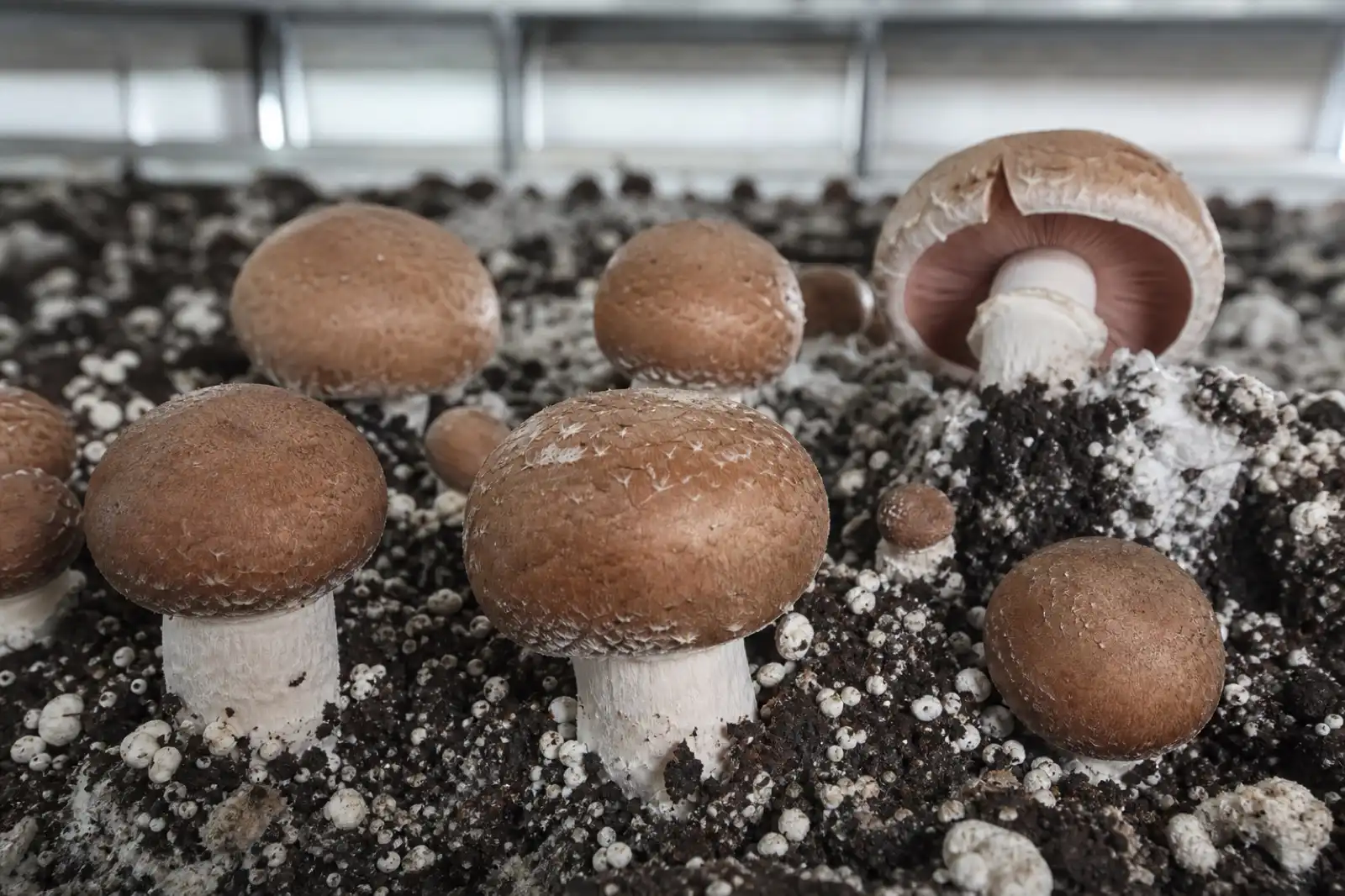
Cremini Mushrooms: Button vs. Portobello, Nutrition, and Uses
Cremini, baby bella, button, and portobello mushrooms are Agaricus bisporus market forms. Compare maturity, cooking uses, nutrition, cultivation, and safety.
health
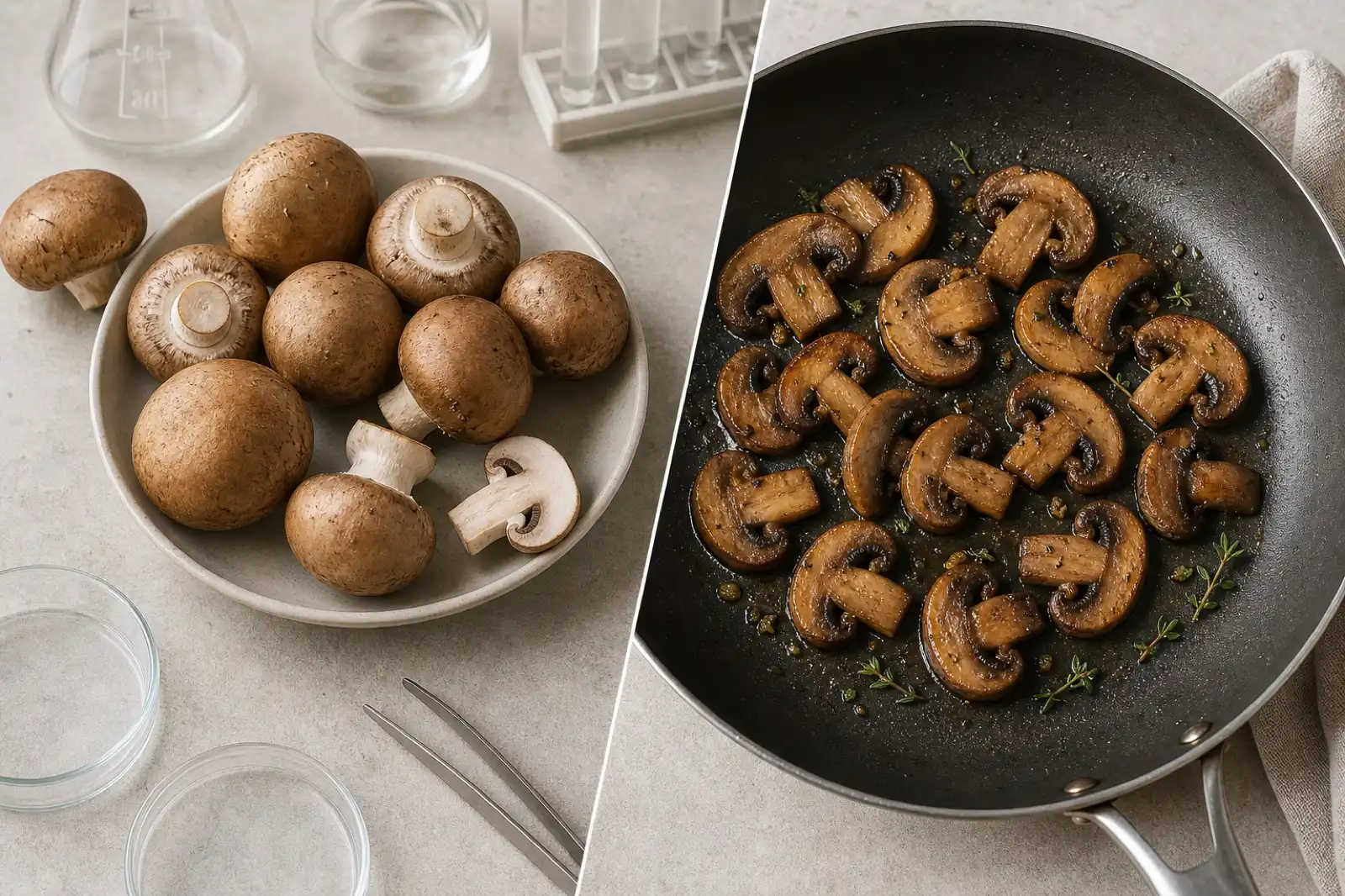
Cooked vs. Raw Mushrooms: Nutrition and Safety
Cooking changes water content, texture, digestibility, and measured nutrient concentration; it also supports safer produce handling.
Continue exploring
Browse more practical guides in Recipes or visit the mushroom encyclopedia.