Mushroom Encyclopedia
Cremini Mushrooms: Button vs. Portobello, Nutrition, and Uses
Cremini, baby bella, button, and portobello mushrooms are Agaricus bisporus market forms. Compare maturity, cooking uses, nutrition, cultivation, and safety.
By MushroomScope Editorial Team · · Updated
Species context
Treat profiles as reference material
Species profiles summarize documented traits, taxonomy, and lookalikes, but natural variation can be substantial.
Use the safety checklist →Decision limit
A profile cannot authenticate a specimen
Do not eat a wild mushroom from an online match, single feature, or generated image.
Read the safety disclaimer →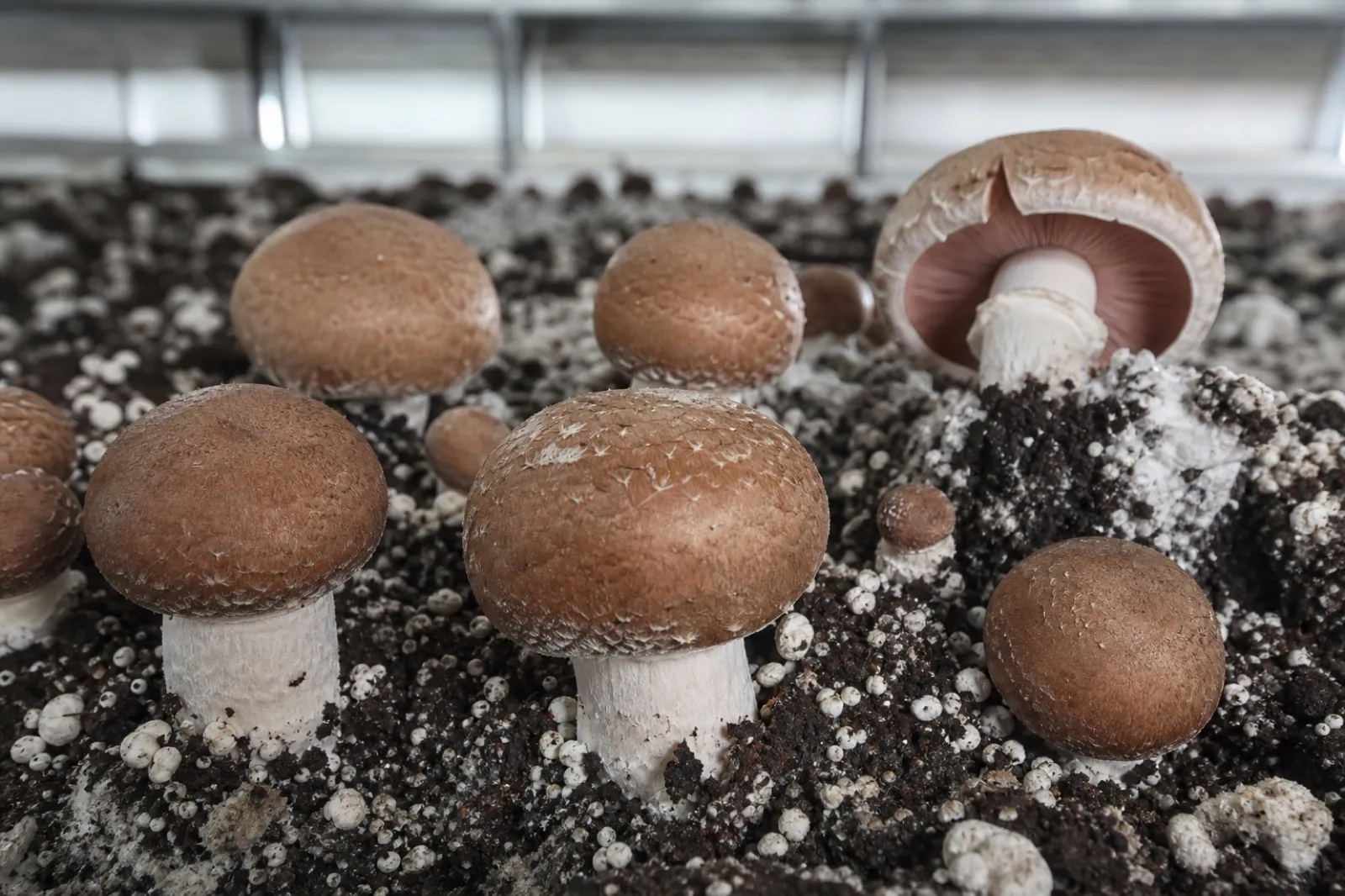
Quick facts
- Scientific name
- Agaricus bisporus
- Common names
- white button mushroom, cremini mushroom, baby bella, portobello
- Taxonomy
- Agaricus · Agaricaceae
- Edibility context
- Edible: Widely eaten cooked. Button, cremini, and portobello are market stages or color strains of the same species.
- Spore print
- Dark chocolate brown.
- Toxicity context
- None Known: No inherent poisoning syndrome is recognized for normal food use, but allergy, spoilage, contamination, or mistaken wild identification remain possible.
- Season
- January, February, March, April, May, June, July, August, September, October, November, December
- Growing difficulty
- Expert
- Regions
- Cultivated worldwide, temperate grasslands and compost-rich sites
Safety limit: These labels summarize documented context; they never authenticate a wild specimen. Cooking does not make a poisonous species safe.
One cultivated species, three market forms
Direct answer: Cremini mushrooms are young brown-capped forms of cultivated Agaricus bisporus. “Baby bella” is a retail synonym. Portobellos are normally the same brown cultivated form harvested after the cap expands and exposes the dark gills; standard white button mushrooms are pale cultivated strains of the same species, usually harvested while compact. These market relationships do not make a similar wild lawn mushroom safe to eat.
Agaricus bisporus is the cultivated species sold most often as white button, cremini, baby bella, and portobello. Those labels combine two variables that shoppers commonly confuse: strain color and harvest maturity. White buttons usually come from pale strains and are picked while closed. Cremini usually come from brown strains at a similarly compact stage. Portobellos are mature, open-capped brown-strain mushrooms. A cremini does not become a different species when its veil breaks; it becomes the market form called portobello.
That continuity explains why the three forms share a mild Agaricus aroma yet behave differently in a pan. As the cap expands, its gills become exposed, the cap-to-stem ratio changes, and the broad surface becomes suitable for stuffing or grilling. The mature form is not automatically more nutritious, safer, or more intensely flavored per gram. Water loss, product strain, UV treatment, storage, and cooking can matter more than the name printed on the tray.
This page separates cultivated-food decisions from wild identification. A grocery label backed by a traceable producer is provenance evidence. A brown mushroom growing in a lawn is not “cremini” because it resembles one. Wild Agaricus identification requires the intact stem base, odor, staining response, gill development, spore deposit, habitat, geography, and a current regional key.
How button, cremini, and portobello differ at the counter
White buttons have a pale cap and are generally harvested before the partial veil opens. Cremini are brown-capped cultivated mushrooms sold at a comparable closed or partly closed stage. “Baby bella” is a retail synonym, not a separate taxon. Portobellos are allowed to expand; the veil opens, the dark lamellae are visible, and the cap becomes a broad cooking surface.
For cooking, the useful distinction is mostly structural. Closed buttons and cremini have less exposed gill surface and are convenient for quick sautéing, soups, sauces, and even-sized slices. A mature portobello has a broad cap that can be roasted whole, grilled, or used as a filling vessel; remove the stem only when a recipe calls for it, not as a safety step. The two related recipe methods, stuffed portobello mushrooms and grilled portobello burgers, apply to cultivated market mushrooms, not to a lookalike found outdoors.
Choose the form by geometry and condition. Closed mushrooms give regular slices and contain the gills during handling. Open portobellos provide more cap area but may carry loose dark gill material into a pale sauce. Sound mushrooms feel firm and dry rather than slippery, with no sour odor or spreading mold. A few veil fragments or minor cap scales can be normal; wet collapse and strong off odors are not.
For moisture-sensitive dishes, weigh the usable portion rather than counting caps. Two packages with the same label can differ in cap size and water loss. USDA FoodData Central is appropriate for representative nutrient estimates, but its entries are not laboratory results for a particular carton.
Cultivated morphology through development
A young cultivated fruit body begins as a compact button with the cap margin tucked toward the stem. The partial veil covers the gills, then tears as the cap expands and can leave a ring around the upper stem. Gills start pale pink, deepen through brown, and become dark chocolate as spores mature. They remain free from the stem rather than running down it. A mature cap is broad and flattened; it does not acquire a cup-like volva at the stem base.
Macroscopic characters
- Cap or upper surface: Rounded and closed when young, expanding from white or brown into a broad brown cap at portobello maturity.
- Fertile surface: Free, crowded gills change from pink to chocolate brown as spores mature.
- Stem or attachment: Central, firm, white to brownish, with a membranous ring and no volva.
- Flesh: White and firm, sometimes bruising pale pink or brown; mild mushroom aroma.
- Spore print: Dark chocolate brown.
In a production tray, adjacent buttons can show several stages at once: sealed veil, stretched veil, first tear, and fully exposed gills. That series is more informative than a single idealized specimen because it shows which traits change with age. The site’s cover image documents a cultivated brown crop in casing and one overturned mushroom with pink-brown gills; it is visual context, not a field-identification plate.
Why a wild lawn mushroom is a different problem
- Agaricus campestris: A wild grassland species; identification requires more than its pink-to-brown gills.
- Agaricus xanthodermus: May yellow strongly at the stem base and can cause gastrointestinal poisoning; odor and bruising must be assessed by an expert.
- Amanita species: Young closed Amanita buttons may conceal white gills and a volva; never identify a wild button by cap color alone.
The comparison list is deliberately incomplete. In many regions, yellow-staining Agaricus can overlap in cap color and stature, and immature Amanita can hide decisive features inside an unbroken veil. Digging out the complete stem base matters because cutting it at soil level can remove evidence of a bulb or volval tissue. If consumption is contemplated, obtain in-person confirmation from a qualified local identifier who can examine the intact collection; a supermarket comparison photo is not enough.
Scientific Classification
| Rank | Name |
|---|---|
| Kingdom | Fungi |
| Phylum | Basidiomycota |
| Class | Agaricomycetes |
| Order | Agaricales |
| Family | Agaricaceae |
| Genus | Agaricus |
| Species | Agaricus bisporus |
The species epithet bisporus refers to the common two-spored basidia of cultivated material, although reproductive biology is more variable than a retail guide can show. NCBI is useful for checking the current lineage, while a paper’s own strain name and voucher information should remain attached to any research claim. “Button mushroom” is too broad to prove that a study used the same strain, maturity, or preparation as a shopper’s product.
Compost ecology rather than wood decay
Commercial A. bisporus is grown as a secondary decomposer in conditioned compost rather than on a living tree or a simple block of fresh sawdust. Penn State describes a staged process in which straw-rich ingredients are composted, pasteurized and conditioned before spawning. Genome and transcript research likewise shows that the fungus expresses a broad set of enzymes while exploiting humic-rich, partly decomposed material. This helps explain why copying an oyster-mushroom straw-bag method is not a reliable substitute.
The casing layer is not simply extra food. It holds and distributes water, supports gas exchange, and provides the physical and microbial interface associated with fruit-body initiation. Commercial recipes often use peat-based casing adjusted with limestone, but the correct material and irrigation schedule depend on the farm system. Waterlogged casing restricts gas exchange; a dry casing cannot supply an expanding flush evenly.
Commercial crops are produced year-round in climate-controlled rooms, so a January carton and a July carton do not indicate a natural fruiting season. Wild or escaped records in compost-rich ground and grassland belong to a separate ecological observation and require local documentation.
Why home cultivation is an advanced project
Button production is technically demanding because the substrate must first become selective enough for the crop. Raw straw and manure are not ready-to-inoculate ingredients. Phase I builds and turns a wetted stack while microbes generate heat; Phase II pasteurizes and conditions the material, including removal of residual ammonia that can damage mushroom mycelium. Only then is verified grain spawn mixed through the compost.
The crop sequence and its control points
- Condition the compost. Complete a validated Phase I/II process and confirm that ammonia has cleared; the smell of raw manure is not a readiness test.
- Spawn evenly. Mix authenticated A. bisporus spawn through the cooled compost so colonization does not depend on a few isolated points.
- Manage spawn run. Record compost temperature, not only room temperature. Active mycelium produces heat and can be damaged if the bed runs above the culture’s range.
- Apply casing. Place an even, moist casing layer over colonized compost. Uneven depth and uneven water storage lead to uneven pin formation.
- Initiate pins. Coordinate fresh air, temperature, humidity and casing moisture. A single “fruiting temperature” copied without strain and system context is not a complete recipe.
- Water between developmental windows. Expanding mushrooms draw heavily on casing water, but direct heavy watering on fragile pins can damage quality.
- Harvest by market stage. Pick closed brown caps for cremini or allow selected caps to expand for portobello. Cool promptly and log yield by flush.
Penn State’s production outline emphasizes that set points vary by cultivar and operation. For a small grower, prepared spawned compost plus a documented casing protocol is safer and more repeatable than improvising a hot compost process indoors. Stop if the substrate develops unexplained colors, foul odors, pest outbreaks, or unexpected fruit bodies; do not identify contamination by color alone and do not eat a surprise crop.
Nutrition claims need a matched food entry
As food, A. bisporus contributes fiber, B vitamins, copper, selenium and potassium in amounts that depend on the item and preparation. It is not primarily a high-protein food by serving weight, and the word “mushroom” does not answer a protein-versus-fiber question without a portion. The mushroom nutrition guide explains how to compare a USDA entry on a 100-gram and normal-serving basis.
Vitamin D is especially easy to misstate. Mushrooms can synthesize vitamin D2 after ultraviolet exposure, but untreated and UV-exposed products should not be treated as nutritionally interchangeable. Check the package and select the corresponding FoodData Central record. Cooking changes water weight and therefore concentration per 100 grams, so raw and cooked rows are not direct claims about nutrient creation or loss.
Genome studies, cell experiments, isolated compounds and animal feeding studies can explain biological mechanisms, but they do not establish that a serving of cremini prevents or treats disease. Concentrated powders and extracts also have different exposure and quality questions from a cooked grocery mushroom. Keep food-composition claims with the food; evaluate supplement identity, dose and evidence separately in the supplements guide.
Food handling and the wild-identification boundary
Buy cultivated mushrooms cold and intact, refrigerate them promptly, and discard packages with slime, spreading mold, or a strong sour odor. Brush or rinse under running water immediately before use, then dry if browning matters. Washing does not turn a spoiled product sound. Keep mushrooms and ready-to-eat ingredients away from raw animal foods and follow current recall notices.
People can have an allergy or intolerance even to an established food species. Stop eating and seek appropriate care for significant symptoms. Cooking is useful for texture and routine food handling, but it does not neutralize every wild-mushroom toxin. Never apply supermarket expectations to a lawn specimen or taste an unknown mushroom as a test.
For severe vomiting, persistent diarrhea, confusion, jaundice, breathing difficulty, or symptoms after an unidentified wild mushroom, contact emergency services or a poison center immediately. Preserve uncooked material, cooked leftovers, packaging and clear photographs if this can be done safely; those records may help professionals, but online comments must not delay care.
Kitchen behavior by market stage
Cremini slices brown best when their surface moisture can evaporate before the pan is crowded. Salt timing matters less than giving released water somewhere to go. Portobello caps contain broad internal spaces and exposed gills; dry them well, score only if a recipe needs faster heat penetration, and allow enough time for water to leave before adding a wet filling or sauce.
The dark gills are edible on a verified cultivated portobello. Scraping them is a visual or textural choice, not detoxification. Leaving them in produces a darker liquid; removing them sacrifices some mass. Closed buttons are convenient where a pale sauce matters. For a controlled comparison, cook equal trimmed weights at the same thickness rather than comparing one whole portobello with several small buttons.
The new mushroom omelet method uses cremini as a separate browned filling so mushroom water does not interfere with tender eggs. Stuffed portobellos instead use the mature cap as a vessel. These pages answer cooking-format questions; neither is an identification guide for foraged material.
A practical label-reading checklist
- Market name: button, cremini/baby bella, or portobello describes the intended form.
- Producer and lot: retain the package when investigating a quality problem or recall.
- UV treatment: check whether vitamin D enhancement is stated rather than assuming it.
- Net weight and condition: compare usable mass, dryness and firmness, not cap count alone.
- Origin and date marks: follow the seller’s storage direction and local date-label rules.
- Prepared products: seasoning, oil and sodium can change the nutrition profile more than mushroom maturity.
Choose cremini, button, or portobello by the cooking job
Choose cremini when you want compact brown mushrooms that slice evenly and keep a distinct shape in a sauté, omelet, soup, or sauce. Choose white buttons for similar geometry where a pale finished dish matters. Choose portobello caps when broad surface area is useful for grilling, roasting, or stuffing. These are kitchen-format decisions, not a ranking of safety or health value.
Compare packages by trimmed usable weight, firmness, dryness, odor, date marks, and any UV-treatment statement rather than assuming that a darker or more mature cap is automatically more nutritious. Store the verified cultivated product according to its label and refrigerate it promptly. A retail name on this page should never be transferred to a wild collection on resemblance alone.
Frequently asked questions in context
Are cremini and portobello the same mushroom?
They are normally brown strains of the same cultivated species, Agaricus bisporus, sold at different stages. Cremini are compact; portobellos are allowed to open and expand.
Are white button mushrooms the same species too?
Yes, standard white button mushrooms are also A. bisporus, generally from pale cultivated strains. Color strain and harvest maturity are separate variables.
Do portobello gills need to be removed?
No for safety when the mushroom is a sound, verified cultivated product. Remove them only when a recipe benefits from a paler sauce, a cleaner cavity, or less loose gill material.
Can grocery cremini teach me to identify wild Agaricus?
They can demonstrate developmental features such as free pink-to-brown gills and a partial veil, but they cannot establish that a wild collection is A. bisporus or edible. Regional lookalikes and the complete stem base must be assessed in person.
Why is button-mushroom cultivation harder than an oyster kit?
The crop depends on conditioned compost, a managed spawn run, a casing layer and coordinated climate changes. That sequence is more complex than fruiting an already-colonized block.
References
- National Center for Biotechnology Information. NCBI Taxonomy Browser. Used for a current lineage check; NCBI notes that nomenclature should also be assessed against specialist literature.
- U.S. Department of Agriculture. FoodData Central. Food-composition reference; values vary by sample and preparation.
- Penn State Extension. Mushroom Food Safety. Production hygiene and preventive-control context.
- Schoch CL, et al. NCBI Taxonomy: a comprehensive update on curation, resources and tools. Database (Oxford). 2020.
- U.S. Food and Drug Administration. Selecting and Serving Produce Safely. General produce handling guidance.
- Penn State Extension. Basic Procedures for Agaricus Mushroom Growing. Phase I/II composting, spawning, casing, pinning, irrigation and harvest sequence.
- Morin E, et al. Genome sequence of the button mushroom Agaricus bisporus reveals mechanisms governing adaptation to a humic-rich ecological niche. Proceedings of the National Academy of Sciences. 2012. Compost adaptation and substrate-degrading enzyme context.
Last editorial review: September 13, 2026. This editorial review was not performed by a named clinician, dietitian, or commercial mushroom grower. Scientific names and public-health recommendations should be rechecked at every substantive update.
Source quality notes
MushroomScope cites sources that match the page scope, such as taxonomic databases, extension guidance, food-safety agencies, food-composition databases, and peer-reviewed or institutional health references. Sources support context and uncertainty; they do not turn an online page into specimen identification, medical advice, or a tested recipe record.
Frequently asked questions
Are cremini and portobello the same mushroom?
They are normally brown strains of the same cultivated species, Agaricus bisporus, sold at different stages. Cremini are compact; portobellos are allowed to open and expand.
Are white button mushrooms the same species too?
Yes. Standard white button mushrooms are also Agaricus bisporus, generally from pale cultivated strains. Color strain and harvest maturity are separate variables.
Do portobello gills need to be removed?
No for safety when the mushroom is a sound, verified cultivated product. Remove them only when a recipe benefits from a paler sauce, a cleaner cavity, or less loose gill material.
Can grocery cremini teach me to identify wild Agaricus?
They demonstrate developmental features such as free pink-to-brown gills and a partial veil, but they cannot establish that a wild collection is Agaricus bisporus or edible. Regional lookalikes and the complete stem base require in-person assessment.
Why is button-mushroom cultivation harder than an oyster kit?
The crop depends on conditioned compost, a managed spawn run, a casing layer, and coordinated climate changes. That sequence is more complex than fruiting an already-colonized block.
Related guides
recipes
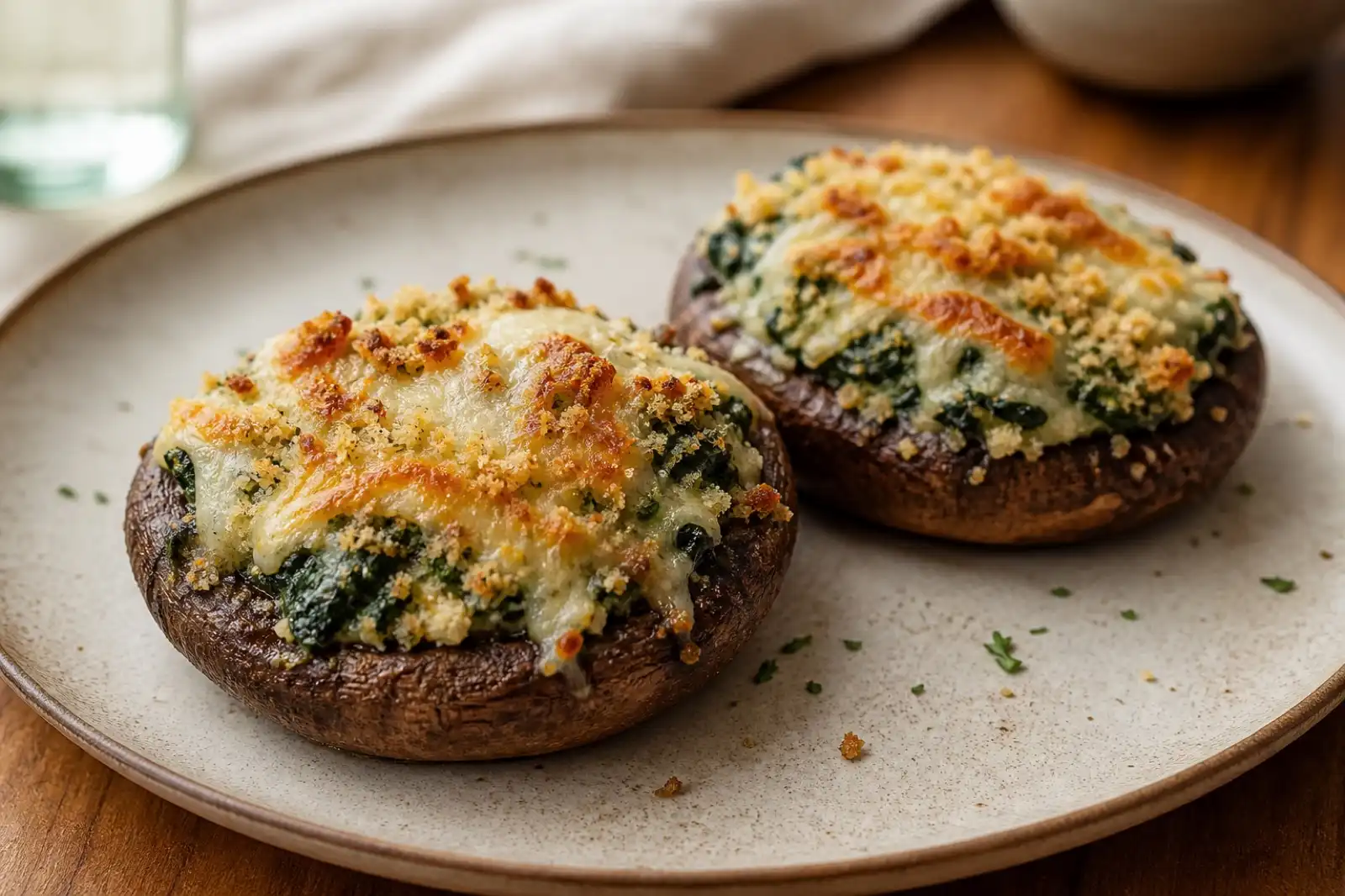
Stuffed Portobello Mushrooms
Make stuffed portobello mushrooms with cultivated portobello mushrooms, clear steps, practical substitutions, and conservative food-safety guidance.

recipes
Grilled Portobello Mushroom Burgers
Make grilled portobello mushroom burgers with cultivated portobello mushrooms, clear steps, practical substitutions, and conservative food-safety guidance.
health
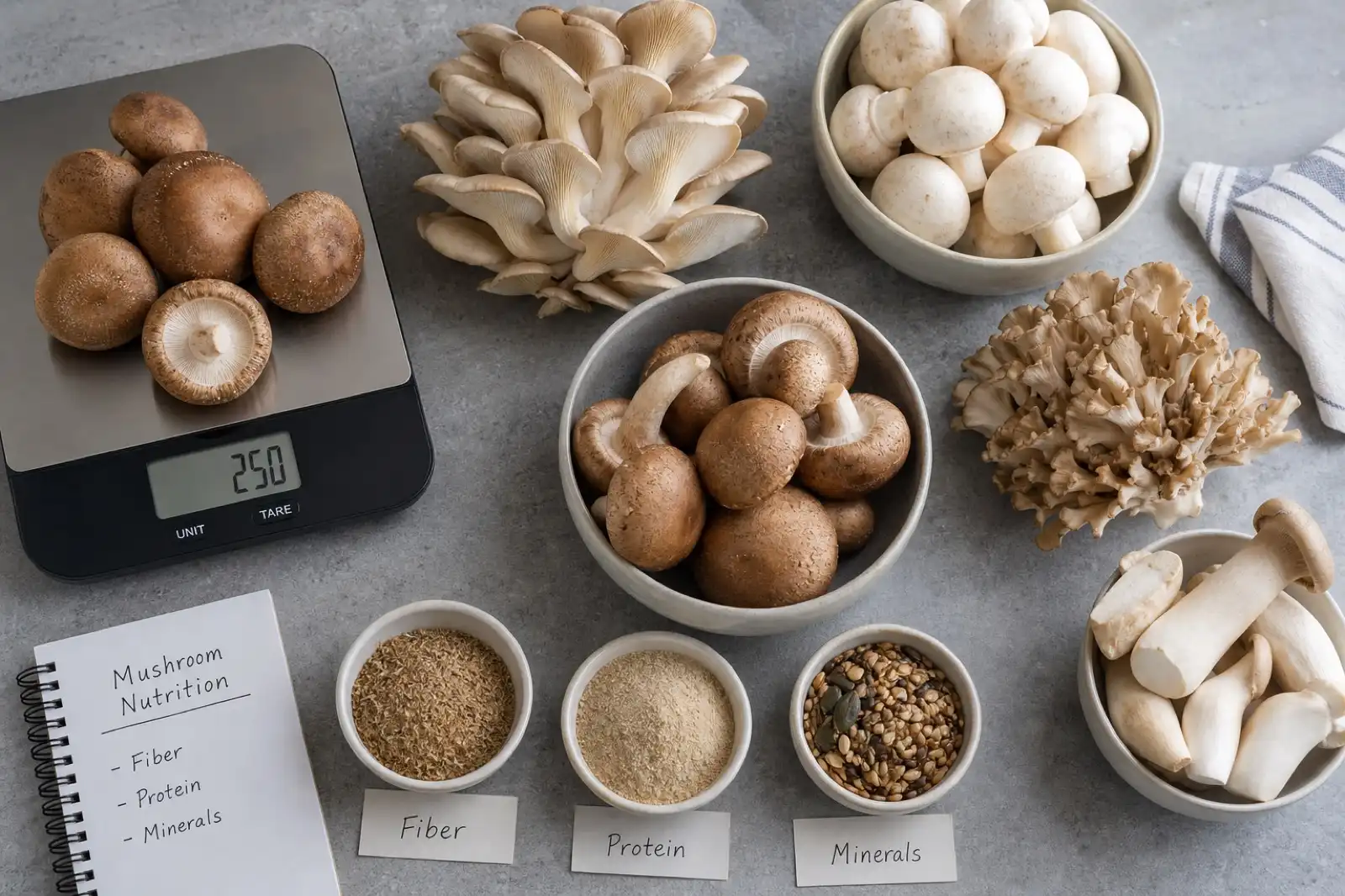
Mushroom Nutrition: Fiber, Protein, Calories, and Vitamins
Are mushrooms a source of fiber or protein? Compare calories, fiber, protein, vitamins, food forms, serving sizes, and preparation without overstating benefits.
Continue exploring
Browse more practical guides in Mushroom Encyclopedia or visit the mushroom encyclopedia.