Mushroom Encyclopedia
Portobello Mushrooms: Mature Caps, Nutrition, and Cooking
Learn what makes a portobello the mature Agaricus bisporus stage, how to select, store, clean, cook, and compare nutrition without inflated claims.
Species context
Treat profiles as reference material
Species profiles summarize documented traits, taxonomy, and lookalikes, but natural variation can be substantial.
Use the safety checklist →Decision limit
A profile cannot authenticate a specimen
Do not eat a wild mushroom from an online match, single feature, or generated image.
Read the safety disclaimer →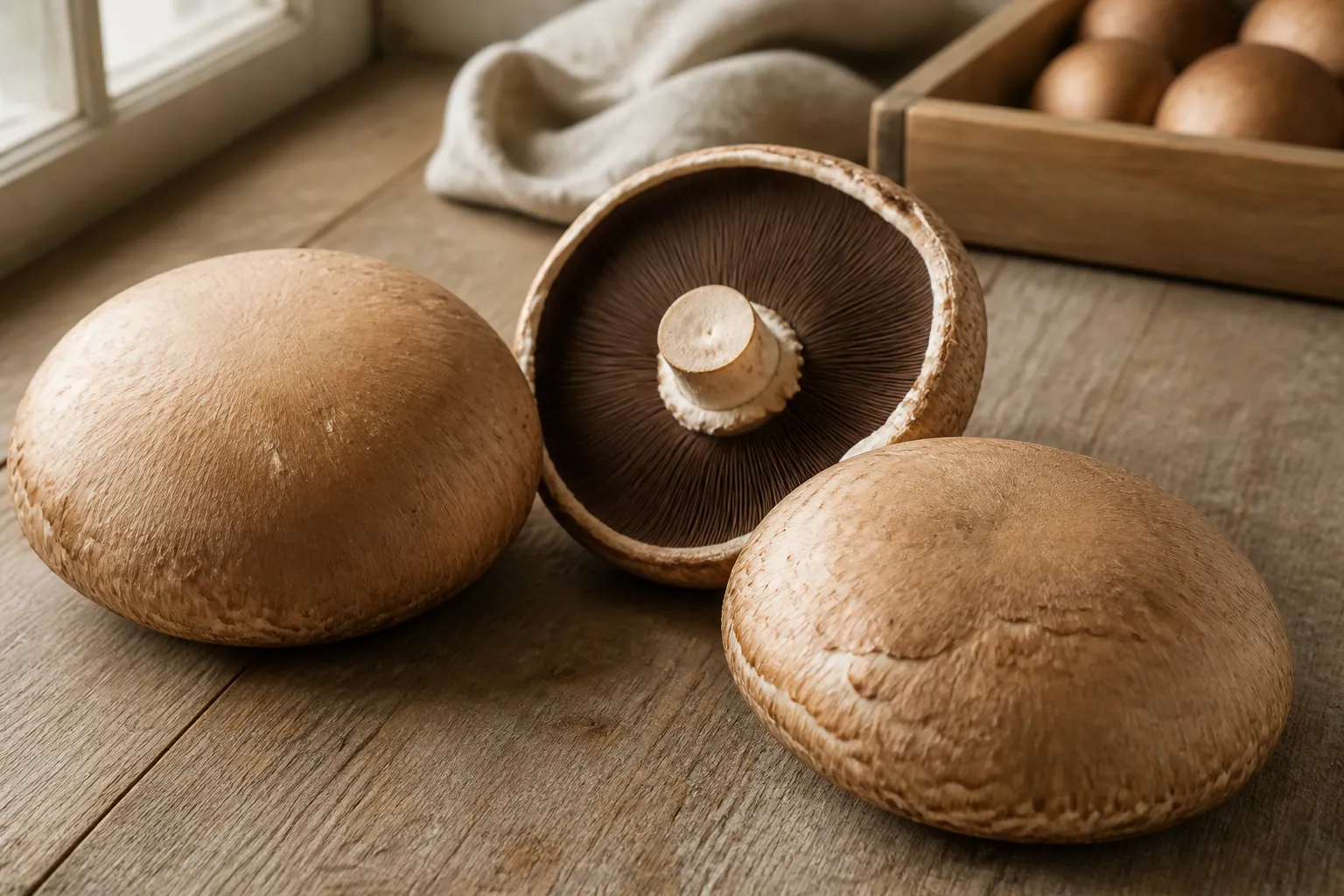
Quick facts
- Scientific name
- Agaricus bisporus
- Common names
- Portobello, Portabella, Mature brown mushroom, Open-cap mushroom
- Taxonomy
- Agaricus · Agaricaceae
- Edibility context
- Edible: Use traceable commercial mushrooms in sound condition, clean and cook appropriately, and account for allergies, intolerance, and recipe ingredients.
- Spore print
- Dark chocolate brown.
- Toxicity context
- None Known: Risks include spoilage, contamination, individual reactions, and confusing commercial morphology with wild Agaricus identification.
- Season
- January, February, March, April, May, June, July, August, September, October, November, December
- Growing difficulty
- Expert
- Regions
- cultivated worldwide
Safety limit: These labels summarize documented context; they never authenticate a wild specimen. Cooking does not make a poisonous species safe.
Portobello is not a separate species from cremini or the cultivated button mushroom. It is the large, mature, open-cap market stage of Agaricus bisporus, usually from a brown strain. Allowing the cap to expand exposes dark gills, increases surface area, and changes texture and kitchen behavior. That production-stage explanation is the core intent of this page.
The distinction prevents two mistakes. A portobello-shaped cap is not automatically nutritionally equivalent to meat; comparisons require measured servings and whole recipes. And supermarket portobello features cannot safely identify a wild brown Agaricus. Commercial provenance does crucial work that appearance alone cannot.
Portobello, cremini, and button are production terms
The cremini guide covers the smaller brown form harvested while the cap remains rounded and the veil covers some or all gills. A portobello matures further: the veil ruptures, the cap opens, and gills become fully visible and dark as spores mature.
White button mushrooms are also A. bisporus, generally pale cultivated strains harvested young. Color and stage are related but separate variables. White, brown, button, cremini, and portobello are market descriptions, not five unrelated species.
The open cap changes cooking geometry
A mature portobello offers a broad surface for a grill, skillet, or tray. Dense flesh retains water, while exposed gills and the cap cavity hold marinade, oil, and released liquid. The shape suits sandwiches, stuffed preparations, sliced sautés, and grain bowls, but it does not behave exactly like meat.
Heat must drive off water before strong browning. A crowded pan or deep wet marinade slows evaporation. For a whole cap, cook both sides and allow liquid to drain. For slices, use uniform thickness and an uncrowded surface.
Select by condition, not a closed veil
Open dark gills are normal. Judge freshness through firmness, a dry-to-slightly-supple surface, intact cap, and mild earthy aroma. Avoid caps that are slimy, collapsing, sour, or marked by spreading wet decay.
Small superficial cracks or fibrous scales can occur as caps expand and dry. They differ from mushy tissue or active mold. Retail stems are often trimmed, so a short stem is not a defect. Check package dates and storage directions when available.
Clean without soaking
Brush loose casing away or wipe with a damp towel. If visible soil requires rinsing, use brief running water and dry promptly. Submerging caps lets surfaces and gill cavities retain more water that must later evaporate.
Cleaning does not sterilize produce. Keep raw packaging away from ready-to-eat foods, wash hands and tools, and follow FDA produce guidance. Do not apply soap or household disinfectants to food mushrooms.
Removing gills is optional
Dark gills are edible in correctly sourced, sound portobello. Cooks sometimes scrape them out because they darken pale sauces, occupy stuffing space, or retain moisture. Keeping them preserves tissue and gives a darker, mushroom-forward result.
Use a spoon gently if removal serves the recipe. Do not treat it as detoxification. Scraping cannot make a spoiled cap fresh or turn an unidentified wild mushroom into food.
Use the stem according to the dish
Sound stems are edible but firmer and more fibrous than caps. Trim flush when a whole cap needs to sit evenly. Chop clean stems into filling, sauce, stock, or sauté rather than discarding them automatically.
For stuffing, avoid cutting deeply into the cap floor. Pre-cooking briefly can release water before filling; drain the cap so cheese, grains, or vegetables are not diluted.
Measure marinade instead of flooding the cap
Oil supports surface browning and carries flavor, but it also changes the meal’s energy. Acid, salt, soy sauce, and seasonings affect the final nutrition profile. Brush or turn caps in a measured amount rather than filling the cavity with an unrecorded pool.
Long acidic soaking is rarely needed for tenderness and can soften the surface. Apply marinade shortly before cooking, let excess drip away, and pat the contact side if visibly wet.
Grill by visible endpoints
Preheat and clean the grill, then oil the mushroom rather than pouring oil over flame. Cook both sides until the thickest portion is tender and released liquid no longer forms a raw-tasting pool. Times vary with diameter, thickness, grill output, weather, and lid use.
The grilled portobello burger recipe gives a sandwich workflow with moisture controls. A thermometer verifies other ingredients in mixed dishes, while mushroom texture still needs direct observation.
Roast on a broad surface
Arrange several caps with space on a rimmed tray and turn or drain as needed. A crowded high-sided dish traps steam. Whole caps may be roasted before stuffing so the filling does not sit in excess liquid.
For slices, expose cut faces to the metal. Add delicate garlic or herbs later if high heat would burn them. Acid added after browning tastes brighter and avoids early surface water.
Sauté in batches
Slice evenly and preheat a wide skillet. Cook one layer at a time. When released water largely evaporates, add or adjust fat and continue until brown at contact points. Broad portobello slices need more space and gentler turning than small cremini pieces.
Salt timing is a culinary variable, not a safety rule. Early salt distributes seasoning and draws moisture; later salt preserves a drier start. Either works when pan capacity and heat are managed.
Nutrition depends on the matched entry
Plain portobello is water-rich and low in energy density, contributing some protein, fiber, B vitamins, minerals, and other compounds. Values depend on raw versus cooked state, cap and stem inclusion, production, database entry, and serving weight. Use USDA FoodData Central for the closest item.
The mushroom nutrition guide separates food evidence from supplement claims. Portobello is not a concentrated protein food comparable with meat gram for gram. In a burger, bun, cheese, sauces, oil, and salty seasonings may contribute more calories, saturated fat, or sodium than the cap.
Vitamin D needs special care. Mushrooms can form vitamin D2 after ultraviolet exposure, but content varies. Do not assume every brown cap is UV-treated; check the label or a matched database entry.
“Meaty” describes texture, not equivalence
The broad cap and savory flavor fit formats commonly occupied by meat. That analogy does not imply identical protein, iron, vitamin B12, energy, or satiety. A balanced plant-forward plate may pair portobello with beans, lentils, tofu, eggs, dairy, whole grains, or other foods according to dietary needs.
Avoid weight-loss or disease-prevention promises based on one ingredient. Deep frying, heavy oil, cheese, and salty marinades create a different meal from a lightly roasted cap.
Store cool and manage condensation
Refrigerate fresh portobello in packaging that limits condensation without crushing caps. Absorbent paper in a loosely closed container can manage surface moisture, but follow retailer directions.
Do not wash far in advance unless mushrooms can be dried and used promptly. Discard slimy, sour-smelling, moldy, or collapsing caps. Cooking is not a salvage method for spoilage.
Refrigerate cooked leftovers promptly in shallow covered containers. USDA FSIS generally advises using refrigerated leftovers within three to four days and reheating appropriately. Warm only the portion needed.
Commercial identity does not transfer to the wild
Retail portobello comes through a cultivated food chain. A wild brown mushroom with darkening free gills and a ring may be another Agaricus, including species associated with illness. Odor, staining, complete base, habitat, gill development, spore deposit, and region matter.
Never use the generated cover, packaging, or cap diameter to clear a wild collection. If illness is suspected, contact emergency services or a poison center and preserve uncooked material, packaging, photographs, and meal details.
Make cooking records reproducible
Record package weight, cap number, diameter, whether stems or gills were retained, cleaning, marinade amount, pan or grill setup, turning points, and cooked yield. “One package” is not reproducible because packages and caps vary.
Use endpoints: surface browned, thickest portion tender, pooled liquid evaporated or drained, and filling hot throughout. These travel better than promising every cap finishes at one fixed minute.
Commercial cultivation is more than letting cremini grow larger
The mature cap comes from a managed Agaricus production system. Growers prepare and condition compost, introduce authenticated spawn, apply a casing layer, manage pinning and climate, and schedule harvests for a target market stage. Holding selected mushrooms longer allows caps to expand, but humidity, temperature, carbon dioxide, irrigation, disease pressure, and handling still affect quality.
This makes portobello an expert rather than beginner crop in the site taxonomy. A household kit must be followed according to its supplier; it should not be improvised from wild tissue or treated like an oyster block. Unexpected molds, insects, sour odor, slime, or unplanned mushrooms are reasons to isolate the unit and follow disposal guidance, not to harvest around the problem.
The distinction also clarifies sustainability comparisons. Yield, substrate inputs, energy, packaging, transport, and waste belong to a defined production system. The size of one cap cannot establish that a meal has a particular environmental footprint. Use transparent producer or life-cycle data when such a claim matters.
Editorial and image boundaries
This guide received editorial review only. No named dietitian, chef, grower, or clinician reviewed it, and it makes no treatment claim. Check nutrition against a current matched USDA entry and the actual recipe.
The cover is an original AI editorial image showing the mature commercial stage. It is not a tested batch, nutrient analysis, farm record, or wild-identification reference.
References
- GBIF. Agaricus bisporus taxon record. Classification and cultivated-name context.
- NCBI. A. bisporus taxonomy query. Independent lineage checkpoint.
- USDA. FoodData Central. Nutrient records for matched raw or cooked products and serving weights.
- FDA. Selecting and Serving Produce Safely. Cleaning, refrigeration, and cross-contamination guidance.
- USDA FSIS. Leftovers and Food Safety. Cooling, storage, and reheating guidance.
Editorial status: reviewed by the MushroomScope editorial team on August 30, 2026; no named dietitian, chef, grower, or clinician independently validated this guide.
Source quality notes
MushroomScope cites sources that match the page scope, such as taxonomic databases, extension guidance, food-safety agencies, food-composition databases, and peer-reviewed or institutional health references. Sources support context and uncertainty; they do not turn an online page into specimen identification, medical advice, or a tested recipe record.
Frequently asked questions
Are portobello and cremini different species?
No. Both are cultivated Agaricus bisporus. Cremini are harvested with smaller closed or partly closed brown caps; portobello mature until the cap expands and dark gills are exposed.
Should the dark gills be removed from portobello mushrooms?
They are edible in correctly sourced mushrooms. Scraping them is a culinary choice that reduces dark color and moisture in pale sauces or stuffed caps but also removes tissue and flavor.
Are portobello mushrooms high in protein?
They contribute some protein but are not equivalent to meat by weight or serving. Check a matched USDA FoodData Central entry and consider the whole dish.
How can a fresh portobello be selected?
Choose firm, dry caps with a fresh earthy aroma and no slimy film, collapse, sour odor, or spreading wet discoloration. Open gills are normal for this mature stage.
Can supermarket portobello features identify a wild mushroom?
No. Wild Agaricus identification requires complete specimens, habitat, odor, staining, gill development, spore color and regional lookalikes.
Related guides
mushrooms
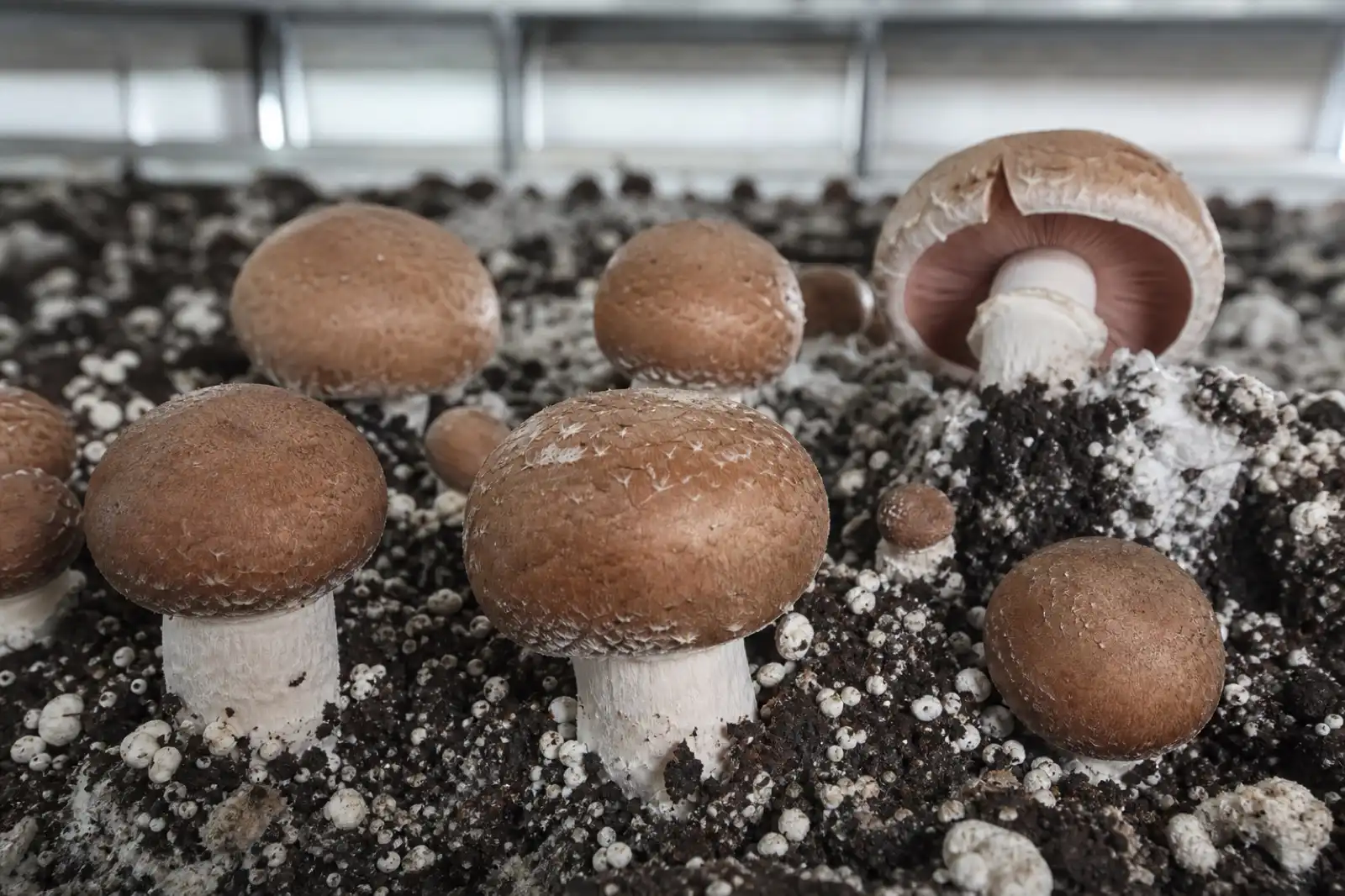
Cremini Mushrooms: Button vs. Portobello, Nutrition, and Uses
Cremini, baby bella, button, and portobello mushrooms are Agaricus bisporus market forms. Compare maturity, cooking uses, nutrition, cultivation, and safety.
health
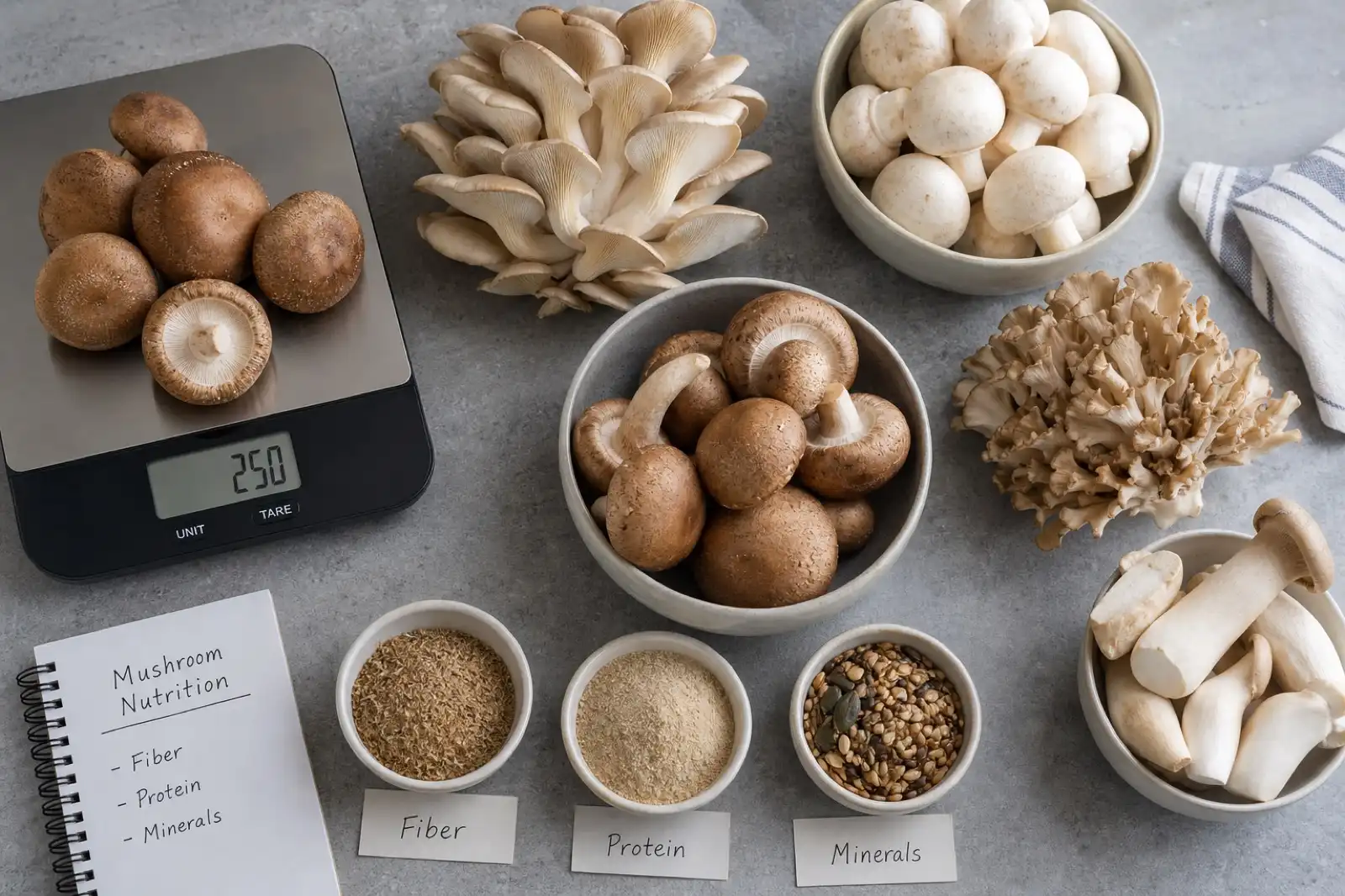
Mushroom Nutrition: Fiber, Protein, Calories, and Vitamins
Are mushrooms a source of fiber or protein? Compare calories, fiber, protein, vitamins, food forms, serving sizes, and preparation without overstating benefits.

recipes
Grilled Portobello Mushroom Burgers
Make grilled portobello mushroom burgers with cultivated portobello mushrooms, clear steps, practical substitutions, and conservative food-safety guidance.
Continue exploring
Browse more practical guides in Mushroom Encyclopedia or visit the mushroom encyclopedia.