Growing
How to Grow Lion's Mane Mushrooms at Home
Lion's mane needs clean culture, hardwood-based substrate, high humidity without saturation, and adequate fresh air for compact fruiting bodies.
By MushroomScope Editorial Team · · Updated
Growing method
Start with authenticated culture
Use supplier-identified spawn or blocks and record substrate, stage, temperature, humidity, and visible changes.
Open the beginner growing hub →Food safety
Discard suspect batches
Unusual colors, slime, insects, or abnormal odor should be treated as a safety concern, not a climate tweak.
Review contamination guidance →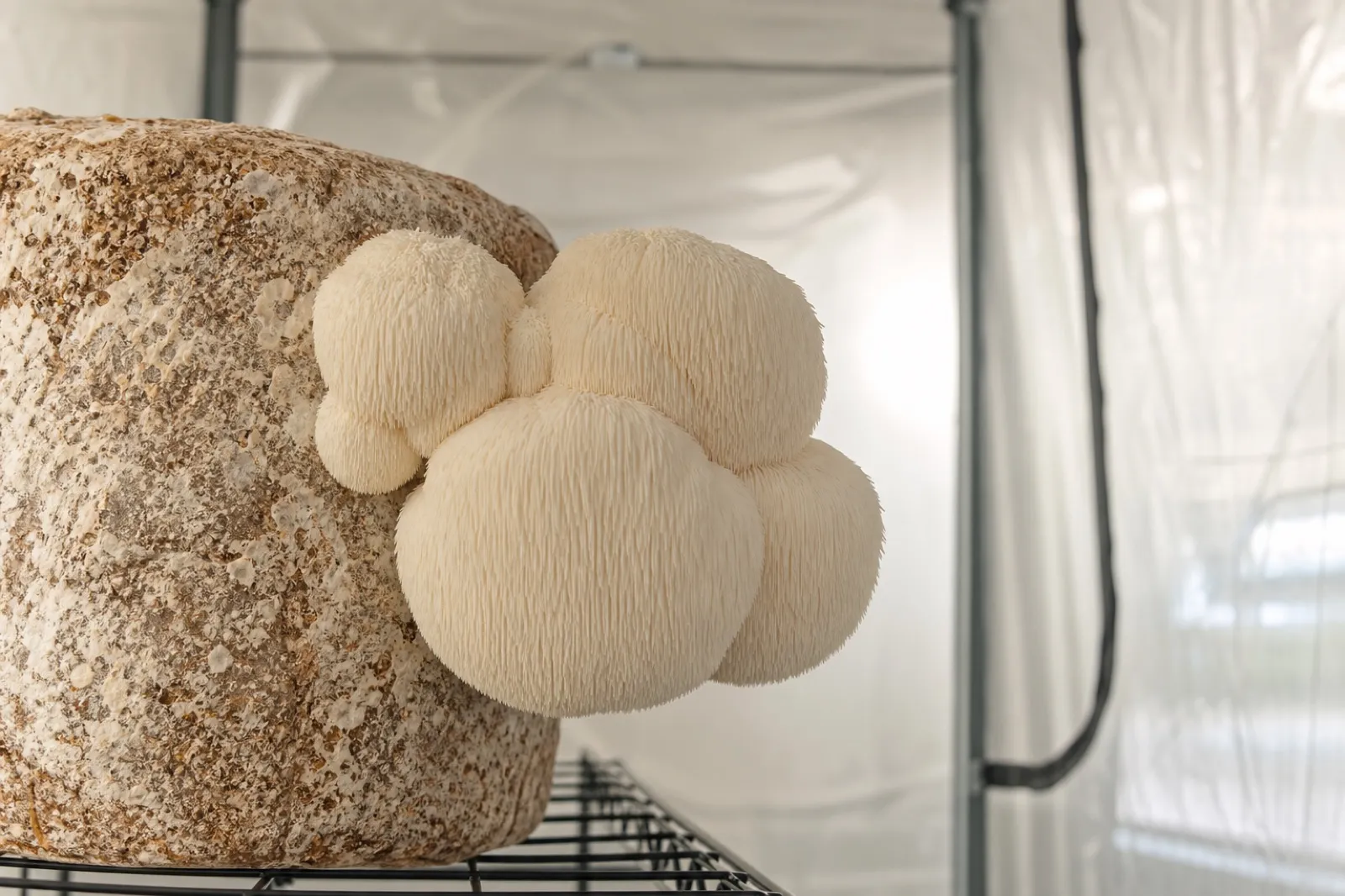
Choose a ready-to-fruit block or an advanced spawn workflow
Lion’s mane needs clean culture, hardwood-based substrate, high humidity without saturation, and adequate fresh air for compact fruiting bodies. This guide covers a conservative home workflow for lion’s mane using supplemented hardwood sawdust. Exact parameters depend on the strain and supplier; universal temperature or humidity numbers can be misleading.
The lowest-risk starting point is a reputable ready-to-fruit block. More advanced substrate preparation increases the consequences of poor heat treatment, moisture measurement, or clean technique. Keep written batch records so troubleshooting is based on evidence.
A ready-to-fruit block has already been inoculated and colonized by a specialist producer. The home grower mainly provides the fruiting opening, indirect light, humidity, air exchange, and observation described by that supplier. This route reduces the number of sterile steps and is the appropriate starting point for most beginners.
Making supplemented sawdust blocks from spawn is a different project. Nutrient-rich hardwood substrate generally requires a validated sterilization process, clean inoculation space, authenticated spawn, reliable sealing, and disciplined batch records. A kitchen pressure cooker is not automatically suitable for every bag size or load, and this page does not provide a universal pressure cycle. Follow equipment instructions and a proven method from an extension program or experienced culture supplier.
Do not use a wild fruit body as the basis for a food crop. Even if a specimen resembles lion’s mane, web photographs cannot authenticate the species or reveal microbial contamination. The lion’s mane species guide explains identification limits; cultivation should begin with labeled commercial culture or a colonized block.
Prepare a clean fruiting area before opening the block
Use authenticated spawn, food-production-grade substrate, clean water, cleanable tools, labels, and a fruiting area that can exchange air without exposing living spaces to excessive spores. Do not use treated lumber, unknown waste, visibly contaminated material, or unidentified wild cultures.
Match the treatment to the material. Pasteurization and sterilization are not interchangeable. Supplemented substrates generally demand tighter control than low-nutrient materials. Follow an established method from an extension source or culture supplier.
For a ready block, gather a washable tray, the enclosure or humidity system recommended by the seller, clean scissors or knife for opening the plastic, labels, and a clean food-safe container for harvest. Use potable water. A small hygrometer can help reveal trends, but inexpensive sensors are often inaccurate and measure only where they are placed. Record the location and compare the reading with how the fruit body responds.
Select a location with indirect light and safe air exchange. Direct sun can overheat and dry a block even when room temperature seems acceptable. A sealed cupboard supplies neither useful fresh air nor a safe way to manage humidity. A fruiting chamber in a frequently occupied bedroom may expose people to moisture and spores; choose a washable area and follow the supplier’s ventilation advice, especially for anyone with asthma, mold sensitivity, or another respiratory condition.
Clean the tray and surrounding surface before opening the package. Keep the block away from houseplants, compost, dirty dishes, animal areas, and active contaminated cultures. Do not spray cleaners toward exposed substrate or mushrooms. If a chemical is used on a surface, follow its label and keep the required contact and drying times.
Inspect the unopened block without overinterpreting appearance
Lion’s mane mycelium can look less uniformly white than some oyster cultures, and it may begin forming fruit inside the bag. Compare the package with the supplier’s normal examples. Confirm the label, strain or product name, lot if provided, delivery date, and any “fruit by” instructions. Photograph leaks, a broken filter patch, unusual colored growth, slime, insects, or foul odor before contacting the seller.
Do not open a clearly suspect package in the main growing area. Isolate it inside a secondary container and ask the supplier how to handle it. A normal mushroom-like odor is different from sour, rotten, or chemical odor, but smell is not a complete safety test and should never require putting the face close to a questionable bag.
Make the fruiting opening specified by the supplier
Lion’s mane commonly fruits from a controlled side opening that encourages one compact mass. Some commercial blocks arrive pre-cut; others specify an X-shaped slit or a small flap. Follow that exact product’s directions. Removing the entire bag can expose too much substrate, increase drying, and create many small fruiting points. Cutting many experimental holes also makes it harder to interpret the result.
Use clean hands and a clean tool. Avoid slicing deeply into the colonized substrate. Fold or secure excess plastic only as directed so water cannot collect against exposed material. Put the block on the clean tray with the fruiting opening unobstructed and label the date.
If the block has already formed a compressed fruit inside the bag, photograph it and check the supplier instructions. Some products direct the grower to cut near that formation; others recommend a new opening. Do not tear the bag apart in an attempt to rescue every bump.
Balance humidity with fresh-air exchange
Lion’s mane needs humid air to prevent the developing tissue from drying, yet saturated surfaces and standing water are not goals. Maintain the range and method specified for the strain and system. A humidity tent may need regular opening or filtered air exchange; a larger chamber may use timed humidification and ventilation. More misting cannot replace fresh air, and aggressive ventilation can overwhelm a small humidifier.
Aim water at the chamber walls or use the supplier’s humidification method rather than repeatedly soaking the fruit body. Remove pooled water from trays. Droplets sitting on developing tissue, yellow wet patches, or a persistently waterlogged opening suggest the system needs review. At the other extreme, browning tips, cracking, or stalled growth can accompany dry air or direct airflow.
Carbon dioxide is not normally measured accurately by looking at a generic room value. Coral-like branching, elongated growth, or a loose structure can point toward insufficient exchange near the block, but strain, opening design, temperature, and humidity also influence form. Document the symptom, verify vents are not blocked, and change one control at a time.
Use light and temperature as stable cues
Indirect ambient or low-intensity artificial light helps establish a normal day-night context and allows inspection. Lion’s mane does not need direct sun. Follow the strain supplier’s fruiting temperature range and measure near the block, not beside a heater or across the room. Large swings can produce condensation inside the chamber and stress developing tissue.
Do not chase a single reading by moving the block repeatedly. Review a day of minimum and maximum values when possible, then make a modest adjustment. If the room cannot remain inside the supplier range without unsafe heaters, improvised wet electrical equipment, or excessive household humidity, postpone the crop or use a purpose-built controlled space.
Follow a documented home fruiting workflow
- Record culture identity, supplier, lot, substrate, hydration method, and date.
- Prepare and cool substrate without recontaminating it.
- Inoculate using the cleanliness level required by the method.
- Incubate inside the supplier’s range and inspect without unnecessary opening.
- Isolate batches with unexpected color, slime, stalled wet zones, insects, or foul odor.
- Initiate fruiting only after healthy colonization, then balance humidity with fresh air.
- Harvest with clean hands or tools and refrigerate edible crops promptly.
For a purchased block, the practical sequence begins with recording the block identity and inspecting its seal. Prepare the chamber, make the supplier-directed opening, and begin fruiting on the labeled date. Check the block at a consistent time at least daily during active development. Photograph the same side so changes in tooth formation, color, and size are visible.
Keep observations separate from interventions. “Tips slightly dry” is an observation; “increased humidifier by ten minutes” is an intervention. Recording both prevents a later grower from assuming that every change in appearance was caused by the most recent adjustment.
Avoid handling the fruit body to test growth. Touching can bruise the white tissue and transfers residues. Look for a developing dense mass, then the appearance and lengthening of hanging teeth. Supplier photos for the same strain and block format are more useful than an unrelated social-media harvest.
For growers preparing supplemented sawdust blocks
Use hardwood material sold for mushroom food production and a known supplementation formula. Weigh dry ingredients and water rather than judging hydration solely by hand. Use filter bags designed for the treatment method, keep seals and filters above standing water, and load pressure equipment only within manufacturer limits. Cool completely in a protected space before inoculation.
Inoculate with authenticated spawn using the cleanliness level required by the validated method. Label species, strain, spawn lot, substrate recipe, treatment batch, inoculation date, and operator. Incubate within supplier limits and avoid repeatedly squeezing or opening the bag. Lion’s mane mycelium may be fine and difficult to see, so a calendar date alone is not proof of complete healthy colonization.
Any bag with unexplained green, black, orange, or pink growth, wet uncolonized pockets, swelling, slime, insects, or foul odor should be isolated. Do not cut away the visible area and fruit the remainder for food. The mushroom contamination guide provides a conservative response workflow.
Interpret lion’s mane fruiting problems conservatively
Temperature, humidity, light, oxygen, and carbon dioxide interact. More misting cannot correct poor air exchange, and more ventilation can dry a block. Observe the fruit-body response and make one controlled change at a time. Long stems, small caps, cracking, yellowing, or stalled pins are clues—not diagnoses by themselves.
Never taste a suspect culture. Cleaning visible mold from the surface does not demonstrate that a food crop is safe. Separate the batch and follow supplier or local disposal guidance. Commercial producers must also follow applicable food-safety regulations.
The fruit forms branches rather than one compact mass
First verify that the opening matches the supplier’s design and that the chamber exchanges air near the block. Clear blocked vents and compare fan or tent-opening schedules with the documented plan. Do not direct a strong fan at the fruit body; this can solve one problem by creating severe drying. If air exchange changes, keep humidity and temperature as stable as possible while observing the response.
Tips turn yellow or brown
Age, drying, direct airflow, high temperature, water impact, or physical contact can all affect color. Check whether the tissue is still firm and normally scented, review chamber trends, and compare progression in photographs. A localized dry tip is different from spreading slime or unexpected colored growth on the substrate. Contact the block supplier when the pattern is unclear.
The block pins inside the bag
Internal fruiting can occur when the block receives fruiting cues before the intended opening is made. Follow the seller’s instructions; some direct the grower to open at the strongest formation. Improve storage timing and reduce uncontrolled light or temperature changes for future blocks. Do not create numerous holes for every internal pin.
Growth stalls after a promising start
Check for a blocked opening, drying, standing water, temperature outside the strain range, and a sudden change in airflow. Confirm the block has not been moved beside a heat source. Make one correction and define when it will be reassessed. Continually alternating heavy misting and strong ventilation produces noise rather than a useful test.
Flies, mites, mold, or foul odor appear
Stop handling the block around other cultures. Enclose and isolate it without shaking or scraping. Do not apply household pesticides, bleach, or fungicides to a crop intended for eating. Follow supplier and local disposal guidance, then clean the space and review entry points before starting another block.
Harvest when the teeth are developed and tissue remains sound
Treat harvest as a block-specific observation rather than a calendar date. Photograph tooth length, surface color, firmness, and the condition of the exposed substrate each day as maturity approaches. Cut with a clean tool before tissue becomes extensively yellow, dry, soft, or waterlogged, keeping plastic and substrate fragments out of the food portion. Weigh the cluster, note defects, cool it promptly in a clean breathable food container, and link the harvest back to the block lot.
Lion’s mane is commonly harvested after distinct hanging teeth develop but before extensive yellowing, softness, or drying. The exact tooth length and color vary by strain and environment. Use the supplier’s examples and judge density, firmness, tooth development, and overall block health together. The harvest timing guide compares this decision with oyster and shiitake crops.
Prepare a clean tray and knife. Support the fruit and cut cleanly at the base without gouging deeply into the block. Trim attached substrate over a separate waste tray. Record harvest weight and observations, then package without crushing and refrigerate promptly. Avoid washing before storage; clean immediately before cooking according to the recipe and produce-safety guidance.
Keep harvested mushrooms separate from raw animal foods, dirty tools, and a questionable second block. Refrigerate at or below 40°F (4°C) and follow local storage guidance. Discard fruit that develops slime, mold, a foul odor, or unsafe time-temperature history; tasting is not a spoilage test.
Rest the block and evaluate later flushes
Many products can produce another flush after a supplier-specified rest or rehydration step. Do not assume every block should be submerged. Record the post-harvest treatment, rest dates, new pin date, and yield. Later flushes may be smaller and can develop from a different point on the block.
Retire a block when the supplier’s cycle is complete or when contamination, insect pressure, structural breakdown, or persistent off odor appears. Do not break a suspect block apart inside the fruiting area. Outdoor composting may be appropriate for sound spent substrate where local rules allow, but it does not turn an uncontrolled outdoor fruiting into an authenticated food crop.
Use batch records to improve the next grow
After each flush, summarize what was held constant and what changed: block source, opening style, temperature range, humidity trend, fresh-air schedule, first visible growth, harvest date, yield, and quality notes. Select one realistic improvement for the next block. Examples include preparing the chamber earlier, moving the sensor closer to the block, or checking twice daily near maturity.
Do not treat one successful block as validation of an improvised sterile-substrate process. Ready-to-fruit fruiting and spawn-to-block production have different contamination risks. Advance only when the current workflow is repeatable and the required equipment can be operated safely.
References
- Cornell Small Farms. Specialty Mushroom Cultivation. Hardwood substrate, production-system, and specialty-crop context; strain-specific settings still come from the block supplier.
- Penn State Extension. Mushroom Food Safety. Sanitation and food-production risk context for cultivated mushrooms.
- U.S. Food and Drug Administration. Selecting and Serving Produce Safely. General handling and cold-storage principles applied after harvest.
Source quality notes
MushroomScope cites sources that match the page scope, such as taxonomic databases, extension guidance, food-safety agencies, food-composition databases, and peer-reviewed or institutional health references. Sources support context and uncertainty; they do not turn an online page into specimen identification, medical advice, or a tested recipe record.
Frequently asked questions
Is how to grow lion's mane mushrooms at home suitable for beginners?
This guide rates the method moderate. A reputable ready-to-fruit block is simpler than preparing sterile cultures or supplemented substrate.
What should I do with unusual mold or odor?
Isolate the material, stop handling it near other cultures, and do not eat from it. Follow supplier or local disposal guidance.
Can I clone a wild mushroom for food production?
Beginners should use authenticated commercial spawn. A wild specimen may be misidentified or carry organisms unsuitable for a food-growing workflow.
Why is my lion's mane coral-shaped instead of forming one dense pom-pom?
Branching or coral-like growth often points to excessive carbon dioxide or an unsuitable fruiting opening, but strain and other conditions also matter. Compare the block with supplier guidance and adjust one variable at a time.
Should I mist lion's mane directly?
Maintain the humid environment specified by the block supplier without leaving the fruit body saturated. Direct heavy spraying can bruise tissue and encourage poor surface quality; use the supplier's chamber method.
Related guides
mushrooms
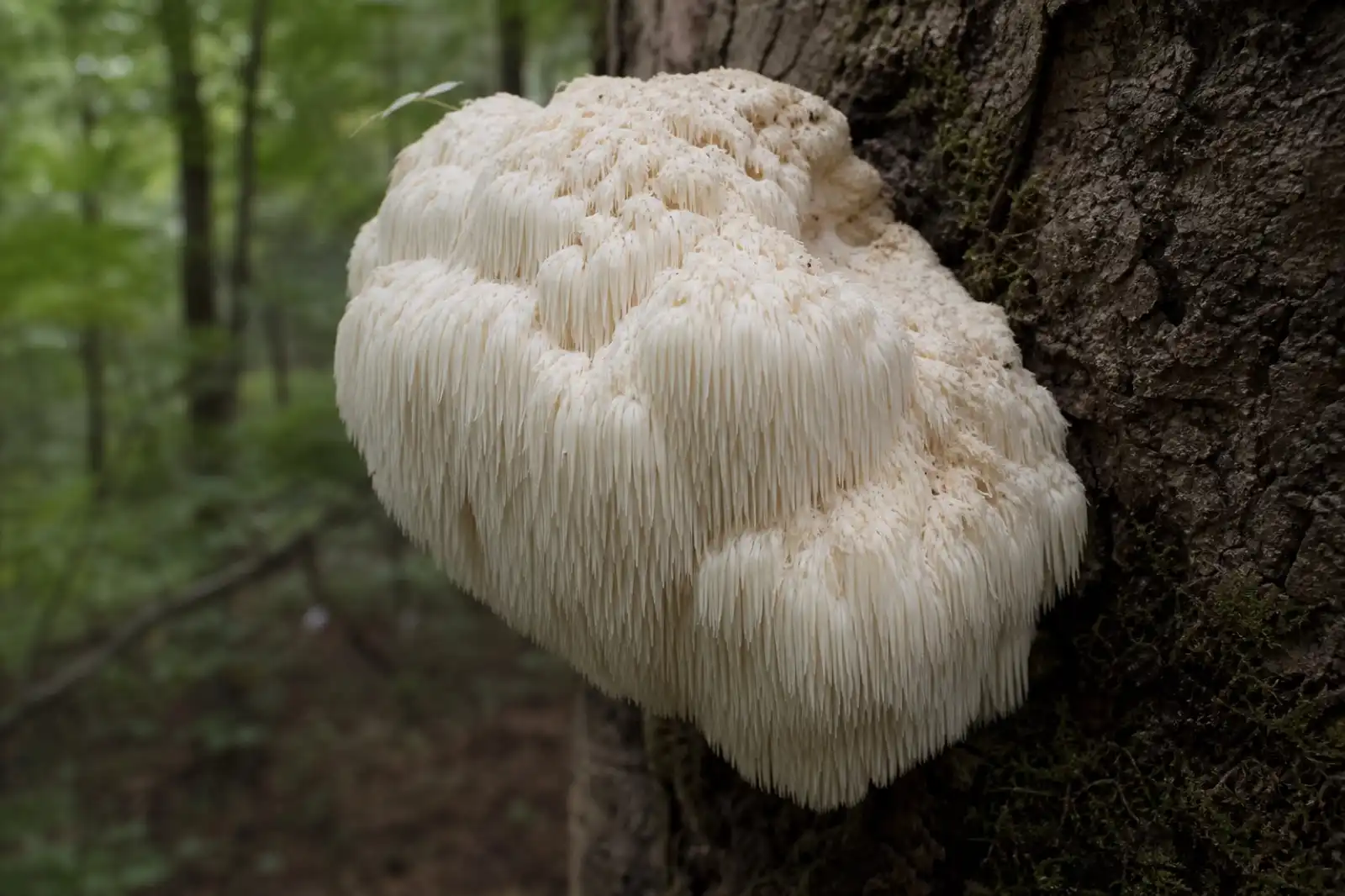
Hericium erinaceus: Lion’s Mane Mushroom Species Guide
Learn lion’s mane identification, hardwood ecology, cultivation, nutrition, supplement evidence, lookalikes, safety limits, and practical FAQs.
growing
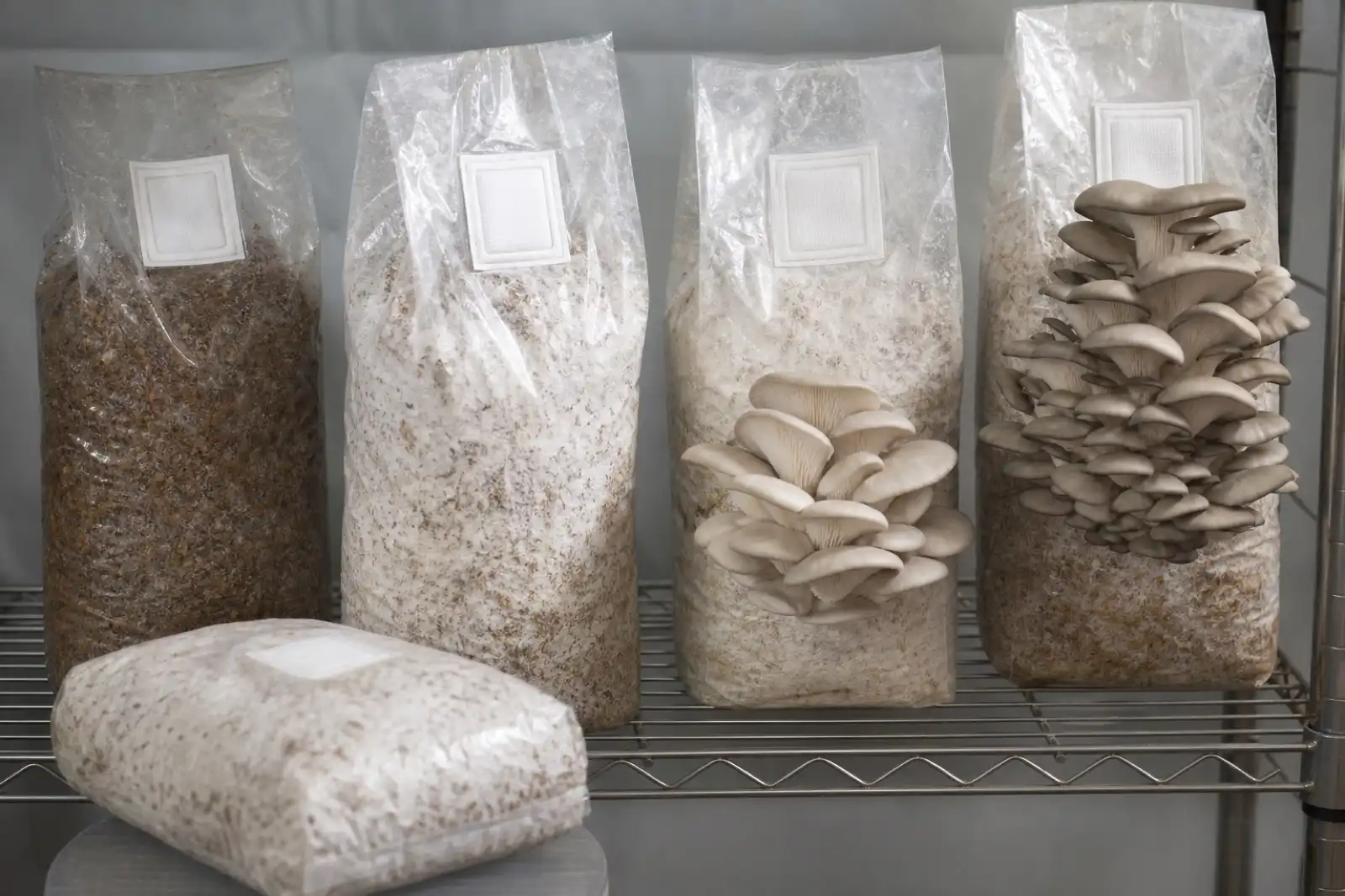
Mushroom Grow Bags: Selection, Filling, and Fruiting
Choose mushroom grow bags by filter, size, and substrate method; learn filling, hydration, sealing, colonization, fruiting cuts, and contamination limits.
growing
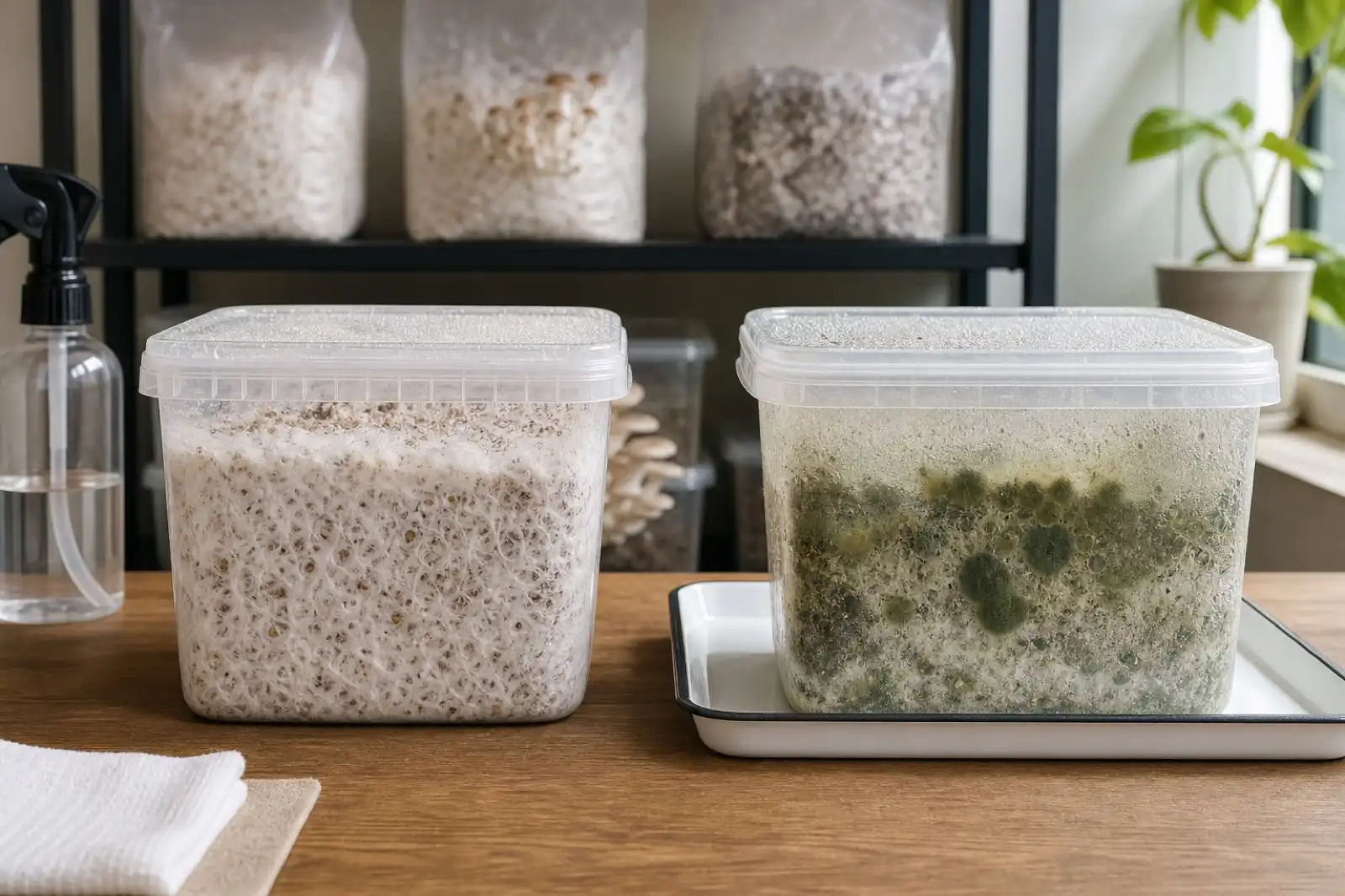
Mushroom Contamination: Isolate, Record, and Prevent Repeat Problems
Recognize mushroom contamination without relying on color alone; isolate suspect batches, avoid food salvage, document the workflow, and prevent repeat issues.
Continue exploring
Browse more practical guides in Growing or visit the mushroom encyclopedia.