Growing
Mushroom Growing Temperatures: Use a Batch Log, Not a Generic Chart
Set and troubleshoot mushroom growing temperatures with a species- and batch-specific log instead of copying universal incubation or fruiting numbers.
By MushroomScope Editorial Team · · Updated
Growing method
Start with authenticated culture
Use supplier-identified spawn or blocks and record substrate, stage, temperature, humidity, and visible changes.
Open the beginner growing hub →Food safety
Discard suspect batches
Unusual colors, slime, insects, or abnormal odor should be treated as a safety concern, not a climate tweak.
Review contamination guidance →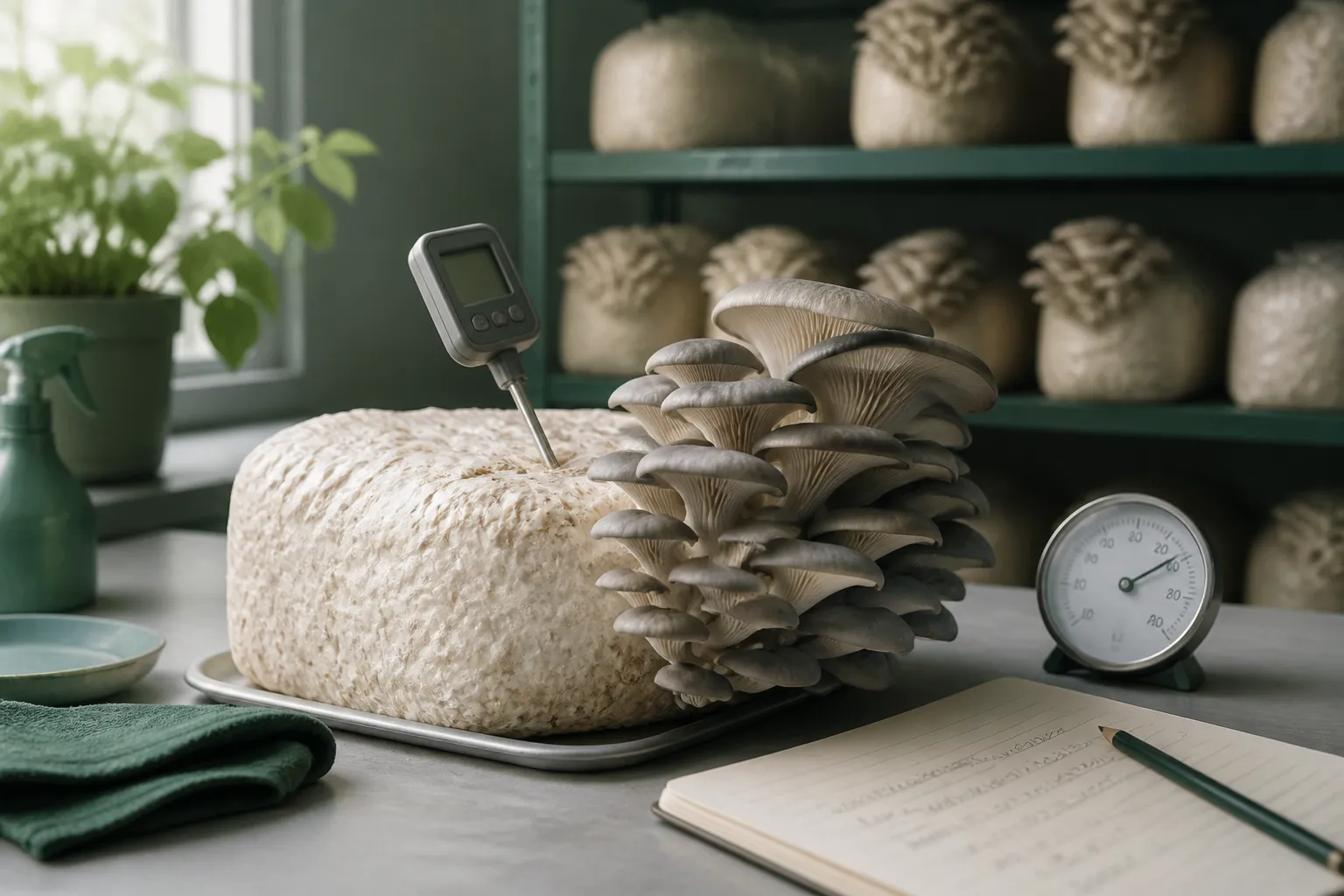
The useful answer: temperature belongs to a named batch
The question “What temperature do mushrooms need?” sounds as if it should have one number. It does not. A useful setting depends on the named species and strain, substrate, container size, cultivation stage, and the supplier’s method. It also depends on what is being measured: room air and the interior of an active block are not interchangeable readings.
Use a generic chart only as a prompt to ask better questions. For a home grower, the dependable starting point is an authenticated spawn or ready-to-fruit block and the stage-specific instructions that came with it. Keep those instructions with one simple batch log. That approach is more useful—and safer—than trying to force every oyster, shiitake, lion’s mane, or button mushroom into a single “ideal” temperature.
Separate the stage before you adjust anything
Temperature has a different job at different points in production. A value copied from an incubation discussion may be wrong for fruiting; a commercial button-mushroom recommendation may not transfer to a specialty block; an outdoor log may follow seasonal conditions rather than a thermostat.
| Record first | Why it changes the decision | What to use as the reference |
|---|---|---|
| Species, strain, and supplier | Strains sold under one common name can have different ranges. | The supplier’s label or technical instructions for that exact culture. |
| Stage: colonization or fruiting | A culture’s needs and warning signs change after healthy colonization. | The supplier’s stage cue, not a calendar estimate. |
| Substrate and container | A deep, active substrate can hold or generate heat differently from room air. | A separately labeled room and substrate/block reading. |
| Indoor block, indoor bed, or outdoor log | Controlled rooms and seasonal outdoor systems are managed differently. | The method-specific guide and local conditions. |
| What changed since the last reading | Multiple changes make a result impossible to interpret. | A dated batch record with one planned adjustment. |
Cornell’s cultivation material, for example, describes shiitake blocks as unusually sensitive to premature fruiting cues during incubation and notes that temperature swings can matter. That is a stage- and system-specific observation, not a number to transfer to every mushroom. Penn State’s commercial Agaricus bisporus material likewise shows why production guidance is tied to a particular crop and stage.
Measure room air and the substrate as different signals
Put the source of every number in the log. A room thermometer describes the air where the block sits. A clean probe used according to its instructions can describe the material at a documented location. Neither reading is automatically the “real” temperature for every part of a grow.
During active colonization, microbial and fungal activity, block size, shelving, and airflow can make a substrate reading differ from the room. Penn State explains the same monitoring logic for commercial Agaricus: growers use multiple substrate measurements and make air-management decisions from both the average and warmer locations. A home setup does not need commercial controls, but it benefits from the same distinction: do not guess that air temperature equals block temperature.
A compact log can look like this:
| Date and time | Batch and stage | Room reading | Block/substrate reading | What changed | What you observed |
|---|---|---|---|---|---|
| Aug. 7, morning | Oyster block, fruiting | Record the instrument value | Record probe location and value | None | Healthy pins / dry edge / other observation |
| Aug. 8, morning | Same batch | Record the instrument value | Same location if safe | One documented air or placement adjustment | Compare with prior observation |
The blank fields are intentional. A log records your validated supplier target and your actual environment; it is not a template that invents a target for an unidentified strain.
Use a conservative adjustment loop
For a healthy, documented batch, work in this order:
- Confirm the culture and stage. Read the instructions for the exact spawn or block. If they do not state a range, ask that supplier rather than substituting a search snippet.
- Check the measurement. Record date, time, room reading, substrate reading if appropriate, and probe location. Keep the method consistent enough to compare readings.
- Check the neighboring variables. Air exchange, moisture loss, light, container placement, and substrate depth can change the outcome even if the thermostat has not moved. Penn State notes that water, carbon dioxide, and temperature work together in production stages.
- Change one variable for a healthy batch. Make a modest adjustment that stays inside the supplier’s guidance, then record the result before changing something else.
- Do not use temperature as a rescue diagnosis. Unexpected color, slime, wet uncolonized spots, insects, or persistent abnormal odor call for isolation, not a series of environmental experiments.
The fruiting conditions guide explains how air, moisture, and light can interact with a healthy crop. If performance is off without a safety warning, use the troubleshooting guide to review the record. If a batch is suspect, the contamination response guide comes first.
Why a universal table can be misleading
It is tempting to make a species-by-species table with exact incubation and fruiting targets. That can hide the information that determines whether a number applies: strain, substrate, stage, sensing location, and the producer’s process. Even a precise range can be unsafe or unhelpful when it is detached from those conditions.
This guide therefore does not publish generic set points. It does preserve a useful comparison: commercial production sources describe temperature as one controlled input among moisture, fresh air, carbon dioxide, sanitation, and crop stage. University of Maryland Extension similarly directs new growers to method-specific resources for indoor and log-based production rather than presenting one home formula. That is the model to use when searching: identify the system first, then compare the source to your actual batch.
Turn a reading into one defensible decision
The most useful temperature note has three parts: where the instrument was, what the supplier says for that exact stage, and what changed after the reading. “It was too warm” is not enough to learn from. A more useful note is: “Room sensor on the shelf edge; clean probe at the documented block location; fruiting-stage supplier guidance retained with batch label; moved the healthy block away from a heat source and observed the next day.” It makes the next decision reviewable without pretending that a single observation proves cause.
Keep instrument placement consistent. A room sensor beside a sunny window, heater outlet, or humidifier may describe a small local pocket rather than the area around the culture. A substrate reading taken at a new depth or from a different block may be just as misleading as no reading at all. If a probe cannot be cleaned and used without damaging or contaminating a block, do not improvise a measurement; use the supplier’s recommended method and record that the substrate value was not taken.
For a healthy batch, compare a sequence rather than one isolated number. A stable reading with a clear change in surface condition may point you toward airflow or moisture management, while a changed room reading with no change in the documented block location tells a different story. The fruiting-conditions guide helps keep those inputs distinct. Make only one planned adjustment within supplier guidance, then give the observation period the supplier recommends before deciding whether another healthy-batch change is warranted.
Escalate instead of improvising
Some observations are not tuning problems. Isolate a batch showing unusual growth, slime, persistent abnormal odor, insects, unexplained wet areas, or a failure that conflicts with the supplier’s healthy-stage description. Do not harvest or taste it to test whether a temperature change worked. A photo, color description, or temperature log cannot identify contamination or establish food safety.
For an otherwise healthy batch with unclear instructions, contact the culture supplier with a compact record: product or strain label, substrate and container, stage, arrival or inoculation date, room and block measurements with locations, recent changes, and clear photographs of the setup where appropriate. This gives them information they can actually compare with their protocol. If the response is a generic number without species, strain, substrate, stage, and measurement context, treat it as incomplete rather than as a command to override the batch documentation.
For a future experiment, change one documented variable only after the suspect batch is kept separate or disposed of according to local waste guidance. Review the substrate guide and contamination response guide before starting again. The objective is a clean, interpretable next batch—not squeezing a yield from material whose safety and identity are uncertain.
Keep food safety separate from yield questions
Temperature monitoring helps you learn from a healthy crop; it cannot authenticate a culture, identify a contaminant, or establish that a mushroom is safe to eat. Use commercial, authenticated spawn for food cultivation. Do not clone or cultivate an unidentified wild specimen for food.
If a batch becomes suspect, keep it away from clean cultures, avoid tasting or harvesting from it, and record the culture source, substrate, treatment, date, container, first observation, and any handling event. The purpose is to protect the next clean batch—not to diagnose a mold from a photo or “fix” it with heat, cold, misting, or extra air.
Calibrate decisions to the sensor, not just the display
Compare the working sensor with a trusted reference at relevant temperatures and record its offset, placement, and check date. Air, substrate core, shelf, and room readings answer different questions. If a value is implausible, verify the instrument before changing heaters or cooling and risking a large uncontrolled swing.
References
Source quality notes
MushroomScope cites sources that match the page scope, such as taxonomic databases, extension guidance, food-safety agencies, food-composition databases, and peer-reviewed or institutional health references. Sources support context and uncertainty; they do not turn an online page into specimen identification, medical advice, or a tested recipe record.
Frequently asked questions
What temperature should I use to grow mushrooms at home?
Use the range supplied for the exact species and strain, substrate, and stage—not a generic chart. Record both the room and substrate readings, then make one measured adjustment if the healthy culture is outside the supplier guidance.
Why can room temperature and substrate temperature differ?
A colonizing substrate can generate heat, while probe location, block size, airflow, and room gradients change the reading. The two readings answer different questions, so label them separately in the batch record instead of treating either as a universal target.
Can I correct a stalled or discolored grow block by changing temperature?
No single temperature change can diagnose or rescue a suspect block. Isolate unusual growth, wet areas, slime, insects, or odors; do not treat the batch as food; and review the culture, substrate, handling, and record before changing conditions in a later batch.
Related guides
growing
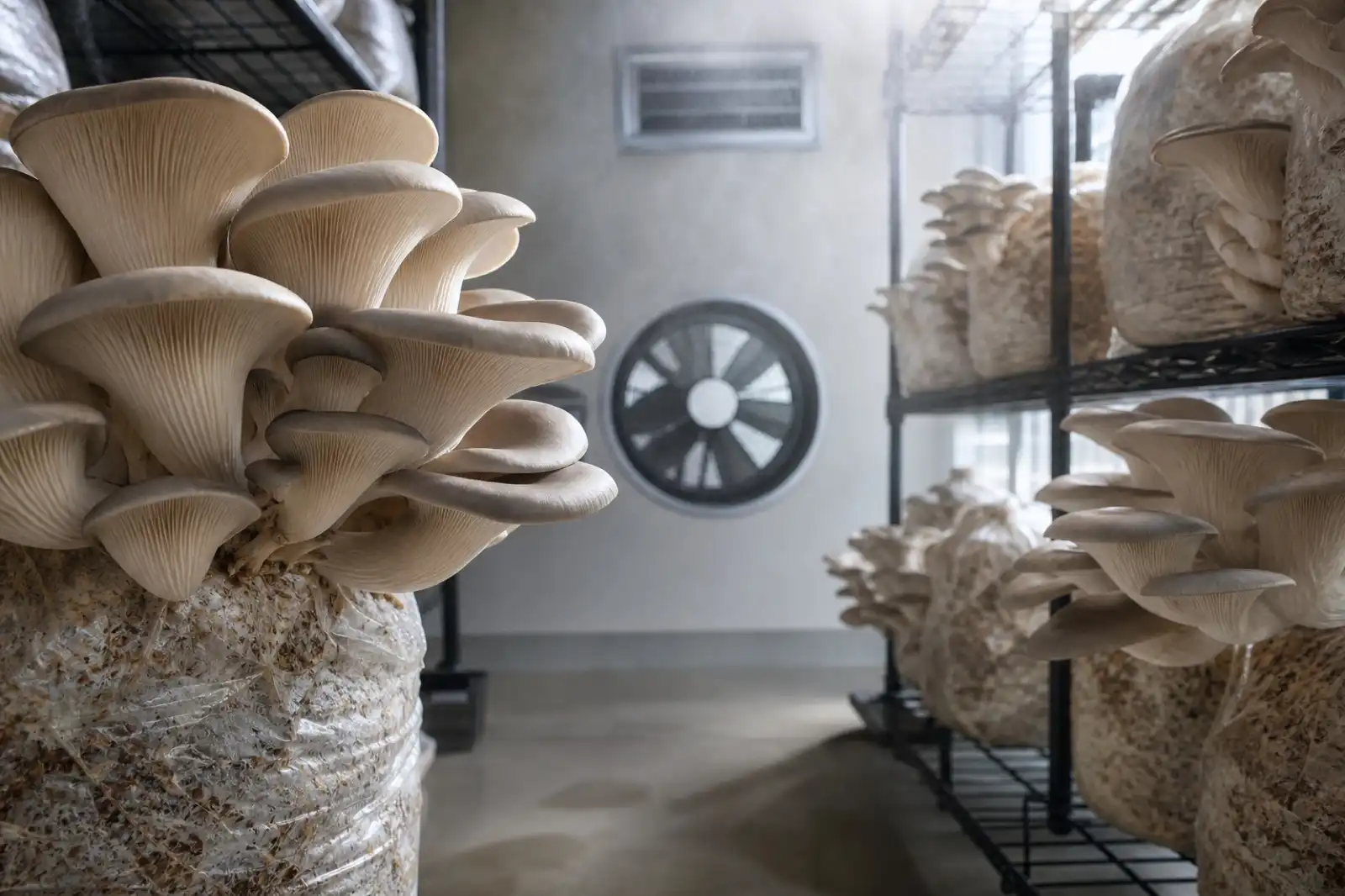
Mushroom Fruiting Conditions: Humidity, Air, Light, and Temperature
Use humidity, fresh air, light, and temperature as a linked observation system for authenticated cultivated mushroom blocks—not a universal settings chart.
growing
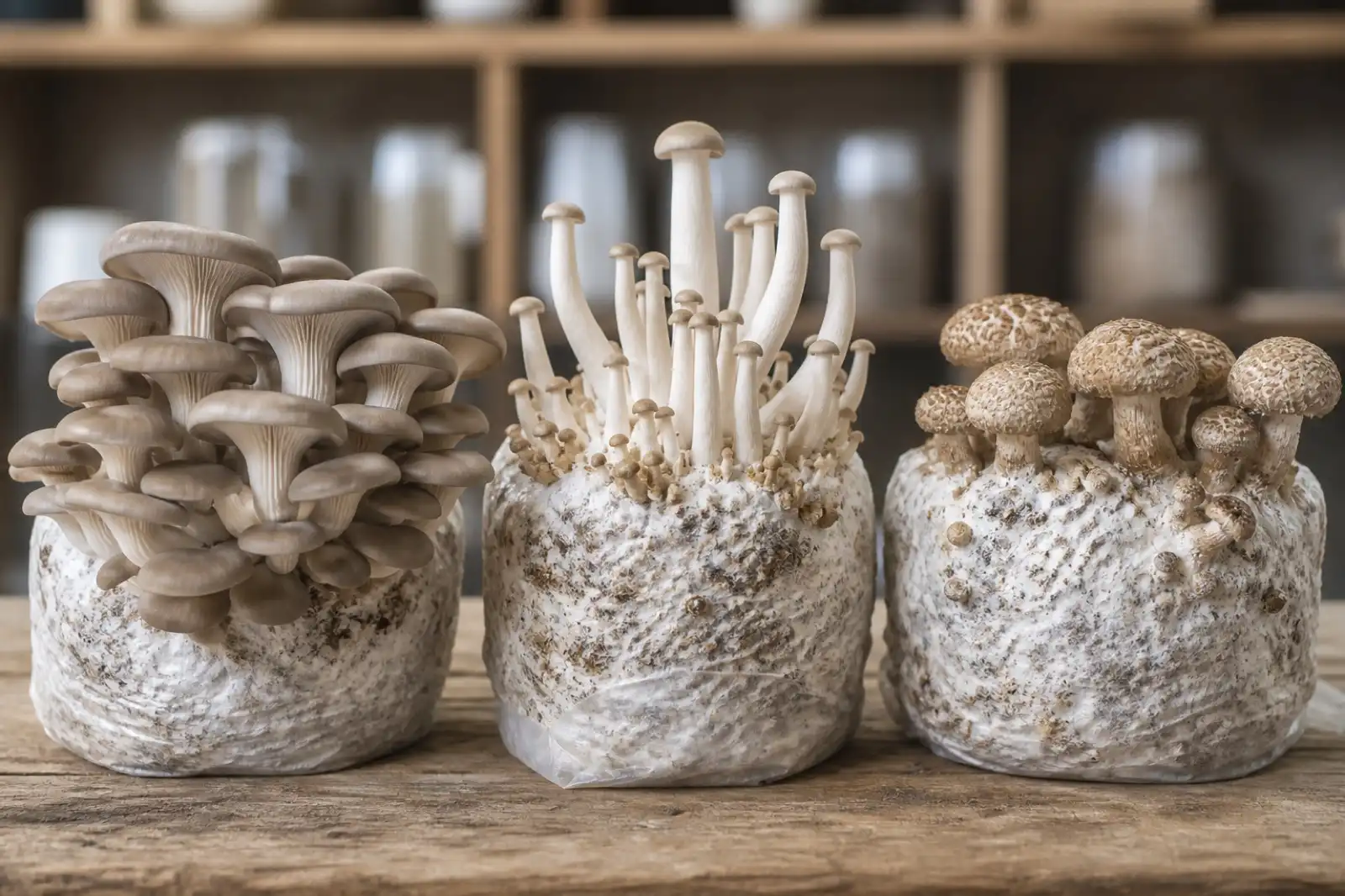
Mushroom Growing Troubleshooting: A One-Variable Logbook Method
Troubleshoot a home mushroom grow by separating contamination, moisture, fresh-air, temperature, and harvest-handling observations.
growing
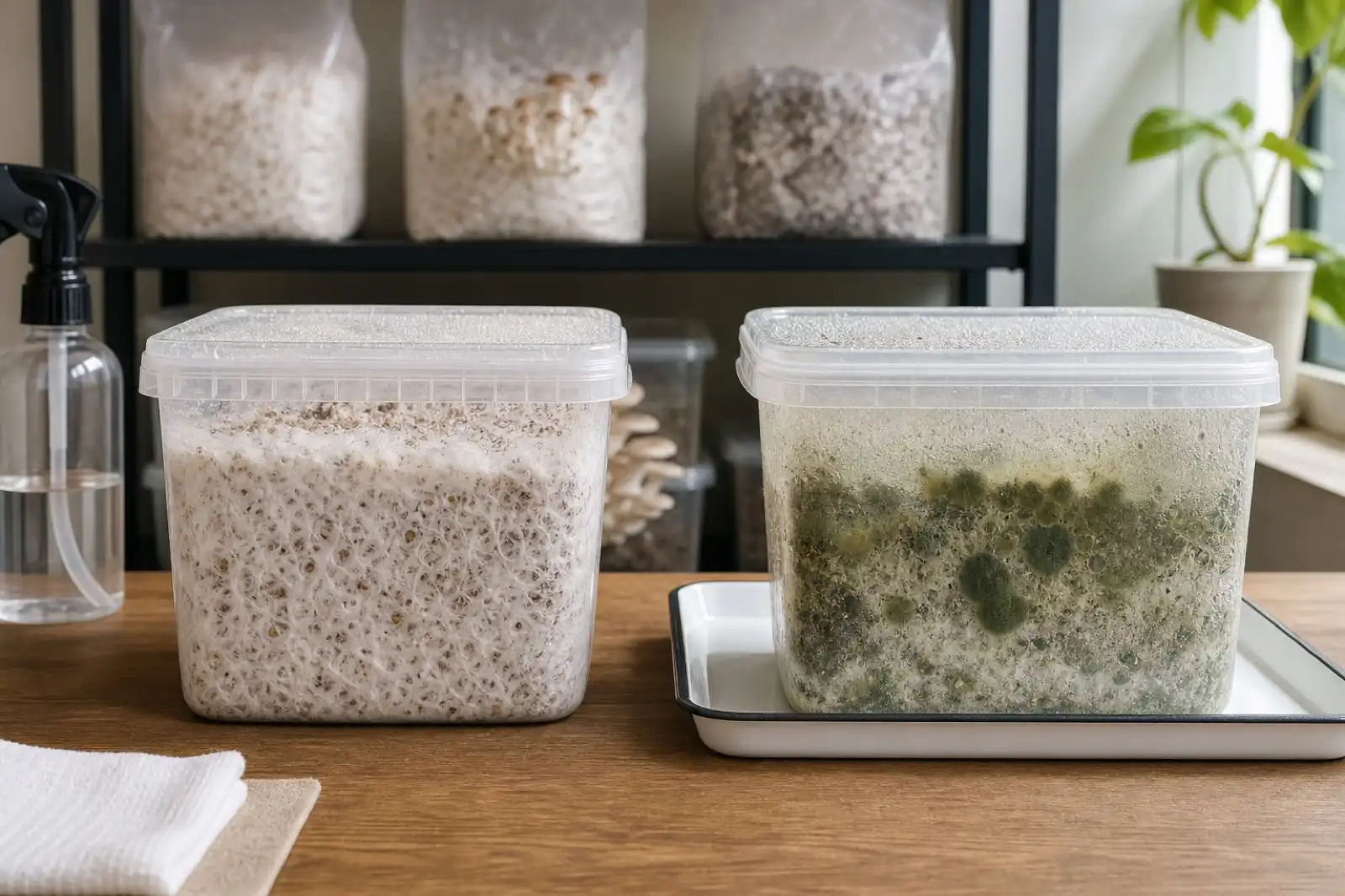
Mushroom Contamination: Isolate, Record, and Prevent Repeat Problems
Recognize mushroom contamination without relying on color alone; isolate suspect batches, avoid food salvage, document the workflow, and prevent repeat issues.
Continue exploring
Browse more practical guides in Growing or visit the mushroom encyclopedia.