Growing
Spent Mushroom Substrate: Reuse, Compost, and Safe Disposal
Assess spent mushroom substrate for compost, mulch, soil trials, second flushes, contamination isolation, salt and nutrient limits, and local disposal.
Growing method
Start with authenticated culture
Use supplier-identified spawn or blocks and record substrate, stage, temperature, humidity, and visible changes.
Open the beginner growing hub →Food safety
Discard suspect batches
Unusual colors, slime, insects, or abnormal odor should be treated as a safety concern, not a climate tweak.
Review contamination guidance →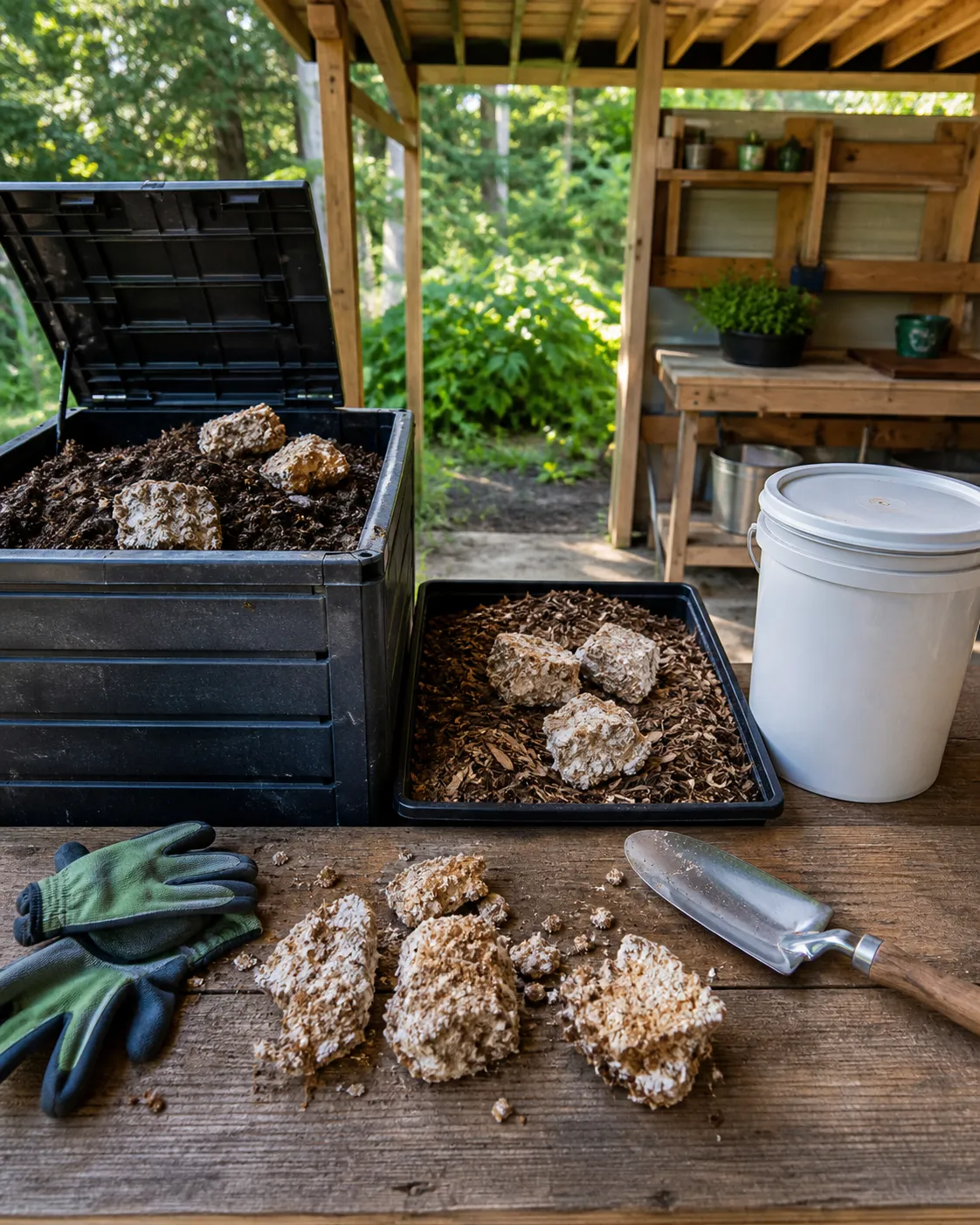
Spent does not mean sterile or uniform
Spent mushroom substrate is the material remaining after one or more crops, but its composition depends on the original straw, sawdust, compost, manure, supplements, casing, species, treatment, and number of flushes. It still contains organic matter, water, nutrients, mycelium, salts, and microorganisms. That variability prevents one universal instruction to put every block directly into a garden.
Keep the original substrate recipe and treatment record with the outgoing lot; the substrate guide explains why straw, supplemented sawdust, and compost cannot be treated as interchangeable materials. Link the final destination to the same lot in a batch record so a plant response, odor complaint, pest problem, or disposal question can be traced back to its source.
Decision point 1: apply spent does not mean sterile or uniform
In Spent Mushroom Substrate: Reuse, Compost, and Safe Disposal, this stage needs a dated observation tied to the exact material, strain or product, quantity, location, and starting condition. Record the result before interpreting it, including an unfavorable or absent response. Compare it with the preceding batch, meal, or decision using the same unit and timing. Note competing explanations and choose only one controlled adjustment. This makes the specific question “Spent does not mean sterile or uniform” testable instead of turning a memorable result into a universal rule. Photograph or retain the relevant label when it materially improves traceability.
Separate clean exhaustion from contamination
A clean, fully colonized block that simply yields less is different from a bag with green mold, foul liquid, insect infestation, or unknown contamination. Do not break suspect material in the grow room or clean work area. Seal and remove it according to local waste rules. Home composting is not a validated kill step for every mushroom pest, pathogen, or contaminant.
Decision point 2: apply separate clean exhaustion from contamination
In Spent Mushroom Substrate: Reuse, Compost, and Safe Disposal, this stage needs a dated observation tied to the exact material, strain or product, quantity, location, and starting condition. Record the result before interpreting it, including an unfavorable or absent response. Compare it with the preceding batch, meal, or decision using the same unit and timing. Note competing explanations and choose only one controlled adjustment. This makes the specific question “Separate clean exhaustion from contamination” testable instead of turning a memorable result into a universal rule. Photograph or retain the relevant label when it materially improves traceability.
Decide whether another flush is worthwhile
Some specialty blocks can produce a second or third flush after a rest and rehydration under species-appropriate conditions. Later flushes may be smaller and occupy valuable space while contamination risk rises. Track yield per block, days, room capacity, labor, and quality. A second flush is an operational choice, not evidence the substrate remains suitable indefinitely.
Decision point 3: apply decide whether another flush is worthwhile
In Spent Mushroom Substrate: Reuse, Compost, and Safe Disposal, this stage needs a dated observation tied to the exact material, strain or product, quantity, location, and starting condition. Record the result before interpreting it, including an unfavorable or absent response. Compare it with the preceding batch, meal, or decision using the same unit and timing. Note competing explanations and choose only one controlled adjustment. This makes the specific question “Decide whether another flush is worthwhile” testable instead of turning a memorable result into a universal rule. Photograph or retain the relevant label when it materially improves traceability.
Composting changes the material
Managed composting combines carbon-rich and nitrogen-rich materials with moisture, oxygen, particle structure, and turning. Fresh spent substrate may be too wet, dense, or compositionally unbalanced alone. Mix it into a broader recipe and monitor temperature and odor. Finished-looking material is not automatically pathogen-free, and commercial or municipal rules may set accepted inputs.
Decision point 4: apply composting changes the material
In Spent Mushroom Substrate: Reuse, Compost, and Safe Disposal, this stage needs a dated observation tied to the exact material, strain or product, quantity, location, and starting condition. Record the result before interpreting it, including an unfavorable or absent response. Compare it with the preceding batch, meal, or decision using the same unit and timing. Note competing explanations and choose only one controlled adjustment. This makes the specific question “Composting changes the material” testable instead of turning a memorable result into a universal rule. Photograph or retain the relevant label when it materially improves traceability.
Use as mulch only after a small trial
Weathered, clean spent substrate is sometimes used as mulch, but fine material can mat, repel or hold too much water, and shift local conditions. Begin away from sensitive plants with a thin, small comparison plot. Keep mulch away from trunks and stems, observe drainage and weeds, and stop if odor, slime, pests, or plant stress appears.
Decision point 5: apply use as mulch only after a small trial
In Spent Mushroom Substrate: Reuse, Compost, and Safe Disposal, this stage needs a dated observation tied to the exact material, strain or product, quantity, location, and starting condition. Record the result before interpreting it, including an unfavorable or absent response. Compare it with the preceding batch, meal, or decision using the same unit and timing. Note competing explanations and choose only one controlled adjustment. This makes the specific question “Use as mulch only after a small trial” testable instead of turning a memorable result into a universal rule. Photograph or retain the relevant label when it materially improves traceability.
Soil amendment rates require context
As a soil amendment, pH, electrical conductivity, soluble salts, nitrogen availability, maturity, and contaminants matter. Mushroom compost sold as a tested product is not equivalent to a fresh home block. High rates can harm salt-sensitive plants or temporarily alter nutrient availability. A soil or compost test is appropriate before broad agricultural use.
Decision point 6: apply soil amendment rates require context
In Spent Mushroom Substrate: Reuse, Compost, and Safe Disposal, this stage needs a dated observation tied to the exact material, strain or product, quantity, location, and starting condition. Record the result before interpreting it, including an unfavorable or absent response. Compare it with the preceding batch, meal, or decision using the same unit and timing. Note competing explanations and choose only one controlled adjustment. This makes the specific question “Soil amendment rates require context” testable instead of turning a memorable result into a universal rule. Photograph or retain the relevant label when it materially improves traceability.
Outdoor reuse can spread pests or fungi
Outdoor placement may allow the cultivated fungus to fruit again or move insects and competitor molds. Avoid natural areas where introducing organisms or nutrient-rich waste is prohibited. Do not assume a food species is ecologically harmless outside cultivation. Local invasive-species, compost, animal-feed, and waste guidance should control the destination.
Decision point 7: apply outdoor reuse can spread pests or fungi
In Spent Mushroom Substrate: Reuse, Compost, and Safe Disposal, this stage needs a dated observation tied to the exact material, strain or product, quantity, location, and starting condition. Record the result before interpreting it, including an unfavorable or absent response. Compare it with the preceding batch, meal, or decision using the same unit and timing. Note competing explanations and choose only one controlled adjustment. This makes the specific question “Outdoor reuse can spread pests or fungi” testable instead of turning a memorable result into a universal rule. Photograph or retain the relevant label when it materially improves traceability.
Handle bags and waste safely
Wear gloves, manage dust, and avoid aerosolizing dry substrate, especially for people with respiratory sensitivity. Remove plastic, filter patches, ties, and labels before an approved compost use. Do not feed spent substrate to animals without species-specific professional guidance. Wash tools and keep waste transport separate from inoculation supplies.
Decision point 8: apply handle bags and waste safely
In Spent Mushroom Substrate: Reuse, Compost, and Safe Disposal, this stage needs a dated observation tied to the exact material, strain or product, quantity, location, and starting condition. Record the result before interpreting it, including an unfavorable or absent response. Compare it with the preceding batch, meal, or decision using the same unit and timing. Note competing explanations and choose only one controlled adjustment. This makes the specific question “Handle bags and waste safely” testable instead of turning a memorable result into a universal rule. Photograph or retain the relevant label when it materially improves traceability.
Build a destination record for each lot
Record crop species, substrate recipe, additives, treatment, number of flushes, contamination status, date removed, bag mass, and destination. A simple clean-reuse, managed-compost, or sealed-disposal decision tree improves traceability. The contamination guide helps flag suspect blocks; local authorities determine what disposal or commercial composting is permitted.
Decision point 9: apply build a destination record for each lot
In Spent Mushroom Substrate: Reuse, Compost, and Safe Disposal, this stage needs a dated observation tied to the exact material, strain or product, quantity, location, and starting condition. Record the result before interpreting it, including an unfavorable or absent response. Compare it with the preceding batch, meal, or decision using the same unit and timing. Note competing explanations and choose only one controlled adjustment. This makes the specific question “Build a destination record for each lot” testable instead of turning a memorable result into a universal rule. Photograph or retain the relevant label when it materially improves traceability.
Frequently asked questions
Can spent mushroom blocks go directly in a garden?
Not automatically. Original ingredients, salts, moisture, maturity, contamination, and plant sensitivity must be considered.
Can a block fruit again?
Some clean blocks can produce later flushes, but yield, space, time, and contamination risk determine whether it is worthwhile.
Should moldy substrate be composted at home?
Do not assume home composting controls every contaminant; isolate it and follow local disposal guidance.
Must plastic be removed?
Yes, remove bags, filters, ties, and labels before an approved organic reuse.
Is spent substrate safe as animal feed?
Do not use it as feed without qualified, species-specific guidance and compliance with local rules.
References
Source quality notes
MushroomScope cites sources that match the page scope, such as taxonomic databases, extension guidance, food-safety agencies, food-composition databases, and peer-reviewed or institutional health references. Sources support context and uncertainty; they do not turn an online page into specimen identification, medical advice, or a tested recipe record.
Frequently asked questions
Can spent mushroom blocks go directly in a garden?
Not automatically. Original ingredients, salts, moisture, maturity, contamination, and plant sensitivity must be considered.
Can a block fruit again?
Some clean blocks can produce later flushes, but yield, space, time, and contamination risk determine whether it is worthwhile.
Should moldy substrate be composted at home?
Do not assume home composting controls every contaminant; isolate it and follow local disposal guidance.
Must plastic be removed?
Yes, remove bags, filters, ties, and labels before an approved organic reuse.
Is spent substrate safe as animal feed?
Do not use it as feed without qualified, species-specific guidance and compliance with local rules.
Related guides
growing
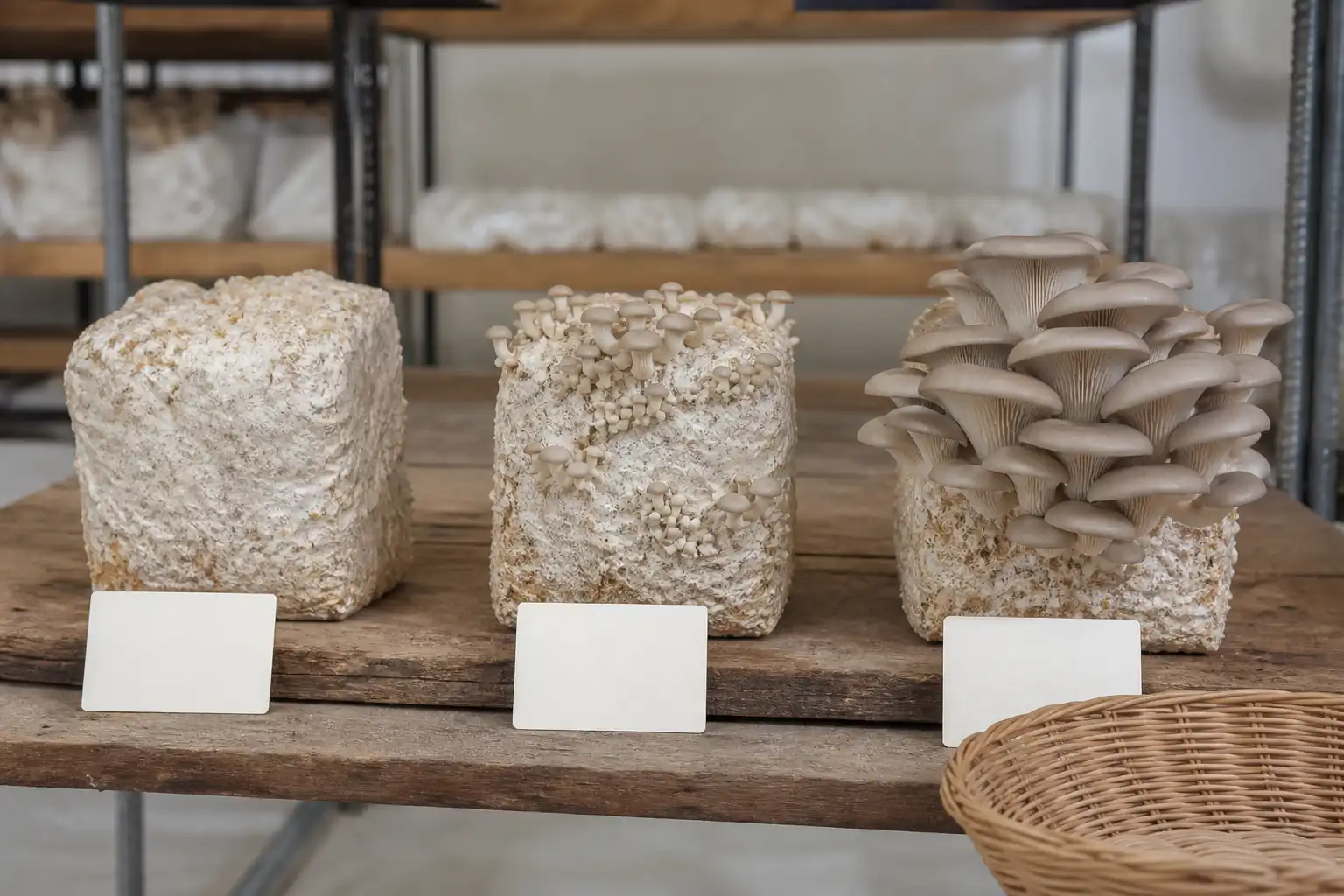
Mushroom Flush Management: Decide When to Rest, Refruit, or Retire a Block
Manage mushroom flushes with defined harvest windows, block condition checks, room capacity, water control, quality records, and conservative exit decisions.
growing
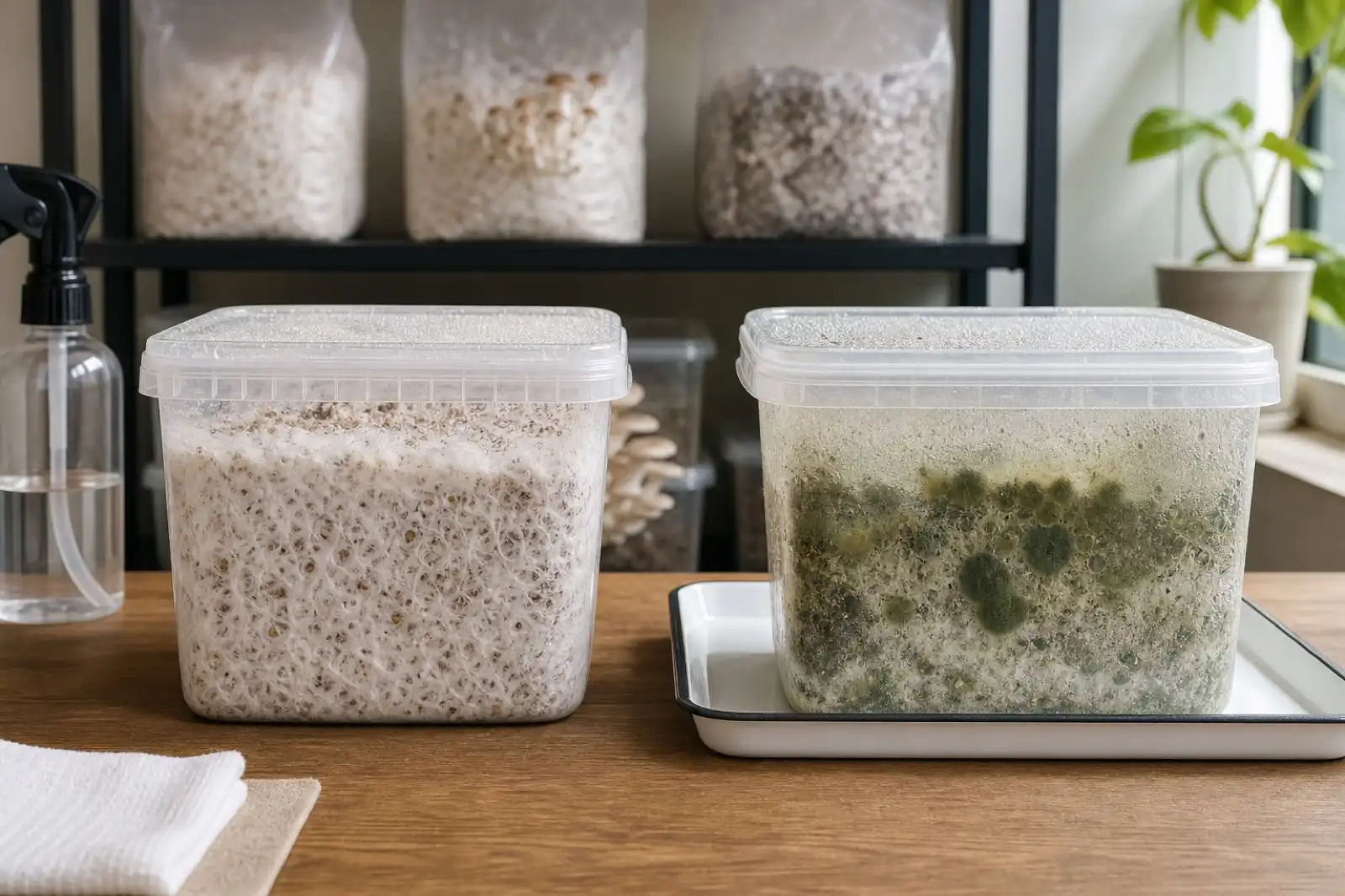
Mushroom Contamination: Isolate, Record, and Prevent Repeat Problems
Recognize mushroom contamination without relying on color alone; isolate suspect batches, avoid food salvage, document the workflow, and prevent repeat issues.
growing
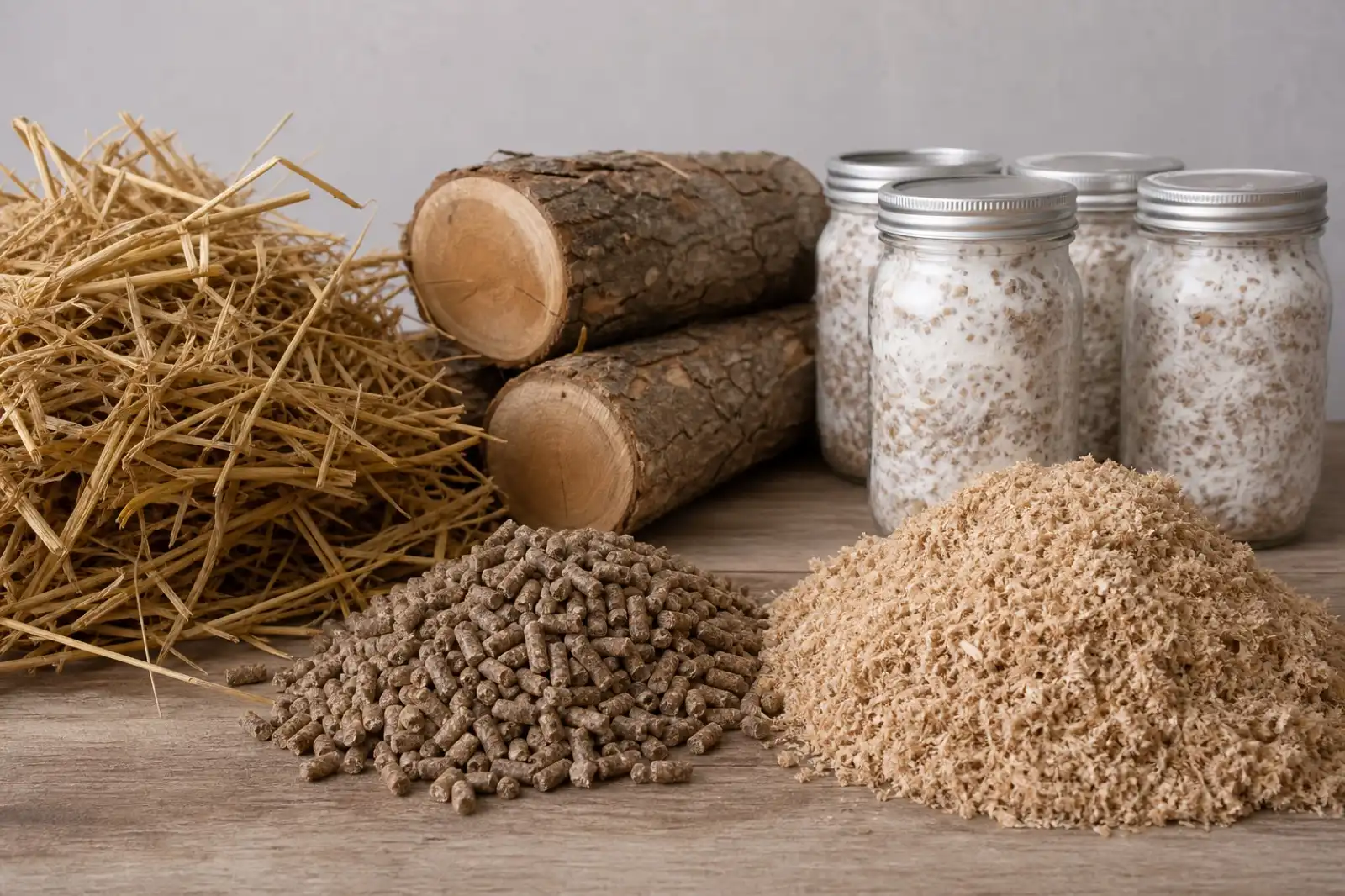
Mushroom Substrate Guide: Match Species to Method
Choose a mushroom-growing substrate by matching a labeled culture to a documented production method, site, and food-safety boundary.
Continue exploring
Browse more practical guides in Growing or visit the mushroom encyclopedia.