Identification
Mushroom Odor in Identification: How to Record It Safely
Learn to record mushroom odor safely, compare fresh and cut tissue, control for handling, and never treat smell as an identification or edibility test.
By MushroomScope Editorial Team · · Updated
Safety first
Use as a field-record guide
Document the whole mushroom, habitat, substrate, and region before comparing names or photographs.
Open the identification safety hub →Decision limit
Do not use this as an edibility verdict
Wild mushroom consumption decisions require qualified local, in-person confirmation of the complete specimen.
Read the safety disclaimer →
The useful role—and strict limit—of odor
Odor can be one of the field characters that narrows a key, especially when it is unusually strong or appears in a particular developmental stage. Iowa State University Extension includes a distinct smell among the observations worth recording, alongside substrate, season, group growth, photographs, and size. That makes odor a note to compare, not a shortcut to a name.
For example, the University of Florida documents the strong carrion- or dung-like odor of stinkhorns. That observation may be useful only when it agrees with the entire fruit body and habitat. The same smell does not transfer to every pale, orange, or brown mushroom, and a pleasant smell does not indicate safety.
Never taste an unknown mushroom, use odor as a food-safety test, or consume a specimen because an online match seems convincing. The CDC advises that wild mushrooms should not be eaten unless identified by an expert; public-health agencies also warn that cooking does not make a poisonous mushroom safe.
A conservative way to make the observation
Start with the evidence that disappears first. Before moving a specimen, photograph the group, its substrate, the cap, the underside, and the complete stem base. The mushroom photo checklist gives a practical record to capture before handling.
Then record odor in a short, non-diagnostic sentence:
- Note whether there was a noticeable odor at normal working distance before handling.
- If you make a closer observation, do it briefly in open air; do not press your face to the specimen, inhale deeply, or put any material in your mouth.
- Write a comparison rather than a conclusion: for example, “none noticed,” “earthy,” “sweet,” “phenolic/chemical-like,” or “carrion-like.” If the comparison is uncertain, write “uncertain.”
- Record when it was noticed: intact, after a cut, after bruising, or only after the specimen warmed in a container. Also record rain, dryness, age, and whether several specimens agreed.
- Keep the odor note separate from the provisional identification. A key may give odor weight only after decisive structural and ecological characters are present.
Do not use a sealed bag or jar as an odor experiment. It can mix specimen odors, hide context, and turn a weak observation into an overconfident one. If a regional key requires an odor character you cannot observe safely or clearly, leave that character unknown.
Put odor beside stronger characters
An odor note becomes more useful when the following observations are complete and mutually consistent:
| Record first | Why it matters |
|---|---|
| Substrate and associated plants | Many species are tied to soil, particular wood, or specific hosts. |
| Fertile surface | Gills, pores, teeth, folds, or a smooth underside place a specimen into very different groups. |
| Stem and base | Rings, bulbs, rooting bases, and veil tissue can be decisive. See mushroom stem features. |
| Age and a range of specimens | Color, surface texture, and odor may change as fruit bodies mature or dry. |
| Spore deposit when appropriate | A controlled deposit can support a key, but is not a stand-alone identification. Follow the spore-print method. |
Conflicts are meaningful. A “right” smell cannot rescue a specimen whose substrate, underside, stem base, or spore deposit disagrees with the candidate. Stop at an unresolved group rather than selecting the closest image or common name.
Standardize the observation environment
Record odor outdoors or in a well-ventilated space, away from perfume, smoke, food, cleaners, and other specimens. Smell the intact collection cautiously from a normal distance first. If a regional key requires it, expose a small fresh surface and waft air toward the nose rather than inhaling deeply. Stop if irritation, dizziness, nausea, or breathing symptoms occur.
Use separate clean tools and containers so one strong-smelling collection does not contaminate another. Record whether the odor came from cap, gills, stem base, cut flesh, or the storage container. Temperature, wetness, age, and time since collection belong in the note because volatile compounds change.
People with asthma, fragrance sensitivity, mold allergy, or another respiratory vulnerability should avoid deliberate odor assessment. A trained second observer can record the character without requiring exposure from the vulnerable person.
Write intensity, timing, and tissue location
Avoid a single label such as “mushroomy.” Describe intensity—absent, faint, moderate, or strong—and when it appeared. Terms used in keys include floury, anise-like, almond-like, radish-like, phenolic, inky, fishy, earthy, or garlic-like, but observers map odors to different memories.
“Moderate radish-like odor from cut stem base after 30 seconds” is more reproducible than “strange.” Do not place reference chemicals beside the specimen. Ask a second observer independently when safe and record both descriptions rather than forcing agreement.
Photographs cannot preserve odor, so link the text to a field number, habitat images, measurements, and full anatomy. A later expert needs to know whether the scent was clear, uncertain, or not assessed.
Explain changes with age and handling
Volatile compounds vary with developmental stage, hydration, temperature, damage, microbes, and decay. A dry old specimen may have little odor; a sealed wet container can accumulate a smell that was not apparent in the field. Cutting may release compounds that intact tissue retains.
Foul, sour, ammonia-like, or rotten odor can reflect deterioration, but lack of bad odor does not prove freshness or safety. Poisonous mushrooms can smell pleasant or neutral. Food mushrooms with slime, mold, foul odor, or unsafe storage history should be discarded without tasting.
Record the intact odor before bruising and again after a defined cut when a local key calls for it. Keep one specimen unhandled as a comparison. Do not heat, burn, microwave, or chemically treat an unknown mushroom to make its odor stronger; this can release irritants and destroy evidence.
Combine odor with anatomy and ecology
Enter odor beside cap, fertile surface, stem and base, veil structures, spore deposit, staining, substrate, host, season, and region. A phenolic odor plus rapid yellow staining at an Agaricus stem base is more informative than either clue alone, yet full local examination remains necessary.
When odor contradicts a candidate, recheck tissue freshness and observer confidence instead of automatically dismissing it. Compare alternative local taxa and mark missing evidence. The complete identification workflow shows how to weigh matches and conflicts.
Odor can sometimes help choose the next key branch; it cannot compensate for a missing stem base, wrong spore color, incompatible substrate, or absent microscopy. Do not combine an odor from one collection with photographs from another.
Avoid odor myths and unsafe shortcuts
There is no universal poison smell. Pleasant, fruity, nutty, or ordinary mushroom odor does not indicate edibility, and unpleasant odor does not classify every toxic species. Animals or insects eating a mushroom are not safety evidence for humans.
Do not taste unidentified mushrooms. Taste steps appearing in specialist keys require expertise and taxonomic context and are not a beginner method. Chemical spot reagents also require safety documentation and treated tissue must never enter food.
A market name, app result, or online vote cannot turn odor into confirmation. The specimen still needs a complete base, fertile-surface examination, habitat record, local key, and qualified review when food use is contemplated.
Preserve an odor record for review
Use a template: collection number; intact or cut tissue; intensity; closest comparison; time after cutting; duration; observer; temperature and moisture; confidence. Add it to the photographs and written morphology before consulting candidate names.
Drying changes odor, so a voucher may not retain the original scent. Preserve the field note even when lawful material is dried. If odor is decisive in a key and the original observation was uncertain, the identification may need to remain unresolved.
For suspected ingestion, odor should not delay poison-control contact. Preserve material and notes, but follow medical instructions rather than repeatedly smelling or handling the specimen.
Why odor is easy to overread
Odor vocabulary is subjective. Rain, soil, leaf litter, a bag, perfumes, smoke, and a specimen’s age can change what a person notices. Some fungi have conspicuous odors, while many have little or no odor under field conditions. A description such as “anise-like” or “chemical-like” is therefore most useful when it is paired with the observer’s conditions and repeated across intact specimens.
This is also why a photo, a search result, or an app cannot settle an odor character. Remote viewers cannot examine the material, compare it with the local key, or assess hidden tissue and microscopic features. Use online resources to learn vocabulary and prepare questions for a local expert—not to make a consumption decision.
If exposure or ingestion is possible
The safe response is different from field identification. Do not wait to determine a name from odor or a photograph. In the United States, public-health guidance directs people to call Poison Help at 1-800-222-1222 after a suspected exposure; elsewhere, contact the applicable poison service or emergency number. If it can be done without further exposure, keep leftovers, packaging, and photographs for qualified responders.
For ordinary observation, return the specimen to the field or dispose of it safely after documentation. Keep children and pets from unknown mushrooms. A record that says “identity unresolved” is a successful field note when decisive evidence is missing.
References
Treat odor as a timed observation, not a label
Odor records become more comparable when the observer notes where the sample was smelled, whether tissue was intact or freshly cut, the elapsed time after cutting, ambient temperature, and whether the specimen was wet, chilled, old, or stored in plastic. Smell the intact cap and stem first, then expose a small fresh surface outdoors or in a well-ventilated place. Do not inhale deeply, place tissue in the nose, taste an unknown mushroom, or deliberately smell a decomposed specimen. Write the first neutral description before reading a field-guide phrase; expectations can turn a faint general odor into an imagined “almond” or “anise” match.
Use shared reference materials only as calibration aids. A fresh anise seed, phenolic product label, flour, cucumber peel, or radish can help two observers explain what they mean, but a household comparison does not prove the mushroom produces the same compound. If observers disagree, preserve both descriptions and prioritize the structural, ecological, spore, microscopic, or molecular characters that actually separate the candidate taxa.
Source quality notes
MushroomScope cites sources that match the page scope, such as taxonomic databases, extension guidance, food-safety agencies, food-composition databases, and peer-reviewed or institutional health references. Sources support context and uncertainty; they do not turn an online page into specimen identification, medical advice, or a tested recipe record.
Frequently asked questions
Can a mushroom's smell identify it by itself?
No. An odor can be a useful observation, but it changes with age, moisture, handling, and surroundings. It must agree with the full specimen, habitat, fertile surface, and a current regional key; it never confirms edibility.
How should I record a mushroom odor in field notes?
Use plain comparison words, record whether the odor was noticed before handling or only after a cut or bruise, and note the weather and specimen age. Photograph and record other characters separately so the odor is not treated as a verdict.
What if the odor is unpleasant or I think someone ate a wild mushroom?
Do not taste or consume an unidentified specimen. If ingestion is suspected, contact a poison center or local emergency service promptly and preserve safe-to-handle leftovers and photographs for qualified responders.
Related guides
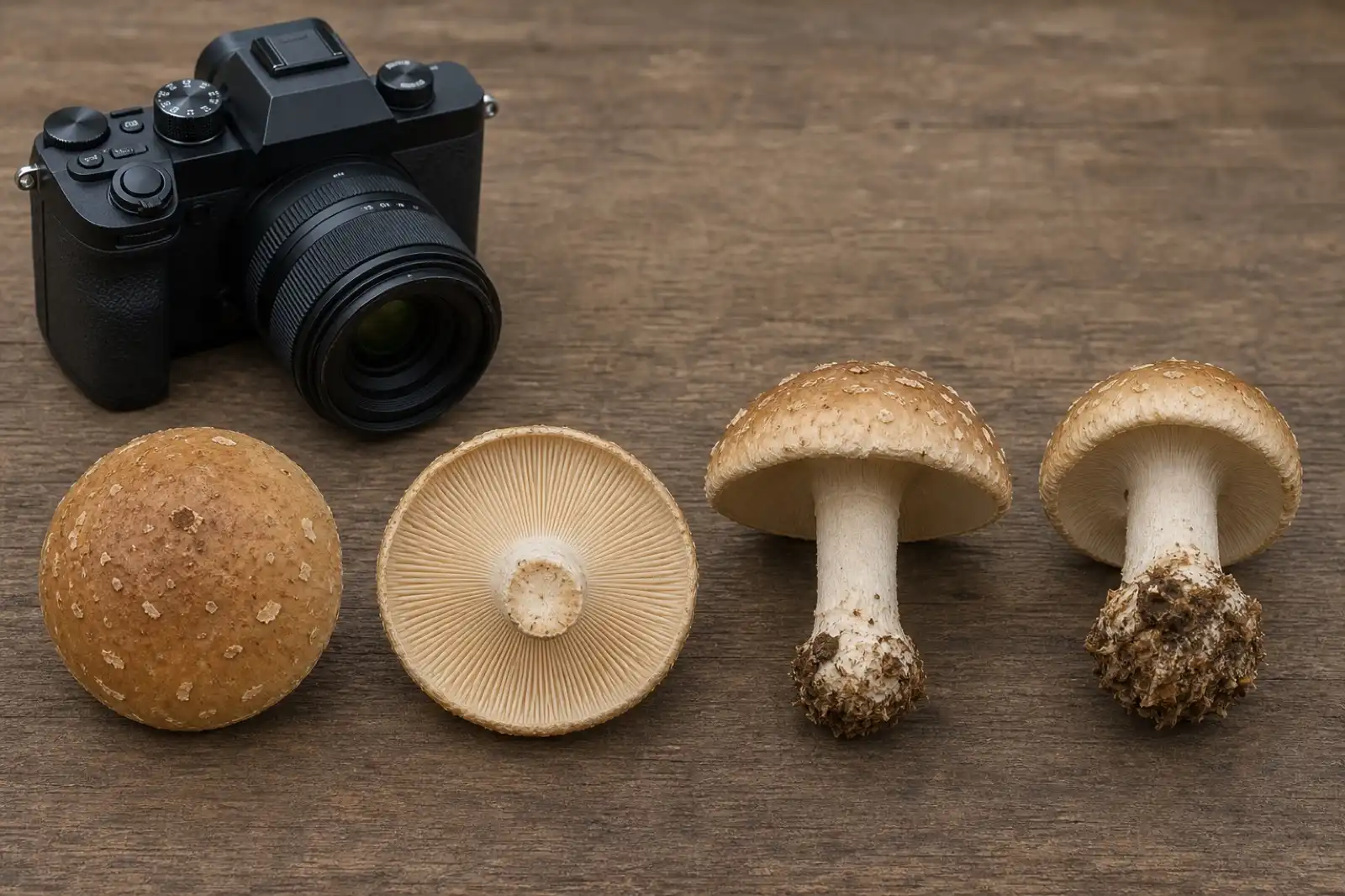
identification
Mushroom Photography Checklist for Identification
Capture the cap, underside, complete stem base, habitat, scale, and specimens at different ages before asking for identification help.
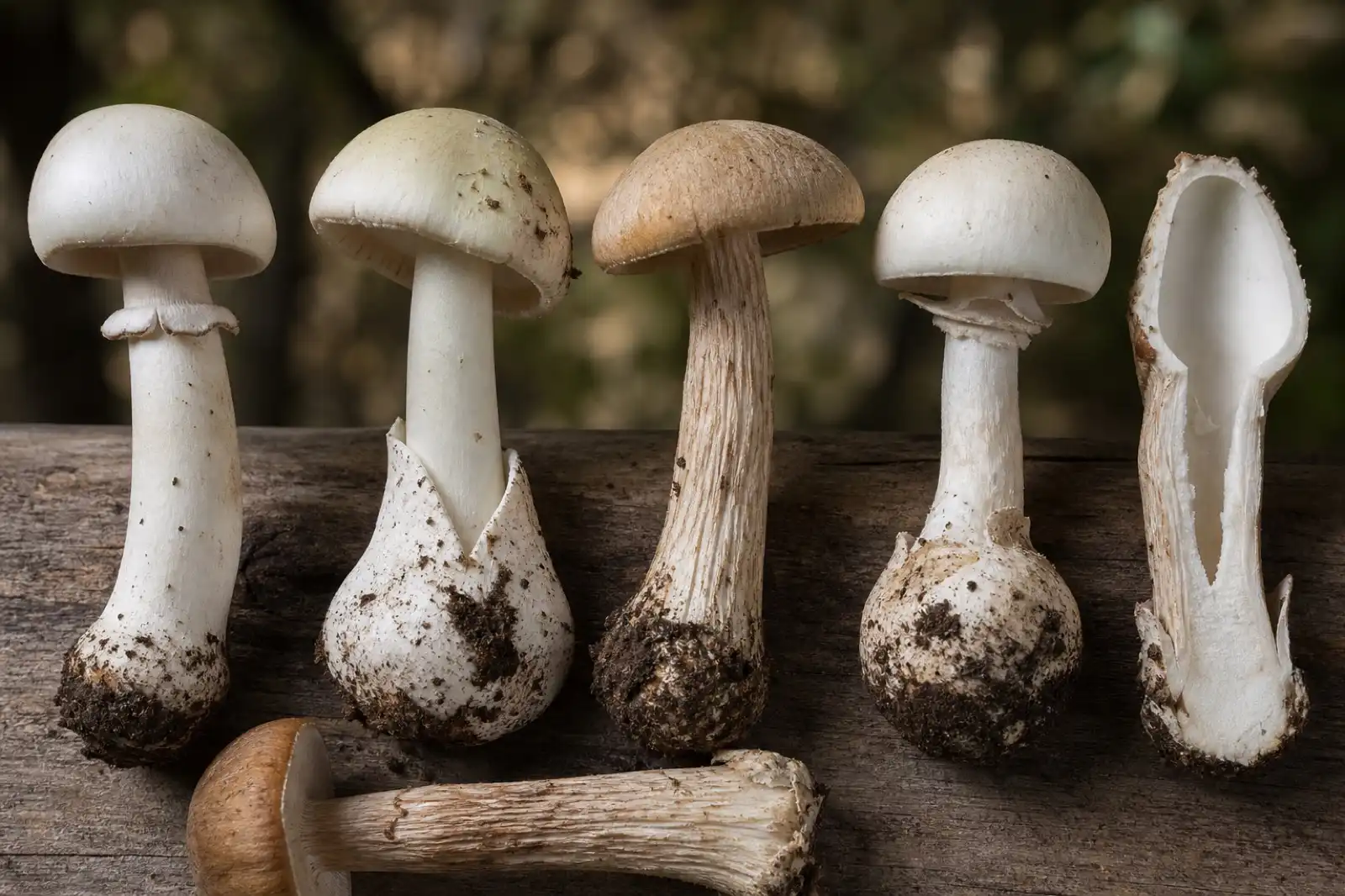
identification
Mushroom Stem Features: Rings, Volvas, Texture, and Base
Document mushroom stem shape, attachment, rings, volvas, buried bases, internal structure, bruising, and texture without using one feature to decide edibility.
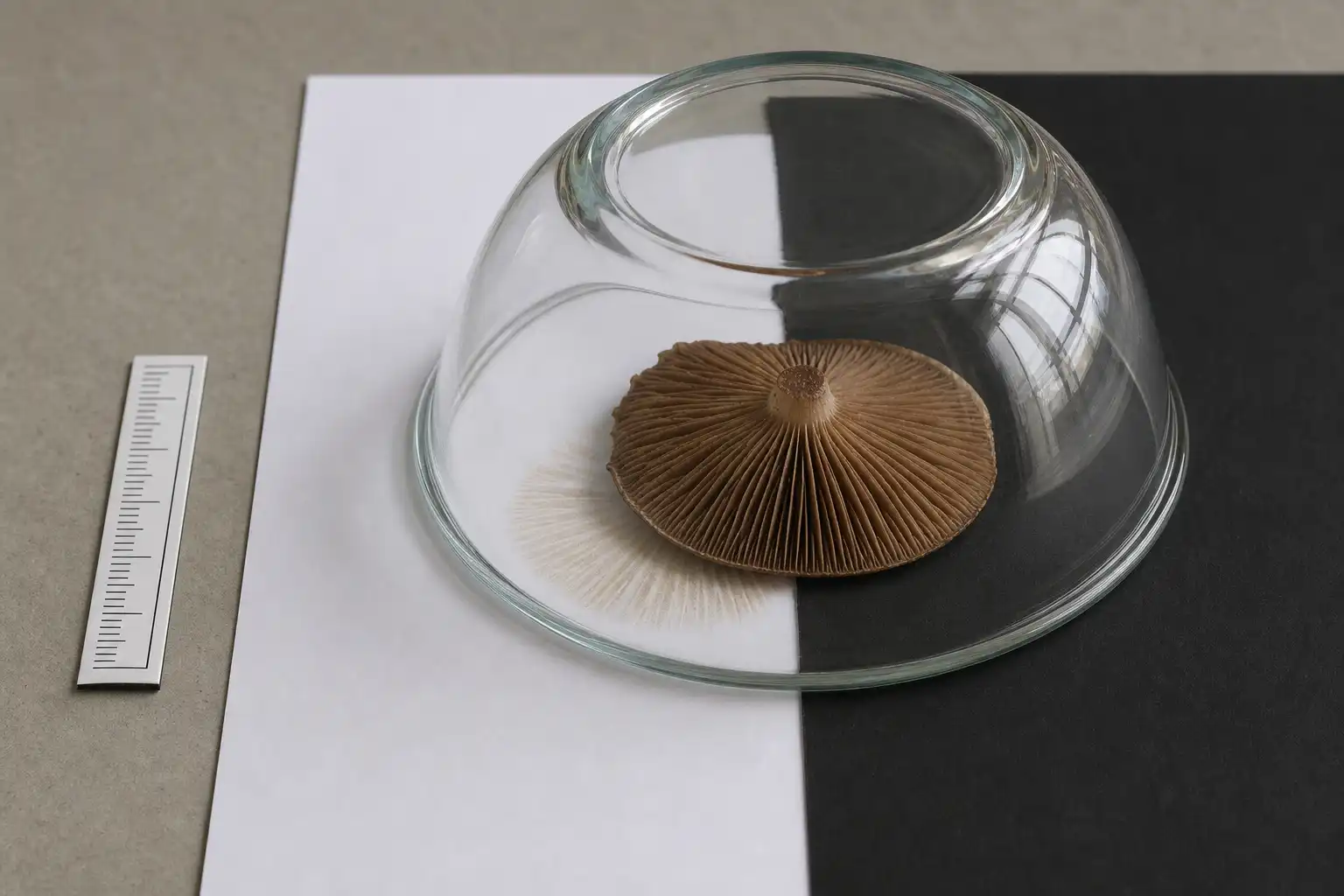
identification
How to Make and Read a Mushroom Spore Print
Make a controlled mushroom spore print, record the result clearly, and understand why a print supports—but never proves—an identification.
Continue exploring
Browse more practical guides in Identification or visit the mushroom encyclopedia.