Mushroom Encyclopedia
Beefsteak Fungus: Oak Ecology, Pores, and Lookalikes
Document beefsteak fungus by its red tongue-shaped brackets, separate tubes, pale pores, oak or chestnut host, white rot, and regional lookalikes.
By MushroomScope Editorial Team · · Updated
Species context
Treat profiles as reference material
Species profiles summarize documented traits, taxonomy, and lookalikes, but natural variation can be substantial.
Use the safety checklist →Decision limit
A profile cannot authenticate a specimen
Do not eat a wild mushroom from an online match, single feature, or generated image.
Read the safety disclaimer →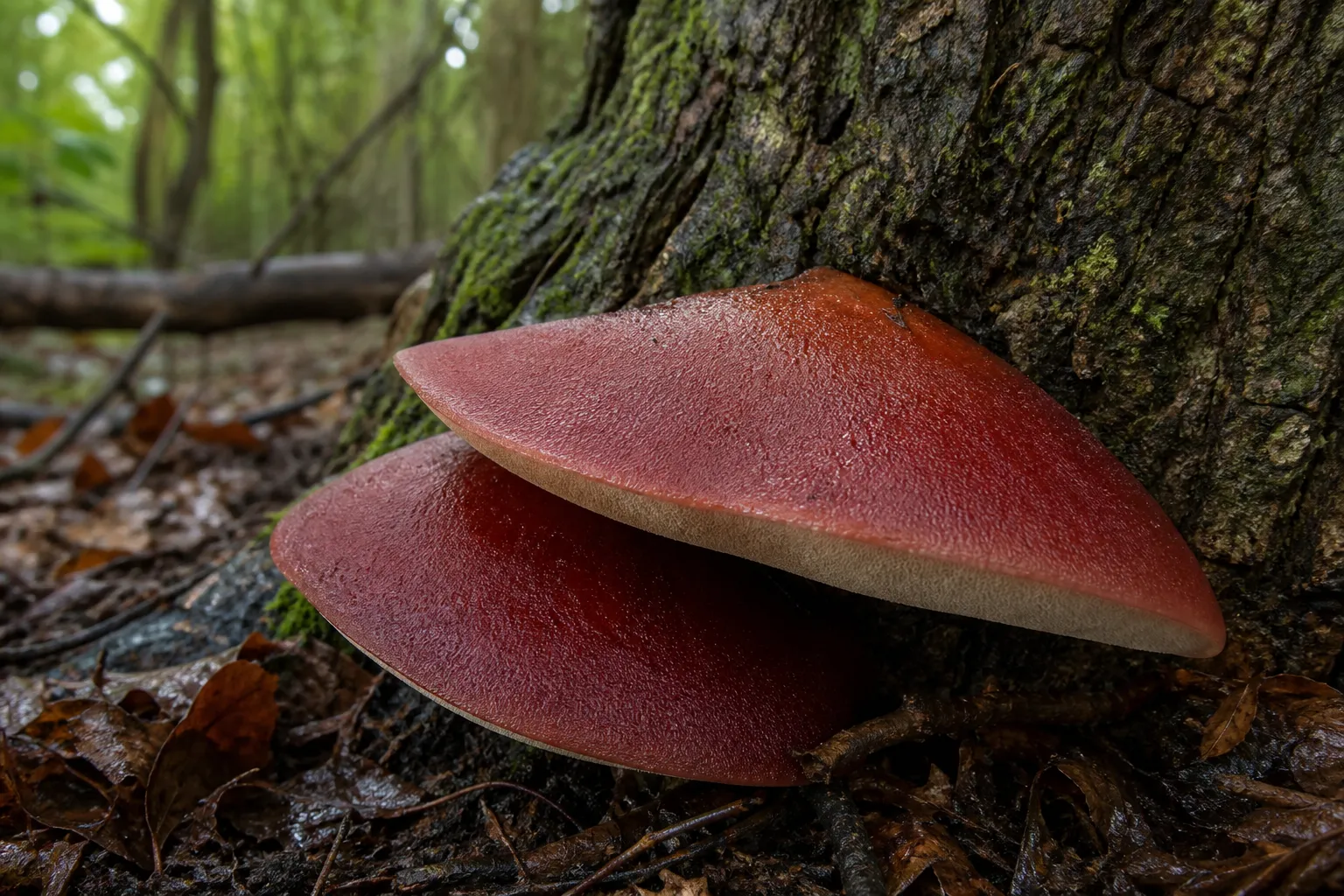
Quick facts
- Scientific name
- Fistulina hepatica
- Common names
- Beefsteak fungus, Ox tongue fungus, Beefsteak polypore
- Taxonomy
- Fistulina · Fistulinaceae
- Edibility context
- Conditional: Culinary use is reported for correctly identified young material, but a web page cannot approve a wild collection or determine freshness and contamination.
- Spore print
- Pale pinkish to whitish, with a print often difficult to obtain from an aging bracket.
- Toxicity context
- Unknown: No broad toxicity label replaces identification, spoilage assessment, host-site contamination review, cooking, and individual reaction precautions.
- Season
- August, September, October, November
- Growing difficulty
- Expert
- Regions
- Europe, temperate regions represented by verified occurrence data
Safety limit: These labels summarize documented context; they never authenticate a wild specimen. Cooking does not make a poisonous species safe.
Beefsteak fungus is memorable because a young bracket can look uncannily like a red tongue emerging from an old oak. That resemblance is useful for noticing the organism, not for naming it. A defensible record connects the soft red upper surface to a pale pore layer, fibrous section, actual hardwood attachment, region, season, and developmental stage.
This page treats Fistulina hepatica as a species account and tree-ecology guide. It is not a remote edibility decision or an arboricultural diagnosis. A fruit body demonstrates fungal reproduction at one location; it does not reveal the complete extent of decay or the mechanical stability of a tree.
Begin with the complete host attachment
Photograph the bracket before touching it. Include the trunk base, wound, cavity, stump surface, or exposed root from which it emerges. Record whether the host is alive, standing dead, or cut, and whether the fungus is attached to visible wood rather than soil over a buried root.
Oak and sweet chestnut are especially important in much European literature, but “near an oak” is not host proof. Trace the bracket to bark or exposed wood and document leaves, buds, fruit, and bark characters independently. The habitat identification guide gives a record structure that avoids assigning the nearest tree by assumption.
Read the upper surface across ages
Young fruit bodies can be bright red, moist, and softly bumpy, sometimes with small droplets. They expand into broad tongue-shaped or semicircular shelves and darken toward reddish brown. Rain may make a surface glossy, while dry weather can dull and crack it. Color alone is therefore unstable.
Measure width, projection, and thickness. Photograph a young and mature bracket if both are present. An old dark tough shelf may preserve the same overall outline while losing the juicy texture behind the common name. Do not force every brown bracket on oak into a youthful description.
Confirm pores instead of relying on a red cap
The fertile underside is pale cream to pinkish and covered with small round pores. In section, those pores lead into many short tubes. The tubes are notable because they remain comparatively distinct and can separate more readily than the tightly fused tube layer of many polypores.
Use a macro photograph with scale and side light. Record pore color, density, bruising, and whether the surface is damaged or insect grazed. Never infer pores from the outline of an AI cover or a distant field photograph. The underside is a required observation.
Section one permitted specimen
A longitudinal cut through young material can reveal thick pale fibrous flesh with red streaking and moisture. Reddish liquid may appear, reinforcing the beefsteak analogy. Record what actually happens rather than squeezing the fruit body until a dramatic result appears.
The section also shows attachment depth and the relationship between flesh and tubes. Note odor without tasting. As specimens age, flesh can toughen, darken, sour, or host larvae. Those changes affect condition and can obscure useful characters.
Treat spore color as supporting evidence
A mature fresh bracket may produce a pale deposit, but success is variable. Protect the pore surface over contrasting nonabsorbent material and avoid drafts. Photograph any deposit with neutral light. A failed print is not evidence of absent spores; immaturity, age, dryness, and damaged pores are common causes.
Microscopy can examine spore shape and other tissues, while DNA may be appropriate where species boundaries or geographic records are uncertain. Preserve a small dried voucher only when collection is legal and there is a real pathway to expert examination.
Separate fruit-body identity from tree condition
Fistulina hepatica is associated with brown discoloration and heartwood change in susceptible hosts. Wood altered by a fungus can differ in chemistry, density, moisture, and strength, but visible conk size does not translate directly into a failure probability. The USDA Wood Handbook explains why wood properties depend on species, direction, defects, moisture, and loading, not a single visual cue.
For a valued tree, document cavities, cracks, root disturbance, crown condition, lean, targets, and recent weather, then consult a qualified local arborist. Removing the bracket does not remove internal mycelium or reverse established decay. This boundary keeps a useful fungal observation from becoming unsupported tree-treatment advice.
Compare chicken-of-the-woods structurally
Young Laetiporus may be soft and tree-attached, but it usually forms overlapping shelves in yellow, sulfur, or orange tones. Its cut flesh and pore layer do not reproduce the red-streaked, tongue-like Fistulina combination. Faded or wet material can blur color expectations, so use structure and section rather than a palette match.
The chicken-of-the-woods guide focuses on its own species-complex and host-safety problems. Neither page should be used as a two-choice key because many additional brackets grow on hardwood.
Compare woody perennial brackets
Artist’s conk and other Ganoderma species are commonly harder and more corky or woody, often with zoned upper surfaces and brown spore deposits. Their tube layer behaves differently in section. The artist’s conk guide explains why a pale pore surface that marks brown is only one character.
Young Ischnoderma and other soft polypores can exude droplets, then become dark and zoned. Record consistency over time. “Bleeding bracket” and “red bracket” are descriptive search phrases shared by unrelated fungi, not scientific endpoints.
Map season without turning it into proof
Late summer and autumn are common fruiting periods in temperate reports. Rain, temperature, latitude, elevation, and host moisture alter the calendar. An old bracket may persist beyond its active growth window, while an unusually wet period can shift emergence.
Record date, recent rainfall, and whether the margin appears actively expanding. Compare with verified regional occurrence records rather than copying one continent’s month list into another.
Build a repeatable field record
- Photograph the whole tree or stump and surrounding habitat.
- Confirm the actual attachment and document the host independently.
- Measure multiple fruit bodies and show several ages.
- Photograph upper surface, margin, pores, attachment, and a legal section.
- Record texture, moisture, discoloration, odor, and insect damage.
- Attempt a spore deposit when material is suitable.
- Compare with a current regional key and retain uncertainty where evidence stops.
The identification safety checklist is especially useful when an evocative common name makes a specimen feel easier than it is.
Keep culinary history behind an identification gate
Young beefsteak fungus has a culinary history in parts of its range and is often described as acidic. That statement cannot approve an individual bracket. Similar fungi, age, bacterial spoilage, pollutants, pesticide exposure, animal contamination, and personal sensitivity remain separate variables.
Do not taste an unknown specimen to confirm sourness. If material has been identified in person by qualified local expertise and sourced legally from a clean site, use only fresh young portions, clean them under potable running water, refrigerate promptly, and cook thoroughly. Cooking is food handling, not an identification test and not a universal detoxification method.
Respond conservatively to symptoms
Gastrointestinal upset, allergy, contamination, and mistaken identity can overlap in early presentation. If illness follows wild mushroom consumption, contact local emergency services or a poison center promptly. Keep uncooked material, trimmings, photographs, preparation details, and meal timing for responders.
Do not wait for a web page to match symptoms, induce vomiting unless directed, or rely on a common name supplied by an app. NAMA’s syndrome overview supports communication but does not replace clinical assessment.
Cultivation is not a short home recipe
Unlike a fast oyster block, a tree-associated bracket involves authenticated culture, compatible woody substrate, slow colonization, and long fruiting horizons. A successful laboratory culture does not demonstrate a practical or safe household food-production method. Deliberately inoculating a living landscape tree would also create property and tree-health concerns.
Any experiment should use legally obtained authenticated material, contained dead substrate, documented strain provenance, and local biosafety judgment. The beginner growing guide is better suited to established saprotrophic crops with supplier-supported parameters.
Evidence and editorial limits
GBIF and NCBI support the accepted-name and lineage checkpoints. Host and season statements are bounded to verified regional records. The USDA wood reference supports general material-property limits, not a diagnosis of a tree photographed online. NAMA and FDA support emergency communication and handling of already verified produce.
The cover is original AI-generated editorial habitat context. It was checked against natural-light MushroomScope references for red tongue-shaped brackets, pale pores, oak attachment, crop, clarity, and absence of text or watermark. It is not a voucher specimen. No named mycologist, arborist, clinician, or chef reviewed this draft.
Read the separate tubes as a mechanical character
A clean vertical slice through a permitted specimen reveals why beefsteak fungus differs from many woody brackets. Its short tubes are individually separable rather than fused into a single corky layer, and the young context is soft and streaked rather than concentrically zoned wood. Photograph the slice beside a scale before drying. In an old, insect-damaged bracket this feature can collapse, so a poor section is missing evidence rather than a negative character.
Track color and exudate by age and location. Young upper surfaces may release reddish droplets, while mature material darkens and becomes tougher; neither “bleeding” nor a red cap is unique. Record the pore surface, tube layer, attachment and internal context from the same fruit body. Orange-yellow shelving with sulfur-colored pores redirects the comparison toward chicken-of-the-woods, while a hard perennial bracket with layered tubes requires a different polypore key.
Host evidence should include more than the nearest tree name. Photograph the exact attachment at an oak or sweet-chestnut base, note whether it emerges from a wound, stump, exposed root or apparently bare soil over buried wood, and record previous pruning or decay cavities. Fistulina hepatica is associated with brown rot, but one fruiting does not quantify remaining sound wood or predict failure. Repeat photographs can document recurrence; only a site inspection by a qualified arborist can assess structural risk.
Frequently asked field questions
Is reddish liquid unique to this species?
No. Exudation varies with age and moisture, and unrelated fungi can produce droplets. Combine it with pores, section, attachment, host, and regional evidence.
Does finding it mean the oak will fall?
No single fruit body establishes failure risk. A qualified arborist must integrate decay location, residual wood, roots, crown, defects, loading, and nearby targets.
Can a specimen grow from buried wood?
Yes. Apparent soil growth can trace to a buried root or stump. Expose only enough to document attachment without damaging the site.
Why are young and old specimens so different?
Water content, pigment, surface wear, tube development, microbes, and insects change the bracket as it matures. A series is more informative than one idealized portrait.
Should the common name be translated literally?
Use local common names as search aids, then anchor records to a scientific name and evidence. Food-like metaphors do not describe taxonomy or safety.
References
- Global Biodiversity Information Facility. Fistulina hepatica occurrence and taxonomy record. Used as a geographic-occurrence checkpoint, not as a complete regional identification key.
- National Center for Biotechnology Information. Fistulina hepatica Taxonomy Browser. Current lineage and name checkpoint.
- U.S. Department of Agriculture Forest Products Laboratory. Wood Handbook. General limits on inferring wood performance from one visible feature.
- North American Mycological Association. Mushroom Poisoning Syndromes. Emergency-response context; not a substitute for clinical care.
- U.S. Food and Drug Administration. Selecting and Serving Produce Safely. Handling context for already verified food material.
Editorial review: September 24, 2026. This revision added separate-tube anatomy, age-linked exudate records and attachment-scale host documentation. No named mycologist, arborist, clinician, or chef reviewed this page.
Source quality notes
MushroomScope cites sources that match the page scope, such as taxonomic databases, extension guidance, food-safety agencies, food-composition databases, and peer-reviewed or institutional health references. Sources support context and uncertainty; they do not turn an online page into specimen identification, medical advice, or a tested recipe record.
Frequently asked questions
Why is Fistulina hepatica called beefsteak fungus?
Fresh brackets can be red, moist, and fibrous when cut, but the common name is a visual analogy and does not establish identity, edibility, or condition.
Does beefsteak fungus have pores or gills?
It has a pale pore surface made from many short tubes that remain more individually separable than the fused tube layer of many other polypores.
Which trees host beefsteak fungus?
It is strongly associated with old oaks and sweet chestnut in much of its documented range, although a host record must include region and actual attachment evidence.
Can a red bracket on oak be identified from a photograph?
No. A useful determination also needs the complete attachment, pore surface, sectioned flesh, exudate, spore deposit, host evidence, region, age, and comparison with local taxa.
Is beefsteak fungus safe to eat?
Some regions have a culinary tradition, but this guide cannot clear a specimen. Identity, age, contamination, storage, local rules, allergy, and individual tolerance require separate checks.
Related guides
mushrooms
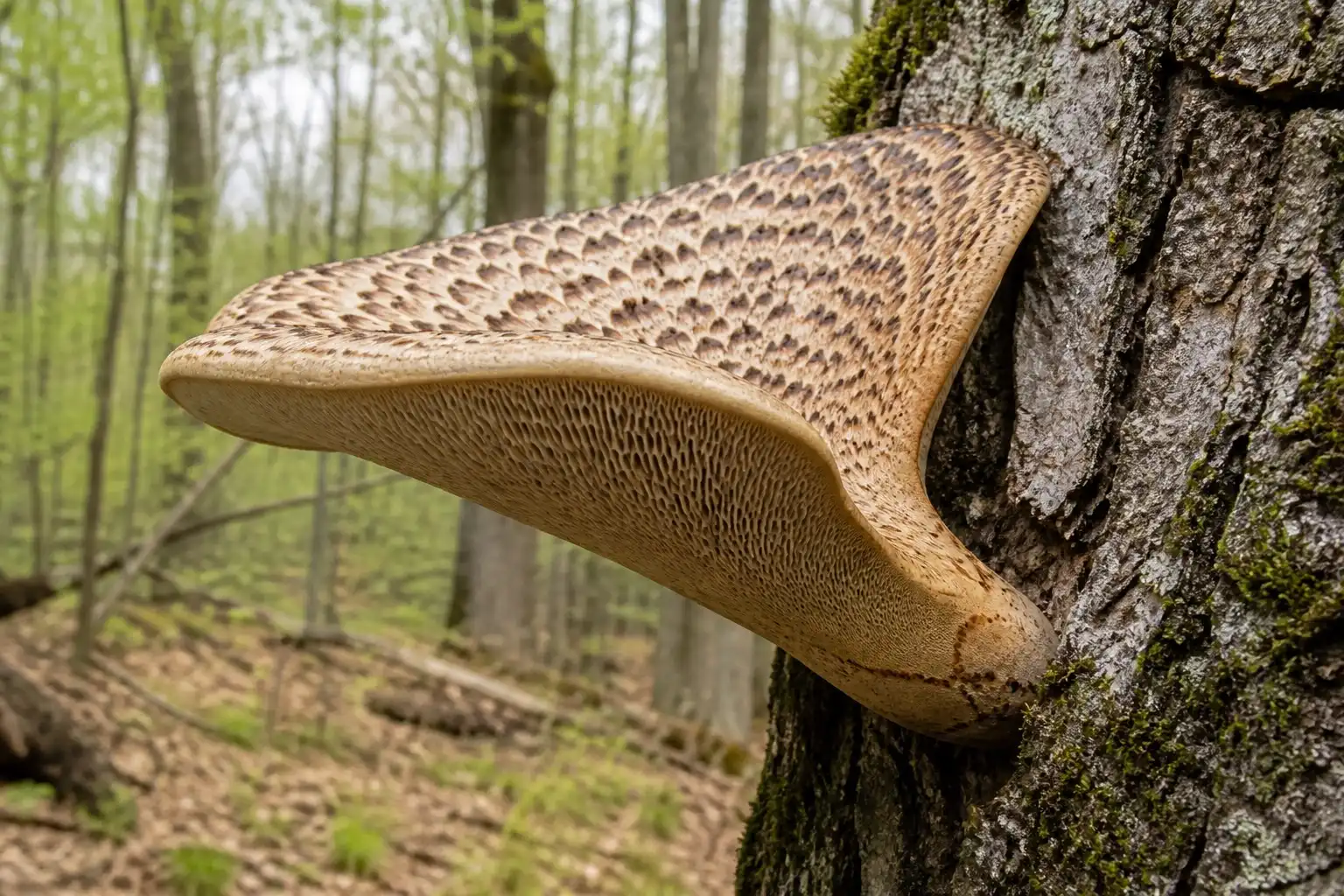
Cerioporus squamosus: Dryad’s Saddle Species Guide
Identify Dryad’s saddle by its scaly cap, broad pores, hardwood host, season, and safety limits; learn why a photo is not enough to clear a wild mushroom.
mushrooms
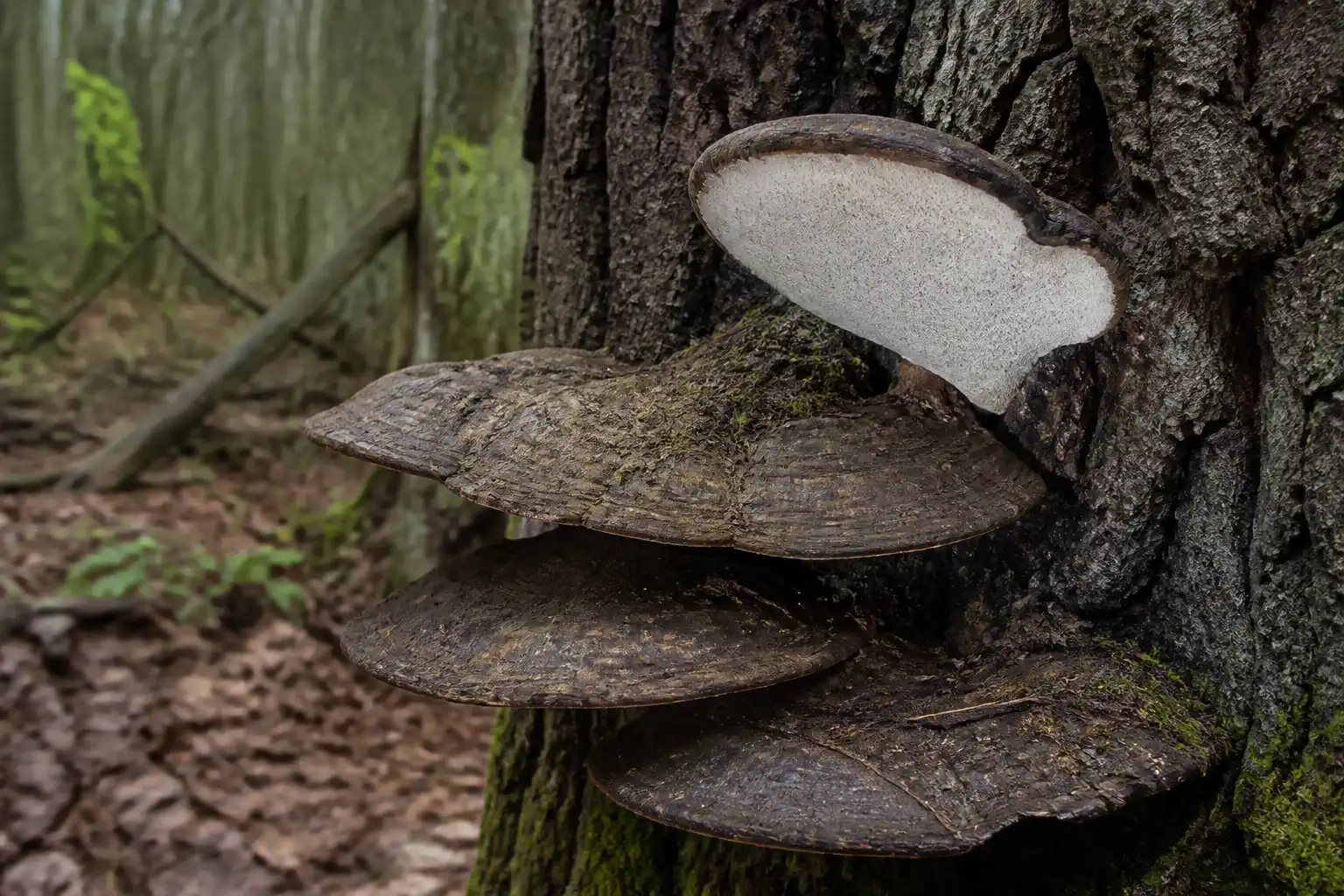
Ganoderma applanatum: Artist’s conk Species Guide
Learn Artist’s conk identification, habitat, season, lookalikes, safety, food context, and cultivation limits with current taxonomy and sources.
identification
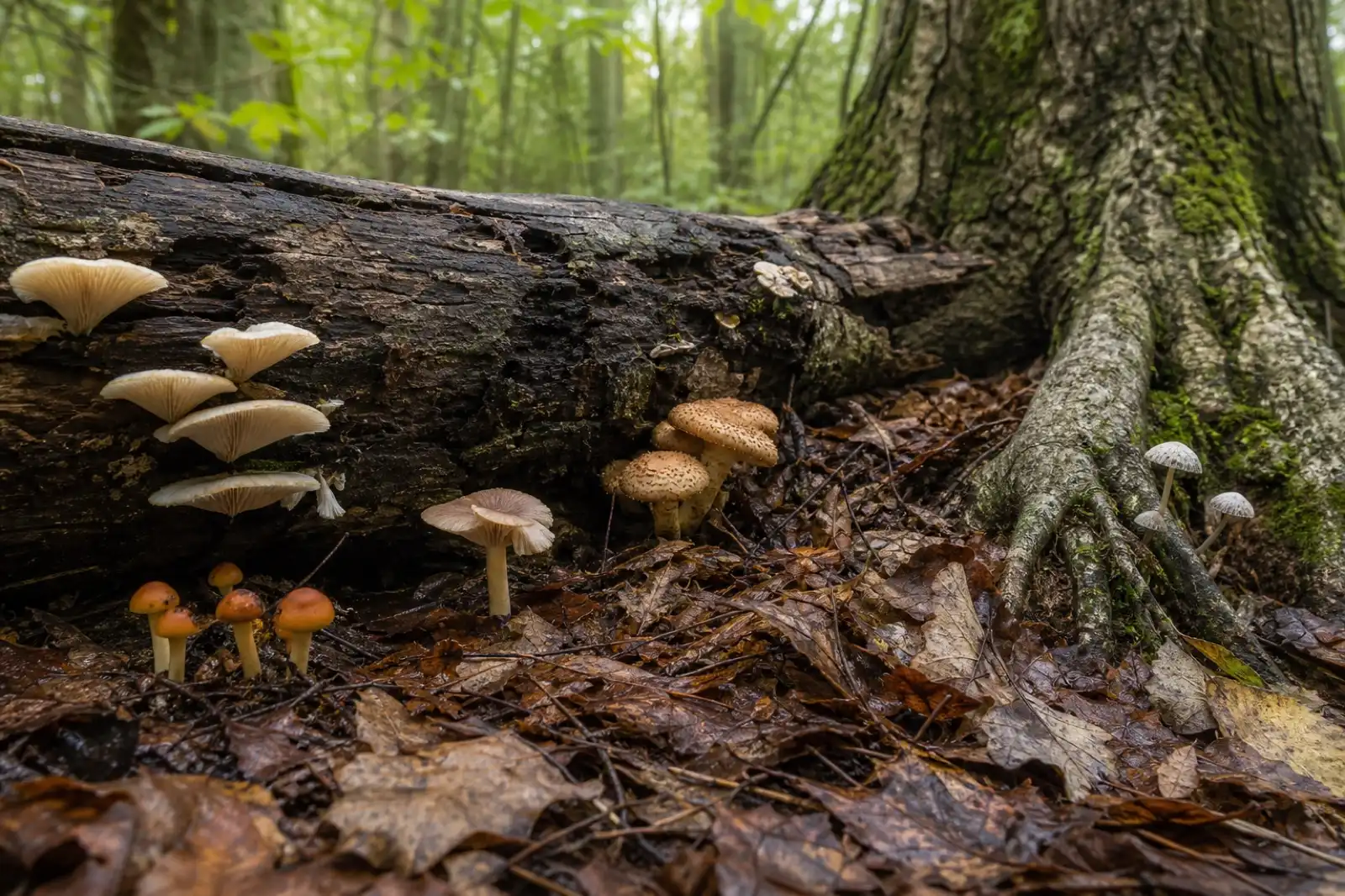
Using Habitat to Identify Mushrooms
Record substrate, associated plants, soil, wood type, moisture, elevation, and fruiting pattern as identification evidence.
Continue exploring
Browse more practical guides in Mushroom Encyclopedia or visit the mushroom encyclopedia.