Mushroom Encyclopedia
Ganoderma applanatum: Artist’s conk Species Guide
Learn Artist’s conk identification, habitat, season, lookalikes, safety, food context, and cultivation limits with current taxonomy and sources.
By MushroomScope Editorial Team · · Updated
Species context
Treat profiles as reference material
Species profiles summarize documented traits, taxonomy, and lookalikes, but natural variation can be substantial.
Use the safety checklist →Decision limit
A profile cannot authenticate a specimen
Do not eat a wild mushroom from an online match, single feature, or generated image.
Read the safety disclaimer →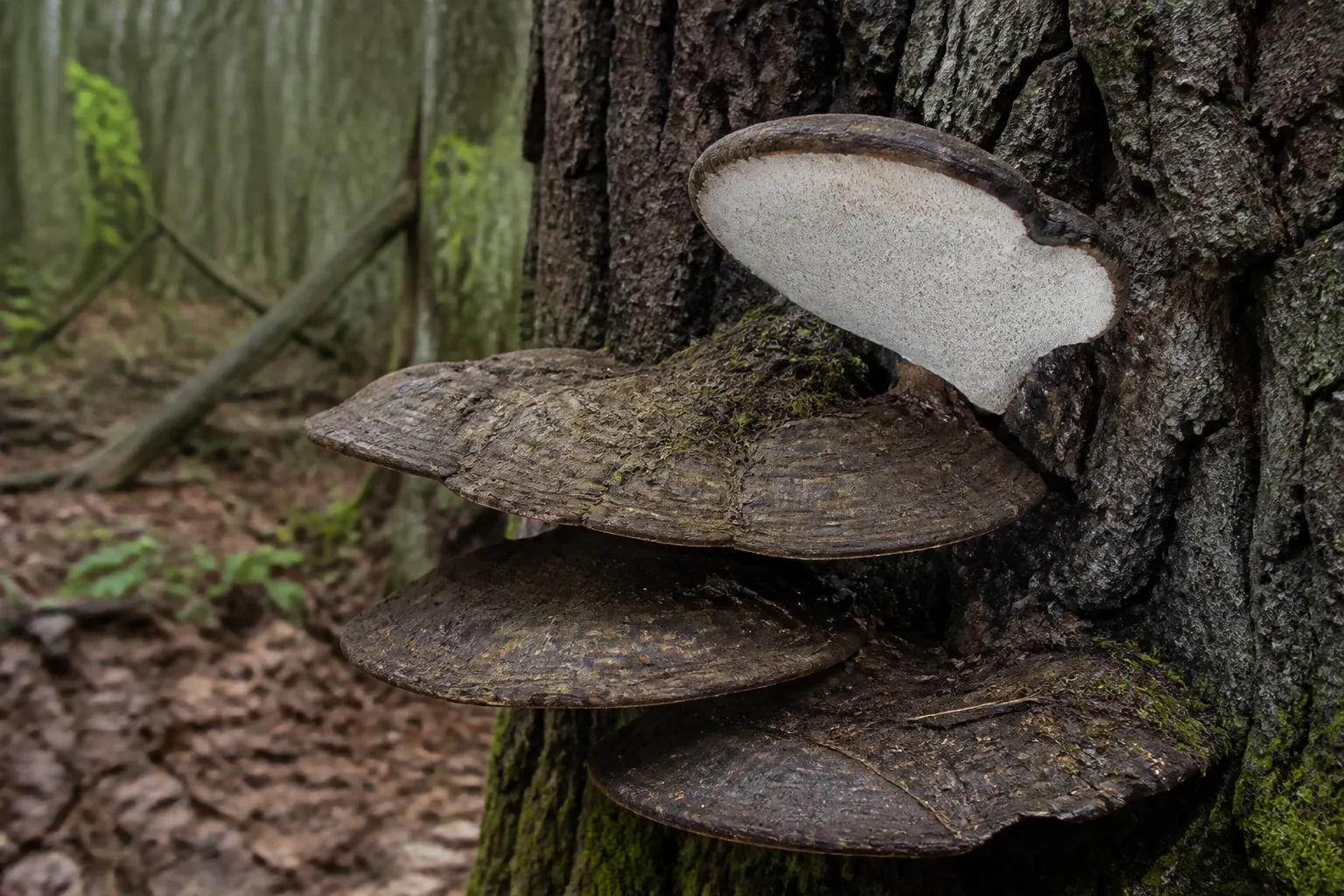
Quick facts
- Scientific name
- Ganoderma applanatum
- Common names
- Artist’s conk
- Taxonomy
- Ganoderma · Polyporaceae
- Edibility context
- Inedible: This database label is context, not remote clearance of a wild specimen; identity, preparation, spoilage, contamination, and individual reaction matter.
- Spore print
- Brown.
- Toxicity context
- Unknown: Risk includes misidentification and individual reaction. Consult current local toxicology guidance before any food decision.
- Season
- January, February, March, April, May, June, July, August, September, October, November, December
- Growing difficulty
- Not Cultivated
- Regions
- temperate regions worldwide
Safety limit: These labels summarize documented context; they never authenticate a wild specimen. Cooking does not make a poisonous species safe.
Identification overview
Large perennial shelf brackets with a dull brown crust and a white pore surface that bruises brown. Tiny white pores mark brown when scratched, inspiring the common name. Stem absent; attached broadly to hardwood. Corky to woody brown flesh. Observe several ages because rain, drying, insects, and decomposition can alter color and texture. Photograph the undisturbed growth, upper surface, fertile surface, complete attachment, and a lengthwise section. A brown. spore deposit is supporting evidence, never a species verdict.
Habitat and season
A widespread decomposer and pathogen on dead or weakened hardwood. The documented range represented here includes temperate regions worldwide. Typical substrates or settings include hardwood stumps and logs and living hardwood. Fruiting records commonly occur in January, February, March, April, May, June, July, August, September, October, November, December, but latitude, elevation, rainfall, and host condition shift the calendar.
Host condition changes the meaning of this perennial bracket. Record whether the conk is attached to a living trunk, standing snag, stump, or fallen log; identify the hardwood from bark, buds, leaves, or twigs when possible; and measure attachment height and orientation. On a living tree, note cavities, cracks, crown decline, and nearby targets without claiming that the bracket alone predicts structural failure.
Similar species
- Ganoderma australe — a similar bracket requiring microscopic and geographic evidence.
- Ganoderma brownii — a regional lookalike with overlapping macroscopic characters.
The comparison set should include the dull versus varnished upper crust, whether the pale pore surface bruises brown, context color, visible tube layering, pore density, host, and geography. G. australe and G. brownii can overlap strongly in field appearance, so a regional determination may require measured basidiospores or sequence-backed specialist work. A scratched white underside by itself establishes neither species nor safe use.
Food and safety context
Artist’s conk is not treated here as a culinary mushroom. Do not taste it or infer safety from traditional use, tea marketing, or the absence of an obvious warning label. Individual allergy, gastrointestinal intolerance, spoilage, environmental contamination, and cross-contamination remain possible. Cooking does not make a poisonous species safe.
Because this woody conk is not presented as food, tasting or simmering an uncertain bracket adds risk without resolving identity. If any wild fungal preparation has been consumed and symptoms develop, contact emergency services or a poison center promptly. Retain the dry bracket, preparation, product label, host photographs, amount used, and symptom timeline for professional review.
Cultivation context
Growing a perennial Ganoderma fruit body for study is different from producing a culinary oyster crop. A credible culture record needs authenticated material, the exact wood or formulated substrate, sterilization method, inoculation date, incubation conditions, and evidence that the resulting bracket matches the culture. Wild tissue can carry other fungi and bacteria, and a successful-looking brown shelf does not authenticate the species or make a home extract suitable for use.
How to document a find
- Photograph the complete tree or log and assign the bracket a position, height, and observation number.
- Measure bracket width, projection, thickness, and attachment; record dull, cracked, algal, or varnished areas separately.
- Photograph an untouched pale pore zone, then one labeled light scratch with elapsed time.
- Use a naturally broken or permitted sample to record context thickness, tube-layer count, pore density, and brown spore dust.
- Compare the measurement set with a current regional Ganoderma treatment and preserve a voucher if microscopy or sequencing is needed.
Read the bracket as a perennial structure
Artist’s conk is a perennial polypore, so one fruit body can preserve several years of growth. A fresh growing margin is usually pale and rounded, while older upper surfaces become dull brown to gray-brown, cracked, furrowed, or coated with algae. Concentric zones may be visible, but weather can blur them. The bracket is broadly attached to wood rather than supported by a conventional stem. Mature shelves can become large and heavy, and several may overlap on the same trunk.
The lower surface provides the common name’s most familiar clue. When fresh, it is whitish and covered with minute pores. Gentle pressure or a light scratch damages the pore surface and produces a brown mark. Artists have used that reaction to make drawings, but the reaction is not unique enough to identify the species. Old pore layers may already be buff, dirty, insect-marked, or darkened by handling, leaving little clean white surface to test.
Cut structure is useful when collection is legal. A lengthwise section should show tough, corky-to-woody brown context and stacked annual pore layers in an established bracket. Record the number and thickness of visible tubes rather than assuming each line represents exactly one calendar year; growth can respond irregularly to climate and injury. The absence of a soft cap-and-stem anatomy helps place the specimen among perennial brackets, but microscopy and geographic context may still be necessary within Ganoderma.
Separate field characters from the name
The name Ganoderma applanatum has been applied broadly in older field literature. Taxonomic databases provide a useful current record, yet visually similar members of the genus occur in different regions. Ganoderma australe is an especially important comparison in many treatments, and G. brownii enters the discussion in western North America. Macroscopic overlap means that a flat brown shelf and bruising white pores are a starting hypothesis, not a universal species diagnosis.
Document characters that can later be checked against a regional key: host species when known, geographic region, bracket dimensions, thickness of the context, color and depth of tube layers, pore density, upper-surface texture, and the presence or absence of a varnished crust. A ruler placed in the same plane as the pores makes close photographs more useful. If a specimen is retained for study, label it with the same date and observation number used for the photographs.
Spores can accumulate as rusty-brown dust on the top of brackets below or even on nearby bark. That deposit can look surprising because spores are released from the underside and carried by air currents. Brown spore dust supports placement in a brown-spored bracket group but does not distinguish G. applanatum from close relatives. Microscopic spore size and ornamentation may be needed, and a competent identifier should explain which regional concept is being applied.
Compare the most relevant bracket lookalikes
Reishi or varnished Ganoderma species often develop a lacquered red-brown surface, sometimes with a stem-like attachment, whereas artist’s conk is typically dull rather than conspicuously varnished. This contrast weakens in old, dirty, or weathered material. Tinder fungus, Fomes fomentarius, commonly forms a gray hoof with a hard zoned crust and does not offer the same clean white drawing surface. Other perennial polypores can produce broad shelves and layered tubes, so color alone is unreliable.
The strongest comparison uses the complete combination of surface finish, pore behavior, internal context, tube layers, host, and region. Avoid comparisons based on internet thumbnails, which often omit the underside and may carry outdated names. Also avoid turning a tentative field label into a health or preparation recommendation. Even a correct genus-level identification does not establish that a tea, powder, or extract contains the named species or is suitable for a particular person.
Ecology, host condition, and tree care
Artist’s conk decomposes hardwood and can occur on dead logs, stumps, or living trees with internal decay. A fruit body on a living tree does not by itself show how much sound wood remains or predict when failure will occur. Root condition, trunk cavities, crown health, wind exposure, and the location of decay all matter. When a large bracket appears on a tree near a building, path, campsite, or play area, a qualified arborist can assess structural risk; removing the visible bracket does not remove decay inside the tree.
For an ecological record, note whether the host is alive, declining, standing dead, or fallen. Photograph bark, leaves or buds when available, the height and side of attachment, surrounding roots, and other brackets on the same tree. Avoid cutting deeply into a living tree merely to identify the fungus. On public or protected land, follow collection rules and prefer photographs or naturally detached material.
Old brackets are microhabitats. Beetles and other invertebrates may tunnel through the context, while algae and moss colonize the upper surface. These changes are not defects in an ecological observation, but they can obscure diagnostic characters. Record which features appear fresh and which are altered. A series of photographs across seasons can show the pale margin expanding, the pore surface renewing, and older layers weathering.
Why traditional use is not clinical evidence
Artist’s conk appears in accounts of traditional material use and in modern product marketing. Those contexts do not establish that a home preparation prevents or treats disease. A laboratory result involving an isolated compound or cell culture cannot be translated directly into an effective human dose, and products sold under broad Ganoderma labels may differ in species, fungal part, extraction method, concentration, and contaminants.
This article therefore does not provide tea, tincture, or supplement instructions. People who are pregnant, preparing for surgery, managing chronic illness, or taking medicines should discuss concentrated fungal products with a qualified healthcare professional. Anyone evaluating a commercial product should look for an identified species, lot information, ingredient amounts, contaminant testing, and claims that do not promise diagnosis, cure, or guaranteed benefit.
The woody texture also makes artist’s conk unsuitable as an ordinary culinary mushroom. Do not treat “not known as a classic poisonous mushroom” as equivalent to edible, palatable, or medically appropriate. Wild brackets can contain insects, mold, environmental contaminants, or other fungi, and an online article cannot authenticate the material in hand.
A conservative verification workflow
Begin with a broad label such as “perennial Ganoderma-like bracket.” Confirm that the underside has pores rather than gills, then document whether a fresh white area bruises brown. Add the dull upper crust, broad attachment, woody brown section, layered tubes, hardwood substrate, and regional range. Next, compare varnished Ganoderma, G. australe, G. brownii, Fomes fomentarius, and locally common perennial polypores with a current regional key.
If the record is being published, state the confidence level and the evidence still missing. A responsible caption might say that the observation is consistent with artist’s conk but requires microscopy for separation from a regional relative. That wording retains educational value without implying a certainty that the available evidence cannot support. Never use an editorial illustration, bruising test, or automated image match as the sole basis for a food or health decision.
Contrast perennial and soft annual brackets
The beefsteak fungus guide demonstrates how a soft annual bracket with separable tubes differs from a woody perennial conk with layered tube years.
References
- Global Biodiversity Information Facility. Ganoderma applanatum species record. Taxonomic backbone and occurrence context.
- National Center for Biotechnology Information. NCBI Taxonomy Browser. Independent lineage and nomenclature checkpoint.
- North American Mycological Association. Mushroom Poisoning Syndromes. Poisoning response and syndrome context.
- U.S. Food and Drug Administration. Selecting and Serving Produce Safely. General handling guidance for mushrooms used as food.
- U.S. Forest Service. Forest insect and disease guide: artist’s conk. Host, morphology, pore bruising, internal structure, decay, and tree-risk context.
Editorial review updated September 27, 2026. The revision added host-condition, perennial-tube, field-measurement, and product-equivalence boundaries; regional taxonomy and poison-response contacts still require periodic checking.
Source quality notes
MushroomScope cites sources that match the page scope, such as taxonomic databases, extension guidance, food-safety agencies, food-composition databases, and peer-reviewed or institutional health references. Sources support context and uncertainty; they do not turn an online page into specimen identification, medical advice, or a tested recipe record.
Frequently asked questions
Can Artist’s conk be identified from one photograph?
No. Identification requires the complete specimen, fertile surface, attachment, substrate, habitat, region, developmental stage, and sometimes microscopy or DNA.
Is wild Artist’s conk safe to eat?
This page cannot clear a wild specimen for food. Obtain in-person confirmation from a qualified local identifier and follow local guidance; cooking cannot make a poisonous lookalike safe.
Where does Artist’s conk grow?
A widespread decomposer and pathogen on dead or weakened hardwood. Regional records and host associations should be checked before applying this summary to a local collection.
What is the spore print of Artist’s conk?
The expected deposit is brown., but print color overlaps among fungi and cannot confirm this species by itself.
Can Artist’s conk be cultivated at home?
It is not a simple beginner crop; use authenticated commercial material and species-specific professional guidance rather than wild tissue.
Related guides
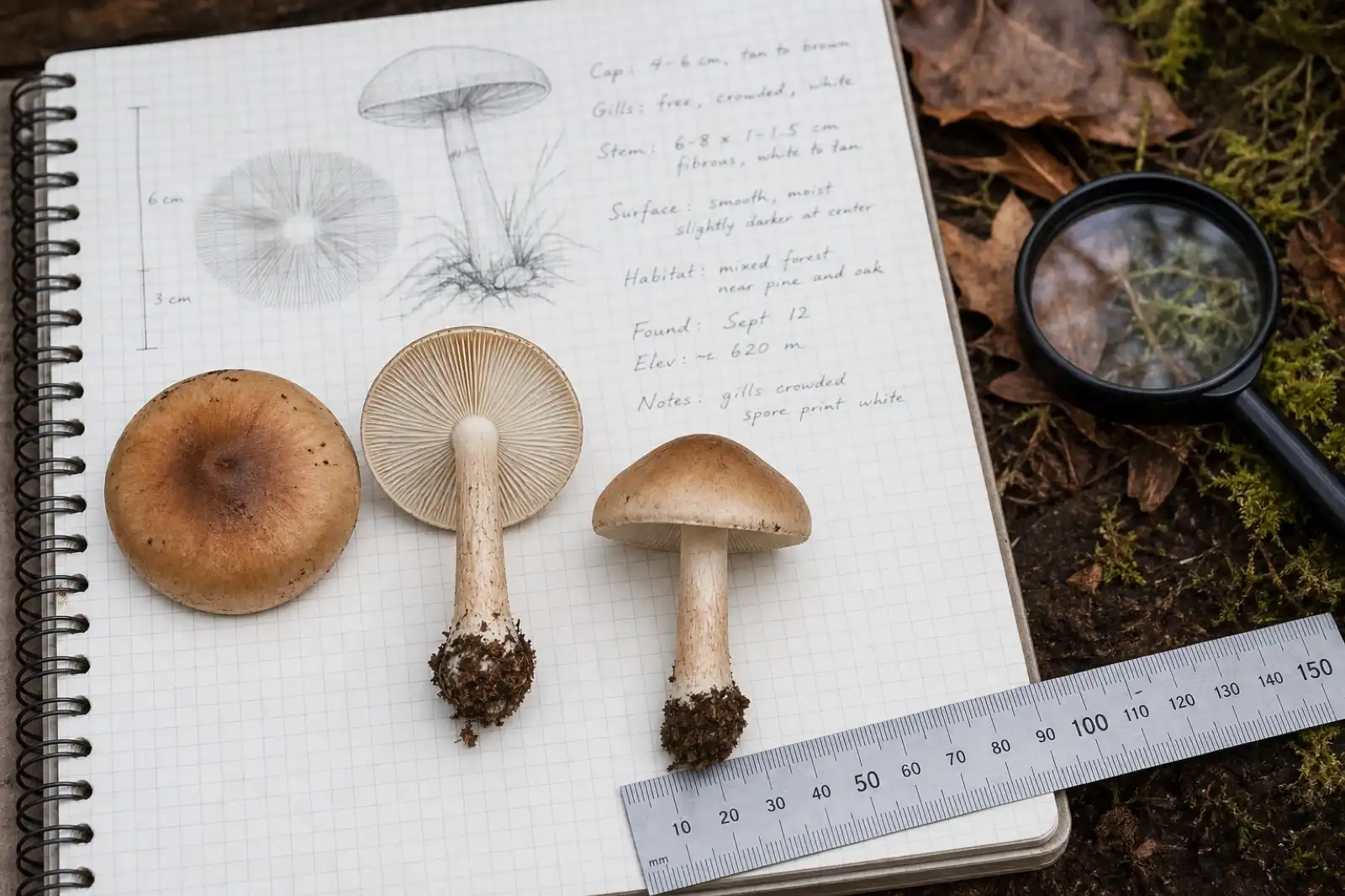
identification
How to Identify Mushrooms: A Beginner's Field Guide
Build an identification from the whole specimen, substrate, habitat, spore deposit, and location—not from a single photograph.
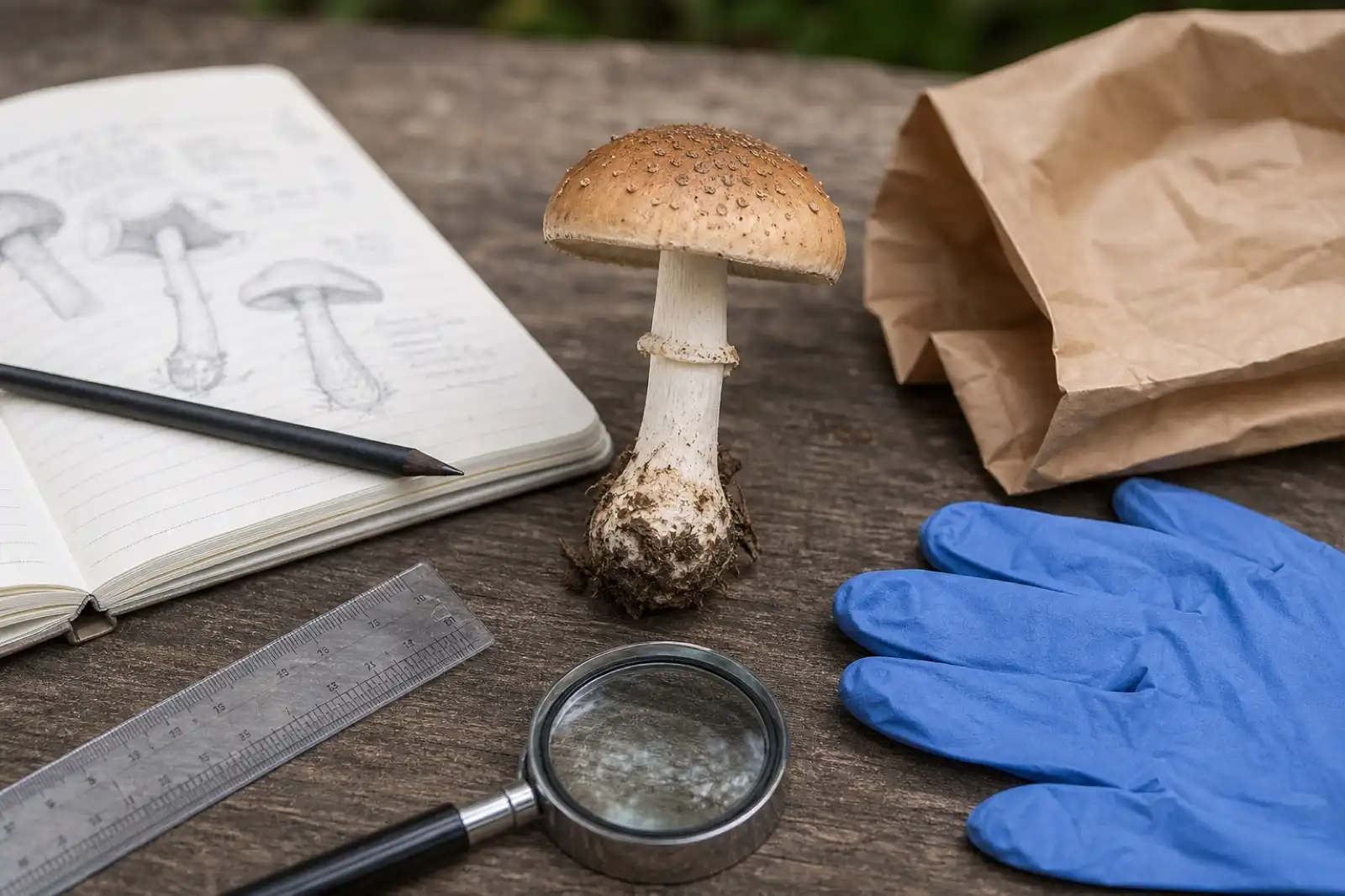
identification
Mushroom Identification Safety Checklist
Use a conservative checklist before handling, documenting, or discussing any wild mushroom, especially when edibility is being considered.
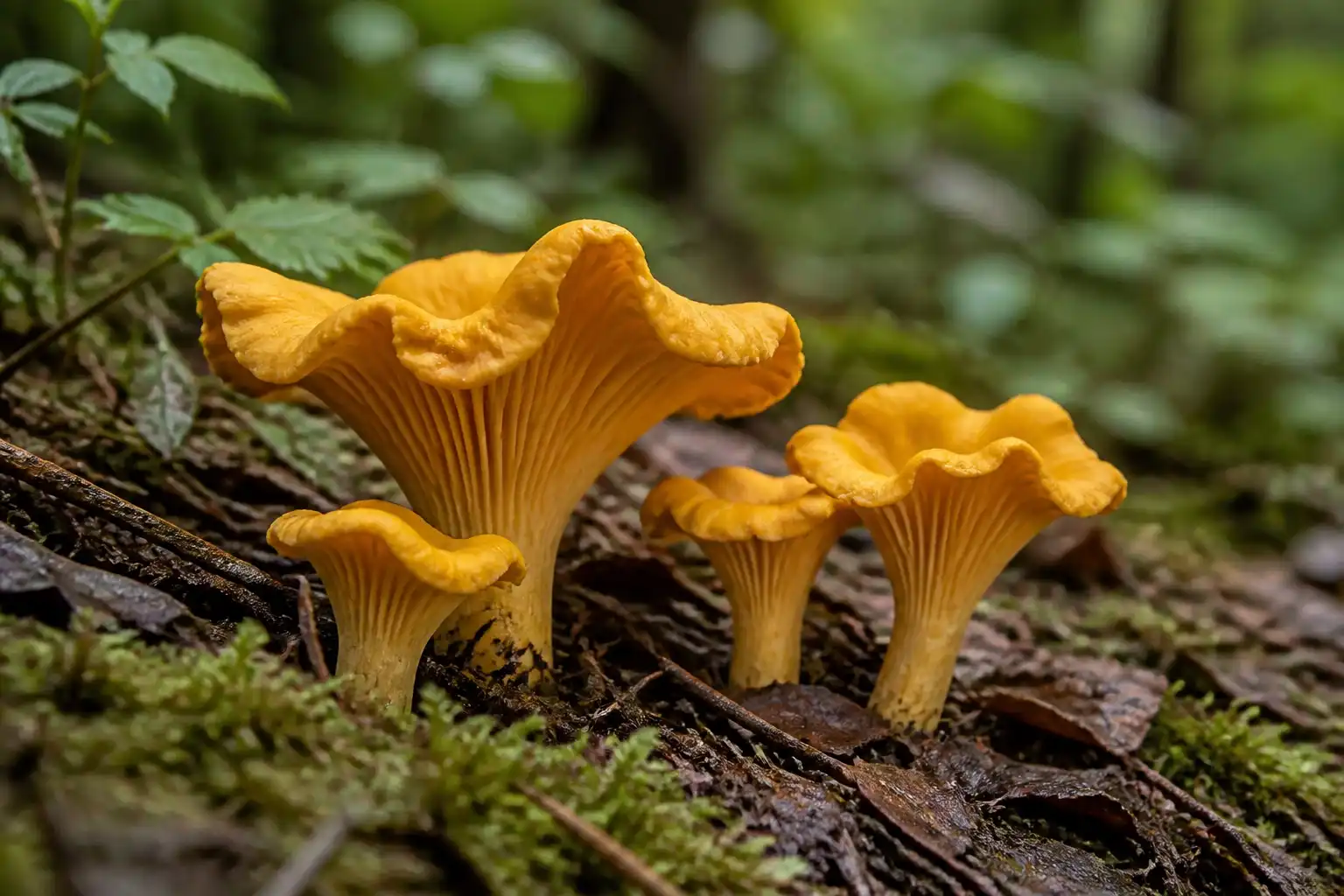
mushrooms
Cantharellus cibarius: Chanterelle Identification Guide
Learn chanterelle identification, false gills, habitat, season, poisonous lookalikes, edibility, nutrition, and why wild finds need local verification.
Continue exploring
Browse more practical guides in Mushroom Encyclopedia or visit the mushroom encyclopedia.