Mushroom Encyclopedia
Tinder Fungus: Perennial Brackets, Birch Ecology, and Amadou
Understand tinder fungus hoof-shaped brackets, perennial pore layers, birch and beech ecology, similar conks, decay, amadou history, and safety limits.
Species context
Treat profiles as reference material
Species profiles summarize documented traits, taxonomy, and lookalikes, but natural variation can be substantial.
Use the safety checklist →Decision limit
A profile cannot authenticate a specimen
Do not eat a wild mushroom from an online match, single feature, or generated image.
Read the safety disclaimer →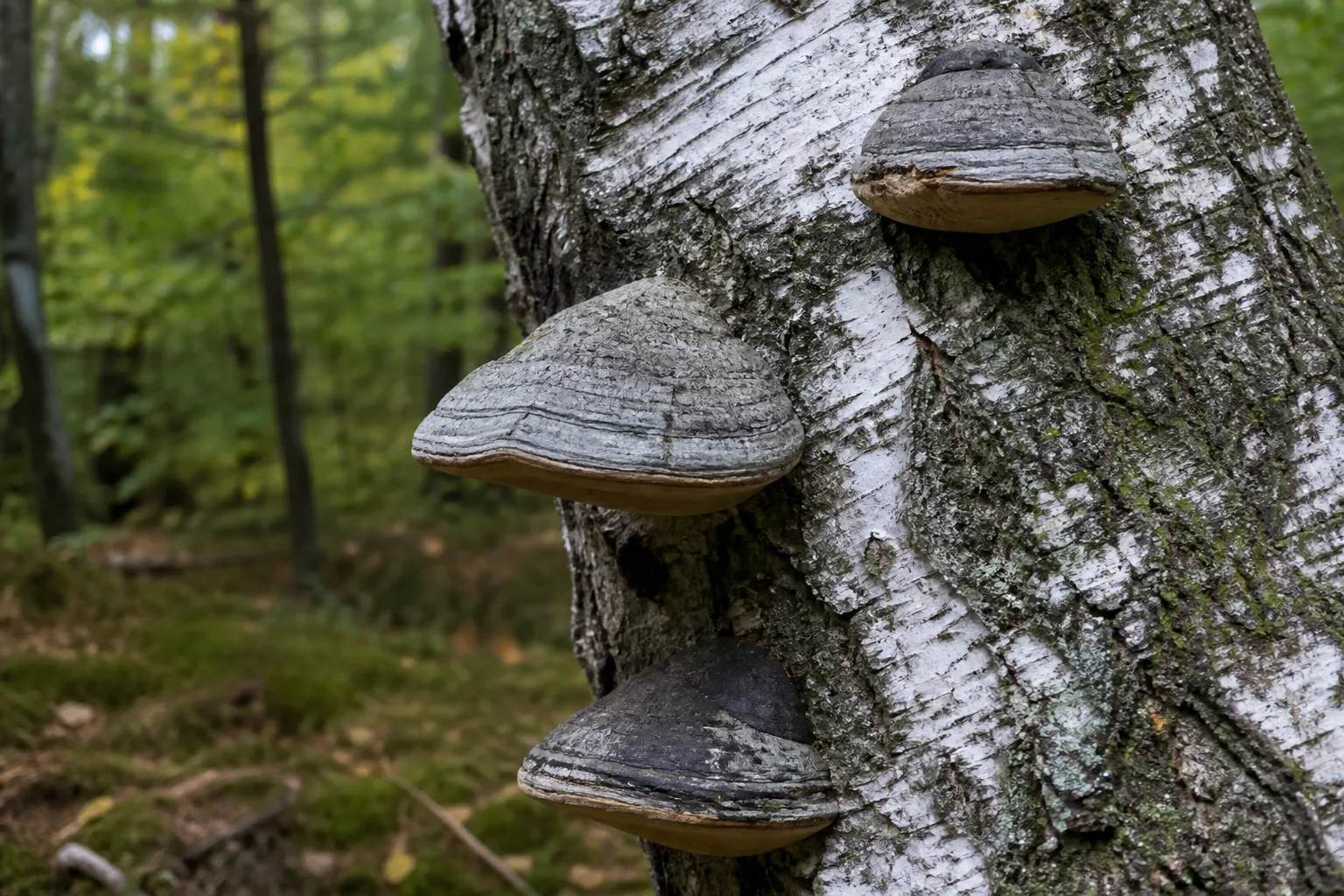
Quick facts
- Scientific name
- Fomes fomentarius
- Common names
- Tinder fungus
- Taxonomy
- Fomes · Polyporaceae
- Edibility context
- Inedible: This database label is context, not remote clearance of a wild specimen; identity, preparation, spoilage, contamination, and individual reaction matter.
- Spore print
- White.
- Toxicity context
- None Known: Risk includes misidentification and individual reaction. Consult current local toxicology guidance before any food decision.
- Season
- January, February, March, April, May, June, July, August, September, October, November, December
- Growing difficulty
- Not Cultivated
- Regions
- Europe, Asia, North America
Safety limit: These labels summarize documented context; they never authenticate a wild specimen. Cooking does not make a poisonous species safe.
Identification overview
Tinder fungus produces a hard, broadly attached bracket that often develops a hooflike profile. The upper crust is gray and concentrically zoned; the lower surface carries fine pores, with fresh growth paler than old weathered tissue. Internally, a hard crust overlies brown fibrous context and stacked tube layers. Photograph the host, side profile, lower pore surface and attachment. A white spore deposit may collect below an active bracket but is not a stand-alone identification.
Habitat and season
The perennial brackets persist through the year on living, standing-dead and fallen hardwoods. Birch and beech are especially important hosts across much of the documented range, but host frequency changes by region. Because the visible conk is only the reproductive structure, record crown condition, wounds and wood defects without claiming the bracket reveals the exact extent or mechanical consequence of internal decay.
For a perennial conk, the tree is part of the specimen record. Identify the host when bark, buds or leaves allow it; record living, standing-dead or fallen condition and the bracket’s height and orientation. Do not cut into a living tree merely to expose internal layers.
Similar species
- Phellinus species — often darker and differently textured perennial brackets.
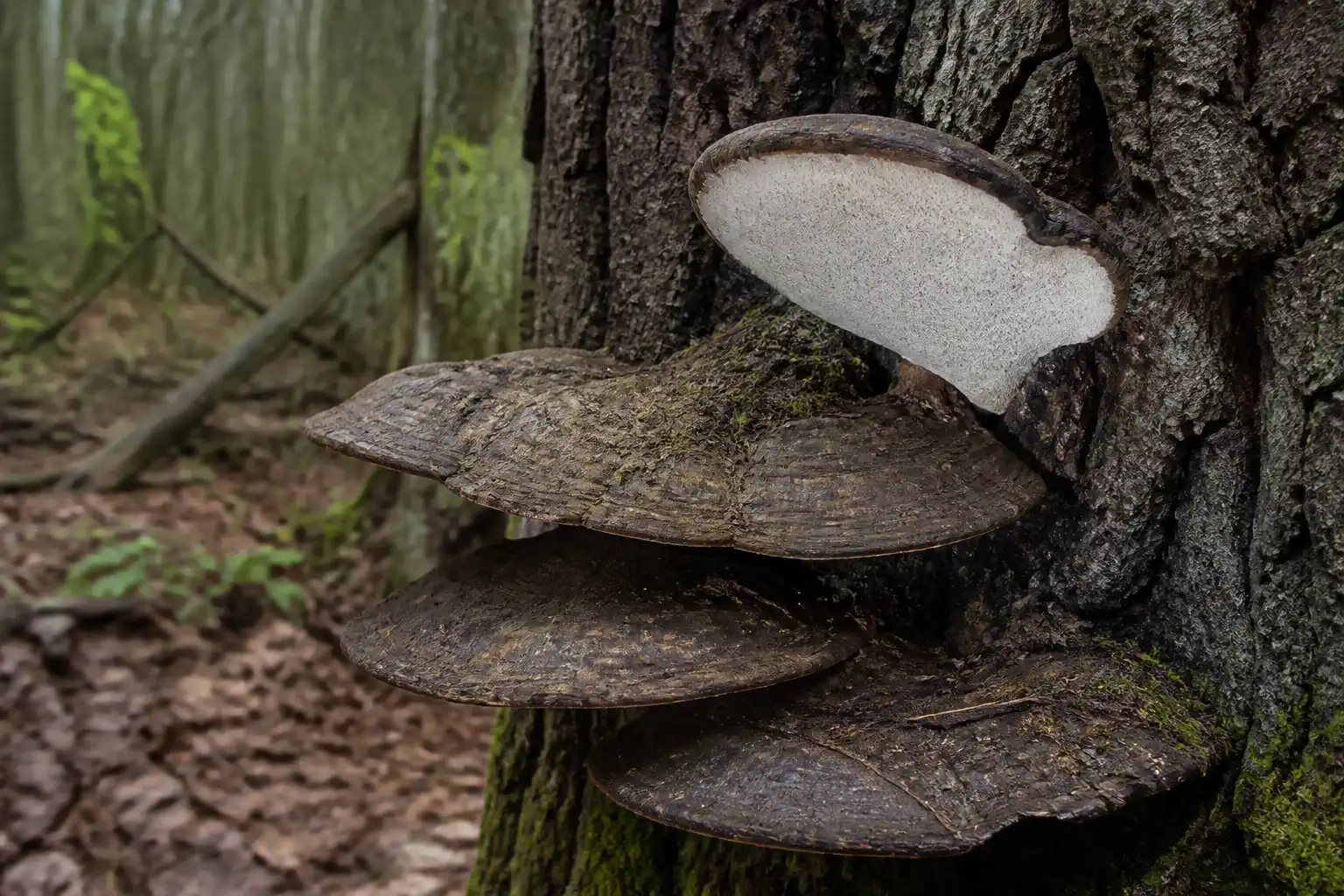
- Ganoderma applanatum — flatter brackets with a white markable pore surface.
Several perennial polypores converge on a gray hoof form. Compare pore density, crust cracking and zoning, internal context and tube layers, host and region. Fomitopsis pinicola, Phellinus species and old Ganoderma brackets differ in combinations that a single side-view photograph may hide.
Food and safety context
Tinder fungus is not treated here as a culinary mushroom. Do not taste it or infer safety from traditional use, tea marketing, or the absence of an obvious warning label. Individual allergy, gastrointestinal intolerance, spoilage, environmental contamination, and cross-contamination remain possible. Cooking does not make a poisonous species safe.
For severe vomiting, persistent diarrhea, confusion, jaundice, breathing difficulty, or any symptoms after an unidentified wild mushroom, contact emergency services or a poison center promptly. Keep uncooked material, trimmings, photographs, and meal details for professional identification.
Cultivation context
Tinder fungus is a long-lived hardwood decayer, not a beginner food crop. Laboratory culture can study growth or material properties, but intentionally inoculating landscape trees would create decay risk and is outside an ordinary home-growing workflow. Historical amadou preparation is likewise not evidence of edible cultivation.
Read the hoof as a perennial structure
Fomes fomentarius builds a hard bracket over multiple growing periods. Its gray crust develops zones, cracks, dark stains, and sometimes algae; the underside adds new tube layers. A section may expose stacked tubes, but visible bands are not a precise age count because growth pauses and erosion obscure the sequence. Photograph the attachment, profile, crust, lower pores, and host before collecting, and measure rather than judging scale from a close image.
Make the host and tree condition explicit
Birch and beech are important hosts across much of the documented range, while other hardwood records vary geographically. Identify a host only when bark, leaves, buds, or anatomy support it. State whether the trunk is living, standing dead, or fallen. The fungus can behave as a pathogen and then continue decomposing after tree death, but a visible conk does not map the full internal decay column.
A bracket on a living tree does not quantify failure risk. Decay location, remaining wood, architecture, exposure, and site use matter. Do not drill, remove, or inoculate a tree from this page. Where failure could harm people or property, seek a qualified local arborist.
Separate similar perennial conks
Artist’s conk is generally flatter and has a pale pore surface that marks brown; compare its species guide. Birch polypore is usually smoother and annual. Dark Phellinus relatives can also form hoof-like bodies. Examine pore density, tube layers, context, crust, spores, host, and regional keys. Fire-associated common names cannot substitute for taxonomy.
Understand decay without oversimplifying it
“White rot” describes changes to woody polymers, not cap color, edibility, or proof of structural danger. Other fungi and insects may share the trunk, so one bracket does not explain every cavity or stain. Leave dead wood where regulations and safety allow because it retains moisture and supports decomposer communities. Photograph first and collect only lawful, justified material.
Place amadou in materials history
The fibrous context has been processed into amadou for catching and carrying an ember. An intact wet conk does not ignite like prepared modern tinder; age, moisture, decay, and processing matter. Historic utility does not prove food or medical value. Smoke contains irritants, and contaminated conks or treated timber must not be burned indoors. Follow fire restrictions and use modern safety equipment.
Archaeological and ethnographic claims should identify a specimen, site, dating method, and publication. Avoid converting “historically used” into a universal health assertion. A material can be culturally important without being a clinically tested treatment.
Preserve a scientific record
A lawful voucher should include host, growth position, date, collector, dimensions, photographs, and location at an appropriate privacy level. Microscopy can assess spores and hyphal construction; DNA may resolve difficult geographic material. Do not wash away the pore surface before documentation. Commercial powders need independent identity and contaminant evidence; a conk image cannot verify species, fungal part, extraction, or purity.
Use the habitat identification guide to separate host evidence from nearby-tree guesses, and the identification safety checklist before handling an uncertain conk or discussing any use.
Editorial and safety limits
This guide has editorial review only and no named mycologist, archaeologist, arborist, materials scientist or clinician. It does not recommend ingestion, wound care, tree treatment or indoor burning. The cited phylogenetic work supports a regional distinction between F. fomentarius and F. inzengae; it does not make host and elevation sufficient for identification elsewhere. The materials paper documents structure and historical material context, not a clinical benefit or a household fire procedure.
Publication-ready questions to answer from the record
Can the number of cap bands date a conk? No. Surface zones and internal tube layers reflect growth, but pauses, erosion, damage, and incomplete seasons prevent simple one-band-per-year arithmetic.
Does a tinder conk mean a tree will fail immediately? No. It signals a decay organism worth documenting, but risk assessment requires the whole tree, defect location, remaining wood, loads, targets, and professional judgment.
Is amadou simply dried bracket tissue? Traditional preparation selects and works suitable fibrous context. Moisture, age, decay, and processing control performance, and an intact conk should not be represented as ready-to-light material.
Can historical use justify a supplement claim? No. Material history and ethnography do not demonstrate clinical identity, dose, purity, efficacy, or safety. Products need their own traceability and evidence.
Why can two similar conks need molecular work? Recent Central European research separated F. fomentarius and F. inzengae using ITS data alongside ecology and morphology. A host or elevation clue can guide comparison, but it cannot substitute for the full regional evidence set.
Example tree-side observation record
A defensible record describes the bracket as attached to a specified side and height of a named or cautiously unidentified hardwood. It records trunk status, surrounding crown condition, wounds, cavities, dimensions, crust zones, pore color, fresh margin, and other fungi. Photographs include the whole tree, target context where appropriate, bracket profile, underside, and scale. The observer separates visible facts from structural conclusions.
If the site is visited again, use the same camera direction and measurement points. Note new pore growth, margin change, bracket loss, storm damage, and management work. Do not infer an annual growth rate from two imprecise images. Longitudinal records help an arborist or mycologist, but they never replace a professional risk assessment where people or buildings are exposed.
For a museum or craft context, add provenance and permission, preparation method, and whether the object is modern experimental amadou or an archaeological artifact. These categories must not be blended. Clear provenance is what keeps the page about a specific fungus and material history rather than a collection of romantic but unverifiable claims.
The page distinguishes organism, fruit body, decayed wood, processed amadou, smoke, extract and retail powder. Evidence about one material cannot be silently transferred to another. Captions must say whether an image is generated editorial context, a documented field specimen or an artifact. This vocabulary check prevents the historical section from implying clinical efficacy and prevents the tree section from implying that a visible bracket alone establishes immediate hazard.
A non-destructive conk record
- Photograph the complete tree and bracket position before moving close.
- Record host evidence, tree condition, bracket height, dimensions and orientation.
- Capture crust zones, margin, lower pores and broad attachment without prying the conk off.
- Note old versus fresh pore tissue and any white deposit beneath active fruiting.
- Refer tree-risk questions to an arborist and species questions to a regional polypore key.
Read pore layers without counting “tree rings”
A vertical section through a mature bracket may show stacked tube layers produced during successive growth periods. Those layers are valuable structural evidence, but they are not automatically one perfectly countable year each. Growth can be interrupted, layers can merge, insects can remove tissue, and the bracket may be damaged or partly resorbed. Record layer thickness and continuity rather than converting every visible boundary into an exact age.
The active pore surface also changes through the season. Fresh pore tissue may be pale before weathering toward brown or gray, while old sterile surfaces accumulate dirt, algae, and abrasion. Photograph the lowest fertile surface square-on with a scale, then take a side profile showing the newest tube layer. A detached old conk cannot reveal whether the photographed pores were actively producing spores.
For a tree-risk observation, distinguish fungal identity from structural assessment. Fomes fomentarius indicates established white rot, yet bracket number and size do not measure the remaining load-bearing shell. Record bracket height, trunk side, cavities, cracks, crown condition, targets, and recent weather without probing or cutting a public tree. A qualified arborist integrates those observations with tree mechanics; a mushroom guide cannot predict failure timing.
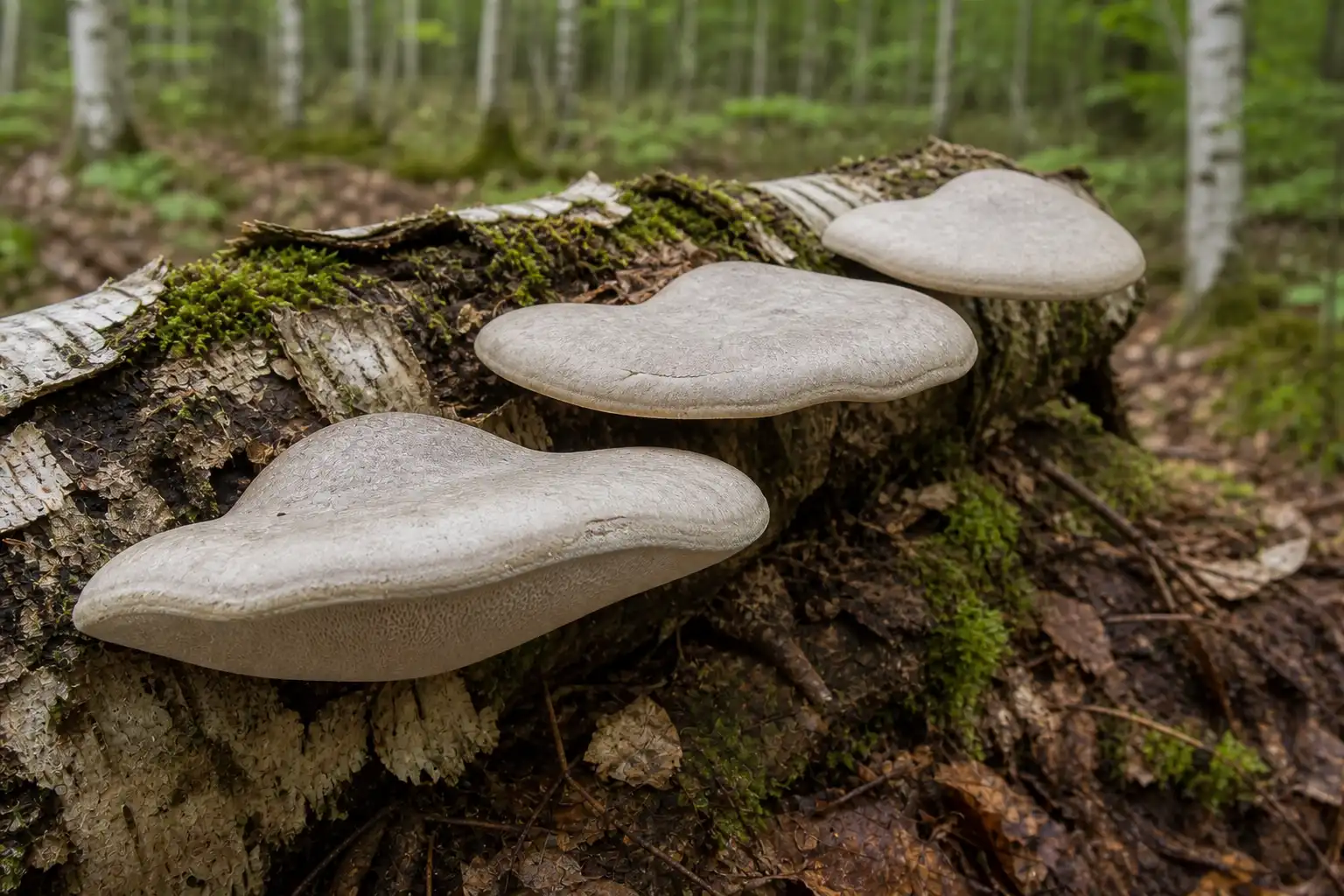
For a host-specific annual bracket comparison, the birch polypore guide contrasts attachment, pore layers, birch evidence, and brown-rot context with perennial hoof fungi.
References
- Global Biodiversity Information Facility. Fomes fomentarius species record. Accepted-name and distribution context for the tinder-fungus concept.
- National Center for Biotechnology Information. Fomes fomentarius taxonomy record. Lineage and nomenclature checkpoint within the perennial polypores.
- North American Mycological Association. Mushroom Poisoning Syndromes. Poisoning response and syndrome context.
- U.S. Food and Drug Administration. Selecting and Serving Produce Safely. General handling guidance for mushrooms used as food.
- Tomšovský M, et al. Ecological, morphological and phylogenetic survey of Fomes fomentarius and F. inzengae. Mycological Progress. 2023. Regional host, elevation and ITS-supported species boundaries.
- Peck M, et al. The complex structure of Fomes fomentarius represents an architectural design for high-performance ultralightweight materials. Science Advances. 2023. Fruit-body layers, material properties and historical material context.
- Cristini V, et al. Incipient decay in beech and linden. Forest Ecology and Management. 2024;566:122101. Controlled evidence that mechanical effects depend on fungus–wood combinations, not bracket appearance alone.
Editorial status: reviewed by the MushroomScope editorial team on August 31, 2026; no named mycologist, archaeologist, arborist, materials scientist or clinician reviewed this page. Recheck host range, regional conk comparisons and tree-risk wording before acting on a real specimen or tree.
Source quality notes
MushroomScope cites sources that match the page scope, such as taxonomic databases, extension guidance, food-safety agencies, food-composition databases, and peer-reviewed or institutional health references. Sources support context and uncertainty; they do not turn an online page into specimen identification, medical advice, or a tested recipe record.
Frequently asked questions
Why does tinder fungus form hoof-shaped brackets?
The perennial fruit body adds new pore tissue over successive growing periods while the upper crust weathers and zones. Its profile can therefore preserve several seasons of growth without providing a perfectly countable age.
Which trees commonly host Fomes fomentarius?
Birch and beech are prominent hosts in much of its range, with additional hardwood associations varying geographically. Record the actual tree and whether it is living, standing dead or fallen.
How is tinder fungus different from horse hoof fungus lookalikes?
Compare crust hardness and zoning, pore size and color, internal context, attachment, host, geography and microscopic characters. A gray hoof outline alone overlaps several perennial polypores.
What is amadou?
Amadou is a processed fibrous material traditionally prepared from the internal context of certain brackets, especially Fomes fomentarius. Historical use does not establish a safe modern food, medical or fire-making procedure.
Does a tinder fungus bracket mean a tree will fall immediately?
No. A bracket indicates established decay but does not by itself measure remaining wood strength or predict timing of failure. Trees near people or structures require assessment by a qualified arborist.
Related guides
mushrooms
Ganoderma applanatum: Artist’s conk Species Guide
Learn Artist’s conk identification, habitat, season, lookalikes, safety, food context, and cultivation limits with current taxonomy and sources.
mushrooms
Birch Polypore: Fomitopsis betulina Host and Decay Guide
Identify birch polypore through verified birch host evidence, annual bracket development, fine white pores, brown-rot context, and perennial lookalike separation.
identification
Mushroom Identification Safety Checklist
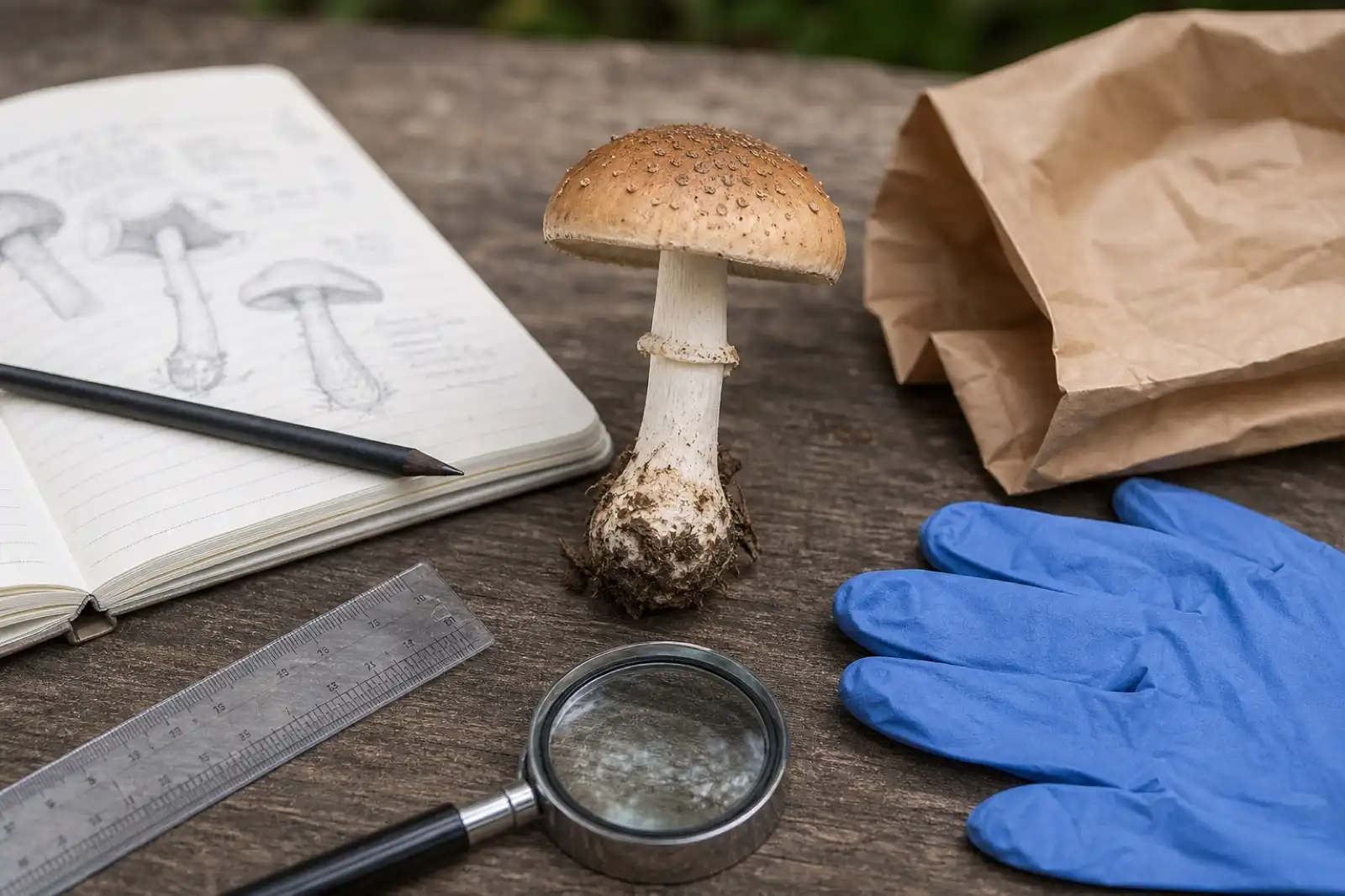
Use a conservative checklist before handling, documenting, or discussing any wild mushroom, especially when edibility is being considered.
Continue exploring
Browse more practical guides in Mushroom Encyclopedia or visit the mushroom encyclopedia.