Mushroom Encyclopedia
Cerioporus squamosus: Dryad’s Saddle Species Guide
Identify Dryad’s saddle by its scaly cap, broad pores, hardwood host, season, and safety limits; learn why a photo is not enough to clear a wild mushroom.
By MushroomScope Editorial Team · · Updated
Species context
Treat profiles as reference material
Species profiles summarize documented traits, taxonomy, and lookalikes, but natural variation can be substantial.
Use the safety checklist →Decision limit
A profile cannot authenticate a specimen
Do not eat a wild mushroom from an online match, single feature, or generated image.
Read the safety disclaimer →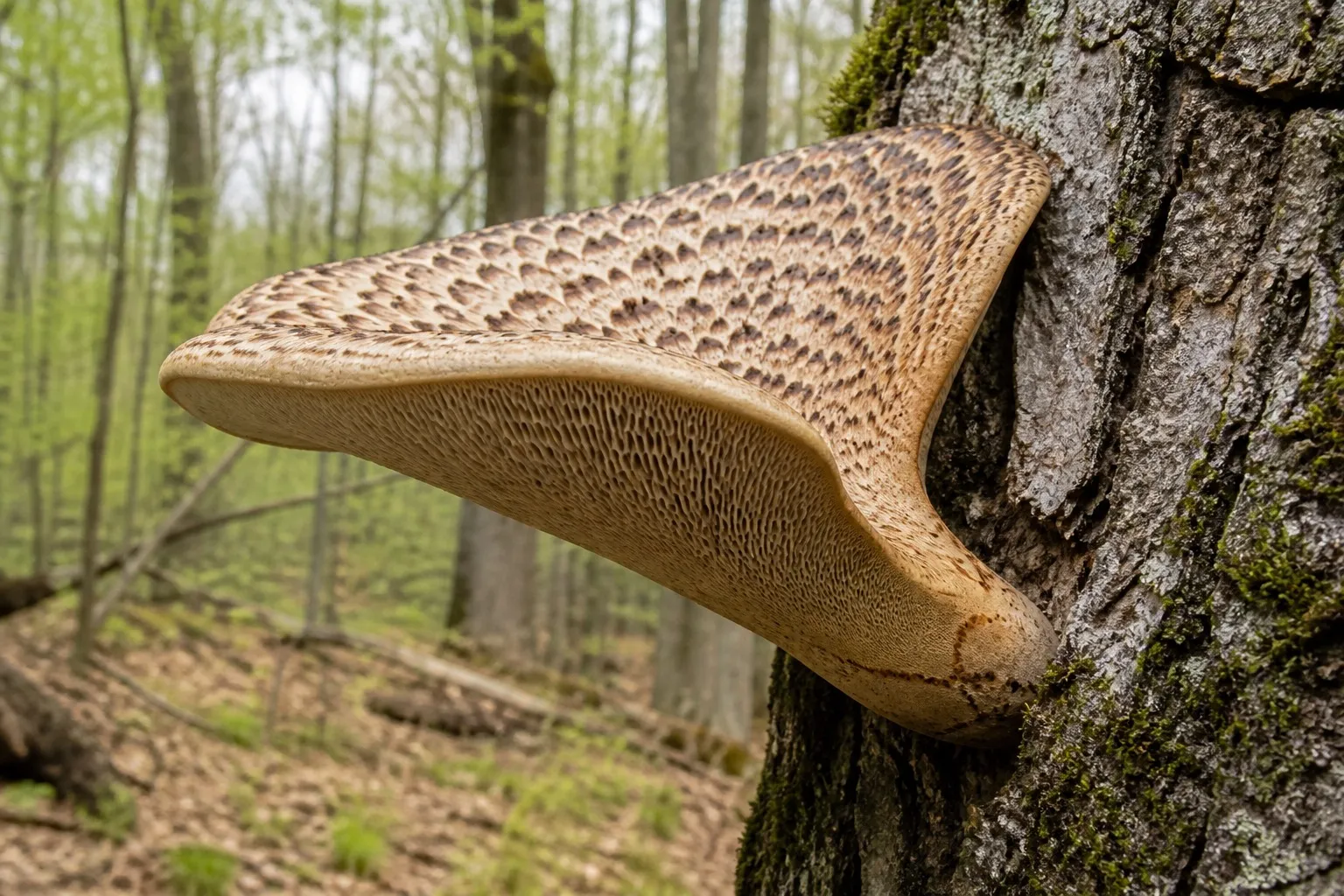
Quick facts
- Scientific name
- Cerioporus squamosus
- (Huds.) Quél.
- Common names
- Dryad’s saddle, pheasant back mushroom
- Taxonomy
- Cerioporus · Polyporaceae
- Edibility context
- Conditional: Young material has a culinary reputation in some regions, but this is not permission to eat a wild specimen. Identification, age, site contamination, freshness, preparation, and individual reaction must be assessed locally.
- Spore print
- White; a print is supporting evidence only and cannot settle the identification.
- Toxicity context
- Unknown: No web page can rule out a lookalike, contamination, spoilage, or intolerance. Cooking does not make a poisonous mushroom safe.
- Season
- April, May, June, July, August, September, October
- Growing difficulty
- Difficult
- Regions
- temperate Europe, temperate Asia, North America
- Recorded synonyms
- Polyporus squamosus
Safety limit: These labels summarize documented context; they never authenticate a wild specimen. Cooking does not make a poisonous species safe.
What the name means—and what it does not prove
Dryad’s saddle, also called pheasant back, is the common name used for Cerioporus squamosus, a large polypore fungus. The name is a visual cue: its tan patterned bracket can resemble a saddle or the back of a pheasant. It is not an identification result. “Pheasant back” is used broadly in field conversation, older sources may use Polyporus squamosus, and the practical comparison set changes by region.
This guide helps make a better field record. It cannot confirm that a mushroom is safe to eat. A food decision requires a complete fresh specimen and in-person assessment by a qualified local identifier. If the goal is learning rather than collecting, photographs and notes are often the better outcome.
Start with the whole fruiting body
A typical young Dryad’s saddle is thick, pale tan to cream, and fan-shaped or broadly kidney-shaped. The upper surface carries dark brown scales in a pattern that can become clearer as the cap expands. The underside is pale and porous rather than gilled. Its pores are relatively large and angular, and they may continue a short distance down the attachment. The attachment is short and lateral or off-center; a very young or crowded fruit body can look broadly attached instead.
Age changes almost every visible feature. A young bracket may have a thick pliable edge, while an older one is broad, hard, insect-damaged, dry, and difficult to cut. Rain can fade the cap, abrade scales, or dirty the pore surface. Do not use toughness as a character by itself. Photograph an intact group from above and the side, then include the underside, attachment, and a clean cross-section from a legally collected specimen.
Before choosing a name, record the following:
- Is the substrate a living trunk, stump, fallen log, or buried wood?
- Is it deciduous hardwood, and can the host tree be identified or carefully described?
- Are dark cap scales, pale broad pores, and an off-center attachment all visible?
- Is the fruiting body young and fresh, or old, dry, insect-eaten, and leathery?
- What locality at a privacy-appropriate level, season, and recent weather apply?
The mushroom habitat identification guide explains why “on wood” is too vague for a dependable record. A photograph that omits the underside or host is not enough to make a food decision.
Hardwood association and tree-health context
C. squamosus is a wood-decay fungus associated with deciduous hardwoods. University of Massachusetts Amherst describes it as a cause of white trunk rot and lists maple, poplar/aspen, willow, and elm among common hosts in its regional context. The National Park Service likewise describes a scaly brown upper surface and white pore-bearing underside. These sources support the ecology and broad morphology here; they do not turn one mushroom observation into a tree-risk diagnosis.
Fruiting bodies on a living tree are worth documenting because they can indicate internal decay, especially around a wound. They do not automatically mean that a tree must be removed. A tree near a target, path, building, or play area should be assessed by an appropriately qualified local arborist or tree-risk professional, not by a mushroom picker. Do not create fresh wounds or pruning cuts merely to inspect the fungus.
In many temperate areas, the large brackets are noticed in spring. UMass notes spring and autumn occurrence in its regional fact sheet, while the Missouri Department of Conservation lists a May–October window for its area. Both can be accurate locally. Rainfall, temperature, elevation, host condition, and climate make a universal calendar misleading.
Similar brackets require a full comparison
Large patterned shelves invite fast conclusions. The safer question is whether every major feature agrees. Dryad’s saddle should have a pale broad-pored underside, dark cap scales, a lateral attachment, and a hardwood context. A lookalike that shares only a shelf shape is not a match.
Cerioporus varius is commonly smaller and less heavily scaled. Polyporus tuberaster can also appear scaly, but ecology and microscopic features matter. Other hardwood polypores may be thin, finely pored, velvety, zoned, or attached differently. Exposure can erase surface characters, so document several fruiting bodies of different ages when legal and available.
For any possible food use, record negative evidence: what was ruled out and why. The mushroom identification safety checklist is a useful final pass, but it does not replace regional expertise.
Edibility, handling, and poisoning response
Some regional field guides describe very young Dryad’s saddle as edible. That limited culinary context must not be generalized to every shelf on every log. Old brackets are often tough, and even an accurately named mushroom can be unsuitable because of decay, insects, pollution, poor storage, or individual intolerance. Material from roadsides, treated timber, contaminated ground, or an uncertain host should not be put into a food basket.
Never eat a wild mushroom simply because an image or article calls the species edible. Poison Control advises that wild mushrooms should not be eaten unless identified by an expert, and notes that cooking does not make poisonous species safe. If an unidentified mushroom has been eaten, contact a poison center or emergency service promptly. Preserve leftovers, raw material, trimmings, photographs, and the time and amount consumed. Do not wait for online identification or induce vomiting unless a medical professional directs it.
Readers who already have correctly identified, fresh, legally collected young material and appropriate local guidance can use a recipe only as a cooking technique, not as evidence of identity. The sautéed mushrooms recipe is for controlled kitchen preparation; it does not endorse an unverified wild collection.
Cultivation and observation ethics
Because this fungus digests hardwood, it can seem like an obvious home-growing candidate. In practice, species confirmation, clean culture, substrate selection, incubation conditions, and fruiting reliability make it a poor first project. Do not clone a found mushroom for food or move wood and fungi between sites. If cultivation is of interest, use authenticated commercial culture and a method specific to the species, or begin with a better-documented saprotroph such as oyster mushroom.
Do not confuse a mass of branching folds with a layered bracket: the cauliflower fungus guide contrasts the rooted Sparassis rosette at conifer bases with individually capped, pore-bearing wood-decay fungi.
When observing a living tree, leave the bracket and surrounding wood intact unless lawful collection has a clear purpose. The fungus is part of a decomposer community, and repeated photographs across weather and age can teach more than removing every young cap. Respect landowner rules, protected-area restrictions, and local collection limits.
A disciplined record is more useful than a fast answer
Dryad’s saddle is an excellent case study in separating an observation from a conclusion. Begin the field note before turning the mushroom over. State what is directly observed: “one broad, tan, scaly bracket on a living hardwood trunk; pale large pores below; short lateral attachment.” Then add the context: approximate tree size, whether the trunk has a wound, whether the fungus is near ground level or high on the trunk, the date, recent rain, and the age range of the brackets. A note that preserves observations can be reassessed later; a note that begins “edible pheasant back” makes the conclusion harder to challenge.
Include a scale without damaging the specimen. A ruler beside a detached, legally collected fruit body can be useful; on a living tree, a hand held nearby or a known-sized object at a safe distance may be enough. Take a side view to show thickness and shelf posture, and take an underside image in diffuse light so the pores are not lost in shadow. If an old bracket has weathered away its scales, photograph a younger one from the same clearly connected fruiting area rather than assuming every nearby shelf belongs to the same species.
The tree itself deserves respect. The appearance of a decay fungus is information about the tree, but it is not a prescription. Do not climb, strike, drill, or remove bark to “test” the trunk. Dead wood can also host insects, birds, lichens, and other fungi. On private land, ask permission; on public land, check rules before removing anything. A photograph, a careful substrate note, and a later local identification meeting provide evidence while causing little disturbance.
If the purpose is food, pause before harvest and use a higher standard than a casual identification post. Verify the species with a qualified local expert, confirm that the fruiting body is young and fresh, assess whether the site could be contaminated, and keep uncertain material separate. Never combine unidentified mushrooms in a meal. If confidence is incomplete at any point, leave the specimen or use it only as an observation. That decision protects both the person collecting and the useful information that future observers can learn from the fungus in place.
Record age separately from identification
Measure cap thickness and photograph the pore surface, margin, attachment, and a cut section from young and mature shelves. The patterned cap and large angular pores support identification, while tenderness declines with age. A correct species name does not make an old, contaminated, or insect-damaged bracket suitable for food.
References
- Global Biodiversity Information Facility. Cerioporus squamosus. Taxonomic backbone and occurrence context.
- University of Massachusetts Amherst. Trunk Rot caused by Cerioporus squamosus (Dryad’s Saddle). Host range, white-rot context, fruiting-body characters, and tree-management limits.
- U.S. National Park Service. Springing Up — Dryad’s Saddle. Scaly cap, pore surface, and spring-fruiting context.
- Poison Control. Mushroom poisoning: don’t invite the death angel to dinner. Expert-identification and exposure-response guidance.
Last editorial review: August 17, 2026. Confirm local taxonomy, seasonal records, land-access rules, and poison-response contacts before acting on a field observation.
Source quality notes
MushroomScope cites sources that match the page scope, such as taxonomic databases, extension guidance, food-safety agencies, food-composition databases, and peer-reviewed or institutional health references. Sources support context and uncertainty; they do not turn an online page into specimen identification, medical advice, or a tested recipe record.
Frequently asked questions
What are the most useful field marks for Dryad’s saddle?
Look for a large tan to cream, fan-shaped bracket with dark scales above, a pale underside with broad pores, and a short off-center attachment to living or dead hardwood. No single mark confirms the species.
Does Dryad’s saddle grow only on dead wood?
No. It can fruit from dead wood and from living deciduous trees affected by wood decay. Record whether the host is alive, damaged, or dead and do not infer a tree-safety diagnosis from one mushroom.
Can I identify Dryad’s saddle from a photograph?
No. A useful record needs the complete fruiting body, pore surface, attachment, substrate or host, age, region, and comparison with local expertise. A photo cannot establish edibility.
Is Dryad’s saddle edible?
Some field guides describe very young material as edible, but this page does not clear a wild collection for food. Correct identification, freshness, contamination, local rules, and individual tolerance all matter.
What should I do after eating an unidentified wild mushroom?
Contact a poison center or emergency service promptly, especially if symptoms occur. Keep leftovers, trimmings, photographs, and timing information; do not wait for a web page to identify the mushroom.
Related guides
identification
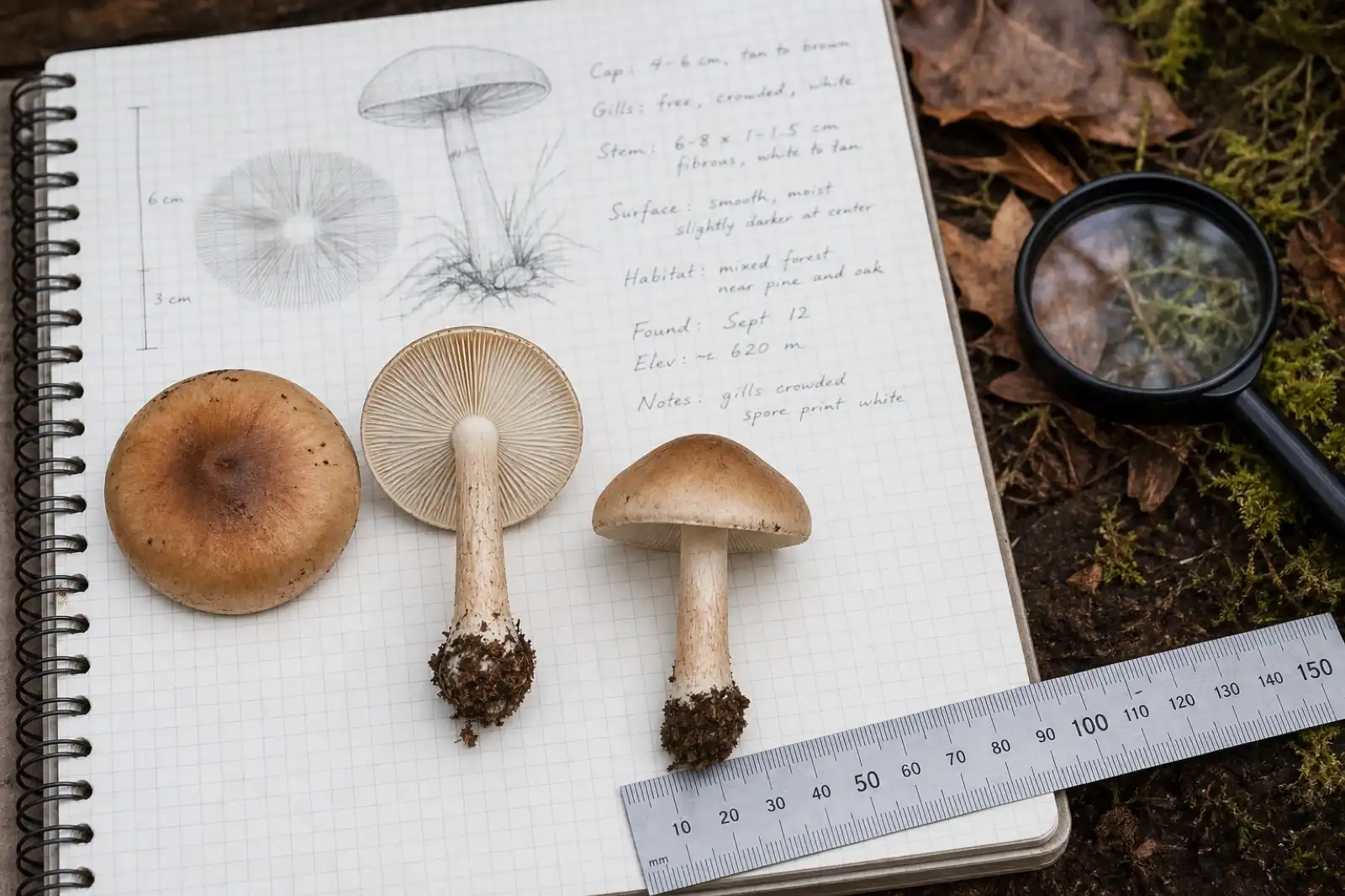
How to Identify Mushrooms: A Beginner's Field Guide
Build an identification from the whole specimen, substrate, habitat, spore deposit, and location—not from a single photograph.
identification
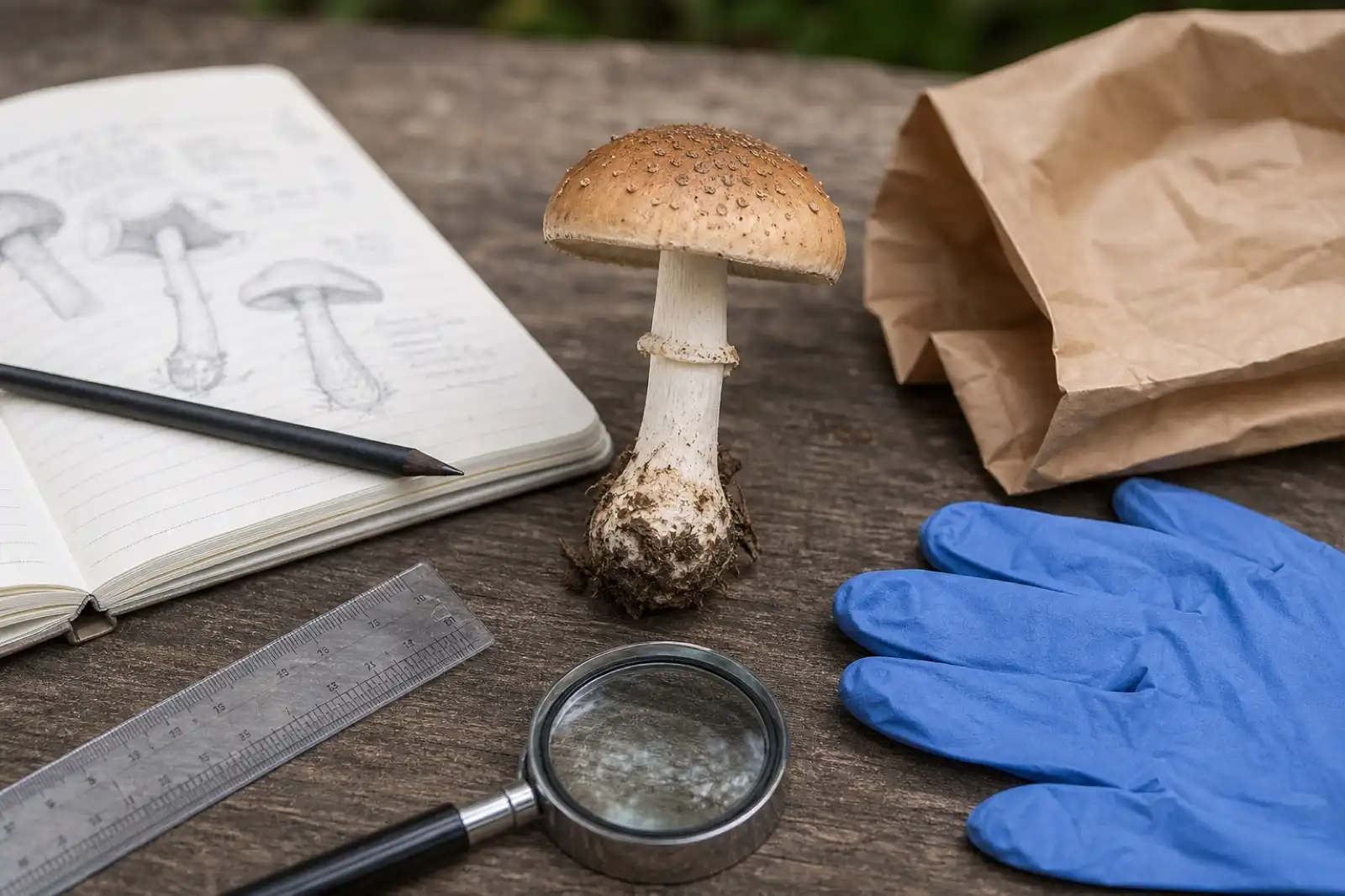
Mushroom Identification Safety Checklist
Use a conservative checklist before handling, documenting, or discussing any wild mushroom, especially when edibility is being considered.
identification
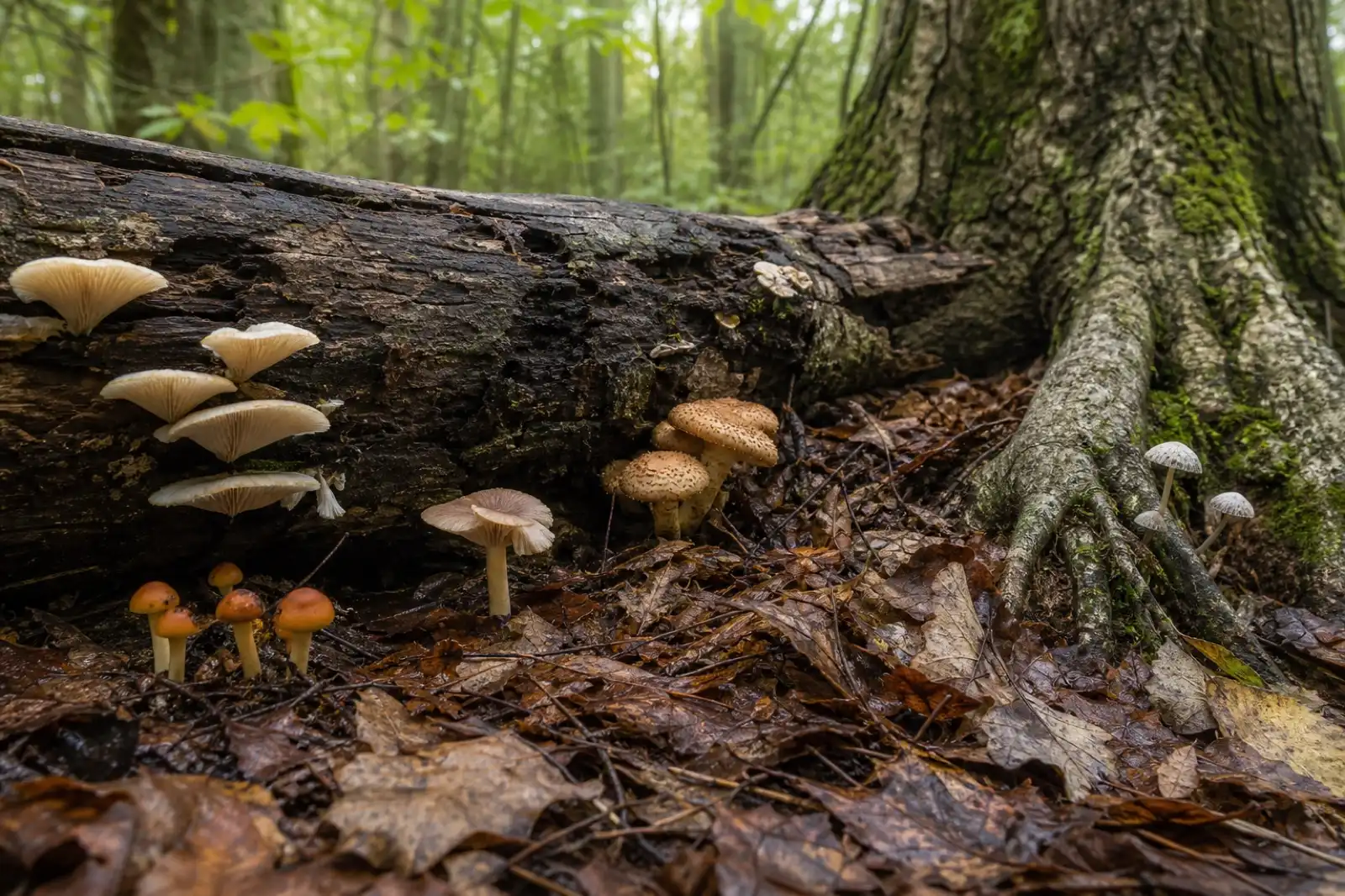
Using Habitat to Identify Mushrooms
Record substrate, associated plants, soil, wood type, moisture, elevation, and fruiting pattern as identification evidence.
Continue exploring
Browse more practical guides in Mushroom Encyclopedia or visit the mushroom encyclopedia.